
 Ask ChatGPT



This episode of The Standard features an in-depth discussion on bus safety in London with Ross Lydall, Transport and City Hall editor of The London Standard. The episode also highlights a new Netflix series, Adolescence, which explores the consequences of youth violence and the impact of modern culture on young boys.
Written by AI. May contain mistakes.

Get the gist, explore an idea or ask about something said.
 Claude
On The Standard, what are the key points of this episode?
Searching your listeningAutomatic transcript. May contain errors.
0:06Hi, it's Rachel Abbott. Welcome back to The Standard Podcast. If you're new here, hit follow and give us a rating. Coming up, the TV drama making headlines and exposing the hidden dangers of the online world for teenage boys. We don't really talk about the end game, like how does it affect young boys? We talk about, oh, Andrew Tate's so dangerous, but then this is showing the consequences of kind of incel culture, you know, stuff that parents might not be aware of.
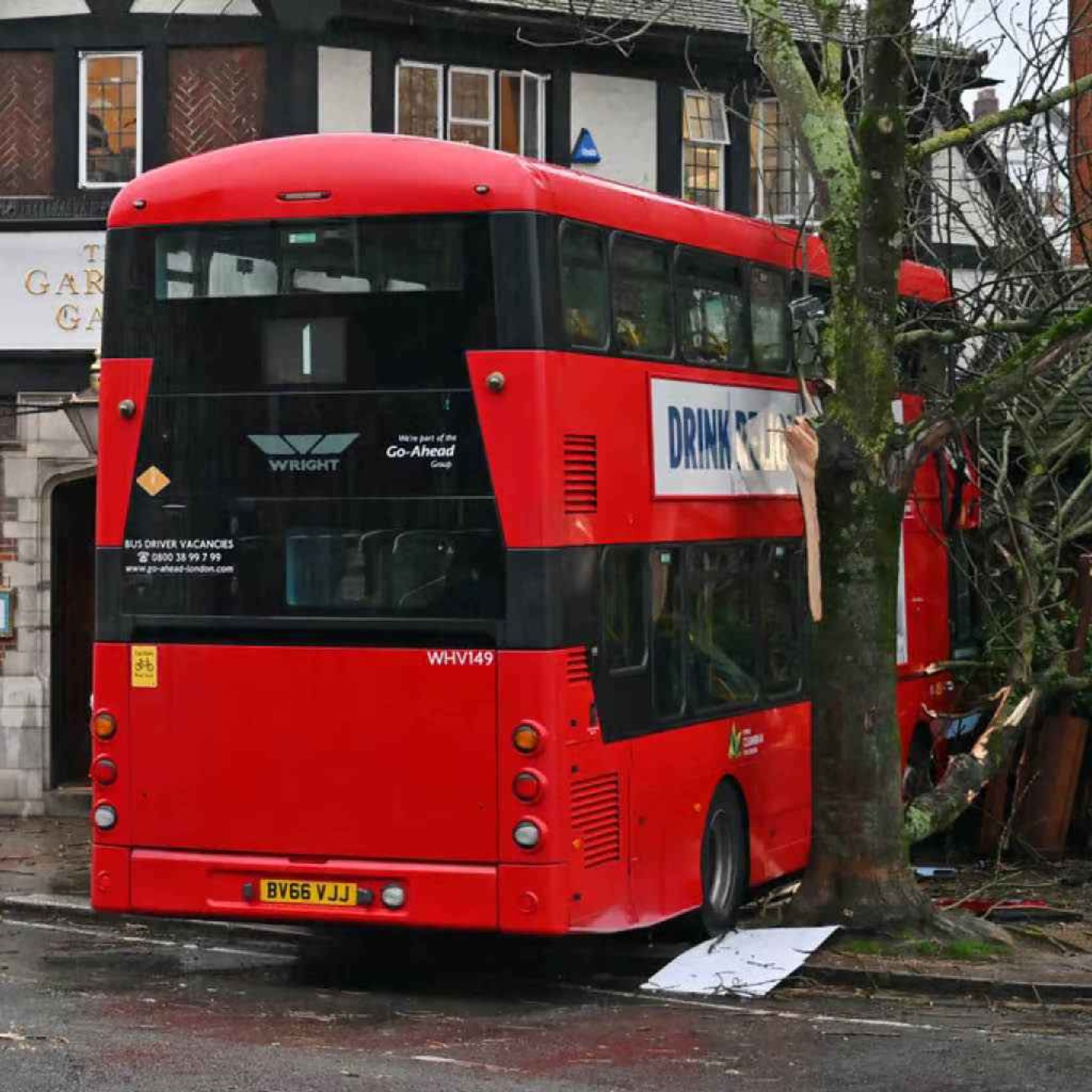
0:36but first back in July 2018 two years after becoming mayor Sir Sadiq Khan launched his Vision Zero plan aiming to eliminate deaths and serious injuries from London's transport network by 2041 the plan also included an interim target of no one being killed on or by a bus by 2030 As part of this week's The London Question, we're joined by the London Standards Transport and City Hall editor, Ross Lydell, who's been writing about the safety of our capital's buses. Ross, from reading your article in this week's edition, would it be true to say there's not been much improvement in bus safety since 2018?
1:19Yes, I think it would. You know, if we look at the bare statistics, there's a difference between incidents that happen on board a bus and those involving a bus. I guess most listeners will think of bus safety in terms of people being run over by a bus. Now, the number of pedestrians either killed or seriously injured by a bus has gone down a bit from 99 back in 2017 to 86 in 2023. Now that is a moderate fall, but 86 people being killed or seriously injured by a bus is still a very big number. Of those, thankfully not all were killed. The number killed in 2023 was six, but in 2024, 16 people were killed by a bus.
2:05So in general, these numbers are still far too big for any sort of sense of comfort or feeling that the job has been done. Can we look at the numbers in a bit more detail? What about onboard injuries? In terms of the number of onboard injuries or deaths, that actually rose over the period we're talking about from 105 to 121. The vast majority of those will be injuries rather than deaths. There's normally one or two deaths on board the bus each year. Now, often this can be caused by the bus moving away too sharply from a bus stop. It can be caused because people are trying to get up or down stairs and they fall.
2:43The falls are the primary concern. There can be issues boarding or sort of disembarking from the bus, you know, trying to get on or off the pavement as well. So there's a multitude of potential factors. But the reality is that a number of people are not essentially getting off the bus in the manner they got on the bus in terms of their own sort of health and safety. Going a bit deeper, what's life like for bus drivers? Are they facing more pressures? Is there a reason why the numbers haven't improved? Probably the most important figure here in answering that question is to look at average bus speeds.
3:18Now these have gone down to 9.2 miles an hour. That's just across London, both outer London and inner London. That's how fast a London bus goes these days. And that's really not very fast at all. You know, you can go faster on your bike, even I can manage that. you know you'd expect buses to be able to go around 12 miles an hour maybe even slightly faster on average if the roads are clear now there are an increasing number of bus lanes that are meant to help buses get through traffic the problem is obviously that there aren't bus lanes everywhere and the volume of traffic is back at pre-pandemic levels and has been for some time so the number of people driving around is essentially leading to the roads being jammed up and the buses are getting stuck in traffic.
4:04Now why does that lead then to safety issues? Well the fact is that buses are required to hit certain timetables and the bus companies have to deliver certain frequencies to transport for London in order to hit their targets and otherwise the bus companies end up getting penalised financially by TFL. So drivers are required to essentially make up time as best they can and this can lead to some erratic driving as they essentially try to race between bus stops or places where the road ahead is clear and they may go faster than they should. In terms of whose fault is it, it may not always be the driver's fault.
4:40This is a very difficult issue. But certainly campaigners don't want Transport for London to indulge in what they call victim blaming when they try and work out what happened and the causes for it. In January, you attended a Q &A at City Hall to mark 25 years of TFL. What did London's Transport Commissioner Andy Lord have to say about this issue? Andy Lord I think who is worth seeing at the outset is a good guy essentially said that bus deaths and serious injuries are very rare and infrequent events and if you look at the bold statistics he's probably right because if you have sort of 1.8 billion bus journeys a year compared to the number of sort of deaths and serious injuries we were talking about at the start of the programme really when you're looking at say 100 or so killed and seriously injured compared to 1.8 billion.
5:32billion. Yes, that is a very small percentage. However, he didn't seem to find the right words to placate the campaigners who wanted him to essentially recognise more the sense of urgency to tackle this issue. So it was a bit of a strange day for Andy Lord. He is trying to drive forward the Mayor Sadiq Khan's plan, which is known as the Vision Zero policy. So TFL always says it's committed to getting to zero road deaths by 2041 and within that zero bus deaths by 2030. But the numbers don't lie and they seem to indicate very strongly that despite, if you like, the warm words that come often from TfL, that we're not going to hit the bus Vision Zero target by 2030.
6:21We're going to miss it by quite some distance. But campaigners and the bereaved have been asking for more haven't they? Yes so several months ago there was a march to TfL headquarters involving some unions that work with bus drivers actually the London cycling campaign was there too which we thought was particularly interesting because normally you would think that cyclists are at risk from buses and indeed they are but the point the London cycling campaign was making in unison with the unions was that if bus drivers have poor working conditions then this can mean that the way they drive the bus can be affected so that you know a bus driver who's tired or cold or needs to go to the loo or stuck in traffic can drive erratically and then place many people around him or her at danger.
7:11So in terms of what the campaigners want more than 16 ,000 people have signed a petition calling essentially for a bill of rights for bus drivers and this looks to impose a sort of series of demands or it asks tfl to enshrine in the contracts that it draws up with the various private bus companies a sort of bill of rights for drivers that would relate to their working day but as we stand yet those various requests haven't been enshrined in the contracts
7:47Let's go to the ads. Coming up in part two, The Standard's TV editor Vicky Jessup on adolescence and why it's causing such a stir amongst both critics and audiences. We'll see you back here in just a moment.
8:05Welcome back. A new Netflix series has been creating headlines, earning praise for not only its hard-hitting storyline, but also its captivating filming technique. told across four parts, each filmed in a single continuous take. Adolescence tells the story of a teenage boy accused of the murder of a classmate and the fallout for his family and all those involved in the investigation. The Standards TV editor, Vicky Jessup, joins us to tell us more. Vicky, I've briefly outlined the premise of Adolescence but can you tell us more about the series and the topics it highlights? yes the basic premise is Stephen Graham who is essentially one of the show's co-creators plays a dad Eddie who has a rather rude awakening one morning when his son Jamie a 13 year old boy is arrested for killing his classmate and the show basically follows that family and then the people around them so that the police and the people around Jamie his psychologist as basically try and make sense of this horrific crime you know at the start I think it's left quite unclear about what it is that Jamie has done and whether he's even guilty you know he's constantly saying I'm not guilty I'm not guilty and as time goes on you realize yes he is actually guilty he has stabbed his classmate a 13 year old girl and the show is basically unpacking that why did that happen why is it that young boys are suddenly feeling like this is a course of action that is acceptable to them.
9:36So very hard hitting, but very gripping. So why do you think it's causing such a stir amongst both critics and audiences? I think for several reasons. So this is directed by Philip Barantini, who also collaborated with Graham for Boiling Point, which is, you know, the acclaimed film that was made into a TV series with the BBC a few years ago. And Barantini is basically a master of the one shot take. So Boiling Point, the film, follows around, you know, the staff at this very busy kitchen restaurant and the same is true for adolescents but kind of scaled up so adolescence is four one-shot takes it's really cleverly done you know we move from jamie's house into the car we follow him into the police station and basically the camera doesn't look away at any point so it's very cleverly put together but it also lends the whole series a kind of very much an urgency and immediacy like the camera's not looking away so you feel like you can't look away either and I guess the other point is that it's not really an issue people talk about very much people talk about Andrew Tate a lot and the dangers of Andrew Tate but we don't really talk about the end game like how does it affect young boys we talk about oh Andrew Tate's so dangerous but then this is showing the consequences of kind of incel culture you know stuff that parents might not be aware of there's a sequence where the police officers who are going through Jamie's Instagram comments you know see all these emojis and they don't know what it means I think it's like supportive but then one of the children decodes it for this police officer saying no these are all incel comments basically and the dangers of being online the internet culture I guess playing out in real time so I think a lot of people have been picking up on that kind of are we sleepwalking into a crisis with our young men essentially.
11:11And you've recently interviewed Erin Doherty who plays Bryony the child psychologist tasked with writing a profile on Jamie ahead of his trial what did she share about being involved in this project so she said it was one of the most grueling things that she'd ever done I think so Doherty has done theatre before so she said that kind of prepared her I think the demands of the show filming made it feel more like a yeah an entire theatre piece essentially she said it was really draining so she appears in one episode and in the run-up to that episode being filmed they practiced for two weeks you know getting everything right making sure you hold the door open for the camera here and you know step aside here and so it's all a bit like a carefully choreographed ballet and then the week of filming that's literally all they did they came in in the morning did one shot the one hour long take went for lunch did the other hour long take and then went home and she said she was just that was enough that was very draining so there was a whole week of that and the other thing she said was that the young boy who plays jamie owen cooper he was basically plucked from an open casting call i think graham said he didn't want his star to have gone to like theater school or anything like that so he's very much a fresh talent and she was sharing how extraordinary he is and he is extraordinary for someone who's not really acted professionally before he is absolutely magnetic as Jamie and she was saying that he was so committed to the uh to the role so the shot that the or the take that they ended up using for that episode for episode three that was filmed towards the end of their week of takes essentially and his voice was hoarse because he had been screaming so much and so he kept coughing throughout the the take and at the end he was quite upset he's like oh I think I might have ruined that and then Barantini came running out was like no that's the perfect shot that's the one we want we want it to be I guess presumably I'm not sure if he said this but you know it lends the whole take and then a sense of kind of urgency and realism and stuff like that so yeah I guess just she was singing praises of him as well which are very well deserved.
13:06Do you think the series is capable of having an impact on how we view and address these issues as a society? Yeah I think so like I said it's not really something we seem to have discussed much before I think Graham himself said that he was influenced to write the series by reading about two instances where young boys had stabbed their classmates girls to death essentially but yeah it's not something I was really aware of myself beforehand and I guess the best thing that TV can do is raise awareness of issues that maybe is bubbling away in the background but as a society we prefer to turn a blind eye we prefer not to think about it, we just don't.
13:41So in the same way I suppose that Mr Bates and the first of the post office created this massive movement towards justice for the postmasters, hopefully adolescents will do something similar in getting people even just talking about the issue and hopefully from there maybe some people might take action, maybe the government will take action, we can only hope. That's The Standard. For all the latest news head to standard.co.uk and please do drop us a line at podcasts at standard.co.uk. This podcast returns tomorrow at 4pm. We'll see you then.
As part of this week’s The London Question, we’re joined by The London Standard’s Transport and City Hall editor, Ross Lydall, who’s been writing about the safety of our capital’s buses. Why have the numbers in serious injury or fatality not improved, and what can be done to make journeys safer?
Plus in part two: a new Netflix series has been creating headlines, earning praise for not only its hard-hitting storyline but also its captivating filming technique.
Told across four-parts, each filmed in a single continuous take, Adolescence tells the story of a teenage boy accused of the murder of a classmate and the fall out for his family and all those involved in the investigation. The London Standard's TV editor, Vicky Jessop, is on hand to tell us more.
Hosted on Acast. See acast.com/privacy for more information.


