
 Ask ChatGPT



The Standard podcast, hosted in London, delves into critical news topics with insights from top journalists and celebrity guests. The episode addresses the implications of climate change on London and features discussions about local commuting conditions.
Written by AI. May contain mistakes.

Get the gist, explore an idea or ask about something said.
 Claude
On The Standard, what are the key points of this episode?
Searching your listeningAutomatic transcript. May contain errors.
0:03Hi, I'm Rachel Abbott and welcome back to The Standard Podcast. Coming up, the best and worst commuter stations for London have been revealed. Does yours make the list and why does it matter? If you are currently working in London and are thinking of leaving, sort of going out into the sticks to find somewhere to commute from, especially in the sort of modern day hybrid working, if you're thinking, is there a nice place I can live outside of, say, central London? If the train service isn't so great, then that could be three or four days of misery.
0:43But first, what happens to London if climate change gets out of control? Climatically, if this system collapsed tomorrow, the Earth would still exist. It's just whether we would. Despite many of us enjoying the chance to bask in the sunshine over the weekend, It's back to wearing woolly jumpers to keep warm this week, as London experiences temperatures widely below average for the time of year. Although discussions around climate change have been ongoing for decades, there is a scenario which could see the capital facing, extremely cold weather as the norm, and the threat comes in part from a giant, invisible ocean current in the Atlantic.
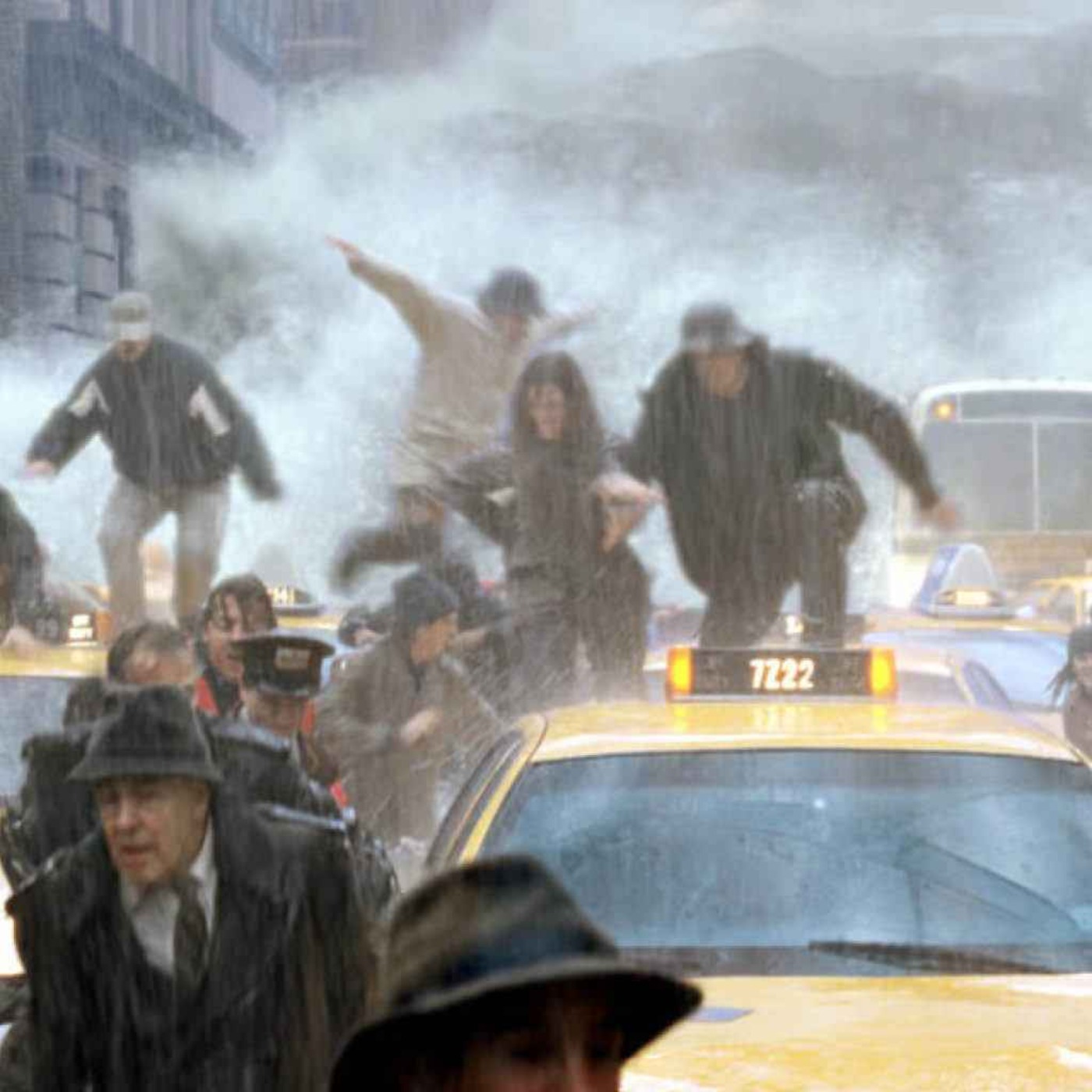
1:23It would be like living in northern Canada if you lived in London. We'd have big sort of winter storms. James Stewart is a climate scientist who is here to explain more. James, when we're thinking about climate change, it's usually about the earth getting hotter. So what's going on here? There's a couple of situations. So the most likely general consensus is that obviously things will get warmer. And that's sort of what we hear about all the time. But there is also another side to that coin. I don't know if you've ever seen the film The Day After Tomorrow. So that film is modelled on something called the AMOC collapsing.
1:55The AMOC is this like invisible ocean current that exists. It's called the Atlantic Meridional Overturning Circulation. It's basically our planet's sort of central heating system. Its job is to pump heat around the ocean. It does that like insanely amount. It has more energy than all the electricity on Earth has just to do this job. And it's slowing down a bit, which is why we talk about this possibility that things could get colder. Because if the thing that's pumping heat around the world is slowing down, what's happening is there are places that are actually getting colder which is mad so there's one tiny little place in the North Atlantic Ocean that for the last 50 years is the only place in the world that's got colder and that kind of gives us a clue that this system might be slowing down a little bit think about it like a sort of giant piece of spaghetti you can't see it but if you could you put it on the world like an atlas it would be like a big sort of loop going all the way down all the way up to where we are in the UK and that system is not doing so well it's actually at its weakest state in nearly 2000 years and there was some research that came out recently that said it could actually collapse in 2025 that's not going to happen but certainly by the end of the century it's very likely if we continue the way we are with fossil fuel reliance this could be significantly impacted the reason that is is because the more ice that melts the more cold water gets into this system so fresh water from the ice caps in greenland really stop this thing from working it cools the whole thing down what does that mean for the world It means that mostly the Northern Hemisphere would significantly cool, like a lot.
3:24So where we are in London right now and in the UK, we could drop by sort of 10 to 15 degrees Celsius. Some people might think that's a good thing. But what it would mean for things like agriculture, for example, it would be like trying to grow potatoes in Norway. You know, our sort of staple crops just simply wouldn't survive. It would be like living in Northern Canada if you lived in London in this situation. We'd have big sort of winter storms. and conversely whilst we get colder this southern hemisphere would get significantly warmer as a result because that heat would be staying where it is in the south rather than being moved to the north which would not be good for them so then you've got things like Atlantic sea level rises so then the risk of flooding as much as 70 centimetres could happen you think about River Thames where we are here that would submerge pretty much every borough along the Thames That's quite a scary prospect how likely is that to happen?
4:16This is obviously a worst case scenario. And in the film, The Day After Tomorrow, this happens in like a fortnight. Geologically, this would happen quite fast, but it would be over sort of decades. But it obviously is not something you'd want to happen. But I think it's just something interesting to think about when we talk about our climate changing is it's not always things getting hotter for certain people. Climate change is about, for me, extremities. So things getting more something, whether that's bigger, bolder, more scary, colder, warmer. It doesn't just mean getting warm. And I just think it's worth just having to think about because sadly, all these things are interlinked and it's a very delicate system.
4:48It's hard because you can't see it. And so you kind of don't necessarily worry about it. So would you say flooding poses the biggest threat to London when thinking about the consequences of climate change? Yeah, I think London centric wise, absolutely. Because that situation could happen with either a cold climate or a warm climate, right? Because stuff's melting either way. So it's either melting into a system which is then keeping it colder, which is then making it the sea level rise. or sea level rises caused by losing land ice. So, yes. We do have the Thames barrier in place, but are we ready for a scenario like that?
5:21Do you remember the Dubai floods last year? So they had these crazy floods in Dubai, which everyone thought was like maybe cloud ceiling. It turned out it wasn't. It was just a crazy storm. But the reason I mention that is because of the way that essentially that was always going to happen to Dubai because of the urban planning. So the way they built the city, it's very impermeable. The entire place, if you've been there, is concrete. We don't have that problem so much here. we're pretty good for like rain obviously it rains a lot and so we do have an infrastructure like london i think it's the world's first garden city like i did a film recently and london is like one of the original green parks like green cities we're pretty good for like rain but flooding is a different story and i i don't know that we're ready for it i don't know that anyone would be climate change has been on the agenda for many years now but how worried should we really be by the threat of what's to come i think the problem with the threat is that we talk about in such small increments so we talk about it is like 1.5 degrees or 2 degrees and you kind of go yeah but hang on I went outside yesterday it was probably 2 degrees colder or hotter and it was I couldn't tell the difference and that's mostly true but of course for so much infrastructure in the world that tipping point of one and a half or two degrees is massive for an ecosystem like ice or like what's happening under the oceans or even things as simple as our weather systems that's a significant change for them so I think we almost shoot ourselves in the foot by giving these like wild things of what might happen and then going that's if things get warm by two degrees and i can understand why that would be you'd be like yeah but who cares it's just two degrees but you've got to think about it in terms of the earth has previously gone through climatic changes and that's always a counter to this that people say yeah but we've had an ice age before and actually we're still in an ice age albeit an interglacial one but humans were never here before so what's happened is a lot of the changes have significantly increased in terms of their intensity because of what we've sort of put into the atmosphere whereas in the past that wasn't so much the case previously things happened over like 10 000 years they're now happening in like 100 120 years the earth will survive we don't really matter in that sense climatically if this system collapsed tomorrow the earth would still exist it's just whether we would it paints a pretty bleak future what can we all do to make a difference and create real change there is a world than which that doesn't have to happen and i think that's really important to remember and it's like it sounds so cringe doesn't it when you say like oh you're just one person what difference can you really make and actually the truth is how many people live in london if we all did something it would be better than nothing and whether that's about fossil fuels or how you travel around or how you get into town how you get to work how you commute how your your heating's powered at home it's things like see who you bank with do they invest in fossil fuels like that's something so silly but most banks do but there are three or four that don't so you can like build a world in your life that kind of gets away from fossil fuel investment that could be a really good starting point and that could be as simple as changing your bank it could be as simple as you know a whatsapp group uses like i think like 2.3 tons of carbon a week right because you have to store stuff on a cloud to send it to your friends if there's whatsapp groups that you've been in for like years from a stag do like seven years ago exit them because weirdly there's a carbon cost there?
8:28I know that sounds stupid, but everything costs something to the environment. That's something I hadn't even thought about. Can you expand on that a bit further? We're having loads more data centres now. So data centres are really thirsty. They need cooling down because there's so many computers in one room. So the less stuff you put like through a data centre, the better. For example, sending an emoji doesn't take any carbon because it's local on your phone. Whereas if you send a GIF, that requires a transaction. James, it's been a really interesting chat. What's the one thought you want to leave us with today?
8:58This is a situation that kind of we've, I would argue, have had a big impact on. And it's a world that we have to live in. So why would we not want to make that better for ourselves? James has been writing on this issue for the London Standard.
9:13Let's go to a quick break. In part two, we're joined by the London Standard City Hall and Transport Editor, Ross Lydell. is your local railway station ranked best or worst?
9:27Welcome back. A poll revealing the best and worst stations for commuter trains in and out of London came out today. The survey found that the capital's commuter services were getting worse, with only 52 % running on time, down from 56 % in the previous year. In addition, almost 4 % of trains were cancelled. To discuss the top ranking stations and the implications for commuters relying on these services, we're joined by the London Standard City Hall and Transport Editor, Ross Lydell. Do you want to tell us about this latest survey, Ross? What is it measuring and why? This is a survey by a website called On Time Trains.
10:10It essentially monitors the performance of trains, in particular commuter trains, as in rush hour trains, trains should get into London in the morning and back home in the evening. And it looks at 30 stations outside London, so just beyond the M25, typically in Essex, Hertfordshire and so on. And it measures them on a series of performance indicators such as the frequency of trains, the speed of the train and the value for money in terms of how far you travel and how much it costs for your fare. And what has the survey found? The survey has found that Chelmsford in Essex has retained first place, essentially the best ranking station when all these different indicators are put together.
10:55It gets a score of 88 % overall. Chelmsford is served by Greater Anglia trains, but also the survey reveals that many stations in Essex, sort of next door to Chelmsford if you like, are also very well ranked with Basildon, Shenfield and Wickford also doing very well. They take second, third and fourth place respectively. But the survey doesn't just focus on the good news. It also reveals which stations are failing or really in particular the trains serving these stations are failing. And it says that of the 30 stations that it measures, these are sort of larger stations, stations that have more than or at least one million passenger journeys a year.
11:39Welland Garden City in the sort of middle of Hertfordshire is right the worst. Stivenoaks is close behind and also St Albans. So in terms of services getting worse, who is to blame here? Mostly it will be the fault of the train operators. However, there are many occasions when it's actually network rail which runs the track and the signalling that is to blame. And that has certainly been the case in West London or west of London. Reading is another station that has ranked poorly and they are the issues flagged up with its services in and out of Paddington. There are Elizabeth Line trains from Reading and also Great Western Railway trains from Reading and we've known for some time that there have been serious issues with the network rail infrastructure between Paddington and Reading.
12:30Network Rail has launched plans to improve the track and the signalling but this will take many years to actually upgrade all the infrastructure. And what are some of the wider impacts? House prices must be affected and they must obviously increase stress levels. I think that's a very good question. If you are currently working in London and are thinking of leaving, sort of going out into the sticks to find somewhere to commute from, especially in the sort of modern day hybrid working. if you're thinking, is there a nice place I can live outside of, say, central London, where you can have more space, a bigger house, a nice garden, if you're looking to bring up kids or find a good school.
13:09If all these things are coming into mind and you're thinking, how long would it take me to get into London, you know, two or three days a week? How reliable would the train be? Because many people, as we're talking about St Albans, we think St Albans is a great place to go and live, which it is. It's a lovely city. But if the train service isn't so great, then that could be three or four days of misery for you. I think the other thing many people will think about though is which mainline station do they want to arrive at? So the choice isn't entirely clear. If your work is based around, say, Waterloo or the South Bank, then you want to get a train coming into Waterloo or possibly into London Bridge.
13:49There's no great benefit getting a train into King's Cross if you work on the south side of the river. So that would be the other factor in terms of which train line or which city or town you go and live in out in the home counties. And finally, can these surveys actually make a difference? I think they do. Probably only an hour or so after this survey was published this morning on the Standard website, one of the real companies actually did pretty well, got in touch saying, please, could you just change the picture that you've used because we've actually got more modern rolling stock than your picture indicates.
14:20But it shows that all the train companies will be looking at this data. Nobody wants to be bottom of the pile. And I would imagine that this would add as another incentive for train companies to try and improve performance, particularly because many of them are about to be re-nationalised by the government. You know, over the next year or two, all train companies will come under the control of the Department for Transport and nobody wants to be seen as the worst performer in the country. That's The Standard. For all the latest news, head to standard.co.uk. If you'd like to get in touch with us, please do at podcasts at standard.co.uk.
14:57This podcast returns tomorrow. We'll see you then.
Although discussions around climate change, with a focus on global warming, have been on-going for decades, there is a scenario which could see London facing extremely cold weather as the norm. So what happens to the capital if climate change gets out of control? Joining the podcast is climate scientist James Stewart, who has been writing about this very scenario for The London Standard.
Plus, The London Standard's City Hall and Transport Editor, Ross Lydall, reveals the best and worst commuter stations. Does yours make the latest poll, and why does it matter?
Hosted on Acast. See acast.com/privacy for more information.


