
 Ask ChatGPT



In this episode, the discussion centers around the controversial decision to ban Maccabi Tel Aviv fans from an upcoming Europa League match against Aston Villa. The episode features insights from various political figures and an interview with Emily Hilton, the International Policy Director of the Diaspora Alliance. Additionally, the episode concludes with a review of the English National Opera's production of "Albert Herring."
Written by AI. May contain mistakes.

Get the gist, explore an idea or ask about something said.
 Claude
On The Standard, what are the key points of this episode?
Searching your listeningAutomatic transcript. May contain errors.
0:02Hi, I'm Charlie Duffield and welcome back to The Standard Podcast. If you're new here, hit follow and give us a rating. For all the latest news, head to standard.co.uk. Coming up later in the show, the English National Opera's first shared production between London and Salford, Albert Herring, is here, having originally premiered back in 1947. It's light-hearted. It's one of the few 20th century operas that is genuinely amusing, which is no mean achievement. That's in part because the libretto is by someone called Eric Crozier, who worked with Britain on a number of occasions and came up with a very witty, very literate, but very singable text that communicates very well with the audience.
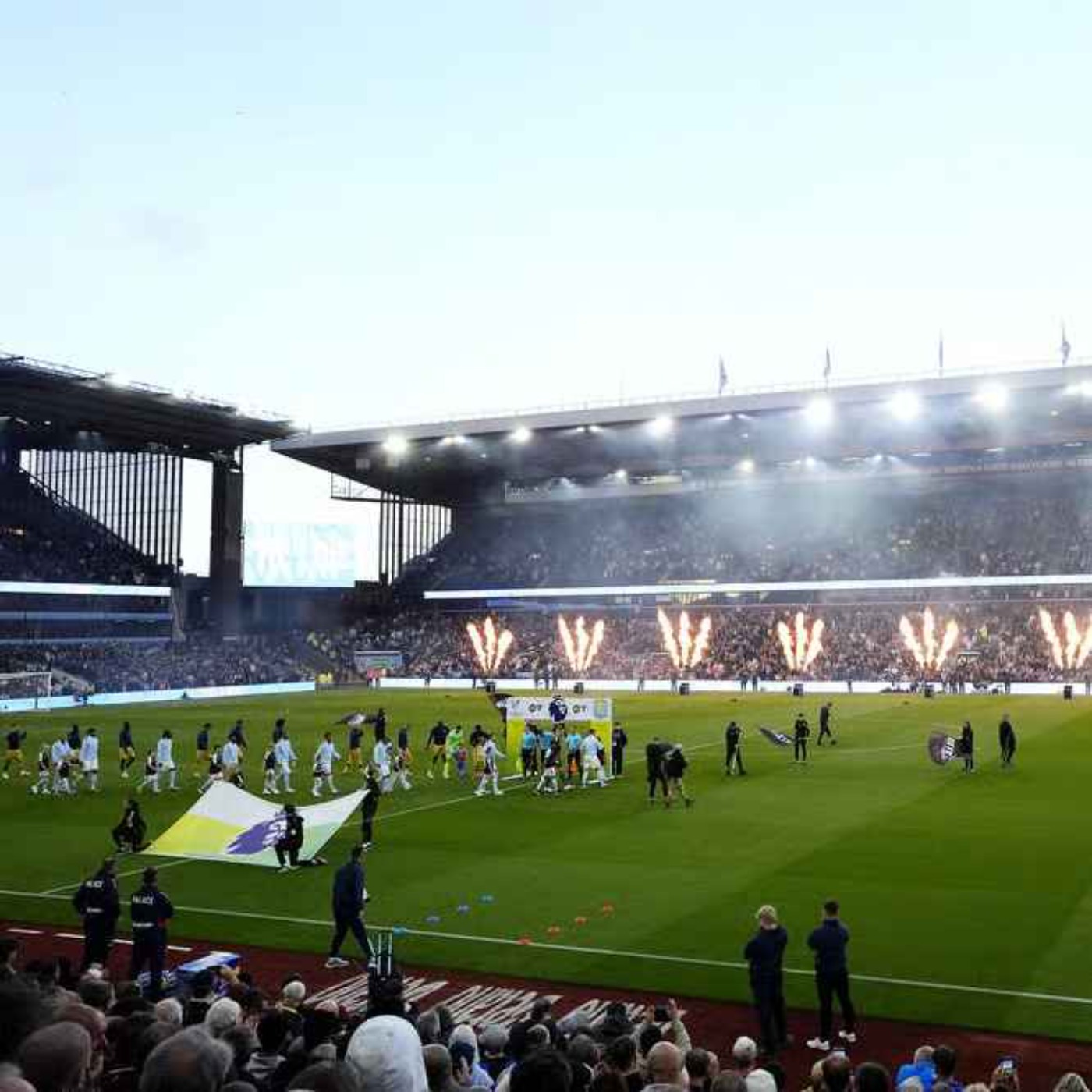
0:50So from time to time, the audience actually laughs, which isn't always the case in comic opera. But first, the decision to bar Israeli football fans from an upcoming match at Aston Villa has sparked a huge backlash today, with Prime Minister Sir Keir Starmer branding it wrong and linking it to anti-Semitism. The ban would see Maccabi Tel Aviv supporters shut out from next month's Europa League game in Birmingham due to public safety fears. Last November, Violence broke out at a match between Ajax and Maccabi Tel Aviv in Amsterdam, which city officials described as a toxic combination of anti-Semitism, hooliganism and anger.
1:34Senior government figures met today to discuss the safety ban, which has been called completely and utterly unacceptable. Tory leader Kemme Bainok condemned it, calling it a national disgrace. Here's what she had to say. We cannot be a country where we tell Jewish people that they can't come to watch football because their security is not going to be looked after. What I want to see is the police finding ways to make sure they can be secure and sending the message to the Islamists and those who are pushing anti-Jewish hatred that this does not happen in the UK. Britain has always been a sanctuary for Jews and it always should be.
2:10Culture and Sport Department Minister Ian Murray also said it was the wrong decision by Birmingham Safety Advisory Group. the body responsible for issuing safety certificates for every match at Villa Park. However, West Midlands Police said it supported the decision, saying it had classified the fixture as high-risk, citing current intelligence and previous incidents as reasons to support the ban. And the Football Policing Unit, which also backed the ban, says the Home Office was briefed last week on potential issues and options, including restrictions on visiting fans. It comes as figures released by the Home Office last week suggest that anti-Semitic hate crime remains near record levels.
2:53UEFA, which runs the Europa League, urged UK authorities to make sure Maccabi Tel Aviv fans could attend the match in Birmingham. Joining us now is Emily Hilton, International Policy Director for Diaspora Alliance, a Jewish-led international organisation dedicated to opposing anti-Semitism and its distortion. Emily, what was your initial reaction to today's news regarding the Maccabi Tel Aviv fans ban? I'm incredibly shocked and disappointed at the knee-jerk decision to call this decision about football fans anti-Semitic or anti-Semitism. To see the tweet that Prime Minister Keir Starmer put out saying anti-Semitism will not be tolerated in the streets seems pretty outrageous in light of a very clearly anti-Semitic attack on a synagogue just a month ago on Yom Kippur.
3:43Maccabi Tel Aviv fans have a history of violence, and particularly racist violence, as we saw in Amsterdam last year, where they were running through the streets, tearing down Palestinian flags, chanting F the Arabs, the IDF will win. Why is school out in Gaza? Because there are no children left. This is clearly a decision that has been taken on the basis of how communities or police and football organizations want to ensure safety and community cohesion during these kinds of matches. It is not a question of anti-Semitism. Whether there could be more done to have fans in the stadium, I don't know.
4:15But I do think that the immediate decision to call this anti-Semitic is harmful, not only in terms of sort of broader discourse and restricting rights and sort of recognising the broader context of Maccabi Tel Aviv, but it's also dangerous for Jewish people. And it really feels like it's putting a target on our backs to suggest that this decision has been taken on the basis of hating Jewish people. I just think that's completely absurd and disappointing leadership. So would you say this measure is too drastic? I understand that there have been other times, for example, when the UEFA imposed a ban on football fans and said that England had to have closed matches after the behaviour of England fans at the Wembley final in 2020.
4:50I know this has happened before. I think West Ham fans were also banned at one point earlier in the year for their behaviour. There was a closed match around that. So this is obviously a decision that has been taken in different contexts, which is why that's a very important thing to recognize also that sort of violence or concerns around the behavior of football fans is something that is a widespread problem within sort of football in general in the UK, but also in Europe as well. And this is probably part of that question that I have concerns with is the way this has been immediately condemned as an anti-Semitic decision, this idea that Jews are not welcome in Birmingham, which isn't true.
5:21You know, that this is part of a sort of hysteria and a construction of this idea that Jewish people are no longer safe and okay in Britain, which is deeply upsetting for, I think, British Jews, particularly at a time when there is real anti-Semitism, when there has been sort of an increased vulnerability of these communities, but also like the fact that this is also being used in a political context. There's also real questions around, I think, in general, whether Israeli football clubs should be allowed to participate in sort of international matches, given what Israel has done and the genocide or destruction in Gaza over the last few years.
5:54That's also a question that we should be having. And how are Jewish people feeling right now? This is a conversation about football fans and policies of community cohesion and how football teams, fans, conduct themselves. This isn't a conversation about anti-Semitism. So, you know, we can talk about what happened in Manchester. we can talk about the fact that Jewish people are feeling more vulnerable. This is also reflective of a broader political reality where many minority communities have felt under attack, have felt an increased vulnerability thanks to a rise in polarization and extremism and the far right, whether that be trans people or Muslim communities.
6:27Jewish people are not alone in that. But I think this is the challenge, is that what we should really be having a conversation about is how does the culture and behavior of football fans impact people's access to the game, impact people's broader sort of sense of safety and community when those games happen. And instead, we're actually having a conversation about anti-Semitism, which to me is like conflating two different things. And the responsibility we have in these times is to be able to delineate between one of these is a conversation about how do we keep minority communities feeling safe?
6:55And one is to stop the politicization of anti-Semitism being used to shield either a broader conversation around accountability for Israel's actions, or a broader conversation around the government not being willing to acknowledge the fact that there are serious issues within British society right now that will only come through a broader commitment to keeping all minority communities safe, but from having a clear expectation of what is acceptable, not acceptable behaviour. Whatever Jewish people are feeling right now, I don't personally think that it is connected to this issue of whether Maccabi fans should be allowed to watch Aston Villa in this match.
7:29So what does this reveal about our political leadership? I don't even know what Starmer has to gain by saying this is outrageous anti-Semitism. I think he could have made the point that either he doesn't think that Maccabi fans should be banned, which is like, okay, that's an acceptable or like a legitimate position to hold. Why not? And then that's the conversation we should have. You know, you could even have the conversation of like, what could the police do to ensure the safety of all people the knee jerk into anti-Semitism? I think it shows poor judgment on behalf of the Prime Minister, but it also shows sort of a lack of willingness to like acknowledge the reality which we find ourselves in.
7:59There are issues with Maccabi football fans. They are a problem in terms of the way that they've behaved previously. I'm not even sure this is about necessarily a weaponization for their own gain, because I don't really see what the Prime Minister gets out of this at all, actually. But I do think it is a very clear example of conflating people's concern about Israeli fans' behavior with Jewish people or anti-Semitism, and also in some ways making Israeli people reflective of all Jewish people, which is also not true. Israel, the country, like any other country, should be treated as such. And if there are fans from that country who behave poorly, there should be consequences for that, as it would be with any country, whether that's from Germany or Amsterdam or wherever.
8:35So it's really concerning to see the ways that Starmer and Badenot have sort of responded to this. It definitely feels like it's trying to fuel a bit of a culture war. And finally, is there anything else that you want to add? It's incredibly important, particularly in the wake of the assault on Gaza, that we do not conflate what is in the interests of Israel or the Israeli state or Israeli people in general with the interests and safety of Jewish people in the UK or around the world. These are two very distinct things. Like Israel is a country that has its own interests, it's football fans, etc.
9:04And that is not the same as sort of Jewish people in the UK. And the problem with these incidents when they arise and what the response from Starmer and Badenok and others have done is sort of flatten those things together. This is not a situation in which the Birmingham police or community safety board has said, we don't want Jewish people at these matches. They're saying we don't want these specific fans from this specific Israeli football club. those things are not the same. And it's very, very unfortunate and problematic to see political leaders try and flatten those two things. And that's why we are in this muddle.
9:36Like this is not a conversation about anti-Semitism. This is a conversation about the behaviour of football fans and community cohesion. That's the conversation we should be having right now. Let's go to a break. Coming up in part two, a fresh and witty new take on Benjamin Britten's much-loved coming-of-age comedy opera. We'll see you back here in just a moment. Welcome back. The English National Opera has ushered in its new Twin City existence with a new small-scale staging of Benjamin Britten's third opera, Albert Herring. It's been described as a 19th century story about a mummy's boy suddenly finding freedom, which offers social criticism of the conventions of repressive country life.
10:24Joining us now is Nick Kimberley. He reviews classical music and opera for The Standard. Nick, can you remind listeners why the English National Opera was forced to move to Manchester and why this has proven so controversial? English National Opera was losing money. Its audiences were declining. Obviously, the Arts Council thought we have to do something about this. And they were also ordered by Nadine Doris to do something about the imbalance between culture in London and culture in the regions, and especially in the north. They decided that the sensible thing to do was, we've already got the Royal Opera House in London.
11:01We don't need another opera company. Let's send them up to Manchester. And that was more or less it. There was resistance from English National Opera, who feel very attached to their London home, the London Coliseum, very attached to their London audiences, and didn't think it was a good idea to move the whole company, which is very large, moving everything to another city entirely, didn't seem like a good idea. and this was made public that ENO wasn't in favour, Andy Burnham, the mayor of Manchester, weighed in and said, well, if you don't want to come up here, we don't want you, which is not a great start to the potential relationship.
11:37And it was eventually agreed upon that instead of moving wholesale up to Manchester, that would become ENO's English National Opera's main home, but they would still hold on to the London Coliseum. This is a sort of bodged together compromise, so it could work out. But it was controversial because it was rather high-handed in the way it was put to Manchester and E &O by the Arts Council. It sort of assumed that since we had the Royal Opera House, we didn't need English National Opera, whereas many people, including me, think that English National Opera is the lifeblood of opera in London, at least as important as the Royal Opera House, partly because it sings in English and that has a more immediate effect.
12:20This new production of Albert Herring, which opened earlier this week, will be the first production shared between English National Opera in London and English National Opera in Manchester. It'll be interesting to see how it goes, but it's a good production. It's made very portable. There's very little in the way of set, which is very sensible. You know, opera going on tour demands flexibility, and Anton MacDonald, who directs and designed production, has had an eye on making sure that it will work in different theatres. One thing that very much interests me is a brand new production of an opera by the American composer Philip Glass.
12:59It's called Einstein on the Beach. I've only ever seen it once in a wonderful production that appeared at the Barbican some years ago. I hope it comes down to London as well. But how Ian Oman manages being between two cities is still up in the air. So what is composer Benjamin Britten best known for? Well, I think probably his most famous opera is Peter Grimes, which, like Albert Herring, is set in Suffolk, which was where Britten lived, where he was born, where he spent most of his life, and where he founded the Aldborough Opera Festival in 1948. But Peter Grimes is a very different kind of opera.
13:35It's very much a psychodrama about a sailor who's potentially a child molester, whereas Albert Herring is rather more light-hearted. You could draw comparisons with the carry-on movies. His other best-known opera is probably Gloriana, which was written for the coronation of Queen Elizabeth II in 1953. And tell me more about the story of Albert Herring. Well, it's set in an imaginary village called Locksford. The main figure is Lady Billows, who has made herself kind of moral arbiter of everything that goes on in the village, and is in charge of finding somebody to be the May Queen, which is an annual festival they have.
14:18And in many small English towns, there is still a May Queen elected. I suppose it's a kind of fertility right, although it's desexualized more often than not. But in discussion with her selection committee, Lady Billows realises that there's no women, no young women in Locksford, innocent enough, naive enough, chaste enough to qualify as a May Queen. So it's decided instead they'll have a May King. So they elect Albert Herring as their May King. He's a very shy, innocent young man. Enter a young man called Sid, who's a much more worldly figure, bit of a spiv. and he and his girlfriend Nancy spike a drink of Albert's.
15:00Albert gets drunk and the story follows his hijinks and the consequences of him getting drunk. Finally, is there anything else you want to add? I think it's quite a powerful production. It is funny without paying it too much for exaggerated laughs. Benjamin Britton once said that as a composer, he wanted to be useful. He wrote a lot of works for children. There's some controversy about his relationship with children. There are three characters in Albert Herring who qualify as students. For me, they stole the show. So bringing young people onto the stage actually works really well. After the psychodrama of Peter Grimes, Benjamin Britten wanted to write something lighter, again, more useful for some audiences.
15:45And I think he succeeded.
15:51And that's The Standard. for all the latest news head to standard.co.uk if you'd like to get in touch please do drop us a line at podcasts at standard.co.uk we'll be back here on monday at 5 p.m we'll see you then
Today discussions to resolve the ban on fans of an Israeli football club attending a match against Aston Villa are happening “at pace, across government”, Downing Street has insisted. Sir Keir Starmer was “angered by the decision” to ban Maccabi Tel Aviv supporters from next month’s Europa League game in Birmingham amid public safety fears, and linked it to antisemitism. But West Midlands Police said it supported the decision, saying it had classified the fixture as “high-risk”. Emily Hilton, International Policy Director for the Jewish led organisation Diaspora Alliance, joins us to discuss.
And in part two, The Standard’s Nick Kimberley is here to review the English National Opera’s Albert Herring by Benjamin Britten, which is the first show to be staged since the company’s new ‘twin city’ existence between London and Manchester.
Hosted on Acast. See acast.com/privacy for more information.


