
 Ask ChatGPT



In this episode of The Standard, host Rachel Abbott discusses King Charles III's unique music presentation on Apple Music 1, which coincides with Commonwealth Day. The King shares his personal relationship with music, highlighting various artists from the Commonwealth and his favorites, and reflects on the significance of this initiative for the monarchy.
Written by AI. May contain mistakes.

Get the gist, explore an idea or ask about something said.
 Claude
On The Standard, what are the key points of this episode?
Searching your listeningAutomatic transcript. May contain errors.
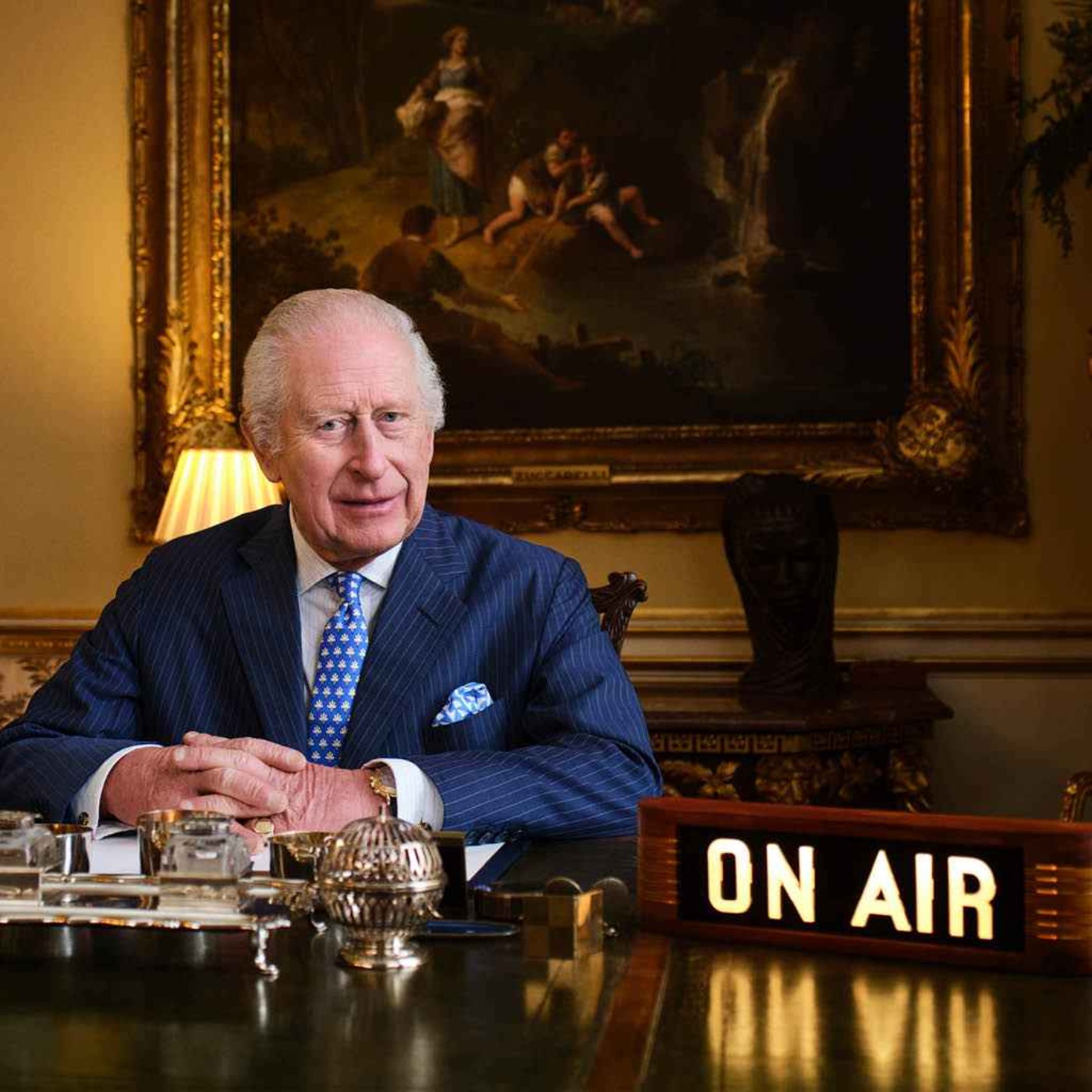
0:02Hi, it's Rachel Abbott. Welcome back to The Standard Podcast. If you're new here, hit follow and give us a rating. Recorded at Buckingham Palace in His Majesty's office, positioned next to an on-air sign, the King's Music Room on Apple Music One went live this Monday, the 10th of March. An hour of exclusive insight into his own relationship with music from around the Commonwealth, in line with Commonwealth Day. Throughout my life, music has meant a great deal to me.
0:34It has that remarkable ability to bring happy memories comfort us in times of sadness and to take us to distant places But perhaps above all it can lift our spirits to such a degree and all the more so when it brings us together in celebration In other words, it brings us joy Some highlights include the king paying tribute to Beyonce say, describing her as exceptional and congratulating the singer on her first album of the year Grammy, as well as a tribute to the late Bob Marley and an appreciation for Diana Ross. This very last song is one of my particular favourites. It is Upside Down by Diana Ross.
1:19When I was much younger, it was impossible not to get up and dance when it was played. And I wonder if I can still just manage it. clips courtesy of Apple Music there. He also gave a mention to British artist Ray. He met the singer-songwriter during a visit to Battersea Power Station in December for the Prince's Trust now named the King's Trust as he learned more about how the charity continues to help young people. To learn more my guest today is Dr Ed Owens, historian of the modern British monarchy, royal commentator and author of After Elizabeth Can the Monarchy Save Itself? Hi Ed, thanks for joining us.
2:00My pleasure to be with you. First, could you tell us more about the King's Music Room? Why is it significant from the royal family? The King has been unwell. Is this his comeback? I think this programme, the King's Music Room, points to probably two or three different things in terms of how the British monarchy is seeking to reach out and engage listeners. First of all, this hasn't been done before. So this is another example of the royals. And in this particular instance, King Charles using media to connect with an audience in new ways. And this audience is not just, of course, based in the UK.
2:37It's a global audience. I think secondly, this is also about King Charles trying to leave his stamp on this theme of commonwealth more broadly. Owing to his sickness, we haven't seen a great deal or heard a great deal from King Charles over the last year. This is, if you like, making it clear to listeners and the public at large that the king is back, is very active in undertaking public engagement, public roles. And I think finally, this is giving meaning to the commonwealth itself. The Commonwealth is meant to be united by a key set of themes, democracy, human rights, freedom, equality. Unfortunately, for the Commonwealth's history, since it really came into emergence in the late 1940s and early 1950s, it's really struggled to live up to those values.
3:27And people and historians writing about the organization have seen it as something of a hollow institution that doesn't really have an identity. But one of the things that Charles has sought to emphasize in relation to Commonwealth is its shared culture. Of course, it's an Anglophone culture that mostly unites the Commonwealth. But also, he's very keen to emphasize this issue of music and its centrality to all Commonwealth nations. And the king has paid tribute to Bob Marley. Do you think he is behind the music selection? Charles has paid tribute to Bob Marley and others as part of this music set that he has pieced together.
4:03I think it was politically expedient for him to include Bob Marley as part of this music show, and that is because Jamaica, where Bob Marley originally hailed from, is currently exploring ways to really detach itself from the British monarchy. Jamaica is a monarchy. It's one of the Commonwealth realms that maintains King Charles as its head of state. But I think it's increasingly likely that Jamaica will sever that pie and will nominate its own head of state from Jamaica in the years to come. So I think what King Charles, the palace and his advisors are signaling to the Commonwealth here is that the king takes a serious interest in these nations, possibly as a way of reminding them of the value of the links that they have both to the monarchy and to the UK.
4:49His scripted links also reflect on his own history with the Commonwealth. Why do you think that's important? I think that this particular broadcast, as well as offering the king an opportunity to run through some of his favorite music and some of the music which connects him to Commonwealth nations, I think it's also the case that it's a great way for him to showcase his long-held devotion to this institution. And the fact that he's talking about when he visited the different countries, when he met different people on his various tours of Commonwealth, it's an important reminder of the fact that he has been at the center of this organization alongside his mother, of course, previously.
5:28But it's a way, again, of leaving his stamp on this particular organization. We've got to remember that King Charles has, if you like, inherited his role as head of the Commonwealth from his mother, but it's not a hereditary role. Elizabeth II had to essentially negotiate with the heads of Commonwealth governments to ensure that the headship of the Commonwealth would pass to Charles on her death. And this is the king's way of really leaving his stamp on the organization, making it clear that he has this long-held devotion to the Commonwealth and all that it stands for. But we do get an insight into his personal tastes too, don't we?
6:07Yeah. And I think what the king is, again, trying to do here is to shed some light on who he is as an individual. He's only been on the throne just over two years. And it's still the case that I think he's lacking a bit of self-definition in that we haven't seen a great deal of him owing to the fact that he's been unwell. And I think he's trying to reveal a more human side of himself through this playlist, give us some insight into, for example, his great love of Kylie Minogue and others. There's a way, of course, of connecting with the listeners as well. It's much easier to relate to an elite institution like the monarchy when it's got this human face, and that human face is very similar to our own in terms of its music taste.
6:51Queen Camilla has her reading room book club. Would you say the King's Music Room echoes that? The King's Music Room, this idea clearly echoes what we saw with Queen Camilla and her so-called reading room, which is a charity and book club sponsored by Queen Camilla to promote literature based in the United Kingdom, but further afield as well. And again, I think this is clearly the king and queen, in terms of their public images, trying to show a human side that's relatable, that members of the public can connect to, can identify with, and getting to know a bit more about them as individuals, but also appealing to listeners, readers, in a way that makes these very elite individuals, very often detached, aloof figures, seem more real, seem more humor.
7:39That's always been really important for the British monarchy in terms of its public image. We saw this going back more than 100 years during the time of King George V, who was the grandfather of Elizabeth II. He was the first king to attend, for example, the FA Cup final, again, as a way to demonstrate a real interest in an ordinary pastime, as a means of connecting with, in that instance, working class Britons, who he had a genuine sort of fear of, because this was a period of radical revolution in other parts of Europe, where current heads of state were being toppled by the forces of social and political change.
8:14And King George V recognised that his monarchy would only endure if he managed to forge these connections.
8:36Welcome back. On Monday afternoon, the annual Commonwealth Day service was held in central London. a 2 ,000-strong congregation gathered for the event at Westminster Abbey. Ed, for anyone who doesn't know, could you explain what Commonwealth Day is? Commonwealth Day is an invented day, and it's designed to create a moment for peoples in the Commonwealth nations to come together in their constituent nations and to celebrate the work of the Commonwealth. Whether this is coming together through civic and faith gatherings, coming together in local schools, organizing other cultural celebrations. The idea is to try and give some meaning to this organization, the Commonwealth.
9:20And as I've said, the great problem the Commonwealth has is that it really lacks an identity in the 21st century. It was created out of the eminence of the British Empire, and it was meant to have a kind of social and political mission. It was meant to be about the spread of democracy, freedom, human rights, equality, but it's never managed to really be about that. There are just simply too many problems within the constituent nations and too many nations just not living up to those ideals. So it needs something at its heart. And if you like, the pomp and circumstance of Commonwealth Day is a way of trying to give this organisation meaning.
9:58And could you tell us about the Commonwealth Service at Westminster Abbey? Who attended? In attendance, King and Queen, Kate and William, Prince and Princess of Wales, notably also Duke and Duchess of Gloucester, and some other notable figures in and around the family. And again, it's a way of paying homage to the work of leaders of NGOs, of leaders of charities, of philanthropic organizations within the Commonwealth, engaged in the work of promoting some of those Commonwealth values. It's a way within this sort of spiritual context to pay homage to the fact that one of the things that unites the Commonwealth supposedly is a belief in, if you like, some of the Christian ideals around respect for one another, looking out for one another.
10:42And I think the obvious final thing is that it's an important punctuation point in the annual calendar of royal events, specifically given over to the Commonwealth. There aren't that many Commonwealth events that take place within the United Kingdom that are meant to speak to the wider Commonwealth community. But this is one of them. And there'll be other Commonwealth services going on across the world, taking place in other Commonwealth nations to celebrate the work of people engaged in service in the different Commonwealth nations. The world is quite in a stark place today, and we've seen the King reach out to US President Donald Trump recently.
11:17What do we know about the King's views on the Ukraine-Russia war? The King has been a consistent supporter of Ukraine since Ukraine was invaded by Russia more than three years ago. And I think he will be quietly outraged at the recent behavior of the Trump administration in relation to Volodymyr Zelensky and Zelensky's Ukrainian government, because he recognizes that the American withdrawal of support has put the Ukrainians in a particularly difficult position and is essentially forcing them to the negotiating table on the back foot, giving over advantage to the Russian aggressor. So I think the king will be quietly furious.
11:58Nevertheless, he can't say anything in public. To all intents and purposes, it's his role as well to help the UK maintain good relations with the United States of America. And we saw that in the signed invitation that Prime Minister Keir Starmer handed over to Donald Trump on his visit to the White House. This is a personal invitation from the king as UK head of state to the American head of state. The first time we've had an American president invited a second time for this kind of state visit. So the king has to play this sort of dual role, essentially trying to butter up the Americans to help maintain the United Kingdom's diplomatic relationship with the USA at this sort of fraught moment for international relations.
12:39And at the same time, as a private individual, he is very frustrated. And I think we saw that as also in the fact that the king, whether at his behest or at the behest of the UK government also had that audience with Volodymyr Zelensky to signal tacitly his support for the Ukrainian war effort. And do you think the king has reflected at all on how his mother would have handled the current situation in the world right now? I think in this particular instance, the king is actually more vocal and more defiant, for example, in his show, Support for Ukraine, when he met Volodymyr Zelensky, than his mother probably ever would have been.
13:14Charles, both as king, but previously as Prince of Wales, leaned into political roles where they were offered up to him. And this was something that his mother tried to avoid at all costs because she recognized that getting involved in politics, getting ensnared in politics, could lead to problems for the monarchy. The king is playing an interesting role in that respect. I think that compared with his mother, who was very quiet when it came to international relations, although she would signal through the dresses she was wearing through the bouquets of flowers behind her at key events, sort of support for countries or organisations that she was concerned about.
13:59I think the king has adopted a more forthright position here. And I think that's typical of his longer term sort of career as a royal public servant.
14:11and that's the standard for all the latest news head to standard.co.uk if you'd like to get in touch with us please do drop us a line at podcast at standard.co.uk and this podcast returns tomorrow we'll see you then
It’s Commonwealth Day and King Charles III has turned music show host to mark the occasion.
Presenting an hour-long show on Apple Music 1, the King is showcasing music from around the Commonwealth as well as some of his personal favourites.
But what is Commonwealth Day and what does this 21st-century celebration say about today’s monarchy?
On today’s episode, we’re joined by Dr Ed Owens, historian of the modern British monarchy, royal commentator and author of After Elizabeth, Can the Monarchy Save Itself? to talk about the King’s song selection and the drive to make the Royals feel more relatable…
Hosted on Acast. See acast.com/privacy for more information.


