
 Ask ChatGPT


 The Standard
25 Sep 2025 · 17m
Written by AI. May contain mistakes.

Get the gist, explore an idea or ask about something said.
 Claude
On The Standard, what are the key points of this episode?
Searching your listeningAutomatic transcript. May contain errors.
0:02Hi, I'm Charlie Duffield and welcome back to The Standard Podcast. If you're new here, hit follow and give us a rating. For all the latest news, head to standard.co.uk. Coming up later in the show. Netflix's new programme House of Guinness is set in 19th century Dublin, where sectarian violence on the street threatens to spill blood and beer after the death of Guinness patriarch Sir Benjamin. But what will viewers make of it? This is a new production from Stephen Knight, who famously gave us Peaky Blinders. People are really hoping that House of Guinness is going to be a sort of souped-up combination of Peaky Blinders and Succession.
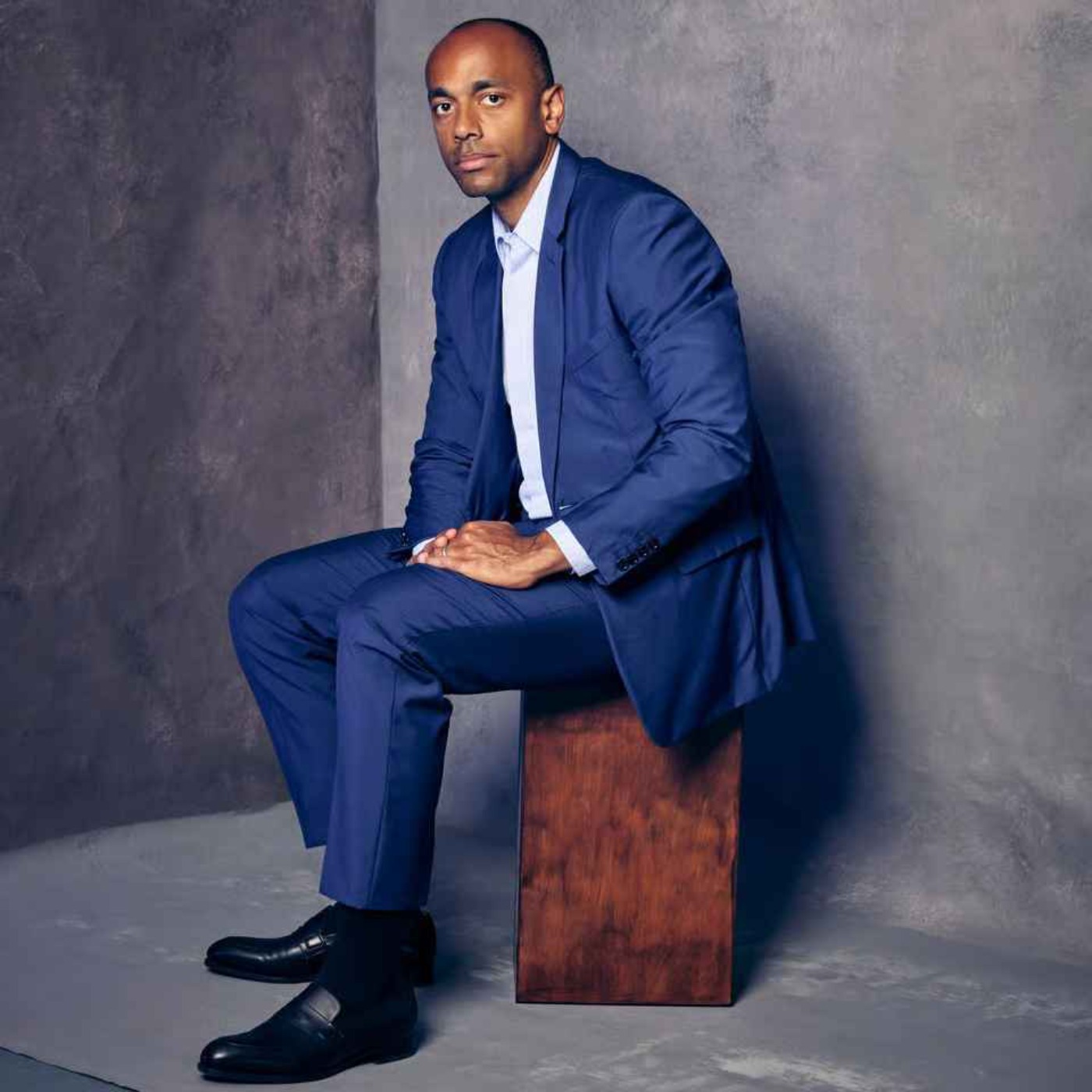
0:52But first... The first time she saw me, she said, you look like Jesus Christ on the cross. I was treated horribly. The moment I got into that arm of the vehicle, I was being tortured one way or the other. It is when you're weak that you have to be strong. That's really what kept me going. And there's no other choice. This is Noradin Bongo, he is the son of the former president of Gabon. He was captured, imprisoned and tortured during a coup to depose his father. Eaten educated and working in London as a project manager, Noradin says he was wrongly accused of embezzlement and corruption by those who seized power from his father and he has been painted as a traitor and a criminal by his father's political enemies.
1:32In the first of an exclusive three-part series, he speaks to The Standard, revealing the terrifying moment he was captured and taken away from his family. The horrific conditions he endured while imprisoned in the dungeons below the presidential palace itself, a battle for freedom in the face of lies and violence, and his fight now to rebuild his life. When the military came, I didn't realise straight away there was a coup. I was with my family and friends and some military erupted and said General Leigh has ordered for you to be put to safety because there had been an attack in one Republican Guard base.
2:08My wife and I quickly went to get the kids. It's only when we got to the armored vehicle, they asked me to give my son to my wife and then they said my wife and kids would follow after me. I tried to get out of the armored vehicle and then the guard pushed me violently back and started screaming to me, it's the end, it's finished, you're not finished. The tortures and all the stuff I remember vividly. The little gap I have is that moment I give my second son to my wife and the part I get into the armored vehicle, I think I was just entranced. I zoned out there. And I think that was the most difficult moment for me.
2:38I was treated horribly. When they actually sent me to prison, I was in an empty cell in the dark. There was one light bulb which would turn on at light, but in the day it would turn off, so it was dark in the day. And it was a completely empty cell. There was nothing to do. There was no bedding or mattress, so I'd sleep on the concrete. So they flood the cell to stop you from sleeping and get mosquitoes to bite you. And throughout that, they would starve us. They gave us one bowl of rice with one salad, not like one individual salad. And that was it for the day. There was never a moment where we were treated fairly.
3:10What kept me going was my need to get back to my family, my wife and children. Joining us now is The Standard's Claudia Cockerell. Claudia, this is a shocking story. But who exactly is Noradine Bongo? The name Nureddin Bongo probably doesn't mean much to the average Londoner. That's kind of the way he likes it. But back in his home country of Gabon, everyone knows that surname. And that's because both Nureddin's grandfather and his father were president of the country. They ruled for 57 years in total. And their rule was often described as petrocratic. and Naredin grew up in Gabon. He lived there until he was aged nine, but then he moved to the UK with his mother, who was a French woman, and attended a prep school and then went to Eton.
3:54He identifies as British and French. His mother's French, so he's also a French citizen and that's where he was born. But he says he feels very little connection with his country, with Gabon. He went to Soas University in London and began working as a project manager. He also set up a business. did lots of ventures in Gabon, but always said he had no interest in politics. He didn't want to follow in the footsteps of his father and his grandfather. And how did he end up being captured? What was he actually accused of doing? So Ali Bongo, who's Nuruddin's father, was president of Gabon from 2009 until 2023.
4:31There were elections that year. Ali was toppled in a coup. The coup was led by the Bongo's cousin, Brice Ali Yenagema. He was the head of the military and kind of seen as Ali's right-hand man. But it was claimed that these elections had been fraudulent. Those claims have kind of tarnished Gabon's elections for decades. There was this bloodless coup. Nuruddin was in Gabon at the time to support his father for the election. He was there with his wife, Leia, and their three children. And on the night of the election, after it was announced that Ali had won, military guards turned up at Nur ad-Din's house and they said, we need to take you to safety.
5:08There's been an attack on the Republican Guard. So without kind of thinking, he gets into a military vehicle with these men. He's taken to the presidential palace, which his grandfather actually built, and taken to the Republican Guard's headquarters within the palace complex and beaten. And over a two-year period, was detained, tortured. He suffered all kinds of things. He alleges he was waterboarded, beaten with a hammer, tasered on his stomach where he still has scars. The Standard has seen a letter from a doctor in London who confirmed that he believed he was tortured. And this is all because of a search for the family's assets.
5:46So the Bongos are an incredibly wealthy family. Over five decades, really, Omar really enriched himself. And he was accused of doing that by siphoning off money from the state. So Gabon is a very oil rich country. And Omar was really president when there was the oil boom. So he had all sorts of luxury properties across France. He had mansions in Paris and Nice. He had fleets of luxury cars and many of his children, he had 54 children and hundreds of grandchildren. Many of his children lived these incredibly lavish lifestyles. That really jars with the reality for many gabonese people a third of them live below the poverty line despite the country being one of the wealthiest having one of the highest gdps per capita in in africa and there's been multiple investigations into omar into his wealth how it was accrued there was a big court case in the early 2000s where bosses at a french oil company which is now dissolved called elf aquitaine testified that they'd paid Omar Bongo$30 million a year to get privileged access to Gabon's oilfield.
6:56So there's a lot of accusations of corruption and embezzlement that have surrounded this family for decades. Nuruddin has always said that he had nothing to do with it. But then in 2018, his father had a stroke that left him pretty incapacitated for months. He wasn't really seen in public. And this led to lots of people saying he wasn't fit to run the country. In January 2019, there was an attempted coup and he was feeling like his position was really threatened. So he actually pleaded with Nuruddin to go back to Gabon and work for him as his close advisor. Nuruddin told us he really didn't want to do that, but he felt he had to out of loyalty.
7:38So he and his family moved back to Gabon and he held that position for a couple of years before resigning. Now it's in this period that the Bongo government saw Nuruddin as part of this kind of corrupt structure where they would siphon money off from the state. Nuruddin completely denies that. He said that he wouldn't have been able to embezzle even if he'd wanted to. He says that he was made into this political scapegoat. He was held up as a symbol for all of his family's previous wrongdoing. So what led to his eventual release? Nouradine was held in prison for nearly two years. In this time, he was brutally tortured.
8:18He alleges his mother, Sylvia, was arrested on charges of embezzling, money laundering. They were held together in a room within the presidential palace for months. Sylvia was also tortured. It was really tough on her to the point where in May 2025, she tried to kill herself. At that point, the pair of them were taken to a military hospital and international calls were kind of intensifying at this point. Zach Goldsmith stood up in the House of Lords and said that we needed to address the issue that the Gabon is a Commonwealth country and this shouldn't be happening. Lots of leaders from surrounding African nations were calling on General Alighi, who's now the president, to release them.
8:58So in May, they were released, they flew to Angola, and then Nuruddin and his mother were flown to London, where Nuruddin's wife Leah was with the three children. Can you reveal anything about the next two parts of this story? Part two really goes into detail about what happened to Nuruddin when he was being held in the bowels of the presidential palace and in Libreville, in the capital of Gabon's central prison. And it also goes into Nur ad-Din's secret weapon. So a few months into his detention, he managed to smuggle in a pair of spy glasses, glasses with an inbuilt camera, which allowed him to begin recording his captors.
9:39And the standards have seen some of this footage. It's pretty extraordinary. It's his captors admitting to abusing him. It's conversations he has with President Oligi, all sorts of things which he hopes will help him to tell his account, his side of events, because it's important to note that President Oligi and the coup leaders deny all allegations of torture. They've described them as slanderous. They say that Nuredine and his mother were kept in good conditions. And then part three looks at Nouradine's wife Leia's fight for his release. So Leia and the children were held for two months under house arrest in Gabon by military guards.
10:15Again, they said she was technically free, but she says she wasn't allowed to leave the house. They weren't allowed to leave the country for another three months. But then in January 2024, Leia and the children got back to London and she began campaigning for Nouradine and Sylvia's release. So she was reaching out to all sorts of NGOs, heads of state, and says she really came up against a lot of brick walls. You know, in France, the bongos are quite well known because Gabon used to be a French colony. And they're seen as this sort of toxic subject. So she said that no NGOs really wanted to help her, but she campaigned tirelessly for their release.
10:50Finally, is there anything else you want to add? I think there's these two sides to Nouradine. On the one hand, he's the son of the former leader of Gabon. His father and his grandfather were president. He's part of this political dynasty that really has a bad name in many places. Whereas in London, he's an old Etonian. He went to Eton alongside royalty and Olympic rowers, had this very gilded childhood. And then was living in London as a project manager, as a businessman, and really says that he didn't identify with his gabonese side he identifies as british so it's that tussle between these two sides of his identity and him being dragged into the one that he's been trying so he says to to leave behind for the last decade let's go to a break coming up in part two trouble is brewing in the house of guinness but who will keep their head we'll see you back here in just a moment Welcome back.
11:54Today a new series, House of Guinness, from the creator of Peaky Blinders, launches on Netflix. Here's a clip from the trailer. Dearly beloved, we are gathered here today to mourn the death of a man who brought peace and prosperity to the people of Dublin.
12:20And of course our thoughts and prayers are most of all with Sir Benjamin Lee Guinness's four children.
12:33I, Sir Benjamin Lee Guinness, hereby give all my brewery concerns to my two sons Edward and Arthur, jointly and equally. It's 1868 in Dublin where the unimaginably wealthy Guinness family run the city. Years after the potato famine, Ireland yearns for freedom, but there's a filial power struggle to contend with first and foremost. The question is, can writer and producer Stephen Knight recreate the magic of Peaky Blinders? Joining us now is The Standard's culture writer, India Block. India, what's this show about? There's kind of two strands for that. on the surface level it is about the history of the guinness family specifically the wing of the family that was brewing that stout that we all know and love so much recently become very popular with splitting the g and all that so it's set in sort of the mid 1800s when the patriarch sir benjamin guinness dies and leaves his four children to try and wrangle his empire the guinness family were Protestants.
13:34They had very close ties to the British Empire because that was the way of sending their product around the world at the time. But then at this point in Ireland, and kind of still, there is also the Catholic section that are quite anti the company that are causing disruption. And so we've got these kind of two layers at the one side, the family inheritance, wrangling and drama. And then that's set across this wider background of sectarian violence and uprising. It's been compared to standout programs such as Succession or Peaky Blinders, but do you think it matches these shows? I think it's like your mileage may vary.
14:12In terms of Succession, it's really not going for that tone at all. It's not sort of about witticisms and backstabbing so much. But it is really interesting that history doesn't repeat, but it rhymes that you do get these dynasties that grow and then a sort of main figure dies and you have multiple children vying for control and for power. Murdoch's not the only person that has happened with. Obviously, Succession is kind of loosely based off the Murdoch family intrigue. Similarly, Peaky Blinders, I mean, it's kind of not the same. And I think this is where I came across watching it to review is that I kind of thought we'd get this sort of Tommy Shelby character in James Norton's.
14:59Sean Raftery is kind of the foreman, the consigliere to the House of Guinness, their enforcer. So he's a bit kind of rough around the edges and I think supposed to be sexy. Personally, I think part of the appeal of Thomas Shelby and the Shelbys is that they are kind of this sort of gang that are out for themselves and the family. Whereas in House of Guinness, Norton's character is more someone who's getting his hands dirty on behalf of the family. This tension that is really interesting and we're very interested in Irish culture at the moment. But I don't think it quite gets to the Irishness of the situation.
15:40It was also not filmed in Ireland. It was filmed in Liverpool. In your review, you talked about Stephen Knight's tried and tested formula. What do you mean by that? He's got lots of needle drops in there of sort of modern music. But you see Fontaine's, you've got kneecap, which happen at dramatic moments. So kind of slow motion walking somewhere or a really big violent fight that gets to the impact of what these huge historical events have.
16:10And that's The Standard. For all the latest news, head to standard.co.uk. if you'd like to get in touch please do drop us a line at podcasts at standard.co.uk we'll be back here tomorrow at 5 p.m we'll see you then
In this week’s special report, in the first of an exclusive three-part series, Noureddin Bongo tells The Standard’s Claudia Cockerell about his hell after his family were ousted in a coup in Gabon, Central Africa.
And in part two, Peaky Blinders creator Steven Knight is back with a period drama that applies his tried and tested formula to 19th-century Ireland. The Standard’s Culture Writer India Block joins us to review Netflix’s new show House of Guinness, which has been likened to familial saga Succession.
Hosted on Acast. See acast.com/privacy for more information.


