
 Ask ChatGPT



Written by AI. May contain mistakes.

Get the gist, explore an idea or ask about something said.
 Claude
On The Standard, what are the key points of this episode?
Searching your listeningAutomatic transcript. May contain errors.
0:02Hi, I'm Charlie Duffield and welcome back to The Standard Podcast. If you're new here, hit follow and give us a rating. For all the latest news, head to standard.co.uk. Coming up later in the show, he's had seven UK number one singles and two UK number one albums. Now, Justin Bieber is back with a surprise record called Swag. If you're a Justin Bieber fan and you want to hear him singing about his mild pain, then there's a lot there.
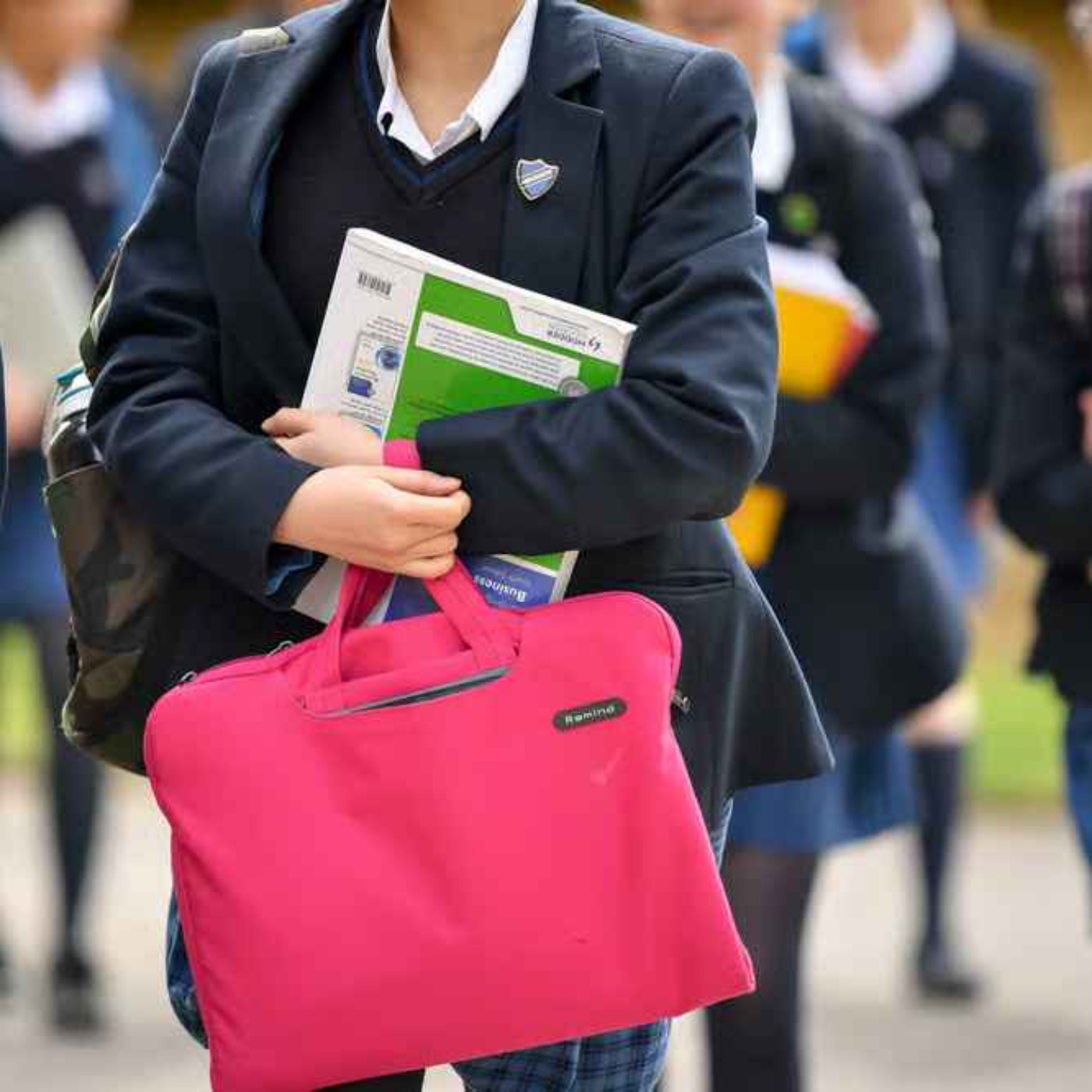
0:39But first, nearly 9 million people populate the city of London, and 22.7 % are under the age of 18, according to the most recent census data. Yet many of the city's primary school children have only a handful of classmates. In The Standard's latest special report, reporter Jacob Phillips found that more than 30 primaries in the capital could shut or merge before September. And that's just the tip of the iceberg. Politicians have warned that the problem is only going to get worse as families continue to be driven out of the city. In 2023, London schools crisis was discussed in Westminster, but no further action has been taken.
1:25I spoke to Jacob to find out more about why this is happening, what kind of city we'll be left with if London becomes a childless metropolis, and whether the issue is unique to the capital. So, Jacob, how many schools are set to close according to the Standards' investigation? So the standard has had a look at the figures and we've run through all the councils and had a look into just how many schools may be facing closure or may have to merge this academic year alone. And our calculations have found that over 30 schools, all primary schools, I believe, are due to close in the capital this year or by the end of this academic year due to this exodus of families from London.
2:05So I believe that those schools are from at least 12 London boroughs all over the capital, although mostly in central London. But we are now seeing boroughs such as Newham and Hounslow having similar problems to an issue that used to just be in Westminster or Lambeth and Hackney. And can you talk us through the reasons why this is happening? It's a bit of a perfect storm. The decline in birth rate in London is definitely a huge factor. So put simply, we're just not seeing as many children born in the capital as we used to. There's something like 20 ,000 fewer live births in the last 10 years from 2012 through to 2022.
2:40But there's a huge combination of factors. So Brexit, the COVID pandemic and the cost of living crisis have all pushed families out of London. When we speak to campaigners and we speak to teachers, they really do talk a lot about how the lack of affordable housing as well is a real key issue. And we're seeing families driven much further afield, zone six and beyond, as one teacher told me. So who did you speak to for this story? We've spoken to a wide range of teachers in the last few years about this issue. Many who've now lost their jobs as the schools have closed, as well as parents who are campaigning to fight to keep their children at a local school and politicians.
3:16So we're seeing a really varied situation across the capital. In Hackney, we're seeing very few children turn up to new classes. It's the same situation in Wandsworth, where it's something like there was one school where I think only eight children turned up in reception this year. We've seen other cases, one teacher in Hackney, Carly Slingsby, who's told me about how now her school has been kind of given the stamp for closure. She's only got two children left in her class. The school's become such a graveyard that haven't emerged together sort of years one to five since there's about eight children across the whole school.
3:49There's basically only year six left because all of those children will obviously move on to secondary school next year. So what can start off as kind of having half empty classrooms at the beginning of the year as soon as the doubts come in. and councils start to think about closing schools, it can really shift and pupils can drop off quite quickly as parents search for alternative options. And how are local councils involved? Well, local councils will run schools or they will fund state schools. So they are ultimately the ones responsible for whether the school will be open or not. They are now facing the difficult decision with this huge drop in birth rate or drop in pupil numbers.
4:23They're having to choose which schools they want to keep open, which schools are in the biggest deficit and maybe they can no longer fund. So town halls across London are having to make the decision on whether to keep schools open, often half-empty schools, sometimes really loved community schools that might be Catholic schools or they might be smaller community schools, many with a high number of children with special educational needs. That's the kind of council involvement. Is this just a problem which is affecting London? We are seeing this happen in other areas of the country and actually we spoke to the Education Secretary Bridget Phillipson who was explaining that they are seeing this fall in birth rates in other areas of the country and that other places may follow.
5:01London's unfortunate situation, there is a national decline in birth rates. On average, when they put all of the numbers together, I think it now comes out at about 1.2 children per family. That obviously doesn't mean you just have a fraction of a child. It means that most families will have one child or there might be a few with two children. But the definite trend is that we're seeing more families with fewer children. That is something that is happening all over the country. It's definitely exacerbated by that perfect storm of factors in London and a lack of affordable housing. What will the long-term impact on the capital be?
5:33It's been a real identity crisis, I think, for London with so many schools closing. It's obviously not just this year where we've seen schools close, but they seem to be closing at an accelerating speed. Huge questions remain around what will happen to the school buildings, whether London will become a childless city, and ultimately who the City of London is for. it's becoming harder and harder to raise children here. The demographics of London are starting to change and therefore the amenities and things that come with that are changing as well. So we've had politicians raise concerns about whether nurses and train workers, people who run the day to day functions of London might be driven out of the capital as well.
6:12In my opinion it's definitely the identity and soul of London that may be at risk if we continue to close schools. That seems to be what ultimately this will come down to and potentially seeing London hollowed out if there's not more affordable housing in the capital and measures taken to keep schools open. Finally, how can schools in London be protected? So campaigners have spoken about a number of measures to try and keep schools open despite sort of these drops in pupil numbers. So one of the big things that there's been a lot of lobbying for has been a shift from the way that schools are funded.
6:45So currently schools receive funding depending on how many pupils they have. They get a set amount of money per pupil. There's campaigners who want to see that change so that maybe you get a set amount of money per classroom or maybe for the size of the school more generally. So therefore when pupils suddenly disappear one year, the school doesn't quickly fall into deficit. And then more widely, there's been a lot of parents, teachers, campaigners who are calling for just much more affordable housing in the capital, trying to make it more affordable for families to live and easier for them to stay rather than than being driven to cities outside of the capital or areas sort of further afield where they're no longer able to walk to local schools or well even be within an hour of some schools.
7:30Let's go to a break. Coming up in part two, Justin Bieber is back with his seventh studio album and it's his most personal to date. We'll see you back here in just a moment.
7:50Welcome back. He rose to fame in his early teens and is best known for songs such as Sorry, Baby and What Do You Mean. But now the Canadian singer Justin Bieber has released his first album in four years called Swag. The 21 track seventh LP was released in a surprise drop and Bieber has referred to it as some of his most personal music yet. The follow-up to 2021's Justice features the singer reflecting on his experience as a husband and father, following online speculation around his marriage to wife Hayley Bieber. He's also been under intense scrutiny, with growing concerns surrounding his mental health.
8:35Back in May, Bieber addressed rumours that he was an alleged victim of Sean Diddy Coombs, but his rep stated this was not the case. The 31-year-old posted teasers on Instagram as mysterious billboards were put up around the world in destinations such as New York, Atlanta, Los Angeles and Reykjavik. The new record includes tracks such as Therapy Session, Dad's Love and Devotion and The Standards Head of Culture, Martin Robinson has had a listen himself. Martin, this is Bieber's first album in four years. Does it differ to the music he is best known for? No, it's not a great departure from what people know of Justin.
9:19There's obviously been a lot of publicity around him and worries around him and he's seemed to be in a sort of dark place. So I was kind of anticipating something that might be raw and revelatory but it's pretty much classic Justin Bieber really. It's a very sort of smooth R &B album, quite a romantic album. It's called Swag. It almost plays its name. So I think fans are going to be happy, but the casually interested music person might not find much in it. And what did you make of it? Did any tracks stand out? There's a few good ones. There's one called Daisies, which seems to be about, people are speculating that it's about his wife, Hayley Bieber.
9:59It's sort of about whether someone loves him or not. These are kind of classic tropes of this kind of smooth R &B music. There's no specific references to any of the tabloid fodder. I think almost some of the most interesting stuff is some of the interludes between the tracks, which is quite a harsh thing to say. He speaks to this comedian called Drusky in those chats, which are quite amusing. In one of them, they specifically address a lot of the sort of photos that he's been putting on his social media, the ones where people got really worried because he looks really sort of like thin and in trouble.
10:31They talk about this and Bieber brushes it all off and just says it felt like he's had to go through his struggles as a human being publicly. And that sort of weighs on him. And that's kind of about it. There's no great sort of revelation about some kind of like drug hell or mental breakdown or anything like that. It sort of feels like he took a moment to explain it, but there's nothing much there anyway. This album is said to be intensely personal. Did that come through when listening? I've noticed online there's a lot of people just rinsing through every lyric and every track, trying to look for evidence of what's really going on in his world.
11:06To be honest, I think he's selling the album a lot around his family, lots of pictures of his wife and child. And it's not a dark and moody record with lots of revelations. It's kind of just quite a sweet, romantic one that's about his family. So I imagine that will quite disappoint some people. You've already mentioned the photos on social media, which have really got people talking. Do you think they were part of his creative process or something unrelated entirely? He sort of says in that bit I mentioned that people are always asking if he's okay. Drusky sort of says this is just you doing your own thing on social media.
11:42So they're kind of presenting it as if all those photos were just little moments rather than sharing his sort of pain. He's kind of like, I don't think there are cynical ways to get attention. I don't think there were particular cries for help. I think he's probably been a bit bewildered by the amount of attention they've got. But at the same time, if you do post that stuff out, and he has showed himself crying and things like this on there, people's interest is going to spike. So he's kind of almost, on the record, he's kind of brushing it off as like, what are people worried about kind of thing?
12:10This is just me doing my thing and being a human through different struggles. But I mean, if you're sharing this publicly, then you're stimulating that kind of interest. Certainly, there's stuff going on with him, clearly, you know as you'd expect from any very famous star who's been very famous since they were very young anyone who's looking for any kind of insight into the p diddy trial they're going to be disappointed and with 21 tracks is that too long for an album well track 20 is called too long for a start that does resonate i mean as i said some of them are sort of like throw away little moments so they're not really tracks anyway it feels like a bit of a slog it feels like a bit of a sort of fan only thing.
12:46I think if people just listen to the first three tracks, all I can take days is a new con, you kind of get the idea. They're accomplished records. These are well produced and well written tracks. For my money, he's not a great artist. He's not that interesting. And for just the casually interested like me, I thought, oh, he's been to hell and back. Let's hear about that. This could have a bit of an edge to it. It kind of doesn't really have that. I'd say first three tracks and then you can skip it.
13:13and that's the standard for all the latest news head to standard.co.uk if you'd like to get in touch please do drop us a line at podcasts at standard.co.uk we'll be back here on monday at 4 p.m we'll see you then
In The Standard’s latest special report, reporter Jacob Phillip has been investigating the capital’s vanishing schools, with more than 30 primaries in the capital set to shut or merge before the next academic year. He joins us to unpack the reasons behind this trend, which is also affecting other parts of the UK.
And in part two, The Standard’s Head of Culture, Martin Robinson, reviews Justin Bieber’s new surprise album, Swag - which the Canadian singer says is his most personal to date.
Hosted on Acast. See acast.com/privacy for more information.


