
 Ask ChatGPT



Written by AI. May contain mistakes.

Get the gist, explore an idea or ask about something said.
 Claude
On The Standard, what are the key points of this episode?
Searching your listeningAutomatic transcript. May contain errors.
0:04Hi, I'm Julie Banks and welcome back to The Standard Podcast. If you're new here, don't forget to hit follow and give us a rating. Coming up. The court hearings in this country are held in public and we should like to see as much as possible of the legal and factual argument undertaken in open session with suitable caution being exercised by the advocates to ensure that confidential material is not disclosed. As the Duke of Sussex's appeal hearing gets underway at the Royal Courts of Justice, the Standards Court correspondent Tristan Kirk is here to explain exactly what Prince Harry is hoping to achieve.
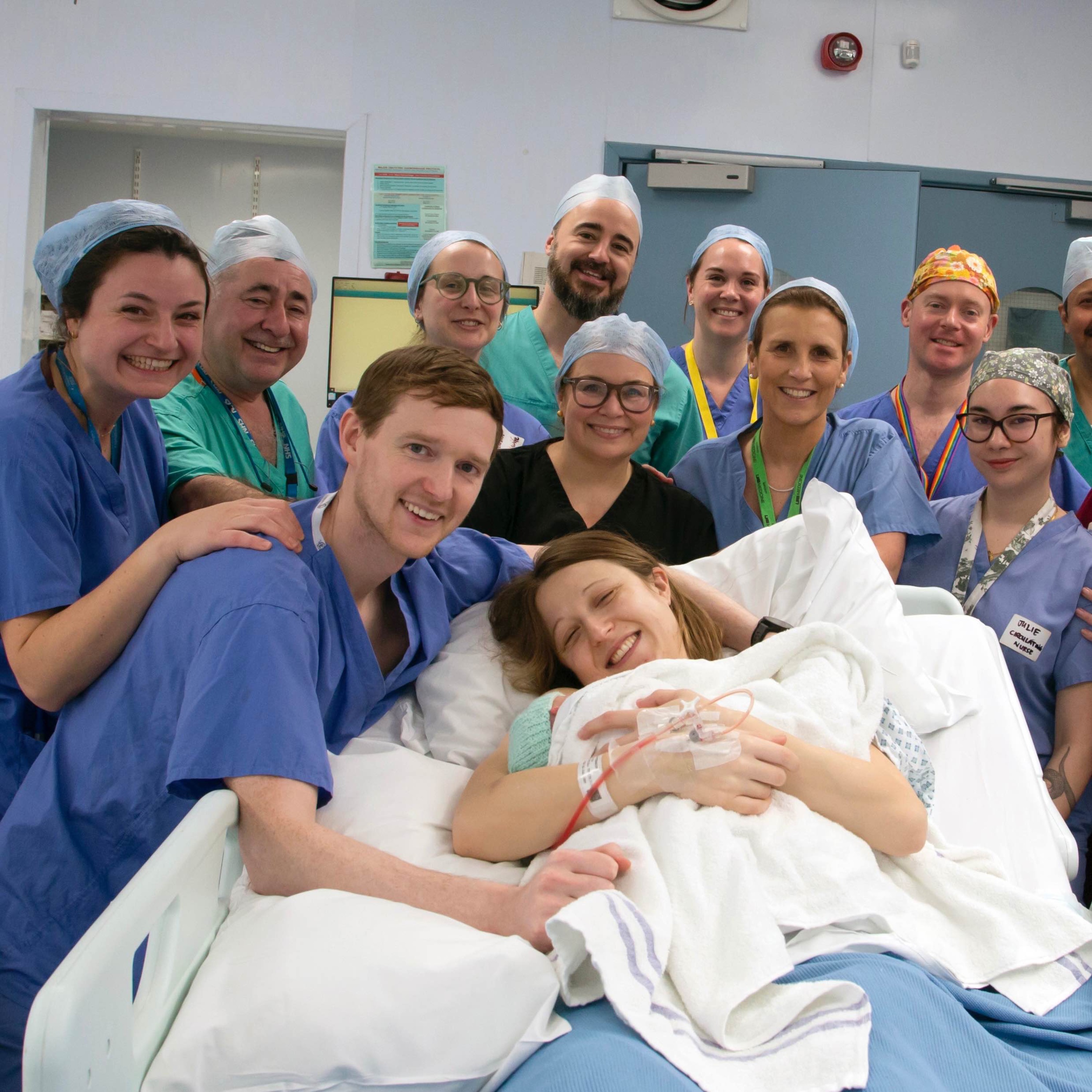
0:52But first, a baby girl has become the first UK baby to be born following a womb transplant, prompting an emotional response from one of the pioneering surgeons involved in making it happen. Here's Professor Richard Smith. I went back, obviously, to see mum and dad and baby a week later, just before they went home. And I have to say, I walked out of the room in Queen Charlotte's with tears streaming down my face. 25 years down the line from starting this research, we finally have a baby. Astonishing, really astonishing. Professor Smith and his fellow surgeon, Isabel Caroga, performed the procedure on Grace Davidson, who received the donated womb from her sister Amy.
1:35It was the first of its kind in the UK and led to baby Amy Isabel Davidson arriving via caesarean section at Queen Charlotte's and Chelsea Hospital on the 27th of February. Amy Isabel was named after her auntie and the surgeon who perfected the surgery technique. Daniel Keane is health correspondent here at The Standard and is with us now. Daniel, how much of a significant breakthrough is the birth of baby Amy? so this is both a personal miracle for the family involved and also a massive vindication for a team of surgeons and scientists who've been working for years even decades to get to this place so a massive massive deal what this could lead to is potentially 20 to 30 womb transplants every year in the uk in the future helping women who were born without a functioning womb you know those who have lost them to cancer or other conditions.
2:29Maybe even something that's available on the NHS in the future. The health secretary has certainly hinted at that. So this is a massive milestone. You sort of alluded to it there, but what sort of people may be able to benefit from this type of procedure in the future? I mean, can you tell us a little bit more, for example, about the condition that Grace, the mum of baby Amy, actually had? So she was born with Maya Rokitansky-Kusterhauser, which is known as MRKH. It's a very rare condition so it only affects one in every 5 ,000 women and it means that they have an underdeveloped or missing womb but their ovaries are intact and they're still able to produce eggs and female hormones and that means that they can actually conceive via fertility treatment.
3:14It is a possibility. So in this case Mrs Davidson and her husband had actually undergone fertility treatment to create embryos. These were then frozen for IVF at a clinic in central London, and then she had surgery to receive the wound from her sister. So it's a very complex procedure. It's quite expensive. It requires a really dedicated team with a lot of expertise from the surgery side. But the estimates are that around 15 ,000 women of childbearing age in the UK could benefit from this. So as long as you're eligible, this could be a huge deal for a lot of women. And Daniel, what can you tell us about the work of the two surgeons who are at the heart of this pioneering procedure?
3:57Professor Richard Smith and Dr Isabel Quiroga were at the centre of all of this and they've been involved in research for decades so it's a massive moment for them. Professor Smith in particular had actually presented research 25 years ago on what he called the vascular patch technique which was a way of connecting major blood vessels in the body. And he used that technique to prove that a womb transplant could work in rabbits. And he said, this will be ready to move to human patients, you know, in the near future. The medical community wasn't interested at the time. And now, after 25 years, he has held the first baby, you know, in his hand, born from a womb transplant.
4:38So it's a huge moment for him. Dr. Quiroga has come from Spain to start her medical career in the UK and she's spoken very movingly about why she decided to specialise in transplant surgery and how transformative it can be for her patients. And her long-term goal, she's always said, was to give women with uterine infertility the kind of hope and choices that they deserve. And that's exactly what she's accomplished here. So onwards and upwards for both of them. It was obviously an emotional outcome for all involved, including the doctors. And we heard a clip from Professor Smith at the start of the podcast.
5:11What's next for the Davidson family? Absolutely. So Grace Davidson has said that she definitely wants to have another child, which is really, really promising. And I think both of them will want to be at the forefront of promoting this fantastic research. It's a fantastic personal moment for them, but they will always be a symbol of hope for thousands, tens of thousands of women around the UK. And I suspect they'll want to continue being the face of that. And what about Grace's sister, Amy, who donated her womb? It must have been a special moment for her too. So Amy wasn't actually at the birth, but in an interview yesterday, she said she was only a phone call away.
5:47She said that watching Grace and Angus become parents had been an absolute joy and worth every moment. And she said she's really encouraged people to donate their womb when they can. She said she didn't hesitate about doing it when it became a possibility. And yeah, she grasped the opportunity with both hands. And I think that's another important thing is showing people the magic of donation for this procedure. And her voice is really important in that. And finally, what does the future hold for the charity behind this incredible story? So this is a significant moment for Womb Transplant UK. They've actually already carried out four womb transplants in the UK.
6:31This is the first for Mrs Davidson, obviously, and then another three on women who received wombs from deceased donors. They've said they've got enough cash for two further operations and they'll be fundraising to carry out more. And the whole country today has been talking about this story. So for the charity, I mean, this is just huge. They're hoping more donations will come in and they will be able to carry out more procedures and help fund them.
6:58Let's go to a break. Coming up in part two, the Duke of Sussex is back in London, appealing a High Court decision to uphold a 2020 move to scale back his UK security arrangements. Tristan Kirk, the Standards Court correspondent, will be here to tell us more. We'll see you back here in just a moment.
7:26Welcome back. The Duke of Sussex arrived at the Royal Courts of Justice in London this morning to appeal the previous decision to downgrade his security arrangements for his visits to the UK. Tristan Kirk, the Standards Court correspondent, has been following the case and joins us now. Tristan, what's the background to this story? The background to this story is that Prince Harry in 2020 decided with his wife Meghan to step back from his duties as a working member of the royal family with a view to leaving the UK and moving across the Atlantic. With that came a change in his arrangements regarding his security and his family's security.
8:07And a decision was taken at that stage that since he was no longer a working royal, then he would be subject to different arrangements on his security. Prince Harry disagrees fundamentally with the way that that decision was taken and that the way that a committee which looks at these kind of arrangements took a decision in his case in a bespoke way individually and different to the way that decisions are taken for other VIPs and people in his kind of position. Essentially the committee decided that he needed that bespoke arrangement because of his particular circumstances and Prince Harry has brought a case to the Royal Courts of Justice, challenging the way that that decision was made.
8:53And how much of the case will the public be able to hear? Well, this case is being live-streamed by the Court of Appeals. So actually, a member of the public can tune in via the Court of Appeals YouTube channel and watch some of the proceedings taking place. Now, obviously, this is a case which involves security, and not just security, but a royal family members' security and matters that involves high sensitivity and confidential information. So some of the case will be heard in public and the public can tune in to listen to it. Some of it will necessarily be heard in private by the judges, which means that the public will be excluded and members of the press from hearing that part of the case.
9:39That's due to be on Wednesday for something like four hours. The judges will hear that sensitive information. We don't know what that covers. But what we do know the case involves is arguments being put forward around Prince Harry's security and particular incidents are being raised. There was the now notorious traffic incident in New York when they say they were pursued by the paparazzi. And there's also a fairly well publicised threat to Prince Harry's safety from Al-Qaeda. So that gives an indication of the levels of argument that are being made that Prince Harry's security is very, very important and needs to be considered in the right way.
10:24Is there anything you can tell us about the committee behind the decision-making process? This is an area that really this case involving Prince Harry has brought to light the way that security and royal security particularly is dealt with in a way that I don't think the public necessarily knew about before then. There's a committee that operates under the guidance of the Home Office, but makes independent decisions. It's known as RAVEC, and it deals with security decisions regarding members of the royal family, VIPs, people of high significance within our society. And what they do is that they assess the risk posed to that particular individual and then make a decision on what level of security they are entitled to.
11:15And obviously that security is usually provided through the Metropolitan Police in its role providing royal and diplomatic protection. But it's a committee that people don't necessarily know an awful lot about what they do and how they make their decisions. If the ruling goes against Prince Harry again, will that mean his rare visits back to the UK will likely become even more infrequent? Well, one of the arguments that Prince Harry's consistently put across in this case is that his security arrangements are very, very important to him and that he considers there to be an elevated threat against him and his family, his wife and his children.
11:56And that's why he is so keen for those arrangements and that security to be put on the right setting so that he can be assured of his and his family's safety when he visits the UK. And it is noticeable that his visits to the UK from their home in the US have been relatively few and far between. Now, obviously, if he loses this case, then the decision around his security arrangements will remain the same. as it is at the moment. And that probably means that the level of visits and the considerations that he has to take into account will stay the same and on a rolling basis, potentially for the rest of their lives.
12:40If it goes the other way, then I think we can expect the decision around security to go back to the committee to make that decision again. And we may well be in a different position in terms of Prince Harry visits to the UK and whether it's considered to be safe. But it's worth saying and remembering that although there's been an enormous amount of noise around Prince Harry, Meghan and his family leaving the UK, he remains one of the most high profile members of the royal family. That hasn't changed regardless of his status as a working royal. And as a result of that position that he occupies as potentially one of the best known members of the royal family, he will always be a security concern and a potential target for people who would want to harm them and the country.
13:33And so that's the background to this. And that's why this case is being eagerly watched and is so important, particularly to Harry. he's turned up to the Royal Courts of Justice today which is an unusual move for somebody in a judicial review particularly in his kind of position he didn't have to come but he has which really underlines the kind of importance that he places on this case And that's The Standard For all the latest news head to standard.co.uk and please do drop us a line at podcasts at standard.co.uk This podcast will be back tomorrow at 4pm we'll see you then
A baby girl has made history as the first child in the UK to be born from a womb transplant. Amy Isabel Davidson was delivered at the end of February after her mum, Grace, received the womb from her older sister, Amy, in 2023. The pioneering transplant procedure follows decades of work by surgeons Professor Richard Smith and Isabel Quiroga.
Daniel Keane, Health Correspondent for the Standard joins us to offer an insight into this medical breakthrough and who might be able to benefit from this procedure in the future.
Plus, the Duke of Sussex arrived at the Royal Courts of Justice in London this morning, to appeal the previous decision to downgrade his security arrangements in the UK. The Standard’s Court Correspondent, Tristan Kirk, is on hand to explain Prince Harry’s case and how it might affect his future visits with his family.
Hosted on Acast. See acast.com/privacy for more information.


