
 Ask ChatGPT



In this episode of The Standard, host Charlie Duffield discusses the UK government's new sanctions aimed at curbing illegal migration through people smuggling. The episode features insights from Rachael Burford, The Standard’s Chief Political Correspondent, and John Darlington, director of the World Monuments Fund, who provides context on the history of the Ragged School Museum in East London.
Written by AI. May contain mistakes.

Get the gist, explore an idea or ask about something said.
 Claude
On The Standard, what are the key points of this episode?
Searching your listeningAutomatic transcript. May contain errors.
0:02Hi, I'm Charlie Duffield and welcome back to The Standard Podcast. If you're new here, hit follow and give us a rating. For all the latest news, head to standard.co.uk. Coming up later in the show, this week's Hidden London feature shines a spotlight on the social history of London's Victorian East End. For me, it's that real essence of spirit of place and how that comes through in a museum setting, so you can imagine what it's like. But first, migrant smuggling gang leaders and companies supplying small boat equipment will face having their assets frozen and being banned from Britain this week in a crackdown on illegal channel crossings.
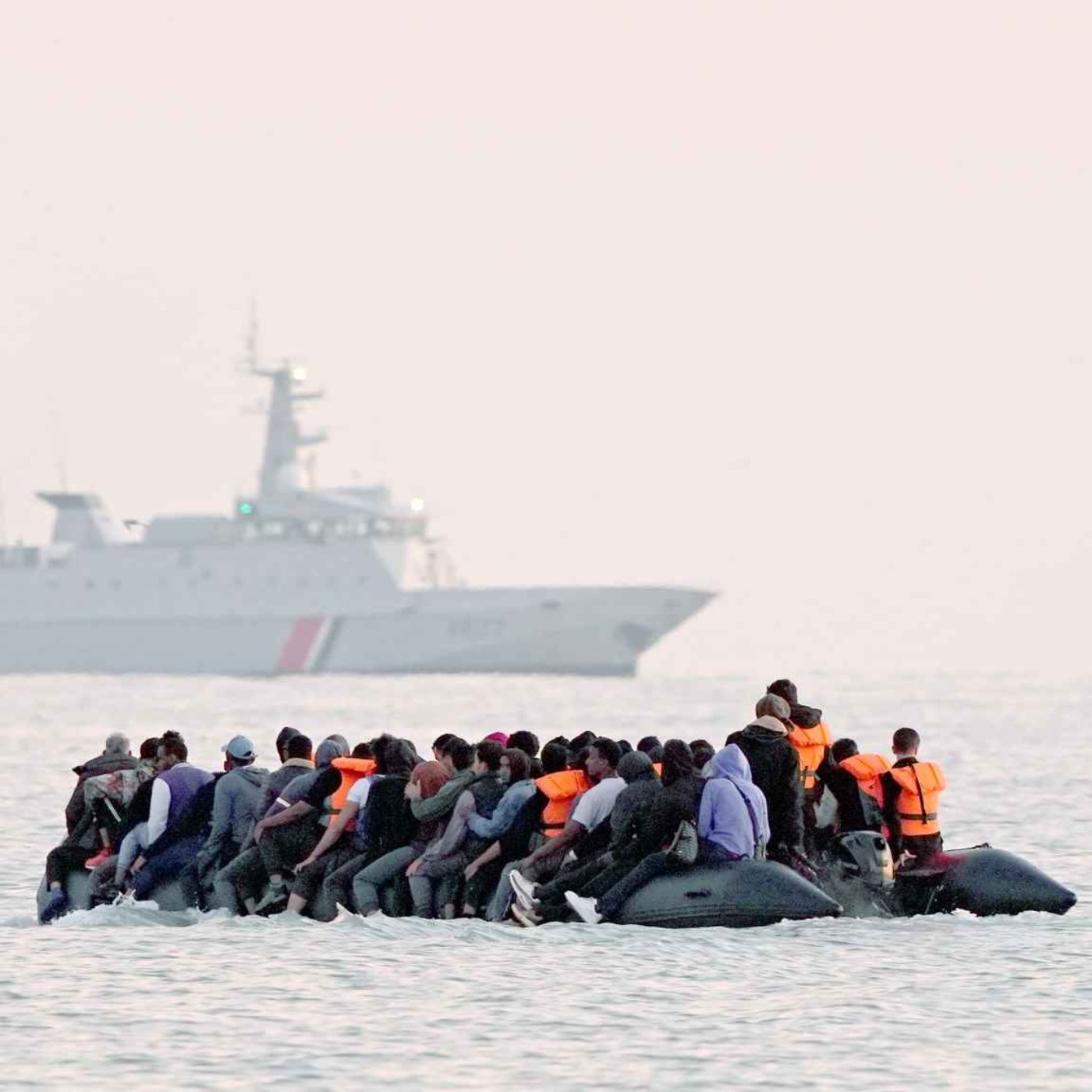
0:50The Foreign Secretary David Lammy has announced the first wave of sanctions on people trafficking gangs and their enablers, like financiers, fake passport suppliers, corrupt police officers and public officials, as well as firms selling the equipment used to make the journey from France to the UK. The aim is to tackle people smuggling, which is an ever-growing concern for the government. Here's what Prime Minister Keir Starmer had to say about it, speaking back in January. I'm absolutely determined that we're going to stop people crossing the channel in small boats. That is being run by gangs who are making a huge amount of money from the vile trade and I was chief prosecutor for five years and one of the things that I learned then was if you're going to smash a gang that's driven by money, follow the money.
1:42According to Home Office data, in the first six months of this year, more than 20 ,000 people crossed in small boats, which is an increase of nearly 50 % on the previous year. Speaking to BBC Radio 4's Today programme, Foreign Secretary David Lammy called the plan the first sanctions regime against irregular migration anywhere on the planet. The first wave of sanctions on smuggling gangs and their enablers will be imposed on Wednesday. And it comes as two men have been arrested by the National Crime Agency after a luxury yacht carrying suspected illegal migrants was intercepted in the English Channel.
2:22Joining us now is The Standards' Chief Political Correspondent, Rachel Burford. First of all, let's recap why so many people are trying to come to the UK in the first place. There are lots of reasons why people are trying to come to the UK. Obviously, we see a lot of people coming from war-torn countries, places where there is significant problems with their government, places like Eritrea, Afghanistan. They're coming across because English is a common second language for a lot of people. So they think perhaps my chance of getting work here is much higher than it is in perhaps other European countries that they will have travelled through.
2:59They may have connections to the country because obviously we've got a lot of people that hail from those countries already living here and they may have family or friends that they know who are living here and they're coming here for a better life. There are a lot of people coming as well to work. They are exploited when they get here. You see Albanians and Vietnamese people who are perhaps not going from dangerous countries necessarily, but countries where they cannot make money and they feel that they will get a better life in the UK, or they're sort of promised something by these smuggling gangs.
3:27They're promised a better life. That doesn't always materialise. Obviously, Britain is seen as a country where we do have freedom of expression and freedom of speech. And there are a lot of brilliant things about this country that your human rights will not be impacted in the same way as they would be if you stayed in your home country. Many of them are coming simply for a better life and simply to improve on the situation that they find themselves in. So what are these new measures being introduced tomorrow and what makes them a world first? Britain will be the first country to implement these kind of measures in a bit to crack down on people smuggling gangs essentially, those people that are bringing in migrants across the channel predominantly in lorries and in small boats.
4:11So tomorrow the Foreign Office is going to impose the first wave of sanctions on people trafficking gangs and their enablers. So this can include people financing these gangs, fake passport suppliers, as well as firms selling small boat equipment that they know is going to be used for those dangerous journeys from France to Britain. The Foreign Office said that they're also going to be targeting corrupt police officers and corrupt public officials as well in these sanctions. So we're expecting about a couple of dozen people to be announced as being sanctioned tomorrow. This will see them named by the government and it will then be illegal for UK businesses and banks to deal with them.
4:49The government hopes that these measures will stop the facilitation of people coming across the channel, at least help curb that a bit because this has become a sort of multi-billion pound business, the sort of trafficking of people to Britain and across Europe. We're the first country to do that and Britain is also working with other countries in the EU and Commonwealth as well to see what measures work and to sort of get information about who may be involved in these kind of businesses and how to target them. Why is this government under pressure to tackle this? I think we're at record levels now.
5:19More than 21 ,000 people have made that journey since the beginning of the year. That is a 50 % increase on the same period in 2024. So we're seeing more people than ever coming across. The cost of asylum hotels is a huge strain on the government finances at the moment. Certain communities do not like having these hotels in their areas. We saw the sort of violence that erupted in Epping last week and over the weekend where six people were arrested after protest outside an asylum seeker hotel. And it is something that political rivals like Reform and Nigel Farage are really capitalising on. It is becoming a big issue for the government.
5:58We're quite a long way off to the next general election, but going into that election, if numbers certainly don't come down, that will be a big election issue for this government. Do you think the strategy of targeting people individually will make a difference when people smuggling is such a mass organised operation? So it's something the government certainly hopes will work. The fact is that this is a big money making operation. Some people on these boats are paying vast amounts of money to be on there,£10 ,000 in some cases, to get on a boat and get to Britain. And then also some of the people, when they get here, they are being exploited, they're being put into work for very little money, making money for certain businesses here too.
6:39The government has ramped up things like illegal working raids on businesses they suspect are hiring illegal workers. Remains to be seen whether or not this will actually work, but the government hopes that cutting off the finances of these gangs will disrupt illegal migration that we're seeing. And interestingly, a man has just been arrested for smuggling migrants on a luxury yacht. Tell me more about that. So this is something that Border Force and the national crime agencies say they're seeing a lot more of, actually. It's people chartering yachts. There have been quite a lot of cases now trying to get into Britain that way, sort of more clandestinely, maybe not as noticeable as those small boats.
7:20An Albanian national, Bledabaga, was sentenced to just under eight years in prison for captaining a 23-foot vessel that was intercepted in the English Channel in April. That was on route to Newquay, I believe, on the south coast. They had 21 passengers on board on this sort of family yacht that was made for six people, 20 men and one woman, also all Albanian nationals. Britain's got a sort of fast-track returns scheme with Albania. We did see a year ago a lot of Albanians coming over on small boats, but now they're being sent back almost straight away. Also on Sunday, seven people were arrested after a yacht carrying suspected migrants was intercepted in the English Channel.
7:58I think that vessel, they believe, came from northern France, and that was discovered by border force just off the Isle of Wight. They've arrested two Ukrainian men on suspicion of facilitating illegal immigration. And that boat had five passengers, four Albanians and a Vietnamese national, who've all been detained under immigration laws. This is another way that these gangs are trying to get around policies that the government are putting in to try and stop them. It's quite obvious that the Foreign Office and the government do really have their work cut out for them if they are going to try and stop these crossings, because this is a huge moneymaker for these gangs and they're not going to go quietly.
8:32They're going to find workarounds in every way they can. let's go to a break coming up in part two the late 18th century doctor who dedicated his life to building schools and homes for vulnerable children we'll see you back here in just a moment
8:59welcome back now if you stepped out into the streets of london's east end back in 1866, you'd have been overcome by a city in squalor. That's what Thomas Bernardo discovered when he moved to London from Dublin, intending to become a doctor. He watched helplessly as a cholera epidemic swept through the East End, leaving Londoners dead or destitute. We know his name because he decided to change things. In 1867, he opened the first ragged school where children could gain a free basic education and he also set up homes for children who were struggling to survive. Ten years later, Bernardo's Copperfield Road Free School opened its doors and for the next 31 years educated tens of thousands of children.
9:46Charles Dickens was even an early supporter and was inspired to write a Christmas carol after a visit to one school. By the time of his death in 1905, Thomas had established 96 homes, caring for 8 ,500 children. Nowadays, the Ragged School Museum exists to make the social history of the Victorian East End accessible to all, and is a poignant place to reflect on inequality, both past and present. Joining me now is John Darlington, director of the World Monuments Fund. John, tell me more about the Ragged School movement. So this is a movement which started actually in the late 18th century. And it was a response really to a growing acknowledgement that there was poverty and child poverty across the whole country, but particularly in the towns and cities of England and Scotland and Wales.
10:40And so the Ragged School movement is a movement which tried to capture those people who are falling through the net, these young kids, young children who were impoverished, who wouldn't go to school, who weren't swept up by the church education system. It offered them an opportunity to come to school and to learn. And because of their impoverished backgrounds, it was known as the ragged school movement because obviously their clothes were ragged clothes. So why did ragged schools actually close down? They ran from the late 18th century all the way through until early 19th century. And the reason they closed down is because finally the state decided that actually it did have a responsibility, not just for the well-educated masses, but also for the entire population.
11:30So there was a recognition that the state needed to step in and to provide schooling for everyone. But in between that, you've got this amazing movement, which was set up by philanthropists, people who were from every walk of life. And essentially, they wanted to help. One of those people was Thomas Bernardo of the famous Bernardo's movement. And he in particular set up his first ragged school at a place called Hope Place in the east end of London in 1868. and then by the time he died in 1905 he'd actually established not just schools but homes where people could stay for orphan children where they could stay overnight and permanently so a really important character in this there's a very poignant moment when he is talking to a young child who's come in to one of the ragged schools someone called Jim Jarvis and Jim Jarvis asks him can I the night.
12:31And Thomas Bernardo says, no, you can't stay the night. This is just a school. Why don't you go home to your parents? And Jarvis, of course, says, well, I don't have any parents. And that leads to Jarvis taking Bernardo to where his friends are sleeping, which is on a roof, 11 of them sleeping on a roof in the middle of the East End, because that's the only way they can stay away from the law and be protected from being robbed, etc. And it's at that moment, And then Bonardo also starts his school, his homes for orphans. So lots of things weave into this magical place and this story about poverty, but also ultimately about hope.
13:10Where is the Ragged School Museum and what can visitors find there? The buildings which no longer were Ragged schools, some continue to be schools, but the one that I'm particularly interested in, which is one on Copperfield Road, again in the East End of London, which was the biggest of Bonardo's schools, taking about 600 kids a year. That went through various different stages of life after it closed down in 1908. And at one stage in the 1980s, it was going to be demolished, but a new trust was established. You can go today to see the Ragged School Museum, which tells this amazing story about the Ragged school movement and about philanthropy in the Victorian era and really brings it to life.
13:56You can sit in the Victorian classroom and imagine yourself in the small footsteps of the very young pupils who would have been there in the past. So you're sitting amongst the inkwells and the writing slates and the church boards, and you've got some very convincing people who act as the teachers, but representing the Victorian teacher ethic ethos, I should say, severe and strict and will place the dunce's hat on those who are not up to standard, particularly if they're adults. You can also experience a late Victorian kitchen as well. And then once you've seen all that, you can then hop over to the very 21st century Canal Side Cafe where you can enjoy a more contemporary refreshment.
14:38What do you love the most about the Ragged School Museum? It's all about spirit of place. So what I really love is a building which you can almost feel the ghosts of the past. You can hear the story and you can actually see the stories written on the walls of the people who went through its doors, who learnt in its classrooms, who were fed. These are issues which in different ways still echo today. We talk about school meals and we talk about breakfast for kids from poorer backgrounds. Some of these issues have not gone away. so it's nice to see how other people have dealt with them and to be reminded of our own responsibilities
15:20and that's the standard for all the latest news head to standard.co.uk if you'd like to get in touch please do drop us a line at podcasts at standard.co.uk we'll be back here tomorrow at 5pm we'll see you then
15:40Thank you.
The government has stepped up its crackdown on anyone involved in assisting illegal migration in the UK. Foreign secretary David Lammy described the new sanctions, which will be implemented tomorrow, as ‘world first’ measures to tackle people smuggling. The Standard’s Chief Political Correspondent Rachael Burford joins us with the latest.
And in part two, John Darlington, director of the World Monuments Fund, explores the history of the Ragged School Museum in the capital’s East End, which is this week’s Hidden London feature.
Hosted on Acast. See acast.com/privacy for more information.


