
 Ask ChatGPT



The Standard podcast discusses key issues in politics, culture, sports, and fashion from London, featuring insights from top news insiders and celebrity guests.
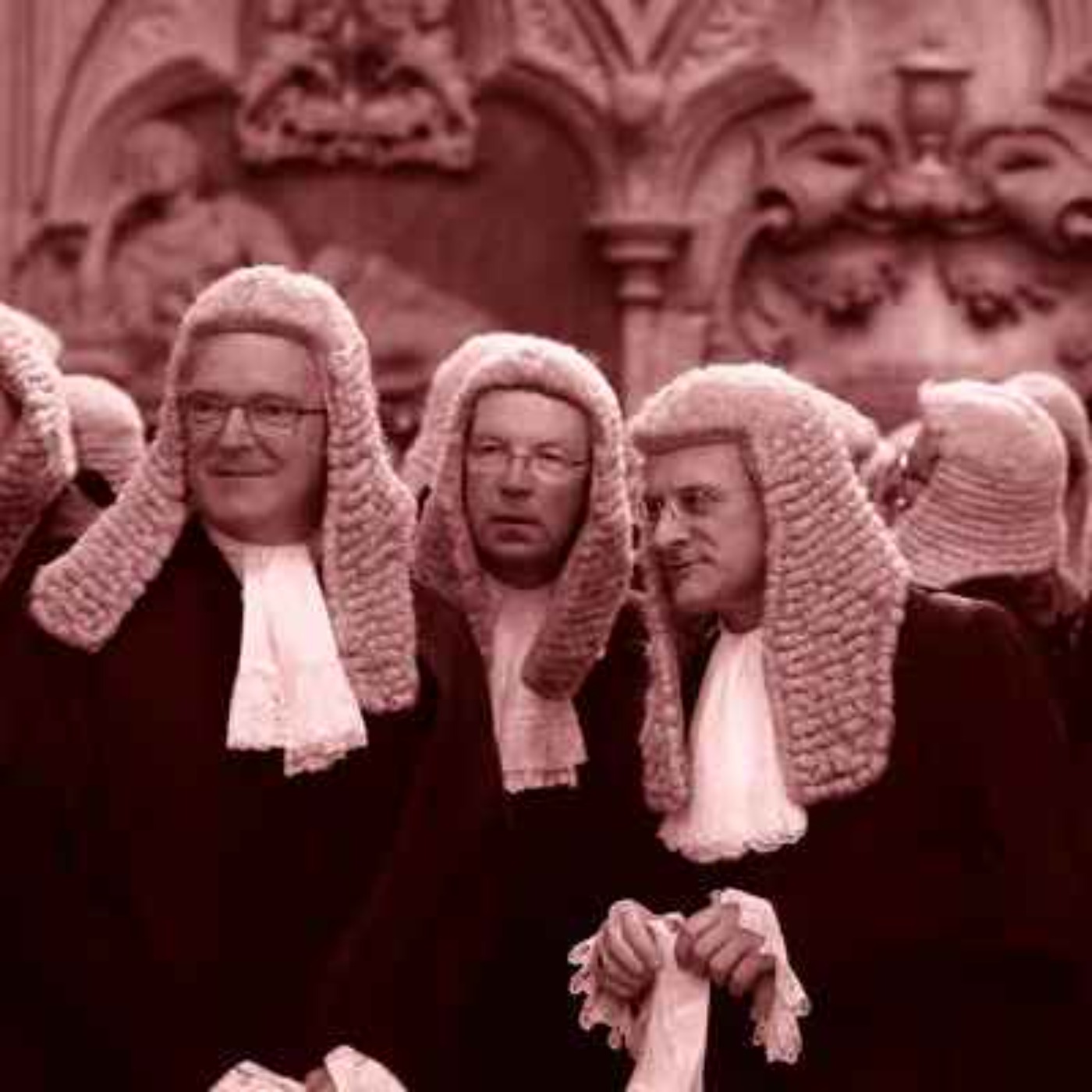
This episode uncovers the crisis within Britain's criminal justice system, characterized by a severe backlog of court cases stemming from years of underfunding, pandemic-related disruptions, and operational failures. The discussion includes personal testimonies from victims and defendants, highlighting the human cost of these delays.
Written by AI. May contain mistakes.

Get the gist, explore an idea or ask about something said.
 Claude
On The Standard, what are the key points of this episode?
Searching your listeningAutomatic transcript. May contain errors.
0:02Hi, I'm Charlie Duffield and welcome back to The Standard Podcast. If you're new here, hit follow and give us a rating. For all the latest news, head to standard.co.uk. Coming up later in the show. The spotlight is on Britain's struggling criminal justice system, as a spiralling backlog of court cases propels it further and further to breaking point. You can't just turn around and announce that you're going to create a whole new court system. That will take months and months to come into effect. And so even an announcement now that things are going to change isn't really going to start to turn around things until perhaps midway through next year or even later.
0:49But first. I spend most of my working days in and out of the criminal courts around London and sometimes beyond. And each day I see signs of decay in the system and the human impact of the chronic delays currently affecting the criminal justice system. My name's Tristan Kirk. I'm the Courts Correspondent for the London Standard. In London, soon we will be setting trials for criminal cases in 2030, some five years into the future. That means the victims, the witnesses and the defendants all waiting for years. Christmases come and go, birthdays, major life milestones, all waiting for justice to be done.
1:35we'll hear more from Tristan in just a moment for this week's special report he spoke to people like Violet when she went to the police in 2018 to say that she had been the victim of sexual violence by four men she didn't anticipate waiting five years for justice to be served her case was initially dropped and there were major mistakes in the way it was investigated She fought back and eventually there were charges brought. A trial was set, but then the trial was delayed at the last minute, just as she was waiting to give her evidence. She was told she'd have to wait another year for the trial to take place.
2:15Her life was essentially on hold, and she waited to recover mentally and emotionally from what happened to her. Chronic delays are now a hallmark of our justice system, which used to be the envy of the world. In West London, Isleworth Crown Court is now routinely setting trials in late 2029. It means that allegations of crimes made to police before the last general election will not be put before a jury until after Sir Keir Starmer's first term as Prime Minister is over. Five years ago, it typically took around 400 days for criminal cases to conclude, from offence to sentence. But now that figure exceeds 600 days.
2:56The situation is so bad that the current Labour government is considering taking the drastic step of axing jury trials for all but the most serious offences. And it comes as today, Justice Secretary David Lammy is under fire as two criminals were mistakenly released from HMP Wandsworth by mistake, with prison governors called in for crisis talks. Here's what Justice Minister Alex Davies-Jones had to say this morning on BBC Breakfast. Why are we in this position again? What, just two weeks after Harash Kabartu was released from prison in Chelmsford, we're in the same position where now two men are on the run?
3:38No, it's totally unacceptable. And I share the fury and frustration that I know you and your viewers will be feeling. Anyone released in error is unacceptable. But this speaks to the wider problem of a prison system and a justice system in crisis, sadly, where you have 14 years of austerity that have meant chronic underfunding in our prison service. You have prisons on the brink of collapse because there was only 500 places built under the previous government. We're trying to take action to address this, building more prison places, the biggest since the Victorian era, investing in more probation, investing in our staff.
4:14But sadly, this isn't going to be fixed overnight. I'm joined now by the Standards Court's correspondent Tristan Kirk. Tristan, you've said that it's an understatement to describe our justice system as now in crisis. There are a lot of legacy issues at play here. How have things gotten this bad? This is a result of decline and decay and neglect over the course of many, many years. So we are talking about underfunding on a sizable level where the justice system, particularly the courts, have never really been a priority for successive governments. We've had a lot of news in the past about legal aid cutbacks and the fact that lawyers have been leaving the system.
5:01Readers will know about courthouses being closed down under the last conservative governments. There was a long period under austerity where courts were closed and judicial sitting days were cut back in the year prior to the pandemic. In 2020, there were obviously restrictions. It became very apparent that the court system had basically been stripped to the bone in terms of resources, space, courthouses, an ability to cope with this kind of a crisis. And that's the point where the backlog of cases in the criminal courts had been allowed to grow. And then the pandemic struck and then it suddenly spiralled out of control.
5:40And we're now at around 80 ,000 cases waiting to be heard in the criminal courts around England and Wales. And so you have an enormous queue that's grown. Some cases are now being listed in 2029. I expect within a week or to for 2030 to be when some trials are being listed. And what is the impact on victims and defendants? When somebody goes to the police and reports a crime, they don't know quite how long it's going to take to get the justice that they're seeking. But nowadays, if the person is arrested and charged with burglary, and if they happen to be let out on bail, then that person might not go on trial, as I said, until 2029.
6:24And that means four years of waiting to see if somebody will be held to account for what they did. For victims, they've often gone through a trauma. I was looking at the defendants as well, because in any justice system, it's supposed to be innocent until proven guilty. But once you are charged with a crime and you're given one of these four-year waits for justice. There are various things that happen to you which can feel like a punishment, even though you say, because you've entered a not guilty plea, that you didn't do it. You might be on bail with restrictions which say that you have to sign in at a police station five times a week.
7:04Well, that's an imposition on your life, on your liberty to do other things. You might be banned from contacting friends because they are potential witnesses in the case. You might even be prevented from seeing your own relatives. You might be on a tag, a curfew. Let's face it, even if they did do the crime, people are entitled to a system of justice which delivers an outcome in a timely fashion. Years and years of cutbacks and neglect have left us in this position. I don't know about anybody else. But if somebody asked me to recall an incident that happened four years ago, give detailed evidence about it, and be subjected to some stringent cross-examination about potentially minor details about it, I think I'd struggle.
7:53But that's the reality of people who get called to give evidence as witnesses in a case. And so we do have a big question mark hanging over whether that is an appropriate system of justice that simply can't get to a case until maybe the next decade. Let's go to a break. Coming up in part two, what are the solutions to a justice system on the brink? We'll see you back here in just a moment.
8:24Welcome back. So Tristan, tell me more about Labour's plans to solve this crisis. Labour has commissioned independent reviews, one looking at the prisons and the way that people are sentenced, maybe to send less people to prison. But they're looking in terms of the court system in changing the way that justice is fundamentally administered. Now, Sir Brian Leveson, a retired judge who has independently carried out a review, and he's made recommendations, which Labour has not said yet whether it's going to adopt. One of them is to take away jury trial for all but the most serious crimes. At the moment, cases either go to the magistrates' court, where they are less serious, and they're dealt with there by either a district judge or a panel of magistrates, or they go to the Crown Court, which is where these backlogs that we're talking about exist, and they go before judge and jury, 12 members of the public selected, to try any case that goes to trial.
9:24Under the new system, if it's adopted, you will have the magistrate's court and the magistrate's court taking on increasing numbers of cases. So some cases will be reclassified to be in the less serious category. You'll have some cases that still follow the path of before judge and jury, murder, terrorism, rape cases. and then you'll have a new category in the middle, intermediate courts or whatever they might be branded and that will be trials that are put before a judge and two magistrates. The aim is to make them more efficient, to make them faster so you don't have to hang around selecting a jury, you don't have to maybe explain the evidence in quite as full a fashion as you would to a jury of people who aren't legally qualified.
10:12And at the end of it, you'll perhaps have deliberations that don't go on for days on end. Important to note that the criminal bar, that's the barristers, the lawyers who are involved in these cases, are pretty heavily against that idea. They say that what you really need to do is properly fund the system, make multi-year commitments for investment, and basically put justice as higher priority as defence, health, education. Why is having a functioning justice system important? Why does it actually matter? Well, the justice system is often alongside the health service. There's something that nobody actively wants to be in.
10:57They are two cornerstones of our society that people need. Nobody wants to be in a hospital bed, but when they need it, we want the hospital bed to be there. In the same way with the justice system, if somebody falls victim to a crime and they want there to be a system there to protect them and deliver justice. I think that there is an enormous amount of focus on crime and solving crime. People want to see bobbies on the street, they want to see arrests, they want to see particular crimes being stamped out. But what they don't necessarily think about is how that process is going to function across the whole of it.
11:36They don't think about if you bring in 10 ,000 new police officers, perhaps you need 20 ,000 extra court sitting days because of the amount of work that's going to be created by these new police officers arresting everybody. You're going to need a certain number, 5 ,000 new jail cells because some of the people will have committed serious crimes. And I think people care about the front end of justice. They care about crimes being stopped and about police officers having visibility on the streets and basically feeling better about our life in general. And if you don't fully fund the entire justice system, then eventually what you're doing at the front end will stop working.
12:20You'll have to tell the police officers to stop arresting people because we've got nowhere to put them, which is something that actually has happened in our system. Finally, can we touch on today's news? It's not just the courts in crisis, but Britain's overflowing prisons. What's your take on this? Cases are appearing of prisoners who have been accidentally set free through a combination of prison blunders, court mistakes, administrative things going wrong. This is not in any way a new problem. There are people who are let out of prison accidentally at the wrong time, But there are also people who are kept in prison accidentally when they should have been released.
13:04And so there was a case that I reported on a year or so ago. Somebody had basically served their sentence. And then the prison authorities didn't know that they were supposed to release him. And then his lawyers got in touch late night on a Friday and said, look, this guy is supposed to have been set free. And the prison said, we don't have the people in place to organize that. It's the kind of thing that people instinctively ignore and don't care about because it involves the human rights of a prisoner, a convict, somebody who's done something wrong to society. But what he did was it quite starkly showed a system that only worked nine to five when you obviously need something that goes a little bit beyond that.
13:46The emergency protocols just fell apart. The prison system has been put under enormous financial strain. It hasn't been made a priority and things aren't working one way or the other. The Labour government are under quite a lot of pressure because this is high profile and it feeds into a narrative that some people build that Labour is soft on crime and I think it should be looked at as a symptom of the wider neglect of the justice system.
14:20and that's the standard for all the latest news head to standard.co.uk if you'd like to get in touch please do drop us a line at podcasts at standard.co.uk we'll be back here tomorrow at 5 p.m we'll see you then
Did you know Britain's courts are in crisis? After years of cuts by politicians, pandemic disruption and operational failures, The Standard’s special report explores the spiralling backlog of court cases that define our broken justice system. Defendants and victims talk about the impact of being trapped, waiting years - sometimes until 2029 or 2030 - for their cases to even come to court. The Standard’s Courts Correspondent Tristan Kirk reports on this shameful decline, and how jury trials could be axed as a possible solution.
It comes as Justice Secretary David Lammy is under fire, as two criminals were mistakenly released from HMP Wandsworth by mistake - with prison governors called in for crisis talks. He went on to admit that the government has a "mountain to climb" in tackling the prisons crisis, as it emerged that 40 more inmates may be wrongly freed before Christmas.
Hosted on Acast. See acast.com/privacy for more information.


