
 Ask ChatGPT



In this episode, the podcast discusses the impending four-day Tube strike in London, which threatens to cause significant travel disruptions for commuters. The conversation features insights from The Standard's City Hall & Transport Editor, Ross Lydall, as well as a segment on the growing trend of second-hand shopping, led by Commissioning Editor and Culture Writer, Vicky Jessop.
Written by AI. May contain mistakes.

Get the gist, explore an idea or ask about something said.
 Claude
On The Standard, what are the key points of this episode?
Searching your listeningAutomatic transcript. May contain errors.
0:02Hi, I'm Charlie Duffield and welcome back to The Standard Podcast. if you're new here hit follow and give us a rating for all the latest news head to standard.co.uk coming up later in the show the joy and feel-good factor of shopping secondhand i do have a gorgeous blazer from m &s which is vintage m &s which is like a kind of gorgeous slate gray color really thick and warm and when i'm wearing it i have like little shoulder pads as well so sometimes when i'm wearing it i really feel like i'm channeling a kind of boss energy Sometimes you'll go out and you'll look for a pair of trousers or a jumper or something, but sometimes you can go to a charity shop or go on Vinted, and you can find something that you didn't expect to find or that you didn't expect you would like.
0:44And that's like a gorgeous new addition to your wardrobe, which I think you'd probably have less if you're just shopping in the high street. But first, talks are being held today as pressure grows on London Mayor Sir Sadiq Khan to intervene to stop tube strikes, causing travel chaos in London next week. It comes as many office workers will be returning to the capital after the school summer holidays. Hospitality bosses have said the threatened strikes, which are currently planned to take place between Monday and Thursday, will be devastating, with the walkouts set to be the worst the capital has experienced in years.
1:22The RMT union has ordered its members to take part in a rolling strike, with different staff walking out at different times, as part of a battle to win a reduced working week in addition to an offer of a 3.4 % pay rise. Additionally, no DLR trains are expected to run on Tuesday and Thursday next week due to a dispute over pay and conditions. Coldplay has already been forced to reschedule a gig at Wembley Stadium because of the strikes. In January last year, Sir Sadiq found£30 million from City Hall reserves to avert a threatened strike by the RMT that would have crippled the post-Christmas return to work, sparking accusations that he had given in to union blackmail.
2:05Now that it's happening again, he's under pressure to get it resolved. Joining us now is the standard City Hall and Transport editor Ross Lydell. Ross, what is the RMT demanding. So the strike is primarily about working hours, not about pay. Transport for London, TfL, has offered all tube staff a 3.4 % increase, which is pretty much in line with the national sort of rail industry and doesn't seem to have gone down too badly with the other unions. But it's also in line with the sort of February rate of inflation, which is used as the measure for pay rises. What the RMT want in particular is a reduction in the 35-hour working week.
2:49That is proving the sticking point. The RMT represents not just tube drivers, but also many thousands of station staff who, like tube drivers, work unusual hours, unusual shift patterns, and often at antisocial times. And what the RMT says is that this leaves many staff sort of fatigued and exhausted and as a result they want to work less than 35 hours a week. The problem they have though is that TfL shows no sign of actually giving in to this demand. While it's willing to consider a four-day working week, it's not willing to consider fewer than 35 hours a week. They wouldn't have enough staff to cover or to fully staff the London Underground.
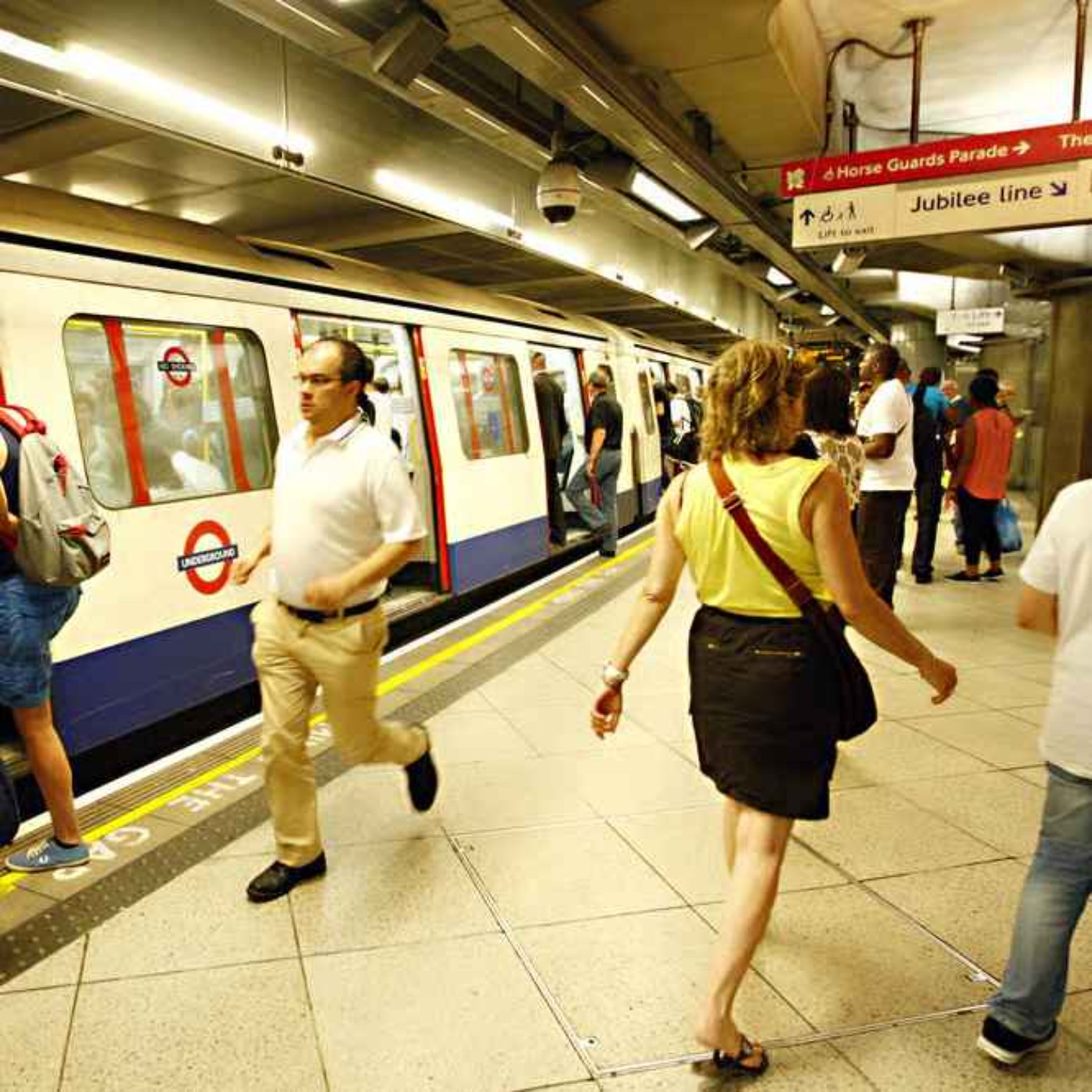
3:29How will the capital be impacted then if these strikes go ahead? Normally tube strikes tend to last one or two days. recently the RMT followed a system where it might strike for one day then have a day off and then have another strike but the problem here is that Transport for London is warning that essentially it could be four days of complete chaos the action will start itself on Sunday the coming Sunday the impact will really be felt on the Monday and from the Monday to the Thursday this is partly because the RMT members will go on strike on different days so depending on exactly which job they do They're not all going to be on strike for consecutive days.
4:08For example, the tube drivers who belong to the RMT are due to go on strike on Monday and Wednesday. And essentially, if you haven't got any tube drivers, then you haven't got any tube trains. Now, the RMT represents about half of the tube drivers. As left is the other union involved here, but its members are not going on strike. Also, RMT members who work in stations will go on strike at different times as well. There'll also be a strike on the DLR, the Docklands Light Railway. But according to TfL, overall, it looks like four days of absolute chaos and it's very unlikely there'll be any service at all.
4:43Or if there is any service, it will only be in sort of short sections of the underground, perhaps the odd shuttle service. Today, there are peace talks between the RMT and TfL. Is there any chance of a breakthrough? Traditionally, it's often gone until the 11th hour before a breakthrough is sealed, should there be a breakthrough. So it really is a case of wait and see. There's still quite a while to go. We've almost got an entire week for negotiations to continue. We don't know of anything planned beyond today. Certainly the RMT today didn't want to put anybody up for interview. It said it really wanted to focus on negotiating a settlement.
5:23If you were to say, what are the chances of this tube strike actually going ahead, I would say probably slightly better than even in the sense of actually at least one or two of the days being affected next week. Do you think the demands are fair considering how much tube drivers earn? Tube drivers are reasonably well paid in the region of say£65 ,000 up to£70 ,000 for if you like a sort of veteran or a fully trained tube driver can expect to earn a pretty decent salary and for a sort of short week in comparison to the private sects. Many people would probably quite like the idea of only working 35 hours a week.
5:59But here we're talking about station staff as well who can be earning around sort of 30 ,000, 35 ,000 pounds and also having to work pretty antisocial shifts. And I'd say it's pretty tough being a tube worker. There'll be certain lines, if you were to be a tube driver, you might prefer the novels. You know, it might be the case that actually the work-life balance and the reality of life as a metropolitan line tube driver is a lot different from being on the Victoria line, for example. The Victoria line is entirely in tunnels from Walthamstow Central to Brixton, so you never see the daylight. Whereas if you're on the Met line or the District line, at least you get a bit of fresh air and a bit of sunshine.
6:37But again, you're working weekends, you're working early mornings, you're working late nights. People might think that perhaps the drivers are remunerated fairly, but also think about the station staff. If you're spending your working day on a busy, crowded platform, dealing with some possibly unpleasant and rather stressed passengers, it might not be the loveliest job. If these strikes go ahead, how can Londoners get around the capital? The good news is that these strikes will not affect the Elizabeth Line or the London Overground. Both of these networks are very good indeed. Around 780 ,000 journeys a day are made on the Elizabeth Line.
7:15It's been open a few years now. and if you haven't been on it then where have you been because it's the most popular railway in the country so the elizabeth line will be in operation the overground will be in operation as well the bus network will still be running as well let's go to a break coming up in part two you've heard of vintage and depop but style conscious shoppers are increasingly turning to small batch fashion sites to curate their look we'll see you back here in just a moment
7:54Welcome back. Secondhand September is here for another year, where thousands of people shop only secondhand for 30 days, or ideally longer, to champion more sustainable fashion. It's not news that secondhand shopping is having something of a renaissance. The global resale market hit more than£150 billion in 2024, according to global data, and is only growing further. Popular sites such as Depop and Vinted have seen staggering growth over the past decade, but where else can you search for the best vintage finds? I chatted to The Standard's commissioning editor and culture writer, Vicky Jessup. So Vicky, it's secondhand September.
8:37Can you explain a bit about this campaign and what the vintage market looks like in 2025? So secondhand September is, I guess, kind of what it says on the tin. So it's like a campaign that runs every year that encourages people to avoid buying new clothes the entire month of September. We're producing far more than we ever wear and a lot of it is plastic. This is a way of promoting more sustainable ways of consuming fashion. And of course, there are many ways of doing that. As I have discovered over the decade or so, I've been earning a regular wage. The market is very healthy, I think, and getting healthier.
9:06So I think last year, there were some studies that showed that 67 % of millennials in the UK shop secondhand, according to a report commissioned by ThredUp, which is an online secondhand fashion retailer. Two in five items in every Gen Z's closet are pre-owned. There is clearly a massive appetite for this. It's growing at breakneck speeds. There is an environmental element to it as well, of course. But I think primarily people just love a bargain. Certainly for me, why would you shop new, for instance, when you can buy the same item of clothing for a massively reduced price? We know that Vinted and Depop are the two giants of the secondhand fashion world, but what other options are there?
9:43Last year, Vinted reported profits of£66 million, Depop of£63 million. They're both still growing at breakneck speed. I will say there are downsides to that. The main one, I think, is just there are so many clothes on there. That can be good because if you just type in black trousers, you will get like so many backyards and I guess you can find the one that's right for you. But sometimes I do feel like it is you are drowning in the influx of just items. And of course, these sites do gamify the buying process. Of course, Vintage gives you badges, Depop gives you stars for being like a fast shipper and that kind of thing.
10:15So you're really encouraged to keep buying, keep selling. Makes sense for their business model, of course, but it does feel a little bit like being churned up by the corporate machine. Of course, you can kind of rent clothing, the stuff like by rotation and her where you don't buy them but you rent like wedding dresses or you can rent like party dresses guest dresses whatever there are also very like small sites which offer a more curated experience so i am a massive fan of curate and rotate and there's another site called retold and both of them focus on releasing the limited edition kind of capsule drops of specially sourced secondhand and vintage items some of which is designer some of which is a bit less same or high street but because it's been they've been selected specifically for you by a team or a person and if their aesthetic matches yours it's quite a nice way of letting the clothes come to you what do you like about buying secondhand and where do you like to shop everyone likes the feeling of getting a bargain when you shop secondhand especially if you shop vintage i think the clothes are often a lot better quality than a lot of the stuff that's been churned out today so i guess i'm thinking like sheen platforms or retailers like h &m and zara where most of a shop and what I grew up shopping, but the quality of the clothes isn't very good.
11:22Whereas vintage, these things have been around for 20, 30 years. They've been really well made. Maybe they come from a time when people were buying less, so what they would buy would have to last longer. So you're just kind of buying things for not a lot more than you would buy in Zara, but you know that they're like good quality. In terms of sites, I obviously used, like I said, Curate and Rotate and Retold. eBay, of course. Peckham Car Boot is always a great bet for secondhand clothing if you're started with the river. You have loads of amazing shops. There's Chile and Portobello Road. I really love One Scoop store in Hackney, which again is pre-loved.
11:53Vintage, designer, secondhand pieces. And also just charity shopping, to be honest. They're still really popular for a good reason. Islington is a really good place for it. Stoke Newington is a really good place for it. Ladbroke Grove as well, I've found. But that does require a bit more effort. You can't really go looking for items there. You kind of have to let the items come to you. Is there a distinction between secondhand and vintage? Secondhand is pre-loved. something that's been worn or owned before it came to you whereas vintage those items are I think at least 20 years old usually and often they kind of represent a specific era in fashion or design so I guess like the newest quote-unquote era of vintage clothes we're getting now is kind of noughties and y2k stuff which is actually terrifying because I remember that when it came around the first time.
12:38Finally can secondhand be cheaper or is it more expensive? A bit of both. I think, like I said, you are getting a bargain in terms of you are paying less for a secondhand item than you would if you were buying it new. I often find that if I'm buying secondhand, I look for items that are from slightly nicer brands and I would be able to afford if I was buying those brands new. So I guess ultimately I'm probably paying about the same, if not a bit more. But I'm telling myself it's justified because the items are from nice places and they have better quality. So jury's out on whether my wallet agrees on that.
13:13and that's the standard for all the latest news head to standard.co.uk if you'd like to get in touch please do drop us a line at podcasts at standard.co.uk we'll be back here tomorrow at 5 p.m we'll see you then
Commuters in the capital face a four-day Tube shutdown next week and disruption from Sunday until Friday if a union presses ahead with threatened strike action, Transport for London has warned. Talks held between TfL and the RMT union today have attempted to avert what will be one of the worst strikes in years - but no resolution has been found. The Standard’s City Hall & Transport Editor Ross Lydall is here with the latest.
And in part two, as second-hand September kicks off, The Standard’s Commissioning Editor and Culture Writer Vicky Jessop joins us to discuss the best places for vintage shopping.
Hosted on Acast. See acast.com/privacy for more information.


