
 Ask ChatGPT


 The Standard
2 Mar 2026 · 15m · 6 chapters
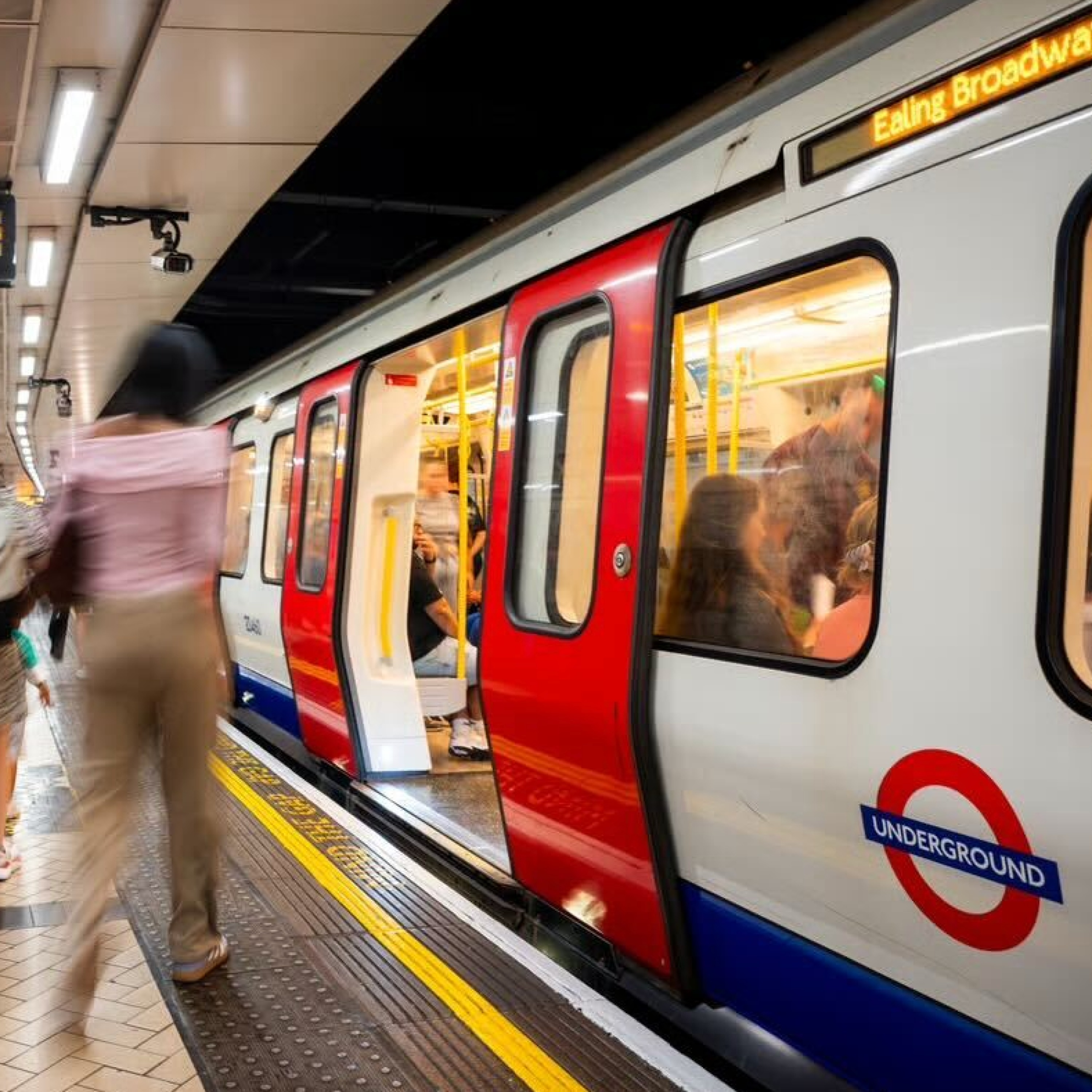
In this episode, host Tamara Kormornyk discusses the recent increases in Transport for London (TfL) fares with Ross Lydall, City Hall and Transport correspondent for the Standard. The episode addresses why TfL raised fares, the impact on various groups of Londoners, and the debate surrounding travel subsidies for older residents.
Written by AI. May contain mistakes.
Discussion on the new TFL fare increases and the impact on London commuters.
“As of yesterday, new TFL fares are in place.”
Exploration of which TFL fares are frozen and the rationale behind these decisions.
“Which fares are frozen and why do you think these freezes are only lasting until the summer?”
Analysis of the specific fare increases for tube and DLR services and their implications for passengers.
“In a week or two's time, it will expand to include 20 more stations in Essex, including Stansted Airport and the likes of Harlow Town, Chelmsford, Bishop's Thorpeford and so on.”
Discussion of the free travel schemes for older Londoners and the financial burden it places on councils.
“Now, 6 % sounds a lot, and it is, because the current rate of normal inflation is just over 3%.”
Debate regarding the fairness of free travel for older workers and the impact on younger Londoners.
“in the next financial year and you know after march this year whereas it's actually losing £99 million by maintaining the 60 plus oyster.”
Discussion on the fairness of travel subsidies for older Londoners.
“And I don't believe 60-year-old Londoners still in full-time employment deserve to have their fare subsidised or be able to travel for free.”

Get the gist, explore an idea or ask about something said.
 Claude
On The Standard, what are the key points of this episode?
Searching your listeningAutomatic transcript. May contain errors.
0:06Ross Lydall: This week, many Londoners will notice a bump in their cost of travel, ranging between a 20 pence increase to a£1.60 raise. And some commuters won't, as certain fares have been frozen. So, will you be stung?
0:25Ross Lydall: Hi and welcome back to the Standard Podcast. I'm Tamara Kormornyk. For all the latest news, head to standard.co.uk. Coming up, travel fare risers. Who are London's winners, losers and free riders.
0:50Ross Lydall: As of yesterday, new TFL fares are in place. The cost of pay-as-you-go tube, rail and DLR services are rising by an average of 6%. But it's not all bad news for Londoners. Bus fares and travel card fares have been frozen for now. And some people aren't required to pay for their travel at all. To understand the latest changes to fares, I sat down with Ross Lydell, the standard city hall and transport correspondent for a London travel update. We talk about why TfL made the decision to raise fares this spring and also the subsidies that older Londoners enjoy and whether these could have filled in TfL's funding gap.
1:35Ross Lydall: Hi Ross, thanks for jumping on The Standard Podcast.
1:37Tamara Kormornick: Okay, no problem. Good to speak to you again.
1:40Ross Lydall: So Ross, I want to start with the good news for Londoners that some TFL fares are frozen. Which fares are frozen and why do you think these freezes are only lasting until the summer?
1:56Tamara Kormornick: The good news in terms of fares comes to bus passengers and passengers on the Croydon tram network. They currently pay£1.75 per journey and they will continue to do so until the start of July, July the 5th to be precise. So the mayor has decided to hold the bus fares at the current level. It's actually still the same fare since 2022. So this is quite a long term freeze. Why is he doing it? Well, he is, of course, the most famous son of a bus driver in the country. and it's well known that Londoners who use buses tend to be sort of lower income Londoners. So Sadiq Khan is well aware that by freezing bus fares, he is helping those amongst us who perhaps don't have as much money as others.
2:43Ross Lydall: And he did, of course, introduce the bus hopper fare and also has expressed wanting to help those that work in the nighttime economy, you know, hospitality workers that are trying to get home. and that kind of thing. Travel cards have also been frozen until 2027. Why do you think this decision was taken?
3:07Tamara Kormornick: Well, this decision on travel cards was not Sadiq Khan's decision. It actually came from his old friend, Heidi Alexander. Currently, she is the UK Government Transport Secretary, and she decided towards the end of last year to freeze regulated fares on the national train network now as a consequence of that travel card prices are frozen as well because the train fare is frozen but what's also really good for london travelers especially london commuters is that the cap on travel card fares will be frozen as well so not only will the actual cost of buying a travel card remain the same year after year between 26 and 2027 but the the cap the ceiling that you can pay if you make multiple journeys a day will remain the same as well and probably for most Londoners that will be a real benefit.
4:04Ross Lydall: And this will still apply for if you use a contactless card right if you use the same one.
4:09Tamara Kormornick: That's exactly right so this applies both to Oyster cards contactless cards or if you're buying a sort of an old-fashioned paper ticket which some people still do if they are traveling in on the train from outside Greater London although So separate to this, the contactless train network is expanding. In a week or two's time, it will expand to include 20 more stations in Essex, including Stansted Airport and the likes of Harlow Town, Chelmsford, Bishop's Thorpeford and so on.
4:37Ross Lydall: This will come as great news to many. I myself have been caught out by the Stansted contactless zone. So great news for summer travel. you mentioned cash fares paper single tickets for zones 1 to 6 these are actually frozen at£7 where TfL fares apply
5:00Tamara Kormornick: the£7 cash fare is the worst possible way to travel on the tube it's like do not do this only 1 % of journeys are actually made by paying cash and this is largely done by confused tourists who get to Heathrow and stand in front of the ticket machines and shove their newly acquired£10 notes into the machine. The advice is don't buy a paper ticket, you'll end up paying more.
5:24Ross Lydall: This is the OG tourist tax then.
5:27Tamara Kormornick: Yes, well, there's both a sort of tourist tax on the paper tickets, the old fashioned paper tickets, and also on the Elizabeth Line services to Heathrow. Now, these are actually cheaper, of course. The cheapest way to get to Heathrow is on the Tube.
5:43Ross Lydall: The Piccadilly Line, right?
5:44Tamara Kormornick: On the Piccadilly line, that's right. But it obviously takes quite a long time and you fairly get bounced around. The Elizabeth line is probably the way most people would like to go because it both balances speed and comfort with a reasonable fare. The Elizabeth line fare to Heathrow just now is a premium, though, is£13.90. That will go up under the new fare structure from the start of March to£15.50, but it's still about£10 cheaper per trip than the Heathrow Express.
6:19Ross Lydall: So let's talk about fare increases that are coming to tube rail and DLR services. Were we due a fare rise and why 6 %?
6:30Tamara Kormornick: The 6 % is an average figure. In essence, what it means is that for most tube journeys, they'll go up by about either 10 pence or 20 pence. So most passengers will see a small increase in the cost of single fares. However, within that, there are different levels. You know, for example, the Zone 1 peak fare will increase from£2.90 to£3.10. Yes, 20 pence, but that's a 6.9 % increase. The Zone 1 off-peak will go up from£2.80 to£3.00. That's 7.1 % increase. But to get from my home in Walthamstow to Arsenal tube station cost me 20 pence more, £2.30 rather than£2.10. That is a 9.5 % increase in the fare.
7:15Tamara Kormornick: Why is Sadiq putting the fares up by 6 %? Well, the answer is actually it goes back to Heidi Alexander again. Last June, the Chancellor, Rachel Reeves, announced that TFL will be getting£2.2 billion worth of investment over the coming years. However, in return for that, Sadiq Khan was told by Heidi Alexander, the Transport Secretary, that he would have to increase TFL fares, such as tube fares, by one percentage point above the RPI rate of inflation. That's why he's got to 6%. Now, 6 % sounds a lot, and it is, because the current rate of normal inflation is just over 3%. So if you're using the tube or the Elizabeth line on the London overground, your fares will be going up roughly twice as much as the current new K rate of inflation.
8:11Ross Lydall: We'll take a quick break. Coming up, I ask Ross about the status of free travel in London, namely the 60 plus pass that came close to a review, and he puts forward his case for scrapping the scheme.
8:33welcome back let's get back to my chat with ross
8:42Ross Lydall: so ross i want to chat a bit about free travel on tfl services who doesn't have to pay travel fares?
8:52Tamara Kormornick: The two groups that get free fares are children and older Londoners. Now children under 11 don't pay anything and then children between roughly 11 and 18, once they get a zip card, a zip oyster card, essentially pay half price fares. But the biggest group here and the most controversial group who get free fares are the 60 plus Londoners. There are two travel concession schemes. One is the 60 plus oyster, which essentially gives free fails after either 9am or half nine, depending whether you're using the tube or the train. And also the Freedom Pass, which applies to the 65 year olds and older. The 60 plus oyster is a TFL benefit.
9:36Tamara Kormornick: It was introduced by Boris Johnson when he was mayor. And the Freedom Pass is paid for by the 33 London boroughs. Now, the problem is that this is paid by the London Borough Councils, which are themselves incredibly cash strapped and are having to raise council tax each year by around 5%. And the concern was expressed that the cost of providing the Freedom Pass was increasing exponentially. It's going to be about£372 million in the coming year and it's forecast to hit£500 million a year by the end of the decade. That's for two reasons. One obviously is the increasing fares themselves. So councils have to reimburse TFL for essentially giving their residents free travel and also have to reimburse the train companies, but also the fact that we're all living longer.
10:24Tamara Kormornick: So people who have the Freedom Pass will be able to use it for longer. That means that it costs TFL more or it costs the councils more to refund TFL. Now, the demand for the review of the Freedom Pass was sort of instigated by several Lib Dem councillors. It was Labour councils who decided to sort of quash this. The reason they did that, of course, is because there's the borough elections coming up in May and none of them wanted to be knocking on doors and facing questions about why are you going to take away or restrict my Freedom Pass? But the biggest issue here isn't really the Freedom Pass, it's the 60 plus oyster, because the real bone of contention for so many younger Londoners is that why should people who are 60 and older, who are still in work in London, still potentially earning a big salary, why should they get free travel to and from work when younger Londoners are paying essentially full buck?
11:20Tamara Kormornick: Why are younger Londoners who are often earning less, have higher housing costs? Why are they subsidising older Londoners who are probably in a much stronger financial position?
11:29Ross Lydall: Well, more than 50 ,000 people signed a petition opposing this review and the issue was squashed in a week. No guesses to the age demographic of those petitioners. Indeed.
11:45Tamara Kormornick: The other thing to say, of course, is that just looking at the 60 plus oyster, it now costs TfL£99 million a year to provide free travel to people aged between 60 and 64. TfL essentially loses£56 million worth of bus fares and£43 million of income it would have otherwise got from tube and rail fares had people between 60 and 64 actually paid their way.
12:10Ross Lydall: can you remind us ross how much more will tfl bring in from the fare hikes versus this 99 million figure for the 60 plus pass yes so tfl will receive an extra 168 million pounds in fares
12:31Tamara Kormornick: in the next financial year and you know after march this year whereas it's actually losing £99 million by maintaining the 60 plus oyster. So, you know, had it actually changed the oyster, it could have almost had no need to put fails up. It could have chosen to freeze fails entirely and just restrict the 60 plus oyster had it wanted to be roughly in the same ballpark overall.
12:57Ross Lydall: You've written on this story and you've said that the golden era of TFL freebies, like the 60 plus oyster must end and that London just can't afford it anymore. Now, Ross, not to expose you on the Santa podcast, but you would be eligible for this benefit in just over five years. So why look a gift horse in the mouth?
13:24Tamara Kormornick: I just think it's fundamentally unfair that people who are still in work are able to travel for free on the backs of others. I think one of the greatest annoyances in the whole public transport network is when people see people dodging fares, jumping barriers, and there's nothing that can be done. Even though I stand to benefit, as you say, in a few years' time and have friends who already benefit from it and cannot believe their good luck. But I think if you're lucky enough to be in employment, you should be paying your wage, you should be paying your fare, and that you should not be expecting others to essentially subsidise your travel.
14:00Tamara Kormornick: It feels like there are so many benefits now once you get older that being young and looking for a job or trying to find somewhere to live in London is incredibly difficult and that really we should be looking at who needs help. And I don't believe 60-year-old Londoners still in full-time employment deserve to have their fare subsidised or be able to travel for free. I think they should pay their way just like somebody who's 59.
14:26Ross Lydall: Well Ross, thanks so much for your insights on this and for coming back on the Standard pod.
14:32Tamara Kormornick: Okay, no problem. Good to speak to you.
14:36Ross Lydall: And that's The Standard. For all the latest news, head to standard.co.uk. If you're new here, hit follow and give us a rating. If you'd like to get in touch, email us at podcasts at standard.co.uk. We'll be back here tomorrow morning. See you then.
14:56Thank you.
Londoners may notice their outgoings increase, due to higher TFL fares that kicked in yesterday. The cost of pay as you go Tube, rail and DLR services are rising by an average of 6% but it’s not all bad news, as bus fares and travel card fares have been frozen for now.
To understand the latest changes to fares, host Tamara Kormornick sits down with Ross Lydall, the Standard’s City Hall and Transport correspondent, for a London travel update. They discuss why TFL made the decision to raise fares this spring, access to airports via public transport, and whether it is time to discontinue travel subsidies that older Londoners enjoy to fill in TFL’s funding gap.
Hosted on Acast. See acast.com/privacy for more information.


