
 Ask ChatGPT


 The Standard
1 Aug 2025 · 16m
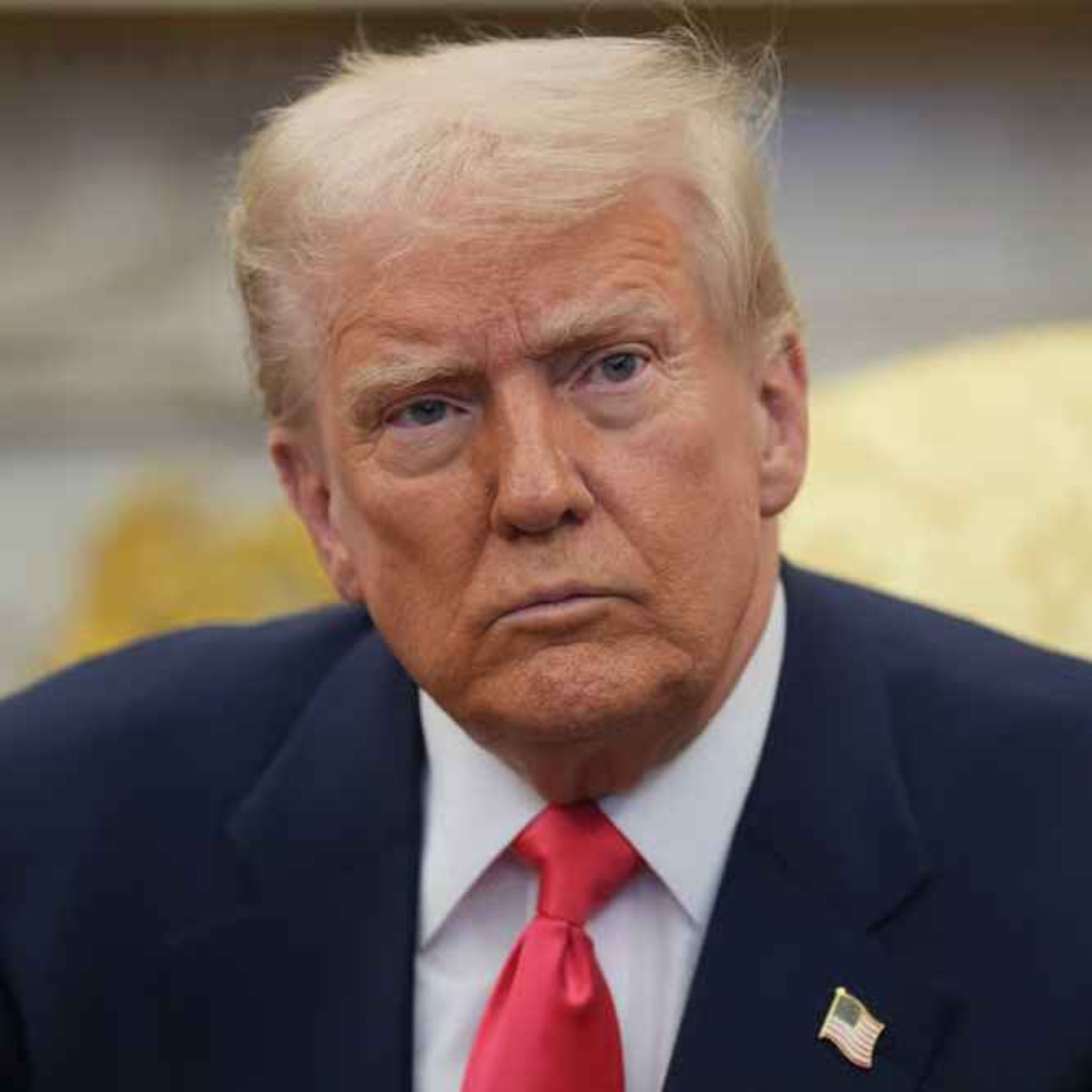
Description: The episode discusses the recent tariffs imposed by US President Donald Trump on trading partners, featuring insights from Nick Dearden, Director of Global Justice Now. It also explores the trend of New Yorkers relocating to London with input from David Ellis, The Standard’s Going Out Editor and Restaurant Critic.
Written by AI. May contain mistakes.

Get the gist, explore an idea or ask about something said.
 Claude
On The Standard, what are the key points of this episode?
Searching your listeningAutomatic transcript. May contain errors.
0:02Hi, I'm Charlie Duffield, and welcome back to The Standard Podcast. If you're new here, hit follow and give us a rating. For all the latest news, head to standard.co.uk. Coming up later in the show, why so many Americans are swapping the big apple for the big smoke. Although the administration is something that a lot of the Americans over here are very against, they probably had in mind a move anyway. But it's just that Trump reinforced that decision or, as I say, stopped them going back. But in general, he wouldn't be the sole motivator for people. But first, the Trump administration's trade policy has been full of twists and turns since the president returned to the White House in January.
0:52In April, he stunned the world by announcing sweeping new import tariffs, only to put the brakes on his plans. But now he has signed an executive order that implements new tariffs for dozens of countries that will go into effect on August 7. The move is the next step in his trade plan that will test the global economy and sturdiness of American alliances. It sets the rate for 68 countries and the EU, with a baseline 10 % rate to be charged on countries not listed. Joining us now is Nick Durden, director of Global Justice Now, which is an organisation that campaigns for a fairer global economy.
1:32Nick, what action has Donald Trump taken today on tariffs? So Trump has signed an executive order that I would describe as launching economic missiles at countries right across the world, friend and foe alike. He's essentially decided that the tariff rates that countries pay for importing into the United States are not high enough. He's going to adjust them, in most cases, put them up enormously. And that's going to make it harder for people to export to the United States there's also a very good chance it's going to push up prices in the United States itself. Can you explain in more basic terms what tariffs actually are and how they work?
2:11Tariffs are a kind of tax that you pay at the border. So when a foreign country exports into your country, you're deciding on the amount of additional tax that needs to be paid on the export. And of course, that has an impact on the price of good it is that's coming into the country. And it makes that good more or less attractive, depending on what the tariff rate actually is. And which countries have been hardest hit? There's a wide range of countries that have had really punitive tariff rates applied to them. One of them is Brazil. Canada also this morning got a tariff rate way in excess of what it was hoping for.
2:48Switzerland got a really unexpectedly high tariff rate, but also a number of countries, particularly countries in Southeast Asia, Myanmar, for example, very high tariff rate. For countries that really rely on export industries, and remember, many of these countries have been told by US transnational corporations over the years, the way to develop your economy is to export more goods to us. That's what they've been told for a number of years now. They're playing by the rules very well. This is going to be absolutely devastating, because it's essentially going to make their exports uncompetitive in the United States.
3:22And that's going to threaten industries in countries that have very low incomes. It's going to be really devastating for those industries. Obviously, countries like Canada and Brazil have more ability to tolerate that pain, but it's still going to be very difficult for workers in export industries in those countries. And I think the really interesting thing is what Trump has done. It doesn't seem to bear any relation to how friendly foreign governments are with him, to any kind of alliances or even indeed any form of trade deals that he's already got with these countries. It's a scattergun approach.
3:56And effectively, what seems to have happened today is that Trump has said, either you have made enough concessions, and therefore I'm going to give you a slightly lower tariff rate, although I should say a much, much higher tariff rate than these countries were paying six months ago, or you haven't made sufficient concessions, and therefore you're going to get a punitive tariff rate. And how has the UK impacted? Are we shielded due to the US-UK trade deal? Deal in inverted commas, because it was more for me a press conference than a trade deal. Some things were agreed, but many things were left on the table and pushed into the long grass and are to be agreed in the future.
4:32But what it did do is give the UK a 10 % tariff rate. That's actually not that much different to what the EU's got. We're paying a little bit on top of that because of the complexities of the deal. But essentially a 10 % tariff deal, much more than we were paying six months ago. And in order to get that, the UK had to make some concessions on a number of areas, including bioethanol. We also got reduction in steel tariffs compared to what other countries got, although many of the details of the steel tariffs are still to be worked out. Yeah, the UK is at the lower end of the spectrum, partly because of the trade deal Starmer did.
5:07And it is also, I should say, though, partly because Trump is particularly targeting countries that have large goods trade surfaces with the US. So countries that tend to export far more to the US than the US exports to them. Although, again, there are some exceptions like Brazil, which is not in that situation. But Trump has just decided that he does not like the president of Brazil. And he's targeted him for a number of reasons, including the way that he's treating a former president of Brazil. So there are all sorts of things mixed up on here. But what you really see, I think, is a global bully who is making demands left, right and centre, and then making a decision sitting in the White House as to how he's going to treat your economy.
5:49So do we know yet what the effect of these tariffs is going to be? So we've already seen a little bit today that the markets are reacting badly to the news. But I think there is also within the markets now a sense that we just don't know what's going to happen even within the next seven days. We don't even know what's going to happen tomorrow. Trump could do something completely different. He could let some countries off because they've come to him with more concessions. We just don't know. People are really concerned that it's going to have two effects. First of all, to push prices up, particularly in the United States, but possibly in other countries too.
6:23In the United States, primarily because imports are going to become so much more expensive, the price consumers pay for goods is going to be higher. But also that it could result in an economic slowdown because companies all over the world that had export markets they were relying on, and that's what they built their profit figures on, that's going to change as a result of these tariffs. They're not going to be able to sell those goods in such quantities as they expected. And that's going to have an impact in terms of their economic activity and the jobs of the workers that they're employing too.
6:53So you could be in a situation here where you're seeing both economic slowdown and inflation, which is really serious when we've seen that before, it's created really serious economic uncertainties. Donald Trump has been accused of escalating a global trade war. How do you respond to that? I would certainly say it's a trade war. I mean, this came out of nowhere. Remember, the tariff levels are based upon figures that have been worked out over many years and decades. And I'm not necessarily against tariffs as an economic tool. But the way that Trump is using them here is like warfare. It just doesn't happen in normal peacetime negotiations between countries, that one country says, either you do this, either you do this thing that I'm telling you to do, or else I will hike tariffs on your economy as a kind of punishment for not doing that.
7:42And this is the kind of stuff that happens in a war, but it's happened here without a shot being fired. And I would say that Trump's primary interest here is the demands of his friends in what I call the oligarchy, big tech industry, the Musks and the Bezos, big oil, big finance. He's batting for some of the biggest corporations in the world. And he's saying to other countries, you have to accept a different way of taxing, regulating these corporations, or else you will face my wrath. And that is ripping up the global economic system. The global economic system had many problems. Don't get me wrong.
8:17It was seriously in need of reform. But I think the reform we didn't need was a kind of modern day emperor sitting in the White House, lobbying economic missiles at countries around the world. Finally, is there anything else you want to add? We are really encouraging countries to stand up to Trump and his demands, because if they don't, he's going to be back for more. This is not a guy who's just going to accept this and now the tariffs are the new reality. If you give in to him, he's going to come back and demand more in the future. Already in the UK deal, there is a placeholder for new talks, for example, on the tech sector, which will surely be about telling the UK government to remove taxes and regulations on the big tech companies.
8:56That's the last thing that we should be doing. But I think that we've given him now extra strength by accepting his initial terms. And I would just urge countries go very slowly, implement, if you've already agreed something, implement it as slowly as you possibly can, because the courts in the US may throw this out. They're currently adjudicating whether Trump has the power to actually do this stuff. So it's going to be challenged in the US. But I think more generally, countries need to work together, stand together, because if they don't, they're all going to get punished individually, and it's going to be much worse for them.
9:27You need to stand up to the bully if you want to create an economy which works for your own people and your own industries.
9:38let's go to a break coming up in part two the stateside theme continues except we're asking why so many americans are making a permanent move across the pond we'll see you back here in just a moment welcome back last month lena dunham's new netflix series too much was released telling the story of a New Yorker who flees to London for a new life. Change your life. Go to London. Seriously? You love London. You saw Spice World nine times in the theatre. I could do it. I could go and find my English dream. You know, a state ground, starting a garden. And it turns out that it's far from a unique story, as the number of Americans seeking this change of scene appears to be growing.
10:29Estate agents say they've witnessed a significant jump in interest from US buyers and renters over the past year. Data released by the Home Office in May reveals more than 6 ,600 Americans applied for British citizenship in the 12 months leading up to March, a 26 % increase on the year before, and the highest number since records began in 2004. Almost a third of applications were sent in between January and March this year, during the first three months of Trump's second term. Joining me now is David Ellis, the standards going out editor and a restaurant critic. David, what's driving this increased interest in London from Americans?
11:12I think there's what a lot of Americans are sort of euphemistically calling the administration or just the state of things, which I think we can interpret as meaning Trump and his presidency. It's not necessarily Trump himself from the people I've spoken to, but the consequences of him being in power and a society over there that seems to be becoming increasingly less tolerant and proud of being less tolerant. Some people, it's not necessarily that they moved over because of that, but it does mean that they won't move back. And so whereas we would have had a flow of people coming and going and you wouldn't have noticed the difference, now the thing is you just don't have people going.
11:49So it appears that we have more Americans over here. And I suppose the other thing is just economic. The dollar was at a historic high in February. House prices here are lower than they have been for a while. Certainly much cheaper than they were 10 years ago. You interviewed a lot of people for this feature. What were some of their stories? I spoke to one lady called Farron who was really interesting. She had been married to a television producer who worked for ESPN. And they came over here a lot for Wimbledon. she was looking for someone to reinvent herself. And she'd been in Dallas and just found that all she was doing was going to the same places, seeing the same people.
12:27And so when she wants to reinvent her life, she thought London would offer that opportunity and then came over, had a big party night and decided to move the next day. Her London offers a completely fresh start, but also what she would describe as her authentic self. She's being the person she wanted to be. Put to another person called Caroline, said she just much preferred British people. She prefers the directness, the frankness. She was from San Fran, so it's quite like a liberal part of the US, but she just felt that she preferred the company of Brits. And where are Americans moving to in the capital?
13:03There will be places like St John's Wood, which have historically always been American, and that's partly because there's the American school there. It's also because there's lots of nice big houses in St John's Woods. So if you've got money, you'll probably move there or Notting Hill. Apparently, the film still has an impact. I think it conjures a fantasy of London that may or may not have ever really been true, but it certainly appeals to Americans. Otherwise, South London doesn't seem to get much of a look in or didn't from the people I spoke to. You'll find places like Stoke Newington or Kentish Town, although Farron, as I mentioned, moved to Hackney.
13:35But in general, it's just North London. What do you think are some of the cultural or societal differences between London and the US? We are broadly speaking more liberal, although I don't think that we're in a particularly liberal phase at the moment in this country's political life. But certainly, yeah, we're more tolerant, or we present to be more tolerant. I think we're also much less obsessed with work defining our status. I was speaking to one of the people I was interviewing, and I was like, I have to be honest, I've known some people in my life for 20 odd years, and I still don't actually know what they really do because it's not necessarily a point of conversation for Brits in the same way that it is for Americans and being productive is a huge part of their social standing in America whereas I just don't think that we have that.
14:22I don't know how true this is but I did hear from people that they think Brits are less materialistic which is quite interesting. Basically work culture seems to be the huge difference and we are in general more left-leaning. Is this good news for London? I think you can look at it in a very cold way and just say it's more money for the capital, which is good to have more money flowing around, perhaps the economy. It's a greater diversity of culture, and that's always a benefit to my mind, at least. And I think it's proof there's a lot in the news about immigration at the moment. And I think actually Americans coming over here is proof that it doesn't always need to be framed in a negative light and that we probably should reconsider what immigration means for a country, that it can certainly have benefits.
15:06Do you think the fantasy or charm of London lives up to the reality? I think London's probably dirtier and angrier than people would like to think. But I also think it's a city that is whatever you make of it. The London of St John's Wood is vastly different from the London of Hackney, Peckham or the London of Soho. You can find your own place in London, find your own tribe, as they say. So in many ways, yes, it can be the fantasy, as long as you're looking for it.
15:41And that's The Standard. For all the latest news, head to standard.co.uk. If you'd like to get in touch, please do drop us a line at podcasts at standard.co.uk. We'll be back here on Monday at 5pm, and we'll see you then. you
Today US President Donald Trump has slapped steep tariffs on exports from dozens of trading partners around the world. At 10 per cent, the UK has been promised the lowest US tariff rate so far. But what does this all mean? Nick Dearden, Director of Global Justice Now - an organisation that campaigns for a fairer global economy - is here to unpack the news.
And in part two The Standard’s Going Out Editor and Restaurant Critic David Ellis explains why so many New Yorkers are swapping the Big Apple for the Big Smoke.
Hosted on Acast. See acast.com/privacy for more information.


