
 Ask ChatGPT


 The Standard
29 Jul 2025 · 16m
Description: A podcast from London that discusses the day’s pressing topics, including politics, culture, sports, and fashion, featuring insights from journalists and celebrity guests.
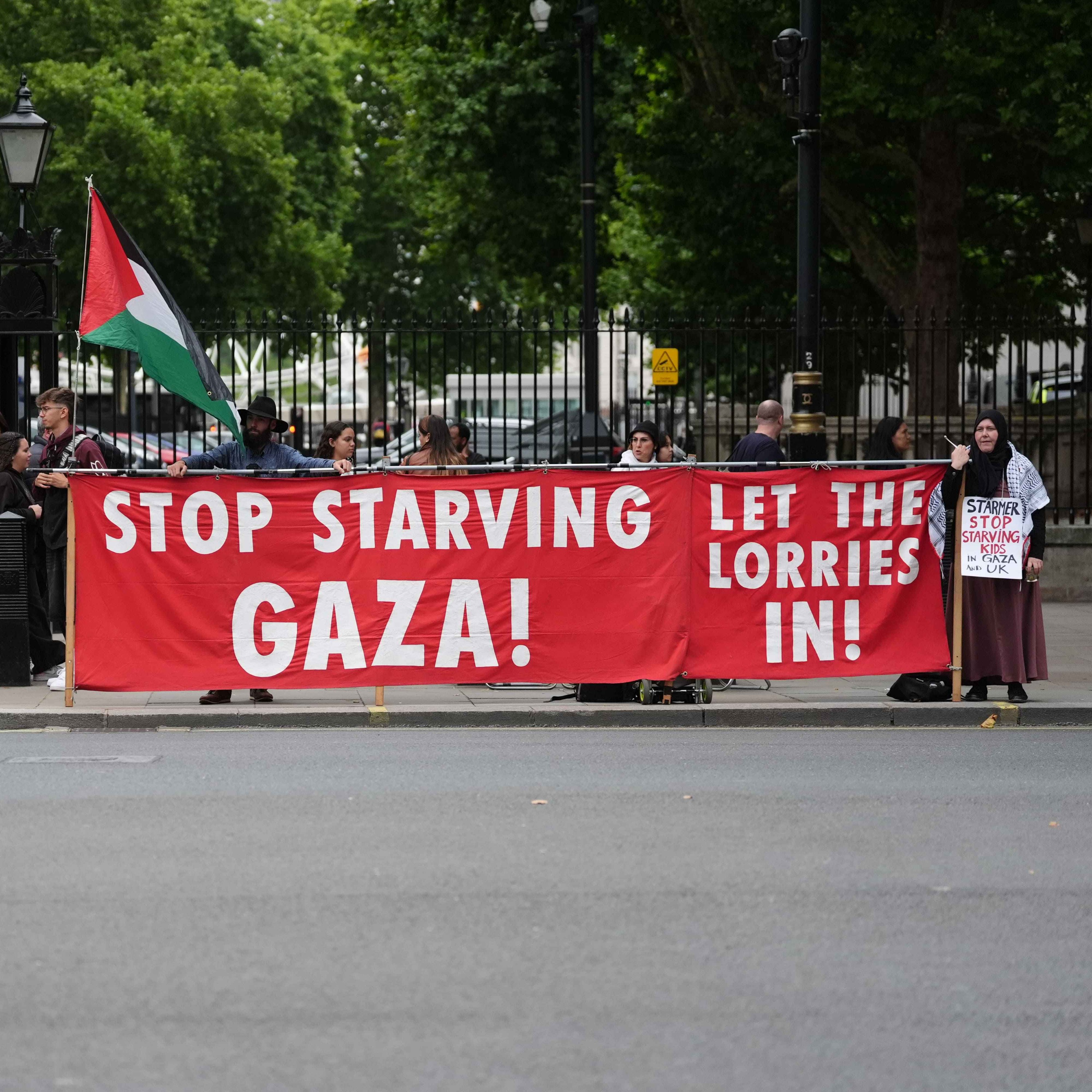
The episode discusses Prime Minister Sir Keir Starmer's announcement regarding the UK's recognition of Palestine as a state, contingent on Israel's actions in Gaza. The episode also features a conversation about the new musical, Brixton Calling.
Written by AI. May contain mistakes.

Get the gist, explore an idea or ask about something said.
 Claude
On The Standard, what are the key points of this episode?
Searching your listeningAutomatic transcript. May contain errors.
0:02Hi, I'm Charlie Duffield and welcome back to The Standard Podcast. If you're new here, hit follow and give us a rating. For all the latest news, head to standard.co.uk. Coming up later in the show, the story of how one man bought an old cinema and turned it into the Brixton Academy.
0:30From being bankrupt to having guns put in your head, attempts on your life. It was a bit of a white knuckle ride at times.
0:40But first, today Prime Minister Sir Keir Starmer has announced the UK will recognise Palestine as a state by a United Nations meeting in September, unless Israel agrees to end the appalling situation in Gaza. The Prime Minister said while airdrops of aid have started today, he wants to see at least 500 trucks of aid per day to enter Gaza. It comes as the World Food programme has said Gaza needs to be flooded with large-scale food aid to prevent mass starvation. And the European Commission has proposed partially suspending Israel from its flagship £80 billion Horizon science research programme over what officials have called a severe humanitarian crisis in Gaza.
1:28Earlier today, I spoke with Dr David Waring, a lecturer in International Relations at the University of Sussex and an expert on UK foreign relations in the Middle East. David, do you think recognising Palestine as a state will contribute to a peace process? It's not insignificant. The recognition that the Palestinians have the right to self-determination and have the right to a state on their recognised borders from a leading power in the world system, it would place further pressure on Israel to change its behaviour with regards to the Palestinians. It would isolate the US increasingly on Palestine, given that most countries in the world recognize Palestine.
2:07So it's important in that respect. It increases pressure to create a two-state solution. But the issue is that we have a short-term or rather immediate emergency in terms of Palestinians starving or rather being starved to death by the Israelis through the blockade. And recognition of a Palestinian state isn't really going to help that. And it strikes me that the British at the moment want to be seen to be doing something rather than actually doing something. So what actions should the UK be taking? We know the answer to this question whenever it's a geopolitical adversary of the British. With regard to Russia, we knew exactly what to do.
2:42Sanction leading regime figures, widespread but targeted sanctions on trade and finance. There's a whole repertoire of forms of diplomatic pressure, arms embargo, all this kind of thing. There's a lot of talk from the British government to the effect of what more could we possibly do and from the British government supporters in the press. But they know the answer to this question. It's an arms embargo. For example, Britain has suspended exports of about 10 % of the arms that it sells to Israel, maintaining the other 90%, including arms which by its own admission can be used in Gaza. Trade and financial relations continue exactly as if nothing's happening.
3:18And then in terms of diplomatic pressure, Britain sanctioned a couple of cabinet ministers. But it's done nothing to place sanctions or pressure on the prime minister, who, by the way, is the subject of an arrest warrant from the International Criminal Court, should produce, you would think, some kind of response from the UK along the lines of personally sanctioning Benjamin Netanyahu or something like that. Starmer is currently meeting with Donald Trump. Do you think the backing of the US president could lead to the beginnings of a solution? Britain has influence with regard to Israel as the Europeans do, but the Americans, it's a different relationship altogether.
3:55Americans, whether under Biden or under Trump, could have pulled the plug on this whole thing any time they like, such as the degree of dependence that Israel has on the United States. It's important for European powers such as the British to take the measures that I've described to bring a halt to these atrocities. But it's vital that the Americans take this kind of turn as well. And what the British and Europeans can do if they take forceful measures, by doing so, apply pressure on the Americans to do the same. If the Europeans step up, it can have a knock-on effect. But even if there isn't a knock-on effect, it will still be worthwhile.
4:28It can still be a good contribution. Is Starmer doing enough to get aid into Gaza? Absolutely not. When I said earlier that this is more about being seen to be doing something rather than actually doing something, That's particularly true with regards to aid. And here we just need to listen to what the aid agencies are telling us, the people who are experts. What they tell us is that the only way now to stop this spiralling into mass death is to open all the gateways into Gaza and flood the territory of aid. People are so malnourished at this point that you can't just give them food or give them the ingredients of food.
5:02You have to give them medical care to help them get back to the point where their bodies are functioning properly again. And what Starmer is proposing is to drop a bit of aid from the sky. This isn't going to touch the sites. It's a drop in the ocean. Sometimes with these aid drops, the parachutes fail and people get killed by falling crates. Or when the crates land, there's no organised distribution. It's just a free-for-all. And it's the strongest people who get to the aid first. So this is completely inadequate. Aid agencies have said as much. And this is why I say that it's so important that the outside world puts pressure on Israel to force it to open the gates and to end its near-total blockade of the Gaza Strip.
5:40That is what is killing the Palestinian people. Yesterday, two leading Israeli human rights organisations said Israel's conduct in the war in Gaza constitutes genocide. And you've already mentioned the arrest warrant against Netanyahu from the International Criminal Court. Why aren't rulings under international humanitarian law making a difference? The issue of international law is it's different from domestic law in the sense that in domestic law you have a state which kind of dominates the scene within which those laws have their remit. And you have the police and you have the courts and all the rest of it.
6:15You have an overarching authority that can enforce the law. Whereas in the international scene you don't have the overarching authority. Often the strongest players in the world system can ignore international law or flout international law with impunity. If you think about the British and American invasion of Iraq in 2003, just a flagrant violation of the UN Charter. And there was no consequences for anyone. If you look at Israel's behaviour over the decades, the colonisation of the East Jerusalem and the West Bank, again, a flagrant violation of the full Geneva Convention and no kind of consequences for them.
6:47To be any sort of future in terms of peace and human rights, then international law has to be defended and maintained as a standard and that basic principle that all human beings are equal and they all have equal rights under the law is something, no matter how hard it is, we just have to insist on that and keep pushing for it. And the BDS, Boycott, Divestment and Sanctions, movement predates the last two years of conflict. Tell me more about that. It was Palestinian civil society in the mid-2000s, I think it was 2005, the issue, the call for boycott, divestment and sanctions on Israel, to pressure it to treat the Palestinians fairly, to stop colonising their land and locking them up without charge or trial and all this kind of thing.
7:31And it's been taken up by the sort of broad international pro-Palestinian movement. And it's modelled, it seems to me, on the sanctions tactics that were adopted by the anti-apartheid movement in respect to South Africa in the 60s, 70s and 80s, which were ultimately successful. When we look at the horrors of October 2023 and the horrific crimes that Hamas committed on that day, that's precisely not the way to quote-unquote resist Israel and its treatment of the Palestinians. It's utterly immoral. BDS, by contrast, is entirely non-violent. It's entirely ethical. It's something that everyone can participate in.
8:09It mirrors tactics that have worked in the past. So I think it's important to stress to everyone in this really kind of dark time that it's possible to take action in respect of all of this in a way that is ethical and it is non-violent and does respect human rights. Finally, do you have anything else to add? Palestinians have been hearing for over 30 years about peace processes. And all the while, the situation has got worse. There was a supposed peace process in the 1990s, during which the colonisation of Palestinian land in the West Bank and East Jerusalem actually accelerated. There were more settlements at the end of the peace process than there were at the beginning.
8:50And so Palestinians have the right to be sceptical about this. We haven't heard any of the details. Talking about a post-ceasefire peace process doesn't do anything to address the current situation, which is the entirely deliberate starvation of the Palestinian people. The increasing likelihood in the next few weeks we're going to see mass death if the situation doesn't change. And this is why I characterise the British government's posture and the posture of many governments, by the way, including the Israelis, the French, the Americans, as trying to be seen to be doing something rather than actually doing something.
9:21It's the latter that they need to focus on. Let's go to a break. Coming up in part two, find out more about the two-man theatrical music tour de force of a tremendous London tale. We'll see you back here in just a moment. Welcome back. The catch line is I bought the Books Academy for a quid and turned it into one of the best venues in London. I want tonight to be an experience, from the way it's promo'd in the NME to the flyer and the ticket right there in your hand. An invitation direct from the band. Merchandise that's been thought about. The look of the venue, the smell, the sound, the sense.
10:03that for a few precious hours, everyone is exactly where they belong. That was a clip from Brixton Calling, a new musical in the capital, which is inspired by Simon Park's best-selling memoir, Live at the Brixton Academy. It features an electric live soundtrack of reggae, punk, rock and rave, and tells the true story of a 23-year-old who bought a derelict cinema for£1 in 1983. He called it the Academy and built a legendary music venue that changed everything. I've never seen a show like this. The script's so cool, the story's so amazing. And as a musician, as an actor, I could not do this story.
10:48It's amazing to be telling the story of the music scene in London developing at such a crucial time and in a crucial place in such an anarchic and balls-to-the-wall way. Those were the cast members, Max Ranham and Tendai Sittima. And joining us now is The Standards Head of Culture, Martin Robinson. So Martin, tell me more about this new musical, Brixton Calling. It's at the Southern Playhouse Borough, and it's basically a musical which tells the story of a guy called Simon Parks, who wrote a memoir about his time when he was running the Brixton Academy. he famously, so the story goes, bought the Brickson Academy for£1 and then proceeded to run it over the next, I think, 20 years or so.
11:38Okay, but did he really buy the venue for just£1? So basically what he did, it was a bit of a hustle. So at the time, Brickson Academy was obviously a legendary music venue, sort of one of the key London venues, and everyone knows Brickson Academy. But back in the day, I think he took it over in 1983. It was quite run down, who's just a form of cinema. Nothing much happened there. He ended up having discussions with the brewery, basically. And he said to them, look, I've figured it out. I will pay you a pound now rather than the£120 ,000 you want. But I will sell this amount of beer over the next 10 years and pay you back through that.
12:14So it was a lease, really. But it's a lovely story. It's an indication of the kind of character Simon is. He wrote a memoir and he saw these amazing stories about him sort of working with every single band under the sun over the 80s and 90s in particular, but also dealing with gangsters and shady characters who are all wanting a bit of the cash and trying to flood his venue with drugs and all that stuff. So it's a good rock and roll story and it's been adapted into a musical, which seems a bit unlikely, but it's a kind of two-man show and it's getting a really good response. So it's a two-man play.
12:48Can you explain a bit more about the story and characters? It's a true story of him, but also his partner in the business, a guy called Johnny Laws, He was a Rastafarian and a bigger character as he was. So it's really the friendship between those two is at the centre of the story. Simon is played by Max Runham and Johnny is played by Tendai Humphrey Sitema. They're both multi-instrumentalists. They play a lot of the tunes live. That's pretty exciting, particularly because Simon was a thalidomide baby. It was a famous sort of series of cases that happened in the 70s. lots of children born with limb differences because of a certain medication mothers were put on called thalidomide.
13:29Max, who plays Simon, also has a limb difference. And I spoke to Simon, interviewed him, and he said it's remarkable how similar their left arms are. But the difference being that Max plays like loads of instruments. And Simon was sort of saying how jealous that has made him and how he wants some lessons from him. He didn't think he could ever do that, but Max certainly can. So very personal story, but also I think a really thrilling one. Very funny, a lot of music, a lot of rock and roll. So I think it's quite a buzzy play. And tell me more about some of the gigs that took place there. They did a lot of charity gigs in the early days.
14:04They worked with The Clash and they did anti-apartheid gigs as well. People like Public Enemy coming in. So they were pretty progressive in terms of bringing politics into music in a way that obviously is happening again now. One of his most favourite things was an alternative Miss World, which was entirely with trans people. This was sort of 1984, I think, something like that. So it's way ahead of what we're finding today, where trans rights are a huge issue. There should be lots of support for them. But back in the day, I think that was a pretty huge moment. They ran out two years in a row and it was like a big spoof sort of Miss World.
14:41We really were at the sort of cutting edge of culture and society as well as just being a great music venue. Finally, would you still classify Brixton Academy as an iconic music venue like it was back then? The O2 Academy Brixton these days, no matter who owns that place or what it's called or the various troubles that they have through the years, at the end of the day, it's such a great room for live music. It's all on a slope so you can see from anywhere. And just the sheer weight of history, you know, from Nirvana, all those great punk bands. It's just one of those places that's got a really special atmosphere.
15:18That really is why I think this is causing a bit of a sturdist production, just because people have seen a lot of their favorite gigs at this venue. They've got some great memories. So anything to do with that as a classic London place to go on a Friday and Saturday night, then it's a huge moment for London as a thing.
15:41And that's The Standard. For all the latest news, head to standard.co.uk. If you'd like to get in touch, please do drop us a line at podcasts at standard.co.uk. We'll be back here tomorrow at 5pm. We'll see you then.
Prime Minister Sir Keir Starmer chaired an emergency cabinet meeting and announced that the UK will recognise the state of Palestine in September, unless the Israeli government takes steps to end the "appalling situation" in Gaza. Before the announcement, Dr David Wearing, a lecturer in International Relations at the University of Sussex and an expert on UK foreign relations in the Middle East explained what needs to happen to resolve the conflict.
And in part two, The Standard’s Head of Culture, Martin Robinson shares the wild true story behind the new musical Brixton Calling, which is on at Southwark Playhouse.
Hosted on Acast. See acast.com/privacy for more information.


