
 Ask ChatGPT



Written by AI. May contain mistakes.

Get the gist, explore an idea or ask about something said.
 Claude
On The Standard, what are the key points of this episode?
Searching your listeningAutomatic transcript. May contain errors.
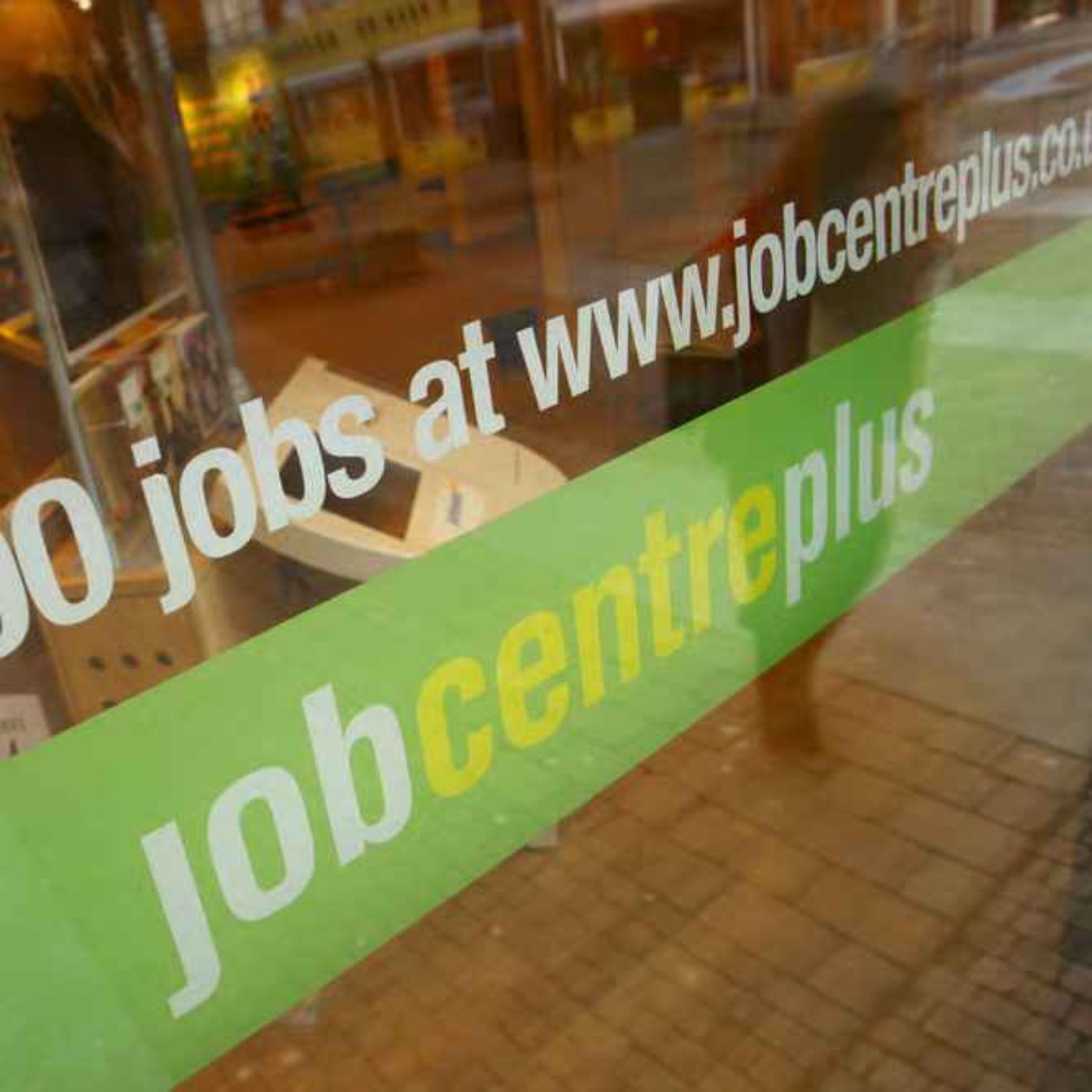
0:02Hi, I'm Charlie Duffield and welcome back to The Standard Podcast. If you're new here, hit follow and give us a rating. For all the latest news, head to standard.co.uk. Coming up later in the show, the battle to keep London's youth dancing. I think maybe if you're in a room with really talented, really enthusiastic young people, it is quite hard to hang on to your pessimism. But first, unemployment has jumped by almost 100 ,000 people in the three months to May this year, which is the highest it's been since the second lockdown during the coronavirus pandemic. Quarterly data from the Office for National Statistics showed there were 1.67 million people actively looking for work during the quarter, up 98 ,000 on the previous three-month period.
0:57The 4.7 % unemployment rate is the highest since the April to June quarter of 2021. The latest figures cover the period that included the start of higher employer national insurance contributions, which many companies have said will lead them to cut jobs or postpone recruitment. To unpack these figures, I spoke to Professor Ashwin Kumar, Director of Research and Policy at the Institute of Public Policy Research. Ashwin, can you explain a bit more about what these figures show today? So what they show is a very small increase in unemployment. But interestingly, when you delve a little bit deeper into the figures, where that has come from is not particularly people losing their jobs, but actually fewer people who are inactive, not looking for work.
1:45Basically, people who were previously not looking for work have started to look for work. So tell me more about that. The way economists classify people in the labour market, there are people in work, and then amongst the people out of work, there's two groups. The unemployed are those who are currently looking for work, and the inactive are the people who are not currently looking for work. And so one of the things that you can see is you can see if you have people who are inactive, they're not looking for work, and they start to look for work, what that can do is that can increase the numbers of people who are unemployed.
2:18And that's because there's more people out of work and looking for work. And that's what the Labour Force survey is saying has happened in the last quarter. And so actually, that's a good thing. If you have lots and lots of people who are out of work and not looking for work, that's a more serious problem than people who are unemployed, because they are out of work, but at least they're looking. If you think about it in stages, if you have a lot of people who are inactive, what the government wants to do is to support them, encourage them to start looking for work. But initially, when they do that, then that means you're going to have a few more people unemployed.
2:50But hopefully that process of looking for work will then start to increase the employment rate further. Whereabouts in the country are unemployment rates highest? The way we tend to look at it is to look at employment rates, what proportion of the population are employed. And it's clear that the lowest rates are in the northeast of England. The northeast has quite high proportions of people who are out of work and not looking for work. and so that's where probably the sort of the biggest challenges are in terms of getting people into work. And do we know which sectors or industries have been hit the hardest?
3:25In terms of the changes in the last month or two it's been accommodation and food services that's had the sort of biggest reduction in the number of employees and so that's not entirely surprising. What we've seen is the tax changes, the tax rises, the employers' national insurance contributions They bite harder where employers are paying small amounts to staff. And so it's not surprising that kind of one of our lower paying sectors is the one where there's more uncertainty on the part of employers and potentially looking for automation or other ways in which they can kind of hold down staffing costs.
4:02Okay, so can you remind me about the changes to national insurance contributions? When we're employed, we pay national insurance contributions, but the employer also pays. And And what the government did in the budget in October is that it reduced the earnings threshold above which employer national insurance contributions have to pay. So whereas previously some low paid staff, employers didn't have to pay contributions on those staff's earnings. Now they have to do so. And the other thing they did is they increased the rate of employer national insurance contributions. So the combination of the two effects means that the effect is bigger where you have lower paid staff.
4:37The point of that was to spend more on the health service and other public services. And so what we've seen probably is a little bit of a slowdown in terms of hiring and perhaps in terms of wage rises. So there's two sides to it. There's the tax, which obviously some employers are holding back on hiring right now. But then there's the positive side of it, which would be the expenditure that follows from that taxation. So is this a jobs crisis then? You'll be completely wrong to call it a crisis. The rate of earnings growth has slowed slightly, but it's still, on average, quite a bit better than inflation, quite a bit better than prices in the shops.
5:12It does seem that there's a little bit of caution at the beginning of the tax year because of the employer and national insurance contributions with employers waiting to see how the economy develops. But as I say, as that spending kicks in, it's probably likely that will start to have positive economic effects. Finally, do you have anything else to add? We'll have to see what happens on the labour market in terms of the number of people in work. But if there's any sense in which it's sort of starting to reduce, then we'll probably see the Bank of England reducing interest rates, which will reduce people's bills, give companies a bit more confidence to invest, and then that will help to boost the economy in return.
5:51Let's go to a break. Coming up in part two, find out more about the organisations championing emerging voices in dance. We'll see you back here in just a moment.
6:12Welcome back. From this Saturday until the 27th of July, Sadler's Wells and Sadler's Wells East is calling all young dance makers, enthusiasts and newbies for its YFX festival. It's a celebration of youth dance amid a challenging landscape, with arts education continuing to face widespread cuts and uncertainty. Fervent campaigning by figures such as choreographer Sir Matthew Bourne has warned against a world in which there can be no more Billy or Betty Elliotts. The Standard's dance critic, David Jay, has written about the fight to keep access to dance and teaching of the art alive and he joins me now.
6:55David what is the current landscape for youth dance looking like in the UK? It's a challenging picture I think a third of schools in the UK offer dance even though it is on specified national curriculum and we know that the take-up of art subjects is falling at A level the university humanities departments are being squeeze and shedding staff. So on that sort of level, it's quite challenging and possibly even bleak. On the other hand, there is a lot of other activity, a lot of schemes that are working so hard to broaden access, to make sure it isn't just the cosseted little treasures whose parents can afford private dance lessons, who get some access to dance.
7:45Sat Does World has a big youth dance Festival happening, which is gathering a lot of different kinds of companies and initiatives. National Youth Dance Company works with seriously talented artists at the top of their game to expose young people to what creativity can look like, what collaboration can look like. And on the other hand, there are programmes like Step Into Dance, which is run by the Royal Academy of Dance and the Jack Petchy Foundation. And that goes into hundreds of schools around London and the Southeast. And again, gives them a provision that they wouldn't otherwise have in their schools.
8:25Really good practitioners, street dance and hip hop dancers, coming into schools, leading sessions, giving young people a chance to explore areas of creativity that they might not have realised can lead to further study to a profession, to a career. In your feature, you refer to dance as a transformative performance art. Why do you think it's so beneficial for young people to learn to dance? I had said that sort of thing before. I've heard it a lot from interviewees. It was really when I went into one of the Step Into Dance Youth Company rehearsals at the Royal Academy of Dance in Battersea. So I saw the flesh on the bones of those kind of statements, because people talk a lot about how dance is great for your dedication and for your focus.
9:19And I saw that. I went into the room, about 30 young people, all chatting very standard teenage behaviour. The minute the music comes on and the rehearsal starts they just snap into focus like little lasers and you could cut the concentration with a knife so I certainly saw that what I also saw one of the leaders of the session had talked about how they like to encourage mentoring they like to bring out leadership skills and in a very informal way you saw that happening people were teaching other dancers routines the older ones were guiding the younger ones, mentoring was happening. Everyone was like an informal rehearsal director.
10:05And why that's interesting, I think a lot of the people I spoke to talked about how dance is great for gathering a lot of transferable skills. I was really expecting this, Charlie, to be quite a pessimistic piece because of the challenge of the funding landscape. but I was surprised by the positivity radiating of all of these conversations. So were you involved in dance when you were younger? I was a very awkward, very self-conscious young person. I was nerdy and bookish. It does occur to me that my young David years might have been very different if I had been exposed to dance. because, again, the social benefit was very clear to see.
10:58Ruth Brill from the London Children's Ballet, the artistic director, said that one of the things she loves about the rehearsal process is that the children who are really shy at the beginning don't talk to people, find it difficult to make friends. By the end of a six-month rehearsal process have come out of their shell. And how has social media changed the dance industry? Yeah, that was really interesting. In two ways. The negative one first, Kenrick Sandy of Boy Blue, who's guest artistic director for the National Youth Dance Company this year, said that he felt that young people, because they could do a lot of their dance on social media, just them and their phone and their camera, they're not having to go out and socialise with other people.
11:46They're not having to do that activity with others. And there are all sorts of obvious reasons why that might be concerning. On the other hand, he felt that it also was allowing a very entrepreneurial, hustly and strategic mindset. And a lot of the young people he saw, one of the dancers with the National Youth Dance Company this year, Hali Wasame, said that she had never done a dance class before she took her audition for the company. She was a bedroom dancer. She was really into K-pop. She was really into Victoria Monet. She was doing all those routines, learning them herself. it was only when someone connected to the National Youth Dance Company saw her performing they said you know what you should really audition and that was the first time she'd been in a in a formal dance class setting it is kind of amazing how far you can get with just passion some determination and a really nice phone.
12:46Finally where can people get involved in dance in the capital? There's a lot going on so London's Children's Ballet operate throughout the year they have a flagship production in the summer and then they take out a smaller production version of that which goes into care homes and schools and other settings which have our dance brought into them and they have dance classes a really good audition process the national youth dance company it will be recruiting its next cohort soon step into dance is a fantastic thing if your school doesn't already have it, it would be very worthwhile trying to find out if you can bring it in.
13:30And that's The Standard. For all the latest news, head to standard.co.uk. If you'd like to get in touch, please do drop us a line at podcasts at standard.co.uk. We'll be back here tomorrow at 4pm. We'll see you then. Thank you.
Today unemployment rates have risen to 4.7%, which is the highest rate since the second lockdown of the coronavirus pandemic in 2021. But what’s the truth behind the figures? Professor Ashwin Kumar, Director of Research and Policy at the Institute of Public Policy Research, is here to unpack the data.
And in part two, The Standard’s dance critic David Jay explores the uncertain landscape of youth dance, ahead of Sadler’s Wells and Sadler’s Wells East YFX festival.
Hosted on Acast. See acast.com/privacy for more information.


