
 Ask ChatGPT



The episode discusses the UK government's plans, as articulated by Chancellor Rachel Reeves, to cut civil service running costs, which may result in significant job losses. It also features a historical segment on the 200th anniversary of Beethoven’s Ninth Symphony's UK premiere.
Written by AI. May contain mistakes.

Get the gist, explore an idea or ask about something said.
 Claude
On The Standard, what are the key points of this episode?
Searching your listeningAutomatic transcript. May contain errors.
0:02Hi, I'm Rachel Abbott and welcome back to The Standard Podcast. If you're new here, hit follow and give us a rating. Coming up, celebrating 200 years since Beethoven's Ninth Symphony's first UK premiere in London with historian Dr. Leanne Langley. The idea was to forge ahead and make music not into a trade but into a business so that musicians felt included in the middle classes. They weren't servants. They were the masters of their own fate. And Beethoven stood for this principle.
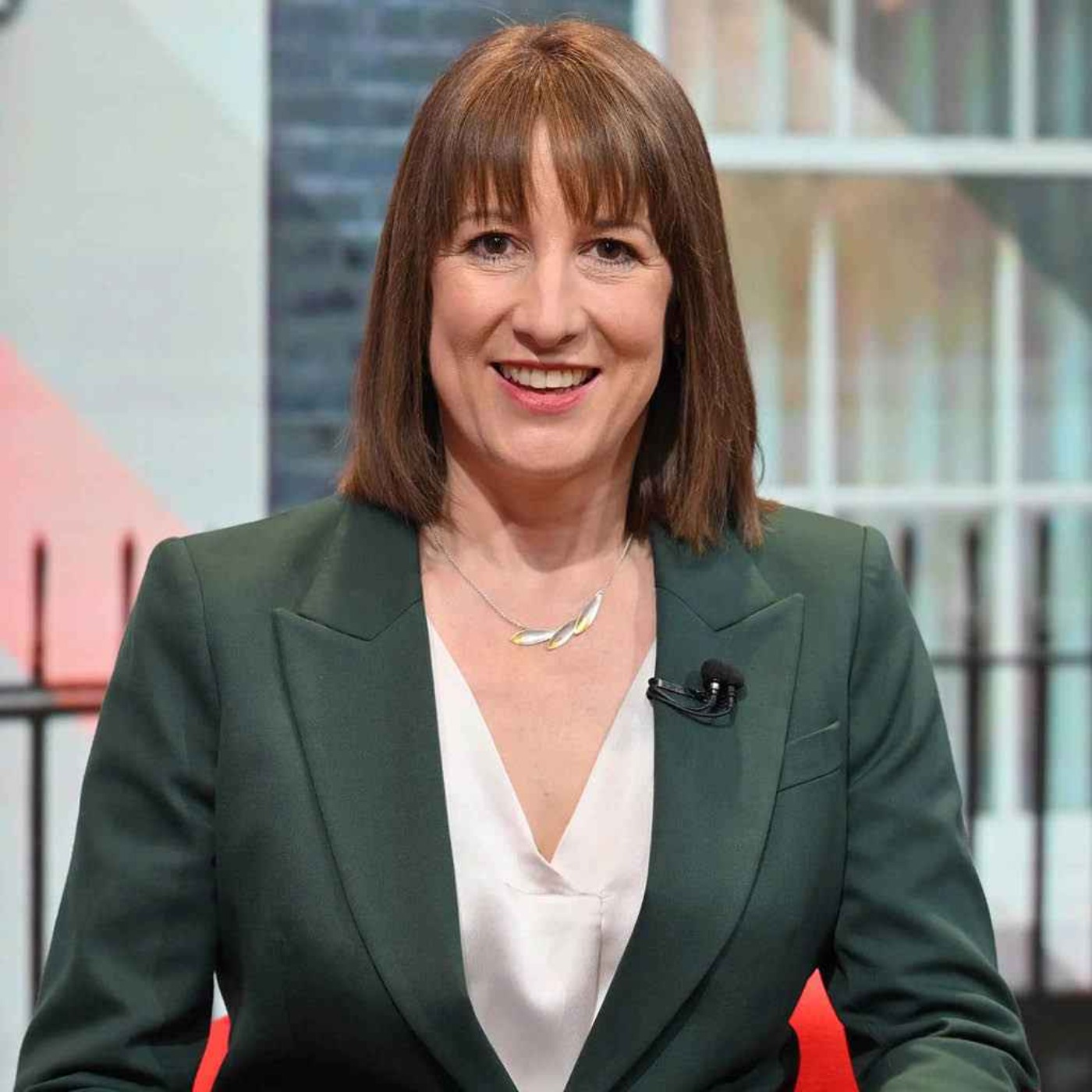
0:41But first, as we approach the spring statement, the government confirmed over the weekend their plans to cut civil service running costs. Speaking to Sky News, Chancellor Rachel Reeves said she was confident civil service numbers could be reduced by 10 ,000. But the Chancellor is now facing a war with unions amid claims as many as 50 ,000 people would lose their jobs. Reeves said Labour was looking to slim down the sector by slashing its, quote, back office functions, the administrative and bureaucracy functions, by the end of this parliament. The leader of the biggest civil service union, the Public and Commercial Services Union, has said any cards will hit frontline services after years of underfunding by previous Conservative governments.
1:29Joining us now is the London Standards' Chief Political Correspondent, Rachel Burford. Hi Rachel. Hello. Rachel, more news of cuts as we approach the spring statement. Is there fat to trim in the civil service? The Chancellor has been fighting off talk that she is taking Britain back to austerity. Yeah, so I mean if you believe the Chancellor there is certainly fat to trim in the civil service. I think even the Transport Secretary, Heidi Alexander, was on the media around today saying, you know, they're not setting a target for how much they want to cut necessarily, but the cabinet believed that the civil service must be leaner and more agile are the words she used.
2:06So yeah, they're looking to cut the running costs of the whole civil service by about 15%, which, you know, it sounds like quite a significant cut. I think the Chancellor suggested it may result in 10 ,000 job losses, but there have been claims that as many as 50 ,000 public sector workers could lose their jobs over these plans. And when did the size of Britain's civil service start ballooning? The Chancellor over the weekend suggested that it was during Covid because of the sort of massive job of getting you know the vaccine roll out and all the things associated with the pandemic together there was a sort of ballooning civil service but actually if you look at the figures it happens a lot earlier than that Britain's civil service fell by about 19 % between 2010 and 2016 so we were there was a stripped down civil service until then.
2:54But then, of course, in 2016, Britain voted to lead the European Union. So in June 2016, there were about 384 ,000-ish full-time employees in the civil service. But that really began ballooning following the Brexit referendum. And then it's reached a high in September last year when there were about 515 ,000 full-time employees in the sector. So that is when we saw that big rise. And it's not particularly gone down since then. So I think, yeah, the Brexit referendum and Britain sort of leaving the EU resulted in a lot of policy specialists being drafted in. And that's when we really saw the sector increase by a significant amount.
3:34You touched on the running cost a little at the start there, but could we look deeper? How much are they looking to cut? Yeah, so it's 15 % is what's being suggested by the Chancellor. Cabinet Office Minister Pat McFadden has apparently been given instructions to make savings amounting to about £2 billion a year by the end of the decade. And that's going to put certain parts of the civil service under more strain than others. You know, things like human resources, communications, office management and policy advice. Are those sectors sort of really expected to be in the firing line? And why are unions concerned?
4:07Well, unions obviously represent workers. And if you've got a significant amount of workers potentially losing their jobs or, you know, or having to work to cover colleagues who may use their jobs. And that's obviously a really big concern for the unions. Had quite a few come out that represent civil servants and say that this is, you know, basically going back to austerity. Fran Heathcott, who is the General Secretary of the Public and Commercial Services Union, which is the largest union covering civil servants, said the impact of making cuts will not only disadvantage our members, but the public we serve and the services they rely on.
4:43We've also had FDA General Secretary Dave Penman saying we're talking about something that's close to 10 % of the entire salary bill of the civil service over the next three to four years. Civil service is about half a million staff. So, you know, that could be 50 ,000 people who were losing their jobs. The Prime Minister defended the plans on BBC Five Live this morning. What did he say? So, yes, Keir Starmer did defend the government's plans. He basically said they're looking to make savings across the board. Rachel Reeves is facing a pretty sort of floundering economy at the moment. She's not got the growth she expected to have.
5:18She's got very strict fiscal rules that she set for herself. And, yeah, the Prime Minister basically said, look, cuts basically are coming across the board. You know, this comes after we saw the big£5 billion cuts to benefits payments that were talked about last week. So it's not just a civil service that is facing cuts. It's a lot of government expenditure. And also, we're having to face, with the situation in Europe and the foreign politics situation, we are facing having to spend more on defence as well. Money is being moved around a lot at the moment. And the Prime Minister has sort of said, look, there are going to have to be savings made in other areas where they're not as important or seen as important to the government in the current political situation.
6:06Finally, for anyone who isn't too sure, what jobs are we looking at here? Well, like I said before, I mean, there are certain parts of the civil service that will be probably facing more cuts than others. Things like communications, which is, you know, perhaps press officers, internal communications, office management, human resources, policy advice. Those are the sort of areas where there are expected to be more cuts than others. But the details will be laid out by the Chancellor later this week, or some of them will be, and then over the coming months as well. So we'll expect to see more details about who may or may not be more in the firing line coming out over the next few months.
6:47Let's go to a break. Coming up in part two, historian Dr. Leanne Langley on the significance of Beethoven's ties to London and the first UK premiere of his Ninth Symphony. A bunch of the players lived around here in the neighbourhood. And when they saw that this corner was on fire, they rushed down here and convinced the police to go inside the building and let them open the cupboards with a lock breaker. And they rescued that Beethoven score. We'll see you back here in just a moment.
7:22Welcome back.
7:32The Royal Academy of Music there, performing Ode to Joy from Beethoven's Ninth Symphony, selected by the Royal Philharmonic Society to celebrate 200 years since the piece premiered for the first time in the UK. The premiere performed by the London Philharmonic Society took place on March 21st 1825 at a popular music venue on London's Regent Street called the Argyle Rooms. Fast forward to 2025 and a NatWest bank now takes its place. To tell us more about the history behind Beethoven's Ninth Symphony, the composer's ties to the London Philharmonic Society plus the significance of the Argyle Rooms, we're joined by historian Dr.
8:16Leanne Langley, who specializes in the musical culture of Britain. Dr. Langley, could you start by telling us about Beethoven's relationship with the London Philharmonic Society? So the idea was to forge ahead and make music not into a trade but into a business so that musicians felt included in the middle classes. They weren't servants. They were the masters of their own fate, and Beethoven stood for this principle. So he was very interested in working for London Philharmonic Society. They commissioned him to do more than one thing. He didn't always do what they asked, but they always encouraged him and gave him hope that one day he could come to London.
9:00They invited him a total of three times. He said he really wanted to come, but he never did, in fact. That's because his own health was deteriorating. He couldn't hear. He requested a travel companion, which required more money, and they said no to that. And he did compose the Ninth Symphony at their request. They made two requests. He was late with his manuscript delivery by two years, but they paid him anyway. And they paid him before they ever got the music. What they didn't know was that he had had the music performed in Vienna first. It was a little bit of sore feeling. But if you look at the manuscript notes and the minutes of their meetings, they never specified, please, can we play it first?
9:46You're speaking to us today from the site where the UK premier took place, which is now a NatWest bank. But what is the story behind the Argyle rooms? Why was the venue significant? The architect of Regent Street, John Nash, worked with the Prince Regent to create what he thought and they thought would be a competitor for Paris. That's how beautiful they were aiming to make the whole street, a wide street that could connect traffic and break up the knot of old dirty houses that existed around Oxford Street. So it was a cleanup urban planning project that Nash invented, and music was put at the heart of it because these philharmonic musicians who were already in touch with Beethoven decided they wanted to invest in the property on Regent Street.
10:35They purchased the old concert hall and had Nash convert it into a brand new elegant building, which could seat 800 people for a major orchestral concert. In a way, it's centrally important to the beginning of the classical music industry at this part of town. In the way that Fleet Street became associated with newspapers, Regent Street became associated with music. There were 200 different businesses in the 19th century that fanned out from this influence at 252 Regent Street. It really, really is a strong line. You can prove it. You can look at all the different companies that set out to sell printed music, create gramophone records, put on broadcast concerts.
11:24Even the location of the BBC is related to this building. What happened next? The Argyle Rooms were then destroyed by a fire in 1830. Yes, you've done your homework. It was tragic because this gorgeous suite of rooms that they had paid an enormous amount for and saw so many wonderful premieres and performances. Very famous musicians came here, like Franz Liszt, when he was a 12-year-old boy, played piano in here. And then Madame Catalani, one of the greatest opera singers of Europe, gave a rehearsal that was overflowing with people who wanted to hear her sing. Karl-Marie von Weber conducted Beethoven's Fifth Symphony on this site.
12:02But the fire in 1830, of course, was completely unexpected. There were two possible causes. One was that something happened with the heating apparatus. Another was that there was a show where a fire eater was going to step inside an oven and cook a steak and then step out again to show he survived and the steak was cooked. And it went wrong and it caught fire to the building. A bunch of the players lived around here in the neighborhood. And when they saw that this corner was on fire, they rushed down here and convinced the police to go inside the building and let them open the cupboards with a lock breaker.
12:37And they rescued that Beethoven score. If they hadn't done that, we would not. It's now in the British Library. It's one of the three most important copies of that piece, including his autograph, which is in the Berlin State Library. That's fascinating. Thank you. Finally, who attended the premier? Who would typically attend the Argyle Rooms? That's a very good question. People who came to the concert, by and large, were members of the Philharmonic Society. That is, they joined this concert-promoting society with an annual fee that they had to pay. It was a club, and you had to pay to be in the club.
13:12And, sorry to say, you also had to sort of pass a little test. Somebody else had to know who you were and vouch for you. It was, in a way, a private club. But in this period, the idea was they wanted middle class, proper people, not just anybody off the street, so to speak. They did not even advertise the concert so that ordinary people could come in. That sounds odd to us now because you'd think, oh, wouldn't they be wanting to build the audience? The notion of building a public audience is something much later. It's much more a mid-late 19th century phenomenon when there were competing orchestras.
13:47orchestras. Because the Philharmonic Society was more or less the only show in town, they could get away with this exclusivity. But when you ask the kind of people, some of them were bankers, some of them were shopkeepers, some of them were business owners, some of them were other artists and creative types, lots of writers, some of them were teachers and doctors. And there were women. There were always women right from 1813 who could join as professional members. Music teachers, harp players, a lot of industrialists, because the music industry was a thriving industry. Piano building was bigger here than almost in any country in the world in the early 19th century.
14:30So pianos were exported from central London. Swiss Cottage was where most of the pianos were made. It's also true to say that though the Prince Regent was nominally on the letterhead, as the patron, he very rarely came. And there were not very many aristocrats who personally came. They were members, but they didn't always come. They sent their money, but they weren't necessarily all that interested because they couldn't call the shots about what was on the program. Unlike the opera house where the aristocrats sent in their money and they said, and I want you to hire Madam So-and-so, and I want you to hire Mr.
15:05So-and-so, they could more or less name who they wanted to come and sing, but not here, not at the Argyle Rooms. So it was very much, in a sense, not a class war, but it was about the middle class asserting professional direction of music rather than amateur direction of music.
15:27That's The Standard. For all the latest news, head to standard.co.uk and please do drop us a line at podcasts at standard.co.uk. this show returns tomorrow at 4pm we'll see you then
As we approach this week’s spring statement we join The London Standard’s chief political correspondent Rachael Burford, who explains the government's plans to cut civil service running costs.
Chancellor Rachel Reeves is now facing a war with unions amid claims as many as 50,000 people would lose their jobs.
In part two we speak to historian Dr Leanne Langley as March 21st marked 200 years since Beethoven’s Ninth Symphony first premiered in the UK.
The first performance took place at a popular music venue on London’s Regent Street called the Argyll Rooms.
We chat about the history behind Beethoven’s Ninth Symphony premiere, the composer's ties to the London Philharmonic Society, plus the significance of the Argyll Rooms at that time.
Hosted on Acast. See acast.com/privacy for more information.


