
 Ask ChatGPT



The episode of The Standard podcast, hosted by Alan Leer, features journalist Melanie McDonagh discussing the concept of “Wet January.” The discussion critiques the popular New Year’s campaigns like Dry January and Veganuary, arguing that these self-denying practices are misguided, especially during the harsh winter months.
Written by AI. May contain mistakes.
Discussion on the difficulties of self-improvement resolutions in January.
“But what if we've got it completely the wrong way around?”
Exploration of why January is a poor time for restrictions like Dry January.
“Joining me now is the standard columnist and features writer, Melanie McDonough, to talk about wet January and why now might be the worst time of year to give things up.”
Historical perspective on January and the end of the Christmas season.
“And the weather is telling you that you should be indoors around the equivalent of an open fire and eating and drinking.”
Analysis of the common perception of New Year resolutions and their implications.
“And for us, it didn't go in for this business of abstinence and frugality and Puritanism at this time of year.”
Discussion on the disconnect between modern habits and seasonal needs.
“You can feel that things are stirring under the ground, at least if you get out of your flat and you're not living in London.”
Insight into the performative aspects of health campaigns like Dry January.
“And when you come home when it's cold and wet and you come back to your own environment, what you do not want is to sit down with a bowl of chickpeas.”
Discussion about the concept of Regenuary and its alignment with seasonal practices.
“We were having a little chat about whether it's time to ditch dry Jan.”
Ideas for a balanced and moderate approach to eating and socializing in January.
“which is problematic in several different ways, including our own health.”

Get the gist, explore an idea or ask about something said.
 Claude
On The Standard, what are the key points of this episode?
Searching your listeningAutomatic transcript. May contain errors.
0:03Hello and welcome back to the Standard Podcast. I'm Alan Lear. You might know me from the Tech and Science podcast, but today we're all lucky enough to get Double Bubble. If you're new here, hit follow and give us a rating. And of course, for all of the latest news, head to standard.co.uk. Coming up, is it time to ditch dry January?
0:31Every January, millions of people resolve to be better versions of themselves They give up alcohol, they swear off meat, they cleanse, restrict and reset, all in the coldest, darkest, most unforgiving month of the year. But what if we've got it completely the wrong way around? It's that time of year when familiar phrases resurface. Dry January, Veganuary, resolutions, detox. These campaigns are often framed as healthy, even virtuous, a way to regain control after Christmas excess. But they also ask something quite specific of us to embrace austerity at the coldest, harshest point of the whole year when warmth, nourishment and comfort have traditionally mattered most.
1:21It also raises a much bigger question about how we live now. Have we become so disconnected from the seasons that we no longer notice when our habits work against them? And have we come to confuse self-denial with well-being, regardless of context? Joining me now is the standard columnist and features writer, Melanie McDonough, to talk about wet January and why now might be the worst time of year to give things up.
1:52Melanie, welcome. The phrase wet January feels deliberately provocative in a world obsessed with dry January. What's the core argument behind it? Why is January of all the months the worst time to give up a sip? It's not just alcohol. January is the worst possible time to give up things in general, including meat and dairy, because parallel to the abomination that's dry January, you've got another abomination, which is veganuary, when we're being invited to give up not just meat, but dairy as well. So you've got a period of abstinence at the absolute worst time of year. This is a harsh and cruel month.
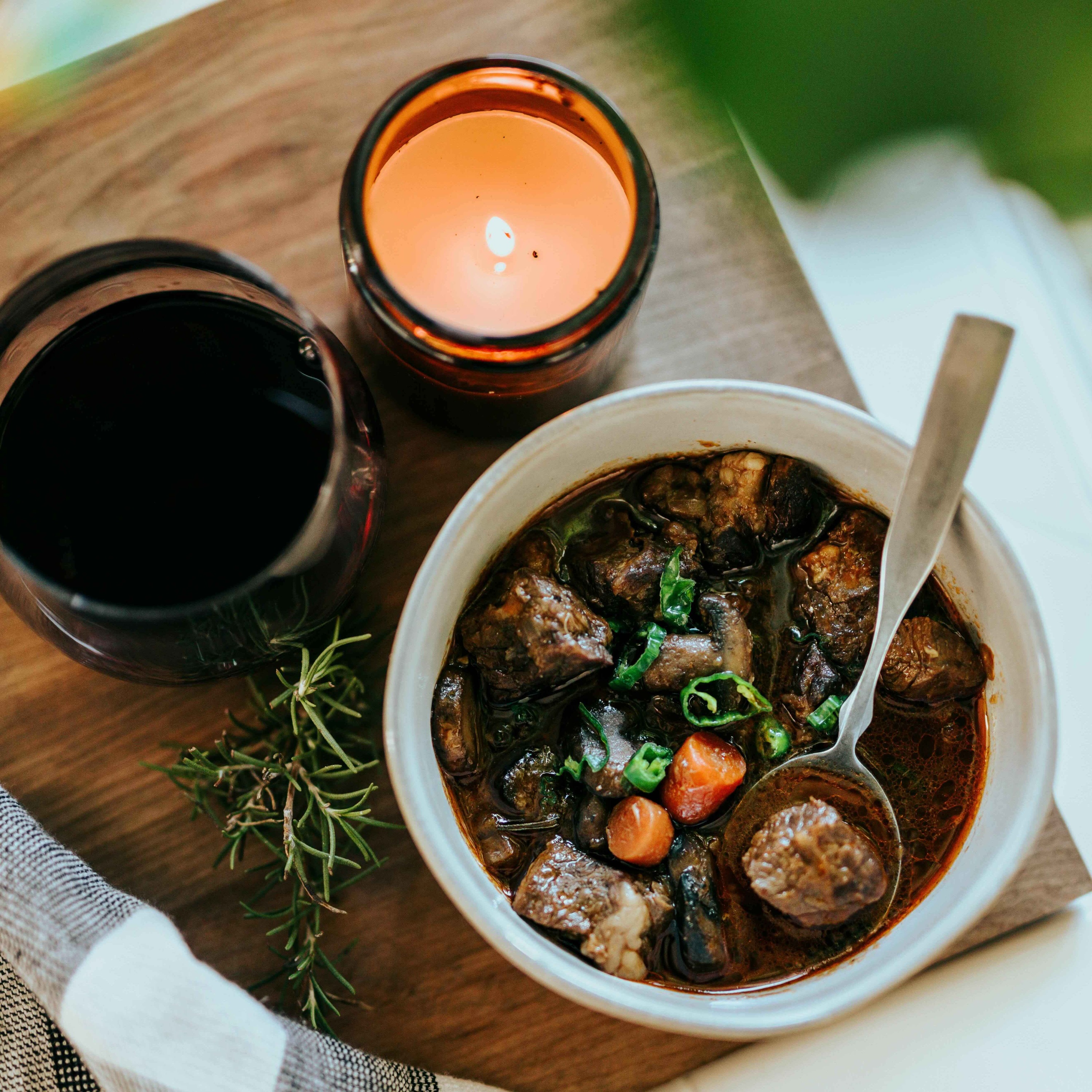
2:27If you look outside the window, you'll find that the weather is really bad. Not as bad as it is elsewhere, but there's a storm out there. And the weather is telling you that you should be indoors around the equivalent of an open fire and eating and drinking. What you should be doing is having things that are hearty and comforting. And a nice beef stew, I'd say, and a bottle of claret is exactly what the weather is telling you to have, followed by a whiskey, mack or a hot toddy. So if you're not drinking and if you're not eating the full gamut of delicious things in January, then you're doing yourself no favours and you're doing society no favours.
3:01It's bizarre and abnormal. So it's actually at odds with the weather, it's at odds with the season and it's at odds with our former customs. And so to that end, could you talk a bit about the history of this period of the year? Some of the former customs and potentially what have we lost by abruptly cutting off festivity and indulgence on the 1st of Jan? In the old scheme of things, Christmas started on Christmas Eve. It's preceded by VADVENT, which is kind of a period of preparation. starts on Christmas Eve, goes on in full blast for 12 days. That is to say, the full festivities don't stop until the high point on the 6th of January when the three kings come to baby Jesus.
3:37And that's the epiphany. And that's when the full merrymaking kind of culminates. And then it kind of tapers off because the whole season of January is kind of a modified Christmas because you're working down towards Candamus, which is the end of the Christmas season. and that actually makes complete sense in terms of our weather. I don't know whether it makes sense in terms of the Holy Land and Bethlehem, but it generally will make sense here. And for us, it didn't go in for this business of abstinence and frugality and Puritanism at this time of year. The 1st of January actually is bang in the middle of the 12 days of Christmas.
4:12It's completely anti-Christian and irreligious and on those grounds alone it was really a bad thing. But also it's terminating a natural period of celebration. So why would you want to cut off the tradition of Christmas lasting 12 days? I mean, what possible incentive is there to give up good things precisely at the point when you should still be enjoying them and still having friends around? Now, this, I think, is because we've got this notion of having New Year's resolutions, which is absolutely fine. Nobody's got anything against New Year's resolutions as long as you're not hung up about them.
4:46But for many people, New Year's resolutions equate to abstinence rather than kind of other aspects of behaviour. And if you're getting hung up about kind of losing three stone after Christmas, then you may think this is a good time to start. Well, it's not. Keep abstinence for Lent, which is this year, it's the 18th of February. So the days are getting longer. It's getting a tiny bit warmer. Spring is on the way. You can feel that things are stirring under the ground, at least if you get out of your flat and you're not living in London. and nature is kind of starting to park up. That's the time when you can start 40 days of abstinence because it makes sense in terms of the weather, it makes sense in terms of the season and it makes sense in terms of existing tradition.
5:25This is at odds with existing tradition, it's at odds with old customs and it's actually taking away something that's good and rational, namely that period of festivity over 12 days and it's replacing it with something austere and Puritan at a time when it's just not appropriate. In your piece you talk about how January is cold, darkness and storms are being ignored in the way that we talk about health and self-improvement why do you think the weather and the season we're in isn't taken into consideration well plainly people don't get out enough and plainly when they're out they're not sort of paying attention to what's going on these are people who spent most of their life indoors otherwise they wouldn't even think about it so they actually don't think of the actual situation they're inhabiting if people were a little bit more in touch with the seasons if they sort of got out of their flipping flat or got out of bed, they'd actually realise that there's something happening out there and that's the weather.
6:16So it's not actually a propitious time of year to give stuff up when it's freezing cold and when it's wet. And when you come home when it's cold and wet and you come back to your own environment, what you do not want is to sit down with a bowl of chickpeas. What you actually want to do is to sit down with a steamed syrup pudding. It's actually the fact that we're completely divorced from our natural environment. And that's because we're so urban and so atomised and so utterly divorced from our own traditions. And if you did spend, as people used to, quite a lot of the time out of doors, then your whole perception of what you need at this time of year would be completely different.
6:55And because of the sort of cultural influence of London and the urban environment, because so many of the opinions are formed by the cliques here, then you've actually got people who do live in the country trying to conform to these bizarre and unnatural standards. Dry January and Veganuary are often framed as morally virtuous. Do you think that there's a performative element behind them, a sense of public self-discipline rather than private well-being? Oh yeah, I'm sure there is. I mean, they're just slogans. They're just invented by somebody who likes to brand things. It's like Sober October.
7:28The branding seems to come in a bizarre sort of way from some sort of futile attempt at a rhyme. It is an attempt to create a new kind of tradition, except the new kind of tradition it's trying to create is, as I say, completely at odds with what we should be doing. And it's utterly insensitive to what nature is telling us to be doing. So I think that there is a performative aspect to it. But the one thing, the one counter tradition that's being invented now, which I really like, is regenerate. And although I think it's a futile sort of slogan, that's just silly, it is an attempt to make us think about eating properly.
8:03So it's an attempt to kind of make us think about regenerative agriculture, of which the humane treatment of animals is a part. So it combines ethical animal husbandry with wheat eating. Let's go to an ad break. Coming up, we'll find out more about Regenuary and the Forget Veganuary campaign. We'll see you back here in just a moment.
8:34Welcome back to The Standard Podcast. We were having a little chat about whether it's time to ditch dry Jan. We'll go back to Melanie McDonagh right now.
8:46Melanie, could you tell us a bit more about Regenuary and what it entails and why it makes more seasonal sense? So basically, regenerative agriculture uses this sort of animal manure in order to fertilise the rest of the farm. You've got places like the Knaipa estate, which actually go in for rewilding. But there you've got the animal waste as part of the natural cycle, creating foodstuffs for animals to graze on. So it is treating agriculture in kind of quite a traditional way, whereby animal husbandry is part of the deal, but not the whole deal. So you will have other crops and other things being produced.
9:24But the ethical treatment of animals is very much part of that. And the new sort of backlash against Veganuary involves sponsoring an animal welfare charity in conjunction with eating meat. And the slogan for that movement is Forget Veganuary. And it's interesting that one of the people who helped establish Veganuary has actually joined that particular movement for the ethical treatment of animals rather than trying to do away with eating meat and dairy, which is problematic in several different ways, including our own health. It entails thoughtful carnivorousness. So you eat meat, but you may eat less of it, which is absolutely fine.
10:03And you make sure that it's sourced from producers who take trouble about where the meat comes from. So anybody who just picks up a sort of kebab from Deliveroo without thinking about what the provenance is, has got a bit of an issue. I mean, we should be thinking about how the animals have been slaughtered and how the animals have been reared. And if we're just going for the cheapest possible option from a kebab shop or from a burger chain or from Nando's or whatever, you're not actually thinking through the ethical implications of your diet. And this would be quite a good resolution if we could be more thoughtful about how we eat meat and what kind of meat we eat.
10:37So at the heart of your argument is moderation rather than excess. What would a sensible seasonal January look like without either like overindulgence or joyless self-denial? Well, it would actually look a bit more normal. I mean, traditionally, people didn't really return to work as farm labourers until the Monday after Epiphany. So that would in fact be next Monday. And so you've got a Christmas season that doesn't start too early, starts on Christmas Eve, goes on, as I say, for 12 days and a little bit after that, and then slowly tapers off. So we've got a season now where you can actually be hospitable.
11:09You can invite friends around. You can make the most of the produce of the season because there's some lovely produce now. There's still some game. There's good meat. There's root vegetables. Loads of stuff that we eat just at Christmas, which actually we could be eating throughout January. And so instead of having a joyless kind of month, we should be actually having a mildly celebratory kind of month because it's cold outside. We should be entertaining friends at home, enjoying the food that we're eating, having things that are wholesome and hearty, I mean, a steamed syrup pudding with golden syrup is one of the nicest things you can actually have.
11:41And at this time of year, you're actually validated because you need more calories because it's cold out there. So if you make a nice beef bourguignon, half a bottle of burgundy there and half a bottle in the chef, then you've got something that will actually cheer you up. It won't actually make you feel miserable. Whereas if you've got a bit of tofu and a chickpea stew, I put it to you that you're not going to feel quite as good. Finally, is there anything else you'd like to add? Yes, I think we should get back to looking at the traditional cycle of the year and seeing that it actually makes sense.
12:08So, as I say, no premature abstinence starting on New Year's Day. In fact, we should get away from the idea that New Year, New You actually means abstinence and frugality and generally feeling miserable. Can we just have some more positive and upbeat kind of resolutions, which can mean, as you say, 18 in moderation. And then keep abstinence for Lent. And Lent is 40 days between this year, it's the 18th of February, right up to Easter. So if one returns to this sort of cycle and stop trying to invent new and stupid traditions, if we just take a look at what we've already got, then I think we could have a much richer cycle of the year.
12:48And that's the standard. For all of your latest news, head to standard.co.uk. And if you'd like to get in touch, please do drop us a line at podcasts at standard.co.uk. We'll be back here tomorrow morning. We'll see you then.
Every January, campaigns like Dry January and Veganuary encourage restraint and self-denial at the coldest, darkest point of the year. But what if we’ve misunderstood both health and the seasons?
In this episode of The Standard, host Alan Leer is joined by journalist Melanie McDonagh as she makes the case for “Wet January” — arguing that winter is the worst possible time to give things up, and that our modern wellness habits have lost touch with how people have historically lived through the colder months.
We discuss seasonality, comfort, self-denial, and what our obsession with restraint says about modern life.
Hosted on Acast. See acast.com/privacy for more information.


