
 Ask ChatGPT



Written by AI. May contain mistakes.

Get the gist, explore an idea or ask about something said.
 Claude
On The Standard, what are the key points of this episode?
Searching your listeningAutomatic transcript. May contain errors.
0:03Hi, it's Rachel Abbott and welcome back to The Standard Podcast. If you're new here, hit follow and give us a rating. For all the latest news, make sure you head over to standard.co.uk. Coming up, we speak to The Standard's Head of Culture, Martin Robinson, about Blitz, the club that shaped the 80s at the Design Museum. It was a formative sort of breeding ground for a lot of famous and important people who went on to sort of dominate the 80s, including Boy George, Spandau Ballet, Steve Strange. But first. In his speech to the UN General Assembly, US President Donald Trump has made a fresh attack on Sir Sadiq Khan and claimed London wants to go to Sharia law.
0:51I have to say, I look at London where you have a terrible mayor, terrible, terrible mayor, and it's been so changed, so changed. Now they want to go to Sharia law, but you're in a different country. You can't do that. Both the immigration and their suicidal energy ideas will be the death of Western Europe. A spokesperson for Sadiq, London's first Muslim mayor, said we are not going to dignify his appalling and bigoted comments with a response. London is the greatest city in the world, safer than major US cities, and we're delighted to welcome the record number of US citizens moving here. Trump's attack on Sir Sadiq in his first speech to the UN, since 2020 came as he criticised Europe for its policy on immigration, claiming Europe was being invaded by illegal aliens.
1:41During UN meetings, the US president, in a rhetorical shift, also appeared to change his stance on Ukraine, speculating that Kiev could win back its land due to Russia's economic troubles. His comments were rejected by the Kremlin on Wednesday. To learn more, we're with The Standards' Defence editor, Robert Fox. To start, why has Trump targeted Sir Sadiq? Well, Trump is nothing if he's not an obsessive, and he seems to have a thing about Sir Sadiq Khan. He castigated Khan and Khan's performance as mayor and linked it with a charge that Sharia law was being introduced in London. This is a false link.
2:24And Khan came out and said, no, no, no, this has never even been on the cards. Although Khan, I think very early in his political career, as far as London was concerned, and remember he's a human rights lawyer as well, he talked about the presence of Sharia law in Muslim communities. And it was from that that the whole meme was developed about him. But it's not entirely new. That it came up in the UN in this particular form is a surprise. But the way that Trump is fixated on certain things, and we got the old trope about climate change being the greatest hoax, it's all that. It's what goes on in the psychodrama of his game show politics.
3:11I think it's a very interesting reflection, by the way, on his visit, his state visit last week, where conspicuously, he was kept out of London. They didn't want him there. I think the prime minister, I think very possibly even the king, well, the king must have agreed with it, keep him out of London because he's come up with all this stuff before. To use another bit of Trump's infantilist vocabulary, everything's nice, good, bad, or terrible people or a disgrace. I think what must have been most alarming about Trump's speech is how incoherent it was. I mean, is he, the question is, in the ever so most polite way, is he really losing the plot?
3:55And I think that that's what Rubio Hegseth and, above all, J.D. Vance must be thinking about now. Could this be a warning to the UK about the future of their US relationship? Well, it couldn't be because the Prime Minister, Keir Starmer, has defended Kant at the White House meeting when Trump attacked him then. And he's obviously got a thing about Khan. And Keir Starmer did say very quietly, well, he's a friend. We're not on a loser here. But where we are is that I do think with the disappearance of Peter Mandelson, there will be a reset of the personal relationship between the Starmer leadership and the Trump leadership.
4:34During UN meetings, Trump appeared to shift his stance on Ukraine. Why? I think he's got fed up with the way that Vladimir Putin has been playing him. They are extremely vain beasts. They are performers and Trump likes to be liked. And Trump, you know, he isn't joking when he aspires to get the Nobel Peace Prize because he mentioned seven conflicts in his speech that he had resolved. And the fact checkers are still checking that out. I don't think it is as big a change as the headlines would have it. I think what Trump is really saying to Moscow, please talk. We agreed to talk. We sort of thought we'd agreed to talk when we met in Alaska.
5:20And now it's all gone off the boil. There's been no further interest. You're trying to say that America doesn't count when NATO is involved in Europe and Ukraine. The Russian propaganda has been quite consistent in this over the last three or four weeks. It wants to detach America from the European allies in NATO, led principally by Britain, France and Germany, and saying that, you know, that they don't have the capacity yet. They don't have the weaponry or the money to ensure that Ukraine can get through the winter. So let's go for it. And we're coming well into the autumn fighting season. It's the mud season.
6:03And we come up to the snow by the beginning of November. They've had mild winters in Ukraine. But I think what's going to be crucial is the effect of winter the further north you get in the tundra in the Arctic, because that's where Ukraine is landing a very big blow by hitting oil and gas pipelines and terminals and refineries. and the pipelines and the terminals, the pumping stations are far more important than the refineries. So is Russia preparing to widen the war? Are they looking to confront NATO? Well, we must take that into consideration because the signs are really quite ominous over the past fortnight.
6:45There have been four or five probes, incursions, temptations, accidents by design, designs by accident. Between 17 and 23 drones over Poland on the 9th of September, one into Romania, and then the flight of three very advanced Russian fighter bombers coming up over Estonian airspace and going down the Baltic. And I think that that is a sign that they did not have friendly intent is pretty clear because they turned off what's known as their transponders. And then only just this week, we've had the sighting of at least three major drones. So they had to close Copenhagen airport for up to four hours and two really big drones spotted over a vital air base in Norway.
7:37So they had to close down Oslo airfield. And Russia is very worried about Norway and Denmark because they're about the most militant in warning the potential of Russian attack and the effect of disruption of cyber attacks, probing, sabotage possibly on pipelines, gas lines and communication lines. And this is why it looks as if what's going on is that Russia will go for a diversion if things go badly wrong, if they get really stuck in Ukraine and probably could attack the Baltics in the spring. The three Baltic countries, Estonia, Latvia, Lithuania. Let's go to a break. Coming up in part two. If you wanted to be around cool people, you had to go and find them.
8:22It's so different now where anything is accessible. Know people and hear music and whatever you want immediately through a screen. Martin Robinson on why institutions like the Blitz Club were so vital for the British culture scene. We'll see you back here in just a moment.
8:46Welcome back. 40 years since its closure, the Blitz Club reopens in London. Well, sort of. From now until March 2026, it's being celebrated in a new exhibition at the Design Museum. Behind a door in Covent Garden, the Blitz Club wasn't just a nightclub, it transformed 1980s London style. To unpack everything you need to know, I'm joined by The Standards' Head of Culture, Martin Robinson. Martin, for anyone who doesn't know The Blitz Club, what was it? So The Blitz Club was a very famous hub, really, of lots of different characters right at the beginning of the 80s. In fact, 79 to 80. It was a tiny little wine bar in Covent Garden.
9:38that was World War II themed. They played lots of music that was from Europe, especially the developing electronica scene, so all craft work and people like that. Played a lot of David Bowie. There was this idea that it was kind of like new sound going on, but crucially as well, it was all about glamour. It was about dressing up, putting on make-up, cross-gender, sort of dressing, anything you could do. It was all about, instead of punk, sort of gritty nihilism, it was about doing something a bit more glamorous and individualistic. It was very influenced by the decadent cabaret era of Weimar Germany.
10:21It was a formative breeding ground for a lot of famous and important people who went on to dominate the 80s, including Boy George, Spandau Ballet, uh steve strange and uh just a whole assortment of uh of people who sort of came out of the the punk era but developed something much more glamorous to uh you know hip-hop culture with that's really interesting so what can we expect from blitz the club that shaped the 80s at the design museum what's being showcased yeah so the exhibition itself tries to contextualize the blitz club as well as show you what happened in there so there's a lot of stuff around sort of the times that it grew out of so the late 70s it's just as margaret thatcher was coming to power it was quite a poverty-stricken country and for the blitz kids who were around you know they were most of them were kind of working class kids you know they were on the squat scene they didn't have loads of cash but what they did have they would put into clothes they just buy lots of second-hand clothes or make their own clothes and try to create some sort of glamour out of this and so the exhibition sort of pulls together loads and loads of photos uh from that era loads of clothes are on display there's lots of interviews and archive footage from all the main people plus there's there's also a you know the centerpiece of it is a recreation of what the blitz club was like so you can you actually go through a door and you're in a version of the blitz club which turns out to be quite a tiny hub basically not glamorous at all but and it wasn't you know but the people who went there certainly were were there clubs like this up and down the country or was this just a london-centric scene so one of the interesting things about this is that it shows you a time where the way that people got together and socialized and formed bands and found their style and who they wanted to be in life the way that you had to do that back through the mists of time was actually meeting each other you had to meet up in a room somewhere and decide this stuff and if you wanted to hear this music you had to make an effort to go and listen to it if you wanted to be around cool people you had to go and find them it's so different now where anything is accessible and you can know people and hear music and whatever you want immediately through a screen but that's certainly how anything from sort of the beatles for instance or to arctic monkeys you know as late as that they all cropped up around you know nights and scenes in a collection of clubs and pups that's the kind of the way it's always worked in this country and that's part of the secret why uh why we've always had amazing music is because there's always been these places where it's developed there's always been scenes um and it's a big question at the end of the exhibition as to whether that is happening or even can happen anymore.
13:22Finally, do you think there's an audience for this exhibition? There is an audience. As with any other kind of nostalgic sort of show or exhibition or, you know, the Oasis gigs, what you find is that there's people who were around in those days who want to come back and want to have a little reminder of what it was like and think about the nostalgia. and you've got a whole new crop of younger people who were fascinated by this time before smartphones and you know uh before uber so i think yeah certainly it's a cross-generational thing you know the scene was also about lgbtq audiences as well you know that everybody was very much involved it's very inclusive scene it was all about who you were you know as an individual more than anything else so i think you know with with those kind of discussions you know still prominent today, I think probably the Blitz Club might even feel more relevant than it has done you know over the last 30 years, 40 years.
14:26And that's The Standard. For all the latest news head to standard.co.uk and please do drop us a line at podcasts at standard.co.uk. This show returns tomorrow at 4pm. We'll see you then.
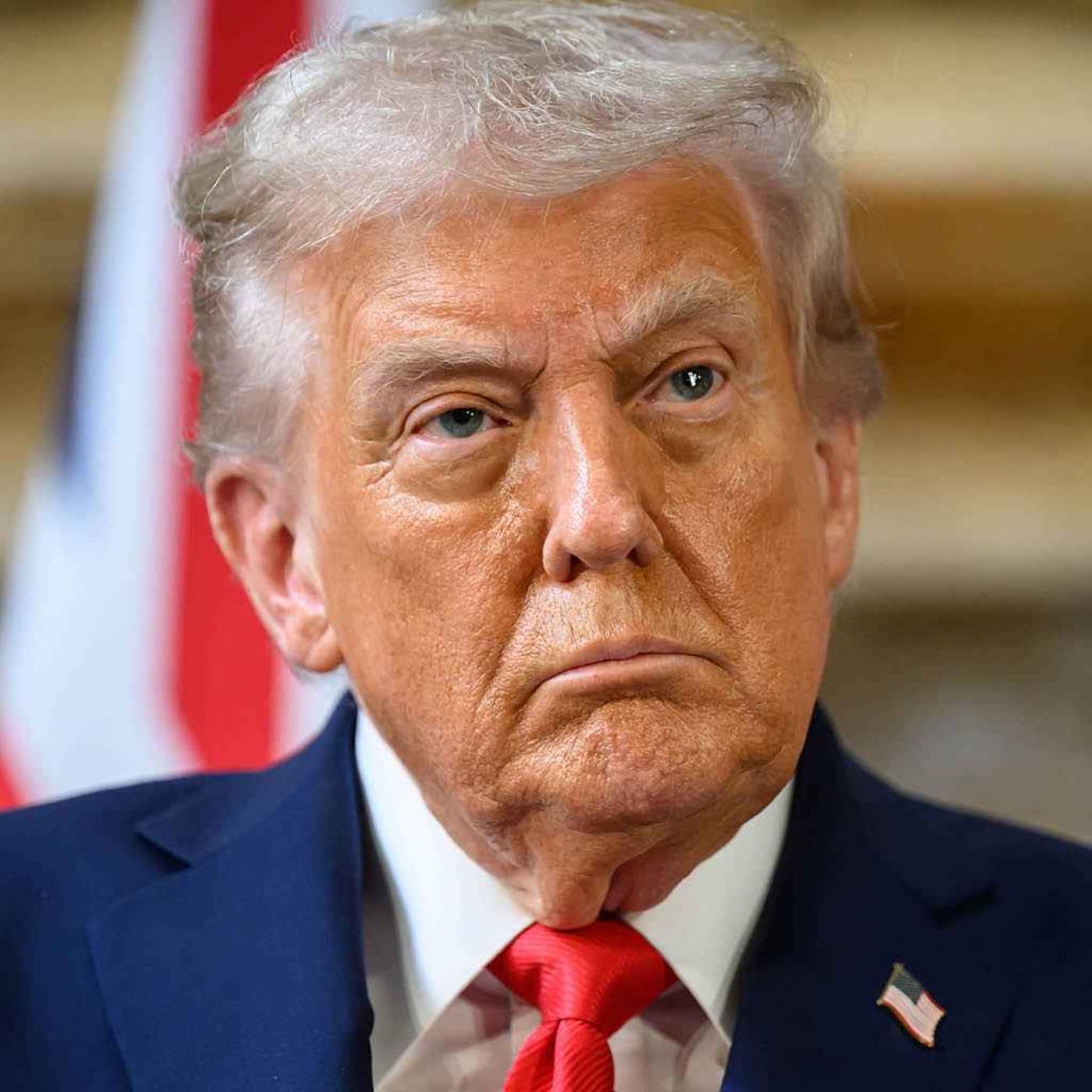
In his speech to the UN General Assembly, US President Donald Trump has made a fresh attack on Sir Sadiq Khan, and claimed London wants to “go to Sharia law”.
A spokesperson for Sadiq, London’s first Muslim mayor said: “We are not going to dignify his appalling and bigoted comments with a response."
The US president also appeared to change his stance on Ukraine, speculating that Kyiv could win back its land due to Russia’s economic troubles.
For analysis, we join The Standard's defence editor Robert Fox, who also tells us what he thinks Russia's plans are next.
In part two, do you remember the Blitz Club?
Forty years after its closure it's now being celebrated at the Design Museum.
The Standard's head of culture, Martin Robinson, reveals everything you need to know, and why this exhibition will attract a large audience.
Hosted on Acast. See acast.com/privacy for more information.


