
 Ask ChatGPT



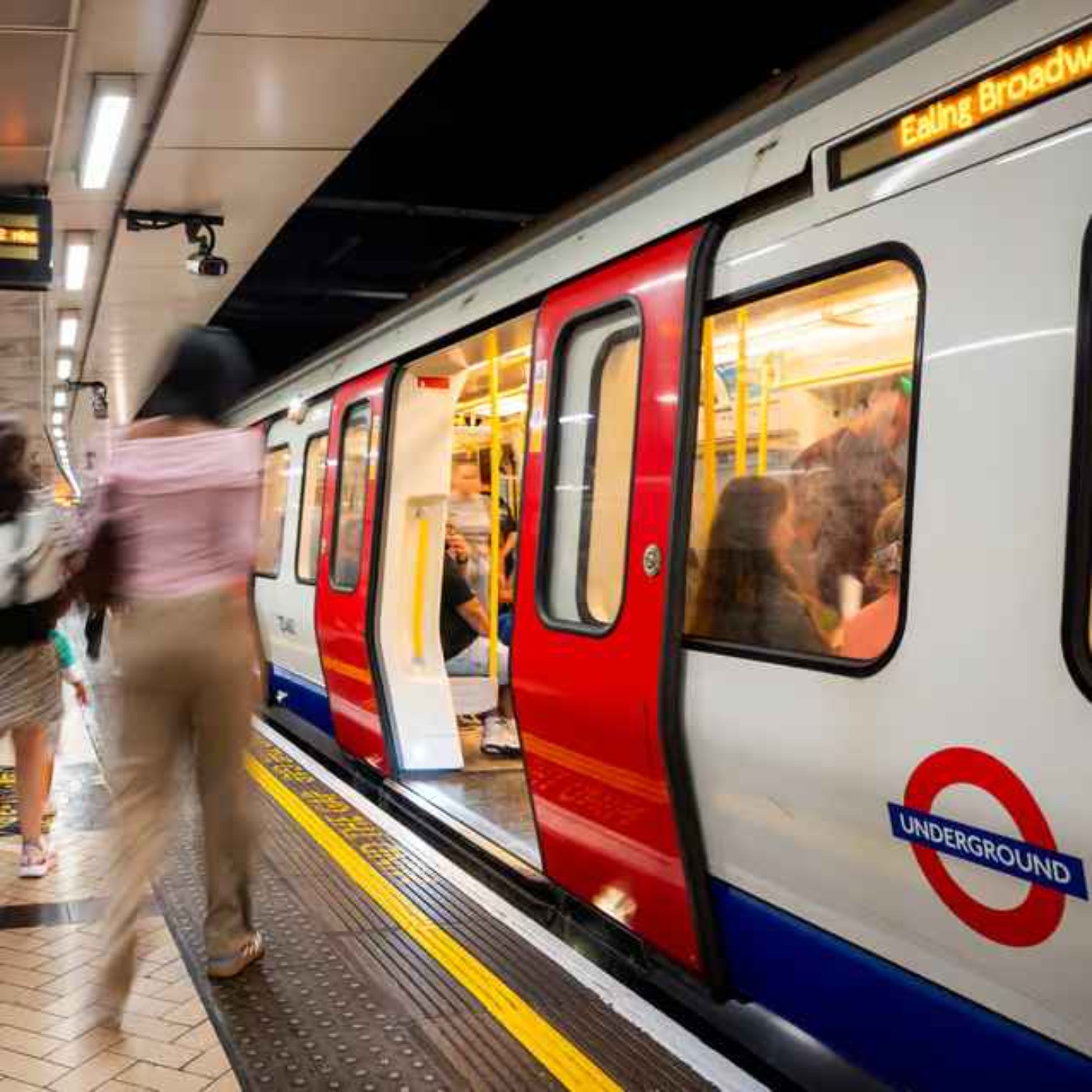
In this episode of The Standard podcast, host Charlie Duffield discusses the announcement by London Mayor Sir Sadiq Khan regarding the increase in tube fares set to take effect in March 2026. The discussion provides insights into the reasoning behind the fare hikes, the ramifications for Londoners, and potential alternatives to mitigate the financial burden on commuters.
Written by AI. May contain mistakes.

Get the gist, explore an idea or ask about something said.
 Claude
On The Standard, what are the key points of this episode?
Searching your listeningAutomatic transcript. May contain errors.
0:02Hi, I'm Charlie Duffield and welcome back to The Standard Podcast. If you're new here, hit follow and give us a rating. For all the latest news, head to standard.co.uk. Coming up later in the show, what changes would you make to the capital if you were Mayor of London for the day? One of the things that we always used to ask celebrities when they were interviewed for the old ES magazine or old glossy magazine was, what would you do if you were Mayor for the day? Well, I was sitting reading through a book on TfL's last 25 years, highly recommended. It's by a chap called Sam Mullins, who used to be the director of the London Transport Museum.
0:44And it tells the whole story of how TfL was established, how the mayoralty was established, and how the priority really for the first mayor onwards, from Ken Livingstone onwards, has been to tackle the city's transport problems. This got me thinking, well, if I was the mayor, what would I have done instead of Sadiq Khan? But first, London Mayor Sir Sadiq Khan has revealed that tube fares will rise in March 2026. According to details published by City Hall on Thursday, most tube and train fares for TfL services such as the Elizabeth Line and London Overground will increase by a maximum of 20 pence.
1:24Many fares will only increase by 10 pence and overall fares will rise by around 5.8 % as the standard exclusively revealed. London bus fares are also set to increase, but not until July. The government made clear to Sir Sadiq in June, following the Chancellor's spending review, that he would have to increase TfL fares by the RPI rate of inflation, plus one point for each year until 2030, in return for£2.2 billion of capital investment in TfL. Sir Sadiq told the Standard that this was fair and that he did not expect the government's decision to freeze National Railfares to apply to London train services.
2:08However, the freezing of the cost of travel cards is a direct consequence of the National Railfares freeze, with knock-on benefits to about 2 million Londoners who use pay-as-you-go to travel on the Tube. To find out more, I spoke to the Standard's City Hall and Transport editor, Ross Lydell. Ross, can you explain a bit more about how TfL fares are calculated? So Sadiq Khan, as the Mayor of London, has the power to set the TfL fares each year. And that means both the London Underground, the Tube, the buses and various other parts of the TfL Empire, including the Elizabeth Line and the London Overground.
2:48Now, this year, the situation was different because of what the government decided to do. The Transport Secretary announced a fares freeze on the national railways. This is in terms of certainly regulated fares, which are essentially season tickets, and the types of fares that are paid by commuters. The reason this was different is that often the mayor is required to follow what the government does with national rail fare increases. He doesn't always follow it sort of letter to letter, but it's normally a guide. And the reason for that is that it's because of the travel card. Now, the travel card is essentially used by many commuters who live outside London to travel in.
3:33And that means they can both pay for their rail fare and TFL tube fares or bus fares with the same ticket. Because of the complex way the travel card is calculated, the mayor often sort of follows suit behind the government. this year was sort of somewhat different. So what are the new fares actually going to be? In central London in zone one the increase will be up to 7.1 % which is almost double the current rate of inflation. That will include essentially looking at most tube fares that is they will either rise by 10 pence or 20 pence. In zone one that means peak hour fare will go up from£2.90 to£3.10, while the off-peak fare will increase from£2.80 to£3.
4:22So if you're one of those unfortunate tourists who decides to get the tube from Leicester Square to Covent Garden, which obviously is a walk of about seven minutes and about sort of 500 yards journey, you will pay then up to£3.10 if you're travelling at peak times. And that's obviously if you have the good sense to use your contactless bank card or Oyster card. If you're daft enough to pay by cash, you'll be paying at least£7, possibly more. And has this been controversial at all? Well, I think the controversy around the increases is that it's because the government has chosen to freeze the railfares essentially for the rest of the country so the government and Sadiq can stand accused by the critics of essentially benefiting the rest of the country while not benefiting London.
5:09Now, I asked Sadiq about this and he said, well, that's not quite right because it's not the case that the government has frozen fares say within Manchester or within Liverpool and similarly they're not freezing fares within London however if you say get a train from Euston to Manchester or Glasgow or a train from King's Cross to York or Newcastle those fares will be frozen so it's sort of out of London fares nevertheless the government did allow perception to be created that with train fares being frozen, but train fares are not being frozen in London. And that means, for example, if you use the Elizabeth Line, which is the most popular line in the entire country, and by popular, I mean the best used, or the London Overground, which again carries about sort of 4 million passengers a week, two very busy rail services, and there's no doubt these are trains, these aren't tube trains, these are rail trains, these aren't sort of parts of the rail network.
6:06fares on the Lizzie line and the Overground are not being frozen. They will increase. So you have this perception created by the government of affairs freeze, but if you happen to come into London on the Elizabeth line or the London Overground, then your fares are not being frozen. That's the controversial part of all this. Sadiq Khan, from his part, as I say, wasn't really buying that argument. And the reason is that back in June, when the Chancellor, Rachel Reeves, gave her spending review details. This was essentially a sort of big pre-budget announcement looking at three or four years worth of spending.
6:43She announced a£2.2 billion grant to Transport for London for various sort of big infrastructure projects such as expanding or improving the Piccadilly Line, which is due to get new trains from the next year, in the next 12 months or so, they'll finally come into service. But in return for this£2.2 billion from the government, Sadiq Khan was required to increase tube fares by the RPI rate of inflation plus one percentage point each year until 2030. So essentially, TFL would have to not so much pay back to the government, but certainly pay more of its way over the coming years than Londoners would have to pay for this big lump sum given by the government.
7:29Now, the national fares freeze happened much later. That happened in November. Sadiq was required to stick to this deal struck in June. And that's what he told me a few days ago on the ferry that essentially was driving his calculations and his thought process. And that's why fares are going up from next March beyond the rate of inflation. But you've also said that this isn't all bad news, is it? The bus fares and also the fares for the Croydon tram network will not increase in March. They won't go up until July or August. Now, strangely, we don't know what these bus fares and tram fares are going to be.
8:08They're currently£1.75 and essentially the London bus fare is the cheapest bus fare in the country. Buses are very important to Sadiq Khan for a couple of reasons. One is a family reason. His dad used to be a bus driver and he essentially uses this as a sort of badge of honour saying I'm one of you, I'm one of the sort of working class people, that's my working class background. Although he does obviously say now working class boy, middle class man. And also, Sadiq recognises that most lower-income Londoners rely on the bus, they don't get the tuber. So Sadiq has always done what he can to keep bus fares low.
8:44So he hasn't chosen at this stage to announce what the bus fares will be from next July or August. He says that's because he's awaiting more details from the government on exactly how much money TfL is going to get. However, some critics, including Caroline Russell of the Green Party, say that's nonsense and it's unfair to bus passengers who may already be struggling to have months of uncertainty until they know exactly what they're going to have to pay for their bus fare come next summer. The other bit of good news is that for the first time ever under Sadiq Khan and for the first time since 2010, so for 15, 16 years, the cap on Oyster card journeys and contactless journeys is being frozen.
9:28So for example, if you go into work in the morning, then perhaps go to the shops or go out to a restaurant at lunchtime and travel on the tube of the bus to get there, then travel home. By the time you get home, you will only have paid probably for about three of those four or five journeys because of the capping system. So the good news is for commuters and for regular travellers in and out of London, if they are currently reaching the cap just now either on a daily or weekly basis, that total cost in terms of how much money is taken out of their account at the end of the day won't be any more next year than it is this year.
10:05Let's go to an ad break. Coming up, Ross shares his top tips for Londoners who want to save money on transport costs in the capital. We'll see you back here in just a moment.
10:22Welcome back. So Ross, with all this news of travel fare hikes, what's the most cost effective way to travel around London? Well, the most cost-effective way to travel is to use your contactless bank card or an Oyster card. The simplest way is to use your contactless bank card or, say, Apple Pay on your phone or sort of similar devices, Google Pay on your smart watch. That is the simplest way to do it. I personally prefer to use an Oyster card just because it keeps my bank account separate to my Oyster card. but both have the same effect and both mean that you get charged the cheapest possible fare.
11:01The other thing to do if you can is to avoid zone one. The third thing you can do is travel outside peak hours. So if you avoid the sort of three hours in the morning and the evening, I think it's sort of six until half nine, ten o 'clock in the morning and then four till seven in the evening, you will then qualify for cheaper fares. Or if you can travel at weekends rather than during the week, you will also travel off peak rather than at peak rates. Those are the top ways to do it. Obviously, you could get the buses a lot cheaper than the Tube. If you can jump on a bike, certainly a Boris bike, that is cheaper too.
11:34And what has the response been to this fares package? It's fair to say that the mail's critics didn't like this fares package very much. London Travel Watch, which is the sort of official watchdog for passengers, described it as a bittersweet pill for Londoners to swallow because they pointed out that fares in London are already some of the most expensive public transport fares in Europe. And they say that there are some crumbs of comfort, such as the sort of delay in increasing bus and tram fares and the fact that travel card and capping prices are frozen. But they do say, and also there's the benefit as well, that they know that we're essentially paying back for this£2.2 billion I spoke about earlier in terms of this extra money for bigger schemes in London.
12:24but they do say that on top of a fares hike last March when fares went up 4.6 % on average and the fact even the congestion charge is going up, it's a different demographic obviously but the congestion charge will go up in January to£18 just getting more and more expensive to travel around London. The Tories really didn't like this at all but that's not unexpected. They are basically criticising Sadiq or saying that while the rest of the country enjoys a fares freeze Sadiq Khan has burdened Londoners with cost increases that are disproportionately going to affect young professionals that they see as the backbone of the city's economy.
13:02Caroline Russell, the leader of the Green Group in the Assembly and somebody who's really well-aversed with how Londoners travel around and has kept a close eye on the whole transport network for some time, She pointed out her concern about bus passengers in particular, saying that many are living sort of check to check and really can barely afford the journey to and from work just now. And that essentially what Sadiq done here is create a whole load of uncertainty. And Hina Bokhari, who is the leader of the Lib Dems on the London Assembly, again, followed a similar line to the Tories saying that the rest of the country labours freezing railfares.
13:39but here in London, the city with the highest rate of poverty in the UK, the mayor is hitting passengers with inflation-eating increases. She said it was a kick in the teeth to millions of people already struggling to make ends meet in London. So finally, if it was Mayor Lydell at City Hall instead of Sadiq, what changes would you make? If it was Mayor Lydell at City Hall, my fairs announcement would have included some of the following. The first thing would have been to tackle the 60-plus Oyster card issue. here essentially you have about a million londoners many of whom are still in work who qualify for free travel after sort of nine o 'clock half nine each morning i think it's outrageous that people who are working essentially get subsidized by younger passengers so i think really this benefit which was introduced by boris johnson really needs to be phased out sadiq did think about phasing that out during the pandemic when he was going to increase the age sort of qualifying limit by six months each year and essentially until it went out until it only you could only get your freedom pass which is a separate benefit for older people but that kicks in around age 65 66 so i'd get rid of the 60 plus oyster i think sadiq needed to be more honest about bus fares and really put a figure on the increase even if he's delaying the increase until july or august we know it will be around one pound 85 one pound 90 i think he just has to say this is what you'll pay.
15:03I think there's no point in mucking about here. Just be transparent. I think one other thing you needed to do is increase the time you get on the hopper ticket. Now, the hopper ticket has been one of the success stories. It's actually a Lib Dem idea. The hopper ticket would allow you to change buses without paying a second fare if you made the change within an hour. Buses are getting so stuck in traffic now that the 60 minute period needs to be extended to 75 minutes or 90 minutes to extend the value of the hopper ticket. That's something Sadiq could have done easily, but he hasn't done that. I think he really should have made more of a song and dance about the fare capping.
15:38The other crucial thing he should have done, I think, was spell out to Londoners what he's doing about cracking down on fare evasion. This costs TFL about£180 million a year, and it drives many fare-paying passengers absolutely spare. The sight of all these people crashing through tube barriers, deliberately doing so, deliberately failing to pay. Sadiq really should have said, I'm going to put your fares up, but I'm going to make damn sure those travellers that you see every day not paying their way, we're going to catch them and we're going to stop them abusing the system. And finally, the other thing I would have done would be to have increased the Silvertown and Blackwall Tunnel levees.
16:16They're currently£1.50 off peak,£4 peak. The intention always was that these should go up each year with inflation or in line with tube fares they only were introduced last April but certainly from this April why not put them up 10 and 20p as well if bus and tube fares are going up for goodness sake don't make it proportionately cheaper to get in your car that is bonkers and Sadiq should have done that too
16:43and that's the standard for all the latest news head to standard.co.uk If you'd like to get in touch, please do drop us a line at podcasts at standard.co.uk. We'll be back here tomorrow morning. We'll see you then.
Londoners will have to pay more in transport costs from March 2026, as mayor Sir Sadiq Khan has revealed that tube fares are set to rise.
The cost of a single tube journey in zone 1, central London will be hiked by up to 7.1 per cent, which is about double the current rate of inflation.
According to details published by City Hall, most Tube and train fares – for TfL services such as the Elizabeth line and London Overground – will increase by a maximum of 20p, although many fares will only increase by 10p.
For the first time in years, bus fares will also be increased, although not until July.
The Standard’s City Hall and Transport Editor Ross Lydall is here with the latest - and also shares what action he’d take if he were London mayor for the day.
Hosted on Acast. See acast.com/privacy for more information.


