
 Ask ChatGPT



Written by AI. May contain mistakes.

Get the gist, explore an idea or ask about something said.
 Claude
On The Standard, what are the key points of this episode?
Searching your listeningAutomatic transcript. May contain errors.
0:05Hi, I'm Suze Cooper and welcome back to The Standard Podcast. If you're new here, hit follow so you never miss an episode. Coming up, Katy Perry takes part in a space mission like no other. Six women, one tiny capsule and just 11 minutes to make history.
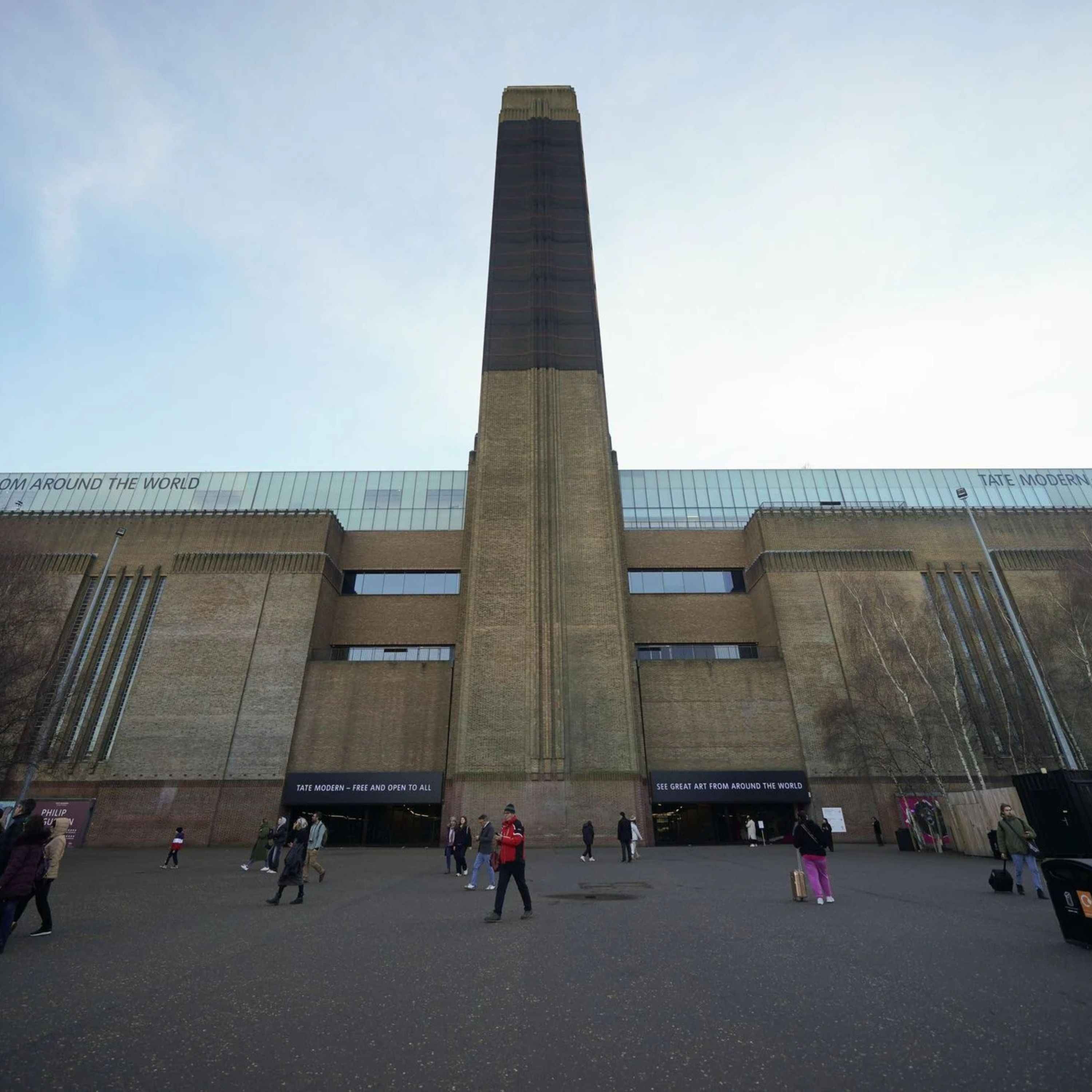
0:27But first, visitor numbers to some of the UK's biggest cultural institutions have taken a hit since the pandemic. The Tate galleries alone have seen a drop of more than two million people over the past five years, a significant decline that's raised questions about what's keeping audiences away. Writing for the London Standard, Rosie Kaye argues this isn't just about changing habits or post-Covid caution. It's about a deeper shift in the way museums are framing their exhibitions and engaging with the public. Well, Rosie is co-founder of the campaign group Freedom in the Arts. she's with me now to discuss what she sees as the reasons behind the drop in footfall.
1:05Rosie, is what we're seeing with the drop in visitors to the Tate galleries part of a wider trend? I suppose that's what we're trying to look at a little bit. It does seem that the organisations that have really embraced certain sort of ideological or politicised stance are suffering the most. and other arts, large arts organisations who have sort of got more broad appeal to audiences are thriving. So I'm trying to sort of tease out, is there a point that we should be having some reflection as to why they may be losing so many sort of people voting with their feet? Now, they may be doing this with the best intentions of being inclusive and kind of representing what may be minority voices but how it's come across has been quite patronizing I think for example the example I use which is quite a sort of famous example is is the Hogarth exhibition at the Tate where the labels themselves didn't seem to really respond and understand how satirical some of Hogarth's work was and instead put it through an ideological lens that ended up calling a chair a racist chair.
2:20And I don't think the critics liked it. I think they pointed it out. And I don't think audiences like it. Audiences don't like being patronised. They want to be educated and instructed on the art, not on what and how they should think. So you say in the article that activism is starting to overshadow artistic or historical exploration. Can you tell me more about that? Well, I think there's been an ideological shift in all of the arts and they're being used as platforms for activism rather than places of artistic and historical exploration. I mean, we're talking about taxpayers' money, DCMS or Arts Council funded national lottery and also, you know, audience ticket fees.
3:02I think that arts need to be more curious about who their audience is and actually speaking to them rather than trying to lecture them. It seems like there's a set of beliefs that we now have to kind of all agree are the right beliefs. The arts aren't the place for that. I'm actually feeling that the art should be less politicised and more about excellent art. Yeah, you touched on funding there. How much does funding shape the kinds of subjects that exhibitions focus on? I think it's actually the other way around. A lot of the funders are incentivising that you have an ideological stance that has a very sort of set prescribed approach and ways of measuring.
3:44So in a way, you can't sort of blame some of the institutions for going enthusiastically down that line. I think what we're realising is at the very higher levels, like say DCMS, that that is a little bit of a problem. We don't really want politicised art galleries who in their charitable objects are there to serve the purposes of art rather than political purposes. So some museums, like the British Museum, they've actually seen visitor numbers go up recently. What is it that they're getting right and what might others learn from them? It seems like their exhibitions are really appealing to the kind of core reason why the British Museum exists and they're presented in exciting ways and audiences are attracted to that.
4:29I think the V &A is also a really good example of like just really finding the right exhibitions. It doesn't seem like that long ago where that was the main criteria. And I've seen much less, although it's not entirely absent, the kind of moralling, hectoring sort of stance and the lecturing of the public. There seems to be less of that and their numbers show that that works. So for those that are getting the lower footfall then, what impact is that having on them financially? Places like the Tates, like the Royal Academy, what's going to happen to them if this continues on a decline? Well, I can imagine that there's sort of an uncomfortable feeling inside these institutions.
5:09Nobody really likes kind of seeing that they're becoming less popular. As far as I understand, Tate trustees have been in discussion with DCMS about their ongoing funding. I think they will be bailed out if there are too many issues, but it can lead to staff cuts. at the Royal Academy, they don't have the option of a sort of government bailout. So they really have to make some difficult decisions. And, you know, my heart goes out to them. They have to kind of cut staff and cut expertise, you know, if their visitors are just not providing the funding that they need. So finally, then, what do you think is the biggest risk to the arts right now?
5:45I want to kind of sound the warning that they're almost sort of, by going down like divisive ideological stance, they're alienating the very people who should be supporting them and that's the public and artists and if the arts don't realise that they're alienating the people who support them the politicians will step in and I think there is a real threat to arts funding you know we've seen what's happened in America the arts can be used as a political football and the arts need to respond to it with realism and to appeal to their public who are funding them.
6:29Let's go to a break. Coming up in part two, from pop star to space passenger, we hear more about Katy Perry's 11 minutes of out of this world fame. I mean, it is the highest high and it is surrender to the unknown, trust. We'll see you back here in just a moment.
6:55Welcome back. It's not every day a global pop star suits up for space, but today Katy Perry joined five other women on a brief flight with Blue Origin, making history as part of the first all-female crew in more than 60 years. The US pop star took off on Jeff Bezos' new Shepard NS-31 mission from West Texas at half two today, landing less than 11 minutes later. Also on board were Mr Bezos' partner and journalist Lauren Sanchez, CBS Mornings presenter Gail King, former NASA rocket scientist Aisha Bowe, astronaut and activist Amanda Guyon and movie producer Kerry-Ann Flynn. Well, Standard reporter Jacob Phillips was live blogging the trip at standard.co.uk.
7:38Jacob, tell us about today's launch and how did Katy Perry get involved? I struggle to tell you exactly how Katy Perry got involved to be honest. I think a lifelong wish to go to space. We're not sure if there's been a deposit put down, whether this has been all funded by Amazon and Jeff Bezos. But yes, Katy Perry was a sick with the crew that went up today. She's been dreaming for 15 years of going up to space and appeared very emotional, holding a daisy up to the sky and taking it with her to space and then kissing the ground on on her return it's a project called blue origin on the new shepherd rocket that that went up yes for a flight that was just 10 minutes and 22 seconds in the end yeah real blink and you miss it moment that shot them up into space a trip jeff bezos did himself recently and he had his fiance was on board he's been you know jerking that he was firing her to space not to marry her just now on there in the sort of few minutes after landing so it's safe to say that they've kept their sense of humour.
8:41And did everything go to plan? It appeared to be incredibly smooth. I mean, I'm no rocket scientist myself, but as far as you can tell, the live stream is incredibly smooth to the point where you could even hear them as they went up inside the rocket. You know, you could hear the shouts and delight. It was your classic sort of countdown. And then actually what's more impressive is just how quickly and easily it all comes back down. So the capsule goes all the way into the air and the rocket splits off and about seven minutes after you know for us reporting on it's a couple of lines of typing or trying to find pictures and suddenly there's a rocket coming back down it's sort of a sonic boom sound and then it very gently lands and then even more gently there's a capsule afterwards but yeah really really clear really smooth you know you could hear those moments that we all probably wish we'd have if you're not too afraid of heights you can hear them shouting you know look at the moon and that oh my god we're in space you know moment where where gravity is lifting and and they're all up there and then the same as they landed very quickly you've got Jeff Bezos knocking on the door and and pulling it back open so it all seems to have gone to plan they also had a wide range of items up there with them I think I mentioned before but you know Kate's basically a daisy up a couple of hundreds bracelets from her firework foundation as well and then I think we had the national dish of the Bahamas was up there and the original flag from the Apollo 12 came up with them which I believe is the second mission to ever go to space so yeah real collectors time capsule up there.
10:14Were they able to experience zero gravity while they were up there or did they need to stay buckled up? Yeah it was a full four minutes you get free from gravity so you can hear on the stream the sort of robotic voice telling them when it was one minute to go it looks like the capsule was not too big it might have been a bit of a tight squeeze up there they're not quite sardines but plenty of windows to float towards and to look down on I think Lauren Sanchez was seen the States, she could see all the states of America, which was nice for her. So has today's story been more about the celebrity sparkle then than the history-making moment?
10:47Well, it's been a real talking point today. I think people are really divided on this one. You know, you had a very glamorous event where you've got the Kardashians, Khloe and Kris being interviewed post-launch, watching on with, you know, sunglasses that look like they might be worth the same as a trip to space. And then Oprah Winfrey and lots of people. But on the flip side, it's a time where cost of living crisis is really striking, not just America, but here in the UK as well. Making a point on the commentary that a lot of people are struggling to buy basic items such as soup. And then on the flip side, if someone wants to pay to go up on a similar trip, I think it's a£115 ,000 deposit plus an unknown figure to actually get up there.
11:28So, yeah, it was very glamorous. And, yeah, it was definitely an extreme Hollywood sort of event. But yeah, I'm sure there will be plenty of takes on what happened. Well, after landing, Katie was interviewed by the Blue Origin team. She explained that not only is Daisy her daughter's name, but the flower holds real significance for her. Daisies are common flowers, but they grow through any condition. They grow through cement, they go through cracks, they grow through walls. They are resilient. She also spoke about her choice to sing What a Wonderful World. I've covered that song in the past and obviously like my higher self is always steering the ship because I had no clue that one day I would decide to sing a little bit of that in space.
12:13But I think that it's not about me. It's not about singing my songs. It's about a collective energy in there. It's about us. It's about making space for future women and taking up space and belonging. and it's about this wonderful world that we see right out there and appreciating it. This is all for the benefit of Earth. And that's The Standard. For all the latest news, head to standard.co.uk and please do drop us a line at podcasts at standard.co.uk. This podcast returns tomorrow at four. We'll see you then.
12:58Bye, bye-bye.
Visitor numbers to the UK’s leading art institutions have fallen sharply since the pandemic - with the Tate galleries alone seeing a drop of more than two million visitors in the last five years.
In this episode, we hear from Rosie Kay, co-founder of the campaign group Freedom in the Arts, about her opinion piece for The London Standard. She shares her concerns that ideological messaging is eclipsing artistic and historical exploration, and questions whether a heavy-handed approach to inclusion is putting off audiences.
Plus, pop star Katy Perry has made history by joining Blue Origin’s first all-female crewed space flight. The Standard’s Jacob Phillips was live blogging the launch - we find out who else went, what they took with them, and whether Katy really sang in space.
Hosted on Acast. See acast.com/privacy for more information.


