
 Ask ChatGPT



Written by AI. May contain mistakes.

Get the gist, explore an idea or ask about something said.
 Claude
On The Standard, what are the key points of this episode?
Searching your listeningAutomatic transcript. May contain errors.
0:02Hi, I'm Charlie Duffield and welcome back to The Standard Podcast. If you're new here, hit follow and give us a rating. For all the latest news, head to standard.co.uk. Coming up later in the show, is Dubai a destination worthy of emulation or a dystopian disaster? I would argue, Charlie, it's also a vision of how society can change. Because we're seeing in London and the United Kingdom, just like around the world, increasing inequality, right? more money going to a few hands and the rest of us struggling more and more to make a means taking whatever work that we can get and the emirates is a vision of a society which on the surface is very modern very comfortable a place that if you've got enough money and status you can have a really great time but in reality actually there is no real freedom behind that material comfort
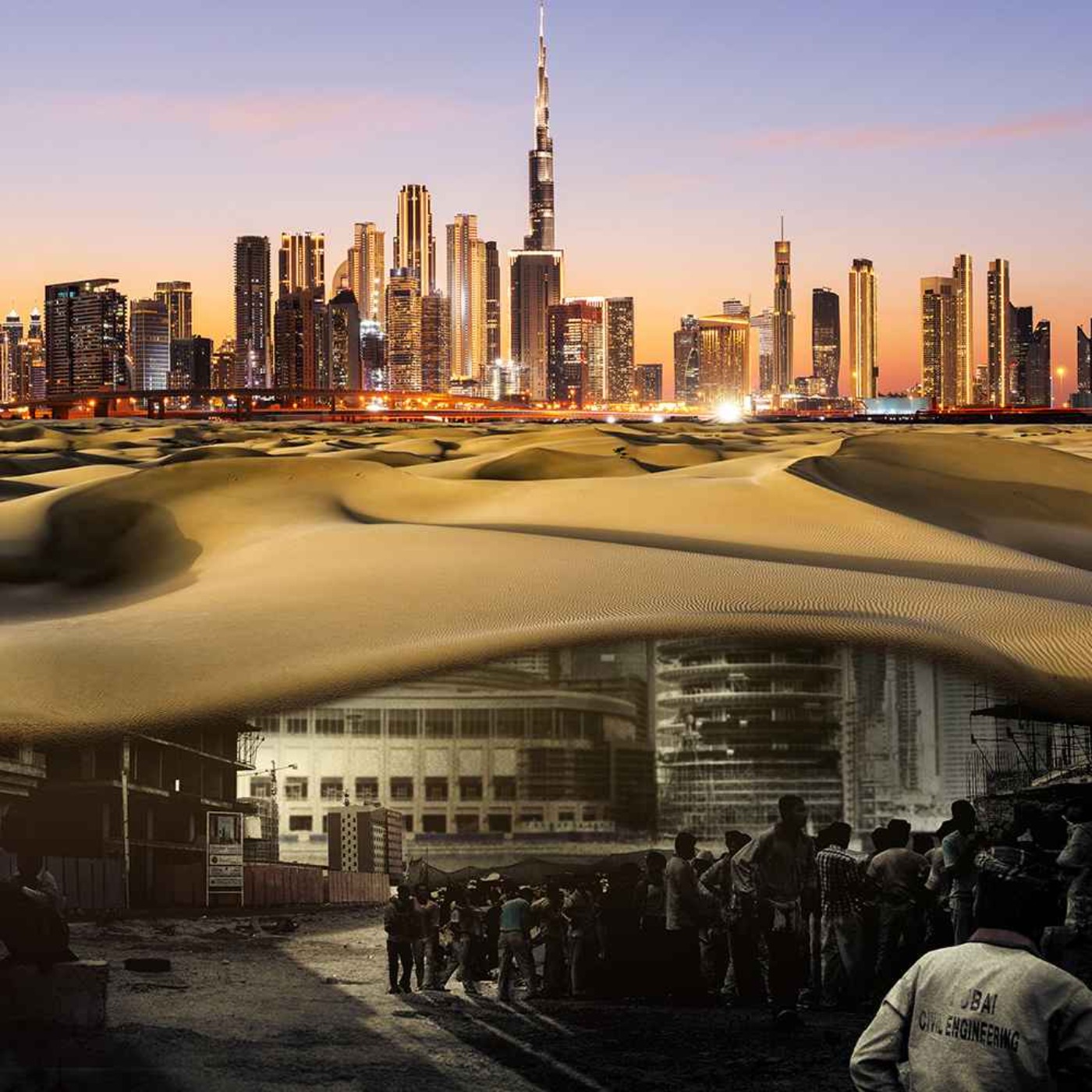
1:05But first, for Brits looking to escape poor public services, high taxation and, let's be honest, the British weather, the dazzling skyline of Dubai has obvious appeal. In fact, the city is home to a quarter of a million British people, and 90 % of its residents are from elsewhere. Thousands of Londoners flock to the Middle East city each year. And expat life seems like a great deal, until you start to notice the cracks beneath the surface. Because behind the city's facade is a brutally repressive regime where human rights are non-existent. Dubai is a dictatorship under Sheikh Mohammed bin Rashid al-Maktoum, and he preserves his absolute power, as dictators always do, with the repression of all potential threats.
1:55A Human Rights Watch spokeswoman said that Dubai has a zero-tolerance policy towards dissent and no respect for basic freedoms. And it's a long-known fact that construction workers are shipped in, mainly from countries in the global south, to build Dubai's towering infrastructure. So what lies beneath the wealth and the glamour of this alluring city? Joining us now is Mustafa Qadri, founder and chief executive of the human and labour rights organisation Equidem. He investigates modern slavery in a global economy. Mustafa, tell me more about how these migrant workers find themselves in the United Arab Emirates and how they're treated.
2:38Most of us don't realise that the majority of the population in the United Arab Emirates, Dubai is one of the city states that make up the Emirates. The majority of that population are migrant workers who are mostly poor people from countries in Africa and Asia, other parts of the world as well. There's about 8 million of them, amazingly, in the country. and they're absolutely essential to every aspect of the society. So they build buildings, but they also raise children. These are people that are leaving their countries because they can't find good enough jobs, lots of challenges, and increasingly also because of climate change.
3:13Of course, they see the images of Dubai, this really glitzy, wealthy city, and they see a place where they potentially have a chance to make their life better. So in many ways, they're going there for the same reason. And lots of people from London and the United Kingdom are going there. They want to be someone that's really cosmopolitan. They want to have a better chance of their life. But the difference for these people is the majority of those people, they have to pay a often illegal fee just to get the job because there's so much demand for those kind of roles in their country. And most of these people don't have that kind of money.
3:44So they've got to take a loan and it puts them in a situation what's called debt bondage. You can imagine the situation where you're desperate for work. You take this loan to get this job. you get your contract, which sounds really great. You arrive in Dubai. Turns out actually the job is very, very different. They take your passport off and they'll throw you straight away into a bus from the airport and you're in a form of imprisonment. And because you have that debt over your head, the first thing you're thinking is not how do I escape this is look, I better stay here for a bit, earn some money, pay off that debt.
4:14And we found in our research that the typical construction worker spends about three to six months of their first time in the country paying off that debt. So that's before they've even made any kind of an earning, which is pretty incredible. And then on top of that, they're living in typically really unsanitary, crowded, unsafe accommodation. Their job is really backbreaking and it's in that extreme heat. It's an exceptionally hot place to be. We're talking about temperatures that, according to health professionals, humans should not be operating in the hottest times. So it's a really physically, mentally demanding job.
4:49Workers will often face issues with not being paid on time stopping pay what they're owed and of course facing injuries or even sometimes death so it's really quite harrowing and also something that i find really quite bizarre and also surreal is when you visit the country they're invisible even though literally you're staying in a hotel that these people have built they're nowhere to be seen so there's that real combination of what we call modern slavery but also that it's out of sight out of mind that makes Dubai, not necessarily unique. That happens in lots of places, including even in London, but it makes it a place that's really where there's a real concern about that kind of exploitation.
5:29Okay, but what about if someone like me moved out there? Surely I would have a pretty decent experience. It's really important to paint a picture where the reality is that there are these invisible red lines, even for people who are not so-called low-wage workers, you can get a lot of trouble. So for example, technically sex outside marriage is prohibited, being homosexual or transgender is prohibited. If you make some kind of really lax comment on social media about the royal family of the Emirates or other political actors that the Emirates has an alliance with, you might actually be thrown in jail.
6:03And also you might be in a situation where you accidentally don't pay for your mobile phone bill. You forget your login details or something like that. It's quite a common thing. That system over there is very harsh at punishing people that are seen to be breaking the law. And when you go into that justice system, it's not one where you automatically expect to have access to a lawyer or your family, which is basically a human right. That's what we call international fair trial standard. So it's something that literally in the foundation human rights treaties, we talk about if you are accused of a crime, if you're seen as crime dramas, you're innocent until proving guilty, you have access to your family and lawyers, those things don't necessarily exist.
6:42So you can very suddenly actually find yourself in a situation where your life is really turned upside down. Whether you know it or not, your rights are being violated because the moment you go there, you're in one of the most sophisticated surveillance states on the planet. So the moment you go through immigration, your biometric data is captured. When you're walking out of the airport terminal, when you're going to shopping malls, they're capturing your physical biomechanical movements, putting them in a database somewhere. They track you at all times. If you're using a charging point for your phone or your laptop, certainly for phones, I've been advised by people we know over there that the state is using that to capture your data off your phone.
7:23Even if you don't realise it, you're completely subject to that. And how does the United Arab Emirates get away with these human rights abuses. How is it set up in a way that this is allowed to be a normal part of everyday life? Yeah, Chai, that's a really great question. It's about really simple things like, do people leave you alone in your private space? Can you just be yourself? Do you get punished just for speaking your opinion? The way that the Emirates has been able to do that is actually very clever, but also really simple. The short answer is they both have a lot of money and they leverage that money by having very important trading relations, spending a lot of money on lobbyists in the United Kingdom and Europe everywhere, not just in Western countries.
8:03The other aspect of it is just being highly repressive and being very organized with that. So when you put those two things together, it keeps them off most of the media, which is why the standards coverage of Dubai is so important. I'm sure you'll get some kind of political heat from doing it. Of course, the other aspect of it, which is linked to those two points, is Dubai and the Emirates is a brand. It's like a commercial entity. So practically any sport, you'll see some kind of Dubai or Emirates branding on it. Like I said, people go there to go on holiday. And I actually completely understand that I have a family myself.
8:38You know, it can be often a great location to go to have a nice, comfortable, relatively inexpensive holiday, got great airlines. So it's a good transit location. And of course, you know, people want to get ahead in their lives. There might be jobs out there where they get paid really good money that can set them up for the rest of their life. I know lots of people who have done that. So in that way, that's part of their strategy, I would argue, of hiding their abuses, that you basically make people in these little ways complicit by being stakeholders benefiting from a system. But the thing to really emphasize, and it'll sound quite dramatic, but I really mean it not in a dramatic way, is that when you work there, when you're there, the reality is, whether we like it or not, is that you are actually profiting out of a system of exploitation.
9:20Every aspect of the economy has been built by people who are actually being exploited. They're not being paid adequately. When they organize in a fairly mild way to say basically things like pay us, or if you're a woman, pay me the same as a man, give me the same opportunities as a man, they will typically get punished. So when you're going to Dubai to work there or to be a customer in some way, you're complicit in that system. That's something people should really bear that in mind. So do migrant workers have any protections at all? What we've found is it's very much case by case and only in sadly the minority of companies or the state where management have consciously decided that they want to do basically run a professional workplace.
10:06Most workers don't really face that. And what the Emirates banks on is that independent human rights and labor rights monitors clients get in unless they're unannounced like we go. So that there's very little chance for people to really respond to them claiming everything is okay. I think personally, gender plays a really big part. If you're a man, you're more likely to be dying in Dubai because of heat stress or because of a safety issue, whether you're a construction worker or a driver working in security, police, those sorts of roles. If you're a woman working in hospitality or working as a domestic worker, you're more likely to face the risk of gendered or sexual abuse-related exploitation.
10:45Those things are really, really rife. And the thing to really stress, often other foreigners who are living in Dubai that are the perpetrators. It's not just the local nationals. It's the power dynamic between some not just being wealthier and having a better experience of life in Dubai than others. It's the power that often managers and employees have over these essential workers because of the sponsorship system you have in Dubai and across the Dals, which is called basically the kafala system, which you might have heard of. So what that does is you have that exploitation that I mentioned to you, but you have also this incredible power imbalance.
11:22And so men and women face that, but there are differences based on your gender. They're a majority of the population, which is quite extraordinary to think about. And yet they can't organize, they can't be citizens. And typically when they complain, and to be really clear, they're complaining about their basic conditions, not about, you know, let's bring democracy to Dubai. they will be generally very efficiently suppressed, often kicked out of the country after spending some really bad experiences in immigration detention. Is it accurate then to say that this is an authoritarian state? Yeah, I think it's an empirical fact that it is an authoritarian regime.
12:01Let's go to a break. Coming up in part two. If Dubai isn't the haven we think it is, if its decadence is costing human lives, can it be defied? We'll see you back here in just a moment.
12:19Welcome back. Mustafa, what happens to those who take a stand against this regime? There are some incredible brave Emiratis and other people that are basically the nationals of that country that want to make a more free society. Typically they do it in a very peaceful and quite a relatively moderate way. And we've seen that the Emirates has been very, very brutal in disappearing these people, torturing them, even killing people, putting them on trial using terrorism legislation. Without that, again, like I said before, meeting those fair trial standards, right? So you have access to a lawyer, you know what the charges are against you.
12:54All those things are secret. So in those respects, very much, the Emirates is an authoritarian state in a way that is a really dystopian vision of what the future can be if we don't address what I would call economic social justice in society. In what ways can these human rights abuses be resisted, do you think? There is no real magic solution. And what I would always say as a human rights person is, number one, always be optimistic. When you feel guilty about a situation, don't dwell on the guilt. Think about how you can respond to that. Find others that share your views and try to, again, organize and discuss it.
13:32I think there's a couple of really simple ways that you can respond. One is about the companies that are involved in Dubai and the Emirates is actually writing to companies that you're a customer of. Ask them questions about modern slavery. How do they address it? If you do happen to go to Dubai and you see things that look suspicious, as a British citizen, you can report that to the local consulate and also make a decision. If you feel that you're not comfortable going there, then it's worth thinking about other locations to go. If you are someone who's in a relationship outside marriage, Think carefully about going.
14:04If you are LGBTQ +, also be really thoughtful about that. If you're someone that, because you're a caring citizen, you care about what's happening in the world, and you have an active social media account where you do make comments about world events, be thoughtful about going there. Probably one final point to make is the British government, you know, the economy we all know isn't really great. They're very keen for those trade deals with the United Arab Emirates. It's really key that the government of the United Kingdom is trying to improve the economy. And of course, trade deals happen with lots and lots of countries.
14:36But one thing you can do is write into your member of parliament saying, you know, I'm concerned about what's happening in Dubai, in the Emirates. I've listened to this podcast or been reading the standard. And I really want you to tell me, how are you going to make sure that as part of any trade deal, there are locked in commitments around human rights? because it's around those trade deals and the Emirates and Dubai's reputation that there are leverage points. And one final question, what would you say to someone who is thinking of swapping life in London for Dubai? He wants to experience some of the lifestyle benefits of living there or just the glitz and glamour that we see posted on our Instagram feeds?
15:16I would in no way judge a person for looking for work in Dubai. I totally get that. I think there are opportunities there that I can imagine are really exciting for people. I would say number one is depending on what company it is, do some human rights due diligence. And really that's all about just do some Google searching about that company. If they're also got a branch in the United Kingdom and they're of a certain size, they will typically be required under the Modern Slavery Act to submit a statement of what they're doing to address modern slavery in their value chain. Also see any kind of guidance on the British government, particularly the foreign office website around what kind of support you can get if you see things, any issues in the country.
15:59I've worked in human rights for a very long time. And, you know, I've really been struck in every line of work and every place that you go, there are wood people everywhere. So if you go there and you care about these issues, you're bound to meet other people that also care. And so build your community around that. Because if you go to Dubai, and Dubai is good to you, then it means you also have an obligation, I feel, to try to be good for those for whom Dubai has not been as good.
16:28And that's The Standard. For all the latest news, head to standard.co.uk. If you'd like to get in touch please do drop us a line at podcasts at standard.co.uk we'll be back here tomorrow at 5 p.m we'll see you then
The Standard’s latest special report reveals the dark truth behind Dubai, as thousands of Londoners are flocking to the Middle East city each year. Ninety per cent of its residents are from elsewhere, and the Gulf expert Christopher Davidson referred to it as the “ultimate liberal economic city state”, which offers the allure of low taxation and cheap labour.
But what lies beneath the wealth and glamour? Mustafa Qadri, founder and chief executive of the human and labour rights organisation Equidem, investigates modern slavery in a global economy. He joins us to discuss the human rights violations that underpin this polyglot city.
Podcast image by HIT&RUN
Hosted on Acast. See acast.com/privacy for more information.


