
 Ask ChatGPT



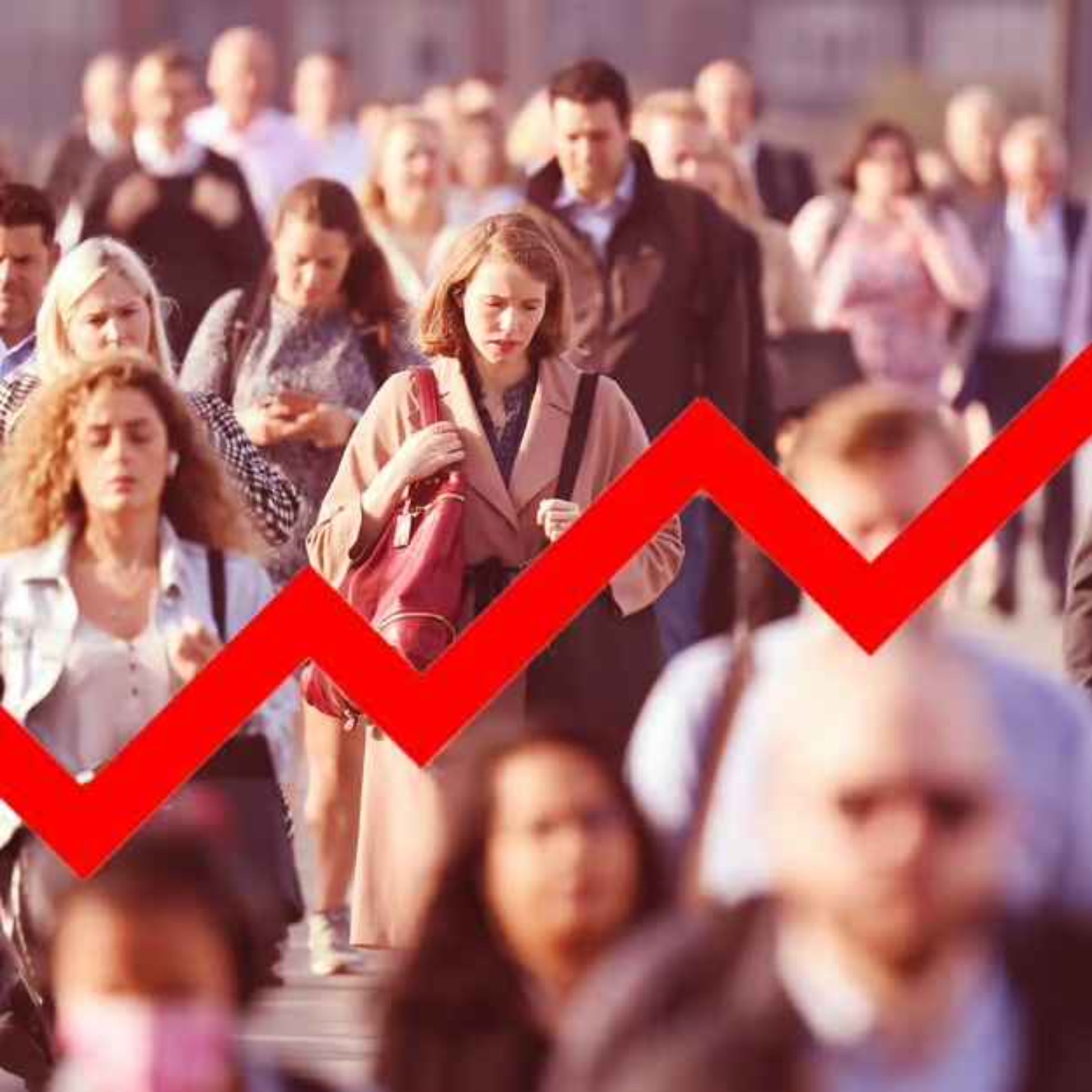
In this episode, host Charlie Duffield explores rising inflation rates in the UK, currently at 3.8%, the highest since January 2024. The discussion delves into the factors driving inflation and its impacts on households. The episode also covers a cultural phenomenon surrounding Labubu collectibles, discussing their popularity and the implications of blind box toy sales.
Written by AI. May contain mistakes.

Get the gist, explore an idea or ask about something said.
 Claude
On The Standard, what are the key points of this episode?
Searching your listeningAutomatic transcript. May contain errors.
0:02Hi, I'm Charlie Duffield and welcome back to The Standard Podcast. If you're new here, hit follow and give us a rating. For all the latest news, head to standard.co.uk. Coming up later in the show, why we went goo-goo for Lububu dolls and the sinister side to their plastic smiles. Everyone could love a Lububu. One more buying box and then I'll get the piece that I really want. And then you're just constantly seeking that high. But first, UK inflation has risen to 3.8%, the Office for National Statistics says, which is the highest since January 2024. According to the Office for National Statistics Chief Economist Grant Fitzner, the main driver is higher airfares, whilst food prices continue to rise as well.
0:54When Labour came to power last summer, inflation was just 2.2%. Chancellor Rachel Reeves has said there is more to do to ease the cost of living and the shadow chancellor added that the situation is deeply concerning for families. Data also suggests railfares are likely to rise by 5.8 % next year. Here's what Pensions Minister Torsten Bell had to say. Well price rises are disappointing for everybody. We've seen energy prices come down in July but they're still too high. That's why it's so important that we keep easing the cost of living, keep acting on that. That's why we're raising the minimum wage, it's why we're capping bus fares, it's why we're extending free school meals and it's why the stability that's allowed five interest rate cuts since the election is so important.
1:38The National Institute of Social and Economic Research has said that it expects inflation to decline in the second half of the year and fall back to the Bank of England's 2 % target by 2026. Joining us now is Jaya Sood, a senior economist at the New Economics Foundation. So tell me more about today's inflation figures. The July inflation figures came out much higher than the Bank of England's target level of inflation, which is 2%. The July inflation figures came out at 3.9%, so that's quite concerning. This high level of inflation has persisted for quite a long period of time. So despite supposedly coming out of the energy crisis and expectations that we would be back on track and prices would be coming down by this point, prices are actually still increasing.
2:27This will be really worrying for households who have been struggling with the cost of living for a good three or four years now and who, on top of high prices, are also having to deal with high interest rates and high mortgage rates. So continuously increasing prices are going to squeeze households more and more. Other countries are seeing their inflation and their interest rates coming down. But unfortunately, in the UK, the stats that came out this morning show that we are not on the same path as those other countries. And why is that? Why is the UK so badly impacted by inflation? There are a couple of key drivers.
3:04One of those is increases in transport prices. And another is increases in food prices. So the increases in transport prices are actually primarily driven by a sort of bump in the cost of airfares. And that's something that we shouldn't be too concerned about because it tends to correspond with school holidays. So there's more demand for air travel around the start of summer. These were inflation figures for July, so it would be expected that airfares might increase slightly. Petrol prices have also slightly increased. But the real concerning driver of the increased inflation that we've seen in July is actually food prices.
3:44We've seen an increase in food prices from July 2024 to July 2025 of almost 5%. And within that category, we can actually see some specific foodstuffs like milk, butter, coffee, chocolate, whose prices have increased by much more than that. In fact, more than 10%. So this is really concerning for households. These are the sort of bare essential food items that we all need to survive. And that is really what's sort of dragging up that headline inflation figure. Now, the UK is relatively exposed to these kind of price increases, which generally are caused by global supply restrictions rather than specific UK economic policy.
4:28However, the UK is relatively exposed to those because we do import quite a large proportion of our foodstuffs. And I think it's important to understand why those food increases are happening. And there are three main reasons. So one is relatively high global energy costs are persisting. So the high price of gas, which is a really important input for things like fertilizers, which are very important for agricultural production, will be one of the drivers. Another really important one is extreme weather driven by climate change, which is really harming crop yields all over the world. And we know that there have been droughts and heatwaves in West Africa, which have increased prices of cocoa.
5:11And we also know that it's affected important coffee producing regions, pushing up those prices there. And the other is general geopolitical uncertainty. When there's uncertainty around tariffs, around geopolitics, around global conflict, we might expect to see price rises as well. It feels like at the moment we are constantly hearing negative news stories about the economy. Do you think the UK will tip into a recession? I think the direction that the UK economy takes over the rest of this year is really dependent on how the government and the Bank of England choose to respond and take action to get us out of this high inflation situation, this low growth situation, and really how and whether they sufficiently support households through the economic turmoil that they're facing.
6:01A lot of our growth issues in the UK stem from a real lack of demand in the economy. People don't feel confident about the economy. They don't have that disposable income in their pockets to be able to go out and buy things. A lot of the higher prices we're experiencing are sort of outside of the UK government's control. High interest rates set by the Bank of England are not necessarily being effective at bringing those prices down. Yet consumers' disposable income is really restricted by those high prices, by those high interest rates. So what we really need is the government and the Bank of England to work together in creative ways to support households, to improve household confidence and get people having more disposable income available so they can get out, start spending that money and stimulate the economy to get things moving again.
6:52Do interest rate cuts make a difference like the one we saw at the start of the month from 4.25 % to 4 %? Despite interest rates being relatively high, inflation continues to persist. Prices are not coming down. So that really leads us to question whether or not this interest rate tool is effective in achieving the goal that it's set out to achieve, which is to bring prices down. So much of the price inflation we're seeing, as I discussed earlier, is to do with global supply restrictions, factors that are relatively outside the UK government's control, or it's factors that are perhaps within the UK's control, but they are more a matter for the government to be able to address than for the Bank of England to be able to address.
7:37Things like the high energy bills that the UK is facing at the moment, that consumers are facing at the moment. High interest rates is not going to bring those bills down. And NEF has a proposal for how those costs could be redistributed. It's called the National Energy Guarantee. The more energy you use and consume, the more you pay per unit of energy to use and consume that. So it sort of redistributes those costs between those more able to pay who are higher consumers of energy and those who are less able to pay. And what that does is it brings costs down for those consumers who are less able to afford the high costs of energy.
8:15So that's an example of a sort of government led solution to bringing down prices for people that is much more targeted than a blanket interest rate hike, which has the devastating side effects of really hamstringing economic growth in the UK. Finally, do you have anything else to add? By working closer together and being more targeted in their interventions, the government and the Bank of England can make sure that the investment happens that is really needed in the green economy, in climate stability. And that kind of investment is what will really insulate us from these global economic shocks and will really achieve growth and will really achieve price stability.
8:56So it's really about the government shouldering some of that burden that the Bank of England currently carries alone for being responsible for bringing prices down. Let's go to a break. Coming up in part two, how we went crazy for blind box collectibles like La Boo Boo's. We'll see you back here in just a moment.
9:23Welcome back. It's a craze which can be likened to Stanley Cups, or if you grew up in the 90s, even Beanie Babies. But could the latest collectible cult item be about to lose its distinctly furry edge? Le Bubu dolls have a legion of celebrity fans, from David Beckham and Rihanna to Marc Jacobs and Lady Gaga. Madonna even had her 67th birthday cake made in the shape of one. Their popularity has propelled Chinese business Popmart to become one of the most valuable toy companies in the world, worth twice as much as Hasbro and Mattel combined, according to reports in the Financial Times. And CEO Wang Ning has become one of China's youngest and richest billionaires.
10:09For ordinary consumers, they have proven difficult to get hold of due to being in such high demand. And crucially, the way they're packaged and sold is under increasing scrutiny. I chatted to the standards culture writer India Block, a Labubu lover herself, to find out more. India, what are Labubu dolls and why do you like them? Labubu dolls are these keychain collectible charms, crucially not toys, they are very much for adults. They are licensed and made by Popmart alone and they've become incredibly covetable. So they're a little elf moomin creature with big eyes and a sort of mischievous slash scary grin with lots of little teeth and two sort of bunny ears.
10:56I can't afford a real labubu and nor have I managed to score one at the Popmart restocks. So I collect lefufus, which is the colloquial term for a fake labubu. Originally, I only found them abroad, but now you can go into any sort of corner shop in London and they usually have a couple by the till. So how much do these cost? If you were buying them direct from Popmart, it would only be£17 or£18 for a single box. But crucially, these are sold in blind boxes. I think it's perhaps something that not everyone will be familiar with. It's an item that is sold in sort of opaque packaging, so you cannot see what is inside of it.
11:34So a particular collection of Le Boubou's, like big into energy, there will be about six standard colourways. And then there will be a seventh secret design that's kind of one in however many, maybe it's 72. And you don't know which colourway you're getting until you have purchased the box, open the box, open the packaging, and then you see it. So a lot of people will buy the entire collection in one go, which is over sort of£100 because they really want one colourway. Or you're just going to have to keep going back and back and buying another one and opening the box to see if you get the one you want.
12:08I was actually surprised to find out that they've been around since 2019. So why are they suddenly popular? I think we're very interested in the moment in Asian culture. So like China, Japan, these collectibles and vending machine gumballs. They were promoted by several celebrities. So Lisa from Blackpink was wearing them. Rihanna was photographed with one in February. So they've become a sort of status symbol. And I think because they're quite hard to get hold of, that also makes them incredibly desirable. And because they're not hugely expensive, if you did manage to get the one you wanted on first try, it's an achievable expense.
12:49This isn't like collecting antique record players or sort of vintage furniture. It's a collection that you can enjoy and also is perhaps obtainable. Also, they're just like really, really cute and hideous and delightful. Have these dolls become a victim of their own success? A couple of months ago, you wrote about things getting pretty out of hand in a shopping centre. Popmart is the only licensed retailer, as I said. They were doing restocks and these became events where people would be kind of camping outside, waiting for the store to open, waiting for hours to be first in line. And I think a combination of people aren't very polite to each other currently and the fact that they've also become so valuable on the secondary market means that resellers also want to be first in line to buy as many as possible.
13:45There were some altercations, I think, especially at Westfield Stratford and Potmart understandably made the decision that it was putting their staff and their customers at risk. So they now do not physically restock them. They've developed an online system where you sign up to try and be there in time for the online drop. But then there's a lot of dissent about that on the Reddit communities where people feel that they're just not being able to get hold of one and that resellers are using bots to buy them all up. I mean, it's made Popmart billions. I think they've made four billion in revenue this year.
14:20So have we now reached peak Libubu? Every celebrity under the sun has been wearing them. They've been getting custom ones done. And I think for sort of cool collectors or people who really enjoy being the sort of first to know about a trend, people I've spoken with for pieces before have moved on to other kinds of collectibles. So Skullpander, Sunny Angel, the more niche the better if you're collecting to sort of show off how in the know you are about hot items. There's also been quite a lot of backlash. A lot of sustainability campaigners have pointed out that because they're a viral trend, because they are just essentially plastic fur and little vinyl plastic faces, if these ultimately end up in landfill, that's just like a huge amount of waste.
15:07Also, the packaging is quite wasteful. We know that Beanie Babies didn't hold the value the way that we thought. Ultimately, if these become discarded, this will be something of an ecological nightmare. And what about the psychological ramifications of these blind box collectibles? I think people are becoming aware that essentially these blind boxes are a form of gambling and a kind of gambling that I think women are particularly susceptible to because this isn't like sports betting or something where it would ping in your brain that you have a betting addiction or a shopping addiction. And Amelia Tate did a really great piece with The Guardian this week where she spoke to people who were spending hundreds, if not thousands of pounds on these blind boxes.
15:47So I think that is also a growing awareness. I mean, President Xi in China has also spoken out against this. He believes that blind boxes are a form of gambling. It's very illegal in China. And so there is a chance that Popmart could fall foul of new regulations on this. So the items themselves bring people a lot of joy. there is also that danger that I think as it reaches this market saturation, people are going to realise that blind boxes encourage overconsumption and can be very addictive.
16:21And that's The Standard. For all the latest news, head to standard.co.uk. If you'd like to get in touch, please do drop us a line at podcasts at standard.co.uk. we'll be back here tomorrow at 5pm we'll see you then
UK inflation has risen more than expected to 3.8 per cent today, according to data from the Office for National Statistics. It’s the highest since January 2024, and when Labour came to power last summer, inflation was just 2.2 per cent. We’re joined by Jaya Sood, a senior economist at the New Economics Foundation to discuss.
And in part two, The Standard’s Culture Writer India Block joins us to talk about the frenzy caused by Labubu collectibles - and the growing backlash against blind box toys.
Hosted on Acast. See acast.com/privacy for more information.


