
 Ask ChatGPT



Description: The Standard podcast delivers insights on pressing topics in politics, culture, sports, and fashion, featuring award-winning journalists and celebrity guests. New episodes air Monday to Friday at 4 PM.
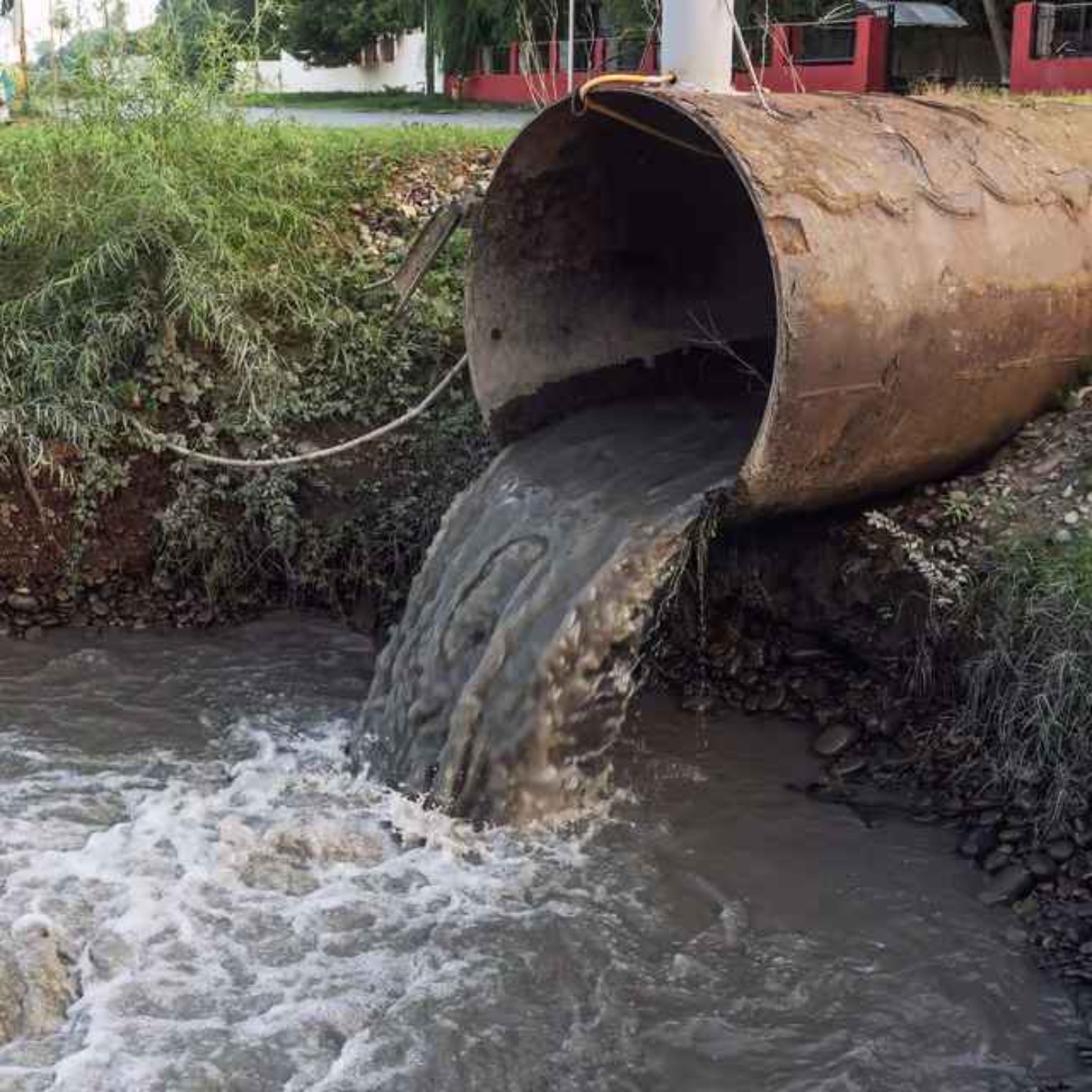
In this episode, the podcast discusses the recent announcement regarding the overhaul of the UK's water regulatory system, specifically the scrapping of Ofwat, and its implications. Subsequently, the conversation shifts to London’s music scene and the economic effects of this summer's major gigs.
Written by AI. May contain mistakes.

Get the gist, explore an idea or ask about something said.
 Claude
On The Standard, what are the key points of this episode?
Searching your listeningAutomatic transcript. May contain errors.
0:02Hi, I'm Charlie Duffield and welcome back to The Standard Podcast. If you're new here, hit follow and give us a rating. For all the latest news, head to standard.co.uk. Coming up later in the show, is this year one of the most exciting for music ever in the capital? In the Spotify streaming era, there is a lack of revenue for new and upcoming artists. The Tobey Swifts and Oasis and Billie Eilish of this world have looked after by the streaming platforms but everyone else is really struggling. But first, the Off-Watt Water Regulator is set to be scrapped following a report from the Independent Water Commission.
0:49The review's author, Sir John Cunliffe, has outlined 88 recommendations to reset the ailing water industry in what would be the biggest reform of the sector since privatisation more than 30 years ago. In a speech at the London Water and Steam Museum, he compared the current water crisis to the Great Stink of 1888 and warns that water bills could rise by a further 30 % over the next five years. Emma Hardy, the government's Minister for Water and Flooding, said the summer will be spent examining which recommendations to adopt. Alongside the new integrated regulator, other suggestions from the report include mandatory water metering and a social tariff for vulnerable customers.
1:34On Friday, the latest data from the Environment Agency revealed a record number of pollution incidents by water companies. The most serious cases, which caused significant harm to aquatic life and, potentially, human health, were up by 60%. Meanwhile, Thames Water, the UK's largest water company, is on the brink of collapse, with£20 billion worth of debt. Earlier today, Emma Hardy spoke about the situation on BBC Breakfast. Today, what we're calling for is a revolution in the water sector. We need root and branch reform. We can't be tinkering around the edges. The water system's broken. Regulation hasn't been working.
2:14You know, we've seen, as I say, record amounts of sewage. We've seen soaring water bills. We're also talking today about the ombudsman that we want to introduce. This is about giving power back to the customers because for too long customers have been let down. I've spoken to customers where they've had a sewage burst in their homes and they haven't been properly compensated by the water company. This is a system that's unfair. What I want to get to in four years is cleaner rivers, lakes and seas and my sole aim and ambition is how do I achieve that in the quickest way. But many argue that the proposals simply do not go far enough with the government ruling out nationalisation as too expensive and too complex.
2:56Joining us now is Giles Bristow, CEO of the campaign group Surfers Against Sewage. Giles, first of all, what sort of state are our waterways in? Only 14 % of our rivers in the UK are of good ecological status and no river is of good chemical status. So our rivers are in rapid decline across the board. our rivers flow into the sea and so people are surfing and swimming in sewage and chemical pollution and we are seeing vital habitats like the marl beds around Falmouth being destroyed by sewage pollution this is a new phenomenon it's happening really quickly it's happening in front of our eyes we have an app called the safer seas and river service app its aim is to keep people safe it can tell them when you should and shouldn't go into the water but it also allows people to let us know if they get sick when they do from swimming or surfing.
3:48And in the region of 2 ,000 people a year, contact us to let us know that they have got sick from going into the water. This is completely unsustainable. We need to take rapid action. I myself have got sick lots of times from going surfing and going swimming in polluted waters, even when those waters are graded excellent by the Environment Agency. So 60 % of the health cases that we receive occur when people have gone to places that are apparently in excellent condition, yet people are still getting sick. What did you make of the Cunliffe recommendations? Surfers Against Sewage, we've gone out with the line that this is putting lipstick on a pig.
4:24What we mean by that is, if you dress it up, it's still the same. This is a system that has delivered enormous quantities of sewage pollution into our rivers, lakes and seas for 35 years. Unless we get to grips with the structure and the changes necessary to end sewage pollution, putting public benefit and the environment over private profit, then we won't see the reform that we need to end sewage pollution. And the government has ruled out renationalisation of our water system. What are your thoughts on that? The government has narrowed, what it did originally, is narrowed the scope of the Independent Water Commission's work to exclude renationalisation.
5:04Now, we think that was a massive mistake because all options needed to be put on the table for this broken water system. The government is shying away from renationalization because it believes it's too complex. It believes it might scare international investors into the UK and maybe too expensive. Now, we disagree with a lot of that analysis. We actually think that the water companies as they are, aren't worth what they are on paper because they're so broken and so much maintenance is required. So we think is that they're cheaper, they could be acquired and reshaped and put into a form of privatised ownership, but with government and private industry working hand in hand to deliver an end to sewage pollution.
5:44There's not been enough innovative thinking to really get behind what is required to deliver the solutions we need. There's a massive spectrum between renationalisation and pure privatisation. The global trend is away from privatisation and into structures like community interest companies, like not-for-profits, like re-municipalised companies, right, so mutuals. That is the trend globally. And England is an outlier for a very privatised system. We're not going to get to the root cause of what's causing sewage pollution, which is ultimately putting profits over restoring our rivers and our lakes.
6:22So governments should be able to underwrite and give confidence about the future and reduce the cost of financing. And the private sector should be able to come up with long, patient capital that could really heal or be required to invest in the infrastructure that we so desperately need and not be seeking high risk, high reward payments. We do think solutions are out there. Is it possible to halve the amount of sewage that is being discharged by 2030, which is what Environment Secretary Steve Reid has said? This is nothing but a rehash of previous commitments that can date back to the previous government.
7:00We're concerned because what Steve Reid has done is to move the baseline. So from 2021, which we're meant to be halving our pollution instances from, to 2024. So what he's saying is effectively is we'll halve them on 2024 levels, but that was a higher level. So we're shifting the goals here, moving the goalposts, and it's going to make it easier to meet those targets. Now, whether or not the actual industry can meet the targets is fascinating. This is a sector that has under-invested consistently. So can we trust these private companies to deliver on the targets? We don't think so. Not without a really beefed up regulators to make sure that these private water companies do the job.
7:41And do you have anything else to add? The thing that I would like to emphasise is we're not just alone in the dark as a campaigning organisation. We represent people across the country who represent their wider communities. And we know this is a massive issue of lack of public trust in the water system. And they want to see something done. An indicator of this is that 27 % of the people that we polled recently had thought about withholding their payments of their water bills to the water companies. And this is incredible in a very kind of, if you like, law-abiding country that so many people would think about a mass civil disobedience like this, because that's how pissed off they are with the water companies and the system.
8:21So unless they want to feel the political and public backlash, this government should really get to grips with this very quickly. It's something that Paul Paulersland can identify with after he decided to become a guardian of the river roding in East London. Here's what he had to say. I'm just a volunteer river guardian. I didn't have any permission from anyone to start caring for my river. I just went and did it. And across London and across the country, people are starting to do that. I act and speak for the river's interest in whatever way I peacefully can. So as an example, in relation to sewage, I realised that the Environment Agency had no idea about where the sewage was going into my river.
9:01So I now go out, put on a pair of waders, walk the river, find the illegal sewage bills and test and track them in order to find which ones are the most harmful. Effectively doing the Environment Agency's job, but that's what I need to do to protect the river. There are currently on my river right now, dozens of illegal sewage bills happening, which the Environment Agency don't even know about, and which nobody has prosecuted in decades. And for Thames Water to fix those would cost maybe tens of millions of pounds. And at the moment, they're choosing to give that money to their shareholders instead.
9:37And this is happening throughout the country on every single river. If they prosecuted every single illegal sewage bill in the Thameswater area, it would make Thameswater insolvent, which is why Thameswater are asking to be relieved from fines as part of their rescue package. The Cunliffe Review is not even looking at the question, how do we enforce the law to stop those spills happening? Let's go to a break. Coming up in part two, with a summer of gigs in London boosting the economy, who gets to actually enjoy the city's live music? We'll see you back here in just a moment.
10:19Welcome back. From Beyonce and Billie Eilish to Oasis and Coldplay, it's been a spectacular summer for music fans in the capital, with the Mayor of London, Sir Sadiq Khan, today referring to the city as the undisputed capital of music. The city's major arenas and stadiums have welcomed more than 3.6 million fans over the summer who have traveled from across the world. Here are some arriving to see Beyoncé perform at Tottenham Stadium. We're from Thailand, from Phuket. It's really nice here for Beyoncé. Literally you've come all the way from Phuket to London to come and see Beyoncé. And spend all my money in my account for this.
11:00It's her dream actually to be here. What brings you here today and where did you come from? I'm here for Beyonce and I came all the way from New York and today's my 25th birthday. I feel like it's way better to experience her in an environment where there's not as many people from the States. Tickets that we have right now go for like$4 ,000 in the States. And joining us now is the Standard's Head of Culture, Martin Robinson. Martin, what are your thoughts on these new stats from Sadiq Khan? Feels like London more than ever before has really hit home with that. There's been gigs like the run of gigs that Beyoncé has done at the Tom Hotspur Stadium.
11:37Billie Eilish has been at the O2 for six nights. Oasis starting their Wembley gigs this Friday. Coldplay coming later in the summer. So there's lots of really big acts who are just drawing in huge numbers of people for ticket prices that are not low. Is it only big international venues that are reaping their rewards? They've really emphasised that this success of live music extends to the press release. music venues. Over the last year, 4.2 million audience members have gone to grassroots venues. They've contributed 313 million to the economy. They're really sort of like saying that this happens at every single level.
12:14This area is a bit contentious though, I'd say, and certainly grassroots venues, they're not booming, they're closing. What I would say is that there's definitely appetite for going out to see shows in a way that there hasn't been for a long time. I think that might be partly to do with people spending a lot of time on screens at home and live music has become a real sort of place for people to meet and gather and have a real experience. I think there really is something in that. But also you're looking at the amount of attention that little gigs have caused in the news. We talk about kneecap and Bob Villain at Glastonbury.
12:51Astinbury and no matter what you think about what they've been saying what it does show is that these stages are now platforms people are making big statements even a lot of these big acts even Billie Eilish will reference some troubles in the world at the show that I went to the O2 last week these are events that are being filmed that are being shared and so they've become a lot more interesting a lot more vibrant and I think they're quite unpredictable as well so they're quite an addictive thing it's coming out of just the pure music world and it's it's gone into the news world So that's got to say something about how alive music is, particularly in London at the moment.
13:25So tell me a bit more about that. I mean, if you look at musical history, artists have always used that platform, the audience that they command on stage in order to make statements. But because it's all film now, it just means that what you do on stage is now, it can be captured and shared and go viral and can be scenes. It's different in that way. This isn't something that we've particularly seen before. I mean, look at the Coldplay thing where they had the kiss cam at the gig and revealed that affair the CEO was having and just the amount of attention that's had. That is kind of unthinkable.
13:59You might have had such mistakes in the past, but probably wouldn't have been shared on the level that they are now, a scrutinized day. Finally, do you have anything else to add? The question is whether this is one of the most exciting years for music ever. Certainly the amount of audiences and the amount of people going to see gigs is extraordinary. Is this like a vintage year though? Is this like equivalent to the summer of 68 or the height of Britpop? I'm not sure if that's quite the case just musically in terms of albums coming out for instance. Are there classic albums being released this year?
14:34It sort of doesn't feel like it. There's not that many. It's kind of the Little Sims record. Wet Leg have just gone to number one. Is it a classic? I'm not sure about that. There's a slight sort of lack of progression or true excitement on just music that's being released. There's no money being made through albums anymore. It's all live. Smaller acts, while I'm sure it's very important, they release music and record their music. They're earning their cash from the live arena. It feels like all of the energy is going there rather than into the records themselves. But what I'm hoping is that with the sheer amount of people going to gigs, Even if you resent gig prices, even if you hate Oasis, even if you refuse to pay that amount of money to go to the O2, it might cause a reaction as well in that way.
15:20I think it will generally lead to a more thriving culture scene in London.
15:28And that's The Standard. For all the latest news, head to standard.co.uk. If you'd like to get in touch, please do drop us a line at podcasts at standard.co.uk. We'll be back here tomorrow at 5pm. We'll see you then.
Ofwat is to be scrapped as part of a radical overhaul of a “broken” water regulatory system Environment Secretary Steve Reed confirmed today, following the publication of a major report from the Independent Water Commission. Giles Bristow, CEO of the campaign group Surfers against Sewage, responds to the news - and Paul Powlesland, Barrister at Lawyers for Nature, explains why he decided to become a guardian of the River Roding in East London, to spot illegal sewage leaks.
And in part two, Sadiq Khan has called London ‘the undisputed capital of music”, but are this summer’s huge gigs the full story? The Standard’s Head of Culture Martin Robinson questions whether it’s good for the music industry.
*This episode contains one example of mild explicit language
Hosted on Acast. See acast.com/privacy for more information.


