
 Ask ChatGPT



Host: Rachel Abbott
The Standard podcast features top news insiders discussing critical topics in politics, culture, sport, and fashion, delivering unrivalled insight from award-winning journalists and celebrity guests.
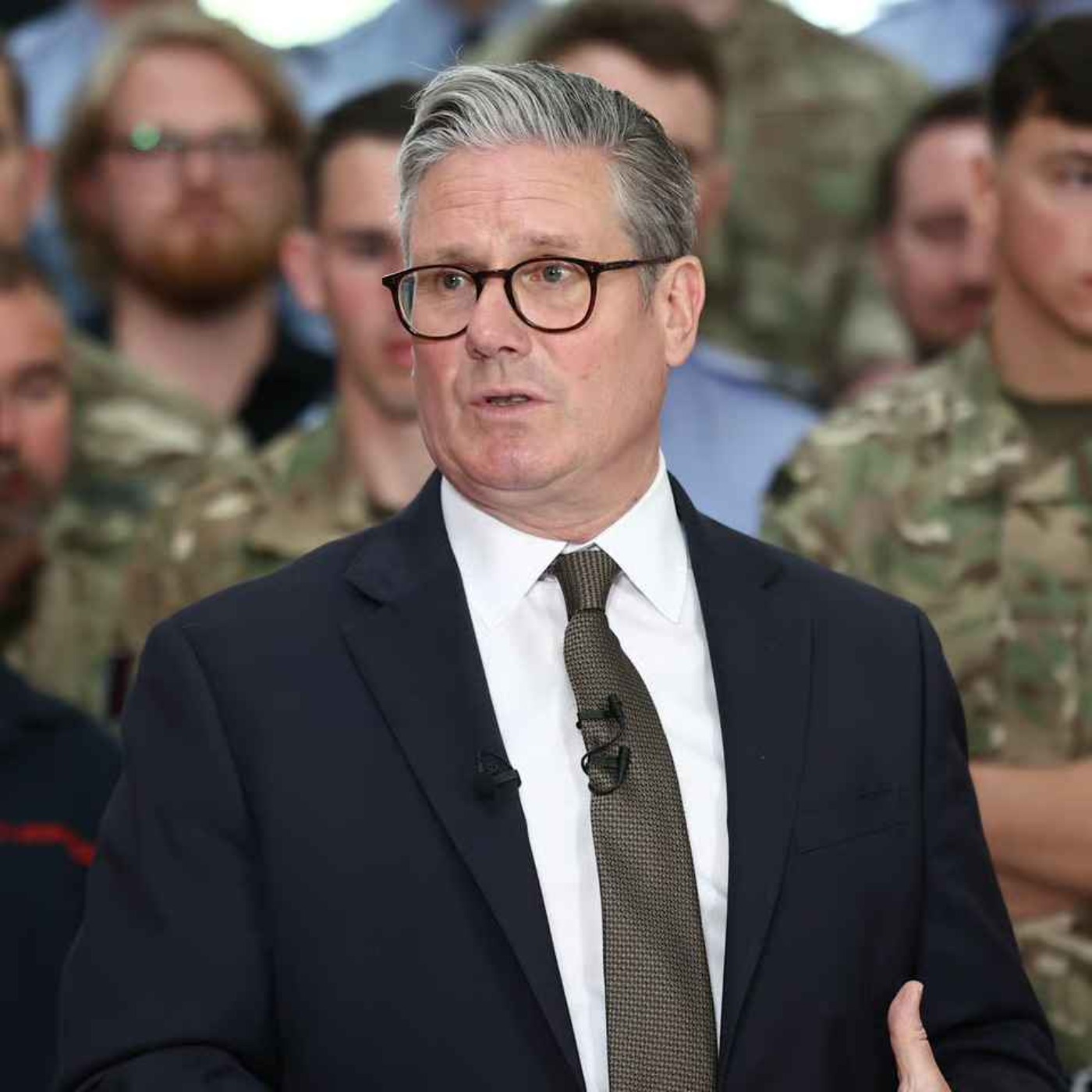
In this episode, the discussion pivots around the UK government's newly released strategic defence review led by Prime Minister Keir Starmer. Defence editor Robert Fox joins the podcast to provide insights into the implications of the review and updates on the ongoing peace talks concerning Ukraine.
Written by AI. May contain mistakes.

Get the gist, explore an idea or ask about something said.
 Claude
On The Standard, what are the key points of this episode?
Searching your listeningAutomatic transcript. May contain errors.
0:04Hi, I'm Rachel Abbott and welcome back to the Standard Podcast. If you're new here, hit follow and give us a rating. For the latest news, head on over to standard.co.uk. Coming up later in the show, the latest on the major Ukrainian drone attack in Siberia.
0:28But first, Kirstama has said Britain must prepare for conflict by moving to be war-ready to deter an attack from Vladimir Putin. If you want to deter conflict, then the best way to do that is to prepare for conflict. And therefore, this is intended to do what NATO has so successfully done for 80 years, which is to continue the peace, but by preparing for conflict and being ready. That was the Prime Minister speaking on BBC Radio 4's Today programme. Today's blueprint for the armed forces, the Strategic Defence Review, is likely to be the most far-reaching reform on the way Britain manages its defences for half a century.
1:18Starmer described the review as a blueprint to make Britain safer and stronger, a battle-ready, bomber-clad nation. He added that every part of society, every citizen of this country, has a role to play in protecting the country. The government has pledged to increase defence spending to 2.5 % by 2027, but has stopped short of guaranteeing it will be 3 % by 2034, adding that this is dependent on public finances. To find out more, we're joined by the London Standards defence editor, Robert Fox, who has just seen the newly released Strategic Defence Review. Robert, how does this document differ from previous reviews?
2:04Each one is slightly different, but this one, there have been extravagant claims made for it, in that it marks a change in warfare, according to one of its authors, the biggest change in 150 years, which was the beginning of modern warfare, the Franco-Prussian War, in that it was General Richard Barron who said this. This is the equivalent of the arrival of the atomic bomb, the internet, the telegraph, a television all at once because what it looks to is warfare in the cyber era. And I think that that's still, they're making a gallant attempt to deal with it with all the old tools, Army, Navy, Air Force, and so on.
2:44But there's one message very clear from this review, is while they have got more money, they've got nearly not enough money for what they think that they really should do. Can you outline some of the key takeaways? Recommendations have been well advertised. They're saying that, you know, Britain has to look to its own defences. It has to involve all British society, which is where it is different from its predecessors over the past 30 years, in that in modern terms, contemporary terms, we're under constant threat and warlike activity, particularly from Russia involving communications networks under sea cables and so on.
3:25There's a great deal about that. But also in cyberspace, that we're under constant daily attacks, dozens of them. Some appear to be purely commercial, but some of them are state-on-state and malicious. And that is what the main message of the report is, that we must prepare for this new state of war, and we're not really shifting there. And it has two requirements. It has a reform in the way things are done, a bit about equipment, actually not nearly so much as one might expect, but also involving people. And it appears to me that people are the really big problem. There are not nearly enough recruits.
4:03How do you make people aware? How do you get volunteer elements, part-time elements, reserve elements from society? And that's the big question raised today. That's interesting. Do you think these reforms go far enough? I think they're quite radical. They're quite radical by previous reviews. And thinking back 40, 50 years, with the reviews at the end of presence, UK presence in Germany, and then there was a discussion about what we should do in 1980. Very important because it was looked as the way ahead and it was decided we needed to reinforce in Germany and put in a lot of cancellations. And that probably persuaded the Argentines that they could invade the Falkland Islands and get away with it.
4:51Canceled two particular ships, an aircraft carrier Invincible, that was not sold to Australia in the end, and the ice patrol ship Endurance. But it is very interesting, the history of these defence reviews. Certainly, just to be a bit autobiographical, in my experience, they're overtaken by events and circumstances, usually within two or three years. And unfortunately, I've got a very, very ominous feeling that it's going to happen this time. You've touched on it already, but Defence Secretary John Healy said the keyboard is now a weapon of war. What are the risks of cyber warfare nowadays? Well, cyber warfare is absolutely constant.
5:33I said that you could look at malware attacks. Malware attacks very often have a state or could even have a terrorist or a subversive element. But let me give you the examples, of course, of the accounts of Marks and Spencer, Harrods, Co-op. That's only happened in the past weeks. But these things happened 90 ,000 in the past 14 months, of which at least 129, according to the Cyber Warfare Center, which I visited last week, were potentially lethal. In other words, they could crash systems, particularly in the National Health Service, leading to quite a deal of loss of life. We've already mentioned Russia.
6:14What other global threats is this defence review trying to protect against? It's very interesting. The major player, which really needs a lot more discussion, but they don't depict as an enemy quite, is China, of course. It keeps on, it refers at one point to China being a wonderful understatement, as a challenge. And the reason why China is a challenge, of course, for all the various claims that it wants to do, and it's supporting Russia and Ukraine. I think we need to make no mistake about that. And it is alliance inadvertently with its China, Russia, Iran, and North Korea. China is moving so far ahead in things like encryption and quantum.
6:56And the prospects of what that will do to us, it's only hinted at in this report, could take down GPS. Yes, it can take down all communication. So the cyber on the other hand, there's also the electromagnetic dimension. You know, electromagnetic, anything from your iPad to your watch to your microwave, it all could be affected by that. It is very, very spooky indeed. And one wonders whether we have exactly the resources to defend ourselves against this. I must say that it's very interesting that it's coming out on the day that we're beginning to learn of the extraordinary, unexpected and peculiarly unconventional attack, even by modern terms, on the four Russian air bases, taking out a third of the Russian bomber force with cheap drones launched from trucks that just then imploded.
7:50They were detonated and they blew themselves up. There's nothing I've seen, I'm afraid, in the defence report up to now to say how Britain would deal with such a threat on its own vital installations.
8:07Let's go to a quick break. Coming up in part two, the latest on peace talks following Ukraine's long-range attack on Russia on Sunday. We'll see you back here in just a moment.
8:28Welcome back. Ukrainian and Russian negotiators are due to meet in Istanbul, with talks today taking place in the aftermath of a major Ukrainian drone attack on Russian military bombers in Siberia yesterday. The attack hit 40 warplanes over 2 ,500 miles from Ukraine and caused an estimated 5.2 billion in damage, according to Ukraine's domestic intelligence agency. I was just going to ask you about yesterday's drone attack by Ukraine on Russia. Can you explain more about what happened? Well, it was dead clever for a start, and it took 18 months to prepare. They put actually quite cheap, quite short-range drones, packed them, over 100 of them, I think up to 140, attacking four bases in pallets, concealed in container lorries, which they drove over the border, some border, because one base attacked was very deep into Siberia.
9:29And they parked up the lorries, the lorries opened, and the drones popped up over the perimeter fence in these air bases and knew exactly what to blow up. It's amazing, really, how much the Ukrainians have revealed about this, because it's a great propaganda coup. I think that they felt that they had to because it was using commercial means. It's very strange. They were using local Russian mobile phone networks. They were using social media to enhance and to show the effect of this. It's a very clever piece of warfare. Critics put it, they put it frequently even this morning, that, oh, why did they have to reveal so much of their tactics because it allowed the Russians to be prepared for the next time.
10:18Well, that was part of the game because part of a game that hasn't been revealed but is open there for all to see, open in plain sight, is it screwed up the whole traffic system in huge parts of Russia because so panicked have they been. They've been searching every other container truck across whole parts of Russia. That's a victory too. Obviously, today there are negotiations in Istanbul. What's the aim of these talks? And is this drone attack going to alter the proceedings? Well, I think that it will impact that, but in a way that will just enrage the Russians. I think the Russians have been so cynical about this.
10:58Trump tried to set the condition that we'll only have reasonable talks if you agree to a ceasefire. The Russians say we'll talk and have a ceasefire at the same time. And by the way, that mechanism dragged out the war for a very, very long time, possibly, well, seven years in all, in Vietnam. So we've seen all that one before. As I was saying, it will enrage the Russians. And so they will make ridiculous demands. The Ukrainians have shown that they're taking it seriously. They've sent a senior defense minister, Damurov, there. Russians, not like that. I think what will happen is what happened last time.
11:34they'll start shouting and screaming and say, we're in this for the long haul. After all, Peter the Great fought the Swedes for 20 years and all that kind of rubbishy use of historical mythology. The war did go on for 20 years, but it's not the same thing today. So we're in a mess. And I think the mess is the following. Russia, thinking by just numbers, it will go on. And this It's part of talk, no talk, it's part of this policy and is building up and it's building up. And here we come back into the Defence Review again. It's building up on a wider front, a wider front threatening Poland, threatening Finland, threatening Estonia and threatening Lithuania particularly.
12:17And that's going to make a big call for NATO and a NATO response to it and which America is going to be reluctant. Now, does the Defence Review offer? Well, it is well aware of that and where Britain should contribute, but it's going to be a big ask. And back to today's defence review, what's one final takeaway? The report makes a very good point, and it would be made in Parliament this week, is that, look, this isn't a thing that just down for a lot of niche armed forces. This is a thing that involves the security in the future, the prosperity of the whole community. And I think that's where it's done a really good job in spelling out that this isn't just for the armed services, this isn't just for the government, it's actually for the people and the well-being of the country.
13:05It's getting the community involved in defence and resilience, which has eluded governments now, well, ever since the Cold War.
13:17And that's The Standard. For all the latest news, head to standard.co.uk. If you'd like to get in touch, please do drop us a line at podcasts at standard.co.uk. We'll be back here tomorrow at 4pm. See you then.
The London Standard’s defence editor Robert Fox joins us to discuss the government’s newly released strategic defence review.
And in part two, he explains the latest on peace talks in Istanbul following Ukraine’s long-range drone attack on Russia on Sunday.
https://www.standard.co.uk/comment/defence-review-keir-starmer-spending-donald-trump-b1230498.html
Hosted on Acast. See acast.com/privacy for more information.


