
 Ask ChatGPT



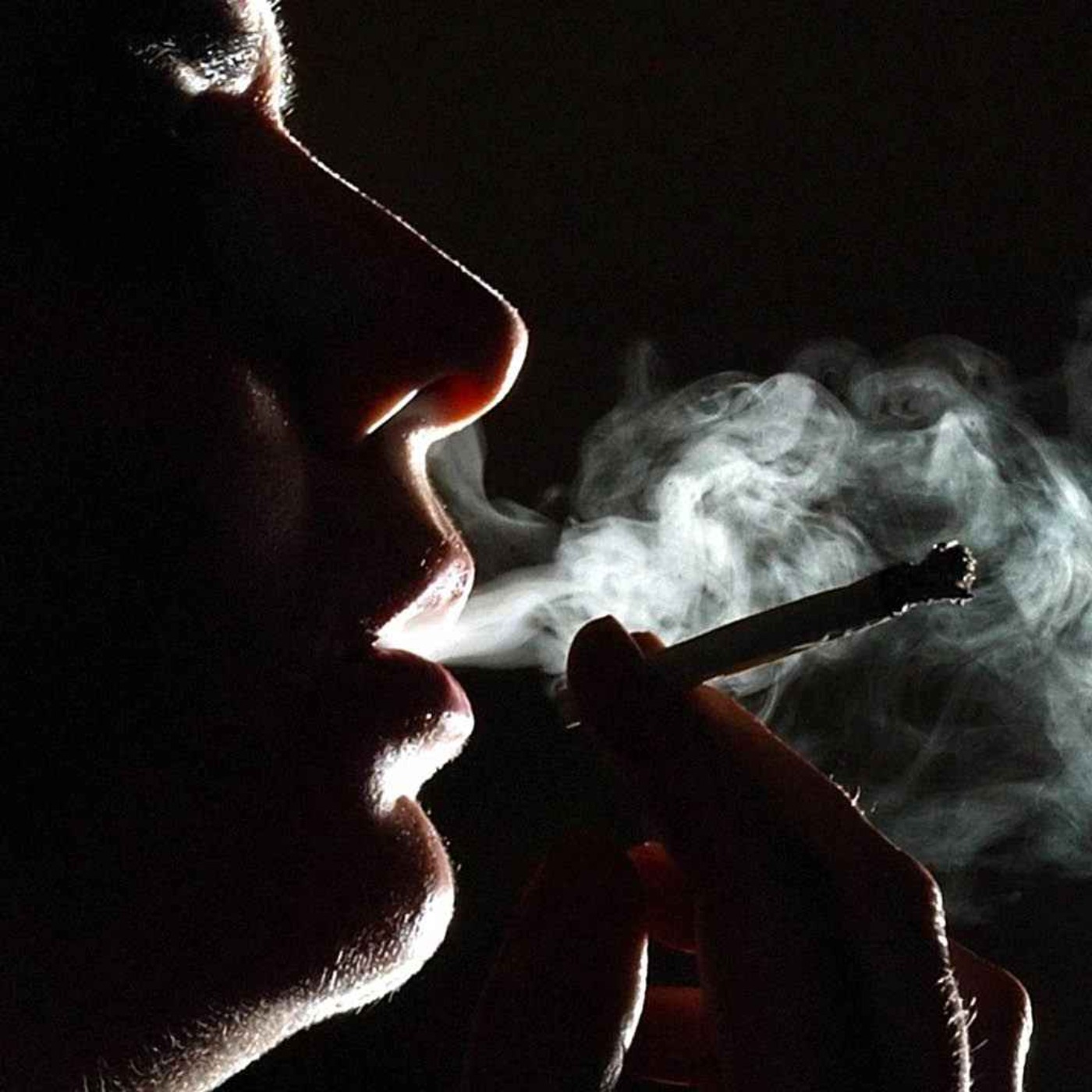
In this episode, the Mayor of London, Sadiq Khan, urges the government to consider decriminalising possession of small amounts of cannabis. Steve Rolles, a senior policy analyst for Transform Drugs Policy Foundation, discusses the findings of the London Drugs Commission. Additionally, part two of the episode features Claudia Cockerell, The Standard's culture writer, discussing the significance and trendiness of slogan t-shirts in activism.
Written by AI. May contain mistakes.

Get the gist, explore an idea or ask about something said.
 Claude
On The Standard, what are the key points of this episode?
Searching your listeningAutomatic transcript. May contain errors.
0:02Hi, I'm Charlie Duffield and welcome back to The Standard Podcast. If you're new here, hit follow and give us a rating. For the latest news, head to standard.co.uk. Coming up later in the show, how effective is fashion's favourite form of activism?
0:28But first, today London Mayor Sadiq Khan has backed calls for the partial decriminalisation of cannabis possession. It comes as the London Drugs Commission published its findings and suggested that the way the drug is policed causes greater harm to society than its usage. In particular, it found the use of stop and search powers disproportionately affects black communities. Joining us now is Steve Rollers, a senior policy analyst for Transform Drugs Policy Foundation. Steve, currently, what is the UK's legal stance on cannabis? And what is now being proposed? Well, currently, cannabis is illegal under the Misuse of Drugs Act.
1:12It's a Class B drug. You can certainly get arrested and get a caution or a criminal record, or sometimes there'll be some other form of disposal. But in theory, you can get a criminal record, which is a very serious burden for anybody. And significantly, the burden of criminalisation is carried by socially and economically marginalised communities, particularly young people, particularly black people, particularly people from socially deprived urban communities tend to carry the burden of that criminalisation because they get arrested more than anybody else. In terms of supply, it's much more serious.
1:47If you're involved in production or supply and you are caught and prosecuted, you can actually go to prison. It's much more likely a number of years in prison or serious fines. So it is very much illegal. What's being proposed is that the criminal penalties for possession of small amounts of personal use would be removed by moving it from the Misuse of Drugs Act to the Psychiatrist Substances Act. And I don't want to get too much into that, but we do actually have these two parallel legal instruments in the UK. The Misuse of Drugs Act, which is the sort of more better known prohibitionist legislation that basically bans drugs for possession sale.
2:24and the Psychiatry Substances Act, which was introduced in 2016, which bans drugs, certain drugs for sale, but not for possession. So you have a no sanctioned possession model for drugs that are covered under the Psychiatry Substances Act. Now, why we have two parallel ways of banning drugs, that's a complicated question and one for the history books, but that is where we are at the moment. And what is being proposed is to move cannabis from the Misuse of Drugs Act to the Psychiatry Substances Act. And in doing so, you effectively remove criminal penalties or possession of small amounts of personal use.
2:55Were you surprised by the findings of the London Drugs Commission? I wasn't particularly surprised. I mean, Sadiq Khan launched this commission clearly with a kind of reform mandate. I mean, he had been visiting cannabis woe rooms in California. He'd been talking about decriminalisation and legalisation. And he launched the commission to flesh out what that might actually mean in practice and for the commissions to look at the evidence and explore options for change, with a clear acknowledgement that the current policy wasn't working very well, was expensive, it wasn't delivering the kind of outcomes that people wanted to see, it was criminalising lots of Londoners.
3:31Clearly, it had a reform mandate. So I'm not surprised it called for change. I'm pleased that it called for decriminalisation because there's no evidence that that is effective, but it is very expensive and it is often counterproductive in terms of criminalising lots of people who really shouldn't be getting criminal records for cannabis possession, which is no worse really than a possession of a can of beer. I think what's surprising for me really is that it didn't go further. I'm surprised that they didn't call for the legalisation and regulation of the supply chain as well, because it seems a rather contradictory position to say you won't be criminalised for your cannabis use, but you have to buy cannabis from street dealers and unregulated organised crime groups, unregulated products with no information on potency or risks on the packaging bought from completely unregulated criminal profiteers.
4:20So that bit of it didn't make sense. And I think the arguments that they make to justify not calling for legalisation and regulation of the supply chain are rather unconvincing. And it feels like there may have been political pressures brought to bear on, you know, who knows what goes on behind the scenes. But certainly Charlie Faulkner, who is the commissioner, has been very vocal in the past about legalisation and regulation of all drugs, not just cannabis. So I don't think it reflects his personal position. I imagine it was sort of committified to a certain example. I think some of the commissioners were more prohibitionist leaning, and perhaps that they were unwilling to put their names to a legalisation recommendations.
5:00I don't know. But anyway, that element of it is rather disappointing. Which other countries support decriminalisation of cannabis? Well, I mean, lots of countries around the world have implemented decriminalisation of cannabis, or in many cases, all drugs. About 45 different jurisdictions around the world have already gone down that line. Most of mainland Europe has some form of decriminalisation. About half of the US states have some form of decriminalisation, or with cannabis, actual legalisation and regulation of supply. So you can just go in and buy it in a shop. It's not just decriminalised to possess.
5:31You can actually buy it legally in about half of the US states now. Canada, Mexico, Uruguay, Colombia, South Africa, Ghana, I mean, Thailand, all over the world, various states in Australia. On every continent, people are moving towards decriminalization and legalization of supply as well. So there is a lot of evidence. Decriminalizing, ending the criminal penalties for possession of drugs is the adopted position of the entire UN agency ecosystem. system. The common position on drugs put out by the United Nations calls for decriminalization of personal use and possession of all drugs, not just cannabis.
6:10And that's a position that's also supported by The Lancet and the British Medical Journal and the Royal College of Medicine and the Royal College of Physicians and the Royal College of Nursing and various other Royal Colleges and the World Health Organization. It's not a controversial position anymore. 65 % of the London population support legalisation of cannabis and even more support the decriminalisation of possession of cannabis. And nationwide, there is also majority support for decriminalisation and legalisation. So it's not even particularly contentious with the public. I feel like the government in particular are kind of trapped in some misperception of the past that somehow progressive drug law reform would be unpopular.
6:52And yet they haven't even made the arguments. And actually, it is popular because it delivers better outcomes. It saves the public money. It saves on police resources, which can be redirected into more serious, you know, actual crimes and just delivers better outcomes all round. We're in an odd position at the moment. The debate is moving forward, but there seem to be these kind of historical political obstacles. And they certainly are not showing any inclination to show actual leadership and kind of make the case for something that many of them know to be right. You know, David Lammy is the foreign secretary.
7:22He has long advocated for the legalisation and regulation of cannabis. It's not an alien concept for the government and the cabinet, or certainly not for backbenchers, many of whom do support it, of course. And in all parties, it's not a left or right or partisan issue in any way. There is support from members of reform all the way to the Green Party. So it's an interestingly cross-party support, as well as opposition, interestingly. And finally, how likely is it that these findings will drive change? It reflects the changing tide of public opinion, the changing tide of media opinion and a lot of political opinion.
7:57And I think that these are small, you know, incremental wins in terms of the public debate. We are already seeing changing in policing practice. Police authorities around the UK already have diversion programmes where someone caught in possession of drugs is diverted into a health intervention rather than prosecuted within the criminal justice system. which in many ways it's a form of decriminalisation because you're caught in possession and you don't get a criminal record. So that is already standard practice. So the government rejecting the idea of decriminalisation is quite strange in many ways because they do actively advocate for these diversion programmes, which are a form of decriminalisation already.
8:39And so I feel sometimes it gets caught up in the semantics and the language. But this commission, I think, yes, it will certainly bring more formal decriminalisation somewhat nearer. It's not unfortunately going to progress the discussion on legalisation much because they don't call for it. They're rather weak and negligent on the legalisation regulation front. But if it brings decriminalisation forward, that's very positive. I feel it's more reflecting change in the public mood rather than leading it, though. If they were doing that, I think they would have made bolder recommendations. But yes, it's a sort of good but no cigar type report.
9:15Some good recommendations, but very disappointing on legalisation regulation.
9:22Let's go to a break. Coming up in part two, from Pedro Pascal to Harris Dickinson, from serious political statements to irony-laced social commentary, is the slogan tea this summer's hottest fashion accessory. We'll see you back here in just a moment.
9:50Welcome back. Now, how do you feel about saying it with your chest? I'm talking about wearing a slogan or catchphrase emblasmed on a t-shirt to speak out against injustice. Plenty of A-listers have been snapped wearing a slogan T, but can it ever be more than just a fashion trend? and what happens when it all backfires. Joining us is The Standard's culture writer, Claudia Cockerell. Claudia, slogan tees are having a moment right now. Who has been spotted wearing one recently? Every year or so, there's a kind of slew of articles saying, you know, slogan tees are back. They've always been around and they always will be, but it does feel like at the moment, a lot of celebrities are using them to kind of make both serious statements and tongue-in-cheek ones.
10:40So the big ones recently are Connor Ives' Protect the Dolls t-shirt. So Connor Ives is an American, London-based fashion designer. And Protect the Dolls is basically a call to protect members of the transgender community. Dolls is this kind of colloquial term used by some of the LGBTQ community to describe trans women. And the t-shirt is raising money for a charity which supports trans rights. I think they've raised over kind of£400 ,000 at this point. And actors like Pedro Pascal, Tilda Swinton have been seen wearing it. It's kind of been everywhere. And then the other big slogan that got attention recently was the actor Harris Dickinson in Cannes at the film festival.
11:25He was there for the premiere of his directorial debut, a film called Urchin, which is about a homeless man in London. He wore a T-shirt which said on the front, being homeless is not a lifestyle choice, Suella. And on the back, it said it's a sign of government failure. This is a bar, but Suella Braverman, the former Home Secretary, who said in 2023 that living on the streets is a lifestyle choice, which got a lot of clap back at the time. But I don't know quite how relevant it is now, considering she hasn't been Home Secretary in almost a year and doesn't really have that much power to change things.
11:59But I guess it was pertinent to Dickinson's film. Is it possible to get the tone right on a slogan tea? No, I think it's definitely possible. I think that, you know, I guess slogan teas have always been this kind of walking billboard. And now more than ever, it's easier for them to kind of go viral because they'll get shared all over Instagram. People have always liked a kind of single minded message to get behind. it gets into tricky territory when a sloganty is doing something really earnest. So we saw in the 2010s, there was a lot of kind of feminism-oriented sloganties. So there was the famous one which Elle magazine designed called, This is what a feminist looks like.
12:40And all sorts of men from Benedict Cumberbatch to Nick Clegg posed in it, you know, pointing at their faces. And these pictures kind of became a bit of a joke. The Benedict Cumberbatch one is almost a meme now. And, you know, there was a lot of kind of feminism t-shirts from that time, which turned feminism almost into a trend for brands to like capitalise on and kind of commodify. You know, if you wore a feminist t-shirt now, it would be seen as a very passe or out of fashion, which is the inherent problem with slogan t-shirts and with taking a really serious issue and turning it into a fashion statement I guess the problem is that it will go out of fashion so I guess that's why one has to be careful and why some celebrities opt to go for more kind of tongue-in-cheek taglines that might underline a more serious issue but but are less easy to kind of make fun of maybe.
13:36Why do you think people are so drawn to wearing them? I think because it's a really easy way to spread a message and get awareness. Like I said, they're kind of these walking billboards. The early kind of originator of slogan tea was the artist Catherine Hamnet. And she famously wore one to meet Margaret Thatcher, which said 58 % don't want Pershing. Pershing is a reference to this American nuclear missile the government were considering installing in the UK. But the thing is, you know, this image of Hamnet shaking hands with Thatcher went as kind of viral as is possible to go. in the 1980s, you know, it was everywhere.
14:15I think it was the most kind of published image that year in newspapers. You know, you can really make a statement with slogan t-shirts and raise awareness. But Hamlet herself said, you know, if you want to affect real change, a t-shirt's not going to do it. You have to write to your MPs. You have to protest, things like that. They're really useful for getting lots of eyeballs on a particular issue. I think they've got power to raise awareness about things. And I think because they are kind of inherently Instagrammable, you know, in the age of Instagram and social media, we talk in soundbites, really.
14:47People's attention spans are so small that you really want like a punchy one line phrase to grab people's attention. Trans influencers, for example, have been saying that they really don't want people to be wearing the Protect the Dolls t-shirt because they think it's cool. They want people to be sure, wear the t-shirt but also what are you doing in your life to actually help protect the trans community and and and do your bit it's not enough just to wear a slogan and i think it's that performative activism thing so then we've seen a lot of t-shirts recently that are more more tongue-in-cheek more ironic so sydney limer who is a standard contributor model writer has designed a t-shirt that just says rich parents on it and she told me that it's to raise awareness that so many in the creative industries have had a leg up through nepotism or through parents who've been able to pay to help them kind of get into the industry and she's setting up a creative platform which helps people from disadvantaged backgrounds get into the arts those more fun playful ones are a great way to kind of embrace the trend they make light of a serious issue not in a way that it could become unfashionable
15:59and that's the standard for all the latest news head to standard.co.uk if you'd like to get in touch please do drop us a line at podcasts at standard.co.uk we'll be back here tomorrow at 4pm we'll see you then
As the Mayor of London urges the government to consider decriminalising possession of small amounts of cannabis, Steve Rolles, a senior policy analyst for Transform Drugs Policy Foundation, unpacks the findings of the London Drugs Commission.
And in part two, The Standard’s culture writer Claudia Cockerell questions the power and popularity of the slogan t-shirt.
Hosted on Acast. See acast.com/privacy for more information.


