
 Ask ChatGPT



Written by AI. May contain mistakes.

Get the gist, explore an idea or ask about something said.
 Claude
On The Standard, what are the key points of this episode?
Searching your listeningAutomatic transcript. May contain errors.
0:02Hi, I'm Charlie Duffield and welcome back to The Standard Podcast. If you're new here, hit follow and give us a rating. For the latest news, head to standard.co.uk. Coming up later in the show, the campaign for one London borough to leave the capital.
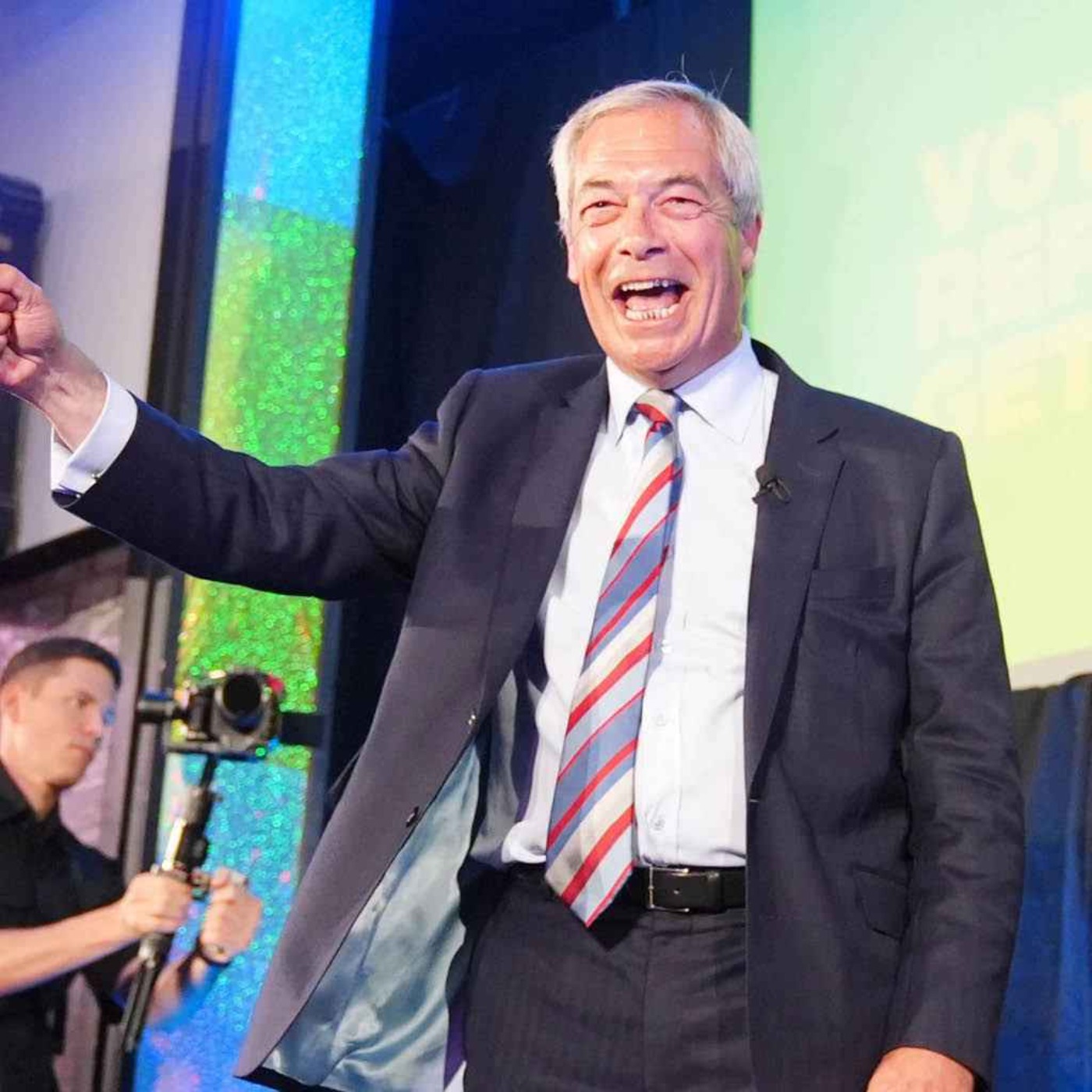
0:25But first, today Nigel Farage's tax and spending plans have been slammed as fantasy economics. It comes as the Reform UK leader has criticised Prime Minister Keir Starmer for being unpatriotic and out of touch. He also accused the Prime Minister of betrayal over his deal with the European Union and the handover of the Chagos Islands to Mauritius. Joining us now is the London Standard's Chief Political Correspondent, Rachel Burford. Rachel, what is Nigel Farage calling for? Nigel Farage held a press conference in central London today where he sort of went through some of reform's key policies. These were policies really kind of designed to win over the working class and working class families in particular.
1:14So something he announced, for example, that reform would, if they did come to power up to the next election, they would lift that two-child benefit cap, which sees families not receive any child benefit for their third child beyond. This is, you know, something that has been, it was brought in by the previous Tory government. It has been something that a lot of people on the left in Labour have been arguing should be scrapped because it is driving children into poverty. And Nigel Farage said by lifting the cap, it would encourage people to have more children. Lower income families would be better off.
1:46He also announced tax breaks for married couples, which is quite an interesting policy. that would mean that one spouse was exempt from paying tax on their first£25 ,000 of their income, while the other person in that relationship would enjoy a tax-free income of£20 ,000 under the policy. So that is something Reform have said, they want to increase the tax threshold from around£12 ,500, as it is at the moment, to£20 ,000. And then he also said that the winter fuel allowance of pensioners will be reinstated, which I think is something that the Labour government are already sort of u-turning on anyway.
2:22Earlier this year said that the winter fuel allowance would be means tested but Keir Starmer has already hinted that he wants to see more pensioners able to get that allowance so that is something we could already see this government u-turn on. Can you explain more about Reform UK's stance on net zero? So yes obviously these policies that Nigel Farage has announced would be pretty costly but Farage has said that they will be paid for by scrapping all of the sort of net zero projects that the UK currently has, as well as scrapping diversity quotas and those policies that he says are in various institutions around the country.
3:02Reformers claimed that it could save£225 billion over five years by scrapping net zero projects. This is something that has been criticised and isn't quite true, but green investment essentially would be scrapped under a reformed government to help pay for reform's policies. What has the criticism been? The Institute for Government stressed that the bulk of the green investment highlighted in this paper called Paying for Net Zero was due to come from the private sector, not from public funds. So this£225 billion figure that reform is throwing around is, it has been suggested, not quite correct because much of that was from private investment.
3:41So Jill Rutter, who's a senior fellow at the IFG, she told Standard that cancelling private investment does not save the government money. And how have reform been positioning themselves against Labour? So yeah, this was Nigel Farage today basically making a direct pitch for Labour voters and announcing these policies that are designed to win over working class families, essentially. Obviously, reform are a right-wing party. They're seen as very right-wing on certain subjects, particularly things like immigration. But also, Nigel Farage thinks there are a lot of voters out there that are, you know, perhaps right wing on issues like immigration and crime, but perhaps more left wing when it comes to economic policies.
4:21You know, he didn't talk too much about immigration in this press conference. He mainly focused on boosting Britain's birth rate, on helping working class families. And that was how this pitch was sort of framed, essentially, rather than, you know, talking about what is seen as Nigel Farage's big issue which is immigration small boats those sort of home office policies that you know some people are very interested in invested in but others you know when it comes down to it if you don't see a sort of boost in your income or a boost in your standards of living then you know that's kind of they're kind of immaterial it's it's that is what people want to see they want to have more you know money in their pocket and see that public service is working correctly Obviously, this comes off the back of the May local elections when reform did very well, gaining a number of councils, winning a large number of council seats from the Conservatives, also from Labour.
5:21And they also won the Runcorn and Hellsby by-election. And that had previously been one of Labour's safest parliamentary seats. You can see there is a big rise to reform. I don't think anyone can deny that now. You know, we've seen in opinion polls recently that reform are consistently coming up on top or level with Labour in those. And they certainly does seem to be doing far better than the Conservatives are in those opinion polls. You know, we've got the next electoral test for Labour and Keir Starmer will be the local elections next year when there are actually a lot more Labour seats up for election than there were in May.
5:58So that will be the next big electoral test for the Prime Minister. And I think Nigel Farage is kind of already trying to make a pitch to those voters that are going to be going to the polls in a year's time about what he will actually do for working class families in those seats that have traditionally voted for more left wing candidates than the ones that were up in May.
6:21Let's go to a break. Coming up in part two, find out which borough in the capital wants to declare its independence. We'll see you back here in just a moment.
6:43Welcome back. You'll have heard of the TV show The Only Way is Essex, but for all the talk of leaving London you probably wouldn't expect one of the capital's own boroughs to be on its way out. But that's not the case for Havering, one of the greenest boroughs in the city, as one campaign is aiming for it to rejoin the neighbouring county. Joining us is the London Standard's news reporter, Megan Howe. Megan, what is this campaign trying to achieve? The aim of this ongoing campaign is essentially for the London Borough of Havering, which includes Bromford, Hornchurch and Upminster, to establish its independence essentially from Sadiq Khan and the Greater London Authority and to essentially rejoin Essex, which it has historically been a part of.
7:33The campaign has gained traction after Deputy Prime Minister Angela Rayner said that she wanted to merge areas where there are currently two tiers of a local authority. So where you have smaller district councils and obviously larger county councils in a bid to streamline services. She also said that she wanted to sort of give regional mayors more powers over things like housing, education and employment, which she believes would help drive economic growth. So it's come as sort of on the back of that, really. Who is spearheading it? So the campaign is being spearheaded by a Conservative MP for Romford, Andrew Rosendale, who said the borough now has a once-in-a-century opportunity to gain its independence.
8:18So he claims that many residents in Havering believe in reclaiming its autonomy. He's cited many reasons for this being Romford does not see enough policemen, for example, that all but one of its police stations have closed. Constituents did not want to be a part of the ultra-low emission zone and that they have opposed planning interference from the mayor as well. So MP Rosendale made his argument in the House of Commons on the 7th of May this year. he criticised the overarching powers of the London mayor and said that Greater London as a region was too big and too remote to meet the needs of a borough such as Havering.
8:57He believes that ever since the merger of Romford and Hornchurch in the 1960s into the new Greater London and the creation of Havering, the borough's, quote, Essex identity has been diminished and even discarded by some, which he claims was due to a government reorganisation at the time, which he believes was lazy in its construction and took no account of the borough's history. Realistically, are the old boundaries of Greater London going to change any time soon? It's unlikely to change any time soon. Local government minister Jim McMahon said that it was not currently envisaged that the boundaries of Greater London will be changed, that the proposed Greater Essex Mayoral Combined Country Authority will be expanded.
9:43However, he did say the latter would be possible at a later date if obviously the local desire was there and statutory tests were met. Could this campaign lead to similar demands elsewhere or is this just an Essex issue? So in theory, yes, this could be seen in boroughs elsewhere. If we take London, for example, So 20 outer London boroughs became a part of Greater London in 1965, including Wimbledon, Acton and Croydon. So it is possible to see similar demands popping up in these areas. It is worth noting, though, that in April this year, the leaders of the 32 London boroughs made a united cross-party call to establish joint decision-making arrangements between the mayor and the boroughs over relevant powers and funding, essentially giving them a seat at the table.
10:31So establishing that joint desire, essentially, that sort of working arrangement between the local council and the mayor and the Greater London Authority. It's also noting as well how Havering was created. Havering was created in 1965 under the London Government Act of 1963. So it combined the areas of the former Romford Borough Council and Orn Church Urban District, which were both previously part of Essex. So the creation of the London Borough of Havering was part of a broader effort basically at the time to create a new and unified local government structure for Greater London. That includes 20 other Outer London Boroughs as well.
11:16And that's The Standard. For all the latest news, head to standard.co.uk. If you'd like to get in touch, please do drop us a line at podcasts at standard.co.uk. We'll be back here tomorrow at 4pm. We'll see you then.
Reform UK leader Nigel Farage is positioning his party against Labour, with policies that will allegedly be funded by axing net zero projects, saving up to £225 billion.
The London Standard’s chief political correspondent Rachael Burford explains more.
And in part two, news reporter Megan Howe tells us why one London borough is seeking independence to rejoin Essex.
Hosted on Acast. See acast.com/privacy for more information.


