
 Ask ChatGPT


 The Standard
28 Apr 2026 · 19m · 8 chapters
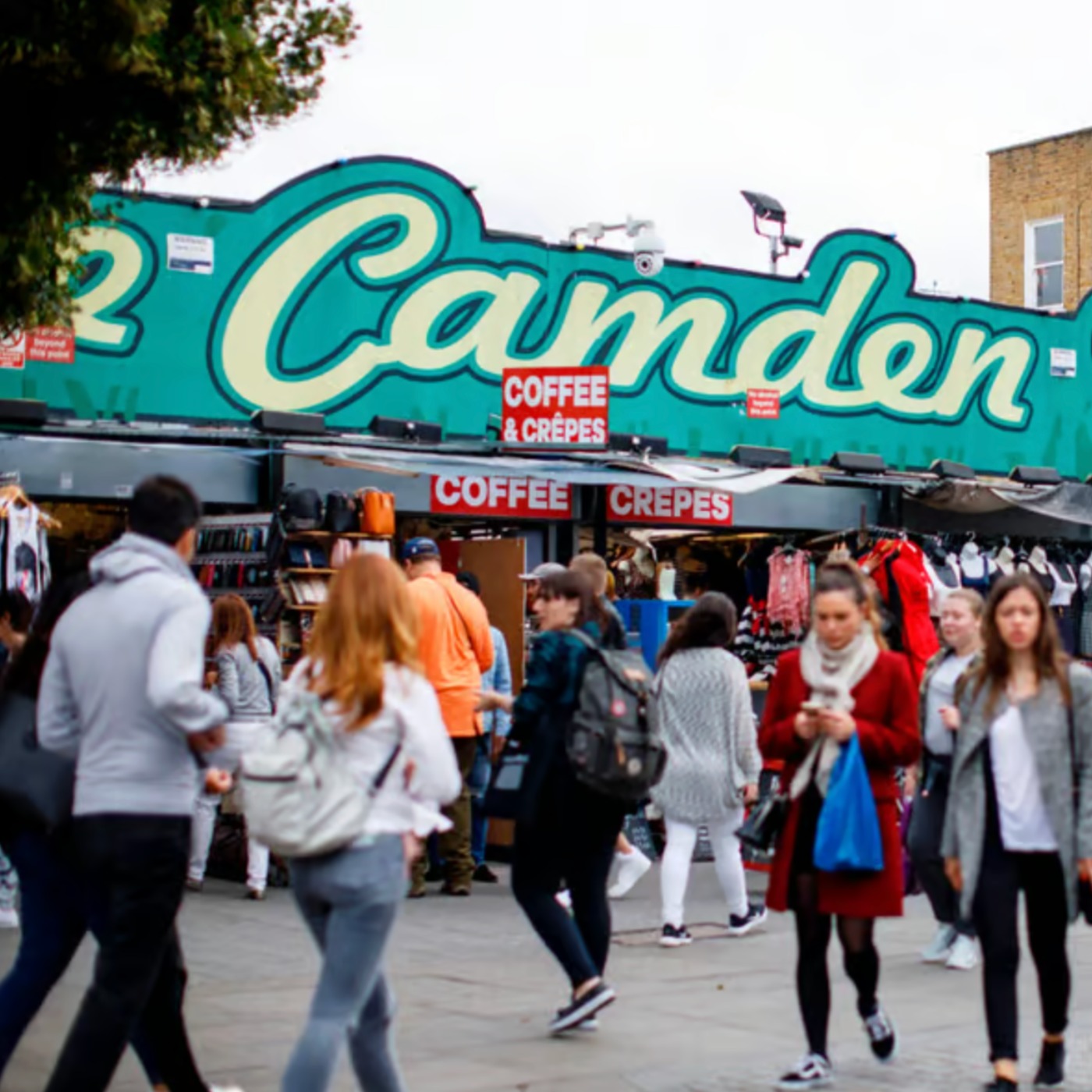
London council elections next week and whether Labour (Keir Starmer’s local borough Camden) could lose ground to the Green Party, with possible outcomes including no overall control and coalition/deal-making.
Tony Travers is a professor in the Department of Government at the London School of Economics (LSE).
Westminster controversies (including a privileges committee vote over Starmer’s handling of Peter Mandelson’s recruitment) may not directly drive local voting, but they contribute to a broader sense Labour isn’t in control. In many democracies, the governing party nationally tends to do worse in local elections. Polling suggests Labour’s vote is down and Greens are up, especially in inner London.
Camden is neck-and-neck (44 Labour councillors vs 1 Green currently). Similar Green threats in Hackney and Lewisham/Southwark/Greenwich/Lambeth; Labour-Conservative fight in Westminster and Wandsworth; Lib Dem hopes in Merton; Reform as a challenge in outer boroughs like Barking & Dagenham/Havering/Bexley and potential “patchwork quilt” in Croydon.
Written by AI. May contain mistakes.
Discussion on the influence of parliamentary issues on local elections in London.
“Sakhir Starmer to a privileges committee investigation over his handling of the recruitment of disgraced politician Peter Mandelson, who, as we all know now, had ties to Jeffrey Epstein.”
Exploration of polling data showing Labour's challenges against the Greens in Camden.
“Polling research has revealed that Camden, Keir Starmer's council, is currently neck and neck with the Green Party.”
Analysis of electoral trends in various London boroughs and potential outcomes.
“Do you think Camden is a microcosm for the rest of London and that the projections of the research for Camden reflect a realistic reality for other boroughs?”
Examining why Londoners might vote based on national climate rather than local issues.
“Let's get back to my conversation with Tony.”
Explore the reasons behind voter behavior in local elections compared to national sentiment.
“And remember, a few months once these elections are out of the way in Britain, we'll all be concentrating on the American midterms.”
Learn about the historical failures of Labour in London and how it reflects current electoral sentiments.
“But that came after the devaluation crisis that gripped the Harold Wilson government in the autumn of 1967.”
Discuss the implications of a diversifying political landscape in Britain and its future.
Consider the possibility of Labour and Conservative partnerships in local governance.
“I think, to be fair, there have been councils outside London where from time to time there have been Conservative and Labour arrangements just to keep the council on the road.”

Get the gist, explore an idea or ask about something said.
 Claude
On The Standard, what are the key points of this episode?
Searching your listeningAutomatic transcript. May contain errors.
0:00Think you know where to go for happy hour? Think again. Benihana's 369 Happy Hour offers$6 pan-fried gyoza dumplings,$9 specialty sushi rolls, and signature cocktails like the Benihana Punch, mojitos, and more. It's unexpected, it's delicious, and it's perfect for meeting up with friends. Happy Hour done differently. Visit Benihana.com. That's Benihana.com.
0:47London's council elections are happening next week and it looks increasingly like Labour's stronghold over the city will be threatened. So what are the possible outcomes? and will Starmer's leadership be further undermined?
1:07Hi and welcome back to The Standard Podcast. I'm Tamara Kormorny. For all the latest news, head to standard.co.uk. Coming up. Will Labour lose London councils to the Greens in next week's elections?
1:31next Friday Londoners will head to the polls to choose their local councillors since 2021 Labour has held the majority across the capital but new polling suggests that even Keir Starmer's local borough Camden may fall to the Greens in this episode I speak to Tony Travers a professor in the Department of Government at the London School of Economics about the results of the latest polling by JL Partners for LSE
2:02here's my conversation with Tony
2:08hi Tony thanks so much for joining me on the standard podcast today it's great to have you great to be here so Tony we are speaking ahead of the MP vote on whether to refer Sakhir Starmer to a privileges committee investigation over his handling of the recruitment of disgraced politician Peter Mandelson, who, as we all know now, had ties to Jeffrey Epstein. Now, inquiries take time. But do you think the result of today's vote will influence how Londoners vote next week? Well, I'm not sure individual one off issues in Parliament directly play through into local election voting, remembering their local elections.
2:55And I think that the whole issue involving what the prime minister did and didn't say to parliament when he said it, what he knew, what he hadn't been told, and, and, and, is even for those of us who are over interested in this stuff, and I put myself in that category, quite hard to follow. So what I think it does, however, is to create a general sense that the government isn't quite in control and that that probably further contributes to the risk to the Labour Party, particularly in London, where they are very powerful and where they are fighting on four fronts from place to place against four other parties.
3:35So I don't think the individual things matter, but the sum total of what it looks and sounds like probably makes Labour's already difficult situation worse. So we are just over a week away from London's council elections. Polling research has revealed that Camden, Keir Starmer's council, is currently neck and neck with the Green Party. Now Camden has a Labour majority. There are 44 Labour councillors to one Green Party councillor currently and a small handful of seats are held by other opposition parties. the voter margin between Labour and the Greens is so close in Camden. In Camden and a number of other boroughs, and there have been other polls of this kind done by other companies, they undoubtedly show that the Labour vote is well down and that the Conservative vote is down a bit, but that particularly in inner London, the Green vote is up a lot.
4:34So this means in boroughs like Camden, but not only Camden, The Labour Party, which has been very dominant, very powerful, now faces this great big challenge from the Greens with a risk that, you know, because it's so tight, you quoted the figures, so tight, it's possible the Greens just pull ahead or possible Labour just is the biggest party. So, you know, it's quite possible that neither the Greens nor Labour get a majority because there'll still be a few Conservatives and Liberal Democrats, particularly in the north of Camden. And one possibility is that there will need to be a coalition in Camden.
5:14And if that's the case, which coalition do you think is most likely? Do you think a Labour-Conservative coalition could be on the cards? I mean, it's a really cool question, this, because if, and it's a big, big if, you know, it might not be like this, but let's say that Labour and the Greens get just under half the seats each and the Conservatives and the Lib Dems get three each. OK, could happen, something like that. Remembering Camden has been controlled by a Liberal Democrat Conservative coalition as recently as 2006 to 2010. So it has something like this has happened before. So if, you know, the Labour was just ahead or the Greens were just ahead, but neither of them had a majority, then one or other of them would have to look for a party either to create a formal coalition with, as happened in Camden back in 26, or at least to do a deal to pass the budget and other very important things.
6:11So, and it's quite, it's a really interesting question because somehow I doubt Labour would be over keen on doing a deal with the Greens who just munched up lots of their votes. Similarly, Labour and the Conservatives, though you mentioned that, well, you know, stranger things have happened. It may be that, you know, Labour and the Conservatives or Labour and the Liberal Democrats would see those, you know, either some configuration of them as the least worst way forward. I doubt there'll be a formal coalition ever between Labour and the Conservatives, but you can just about imagine them, one being the biggest party and the other sort of grudgingly support them for the budget, because they've got to produce a budget every year by law.
6:51Now, Tony, let's zoom out to the other 32 London councils. Which trends are you noticing there? Do you think Camden is a microcosm for the rest of London and that the projections of the research for Camden reflect a realistic reality for other boroughs? Or is the city much more diverse and much more difficult to predict? Oh, it's certainly difficult to predict because it's so uncertain. You've got different parties fighting each other in different places. The margins in some wards will be very small. There'll be some wards where people have councillors from two or even three different parties.
7:30So lots of odd things are going to happen in this election. But if we just start with Camden, Camden is similar to in the sense that there's quite a big Labour, there's a big Labour majority, but the Greens could nibble into it. So Camden is linked in Hackney. Greens have high hopes for Hackney. And then coming south of the river in Lewisham, Southwark, to some extent Greenwich, but Lambeth, there Labour does face a threat both from the Greens and possibly here and there from Liberal Democrats. So those are quite like Camden. But then Westminster and Wandsworth, also in a London borough, there the fight is between Labour and the Conservatives.
8:13Labour won them both last time. But the Conservatives are by far the most likely party to win if people don't vote Labour. So that's a very different picture. Tower Hamlets different again. May look for Rahman's party, Aspire. Did very well last time. No reason to believe it won't do well this time. Kensington and Chelsea, rock solid, Conservative, likely to stay so. So that's inner London. So we move to outer London. Perhaps you've got an interesting place to start would be Merton. Merton is a Labour-held council where the Liberal Democrats have hopes of winning. adding to there they already hold Sutton, Kingston and Richmond so Lib Dems have high hopes of winning from Labour there if we go out to sort of Hillingdon Conservative controlled at the moment Reform will hope to win some seats there Labour might lose some so it could end up with no overall control Harrow there probably the Conservatives are well bedded in and will stay in control Barnett is a Conservative Labour marginal Again, Labour might hold on, but the Conservatives probably likely could well do well there.
9:26Enfield, Conservative, Labour, marginal. The Conservatives will be hoping to win a few seats there. Labour could lose that to no overall control. And then, of course, in Waltham Forest, safely Labour controlled. There's still a substantial Conservative vote there, but Labour could lose seats to both the Conservatives and Greens there. Then we reach the intriguing far eastern boroughs, Barking and Dagenham, Havering and south of the River of Bexley. That's where reform is a big challenge, partly to the Conservatives, actually, not to Labour. But in Labour, to Labour and Barking and Dagenham, the Conservatives in Havering and Bexley and possibly Bromley.
10:06Redbridge, mustn't forget Redbridge. Red Bridge is one where there are lots of quite marginal seats, certainly if independents start to do well and in its neighbour. So that, you know, Labour held quite strongly, but could move towards no overall control. Newham, there's a big Newham independent party there hoping to unseat Labour who've never lost. And Labour's never lost Newham and never lost Barking and Dagenham since they were created back in the mid-1960s. Back south of the river, Croydon to the far south could well end up as a sort of patchwork quilt. Labour and the Conservatives may both lose seats there to reform and or the Lib Dems and or the Greens who might win one here and there.
10:52So that'd be very interesting. Greenwich, strongly Labour controlled, probably likely to stay so. Lewisham, as I said earlier, along with some of the other boroughs I mentioned before, big target for the Greens. and Hounslow, strongly labour-controlled, Hammersmith and Fulham, strongly labour-controlled, Ealing, and all three of those share. The polling suggests they're likely to stay under labour control with just the slightest chance of, well, they'll lose some seats, but probably not completely and to lose them outright.
11:29We'll take a quick break. Coming up, will Labour retain the lion's share of control over London boroughs? And if not, will they make an arrangement with the Conservatives in order to stop the Greens and reform from taking control?
11:48We'll be back here in just a moment.
11:58Do you have a great idea for a business? Or maybe you've recently started one? Then why not enter the AXA Startup Angel competition where we'll help you start up with confidence. I'm Izzy Obeng, founder of FounderVine and I'm thrilled to be joining this year's AXA Startup Angel competition in partnership with The Standard. There are six chances to win, including two top prizes of£25 ,000, expert mentoring, business insurance for a year, thanks to AXA, and more. Entering is easy. Just send us a short pitch video and answer three questions about your business idea. Search AXA Startup Angel to find out more and enter before the 21st of June, 2026.
12:56Welcome back. Let's get back to my conversation with Tony.
13:05So, Tony, I'm going to let you do the maths here. Based on the polling, do you anticipate that Labour will continue to have the lion's share of London boroughs in its grasp after the May elections? It's possible that they are still the party with the largest number of boroughs in outright control, but the numbers are going to be well down from 21. The Conservatives could win one or two and lose one or two. The Lib Dems might win one, Merton, but the big winner is likely to be no overall control. And that means days or possibly weeks of the biggest party on the council, or even the second biggest, trying to form an arrangement with other parties to try to set up an administration and to choose a leader.
13:53And it's important to remember that the London Council elections are local. Tony, why do you think that some Londoners vote based on the wider political climate, how they feel about the goings on of Westminster, rather than local issues? Why do people vote like this? It's a great question. And remember, a few months once these elections are out of the way in Britain, we'll all be concentrating on the American midterms. And the fact is that in most democracies, we saw it in France recently, we see it in almost all democracies, the government in power at the national level tends to do badly in local elections and subnational elections because people feel it's a sort of free hit to make a statement about the government of the day.
14:41it doesn't make at some level you might think why would you do that because this is about bins and streetlights and the quality of social care and the quality of libraries and potholes so why if you're living in a borough and i say just you know put it out there you're run by a reasonably well-run labour borough and you want to risk losing that reasonably good administration just because of kia starma but the truth is in britain as in other democracies it's what happens And you can see it. I mean, the single worst elections, just a little bit of history here, ever for Labour in London took place in 1968, when Labour was absolutely wiped out by the Conservatives and only ended up with a handful of boroughs, less than a handful of boroughs.
15:25But that came after the devaluation crisis that gripped the Harold Wilson government in the autumn of 1967. And people then punished all Labour councils, including in London, the year after. It's just the way the electorate, we the electorate behave.
15:51And Tony, to wrap up, do you think the results of the London Council elections will send a message to Westminster? If so, what kind of message will Westminster receive? I mean, the most obvious message, but there's more than one. It's a great question. There's more than one message. The first one is Labour. You know, do Labour hear of losses in London and elsewhere? Remembering if we were talking about this in West Yorkshire or the West Midlands, reform would be sweeping in over the Labour vote. So the question is, just how bad is it for Labour? If it's sort of bad, but no worse than expectations, and expectations are important in these things, then Keir Starmer's supporters will say, look, it's not as bad as you say, let's just carry on.
16:40If they are very, very bad compared with even the worst projections, then Starmer's opponents will say, you know, this is it, time to move on, time to change. But there are other messages as well, because it's quite possible Labour and the Conservatives both lose seats in this election. I'm almost certain that they will. And what the message there is from, as it were, traditional voters in all parties saying we want something different. Some places we want the Greens, some places we want the reforms, some places we might want the Liberal Democrats. But we don't want the Labour Party and the Conservative Party.
17:16And that message, the five-way fragmentation, six in Wales and Scotland, is the end of an era for British politics. It means that the so-called two-party system has at least temporarily had it. and first at the local level in London, boroughs and elsewhere and then possibly at the national level after the 28 or 2029 general election how do centre-left or centre-right groups of parties work together to run the country and that's what we'll begin to learn about when these elections are over and all the votes are counted Well it's definitely food for thought and the idea that the Labour and Conservative Party might work together very, very closely.
18:03Would never have been thought possible. Yeah, absolutely. I think, to be fair, there have been councils outside London where from time to time there have been Conservative and Labour arrangements just to keep the council on the road. And, of course, the Conservative and Labour have a lot in common, which, of course, is why the Greens and Reforms say you know they're just the conventional block in the middle so you know watch this space yeah it'll be fascinating to see what what kind of arrangements are formed uh after next week but thanks so much tony for coming on the standard podcast lovely speak tomorrow thank you
18:57And that's The Standard. For all the latest news, head to standard.co.uk. If you're new here, hit follow and give us a rating. If you'd like to get in touch, email us at podcasts at standard.co.uk. We'll be back here tomorrow morning. We'll see you then.
19:27Writer's Theater is an intense psychological thriller that skewers the insidiousness of the internet, the meaning of work, and the ramifications of a secret revealed. The off-Broadway sensation and edge-of-your-seat thriller about big tech and even bigger secrets is on stage at Writer's Theater April 9th through June 14th.
Next Friday, Londoners will head to the polls to choose their local councillors. Since 2021, Labour has held the majority across the capital, but new polling suggests that even Keir Starmer’s local borough of Camden may fall to the Greens.
In this episode, host Tamara Kormornick speaks to Tony Travers, a professor in the Department of Government at the London School of Economics about the results of the latest London council election poll by JL Partners for LSE. The two discuss possible outcomes for the upcoming elections, including which parties might join forces, and the messages Londoners may send to Westminster through the ballot box next week.
Hosted on Acast. See acast.com/privacy for more information.


