
 Ask ChatGPT



Written by AI. May contain mistakes.

Get the gist, explore an idea or ask about something said.
 Claude
On The Standard, what are the key points of this episode?
Searching your listeningAutomatic transcript. May contain errors.
0:02Hi, I'm Charlie Duffield and welcome back to The Standard Podcast. If you're new here, hit follow and give us a rating. For all the latest news, head to standard.co.uk. Coming up later in the show. It's been a bleak five years for restaurants, but with a host of starry openings, the tables are finally turning. Any chef worthy of the name will have an ambition to open in London, whether they're based in New York or Tokyo or Paris. most of the great chefs who want to build a sort of global reputation will at one stage want to crack London. Many try it, some fail, some succeed and go on to create very long-standing restaurants.
0:50London is the sort of probably now the number one gastronomic destination in the world and people want to be here. But first, today Donald Trump's newly unveiled peace plan for Gaza has already been hailed by some world leaders as the best chance to end Israel's war. Hamas negotiators are poring over the details of the 20-point plan, which was unveiled by the White House on Monday night. Trump called it a historic day for peace and said Netanyahu would have US backing to finish the job of destroying the threat of Hamas, if Hamas did not agree to the plan. Here he is speaking at Monday's press conference.
1:31My plan calls for the creation of a new international oversight body, the Board of Peace, we call it, the Board of Peace, sort of a beautiful name, the Board of Peace, which will be headed, not at my request, believe me, I'm very busy, but we have to make sure this works. The leaders of the Arab world and Israel and everybody involved asked me to do this. So we'll be headed by a gentleman known as President Donald J. Trump of the United States. And we'll do it right. And we're going to put leaders from other countries on and leaders that are very distinguished leaders. And we'll have a board. And one of the people that wants to be on the board is the UK former prime minister, Tony Blair.
2:13Good man. Very good man. And some others. And they'll be named over the next few days. Trump's plan states that if both sides agree, there will be an immediate ceasefire, the withdrawal of Israeli forces to the agreed-upon line and the release of all the hostages, followed by the release of Palestinian prisoners and a surge of aid into Gaza. Gaza would then temporarily be governed by a transitional committee of qualified Palestinian and international experts, with oversight from a new international transitional body, referred to as the Board of Peace. Former UK Prime Minister Sir Tony Blair will be part of the governing body and has called the plan bold and intelligent.
2:57But Hamas will not be permitted any role, directly or indirectly, in the future governance of the territory. The plan has been welcomed in principle by leaders in Saudi Arabia, Jordan, the United Arab Emirates, Qatar, Indonesia, Turkey, Pakistan and Egypt. He said they were ready to cooperate with Washington to ensure its implementation. Joining us now is David Waring, an assistant professor in international relations at the University of Sussex and expert on UK foreign relations in the Middle East. David, Trump has said he really wants to achieve peace in the Middle East. Can you remind us what's being laid out in this 20-point plan?
3:39Yeah, I mean, it's effectively a peace proposal. I put that in quotation marks because it doesn't, to me, meet the basic criteria of a peace proposal, which would be that you draw it up in consultation with the warring parties. Now, what they've done, what the White House has done, is drawn up a peace proposal, quote-unquote, in consultation with one of the warring parties, which is Israel. It's drawn up a proposal which basically suits most of Israel's preferences. And then it's presented it to Hamas and said, you can take it or leave it. And it's not a serious way to negotiate. You negotiate peace with the two parties for a fight.
4:16And the contents itself, it seems to me, are the sort of terms that you would expect Hamas to reject. So the basic terms would be that not just Hamas, but Palestinians full stop would have no sovereignty, no executive sort of power in Gaza. Gaza would be run by an interim administration headed by Donald Trump himself, perhaps also with people like Tony Blair working alongside him. So non-Palestinians, allies of the state of Israel, which has been committing this genocide in Gaza. They would have overall authority. Beneath them would be Palestinian civil servants and technocrats and maybe policemen once they've been vetted.
4:57It'd be very much like a colonial administration. The outside powers would have power over the territory, and the people who live in that territory would at most have a role in administering the colonial power. There's nothing in the way of a specific pathway to a Palestinian state, Palestinian independence, Palestinian rule. There's very vague promises of something like that happening in the future. But before that happens, the economy will be reworked, the society will be reworked until it fits what Israel would want. So, you know, it's not a peace proposal, it's a proposal for colonial conquest.
5:33And it's effectively saying to Hamas, you can take this or leave it. And you'd expect Hamas to say, well, no, we're not going to accept that. And frankly, most Palestinian actors would reject it. And that gives Netanyahu the kind of the alibi that he wants to continue with what he's been doing for the last two years. So it seems to me to be a bit of a setup in that respect. So what has the UK's response been? I'm not aware that Keir Starmer's responded to this as yet. You would expect him to support it because the British government in this and in most things is pretty deferential to the Americans, whether it's on Gaza or on foreign policy more generally.
6:10Britain's position is that there should be a two-state solution, two-state settlement, Israel living alongside a Palestinian state, and the Palestinian state would be in Gaza, the West Bank and East Jerusalem. The problem is that the Israelis outright reject that. And this proposal from Trump and Netanyahu at best pays lip service to that. But because it just about pays lip service to it, what I would expect, I could be proving one, is that the British government will say, okay, there's some vague promise of that in the future. And so we hope that will come to fruition. But in practice, this is not going to lead to Palestinian statehood or Palestinian sovereignty.
6:46It's not a plan for that. Is this actually going to get off the ground? Is it viable without the inclusion of Hamas? It's certainly not viable without the inclusion of pretty much any Palestinian actor. I mean, even the Palestinian Authority in the West Bank is excluded from this. The proposal says that the Palestinian Authority has to reform itself and has to change. And it doesn't really lay out a clear pathway for what the Palestinian Authority needs to do to qualify to be an authority in this part of Palestine. it's impossible for me to see how this is sustainable because even if Hamas were to capitulate which I find it very difficult to believe that the mass would do that but even if they did say okay we surrender because that's what's being demanded of them and this sort of interim international authority were put into effect I mean Palestinians wouldn't accept it we've got hundreds of years of evidence that colonized people don't accept colonial rule don't expect to be accept to be ruled by external powers so there would be armed resistance of some kind, whether it came from Hamas or someone else, and there'll be political resistance.
7:47So it's hard to see how it could possibly be sustainable. It doesn't seem to me to be a serious proposal. What do you make of the presence of Tony Blair? He has called this plan bold and intelligent. It's certainly not intelligent. I'm not sure. It's a good faith peace offer, as I've said. And as for Tony Blair, I mean, look, this is the thing. It's a basic principle that people have the right to be ruled over by people they've chosen. We in Britain expect that. People in Israel expect that. And people in Gaza and wider Palestine expect that. It's not intelligent to assume that Palestinians will accept being ruled over by Tony Blair.
8:25And even if Palestinians were to accept that, okay, in an interim government, we can accept being ruled over by foreigners, they would at least want to consent to who those people are. and you can't imagine Palestinians accepting to be ruled by someone like Tony Blair with his record in terms of the invasion of Iraq. You can't accept him certainly to be ruled over Donald Trump who set up in this proposal as the main kind of authority within this interim government. Why would Palestinians accept a guy who is enabled in Israeli genocide for the last seven or eight months? Why would they accept to be ruled by someone like that?
9:01I don't know whether it's bold or not, but it's certainly not intelligent. if it's a good faith offer, but my real suspicion is that it isn't a good faith offer. It's an ultimatum that's being made in the expectation that they will reject it, so that the Israelis can then, with that alibi saying we made a peace offer and they rejected it, can then push ahead with what they really want to do, which is complete the genocide and complete the ethnic cleansing. I don't think that's what Trump wants, but I think that's what the Israelis want from this. Finally, and leading on from that, what do you think Israel's intentions are here?
9:33I think the Israelis have probably outmaneuvered Trump. I suspect Trump wants a peace deal, so he can clearly wants a Nobel Peace Prize. He's deluded himself into thinking that's possible. And what he wants is an end to the military conflict. And he thinks that just by imposing his will on this, that's his repeated view, as we see from Ukraine to other situations and to here, is that if I can just impose my will, the fighting will stop. And obviously that's not true. But what the Israelis have managed to do feeding into this process is say, if we can shape this process, if we can shape this proposal so that the Palestinians won't accept it, we can then say to Trump, this is a wonderful peace proposal, Mr.
10:18President, if the Palestinians reject this, they're fools, knowing full well that they will reject it. So I think the Israelis have probably played Trump pretty well here, which is trivially easy to do because he's not a smart guy. And they've got a lot of experience, the Israelis, and outmanoeuvring American presidents. They've outmanoeuvred far smarter people than Trump in the past. So I think they'll be very happy, the Israelis, with this. Trump won't be when it falls apart, but they'll be very happy. Let's go to a break. Coming up in part two, why London's fine dining scene is going from gloom to boom.
10:54We'll see you back here in just a moment.
11:02Welcome back. It's been a tough five years for the capital's hospitality sector, with the pandemic era of lockdowns followed by the cost of living crisis. But there are tentative signs that something like a fine dining restaurant opening boom may be underway. With plenty of recent or planned openings over autumn and winter, London's restaurant scene remains vibrant, despite all the economic turmoil. Michelin-garlanded chefs such as Daniel Bouloud, Angela Hartnett and Claire Smith are among those putting their faith in London with new openings. To find out more, I spoke to The Standards' business editor, Jonathan Prynne.
11:40Jonathan, remind us what challenges the capital's hospitality sector has been facing? Yeah, absolutely. It's been a really, really tough few years for the hospitality sector across London, but fine dining certainly not spared from that. It's basically been the costs that they're facing have absolutely risen across the board, whether it's the energy bills that they need to keep the kitchens going, the food that they use obviously to turn into fabulous meals for diners, construction costs of building new restaurants or fitting them out as well as rents and rates and all the other costs that they face plus of course in the last budget we saw the sort of final coup de grace the increase in national insurance contributions that rachel reeves announced last october came into force in april that was almost the straw that broke the camel's back according to a lot of restaurants quite a few have got on a business tell me more about this term gloomsterism which was coined by the editor of Hardin's London Restaurants Guide, Peter Hardin.
12:42What sort of prompted this piece was some numbers from the latest guide from Hardin's who've been writing restaurant guides and doing a tally every year of the number of openings and closures for over the last 35 years. And whereas you might have expected because of all those challenges that I just mentioned that the numbers would be down and indeed they have been over the last few years, in the last 12 months, they've seen a sudden increase. There were 150 new openings in London in the sort of fine dining sector and a net growth of 81 after you net off the closures. And that is one of the highest figures we've seen for quite a while.
13:22And that's why Peter said he thought gloomsterism, as he coined it, has been overdone a bit. Now, we've spoken on the podcast before about how it's been an amazing summer for live music in London. Do you think that has contributed to this revival? Yeah, it's very interesting. It certainly was mentioned by one or two of the restaurateurs that, okay, on the one hand, maybe some of the sort of non-dom people that have left the country are no longer in their restaurants. They did have incredible numbers of sort of culture tourists, quite wealthy culture tourists who came to London for Oasis or Wimbledon or Taylor Swift or whatever the events might be.
14:05And they're spending a lot of money in top restaurants as part of their experience when they come to the UK. And are these all high-end openings we're talking about? Yeah, I mean, it is a mix. It's not all sort of classic, fusty, fine dining sort of restaurants. I mean, some of the really big arrivals that are coming or have come already this autumn include Carbone in sort of New York, Italian, very buzzy, very on trend. And that's opened up at the former U.S. Embassy in Grosvenor Square. Now the Chancery Rosewood Hotel, massive five-star hotel with loads of new bars and restaurants opening up in it.
14:43So that was one that certainly caught the eye. We're about to get Simpsons in the Strand back after quite a long closure. That's been masterminded by Jeremy King, who formerly ran the Wolsey. Another one that sounds interesting is a place called Lilibet's, a new luxury seafood restaurant, which is just opened in Bruton Street in Mayfair. And that was the building where Queen Elizabeth II was born. So none of these are cheap places to open. They'll be very expensively fitted out. Several millions of pounds will have been spent on getting them ready for opening day. So, you know, the sums of money involved, very significant.
15:19So do you think this is a positive development for London? Well, I think so. You want places opening rather than closing. I mean, not everyone can afford to dine in these places, but I think it's good for London that it's competitive on the world stage and it's up there punching its weight along with New York and Paris and all the other great global cities of the world. They are very expensive places to go and eat, but they equally employ huge numbers of people. The money that's spent in these restaurants is recycled back into the London economy. And so it has a trickle-down effect that's good for everyone, not just the people who are dropping£200 or£300 a head to eat in some of these places or more.
15:59I sort of mentioned a guy that we overheard coming out of one restaurant who just said to his colleague or his friend, he just spent£2 ,500 on wine in Carbone. So the sums of money are great. But as I say, that is all being recycled back into the broader London economy.
16:18And that's The Standard. For all the latest news, head to standard.co.uk. If you'd like to get in touch, please do drop us a line at podcasts at standard.co.uk. We'll be back here tomorrow at 5pm. We'll see you then.
16:39profession.
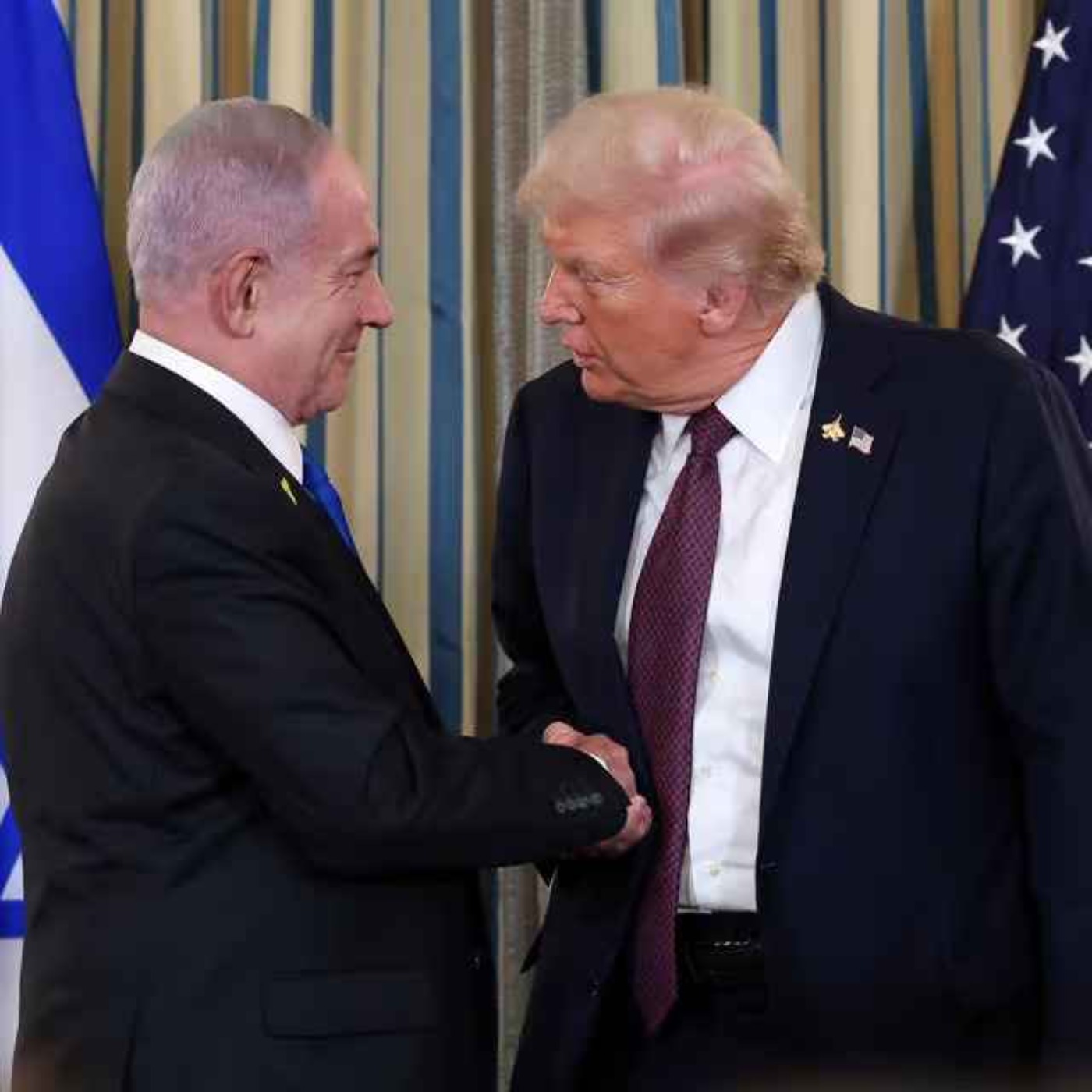
Today Donald Trump’s newly unveiled peace plan for Gaza has already been hailed by some world leaders as the best chance to end Israel’s war. Israeli Prime Minister Benjamin Netanyahu threw his support behind it at a joint press conference with the US President - and it has been backed by a number of Arab nations including Qatar and Egypt. But is it a viable solution to ending the conflict? David Wearing, an Assistant Professor in International Relations at the University of Sussex, and expert on UK foreign relations in the Middle East, joins us with the latest.
And in part two, The Standard’s Business Editor Jonathan Prynn is here to discuss the revival of London’s fine dining scene.
Hosted on Acast. See acast.com/privacy for more information.


