
 Ask ChatGPT



Description: A daily podcast hosted in London discussing the major political, cultural, and social issues of the day, featuring insights from top journalists and celebrity guests.
This episode covers the recent discussions between Ukrainian President Volodymyr Zelensky and US President Donald Trump regarding the ongoing war in Ukraine, alongside commentary from Dr. Svitlana Romanko on energy sanctions. The episode also explores the loneliness epidemic affecting Generation Z, featuring insights from freelance journalist Sophie Peachey.
Written by AI. May contain mistakes.

Get the gist, explore an idea or ask about something said.
 Claude
On The Standard, what are the key points of this episode?
Searching your listeningAutomatic transcript. May contain errors.
0:02Hi, I'm Charlie Duffield and welcome back to The Standard Podcast. if you're new here hit follow and give us a rating for all the latest news head to standard.co.uk coming up later in the show how to beat social anxiety and thrive in any social situation feel the fear and do it anyway i think often when you feel anxious in scenarios you're looking for a way to not feel the anxiety just accept the fact that the anxiety is going to be there but that the things that you want are on the other side of that anxiety and you have to just be able to push through because all of your goals, all of the things you want to be able to do, all of the things that make your life shinier and richer and fuller are through and beyond that anxiety.
0:50But first, today Ukrainian President Vladimir Zelensky joined European leaders in talks with Donald Trump and his Vice President Jody Vance ahead of this Friday's Trump-Putin summit in Alaska. There have been growing concerns in Ukraine that Trump would attempt to force through a peace deal that would sell their country out when he meets Putin on Friday. Last week, concern was sparked in Kyiv and across Europe as Trump said there would be some swapping of territories to the betterment of both Russia and Ukraine. Before the call, Trump said European leaders wanted to see a deal done. And after the call, Zelensky said that the US is ready to support us.
1:31The German Chancellor Friedrich Mertz and French President Emmanuel Macron both emphasised the common European position that no decisions can be made about Ukraine without Ukraine. And Zelensky urged partners to put even more pressure on Russia, arguing that Putin was bluffing by claiming that sanctions were not affecting the Russian economy. Previously, Zelensky said Ukraine could not agree to a Russian proposal to give up more of his country's territory in exchange for a ceasefire because Moscow would use what it gained as a springboard to start a future war. Earlier today, before the call took place, I spoke to Dr.
2:07Svetlana Romanko, the Ukrainian executive director of Resin We Stand, a climate campaign fighting to cut off the money fueling Russia's war. So what was the purpose of today's talks between Zelensky and Trump? It's again continued conversation about the so-called peace negotiations that are going to be held on the name of Ukraine, but without our official governmental presence in Alaska. It is highly controversial because President Trump has an opportunity now to send a message to Putin and the world that the U.S. will not bargain away Ukraine's future for just a photo op on Alaska or somewhere else.
2:44Ukrainians are also really afraid to be in trade-off in exchange of any kind of deals that would justify horrific Russian aggression in Ukraine and will, as I said before, bugging away committed war crimes which are now amounting, Russian war crimes in Ukraine amounting over 150 ,000 just registered war crimes. The strongest possible message of both presidents today would be to announce full ban on Russian fossil fuels and clear penalties for any country that continues to buy them. Ukrainians are concerned about this so-called territories exchange because there is nothing to exchange. Russia invaded Ukraine and they don't have their territories in Ukraine, basically.
3:27This is illegal and this is also a huge threat to Ukrainian territorial integrity and sovereignty. If we would have banned on Russian fossil fuels on the government level or the J20 level much sooner than now it has been happening, we could effectively cut Russia off fossil fuel profits and we would have seen absolutely different behaviour. What will Zelensky be demanding? President Zelensky highly respects the constitution of the country, which is saying that there can't be any territorial agreements without the people's will, which is called referendum in Ukraine, but not even that. Up to any standard of international law, trying to seize and legally own the territory of other countries is highly forbidden by international law.
4:16So it's not just about what the president will say. It remains completely illegal to seize Ukrainian territories and wanting to call them Russian territories. And it remains highly illegal to try to involve the president of the other country in bargaining Ukrainian territories, which they don't have a right to. And what are your concerns ahead of Friday's meeting between Trump and Putin? We had another Friday, which was Friday 8th of August, when that was the deadline which President Trump has set for himself and for Russia to take steps to end this illegal war and horrific war. And he promised sanctions in return and mostly sanctions on Russian oil that still keeps bringing Russia a huge amount of money in spite of existing oil price cap and so-called oil embargo, which we have helped to achieve on the global level.
5:06Much more needs to be done, not wait for more empty Kremlin promises. We don't even know what will happen on Friday. We also have been observing this with a high concern and also delaying sanctions for more diplomacy. As it's been happening on the U.S. side, it risks signaling that the U.S. sees energy sanctions as negotiable and that war crimes can be bugging the way. Sanctions can shift behavior, but they must be applied firmly and fast to stop Putin's war machine. There has been a slightly desperate preconception everywhere that sanctions, they don't work as expected. But no, they do. And Russia has already been forced into longer trade routes and higher shipping costs and shrinking foreign reserves because of energy sanctions.
5:49With a tightening dose, we could have seen Russia more tending to negotiate on the preferable conditions, more preferable for Ukraine than it is just now. But Russia is still able to fund the war of aggression instead. And we've calculated that every single attack, like massive attack of drones over Ukrainian cities, the cost is about 650 millions per day, which is highly affordable for them if they keep getting about 1 billion per month for the trade of their fossil fuels. This has been effectively cut by, I would say, almost five billions in the couple of last years. But the more needs to be done here.
6:30And until the sanctions on Russian energy are being tightened at maximum, we won't see a real progress on Russia's side. They will be lying. They will be trying to avoid irresponsibility. They will be trying to get President Trump into some really doubtful negotiations on behalf of Ukraine. and don't expect anything nice, of course, of that Friday. The European Union and the UK undoubtedly support Ukraine since the first day of a full-scale invasion. But if they would have been a bit more decisive, a bit more strict, and a bit more tough on Russia and on their geopolitical influence, not being afraid, their economy is 10 times bigger than the Russian economy is.
7:12They are quite a powerful union. Many of us can't understand that indecisiveness, a lack of political will. They must take a firm position now and support Ukraine in these so-called peace negotiations because it will define not just the future of Ukraine, but the future of Europe in general for many years since now and onwards. So European leaders must really do everything possible to get a place on the table and to be strongly decisive using the influence of their markets on Russian fossil fuel trade. Can we expect a peace deal? What position could Ukraine be left in? Ukraine might be left in the position that they just need to sign something, as President Trump said.
7:53But believe me, for Ukrainian people, for those who are at the battlefields now, for those who are sitting in the offices or just walking in the streets, it's not acceptable. This will inevitably change the world for worse. And this will threaten every single European citizen and European nation. So we don't expect a signed peace deal happening on Friday, but we expect some steps happening afterwards. Let's go to a break. Coming up in part two, feeling lonely? Ironically, you're far from alone. But how can you go about making new connections in the capital? We'll see you back here in just a moment.
8:41welcome back our modern day loneliness epidemic often makes the headlines but now gen z in particular have been branded generation lonely with new statistics from dating app hinge revealing just how much people are struggling with social connection according to freelance journalist Sophie Peachy, who at the age of 26 is a member of Gen Z herself. Loneliness is the great leveller. She's been exploring ways to tackle social isolation and joins me now. Sophie, why do you think Gen Z are struggling to make social connections? We've grown up in this perfect storm of external factors that make it really, really hard to make connections.
9:21I think we've grown up in this totally saturated online world, going on Instagram and seeing every happy person that's ever lived and seeing every single life unfold before you. But I think that to grow up with it is sort of qualitatively different and creates this kind of vacuum for in-person connection. It makes it a lot harder to speak to people in person because we haven't been raised necessarily like that. You're used to sort of speaking to people online. You've got this rise inside hustle culture. Everything's quite individualistic. And then we've had this decline in traditional institutions that would have promoted belonging.
9:54And we've also lost a lot of third spaces. These are things that we're not really growing up with. And then for lots of people like myself, we've spent our formative years, which would be at school or university, in the middle of a pandemic, you couldn't make social connections. And so it's made it harder. We've come out of COVID and a lot of people are starting their first jobs, either fully remote or hybrid. Again, that creates this sort of disconnect when it comes to connecting with other people, having these in-person connections. And tell me more about this concept of newcomer nerves. I'd moved up to North London and this isn't, you know, Gen Z don't have any friends.
10:27It's just about being able to make connections with like a wider group of people and sort of create variety in your life. I wanted to join this sort of gym, which does these like social communal classes. So you have to kind of speak to people as you do it. It was so difficult. I remember standing outside the door and I was just completely terrified. So Hinge, who I worked with on this story, they've coined it sort of newcomer nerves. Hinge has this social impact program called One More Hour. And it's all about connection in person, looking at why Gen Z feel this. And so they did a survey of 3 ,500 young adults, see how they felt about connecting and meeting people.
11:01And according to the data, 70 % of my generation say that they feel anxious about meeting people. These nerves are a massive barrier because the data also says that 65 % of us really want to meet people in real life. 85 % of us in Britain are really lonely. It's not that we're antisocial, We're desperate to meet people. We're desperate to make these connections. But there are these kind of nerves and these newcomer nerves, which are acting as a massive barrier for us to do this. Now Gen Z receives a lot of criticism. Do you think any of it is valid? I feel very defensive of my generation because, and this might be controversial, but I just think that we are a generational punching bag.
11:40You literally open up any paper on any day and it will be like, Gen losers, Gen weirdos, Gen virgin, celibate, whatever. Why is it that there is so much criticism sort of heaped on us? And I think what people maybe fail or like skim over is that Gen Z are, I would say, one of the first generations that is fundamentally experiencing a broken social contract. like we can't have the things that we were told that we could have which has influenced the behavior of other generations you look at these workplace testimonials and management will be like they just clock in at nine and they clock out at five and they're not interested in being here they don't want to hustle they don't want to work harder they don't want to progress their careers but I guess my question is why why do people work harder and longer because there was a social contract that said that you will be able to buy a house and have a family for the hours and work that you put in.
12:31And that's sort of gone. Like for most people, the idea of buying a house is a pipe dream. Why should we do any of these things when what existed for other generations doesn't necessarily exist for us anymore? So what's causing us to feel so isolated in the modern world? I really think that social media is probably a really big factor. And I know I sound a bit boomer when I say that, but I just think it's abnormal, you know, for your brain to be every night before you go to bed, you're downloading terabytes of information about the lives of other people. You're seeing every single avenue that life could take.
13:03You're seeing every job you'll never have, every boyfriend you'll never have, like your own shortcomings sort of weighed up against the successes of other people. And I think that makes people feel incredibly lonely. People in London, particularly where I live, don't know their own neighbors. So it's just a place that you live. It's not community. And so I think that's just isolating. You spend nights in big cities and one night alone, which you might see people every other day of the week, but that can suddenly feel so much more overwhelming when you're faced with every single possible avenue that the life of anybody could ever take.
13:36And I mean, my mum growing up in her generation used to tell me that she had her five friends, they were only contacting each other via landline, and she only knew about the lives of five people and they were in her community and they sort of shared their life together. She didn't know that girl that you went to school with when you were 11, who's now doing XYZ and this person that you used to date who's now doing X. I don't think it's normal to have that much access to the information about the lives of other people and have to constantly compare yourself. And I think that's what's making people fundamentally lonely.
14:06Because I spoke to this founder, Holly Cook, who runs Lonely Girls Club. She was saying a lot of people that come to these clubs, it's not people that don't have friends and don't have their own lives. It's just this feeling of loneliness is so pervasive across the entire generation. And for a lot of people, their loved ones, their friends might not even be in the same place as them, might have different priorities. People are looking for sort of community where they are, people that they can kind of do life together with. And what advice do you have for people who feel socially anxious and are struggling to make connections?
14:37So I have my own personal advice, which works for me, but I don't know if it will resonate with that many other people. And then I also spoke to Mo Ari Brown, who's Hinges love and connection expert, and they're also a licensed therapist. So their advice was about setting achievable goals that are small. So when you feel like a task is really insurmountable. Maybe you want to go to this new club that you've seen or this community event. You just feel far too anxious to do it. Set goals. You set simple, digestible, measurable goals when you're trying something for the first time, literally as small as just pretending that's the goal.
15:10And then anything else that happens doesn't matter because you've done one thing. You say that you're going to compliment someone's outfit or you're going to spark a conversation with just one person, or you're going to get the phone number of one person, or you're going to meet at least two people. And then other things like prepping conversation starters. Any of my socially anxious people out there will know this. You've got a notes app on your phone filled with questions that you're kind of ready to bring out into conversations. So things like that. Dressing for confidence. So like just making sure that you really feel good about yourself and then using positive affirmations.
15:41So telling yourself before, I'm a nice person. People are going to want to speak to me. I can have fun. Like things like that, which might feel a bit sort of twee, but actually really help. And then also like bringing a friend. Sometimes if you're too scared to go to an event on your own, you ask your mate, listen, can you just come with me this one time? Finally, is there anything else you want to add? Pushing yourself out of your comfort zone always works. It always pays off. Yet you still feel anxious the next time, even though you have the precedent that normally it's fine.
16:12And that's The Standard. For all the latest news, head to standard.co.uk. If you'd like to get in touch, please do drop us a line at podcasts at standard.co.uk. We'll be back here tomorrow at 5pm. We'll see you then.
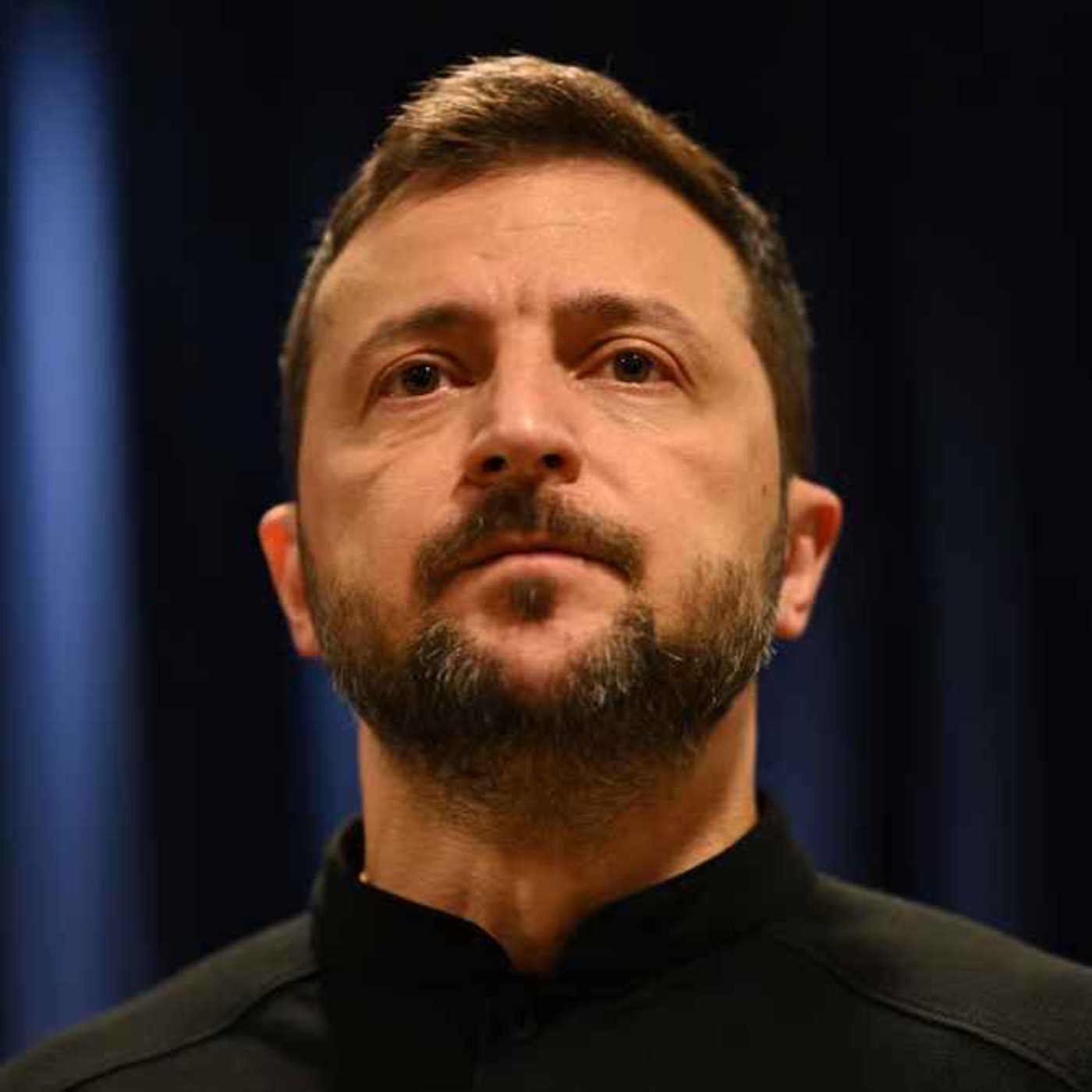
Today Ukrainian President Volodymyr Zelensky told Donald Trump that "Putin is bluffing” as he discussed the obstacles to ending the war in Ukraine with the US President and other world leaders in a phone call. It comes ahead of this Friday's Trump-Putin summit in Alaska. Before the world leaders met, Dr Svitlana Romanko, the Ukrainian Executive Director of Razom We Stand, a climate campaign fighting to cut off the money fuelling Russia’s war, shared her thoughts about what lies ahead.
And in part two, freelance journalist Sophie Peachey joins us to discuss why Gen Z are so lonely and how to overcome social anxiety to make new connections.
Hosted on Acast. See acast.com/privacy for more information.


