
In short
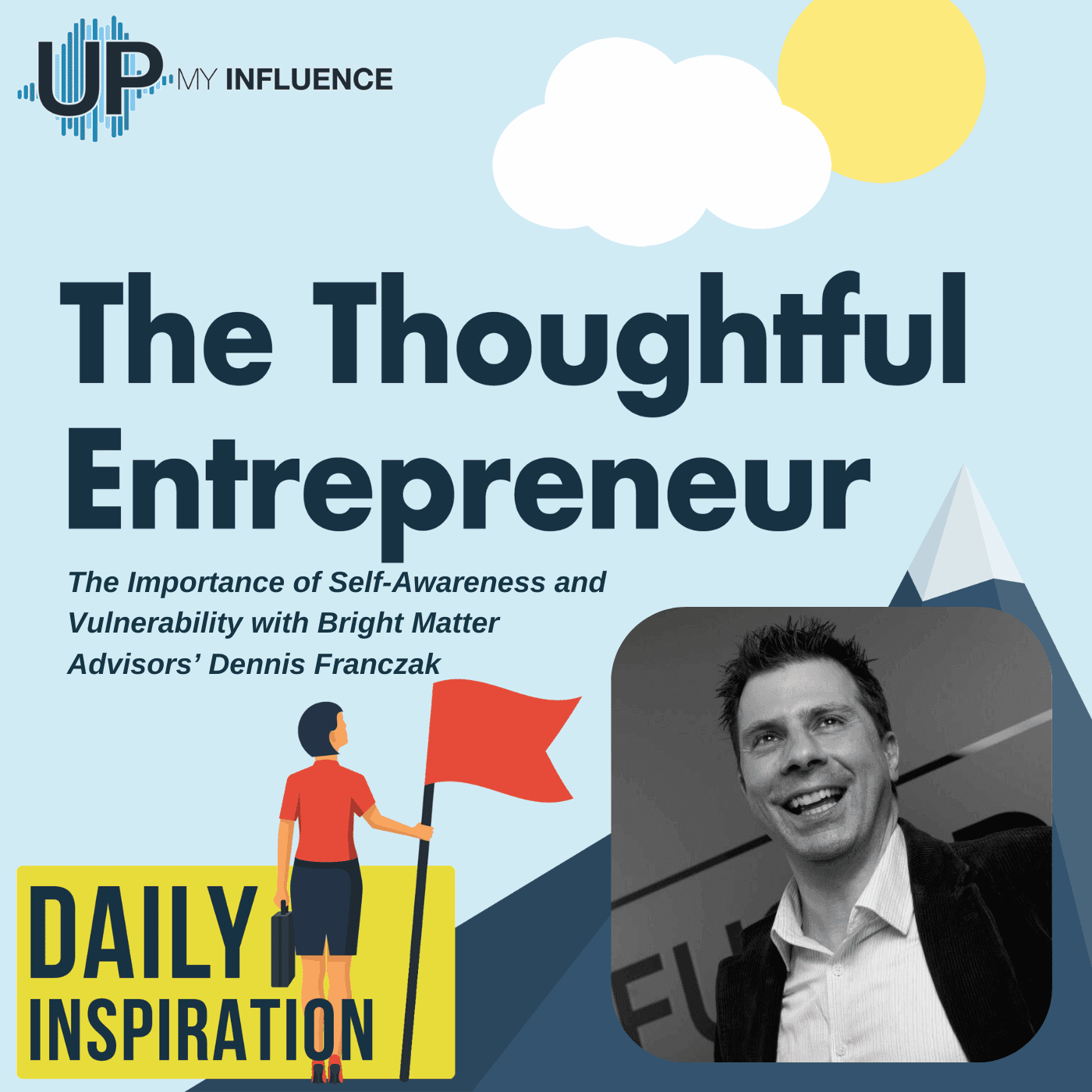
Podcast Notes: The Thoughtful Entrepreneur - Episode 2071
Episode Title
The Importance of Self-Awareness and Vulnerability with Bright Matter Advisors’ Dennis Franczak
Episode Summary
In this episode, host Josh Elledge interviews Dennis Franczak, founder and partner of Bright Matter Advisors. The conversation delves into Dennis's personal journey through leadership, burnout, and the significance of vulnerability in executive roles. Dennis shares his insights on helping other executives reconnect with their true selves and navigate their careers with purpose.
Key Themes and Discussions
- Dennis Franczak's Background
- Experience:
- Former CEO of a successful advertising agency for nearly 20 years.
- Experienced severe burnout, prompting a six-month sabbatical in 2022 for self-reflection and healing.
- Transition:
- After his sabbatical, transitioned to a chairman role and founded Bright Matter Advisors.
- Burnout and Self-Awareness
- Burnout Recognition:
- Dennis describes how burnout was a gradual process, likened to a "fuse box" where multiple "circuit breakers" started tripping before culminating in a breakdown.
- He realized he was losing connection with his identity as a leader and family man.
- Sabbatical Impact:
- Focused on therapy and self-discovery during his sabbatical.
- Gained insights into the pressures faced by executives and the importance of aligning personal values with professional lives.
- Importance of Vulnerability in Leadership
- Cultural Expectations:
- Many executives feel the pressure to project strength and control, leading to avoidance of vulnerability.
- Dennis's Advocacy:
- Emphasizes that vulnerability is a strength and vital for personal growth and effective leadership.
- Encourages leaders to seek help and open up about their struggles.
- Bright Matter Advisors
- Mission:
- Assist executives in understanding their true selves and their relationship with their careers.
- Focus on self-discovery, career alignment, and defining legacy and purpose.
- Approach:
- Offers one-on-one coaching, group sessions, and workshops to help high-performing professionals reset and reconnect with their purpose.
Takeaways
- Need for Self-Reflection:
- Leaders should regularly evaluate their mental and emotional state to prevent burnout.
- Vulnerability as a Strength:
- Leaders benefit from being open about their challenges, fostering a culture where seeking help is normalized.
- Purpose and Legacy:
- Finding a deeper purpose beyond financial success is essential for fulfillment in leadership roles.
Resources Mentioned
- Brene Brown's TED Talk on Vulnerability: Recommended for understanding the importance of vulnerability in leadership.
- Bright Matter Advisors: [brightmatteradvisors.com](http://brightmatteradvisors.com)
- DJs for a Cause: Initiative started by Dennis to use DJing for positive community impact. [djsforacause.org](http://djsforacause.org)
Conclusion The episode provides valuable insights into the complexities of leadership, emphasizing the need for self-awareness, vulnerability, and a strong sense of purpose. Dennis Franczak’s journey serves as a powerful reminder for leaders to prioritize their mental health and personal growth while navigating the challenges of executive roles.
Written by AI. May contain mistakes. Listen to the episode to check what was said.
Transcript
Automatic transcript. May contain errors.0:05Hey there, thoughtful listener. Are you looking for introductions to partners, investors, influencers, influencers, influencers, and clients? Well, I've had private conversations with over 2 ,000 leaders asking them where their best business comes from. I've got a free video you can watch with no opt-in required where I'll share the exact steps necessary to be 100 % inbound in your industry over the next six to eight months with no spam, no ads, and no sales. What I teach has worked for me for over 15 years and has helped me create eight figures in revenue for my own companies. Just head to upmyinfluence.com and watch my free class on how to create endless high ticket sales appointments.
0:51Also, don't forget, the thoughtful entrepreneur is always looking for great guests. Go to upmyinfluence.com and click on podcast. I'd love to have you.
1:05With us right now, it's Dennis Fronzak. Dennis, you are the founder and partner of Bright Matter Advisors. You're on the web at brightmatteradvisors.com. Dennis, thank you so much for joining us. My pleasure. Thanks so much, Josh. Yeah. So give us an overview of the work that you do. What do you do with Bright Matters? So what I do with Bright Matter Advisors is it was born out of some personal experience of mine where, you know, I was been a CEO for almost 20 years. A few years ago, I had a severe kind of burnout experience, but it had been building for years and I had kind of missed all the little signs.
1:42And basically around 2022, I decided to take six months off and I went away and I really focused on myself. I did a lot of healing. I stayed off the grid. I did a lot of work on myself because I felt like I was losing who I was as a leader and as a family man and other things like that. And what I try to do now is now that I've stepped into the chairman's role at my old at my ad agency that I used to run, I'm now focused on helping executives come to a better understanding of who they are, their relationship to their careers and their businesses, and ultimately what they want to be known for. Um, I think a lot of executives and high performing people get caught up in all the day to day and they get weighed down by a lot of expectations and they get a lot of things thrown at them and they lose themselves along the way.
2:37And I've seen this happen to hundreds of executives that I've worked with. And my job is to try to help them reset without having to leave for six months and throw their phone in the trash, so to speak. Yeah. Yeah. Were you to do it over again, what do you think now that you have hindsight and, you know, the experience and the wisdom, were you to look back at your own personal journey and think about the things that contributed to the burnout? Now, what things would you change? What things would you have changed? Even though, you know, there's always that no, no, I wouldn't change anything because it's made me who I am today.
3:15And now I'm a better person for it. But still, I suspect that there are many other people that may be in a similar situation to what you were experienced, what you experienced. So maybe what might be some of those things where you're like, yep, this is a guardrail that I do today, based on some of that learning. yeah this is a great question josh i use it i like in this whole i i kind of use an analogy or metaphor imagine your you are your life and you are like a giant fuse box and all the little circuit breakers started started tripping on me and i didn't recognize that they were tripping until the whole box blew up and it started with little things it started with me um working longer hours than I had ever done.
4:00And it was because of the pressure of the growth of my company. But then we would go on vacations and I would be in my emails all the time. I'd be on my phone and the kids were at Disney World and they're going, dad, get on the ride. And I'm on calls. And then like, I was just so afraid to fail that I felt like if I took one minute off of work, I was never going to be successful. And I didn't even really know what success meant at that time. So I just kept working harder and harder. And eventually I reached the state where I started doing things that were out of character for me, skipping meetings that I used to go to all the time.
4:45I started not caring about status reports that people would give me. I would basically not read emails, you know, because I was too exhausted to look at 500 emails a day, you know, and I still at the time, you know, didn't even have an executive assistant because I want to do everything myself, right? Oh, God. Yeah. So I learned, right? Dennis, can I ask you, so because I think you bring up a good point, how do we know, Or what is the question that we can ask ourselves, whether we are setting an appropriate boundary versus what I think I hear you describing as kind of more of an avoidance behavior?
5:34Is that accurate? Well, it was. It was a combination of things. It started with this overall feeling of just me getting on a hamster wheel every day, getting up in the morning, going into the office, you know, caring a lot less than I used to and coming home and rinse and repeat every day. And instead of avoidance, what I did is I started other companies. So I'm like around 2019, my agency is doing well. I had put together a really nice transition plan for like my leadership team and everything. What I didn't subconsciously realize is I was looking at it as an excuse to really step back when, which I found this, I found a passion in ice hockey through my son.
6:26So I started a hockey club, which then grew into a residential academy. And the next thing you know, it's a multimillion dollar business. And now I've got two of these things running at the same time. I'm not doing either one of them very well. And it was all to escape some of the pain that was going on inside me. My marriage was, was failing slightly. And there was just a lot of things going on that I hadn't paid attention to. And it was all subconscious until 2022. I had a suicide of a player that was in that hockey program in my residential program. My marriage was definitely on the rocks and I was ineffective as a leader and I decided I can't go on like this anymore.
7:12Yeah. You know, it's really interesting. Um, Dennis, I'd love your take on this. Um, you know, I remember this described to me once, I think that kind of the principles of what you're talking about. And it's kind of like, you know, the, you know, the universe or life will just send us messages. And initially it's kind of like going out in outside during the winter. And there's like a gentle snow that's like falling on our shoulders. And you can either look and go, oh, hey, snow, or you can ignore it. And then all of a sudden now it's sleeting and now it's harder and heavier. And then all of a sudden it's a nice big fluffy snowball in the face.
7:51And if you don't pay attention to that soon, it's going to be an ice pack snowball with sticks and rocks in it. It's It's just like, you know, it's the longer we, and some of these things I think are just, it's more uncomfortable sometimes for us to get to that level of introspection. Like that is the pain or the comfort that keeps us from the willingness to investigate and say, you know what, maybe I'm contributing to some of the things that I'm experiencing around. around me, or at least my lack of proactivity is leading toward some of these things that just ultimately make life a little bit harder.
8:36Do you think that's a part of this here? No, I'm so glad that you said that, Josh, because the number one thing that caused me during my essentially time away, I saw a TED talk by Brene Brown on Vulnerability. If anybody has never seen that, take 15 minutes and go to YouTube and watch Brene Brown's TED Talk on vulnerability. Because we as executives, we can't be vulnerable. We have to be on all the time. People look at us like we're always got it together. And I was afraid to be vulnerable with people that were close to me to say, I'm not feeling right here. I need some help. And I never did that because I was afraid that I would look weak or I would come across as not a good leader.
9:25And I have to work very hard with executives in the first consultation to start to feel like they can be vulnerable with me. I've sat in that CEO chair for over 20 years. I know what it feels like. I know the pressures. I know what people expect of you. I know it feels lonely. so I try to relate to them on a human level just so they can just open up and say this is what's been going on with me and I'm glad I'm here before it's too late and they always end up saying that because um I for me it was too late you know it just had I asked for help and been on had I been vulnerable with somebody to say I'm not feeling right I could have avoided a lot of pain for myself.
10:09I lost my marriage, you know, and that's a consequence of, of, of what happened to me. And I will do anything in my power to help others from having the same experience. Yeah. How do you fulfill it? So how do you work with bright matter advisors? What does that look like? Who do you serve? Yeah. So what I do is I work with, with high performing professionals, executives and we do I do one-on-ones we do group we do a lot of workshopping and I take them through a program so we start with them right and that program lasts typically about a month to six weeks where we really focus on them as individuals and who they are to really understand kind of what drives them and it's it's not therapy or anything like that it's it's it's coaching, but also helping them start to feel safe to let me know what's going on with them.
11:09Right. And I get to know them really well as a person. And I share my experiences and it's, and it's, it's, it's where we build the bond. And then once I know them as a person, we go to the next phase, which is the next six weeks, which is about how we, how that person interacts with their business and their career, right? What's the relationship to them and their career, their business? What are the challenges they're facing? And that's where they lean in on me a lot for a lot of my experience as a CEO, like, because, you know, they've opened up, there's certain things they're very good at, and there's certain things that they've, they're not good at.
11:47And they end up not interacting in a healthy way with either their strengths or weaknesses and things start to go off kilter then once we've got that we do the most important work which is about why are you getting up every day why what do you want to be known for when you leave this earth and stop working right it's about purpose it's about giving them because this is the number one thing this is the answer to the whole homework if you're not doing something with purpose, then you're just getting on that hamster wheel every day. So I help them find their purpose. You would be surprised how many executives are just out there, CEOs, CXOs, entrepreneurs.
12:34I work with a lot of them too. And up and coming professionals, they don't know what their purpose is. They're like, I just want to make a lot of money and I want to be cool and go to Burning Man and do all that kind of stuff. That's not purpose. so once I help them find their purpose it's about legacy what do you want to be remembered for and mine I'm going to help any executive I can not blow up their life like I almost did that's the legacy I want to leave and that gets me up every day and that's the same lens that I run all my businesses through am I doing something with purpose and positive impact to help others It took me 55 years to find that.
13:19Yeah. You know, what you're talking about, I think, you know, nearly every leader I know surrounds themselves with advisors and coaches because they recognize that how they show up in front of their team, their organization, their audience, their partners, their clients, like it really really has a major impact, not just on those people, but I think, you know, how we feel about ourselves. And I think a lot of us as leaders or CEOs, I know I can speak for myself, like, you know, I've got a bit of that perfectionist streak in me, right? I have a very, very high standard for myself and sometimes very unfairly so.
14:06You know, I love this concept of, you know, allowing ourselves grace now. And, you know, I want to caveat that because, again, grace doesn't mean like what you were talking about earlier. Like we know when we're off our game, like we like there's got to be that sort of I don't mean to kind of keep going back to this initial issue, but I really love this conversation. And I wish we had more time, Dennis. But I do want to get to just because we have a couple of minutes left to our friend that's been listening to us. I mean, we've just barely started scratching the surface on this topic. I suspect you have resources.
14:41I suspect, again, you're accessible in some way. Do you mind maybe sharing to our friend who wants a little bit more after this conversation where they might go and what they might do? Absolutely. I think the number one thing is reach out to me at brightmatteradvisors.com. My phone number is there. My email is there. You can reach me on LinkedIn, Dennis Franzak. um i'm starting to do some content on instagram at dennis at bright matter which is really starting to give people tips and and bits of information on how to just things to look for good and bad but the number one thing i can say for those that are that are just going yeah i could really use a chat because i'm not feeling 100 myself just pick up the phone and have a conversation with me.
15:28It's not costing you a thing. And maybe I can give you some help so you can feel safe to talk to somebody. Yeah. Your website, Dennis, is brightmatteradvisors.com. What should they click on? When they go to your website, what should they do? Write to the contact page. And then there's information about me on my bio page and everything with links and some other podcasts that I've been on and things like that. So a lot of speaking as well. So I go into companies. I work a lot with the HR departments on culture building, things like that, because that helps executives perform better when their whole company is aligned behind their personal values.
16:13Yeah. You know, one thing, final thing I wanted to ask you about, just because I have an interest in this. I started DJing when I was in eighth grade and I had a mentor, Dan Agney, who was part of the, he's one of the dads at the church that I was attending at the time. It was just a small town Presbyterian church, but he had a DJ system and he mentored me and he allowed me to help him. You know, it's just all volunteer stuff. He was volunteering, but it was a skill that I wanted to learn. And as an eighth grader, I just, you know, that was so, so cool. And, and, and what was just what I love about DJing is it's so much about, in my experience, being aware, like being aware of what's going on in the room, what's going on with this community of people.
17:07So as a DJ, you're trained to constantly scan the room and kind of get the vibe of what's going on and then try to anticipate, you know, how we can move the energy in that, in that room. I, and so I want to have you just, you know, kind of in our last minute here, have you talk about DJs for a cause? Cause this is cool. So DJs for a cause really has come about, about my, as a result of my journey, because what I wanted to, everything I do now, I want to have positive impact. So about four months ago, I was doing a set and this young boy came up and it was clear he was nonverbal autistic. And he was standing next to me during half the performance.
17:53And the father said, came up and introduced him to me and said, this is Colby. And he only can communicate through music. He learned English through music. Everything is done through beats and music. He has a little mixer at home and drums. And I said, do you want to learn to play with me? And he stepped in and I showed him how to use the mixing board and a perfect mix. And I stayed in touch with that young man. And I said, what if I took my DJ talents and my business and networking talents and brought together DJs from all over the world? And we started partnering with foundations and organizations to run meaningful events that help them raise more money for their constituents.
18:37So we partnered with the Doug Flutie Foundation for Autism, which is very big here in New England, for our first two events. And we've got a number of events. We've got events coming up in New York, Los Angeles. We're going to be doing some in Miami. And we're going to be drawing on DJs from all over the world. It's a community of DJs who want to use some of their time and energy to help make an impact to others through the power of music. That's what DJs for a Cause is all about. Yeah. Do you have a, for someone that might be interested, where can someone find more information about that? Oh, djsforacause.org.
19:18Nice. It's on our website and on our Instagram is at DJs for a Cause. and uh if you're running a non-profit or you're running i just did it we did an event at a hospital um anything that's in helping others we're we're here to help you dude i would love this this is actually really cool so you know and i think there's a lot of us like look we got our bills paid we don't need like if we enjoy we loved like i love djing just you know kind of what i was talking about like it just feels good to do that i don't need money from it right i'm good like so I may as well like you know use my superpowers for a little bit of good goodness knows I'm not getting any gigs with my bass guitar yeah I still have that urge to get out and perform and there's probably ample opportunities where you can do this pro bono make the world a better place you know it's you know chances are anyway uh I just want to say thank you Dennis it's been a great conversation yeah again your websites DJs for a cause.org and of course bright greatmatteradvisors.com.
20:25Again, Dennis Franzick, thank you so much for joining us. Thank you, Josh.
20:34Thanks for listening to the Thoughtful Entrepreneur Show. If you are a thoughtful business owner or professional who would like to be on this daily program, please visit upmyinfluence.com and click on podcast. We believe that every person has a message that can positively impact the world. We love our community who listens and shares our program every day. Together, we are empowering one another as thoughtful leaders. And as I mentioned at the beginning of this program, if you're looking for introductions to partners, investors, influencers, and clients, I have had private conversations with over 2 ,000 leaders asking them where their best business comes from.
21:16I've got a free video that you can watch right now with no opt-in or email required where I'm going to share the exact steps necessary to be 100 % inbound in your industry over the next six to eight months with no spam, no ads, and no sales. What I teach has worked for me for more than 15 years and has helped me create eight figures in revenue for my own companies. Just head to upmyinfluence.com and watch my free class on how to create endless high-ticket sales appointments. Make sure to hit subscribe so that tomorrow morning, that's right, seven days a week, you are going to be inspired and motivated to succeed.
21:57I promise to bring positivity and inspiration to you for around 15 minutes every single day. Thanks for listening and thank you for being a part of the Thoughtful Entrepreneur Movement.