
In short
Podcast Summary: The Thoughtful Entrepreneur - Episode 2147
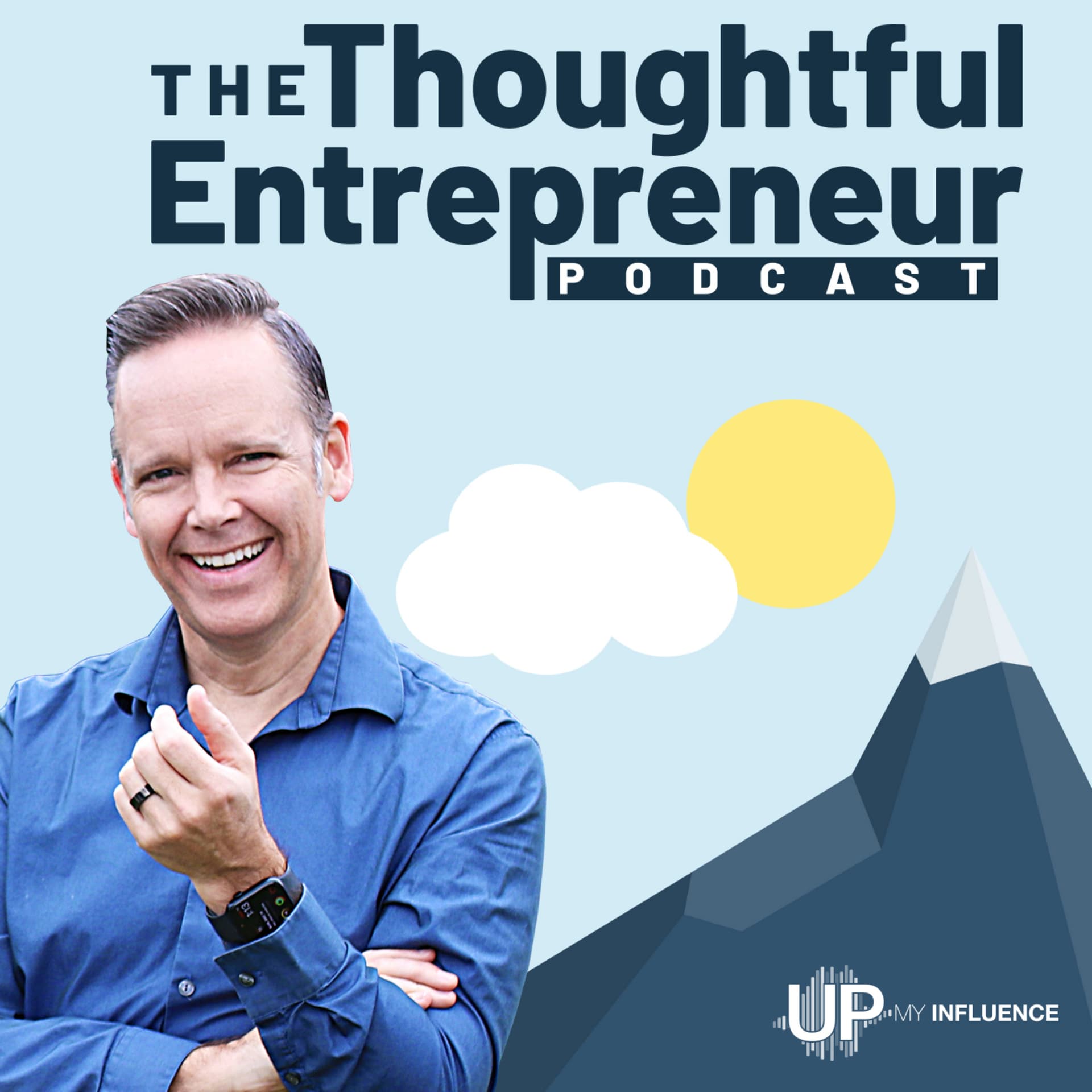
Episode Overview In this episode of *The Thoughtful Entrepreneur*, host Josh Elledge speaks with Doug Hall, renowned innovator, founder of *Eureka Ranch*, and co-founder of *Dexter Bourbon Company*. The discussion revolves around leadership, employee engagement, and innovation, highlighting how leaders can leverage employee challenges to foster a culture of innovation.
Key Discussion Points
- Doug Hall's Background
- Founder of *Eureka Ranch*, focusing on innovation for global brands.
- Co-founder of *Dexter Bourbon Company*.
- Nearly four decades of experience in guiding and implementing innovation.
- Aimed to create a culture where every employee is engaged in problem-solving.
- Personal Growth and Continuous Learning
- Doug emphasizes the importance of lifelong learning, sharing his annual personal learning theme (e.g., learning to play the ukulele and artisan bread baking).
- Advocates for mentorship and experiential learning as key components of personal and professional growth.
- Proactive Problem-Solving
- Doug discusses his framework outlined in his book, *Proactive Problem Solving*, which focuses on engaging employees to identify and address inefficiencies rather than blaming bad systems.
- Highlights that broken systems, not employee mistakes, often lead to wasted time in organizations.
- Shares a specific example from *Dexter Bourbon Company* where an employee suggested a simple solution that increased productivity.
- Engagement as a Driver of Innovation
- Modern employees seek purpose and clarity in their roles; understanding the "why" behind tasks enhances motivation and commitment.
- A proactive problem-solving culture empowers employees at all levels to innovate and contribute to the organization’s success.
- Historical Context and Future Trends
- Doug draws parallels between present-day challenges and post-World War II Japan's management practices, emphasizing participatory management.
- Points out the critical need for organizations to engage frontline employees to foster innovation amidst rapid technological changes.
- Practical Steps for Leaders
- Start by addressing small inefficiencies (referred to as "stop the stupid") to build momentum for larger changes.
- Engage employees in discussions about their pain points and empower them to propose solutions.
- Leaders should articulate the "what" and "why" of tasks to give employees context and enhance their engagement.
About Doug Hall
- Eureka Ranch: Focuses on systematic innovation and equips teams to create and implement big ideas.
- Dexter Bourbon Company: Emphasizes a data-driven approach to distilling and fosters a culture of experimentation.
Key Takeaways
- Employee engagement is critical to drive innovation and improve efficiency within organizations.
- Leaders should prioritize enhancing communication and understanding among team members to foster a proactive culture.
- Continuous learning and adaptation are essential for personal growth and organizational success.
Links Mentioned
- [Eureka Ranch](https://eurekaranch.com/)
- [Dexter Bourbon Company](https://www.dexterbourbon.com/)
- [Doug Hall's Website](http://DougHall.com)
- [Proactive Problem Solving on Amazon](https://www.amazon.com/Proactive-Problem-Solving-Organizational-Engagement/dp/B0CQ58TPRV/)
Conclusion This episode emphasizes the evolving role of leaders in cultivating a culture of innovation through engagement. Doug Hall's insights underscore the importance of empowering employees to drive change and solve problems collaboratively, making a strong case for proactive problem-solving strategies in modern organizations.
Written by AI. May contain mistakes. Listen to the episode to check what was said.
Transcript
Automatic transcript. May contain errors.0:05Hey there, thoughtful listener. Are you looking for introductions to partners, investors, influencers, influencers, influencers, and clients? Well, I've had private conversations with over 2 ,000 leaders asking them where their best business comes from. I've got a free video you can watch with no opt-in required where I'll share the exact steps necessary to be 100 % inbound in your industry over the next six to eight months with no spam, no ads, and no sales. What I teach has worked for me for over 15 years and has helped me create eight figures in revenue for my own companies. Just head to upmyinfluence.com and watch my free class on how to create endless high ticket sales appointments.
0:51Also, don't forget, the thoughtful entrepreneur is always looking for great guests. Go to upmyinfluence.com and click on podcast. I'd love to have you.
1:05With us right now, it's Doug Hall. Doug, you are the founder of Eureka Ranch and the co-founder of Dexter Berman Company and Dexter Custom Spirits. Doug, it's great to have you. Thank you so much for having me, Josh. Yeah. Well, Doug, before we get going, what are you doing for pleasure lately? Any music or books or movies or TV shows that you've been enjoying? Well, every year as the calendar flips over, I always pick kind of a theme for the year to push myself to learn new things. It's just a thing I've done for forever. And this year, it's a quirky collection. I'm learning to play the ukulele.
1:46And so I started right with the dummies book for ukulele. I figured I'd start there and then go up from there. Wow. So I hear ukulele. I lived in Hawaii, so I remember they always refer to them or say ukulele. But I hear the ukulele is, you know, when I picked up the bass about a year and a half ago, and I saw that on a list of instruments that are actually fairly accessible, meaning that you can pick it up and you could probably get to where you could play along with a song. it's not going to take you real long to kind of get to a very elementary level and is that kind of what your experience has been um i'm uh yes yes but it's still you know a little older big fingers um so it's it's taking some time to get in there and then the other so i want to play the ukulele that's one of the things i'm doing this year and then another one that i'm doing is to make a great, not an okay, but a great baguette.
2:50And I have a dear friend of mine who's a third generation master baker and his family came from Europe and he's given me some lessons. And I, I, I FaceTime with him in the middle of making it as to what went wrong this time, what went wrong this time. And so that's, that's an awful lot of fun. My gosh, my daughter gave me a sourdough baking kit and she sent me some starter. I broke the glass. And so, you know, starter, you know, can take anywhere. If you have started to begin with, you know, the dehydrated starter, I think it could take maybe a couple of weeks. Well, I broke the glass. I had to start all over.
3:28Here we are recording, you know, toward the latter half of February. And I finally just made my first dough, meaning that I had to start over, had to start over again. I mean, it's a great lesson in patience. And then I just found that I kept making a lot of mistakes, but it was, you know, in the making of the mistakes that, I mean, I now know so much because, you know, what's that, you know, experience, experiential learning is 10 times more valuable than learned knowledge. You know, you do something, you make a mistake. I don't want to do that again. So finally, I have good sourdough baguettes.
4:04That sounds delicious. I can't imagine that that's, I mean, once you get it, that's got to be so rewarding. Well, and he also showed me how to par bake it, cook it at a lower temp and make half loaves and then freeze them. Yeah. Yeah. And then you just drop them in the oven really quick. And so, you know, during the week, we've got these just quick and wonderful crusty, you know, just like you'd get in Paris, you know, where you get the really good. And so, and it's, it is, it is surprisingly a lot more work to how you handle the dough and stretching out the fibers. It is, it really takes some, the gluten, it takes some work and it's, but it's fun, but it is, it is an art as well as a science, as he said.
4:51Well, Doug, I don't know that baguette baking probably pays the bills yet, but let's talk about the other great work that you're doing. Tell me about, again, you're the founder, chairman, and chief inventor with Eureka Ranch. Tell me about Eureka Ranch because 39 years you've been fostering innovation. Tell me more about this great work that you've done. Yeah. So it's evolved. I mean, like any innovation company, a real innovation company, you innovate and evolve as time goes on. I started the business in my basement way back when. And it grew into a quite successful company working for, I made a list of clients I wanted to work for.
5:35That was back when, you know, Michael Jackson was doing Pepsi commercials. And Pepsi was like the coolest company of the day. And it had Pepsi and Nike and American Express and Walt Disney. And I've been very blessed to work with them many, many times and other companies around the world. And so the company originally started as the big idea people. And we would help them build those big disruptive ideas. And then in time, people were looking more and more to be able to get that capability. And so we built a whole curriculum that's taught on college campuses called innovation engineering, where we teach people how to invent big ideas.
6:12And then most recently, with the changing world, there is now a big interest amongst our customers, which range from small to large companies, to how do I get my employees engaged? And there was a simple little piece of research. We do a lot of research at the ranch. We're very much art and science of innovation, and we measure compulsively. and a piece of research came through that said that the average manager wastes three and a half hours a day dealing with employee mistakes and broken work systems wow okay now i saw the data and i sent it back to greg our status state we have a full-time statistician i said greg check this data out this this seems a little high this is a per week or month.
7:02This is our day. And he came back and says, no, Doug, it really is three and a half hours a day. So I went out and I started talking to people and they said, well, mine's actually more than that, they would say. I had nobody that said it was less. And interestingly, when you go into the three and a half hours a day, you find that a very small amount of it is employee mistakes. Most of it is broken systems, whether it's work systems, whether it's communication systems, IT systems, bureaucracy, that it's getting in the way of people doing good work. And that really hit me as, you know, we needed to figure out a way to do that.
7:39Add to that the fact that about a third of employees, the research shows, are really engaged in their work. And of course, it's easy for people, especially my age, to say these young people, they're not engaged, they don't care, They don't work like we did, blah, blah, blah, blah, blah. So I started to play with it. And I had a wonderful platform because I'd created a bourbon company with some amazing technology. And we had, we were doubling every three to six months during COVID. We had employees that were not high-end employees. I mean, there were bottlers and people that would work in the distillery.
8:14And I said, I got a learning lab. So let's experiment. How do I get these people fully engaged. And from there came Proactive Problem Solving, my latest book, as well as a training program that we do at companies. And it is, in my life, I've never seen anything that causes such excitement amongst employees and amongst leaders, because finally they have a way, because they're so frustrated with management today, because it's just, it's changed, life changes. And this really gets the employees very excited. And so I'm, you know, suddenly, I'm like more fired up than ever before. I mean, I'm more excited about proactive problem solving than any of my other books.
8:59And I've done very well with books. But this one, for some reason, speaks to people and it's small, my publisher made me write only 50 ,000 words, usually I'm 120, you know, like read big books. And this one was and so and it didn't take anything out, I just had to say it as simple and precisely so that everybody could be accessible to it. Yeah. Well, Doug, you know, here we are. I think we're really experiencing Moore's Law right now in innovation. And I think it's really exciting, you know, just how much more rapidly we can innovate today. You know, you've been in the innovation space for so long.
9:40Where do you think we're headed? Well, I think if we do not get employees engaged, we're in big trouble. Yeah. And while I love the AI stuff, we've been doing it for many, many years with different things, either from a bourbon wizard that helps you create your own custom bourbon to systems that do five-year risk-adjusted forecasting. We've been using it. but those are tools, but they can't think and create the way that people do it. And the people on the front lines, if we don't have them, we've got a big problem. And right now with the turnovers and the rest of that stuff, we've got to take innovation from the expert gurus and put it across the entire organization.
10:30And in fact, this is exactly what happened in Japan after world war two. My dad worked with Dr. Deming, who helped recreate Japan after World War II to build quality. And the key moment was when Sumitomo Electric went from experts to participatory management and enabling all of the workers to figure out ways, in that case, to build quality, and in our case, ways to work smarter. And what would you say if there's a leader who's listening right now and they would say, you know, I don't know where to begin. Like, I don't want to come right out and do a big rah-rah session because I don't think I'm going to get buy-in from my people.
11:12Like, how do we begin to evoke change within organizations? well but let me let me address the thing that you just said there first because that is really insightful employees have seen everything heard everything yes i mean i guess i could tell over a nice glass of bourbon of employees that make multinational company i'm in the back of the room there's a new ceo he's chart cheering them up for this thing i'm talking to some people in the back I said, what do you think of this? He said, well, we'll see how long he lasts. I said, are you going to do what he says? Well, we'll make it look like it.
11:50Oh, no, they're turned out. Early on, I figured out that that was going to be something that was going to be a big problem. And so I got with the workers and instead of the CEO starting it, start it from the other end, from the bottom. them. And the way you motivate them is you get a group of volunteers in a work team, you give them the training or books or however you want to do it. And then what we say, and I say right in the front of proactive problem solving is the subtitle almost became how to stop the stupid. And you sit with employees, you say, the first thing you're going to do with these tools to create, communicate and commercialize ideas and to fix problems is you're going to stop the stupid.
12:34Does anybody have anything stupid going on in their work? You know, forms, other departments sending you stuff, not enough tools, whatever it might be. And everybody's like, absolutely. And next thing you know, and you say, we're going to start with stop the stupid. We're going to stop the things in your work system, in your team, little things. And, and then, then we're going to start to go bigger and bigger and bigger until you're doing it. If your leadership leads in doing that, you change the place from the bottom up and it creates. And it's that because you got to get their soul. You got to get inside him.
13:10You can't bribe people to do work. You have to get inside them. And so that's the key to this whole thing is you've got to start with the frontline people, the lowliest people, change their lives. So let me give you an example. There's a lady who works in a company. They make machines to clean, cleaning machines. After they make the machines, they have to lift them up and put them in a box. I said, what's stupid? It's your work. She says, my back hurts. I said, what do you mean your back hurts? She says, well, I'm not very big and it hurts me to lift them up. And I said, well, why don't we do something about that?
13:45She said, I don't know what they can do about it. And so her boss, the team leader was there. I said, what can we do? Let's do this. He said, well, I said, let's think about it. And then somebody said, well, you know, I worked at another place where instead of baking the box and putting the thing in it, when it was something heavy like ours, you rolled it over and you built the box around it instead of putting it in the box. Within two weeks, problem's gone. Now, imagine her motivation now that her back doesn't hurt. She has become a mouthpiece for it. And that's one of, in this organization, this probably 300 of these little things that have done that have changed the entire culture to become very proactive problem solvers.
14:30And they get, people don't go to work to do dumb stuff. They want to be, feel rewarded. They want to make a difference. And that's what proactive problem solving is about. Yeah. Yeah. Well, yeah. So let's congratulations, by the way, on the launch of your book. It's Proactive Problem Solving, the organizational engagement system behind the world's most disruptive bourbon distillery. It's available on hardcover and Kindle on Amazon right now. And by the way, you can access this book by just simply going, Doug, to your website. And that's DougHall.com. Or you could go to EurekaRanch.com. But Doug, can you tell us about the book?
15:15Yeah, so the subtitle references the distillery because they're very human stories of, you know, everyday folks doing things. And because they was part of my inspiration for it, plus it's more fun than hearing stories about Nike and Disney. You know, it's a lot more approachable when it's a craft bourbon distillery and well, it makes it, makes it more fun. So the book basically has three parts to it. The first is identifying the problem in a very specific way, which is, and then the second part is creating ideas. And the third part is making those ideas real with, and decreasing the risk. So implementation.
15:54So problems, solutions, and implementation without risk. Because the research of employees said the reason they weren't taking proactive action is they didn't think it was their job and they didn't know what to do. So I've stayed very religiously focused on helping them understand the benefit to them. We're going to stop the stupid first. Then you're going to start your team. Then you help your department. Then you help your organization. and as you build your confidence and stay that way. And the key for the leaders is when you start to work on projects that you need help with is to describe what and why.
16:40What the problem is and why it matters. And this comes out of the military's thing they call commander's intent, which is how the military manages. is they give their orders come with a what and why. And that's the most important part. Because when I know why, you're enabling me to be able to think. If I'm just doing a job because I've been told to do a job, even when it becomes the wrong job, I keep doing it because that's what I've been told to do. When I understand the why, I can understand the interconnection of the parts and it can make a difference. And that makes a big transformation. And, you know, people say these young people aren't very good.
17:17Well, if they don't know why, they are the worst puke heads in the world. But when they do know why, they can become very engaged. Now, the difference is when I worked at Procter & Gamble, you know, almost 50 years ago, I would work till 8 o 'clock at night doing forms and charts that I didn't know what I was doing and why. But you did it because that's what you did. Today, they want to know why. And when you take the time to explain why, they become amazing. Now, who's the idiot? I think it was me staying till eight o 'clock, newly married, doing stuff that I didn't know why it mattered versus today where they want to be part of the process.
17:59And when you do, I'm telling you, it changes your job as a leader. It is so cool to see these young people doing amazing things because they are so much better trained than we were at that time. Yeah. Oh, truly. They're amazing. Well, Doug, congratulations again. The book is Proactive, Problem Solving, the Organizational Engagement System Behind the World's Most Disruptive Bourbon Distillery. It's on Amazon, and you can access it through dughall.com or eurekaranch.com. Doug Hall, it's been a pleasure speaking with you. Listen, you've inspired me too on the baguettes. I'm going to find myself a nice bourbon and a nice baguette.
18:41I'm sure that they will pair well together. There you go.
18:56Thanks for listening to the Thoughtful Entrepreneur Show. If you are a thoughtful business owner or professional who would like to be on this daily program, please visit upmyinfluence.com and click on podcast. We believe that every person has a message that can positively impact the world. We love our community who listens and shares our program every day. Together, we are empowering one another as thoughtful leaders. And as I mentioned at the beginning of this program, if you're looking for introductions to partners, investors, influencers, and clients, I have had private conversations with over 2 ,000 leaders asking them where their best business comes from.
19:37I've got a free video that you can watch right now with no opt-in or email required where I'm going to share the exact steps necessary to be 100 % inbound in your industry over the next six to eight months with no spam, no ads, and no sales. What I teach has worked for me for more than 15 years and has helped me create eight figures in revenue for my own companies. Just head to upmyinfluence.com and watch my free class on how to create endless high-ticket sales appointments. Make sure to hit subscribe so that tomorrow morning, that's right, seven days a week, you are going to be inspired and motivated to succeed.
20:19I promise to bring positivity and inspiration to you for around 15 minutes every single day. Thanks for listening and thank you for being a part of the Thoughtful Entrepreneur Movement.
From the publisher
On this episode of The Thoughtful Entrepreneur, host Josh Elledge speaks with Doug Hall, founder of Eureka Ranch and co-founder of Dexter Bourbon Company. With nearly four decades of experience guiding innovation for top global brands, Doug shares a powerful perspective on how leaders can drive innovation through a proactive, engaged workforce. From launching disruptive ideas with Nike and Disney to transforming the work culture at his distillery, Doug’s approach emphasizes engaging every employee to build a system that thrives on innovation.
Personal Growth, Innovation, and the Power of Curiosity
Doug shares that every year, he selects a personal learning theme to stretch himself—this year, it’s learning the ukulele and perfecting artisan bread baking. These hobbies reflect his belief in continuous learning and expert mentorship, a mindset he also brings into his business ventures. Doug launched Eureka Ranch in his basement to help brands innovate and later developed Innovation Engineering to teach individuals how to invent and implement ideas from within their own organizations.
Creating a Culture of Proactive Problem-Solving
Doug emphasizes that most wasted time in business stems from broken systems—not bad employees—and leaders must empower teams to identify and fix inefficiencies. At Dexter Bourbon Company, a frontline worker solved a daily struggle by voicing her challenge, leading to a simple fix and higher productivity. This approach is outlined in Doug’s book, Proactive Problem Solving (available on Amazon), which provides a clear framework for building engaged, solution-focused teams.
Turning Engagement into Innovation and Competitive Advantage
Doug explains that modern employees crave purpose and clarity, and when leaders communicate the “why” behind tasks, teams become more motivated and committed. Proactive problem-solving creates a culture where employees drive innovation from the ground up, transforming organizations into agile, empowered environments that don’t just survive but lead.
About Doug Hall
Doug Hall is the founder of Eureka Ranch and co-founder of Dexter Bourbon Company. He is the creator of Innovation Engineering and author of multiple books, including Proactive Problem Solving. Through his decades of work, Doug helps teams and leaders unlock creative thinking, drive growth, and build thriving innovation systems. Learn more at DougHall.com.
About Eureka Ranch & Dexter Bourbon Company
Eureka Ranch trains teams and organizations in systematic innovation through its Innovation Engineering methodology, helping them create, communicate, and commercialize big ideas. Dexter Bourbon Company brings data-driven distilling and a culture of experimentation to the bourbon industry, emphasizing continuous improvement from production line to leadership.