
 Ask ChatGPT


- Podcasts
- The TreppWire Podcast: A Commercial Real Estate Show
- 413. Inside Nomura's Return to CRE Finance with CMBS Industry Icon Larry Kravetz
The TreppWire Podcast: A Commercial Real Estate Show11 Aug 2026 · 29m · 12 chapters

413. Inside Nomura's Return to CRE Finance with CMBS Industry Icon Larry Kravetz
In short
Larry Kravitz (Nomura) discusses CMBS’s evolution since the mid-1990s, why underwriting discipline is better than pre-2008, Nomura’s strategy to rebuild a full-service CRE/CMBS platform, and current market drivers (especially SASB dominance, refinancings, and data-center lending). He also forecasts the next 18–24 months, including “trickle” capitulation and CMBS’s role providing liquidity.
Guest background
Larry Kravitz is head of U.S. commercial real estate and CMBS at Nomura, with 30+ years in CRE finance. He helped launch Lehman Brothers’ Large Loan CMBS business in the mid-1990s, led U.S. CRE finance at Barclays, and has worked through multiple cycles including RTC-era and 2008.
Key claims
Pre-2008 problems were leverage plus overly aggressive underwriting and “pro forma” assumptions; today fundamentals are more disciplined. SASB issuance should remain strong because activity is mostly refinancings and data centers need capital. Data centers are “real estate-adjacent” via lease financing, but long-term residual value/technology risk adds complexity. CMBS liquidity dampens cycles.
Notable examples
“Sasko 92 M1” non-cross-collateralized multifamily pool; Nomura/Lehman/Goldman early large-loan era; Lehman’s “Hilton take private” consortium deal; Nomura’s first SASB priced Jan 12 and 12 SASBs YTD (~$3B Nomura portion; ~$6B total), with a $718M SASB as sole lead; conduit/warehouse/warehouse figures; data-center deal scale jump (e.g., ~$2.5B to ~$38B).
Written by AI. May contain mistakes.
Chapters
0:00
Introduction to the Guest
Learn about Larry Kravitz's extensive background in CRE finance.
“I mean, you were literally on the ground floor when CMBS started.”
1:42
Larry's Journey into CRE Finance
Discover how Larry Kravitz began his career in commercial real estate finance.
“And as you said, I've been around for a while and it's been a long and somewhat winding road.”
3:56
The Evolution of CMBS
Hear about the early days of CMBS and Larry's role in its development.
“And I'm certainly naive to reach out to John Whitehead.”
6:02
Lessons from the 2008 Financial Crisis
Understand the factors that led to the financial crisis and its impact on CRE.
“We did with a few of my colleagues, we did some workout in advisory restructuring work because when you have technical expertise and you have contacts and you have no capital, that's what you do in a disrupted world.”
11:06
Current Trends in the CRE Market
Explore the current state of the CRE market and recent challenges.
“And the lack of liquidity after the fact is what really, you know, I think brought everything to a halt.”
12:06
Nomura's Strategy in CRE
Learn about Nomura's approach to enhancing its CRE and CMBS offerings.
“Yeah, so NEMUR had built out for the past 15 years or so a really top tier securitized products platform, not only in the US, but globally.”
14:01
Reflecting on Nomura's First Year in CRE Finance
Insights into the successes and challenges faced by Nomura in commercial real estate finance during its first year.
“You have to have lived that experience in order to have it.”
18:10
The Current Landscape of SASB Issuance
Discussion on the prominence of SASB transactions in the current market and future expectations.
“Give us some thoughts on maybe why that is.”
20:59
Understanding Data Centers in Commercial Real Estate
Examining the classification and financing challenges of data centers in the real estate sector.
“Does it add more questions than answers?”
22:43
Market Resilience and Future Projections
Analysis of market resilience amidst economic challenges and predictions for the coming years.
“It's great to hear that you guys are available and willing to look at these.”
Show all 12 chapters
26:11
Advice for Aspiring Professionals in CRE
Larry shares key advice for young professionals aiming to succeed in the commercial real estate industry.
“We do like to end the show with folks that have risen to senior rankings and led teams and built structures.”
28:00
Closing Insights and Audience Engagement
Listeners gain insights into how to connect with Larry and Nomura.
“Larry, thank you so much for sharing your insights and your expertise.”

Ask about this episode
Get the gist, explore an idea or ask about something said.
 Claude
On The TreppWire Podcast: A Commercial Real Estate Show, what are the key points of this episode?
Searching your listeningTranscript
Automatic transcript. May contain errors.
0:00I mean, you were literally on the ground floor when CMBS started. In the early days, it was really selling a new product that people hadn't heard of.
0:13Larry Kravetz: Welcome to the TREP Wire podcast, the show where commercial real estate needs data and insights. This is a special guest podcast. I'm Haley Keen with TREP, a data modeling and analytics firm for the CMBS, commercial real estate and CLO markets. I'm with Lonnie Hendry, chief product officer. Today, we're joined by Larry Kravitz, head of U.S. commercial real estate and CMBS at Nomura. Larry oversees Nomura's U.S. commercial real estate and CMBS business, leading the firm's return to commercial real estate finance and the expansion of a full-service CRE platform. With more than 30 years of experience in CRE finance, Larry has helped build some of the industry's most influential lending platforms.
0:54Larry Kravetz: Prior to joining Nomura, he led the U.S. CRE finance business at Barclays and earlier in his career helped launch Lehman Brothers Large Loan CMBS business in the mid-1990s. His experience across multiple market cycles gives him a unique perspective on today's CRE market, the resurgence in CMBS, and where the industry may be headed next. Larry, we're so excited to welcome you to the show today. Thank you for joining us and welcome to the Trapwire podcast. Haley and Lonnie, thank you. It's a pleasure to be here and I look forward to our conversation. So as I stated, you've spent more than 30 years in commercial real estate finance.
1:33Larry Kravetz: Why don't you walk us through, from your perspective, how you got your start in this industry and how it ultimately led you to your current role? I'm happy to do it. And as you said, I've been around for a while and it's been a long and somewhat winding road. If I really go back, it actually predates my entrance into the industry. and I think it's, at least for me, as I think about my career, it's kind of an interesting story. My first job out of college, I went to a liberal arts school, great school, majored in economics, didn't really know business at all. And I got a job in a management training program at a major insurance company to administer what they call group national accounts.
2:11Doesn't sound too exciting, and it really wasn't. After two weeks in the job, I knew I'd made a mistake, and I'm like, oh my gosh, what do I do? And I really knew nothing about business. Neither parent went to college. My father owned a small business. So I started just reading and exploring, you know, back then there was no internet, there was no AI. I was pretty naive at the time. So naive that I looked at our alumni network from my college, which was Haverford College. And I saw the name John Whitehead, who was the managing partner at Goldman Sachs. I didn't really appreciate or understand what that meant.
2:41So out of really pure naivete, I wrote him a letter asking if I could have an informational interview. He wrote back. And next thing I know, I'm sitting in the office of the managing partner at Goldman Sachs at 22 years old, pretty clueless about business and life. And the one piece of advice he gave me was go to business school. And so I took that to heart. And then from that point on focused on getting into business school or applying and getting into business school. And during that period, I actually, I network, I had a friend who was working in real estate at the same insurance company and I was reading books and I thought real estate sounded interesting.
3:15So I actually went to business school thinking I try to get into commercial real estate. In my summer job, between the first and second year, I worked for a developer in Boston. Second year, I thought finance would be interesting. And I ended up getting hired by and working for what was then Chemical Bank. So that dates me a little bit. And that was my real intro into commercial real estate finance. Back then, it was pretty basic. It was a great training. I learned how to underwrite commercial real estate. It was in the Midwest region. That's what we covered. I was based in New York and did a lot of mall deals, really learned the fundamentals of commercial real estate underwriting.
3:51So that was the way I got into it. And sometimes I think being naive can be a plus in your life and career. And I'm certainly naive to reach out to John Whitehead. So I was there from 87 to 92. It was a great time and a great place to work. And then I started reading about CMBS and this was during the RTC phase. I thought the marriage of capital markets, and this goes back to my business school experience with the fundamentals of commercial real estate sounded intriguing. And I had an interview at Lehman and was able to get that job. And I joined Lehman in the CMBS group. I'll call it that. So toward the tail end of VRTC and really at the beginning of Originations Conduit and then the large loan business, the first deal I worked on that I'll consider Originations was for what was then a Signia Financial Group, which was Andrew Farkas.
4:43And he had rolled up a number of GP interests from syndicators. And we securitized. And I think this was a first. It was a pool of non-cross-collateralized multifamily properties. And I think we called it Sasko 92 M1. And we were off to the races. And from that, it was developing the conduit. My then boss, Mike Mazzi, who was a mentor of mine throughout my career, said, hey, go ironically go figure out what Numura is doing with this mega deal thing and I was tasked with doing that that was mid-90s we came out with our large loan program and it was really in the early days it was us Numura and Goldman Sachs really as the three players in that space and I really started the large loan business and ran it until the end I described my 16 years at Lehman as 15 wonderful years of one god-awful life all year 2008 but it was incredible we did about 100 billion dollars of deals in the large loan group and it was really it was really incredible the last deal we worked on was the uh hilton take private which was ironically led by bear stearns which we know what happened there and we were part of that consortium and that was the uh the last the last one we worked on so that that was really the the foundation in between lehman and barclays We did with a few of my colleagues, we did some workout in advisory restructuring work because when you have technical expertise and you have contacts and you have no capital, that's what you do in a disrupted world.
6:16And then when Barclays decided to restart the business, they called me and I was fortunate to get that role. And that was my first time really building the whole platform as opposed to just components of it. And that was a great run. And now here I am in Merck. That's the history. No, it's incredible. I mean, I agree with you. I think being naive sometimes is a superpower because if you were logical in knowing what sending a letter would have meant, you probably wouldn't have done it. And who knows what would have happened. Your trajectory would have been completely different. So we usually close the show with asking you to give advice to young people starting their career.
6:52And I think you actually gave the best advice in your intro, just saying sometimes when you're interested, you just reach out to folks. And I've seen and experienced myself that people are generally willing to work with young students that are ambitious and they'll share vision, advice, wisdom, et cetera. And I think you embody that with your stories. And that was a great introduction of just where you've sat across the spectrum of CMBS. When Haley says you have a unique perspective, I mean, you were literally on the ground floor when CMBS started. And so, you know, maybe we'll use that as a jumping off point here.
7:26What has changed? You went from syndicating, you know, taking GP syndicated interest and putting that into a securitization. And now you have this incredibly sophisticated institutional quality CMBS market. Just give us a little bit of a breakdown maybe of the evolution of CMBS broadly, and we'll jump into some of the stuff that we're seeing today. In the early days, you know, we were, it was really selling a new product that people hadn't heard of, convincing people that it was something that made sense to do. You know, real estate borrowers forever went to their local bank and insurance company.
7:58And, you know, what's this new CMBS thing? That was a big part of it. You know, I felt in the early days, and everything was new back then. It seemed like every new deal had a structure or you were inventing it. And so that was incredibly exciting as well. But it was embraced pretty quickly by institutional players in particular. And when you think about when I go back to those early days at Lehman and again with our competitors, you know, our clients were really institutional borrow. A lot of it was hospitality. A lot of it was malls back then. We saw very little industrial because that was the domain of the insurance companies, a very little multifamily.
8:33family. Think about pre-2008 and post-2008. Maybe I'll go there. And what led up to 2008 in particular in comparing these two times. And if you look at today, if you look at the false statistics and delinquencies, they're actually, and you guys know this because that's what you do, they're pretty close to back then. I'd say two things in particular back then. The crisis that occurred was really, it was a global financial crisis. It was about too much leverage in the system, not necessarily with real estate. And then, you know, illiquidity from that, we all know what happened. But when I really look back at real estate, what was happening was a combination of, you know, in our world, really overly aggressive underwriting and a lack of skin in the game.
9:19And I think those two things probably would have resulted in a pretty ugly blow up, even if you hadn't had the overall financial crisis. Everybody was underwriting pro forma. The rating agencies were underwriting pro forma, even though they never wanted to admit it. When you looked at BP's buyers and Mez buyers, they were financing versus CDOs and CDO squared. The discipline went away. There was a lack of discipline. And the financial engineering, I'd say, got ahead of the fundamentals. And that was pretty ugly, pretty devastating. And it was across every property type. Fortunately, I guess for the industry, we were bailed out eventually by low interest rates, which we all know how long that lasted.
9:59But that was key to ultimately... You know, we did the whole industry did, you know, the playbook is extend and pretend and which we've had now. And that that was that's what helped obviously get bailed out by the low interest rate environment. You know, so what's changed today? You know, obviously, the shock of historically steep and fast interest rate increases when you're relatively highly leveraged industry. You know, it's going to happen there. But I don't think underwriting fundamentals have gone anywhere near where they were pre-financial crisis. and I think there's the discipline has been maintained through the system I think and with the bp spires with hrr buyers with mez buyers with the rating agencies I think we've maintained really good fundamentals as an industry that has kept things from from getting I'd say you know anything close to where that they were or from an underwriting perspective obviously that paradigm shift in office utilization and we've gone you know and we're working our way through that But I'd say those are the main fundamental differences in those two areas.
11:02Yeah, I agree with you. I think the financial engineering during the GFC was really unprecedented. And the lack of liquidity after the fact is what really, you know, I think brought everything to a halt. And I look at what we're seeing today, and it feels like the federal government at that level, even, they understand how important commercial real estate is to the overall economy. And so, you know, you've seen regulators say extend if you can with borrowers that are willing to pay. Certainly there's a math problem at some level on some of these low interest rate loans that need to refinance into higher rates.
11:32But those are problems that can be resolved over time and with some additional capital infusion. And we're seeing that kind of play itself through the system. So I do agree with you that the discipline has remained much, much better. Although, you know, you're certainly seeing some disruptions across certain industries. So we'll get into that here in a little bit. But let's transition here to your role at Nomura today and kind of what the evolution of their business has been relative to, you know, coming back into the CRE and CMBS marketplace. Just to kind of fill out their platform, be more full service.
12:04Just give us a little bit of behind the curtains view of what the strategy was with you joining the team and kind of building this out. Yeah, so NEMUR had built out for the past 15 years or so a really top tier securitized products platform, not only in the US, but globally. And I report to Gordon Sweeney, who runs it globally. And in particular, strength has been in RMBS, where we've been named Bank of the Year for four straight years and Trading House of the Year, and so on and so forth. So we're in infra, we're in insurance solutions, we're in asset finance, we're in eight verticals in total, and we're the ninth.
12:42It came from a few things. One is you're looking at their competitors and seeing what they're offering, but also from the client base. There's a lot of crossover in the client base, especially when you think of the big alternative fund managers and asset managers. And so the clients were also asking for, like, why don't you have this product? And they've been thinking about it for several years. It was a matter of timing and also, frankly, meeting the right, you know, having the right person that made the most sense. And the reason I say that is Gordon was a Lehman person and I knew him from Lehman.
13:14And actually, there were a number of former Lehman people here still today, which gives you a sense of, I think, the longevity that people have had at this platform. So when we connected, I was at a point where I was making a decision. And do I retire? Do I work for a few more years in my current seat? Or do I take the leap and do something new, which frankly, a number of people thought it was crazy to do at this tender age. But it all felt right. And I was motivated and excited to build again. And it was just the confluence of perfect timing and someone I knew from years ago. And here we are.
13:48Life generally works out better when that's how it plays itself out. You're comfortable and excited. And I can tell just in the passion you're talking about this that you're invigorated with the opportunity. It's very evident in your approach. The experience that you bring to the table, obviously, is not something that can be replicated. You have to have lived that experience in order to have it. And the value you bring from day one is immense. And so maybe give us a little bit of insight into looking back on the first year. I think you guys participated in about 11 SASB transactions. You had about$2.5 billion worth of underwriting volume.
14:20How has that been seen across the market? How's the adoption been? You guys satisfied? What does that look like? I appreciate that you're commenting on my passion and enthusiasm. I think people have known me for years wouldn't use those adjectives to necessarily describe me, but it certainly has come true. First year has been incredible. It's just shy of a year. It has been amazing. It's exceeded expectations in every way. When I joined back right around Labor Day last year, we spent much of the fall building out the team and also building out the plumbing, kind of attaching what we can do in real estate and CMBS to what they had built here.
14:57And it's kind of funny. We closed our first loan on December 30th, which was a small bridge to conduit. I think if we had to close that two weeks prior, we may not have been ready. It was just getting everything up and running. If you fast forward today, we have 28 people on the team and all senior and also mid and junior ranks are covered through all our products, which is direct lending on balance sheet, warehouse, conduit, and SASB. There was a lot of enthusiasm. The extent of it surprised me from our clients about the team coming over and the team we built out. And, you know, part of it, and this is something I didn't foresee, there's such a mystique about Numura for those of us who've been around long enough from back in the 90s.
15:39Like the enthusiasm to have that name back in our space really, really took me by surprise. I didn't anticipate that. And I think if I'd gone here, you could pick another bank, another foreign bank. I don't think people would say that, wow, we're so excited that such and such is in the business. So that was great. And I really felt that people really wanted to see Numura back and succeed. and the reception's been amazing. I told my team, the hardest thing to do will be making our first loans. Like I anticipated people would say, thrilled to have you back. Come back to us when you've done some stuff and we'll do business with you.
16:10And our experience was really quite the opposite. As I said, closed our first loan on December 30th. We priced our first SASB, I believe it was January 12th, which was the Friday before Crefsy, which we couldn't have planned better. And if you fast forward today, and actually it's 12 SASBs year to date, just under$3 billion is our portion, then just under$6 billion total. And what's really amazing, and we're so grateful to our clients, is of those 12, six are left. Of those six, four are sold, including a$718 million SASB that we priced on Monday as a sole lead. And just to give you context, that's the largest sold deal since 2024.
16:48And here we are 10 and a half months into this. It's pretty remarkable. And that was the portfolio of multifamily properties. and the client's very happy and we're thrilled to have done it for them. And so, yeah, we're off to the races. Conduit will be in two conduit deals over the summer, one of five and one of 10 year. We're actively secondary trading. We're supporting other shelves right now in anticipation of our shelf. We expect to issue off of our conduit shelf second half of the year. In Warehouse, we closed our first facility in January. We had about a billion six outstanding on our way to doubling that direct lending.
17:23We've been so busy on SASB, frankly, the team has been a little less focused, but we'll have by the end of this month, about 500 million on balance sheet and some really cool stuff that we've done. So we're hitting on all cylinders. It's been it's been quite amazing. And the team has blended together incredibly well. We have some old faces and some new faces. So it's been amazing. No, it's great. And I was going to ask, that doesn't happen unless you have relationships with folks. Like you can't just onboard 20 plus new people and hit the ground running unless you have known them or worked with them or trusted them.
17:53And it's great that here you kind of blended that with some maybe new joiners. They bring fresh perspective and some fresh ideas. And so you guys have really, it sounds like, just knocked it out of the park here. I did want to focus a little bit on the SASB issuance, because if you look at overall CMVS issuance this year, we're about 80 % SASB and a much lesser focus on conduit. Give us some thoughts on maybe why that is. What is the market telling us? Is that something that's going to continue to remain over the next couple of years? Or is this just part of the ebbs and flows of the market cycle?
18:22Well, there's certainly always an element of ebbs and flows, but I think we're in a great trend and I could see the next few years continuing, if not growing. And one thing that's interesting with the trend, I think last year was the biggest SASB year at just under$92 billion in about a decade. This year is on pace to exceed that. Deals have executed well. The market has been, from an investor perspective, yes, we've had some geopolitical things happen, but it's been resilient. But what really doesn't exist right now that has driven it in prior years, maybe not last year so much, is this very little M &A activity, is very little sales activity.
18:57So this is really predominantly refinancings. If and when that other activity picks up, either through a lower rate environment at some point or just capitulation where people have to sell, even if the pricing is what they like. I think there's another leg up that we should be experiencing. Then you have the backdrop, obviously, of data centers where the voracious appetite of everywhere, they need everything. And that's been a meaningful part of it. And I think our competitors, which are historical, the balance sheet lenders as well as the debt funds, that competition is broad and fierce as it's ever been.
19:30But there's a real place for SASB. It's size,$718 million deal. It's leveraged at points in time. It's what the profile is. You know, there are office deals that are getting done that couldn't otherwise get done. Balance sheet mall deals are accepted, you know, for the right profile, so on and so forth. So I think we're in a good place. And I think that we're poised to be at this level, if not grow, you know, over the foreseeable future. Yeah, I would agree with you. I think this is the trend and I think we'll continue to see it grow for the reasons you've outlined. I mean, it feels like the market is really plugged into this.
20:03And it services, you know, office and lodging and some of the mall stuff that just probably doesn't have another outlet. But I think there's an inherent advantage there. You talked about data centers a little bit. And this is something that we've been a lot of time over the last couple of months on our weekly show, just trying to decide, is a data center real estate? Is it infrastructure? Is it a hybrid? How do lenders view this? We've had a couple of people join us and said, you know, they're happy to finance the construction of data centers, but they don't want to hold a note beyond construction.
20:32and they don't want to be the takeout. And if they are, they want fully amortized loans over the term, effectively saying they don't know that there's any residual value to the building just because the technology is moving so quickly. And then the sheer scale of these in terms of just dollar volumes, I mean, one deal can wipe out an entire bank's ability to diversify. They have so much concentration with one deal that they're at their caps. What are your perspectives on data centers? Is this something that is beneficial to the CRE landscape from a lender perspective? Does it add more questions than answers?
21:04What are your thoughts? The answer to everything you said is yes. Is it real estate? Is it infra? Is it something else? Yes. Is it beneficial? Does it add potential issues? Yeah, the magnitude and the scale is mind boggling. Last summer I was on garden leave. Just coincidentally, I had the summer off. And those 90 days, we went from being like a$2.5 billion deal is really big to a$38 billion deal. And we've seen more of that. The scale is mind boggling. As I describe it, and I say this more for a fact, our clients are searching the four corners of the earth, looking for capital sources in every way, shape or form.
21:43And I do think we're getting to a point where they need to keep finding them because, as you say, people are getting filled up with the exposure. I've had the discussion as well, is it real estate or not? It's easy to say it's not, but I think the best way I can describe it is, you know, you're financing a lease, but you know, if you look at alternative use at the valuation, we all know the story. It only works at that. And then if you're a fundamental real estate person, how do you predict the future of the need and the technology 10 years out? So I agree with what you said, which is, I think the construction is certainly for hyperscaler lease is a comfort zone.
22:19And that first five-year loan in probably is as well. And after that, I agree, you're going to need structure to make sure you're at a basis that's going to look like a fundamental real estate basis. Because how do you predict what the demand and the technology will look like in 10 or 15 years? It's beyond me, that's for sure. And I think beyond most fundamental real estate people. But we're here to do our part in financing certainly the portion of it that we're comfortable with. It's great to hear that you guys are available and willing to look at these. And I do think it's additive for the industry in the sense that it adds a new wrinkle.
22:51The scale, though, we can talk about on the show. People can hear the numbers,$30 billion per deal, something like that. But until you actually sit down and see what that looks like, it's just incomprehensible relative to a traditional$700 million CRE SASB deal. It's just so, so much bigger. Think about this. If we throw around like$30 billion or so, but that was the size of the SASB market not too long ago. Obviously, we couldn't do that deal in the SASB, but people just start throwing around these billions. It's pretty mind-blowing. You know, we joke on our show just about how everything, I mean, you've added a comma and a couple of zeros to every transaction.
23:28You know, you did a$100 million deal 15 years ago that was newsworthy. Now, if it's less than a billion, like, it doesn't stay on top of the fold too much. And so it's amazing just how things have evolved. And so, you know, you mentioned a little bit about distress and delinquency. And I think the markets have performed exceptionally well considering the paradigm shift in an office that you mentioned and COVID and lockdowns and interest rate hikes and inflation and geopolitical. You could go down the list. I've been saying for a while, we basically lived through 100 years worth of challenges in the last five plus years.
23:59And the markets have been resilient. Loans are still performing. Lenders are still lending. You know, transaction volume is lower, as you mentioned, on the sales side. But, you know, what do you think the next 18, 24 months look like? Are we really at a point where you start seeing some of the capitulation, some reset basis, and the market takes off again? Or do you think we're going to see more of the same for the last couple of years? I think it's going to be the farmer. I do think, and we're starting to see them dribs and drabs, the capitulation. And you can go across property types, but part of it is in hotels and lodging, right?
24:29You need pips. Like, they need to put money into it. And if your basis is where it is, it's too high, you're not doing it. And the franchisors are saying, you know, we need to be refreshed. You're starting to see it, I would say, somewhat across the board. It's a trickle, not a bud at this point. But I do think you'll see more and more of that. And you're putting up one thing. It ties back to an earlier comment. It's about where do we sit? Where does CMBS sit? And when you think about it, and going back to the beginning of this conversation, I started my career at the end of the RTC. We use securitization to provide liquidity to get through the SNL crisis.
25:03And when you think about 2008, CMBS started up again about a year and a half after. And you think about the mall situation, the paradigm shift there. You think about office. You think about when all the balance sheet lenders were stuck a few years ago. It was CMBS that really provided the liquidity for the markets to kind of flush out, so to speak. That liquidity that we provide, I think, is a huge part of sustaining real estate and dampening some of the cycles that we have. As people complain about maybe some of the things they don't like about CMBS, They lose sight of that. Yeah, I think it's very well put because if you go back and just look at the issuance volume numbers, it proves that story.
25:39And if you look at what we're predicting for this year, we're estimating about$180 billion in total CMBS issuance. I mean, that's getting pretty close to that$200 billion threshold that we saw just before the run-up in 06, 07. Now, obviously, it's not inflation-adjusted, et cetera, et cetera. But still, if you get above$170,$200 billion in issuance, that's a pretty strong market. and an indication of your point of it's an outlet for folks and it keeps the market moving. And I think it pays dividends that people maybe underappreciate at some level. So, you know, this has been an incredible conversation.
26:10I think we could talk for another hour or two very easily. We do like to end the show with folks that have risen to senior rankings and led teams and built structures. You obviously fit that bill. What is some advice beyond just some of the naivety of reaching out to someone that maybe you otherwise wouldn't have? What are some things you could share with our audience? How can they differentiate themselves? How can they set themselves apart? How can they set themselves up for continued advancement across our industry? I could make this a half hour answer, but I actually think it's easy today. I really do.
26:40I won't go too far back in time, but the one thing you couldn't do when I was coming through the ranks is outwork people. We worked incredibly hard. I don't know if I'd want to repeat it. Every night till 11 o 'clock, the joke was weekends meant you could go to work, dress casually and not in a suit and tie. I think today, if you have passion for the business and passion for the industry, look as much as you can. Be in the office and work really hard and it'll be noticed. And I think too few of the younger people are willing to do that. And it's a very simple way to distinguish yourself. But you have to have the passion for the business.
27:12And the other thing you can tell, especially when you have analysts coming in, if they don't have a passion for the business, they know it, we know it. But assuming you get past that and you want to be in this business, work hard, be dedicated, and you'll be noticed. Yeah, I couldn't agree more with you. It's this weird intersection where technology has made things easier for a lot of our day-to-day, but it's also stripped away some of that inherent need to show up and work really hard. You can showcase your skills using dashboards and other cool tech, but really being there and learning from people that have experienced things, there's no substitute for that.
27:46Like I mentioned earlier, the best way to learn is to sit across from someone that's experienced something and let them impart their wisdom on you and then you get the benefit of that and do it yourself. It's really, really great advice. So yeah, Larry, thank you so much. This has been an incredible, incredible conversation. I really appreciate it. Thank you. It's been a pleasure in my end.
28:03Larry Kravetz: Larry, thank you so much for sharing your insights and your expertise. I agree with what Lonnie had to say here today. Even if you haven't heard it before, your passion and your enthusiasm is very clear. And I'm sure our listeners will have more to ask you or more that they want to know or learn about your business at Nomura. So why don't you quickly share how people can get in touch with you or reach out to the firm? I am on LinkedIn, so they can certainly reach out to me on LinkedIn. And Nomura in general is www.nomura.com and they can reach out that way and they can get to me as well. Excellent.
28:39Larry Kravetz: Go visit the website and send some questions their way. So thank you again, Larry. Thank you, Lonnie, for the interview. This has been an excellent episode and we're excited to follow along with your journey and the business's journey. With that, we'll close this special guest episode. Thank you, Larry, for joining us today. Join us later this week as we look at what's happened during the week and how it may be impacting you. If you have a question or just a comment, send an email to podcast.trep.com. Until then, visit trep.com for more info and subscribe to the TrepWire Podcast, your favorite provider.
29:11Larry Kravetz: Thank you for listening and stay well. All right.
29:18Thank you.
From the publisher
In this special guest episode of The TreppWire Podcast, we are joined by Larry Kravetz, Head of U.S. Commercial Real Estate (CRE) and Commercial Mortgage-Backed Securities (CMBS) at Nomura, to discuss the firm’s return to CRE finance and the expansion of a full-service CRE platform.
With more than 30 years of experience in the industry, including helping launch Lehman Brothers' large-loan CMBS business in the 1990s and later leading U.S. CRE Finance at Barclays, Larry reflects on his career, the evolution of the CMBS market, and how lessons from past market cycles are shaping today's CRE landscape.
We explore the resilience of today's CRE market, the continued momentum behind SASB issuance, CMBS's role in providing liquidity during periods of market disruption, and the opportunities and challenges surrounding data center financing. Larry also shares his outlook for the market ahead, Nomura's rapid growth in CRE finance, and the career advice that has guided him throughout his decades in the industry. Tune in now.
Episode Notes
- (0:00) Larry's Background
- (11:47) Nomura's Return
- (15:21) State of of the Market
- (20:13) Data Centers & More
- (24:10) What's Next in CRE
- (26:26) Career Advice
- (28:21) Closing
Questions or comments? Contact us at [email protected].
Follow Trepp:
LinkedIn: www.linkedin.com/company/trepp
More from The TreppWire Podcast: A Commercial Real Estate Show
All episodes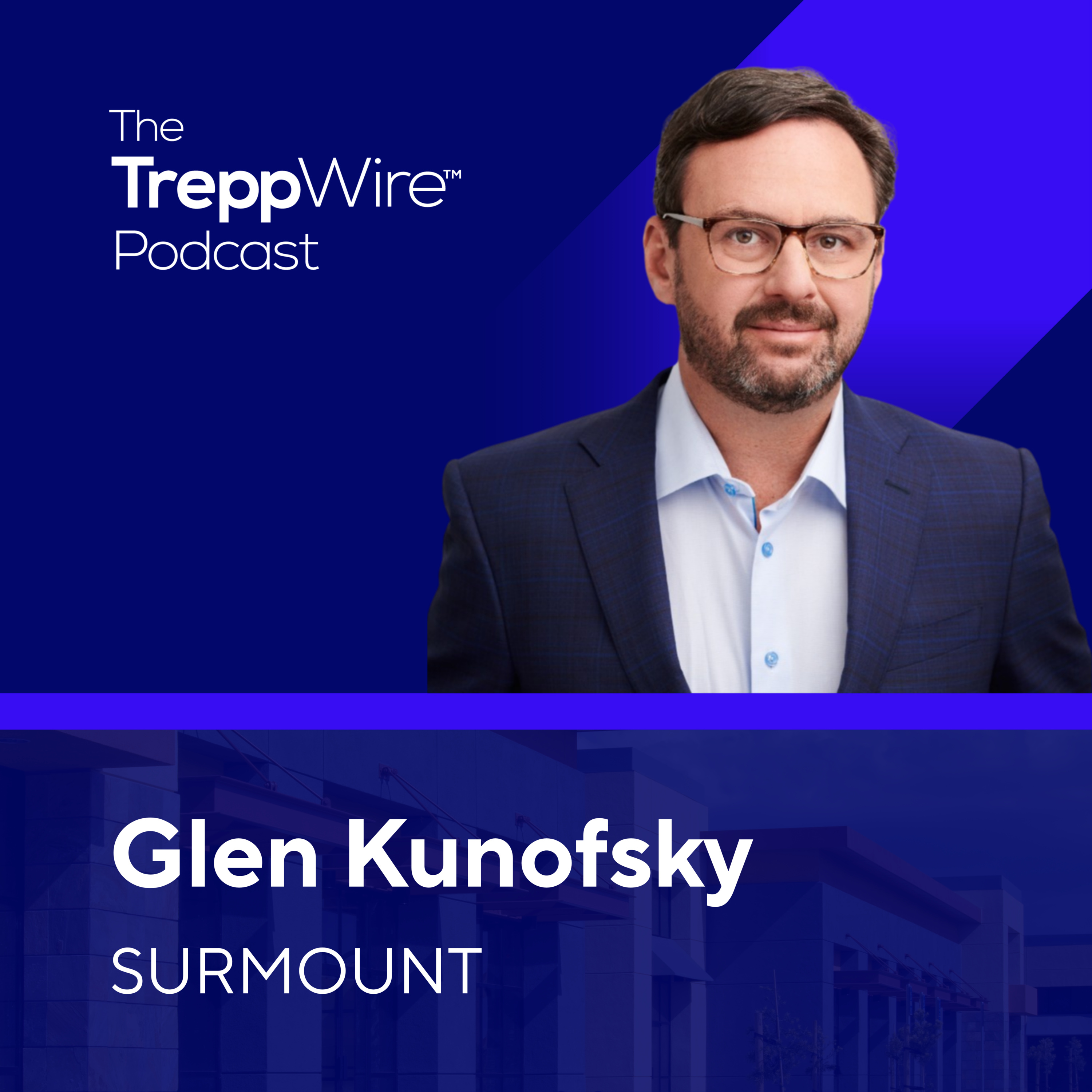
We use cookies.They keep VO running smoothly and help us improve it. Privacy policy