
In short
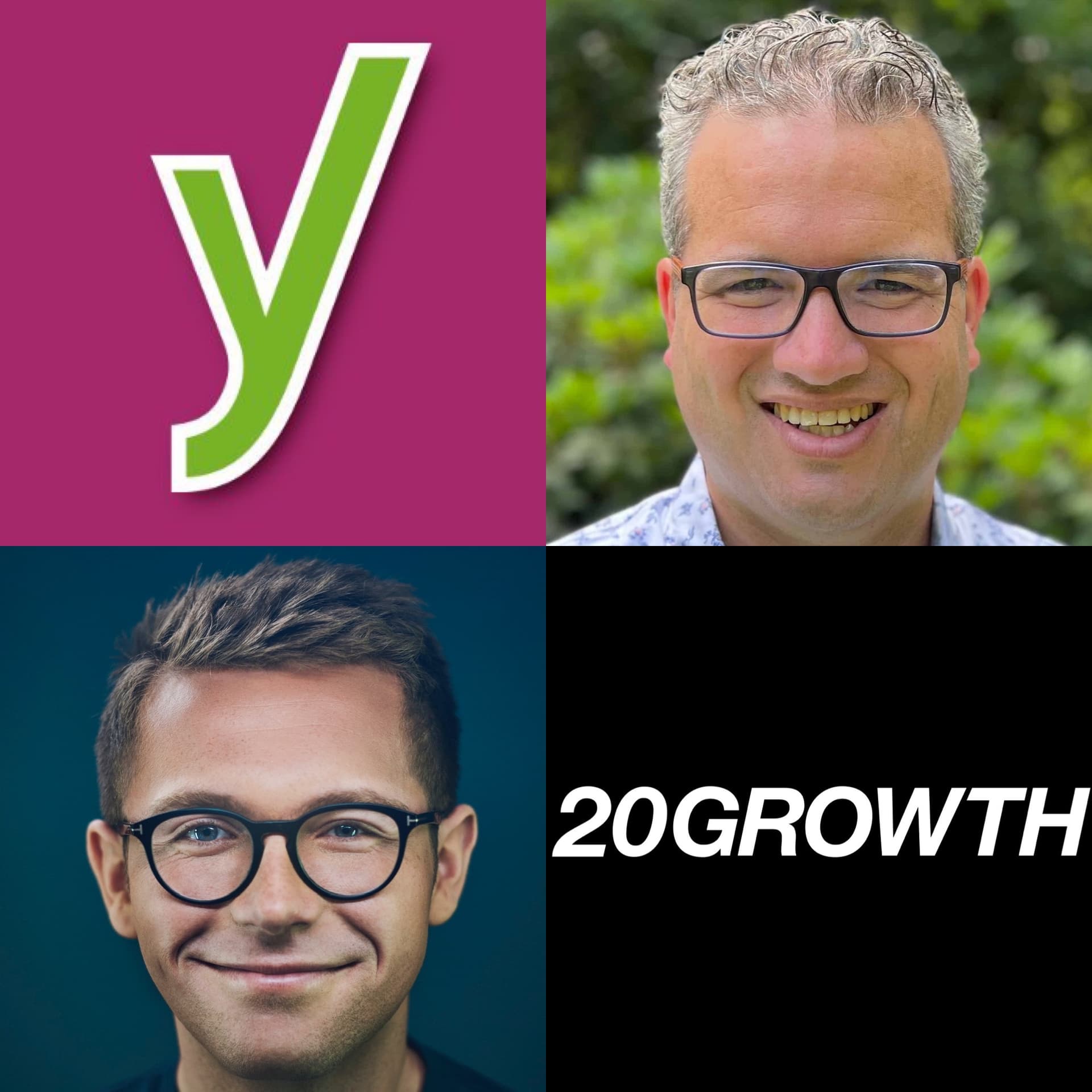
Podcast Summary: The Twenty Minute VC (20VC) with Joost De Valk
Episode Details
- Title: 20Growth: How AI Will Change the Game For Content Creation and SEO
- Guest: Joost De Valk, Founder of Yoast
- Air Date: TBD
Guest Background
- Joost De Valk is a pioneering figure in the SEO landscape, having founded Yoast, which began as a side project and grew into a multi-million dollar business used by 13 million websites. The company was sold to Newfold Media in 2021. Joost is also an angel investor through his company, Emilia Capital.
Key Topics Discussed
- From Side Project to Multi-Million Dollar Business
- Genesis of Yoast: Joost started Yoast as a plugin to simplify SEO for users by merging different functionalities.
- Realization of Potential: The turning point came when the plugin reached a million users, prompting Joost to consider it more than just a hobby.
- Lessons Learned: Joost reflects on what he wishes he had known when starting, such as proper scaling and hiring practices.
- Investing in SEO
- Timing for Investment: Joost advises that the right time to invest in SEO is early in a company's lifecycle, especially once customer support inquiries reveal common questions.
- Budgeting for SEO: He suggests allocating around 10% of the pay-per-click (CPC) budget to SEO initiatives.
- Common Mistakes: Founders often fail to recognize the importance of a recognizable brand in search results, and they may create unique terms that don't resonate with potential customers.
- Impact of AI on Content Creation
- AI's Role: AI can streamline content generation, but its current limitations include inaccuracies, also known as "hallucinations."
- Future of AI in SEO: Joost believes AI will enhance productivity but emphasizes the necessity for unique, high-quality content that engages users beyond SEO metrics.
- Building a Developer-Led Brand
- Challenges of Open Source/Freemium Models: Joost warns that freemium models can be difficult, as they require a delicate balance between free and premium offerings.
- Branding for Developers: A successful developer-led brand should prioritize the needs of general users over power users to avoid churn.
- SEO Strategies and Best Practices
- Content Importance: SEO strategies must include a focus on providing valuable content that addresses users' problems.
- Changing Dynamics: The discoverability of quality content becomes increasingly challenging as the volume of content rises, particularly with AI-generated content flooding the market.
Key Takeaways
- SEO Fundamentals: Understanding basic SEO principles can greatly assist founders in better shaping their products.
- Long-Term Investment: Investing in SEO should be seen as a long-term strategy rather than a quick fix.
- AI's Double-Edged Sword: While AI can speed up processes, it also raises concerns about content quality and the need for effective brand storytelling.
Final Thoughts Joost De Valk’s insights reflect a deep understanding of both the technical and strategic aspects of SEO in the modern digital landscape, particularly as businesses face evolving challenges due to AI and changing market dynamics. His experiences and advice offer valuable guidance for founders looking to navigate the complexities of SEO and content marketing effectively.
Written by AI. May contain mistakes. Listen to the episode to check what was said.
Transcript
Automatic transcript. May contain errors.0:00I don't think this is different from crypto. I think this has a bigger impact on society than crypto will because this has the type of impact that electricity and the steam engine had in terms of productivity changes. This is 20 growth with me Harry Stabbings, and I'm so excited for the show's day because the one element of growth We have really not done a deep dive on is the dark art of SEO and so stay which joined by one of the OGs of the SEO world Yost de Valk, as the founder of Yost, he scaled what was a side project plug -in into a multi -million dollar business used by 13 million websites and selling to new fold media in 2021.
0:36As one of the early SEO pioneers, he's also an extremely coveted angel investor, an investor in his company, Amelia Capdall. And I do want to say huge thank you to Shaq, Alex Shals and Matt Mullamweg, some amazing questions to ask today without which this episode would not have been so special. But before we dive into the show's day, I need your help, I need your input on the 20 VC Mirror Board as I'm booking new guests that we should feature on the show in 2023. Now this is the only way to make suggestions. Head on over to mirror .com forward slash 20 VC and leave your suggestions with digital sticky notes or comments as mirror .com forward slash 20 VC and mirror actually sponsored this episode.
1:16For those of you that have not used it before, it's this incredible tool that I think is truly game changing. Just ask a 1 million plus people who sign up for Miro every month, it's a visual collaboration platform packed with the right tools, tech and templates to grow your idea, your product, your vision at scale. Miro asks a single source of truth across teams. That means you can get buying much faster from teams like marketing, engineering, sales, product, basically anyone who needs to have a say to make growth projects grow. And even though it seems like a simple digital whiteboard, it's so much more.
1:50Hatching out a sound acquisition strategy, brainstorming Miro, rethinking your sign -up flow, using Miro's user research templates, quickly visualise team structures on a Miro board. However you need to grow, Miro can help, we use Miro all the time to brainstorm future shows, vote on potential guests, and leave no stress to the team in our own time, check it out again at Miro .com -4 -2 -0 -VC to submit your guest suggestions. And I'm really excited about this net sponsor because a few of my portfolio companies use it and love it. So do you know the impact of your marketing efforts? It's more important this year than ever to know the impact.
2:26Or how much you've spent so far this month and what you got as a result. You're not alone in not knowing these answers, even though marketing is now all about the data. Most companies still use manual spreadsheets for reporting an analysis, but if you want a supercharged gross, spreadsheets just won't cut it. Funnel is the world's first and only marketing data hub that takes all the manual effort out of data collection and lets you blend data from different platforms to unlock new, deeper insights and the best part is this can all be achieved without writing a single line of code. I can hear your sigh of relief.
2:59That's why it's used by more than 2000 of the world's top brands and media agencies, including Samsung, Adidas, Sony and have Asmedia. Start your own free trial by visiting funnel .io slash 20vc. That's funnel .io slash 20vc. And finally we've all been there but nothing is quite so depleting as the blinking cursor on an empty page reminds me of law school. You're sitting there trying to come up with ad copy or hypothetically a set of interview questions for a podcast you run obviously personal and it's just staring back at you like a brick wall. This moment of frustration amid growing content And the most important thing is that I'm probably hearing about Jasper nonstop these days.
3:39Jasper is an AI assistant for business that helps marketers, sales reps and other creators accelerate their writing process and repackage content into different formats, languages and tones. Online broad use AI tools, Jasper was built for business and this makes a big difference in incorporate SEO, a plagiarism checker and a browser extension so you can call up Jasper in pretty much any text box or platform you use online. Visit jasper .ai -4th -2 -0 -VC for a demo. Your burnt out team will thank you. Three, two, one. What's your book? You're now arrived at your destination. You know, I'm so excited for this.
4:21I told you I was there to you with Chat last night hearing stories I'm also heard from Brian Hale, from Mullenlegg, from Alex Schultz. So thank you so much for joining me today. I'm sure it's a pleasure to be here with all the people that have been here before me it does feel like you're incorporated into this ridiculous group. Do you know what I'm very lucky to be ingratiated by such intelligent people but I want to start at the beginning? So you started the Yoast SEO plugin as a hobby. It's now used by 13 million sites according to the trusty Google. What was the aha moment for like I have to create the Yoast SEO plugin that even we use at 20VC?
4:53I started as an SEO consultant having my own website doing some small things and I built a couple of small plugins that did very specific SEO things and people kept saying to me like well we just want one plugin that does it all. So I just combined different plugins that I had into one thing and then realized there's basically two sides says here already, you have the technical stuff and you have the content side of things and the technical stuff is not something that anyone wants to think about. What I try to do is take all the technical stuff away from people and just fix it for them and give them good feedback on their content.
5:28Pretty simple recipes that has actually helped to grow so much. But there's a moment when it changes from my hobby that's kind of cool and kind of working to like, oh wow, we actually have something. What was that catalyst for I need to go all in on this? What was side hobby at the time? I started my own company in 2010, Basically doing consulting, I was working for Alex during consulting for Facebook and and doing consulting for eBay. What happened is that the plugin became really big so it had like a million users. WordPress was growing quite fast and I suddenly had on this free plugin that I built as a hobby a million users and I was spending way too much time supporting it and my wife was quite clear.
6:10I didn't need to make money doing this so we need to stop doing it. I first started with an add -on, so I build a video SEO add -on, but the small business plan for it is like if I'm gonna make 100K with this in the first year then it's actually worth continuing doing this because I was making quite a lot of money as a consultant so it had to actually offset that money and that I made more than 100K in the first month. Oh wait there might be a bit more to this. Do you have that moment though then as the next moment you first have that catalyst for oh shit this is something that's working and working well.
6:40When you're doing 100K a month pretty quickly, you were having people chase you down to invest. Why did you never take external funding? Why would we? First of all, don't think that any of this was a plan up front. There was no plan to sell the company. There was no plan to grow to as big as we were as we became, because it just happened. And we grew along with WordPress, and we were very lucky in a way that we picked the right platform in the beginning and built on that. But in the beginning it was very much about turning that hobby into a bit of a lifestyle business We have four children I was also spending a lot of time with them and I didn't necessarily want to build a huge business in the beginning And later on when we realized that we had quite a large business in our hands by their type It really wasn't needed anymore We were generating enough cash to grow into what we wanted to do The funny thing about our sorts of businesses that the only cost that you really have as people Why take money?
7:38If you could turn the clock back 10 years or 2010 when you saw an ankle braces, what would you do differently? Had I known in the beginning that we'd be selling the company at some point, I might have hired a bit less people. A whole lot of the things that we did, we did just because we thought it was fun and not necessarily because we were thinking about how to make the most money. If I look back at it and maybe we hired a bit too much at certain points in time and and also, we're really not that big, use to say companies not that big anymore. 13 million websites, having 120 or so people is really not all that much people.
8:13I wanna start on the first major topic there, because when we chatted before you said, you know, alongside Matt, really it's the first time we've had an open source and a kind of premium OG on the show. And I wanna start with something you said, which is open source slash premium models, who are extremely hard to make work. But when they do, they lead to incredible potential, which VC's underestimating. Let's break that down. Why open source and freemium models so hard to make work first? Two sides to that. On the one hand, freemium is always going to be hard because you have to decide about what to put in free and what to put in premium, like how do you attract the most users and at the same time get enough in premium to actually convert them into paying customers.
8:52And the add on thing that's harder when you're in open source is that when people think that you've got a good product by too much of its premium is that they might just fork your premium product. And you also have to build like a sort of trust relationship with the customer. They need to trust you to be better than the other options that are out there. What you get quite quickly with these models is that you have web skill problems and small company income. At its peak, used was a 15 million euros a year revenue when we sold. That's not a whole lot of money compared to the 11 million sites that we were running on at that time.
9:28So you're solving problems through a whole lot of sites with relatively little people. At the same time, open source community controls a large part of the web, a very, very large part. I think people still underestimate what Matt has done with WordPress. I mean, more than 40 % of websites on the web are WordPress sites. And companies like Shopify, and I heard you podcast with the Toby, which was awesome. But Shopify has like 2 -3 % of the market, if that. So WordPress is way, way bigger. And people underestimate that, and it's under invested, I think. He mentioned there the challenge of putting enough greatness in the free that they convert to the premium.
10:09When you have found this comes to you with this problem, I don't know what to do, I don't know how much to put in, how much secret sauce. What do you actually advise them? Because I'm sure you see so many. I will say that putting too much in free early on is dangerous, because you can't really take it back. I think that's where open source slightly differs from from size, because in size you can just take it back. And in open source, as soon as you've put it out, there it's out there. And someone is going to fork it if you take it out. When you look at freemium and open source today that've worked, the best in class, all of the commonalities in those that have worked well that you think could call to their success.
10:45The biggest underestimated thing in all of open source is branding and thinking about, Hey, how do we want people to look at us? What are we putting out there? How are people perceiving us? They see the hardest thing because you also have to develop a lead brand. And yes, that's what's the most challenging, which is like, I'm a brand -ing -out, but a developer lead brand, that's hard. What makes a great developer lead brand? What makes a great developer lead brand is it's not just developer lead. If I'd been the only one billion years to see it, then we would have only optimized for SEOs for developers who want very specific niche features all the time to do very specific things and honestly nobody cares.
11:24I think Brian, who mentioned in one of your podcasts at some point there, companies tend to optimize for the power user. I think that's the thing that you don't have to do, the exact opposite of what you should be doing and it's very hard to do that well so if you're just a developer leading a company like that and it's really very important that you get someone and bought who's not a power user who can help you like hey I'm a normal user of this product. When you need what don't optimize the power user I'm fascinated that because quite often they're the ones most likely to churn they're not the real lovers.
11:54I understand the optimise for the power user and for the super lover because they're your champion and they're the ones who are gonna espouse it to their friends and the community. Make the ones who love it love it more and they'll do the rest for you. Why am I wrong? Well you're not. That's a word super hard. But the fine line that I've always tried to do with Yoast is that we did the things automatically that the lovers, the really geeky SEOs really liked so we fixed all the problems automatically and very cleanly. And we tried to keep the interface as simple as possible and at the same time we horribly feel that at times the thing is that once you'll start looking at some data and one of the harder parts is that you actually don't have that much data.
12:37is that people don't look at settings. So for an SEO plugin, they turn it on and they expect it to do magic. That means that your defaults have to be incredibly good. And that every setting you add is basically just more noise. So I think that the power is to make sure that you keep on doing the right things and reacting quickly. So one of the things we always did was whenever Google came out with new stuff, it's we'd be on that and we'd have a new release ready a couple days later or even on the day itself to add the features that were needed. You mentioned the default there and that it's saddings, people don't get a saddings.
13:13I think it was Dave Morin who said by the devils in the default when it comes to products and products expectations and that she just destroys creativity. Do you agree or is actually the default is good? It's what we know and it's what we're comfortable with. I think the default is what 90 % of your users who end up using so it better be damn good. It's actually one of WordPress's core principles in its design philosophies which Matt came up with. Decisions are not options. That means we're not going to add options for stuff where we can decide the right thing for 90 % of people. We're not going to add an option for it.
13:48There might be a filter and a code to change it. So if you're a developer, you can change it. but for normal users, adding more options just makes your product harder to use. Can I ask, I think we learn a lot from mistakes. When you look at kind of the product journey of Yost, what do you think was the single biggest kind of product mistake? And what did you learn from it? The biggest product mistake is thinking that people were using our features when we didn't know for sure. So we spend a whole lot of time building features that done nobody used. And that's the problem of building a WordPress plugin because you don't have to leverage your going back to your systems all time.
14:27So we literally didn't know. And then we started building tracking to actually get sent some telemetry back and now we realize, oh, wait, we're spending a whole lot of our time working on this and nobody's using it. So what are you changing then? You spend more time on branding, you spend more time on distribution, you spend no, you spend more time on the parts of the interface where people actually do interact with yourself with. I do not have to ask that, I'm concerned when we look at the freemium model in particular, especially as we enter a different macro climate because what you see is the removal of the credit card from the user and actually it revert back to the CFO where it traditionally was and people do not have the same purchasing power on the front lines.
15:05Are you concerned in the same way as I am about that removal of purchasing power and how does freemium look differently over the next few years to how it did over the last few years? I am slightly concerned there, but I'm not as concerned for Yost because SEO is probably going to be invested in more instead of less in a downmarket because people look at their adverts bill and they go like, oh, maybe we should do something about that. But yeah, I think you're right. And at the same time, most of these freemium models are relatively cheap, so while there's not purchasing power as much anymore under front -end, I mean, Yost SEO costs like 99 euros a year, a lot of WordPress plugins have those kinds of price points, those are not the hardest decisions in the world usually.
15:46Well, why worries me also with the freemium models honestly and the kind of big cohort of startups we have today is you have the cost structure of enterprise startups, you have STRs, you have A's, you have CS teams, you have this very bloated kind of org structure, and then you have the price points of freemium, and we have no knowledge that they upsell efficiently, we have no knowledge of large ACVs at the end of the rainbow, And so you have this inflated cost base and a small ACV with premium. It just doesn't, doesn't work. Honestly, a lot of those companies are also building for scale that they're never going to reach.
16:20I think that there's a lot of opportunity to just do scrappy and small and also to price reasonably because some of these things just get too expensive and then it's too easy to throw you away. So something like Calendly, which I see a lot of people use and love, Google rolls out a new feature and suddenly countlessly is gone. Do you think so? I mean, it's the 3 -5 billion dollar company. I mean, the risk of that is quite big, right? I mean, countlessly, I don't know long I pay for it, but when I use to pay for it, it cost me more than my Google workspace account. And I was like, the deseprosings don't match.
16:53Again, I am an ambassador for a living. You said before that VCs underestimate these models. How do you look at them? How do you evaluate them? What is the mechanism of determination for quality? In terms of software, I can just look at the code. I'm arrogant enough to say that I think I can determine that myself. And then it's just looking at what users are saying, looking at reviews, looking at how people are talking about it. In these communities, which you really get is that you have like the WordPress communities are a layered thing, but the inside WordPress communities, relatively small group of people that goes to WordCamps and that goes to these conferences.
17:31And when I say small, that's a relative, right? I mean, word -campurable will probably be a couple thousand people. It's actually very cool to listen to that, to figure out like, hey, these are the ones that are really going to make a change. So that's being in that community and actually caring about that community and being aligned with that community. How do you tell pre -launch? I meet many, many in my role. Why would you tell pre -launch? You don't have to. Well, why would you fund pre -launch? Yeah, but also, why would you want to tell pre -launch? I mean, most of these things exist already.
18:00That's it. So it's a very different building atmosphere. It's very much build out in the open. How many startups actually take that approach? But that's what I'm saying. Like, this is very uncommon to, I think most VCs, that it is much more out in the open. I mean, when you sell your, it's what you sell as a brand and what you sell is not necessarily just a software, because the software everyone could just pick up and copy. Do you think any VCs does it well? So I've spoken to quite a lot of them because they do reach out and need to, and Feecees are gonna Feecee, I don't think I'll let it them get it.
18:32I think there's a wide open market. Always chance for you to become a VC, as is everyone wants to be a VC these days. I wanted to talk about kind of the highs and lows of SEO. We went through Shaq really. He told me about the instrumental work that you did on CoinDest. So timing and budgets. What does it mean to invest in SEO? I often hear like, oh, we're gonna invest in SEO. What does it mean to invest in SEO? I think that every founder should understand the basics of SEO because it's going to help them in a whole lot of different things. Because what you need to do when you do SEOs, you need to look at a whole lot of data.
19:06And you need to think about what do people search for? How do I describe my product in words that people actually use? When they have a problem, what are they searching for? What are the words that people use to describe the problems that they have and how can I tap into that? I actually think that that's good to think about when you're building a product. So investing in SEO stars there, we're actually thinking about what are we solving, which problem are we using as are we solving? That's where SEO is in the beginning and where it's important, I think. And then when you invest in SEO, you need content, you need a good tech platform.
19:38And honestly, WordPress is out there. So if you're going to use another CMS, I think you're pretty stupid because every other CMS is going to cost you more money. And then you need content, you need to write that content and in the beginning, us probably you that needs to write that content. If we go back to the founder hat of what it means to invest in SEO, the next question is like, when's the right time? A lot of founds like, Harry, I just need to get a couple of customers, I need to build the base and then I'll think about it. When's the right time to start investing in SEO? If you pick the right platform to build your website on and make sure that it's relatively technically SEO friendly already, then you're good in the beginning and then as soon as you start doing customer support, you'll get questions that you have more than two or three times.
20:21Start writing knowledge based articles for those. It's as simple as that. The things you're already writing anyway because you're answering those customers or you're fixing them, reuse that content and put it on your site. Then just build on that. I think the right time to start investing in it is fairly early but that doesn't mean hiring an expensive SEO consultant. It just means putting content on your site and making sure that people can find what you do. Imagine hiring a spandes of SEO consultant, you see so many people attend SEO, or the biggest mistakes you see founders make with SEO in the early days.
20:53One, come up with a brand that is not recognisable. Even in search, if people search through your problem area, they never search ones, right? They always have a search journey where they search for multiple words and for multiple things in over a period of time. Even if they don't click your result, if they see your brand name a couple of times in their results, you're slowly building up confidence for your brand. So being recognizable in search is super important. People underestimate how important it actually is to have a brand that people can remember and that doesn't become very vague very quickly.
21:28That's one. The other is coming up with terms themselves for the say you think you're very clever and you create your own term for what you're doing. Nobody else uses that. So don't use the words that everybody else uses. That's so interesting. So category creation may sound sexy to a VC, but actually whatever intellectual word you're using it doesn't mean shit to anyone, don't bother. So category creation is I think super important, but it's almost always it's a category that already exists as a problem. The problem that you're fixing for people already has words attached to that. If you're going to start using different words for that category, then the people are using to search it for them.
22:07You're gonna have a hard time getting people that search into your website. You can't really create demand with SEO. SEO is very demand driven, just like AdWords is very demand driven. The demand has to be there. You can't create the demand. So that's why the branding is important and you have to do other things as well and a holistic view on growth should absolutely include SEO, but should also include a whole lot of branding. Should you have SEO specialists within your growth team within your marketing team. Is this a matter of skill that everyone should have? How should that be distributed within your team?
22:40I think you should have SEO specialists on your team if you're building a larger growth team because it's a pretty specific problem area to keep track of. It's quite a bit of time that it takes to just keep track of everything that Google does. As your company gets larger, managing SEO gets a lot harder so you'll probably need an SEO team over time because what changes with time? Why does it get harder? As you move quickly on your site and all these companies want to ship every day, then it's hard to not make SEO mistakes every day. So you need people that keep track of what you're shipping and say, okay, maybe we can change this and then it's actually actually SEO friendly.
23:18Who do the SEO specialists in your team work close as with? Is it with the product teams, is it with the dev team, is it with who are their consignal areas to ensure they have that seamless integration? Both these actually, I think they should probably be in that triangle the whole time, and the content side of things should probably also talk to your PR and Combs to your people etc. SEO is a nasty habit of being in so many different places at the same time, like so many different things are important to SEO. You mentioned the kind of the centrality of content there. I think one of the things I always say with content, having done a fair here is the reason most people fail is because they give up.
23:54It just takes a long time to work. When you think about how long it takes to see the gains of SEO, how long does it take to see SEO really come into fruition? This depends a bit on where you are in your journey, but if you're starting as a new company, then it's going to take quite a bit of time. Nobody's heard of you, and you're not going to get like a whole lot of clicks automatically suddenly because you've launched a new website. At the same time, if you're a bigger company and you've not invested in SEO, which you do already have a brand, then you could see results very quickly as soon as you start actually putting decent well optimized content on your site.
Read the full transcript
24:28If you are a CEO or a CFO of a Series B company and you haven't optimized for it already, how do you allocate budget for SEO? Do I take it from marketing? Do I take it from product engineering? Is it a new budget? How much should it cost? If I was literally in an angel investment of your Series B, what would you advise me in terms of asset allocation towards SEO. If you're already doing CPC, I'd take 10 % of your CPC budget and allocate it to a SEO, and then start from there and see what happens. How do you measure along the way the effectiveness and success of your SEO strategy in those early days?
25:04How do you advise me on that? Well not just early days, measuring these successive SEOs hard, because Google has very successfully made it impossible for people to track the effect of anything but CPC. Every company out there either uses last -click attribution or an attribution system where the last click is important and the last click is in most cases going to be a brand search because you've convinced someone to buy somewhere in the process. We don't know which keywords people search for anymore when they get to a site because Google HiStoes, so it's actually quite hard to say, hey, how well does SEO work for us in our business?
25:41The same way that it's hard to tell the results of a TV ad, but that doesn't mean that TV advertising doesn't work, nor does it mean that SEO doesn't work. It really is something that's gonna blow up the rest of your results and it might be hard to attribute. So actually that's one of the falsities that we have in the whole growth world, is that we can measure everything, but don't think you can. When you go inside companies today, you're investing your advising. What are the best SEO individuals and teams have and do and what are the worst have and do? I think the worst start looking at a very long list of technical things to fix and go from top to bottom.
26:21I would just spend months and months and months fixing things that really don't matter because the overall story is bad. The best go in and look at, okay, so what is our brand story? What does the thing that we're selling? They fixed the biggest technical problems and then go into okay, so how do we create a story around this? How do we to get it with comms and others? Make sure that people that land on our site do the right things and find the content that actually addresses their needs. So you said about brand story. We're gonna do this in real time because that's gonna be a lot of founders that listen to this and go great I get it.
26:53I get it. But what would that actually mean for us? So you know used SEO for everyone that it is that your brand story? just a land as that. I think YOS as a company, I can still do this better than we probably do. Yes, I do think that SEO for everyone is the thing that YOS does. It is making SEO accessible to everyone. But the things that people search for are terms like WordPress SEO. And if you search for WordPress SEO, you'll either end up on a plugin page or on an article page that gives you a very long list of things to do for SEO. And it explains to you how SEO works. You know you get you get three ads.
27:32That's one of the funny things when you start selling your company, people start asking for things like your cost of acquisition for Customer and we were like, you never spent any ads, so how would you calculate this? I think the final thing on this which I do have such an answer is really hard when you have a horizontal tool. So you have a notion, so you have an air table, so you have any of these kind of collaboration tools which are Oblicable across many different verticals. How do you think about an effective brand story that hits those very different use cases? in one short headline. At that point, you're going to want to start optimizing the use cases.
28:06You'll have a ton of use cases. You want to tell that story. You want to tell the stories of how your customers are using it and writing that down. All the different ways in which they are using it and all the different verticals as you're thinking of or people could be using your product. You want to be creating pages for that and actually telling people those stories. Should you do that from day one or should it be the interest over time? And if you can do that from day one, it's absolutely awesome. You mentioned the centrality of content again. We're seeing open AI change a lot about low level content creation.
28:37How does AI impact search and SEO do you think most significant in the next couple of years? I think AI for content generation is still problematic because it hallucinates too much. So there's too much things that are in there that are just not true. Predictions are next word, but it doesn't mean that the next word has to be true. At the same time, I think AI can be tremendously useful in content generation. It can help you create outlines. It can help you create excerpts of longer articles very quickly. It can actually help you distill your research very quickly because you can say, hey, so I've got these 30 articles on this topic.
29:15And you can use something like open AI to make excerpts of those and summaries and use that to write your own content very quickly. But I do think that writing your own content and adding something unique is going to be more important over time. And with a lot of these changes happening, search engines are bound to focus more on the author of the content and they have done for a while because it's actually important for them to make sure that what's on their pages true and it's good. They want to make sure that they can actually trust the author. I think the author of an article is going to be more important over the next few years than it has been in the past few years.
29:50Does the price of content not get down if you think about what this does to demand supply chart. This is a supply shock, creating excess supply or a massive increase in supply, which will inevitably increase the price by which demand is willing to pay. Do you not worry about that? In terms of more content being created, yes, there will be loads more content being created at probably very, very low prices. The thing is that most of that content will be not good. The content that will rank in search engines will very quickly be the content that is actually unique and actually has value in it that is not given by an AI solution.
30:28Do you think we lose creativity in our content teams? And what I mean by that is you mentioned like the outlines that it can generate is that a loss of creativity would not happen to do this. If like you know our arithmetic skills went found dramatically when calculated were introduced. Do we lose that? Some companies might lose that. I think the winners will not lose that. I think creativity is still what's going to make content really good and really unique and shareable. SEO doesn't exist in a vacuum. If you land on a page that was written purely for SEO purposes, it doesn't have any value, you're not gonna share that page with your friends.
31:02At the same time, the thing that you want for pages that rank in search and for them to be successful is that people will share them with their friends and will revisit them. So we have to make better web pages. And Google has been saying for years you need to make websites for users not for search engines. And I think they're absolutely right. If that page you land up on from search that you build for SEO is not something that I want to share with my friends Then that page is not worth its money. You say about kind of enigma, not many people do it well, but the importance of quality of content I agree what concerns me is when you increase supply you have discoverability challenge now where there's just harder to find that great quality content because it's in a sea of rubbish content That's what concerns me.
31:44That concerns me and I think that concerns search engines even more That is one of the things that Google is panicking about, like this is going to create a way of very, very bad content on the web, and how are we going to surface the really good content. And that's why I expect them to be doubling down on things like the EA team, the things which they've had, expertise, authority, trust. They've already talked to that. I've been quite a number of vocations, and I think they'll double down on that. What elements of AI are in that series concerning that you don't think enough people are spending time on, or thinking about?
32:16I think the biggest problem, and this is where it shows that I'm very European, because we don't know what's in those language models, and we really shoot, and we sort of have a right to know as well, like what did you train your model on? What can I, based on that, I can make a decision on whether I want to use it for a specific use case, and I would be very much in favor of some regulation that actually say, hey, you need to disclose these things about your language model in order to be able to, to allow the general public to use it, because then they can know, especially because a lot of those large language models are trained on content that they don't necessarily own.
32:54I've had the pleasure of working with the team at the Guardian for a couple of years about a decade ago. So they should pay for access to that content, which then enable them to provide their service better. They'll ever do other people work to make money off it. Yeah, for free. That is hard and I don't have the answer. And part of that is gonna be licensing, But part of that's actually also going to be S .E .O. Like how do we create robots .txt rules for this sort of stuff that like allow you where you can say I want to be in This type of large language model, but not in that it's going to be super hard I don't think we have any good solutions to that yet.
33:31How do content teams and the structure of them change with AI playing a much more central role in the creation and Planning of their content that they do today. I hope it speeds them up if they use it well it speeds them up and you might need actually a few less people to do the same amount of work. There's very many ways in which AI can speed up not just content but development too. If it doesn't mean a step changing your productivity then you're using it wrong. Well, Warrisme is actually like everyone agrees that it's going to create many billion dollar companies with 10 or 20 employees, not even engineers.
34:06Well, that does to a wealth inequality is terrible. Even worse than what we have today. Do you not worry that we just usher in a new phase of income inequality and wealth inequality that we've never seen before? Well, yes. So this is where I admit that I'm pretty much a socialist, which I know is a bad word to most Americans. I do worry about that. I do worry about the fact that the wealth inequality we create is not something that we're going to be able to sustain. So we need better systems for that. And I also worry about like how do we even make this understandable to politicians at some point.
34:39Are they going to be too late at the point where they start regulating this, where we've already gone past everything that they could fix? What is that point of being too late? When it's already in the hands of consumers and bluntly, there's rights on the streets when you take it out? That's a good question. And I don't know of the answer. I thought about it a lot with crypto, which is like you can't just put crypto back in a bottle. If you could offer it to politicians at the start to put it back in, I'm sure they would take that. Yes, I don't think this is different from crypto. I think this has a bigger impact on society.
35:08done crypto will because this has the type of impact that electricity and the steam engine had in terms of productivity changes. So you don't think that the funding hype is over hyped? You think this is justified? Do you think this is a fundamental platform shift like mobile was? Yeah, of course the funding hype is over hyped. It always is. But it's also because a lot of money has to go into it and we have to try a lot of different things to figure out which ones work. So I do really think that AI can change where we go in terms of how big companies need to be to do things and how many things we can do on a day.
35:47Using machine learning to do so much of the work that people are doing on a day -to -day basis could be very powerful, but we need to get better at actually understanding what is machine learning. so we need explainable AI in a way, we need to actually understand what it's doing. We can train a model to say, hey, you are getting credit, you are not getting credit, but in the end, we actually have to be able to explain why it's making that decision. You mentioned how it changes development cycles. Currently, I think it was get up posted the 41 % of code stays AI generators. Five years time, Yost, how much is then?
36:2160 to 80. It allows you to focus on business logic a lot more. Unpack that. What does that mean? The hardest part right now of building software is thinking about DUX and then fixing the business logic. But the business logic is almost always like only 10 % of the time you spend on this whole thing. Everything else is all the other stuff. And all the other stuff is relatively basic, but it just costs a lot of time. But the relatively basic stuff AI can do fairly quickly. So you need to create the processes. You need to create the logic because the AI is not going to do that for you entirely. But at the same time, brightening the individual functions is going to be easier and easier.
37:01I'm a big fan of Cloudflare. If I describe to OpenAI, like I need a Cloudflare worker that does this and this, it'll just give me the code. I don't have to code anything anymore. It'll just give me a working worker. I've done this twice in the last few weeks where it just did exactly what I needed it to do. I didn't even have to write a single bit of code. And I think that's going to be a lot more common. Think of an OpenAI interface on top of no code interfaces, et cetera, connecting APIs together is going to be tremendously powerful and is going to save a whole lot of time coding things. Final one before we do a quick fight for virtual tool days.
37:38When you decide, hey, I'm going to angel invest. Do you set aside a budget? Do you decide I'm going to write 25K checks, 50K checks, I'm always going to write the same check? When you moved into angel investing more and advising more, How do you think about the strategy there? Not enough. I tend to write slightly bigger checks. The thing is, I want a company to be able to be self -sustaining as fast as possible. People send me decks with like, you know, we're doing an angel round now, and then we're going to do an A round in a year. And then they've already planned like, when they'll do their rounds, but they not planned when they'll build the product.
38:14I sort of glance and go like, no, I'm not interested. So you guys run two 50K checks. 200, 200 K, that's usually the... yeah. Okay, how many do you want to do? Probably another 20 to 14 the next five years. How involved are you? Very. So we have a shared Slack channel with each and every one of them, and I talk to almost every one of them on a... not always daily, but most of them on a weekly basis. Do you love angels and besting? I really, really love working with founders and seeing their energy and being able to help them grow. Do you mind where you invest? Does it have to be pre -seed? Can it be a series A, B round?
38:50I think we are both Marie -Kennaya better in the pre -seed stage than much later on. If you're getting too later on, then most of the value that we can probably give you has already been happening. Do you find most of your deals are in Europe? No, I don't care. I want to move into a quick fire, so I say a short statement. You give me your thoughts. Does that sound OK? Yes, absolutely. OK, so what did you believe about growth five years ago that you no longer believe? That was easy, also a bit of an underestimation of what Marie can I could do together. Tell me, what life balance, and what do you advise me, yes, to be spoke about it before?
39:26Move out of London, I think work life balance is absolutely achievable. Also, don't think it means what people think it means. If it's good for you, then it works, right? I will say that not being in a big city and having to go to a fancy dinner three times a week does really help. Can he start up being built on free traffic as such in 2023? Yes. Single biggest mistake people make when starting SEO strategies stay. Not considering branding from the get -dead, go in their entire strategy, and not considering what people use to describe their problems. What would you most like to change about the world of growth?
40:01I would want people to stop thinking they can measure everything, and that's mostly stolen from my wife who's a PhD in sociology and just says people think that they can explain behavior way too much and you can't. Final one, what one company grows strategy? Have you really been impressed by recently and why? I think that what Microsoft's doing with Bing right now is absolutely brilliant. I really love it. So Bing Chat, it's very fun what they're doing there. It's a bit cheeky because it doesn't really work out but it's making everybody at Google so very conscious of what they don't have. So I really like that.
40:34But in terms of other companies that I really like, I'm always impressed when companies do marketing towards developers very well and grow on top of that. Because I do think that that's still an underappreciated way of going out at the market. So companies like Algolia that actually do to rate developer outreach provide absolutely awesome docs on how to work with this offer and how to solve your problems with it. What makes awesome doc or just good documentation of everything you can do with your software and also copypaste examples to actually work. We mentioned great tech platforms earlier. Webflow, good, not good.
41:11It competes directly with WordPress, so I'm always going to say not good. Squarespace. Reasonably good. Wix. Good growth tactics at the moment, to really focusing on the SEO industry as one of their lovers of getting other people to install or use Wix. I don't really like that product. Yes, there's my cannot wait to do many more engine investments together. Thank you so much for putting up with my prying questions. I've got a lot more prying over the years, they used to be very easy as an interviewer. But you've been a star, so thank you so much. Thank you for having me, it's been an absolute pleasure.
41:45What a fantastic guest, I so enjoyed that show. If you want to see more from us, you can head over to YouTube and watch the full interview by searching for 20VC. But before we leave you today, I need your help, I need your input on the 20VC Mirrorboard as I'm booking new guests that we should feature on the show in 2023. Now this is the only way to make suggestions. Head on over to Miro .com forward slash 20VC and leave your suggestions with digital sticky notes or comments. That's Miro .com forward slash 20VC and Miro actually sponsored this episode. For those of you that have not used it before, it's this incredible tool.
42:20The writing is truly game changing, just us a 1 million plus people who sign up for Miro every month. It's a visual collaboration platform packed with the right tools, tech and templates to grow your idea, your product, your vision at scale. Mirror asks is a single source of truth across teams. That means you can get buying much faster from teams like marketing, engineering, sales, product, basically anyone who needs to have a say to make growth projects grow. And even though it seems like a simple digital whiteboard, it's so much more. Clashing out a sound acquisition strategy, brainstorming mirror, rethinking your sign -up flow.
42:55Using Mero's user research templates, quickly visualise team structures on a Mero board. However you need to grow, Mero can help. We use Mero all the time to brainstorm future shows, vote on potential guests and leave notes for the rest of the team in our own time. Check it out again at Mero .com -4 -20VC to submit your guest suggestions. And I'm really excited about this net sponsor because a few of my portfolio companies use it and love it. So do you know the impact of your marketing efforts? It's more important this year than ever to know the impact or how much you've spent so far this month and what you got as a result You're not alone in not knowing these answers even though marketing is now all about the data Most companies still use manual spreadsheets for reporting an analysis But if you want a supercharged gross, spreadsheets just won't cut it Funnel is the world's first and only marketing data hub that takes all the manual effort out of data collection and as you blend data from different platforms to unlock new, deeper insights and the best part is this can all be achieved without writing a single line of code.
43:58I can hear your sigh of relief. That's why it's used by more than 2000 of the world's top brands and media agencies, including Samsung, Adidas, Sony and have Asmedia. Start your own free trial by visiting funnel .io slash 20vc. That's funnel .io slash 20vc. and finally we've all been there, but nothing is quite so depleting as the blinking cursor on an empty page reminds me of law school. You're sitting there, trying to come up with ad copy or hypothetically a set of interview questions for a podcast you run, obviously personal, and it's just staring back at you like a brick wall. This moment of frustration amid growing content amounts is probably why I'm hearing about Jasper nonstop these days.
44:39Jasper is an AI a system for business that helps marketers, sales reps and other creators, accelerate their writing process and repackage content into different formats, languages and tones. Online Broad Use AI tools, Jasper was built for business and this makes a big difference. In Incorporate's SEO, a plagiarism checker, and a browser extension so you can cool up Jasper in pretty much any text box or platform use online. Visit jasper .ai ford slash 20VC for a demo. Your burnt out team will thank you. As always, I so appreciate your support and I can't wait to bring you a fantastic episode this coming Friday with David Marcus.
From the publisher
Joost De Valk is one of the OGs of SEO. As the Founder of Yoast, he scaled what was a side project plugin into a multi-million dollar business, used by 13 million sites and selling to Newfold Media in 2021. As one of the early SEO pioneers he is also an extremely coveted angel investor and invests through his company, Emilia Capital.
In Today's Episode with Joost De Valk We Discuss:
1. From Side Project to Multi-Million Dollar Business:
- Why and how did Joost create the first version of Yoast?
- When did he realise that this was not a side project and could be a big business?
- What does he know now that he wishes he had known when he started Yoast?
2. When, How and Why To Invest in SEO:
- When is the right time to invest in SEO?
- How should one determine how much budget to allocate to SEO?
- Once decided on budget, what are the first steps to investing in SEO?
- Which part of the org should SEO team specialists sit in?
- What are the biggest mistakes founders make when investing in SEO/
3. AI Changes The World of Context:
- How does AI change the way businesses create content?
- How can startups leverage AI to create and distribute more content for SEO?
- What are the biggest challenges/problems to leveraging AI for content creation?
4. Creating a Developer-Led Brand and Mastering PLG:
- What is the secret to creating the best developer-led brand?
- What are the biggest mistakes people make when marketing to developers?
- How does Joost navigate the balance between having enough value in a freemium product but also retaining enough value to be able to charge for the premium product?
- Is Joost concerned that budgets will revert back to CFOs and away from individual contributors with the financial downturn that is ensuing?


