
In short
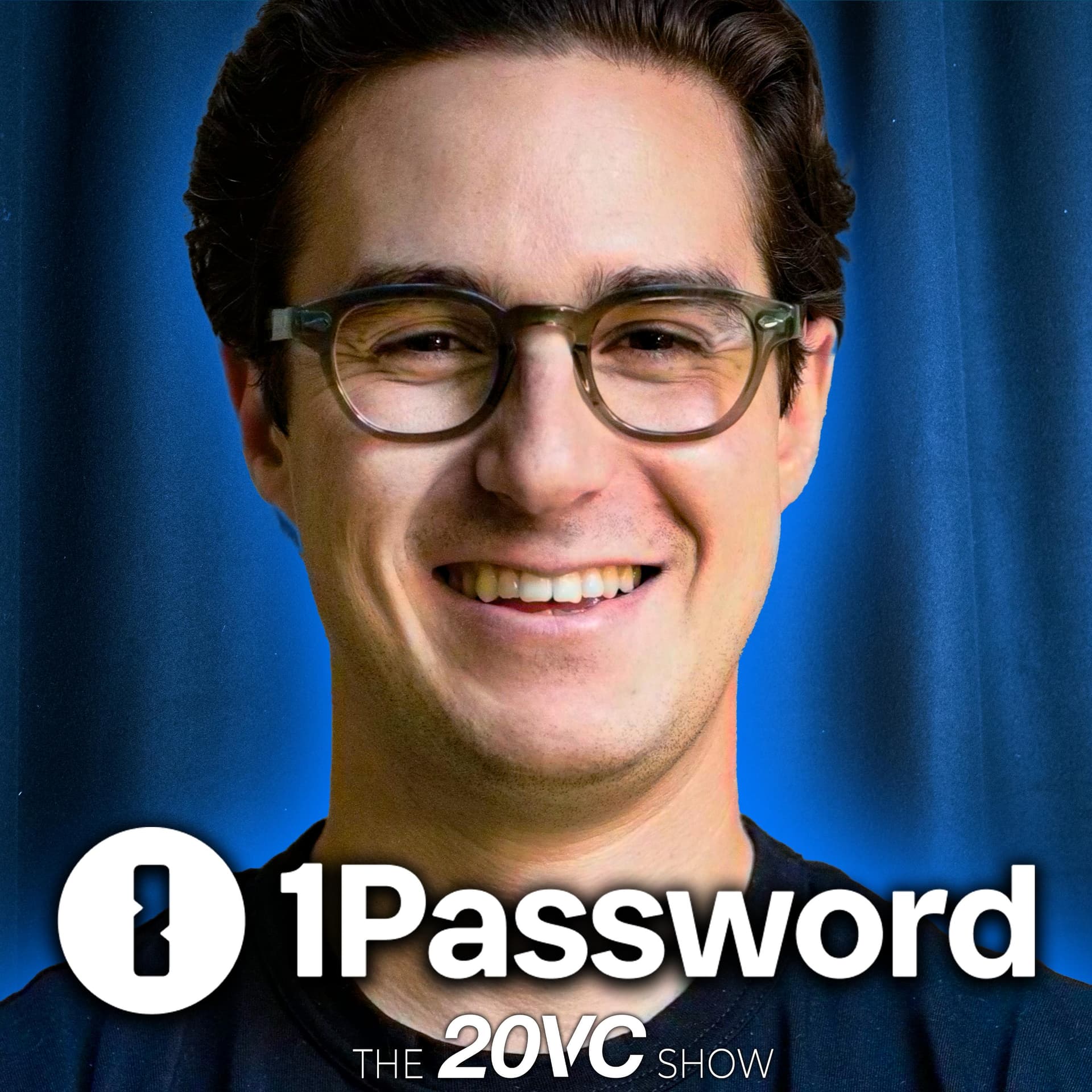
Podcast Episode Summary: 20Sales with Julian Teixeira, CRO at 1Password
Overview In this episode of *The Twenty Minute VC*, host Harry Stebbings interviews Julian Teixeira, the Chief Revenue Officer at 1Password. Julian shares insights from his extensive experience scaling B2B revenue and building effective sales teams. He discusses various aspects of sales playbooks, hiring, training, compensation, and the realities of tech sales today.
Guest Background
- Julian Teixeira:
- Current role: Chief Revenue Officer at 1Password.
- Achievements: Grew B2B revenue over 8x and scaled a team of over 450 in go-to-market efforts.
- Previous role: Head of global sales at Lightspeed Commerce, contributing to its growth from startup to IPO.
Key Topics Discussed
- Sales Lessons from Scaling to $1BN in ARR
- Emphasizes the importance of understanding customer needs and aligning sales strategies accordingly.
- The Sales Playbook
- Definition: Julian criticizes traditional playbooks as often too generic and ineffective.
- Framework: Focused on anatomy of a winning deal, including key steps for success.
- Importance of skills development in conjunction with a playbook.
- Hiring and Training First Sales Hires
- Who to Hire: Advocates for hiring individuals with humility, patience, and high curiosity rather than just those with impressive resumes.
- Role of Founders: Believes founders should be involved in creating the first sales playbook to ensure alignment with customer feedback.
- Goal Setting and Performance Metrics
- Initial Strategy: Start with team goals to motivate early hires but transition to individual performance metrics as the team matures.
- Discusses the importance of stretch goals that challenge teams without setting them up for failure.
- Sales Models: Hunter vs. Farmer
- Initially adopted a hunter-farmer model at 1Password but is moving towards a hybrid model to align with customer buying patterns.
- Compensation and Specialization
- Importance of clear, understandable compensation plans that evolve with company focus.
- Discussed how specialization can vary based on company product and market needs.
- Morale and Performance Management
- Stresses the need for maintaining positive morale even during sales slumps by focusing on individual and team successes.
- Importance of thorough understanding of the procurement process to minimize deal attrition.
- Sales Tech Stack
- Julian mentions essential tools every sales team should have, including CRMs like Salesforce, sales engagement platforms, and sales enablement tools.
- Remote Sales Teams
- Julian leads a remote sales team but emphasizes the need for in-person interactions to maintain engagement and morale.
Final Thoughts and Advice
- Advice for New Sales Leaders: Choose a company with challenges you are passionate about solving.
- Future of Sales Tactics: The traditional urgency tactics like discount deadlines are becoming less effective as clients become more savvy.
Conclusion This episode provides valuable insights into the dynamics of building and scaling sales teams in a rapidly changing tech environment. Julian Teixeira's experience and straightforward approach serve as a guide for founders and sales leaders navigating the complexities of sales operations today.
For Further Listening
- Tune into more episodes on *The Twenty Minute VC* for insights from top venture capitalists and founders.
- Access full episodes and show notes at [20VC](http://www.20vc.com).
Written by AI. May contain mistakes. Listen to the episode to check what was said.
Transcript
Automatic transcript. May contain errors.0:00I think of it as breaking down the anatomy of a win. What steps should one be repeating to have a higher rate of success in winning deals? That's just part of it. Like without the right skills development, your playbook isn't worth shit. You know, you're not hiring people to take orders. You're hiring them to sell. You think about what outbounding really is. It's about captivating interests. It's about getting to the point quickly. It's something that matters to the individual that you're speaking to. That in and of itself is valuable, even if all you're getting is an inbound call. That makes you more effective at that first discovery call, that first meeting.
0:34This is 20 sales with me Harry Stebings. Now 20 sales is the monthly show where we sit down with one of the best sales leaders to discuss their tips, tactics and strategies. Now, to stay with you joined by Julian Texera, Chief Revenue Officer at One Password, where he's grown B2B Revenue over 8x and scaled a team of more than 450 in Go to Market. it. Prior to one password, Julian served as the head of global sales at light speed commerce, a company he helped scale from start up to IPO and through over 10 acquisitions throughout over a decade long tenure at the company. But before we dive into the show today, if you're ready to leave rigid payment terms behind, capchase is here to change the game.
1:15Capchase brings B2C buying convenience to B2B software and hardware purchases. Capchase offers your buyers the flexibility they demand on annual and multi -year contracts While you get paid up front every time, this means faster closings, higher deal sizes and a streamlined process without the hassle of discountual collections. Over 2 ,000 companies already use cap chase to accelerate their sales and secure predictable revenue. It's time to unlock your team's full potential. Try cap chase on even just one deal you've lost over price or terms, no obligations, no platform fees and no heavy implementation.
1:49Visit capchase .com forward slash 20V seed today and turn payment friction into your competitive edge and when it comes to sales, timing is everything. But if you're relying on outdated CRM data, you're probably already behind. And that's why it stays most innovative companies, trust go -to -market intelligence to fuel their AI -powered growth. Ready to join them? Zoom in for his hosting an interactive online summit in May that will help you get the competitive edge you need to stay ahead of competition. Find out how leaders in AI and Go -to -Market are building their growth engines and get practical advice, including hands -on demos of cutting -edge AI tools from Zoom Info to Go -to -Market Intelligence platform that makes every seller your best seller.
2:32Learn more and subscribe to be the first to know when registration opens at zoominfo .com forward slash 20VC. And if you want to turn insight into action, Gong has you covered. Going is the number one revenue AI platform that's changing the way sales teams win. You know, guess what, it doesn't close deals. So gone captures every customer interaction and gives you real -time insights so you can drive predictable growth. With gone, you can power all your critical revenue workflows from prospecting to renewal on one AI platform. That's why go to market teams that link DIN, Snowflake, ADP, NASDAQ, Shopify, such incredible companies, and thousands others trust Gong.
3:12Masterclass even used it to assess and prioritize key areas of their sales pitch, ultimately leading to a 44 % increase in win rates. Get started today at Gong .io and unify your data, workflows and teams with AI to win more. You have now arrived at your destination. Julian, I am excited for this dude. I've been looking forward to this one for a while, so first thank you so much for joining me. Likewise, thank you for having me, Harry. This is great. Not at all, but I want to start with your entry. You started in marketing. And I think it's a really interesting entry point. How did your entrance from marketing impact how you think about sales today?
3:48It was really interesting in a way, because on the one hand, it didn't prepare me at all for what sales could sort of look like. But on the other hand, I learned to appreciate very early on that when done right, marketing could really serve as the guardrails for repeatable success in sales. And so aligning the outside looking in perception of the company and the brand with what the field is presenting is critical to establishing that trust and credibility. So that was sort of my appreciation as they went into sales understanding that, you know, when it's done right, it could be really effective.
4:17You had 10 years at light speed. It's a phenomenal amount of time. And you also, like, incredibly accomplished in terms of position at a young age. I just want to ask, what are the biggest sales leadership, specifically, take aways for you, from 10 years at light speed in that period of hypergrowth? It was a long journey, and the company I joined at the top of 2011 was not the company I left, through halfway through 2020. But I learned very on and at every stage that connecting with people was the key to motivating them. I'm keeping them engaged. Building and scaling companies is hard work. You're taking people through some really, really hard changes.
4:54And so the ability to connect with them on a very personal level and understand what motivates them. What are the hardest changes, Julian? People are sort of used to going through change and then living with it for extended periods of time. But you know the reality is when you're part of a scale up or startup the thing you implemented three months ago Can very well go stale shortly thereafter and so people get a lot of fatigue with that They like for things to remain constant and consistent and that's just not the case when you're scaling rapidly You were 30 leading all sales in GTM for light speed a year pre IPO Did you have an imposter syndrome?
5:27It's a big role. It's a young age loads of it I still make eye contact with it today. I was always fortunate to have been surrounded by people who believed in me. What do you sound as imposter syndrome make you better or worse? I'd say it's the constant pursuit of more and better. I look to people that are more successful or who have accomplished more than I have in a shorter time frame. And that's my bar. Being in this constant state of good isn't good enough, just keeps you grinding. Listen, I have it too. You know, I was about 12 years old when I raised my first fund. And I definitely felt last.
6:01But it is what drives me to go up and go and work at 2am when everyone else is going to bed. So I actually think involves the center of the room's good. I want to dive right in though. We always hear in sales, like sales playbook, sales playbook. What is a sales playbook to you first? How do you define it? I hate the term because of what it stands for. It usually ends up looking like a some 20 page document that you use to check a box. I think of it as breaking down the anatomy of a win. What steps should one be repeating to have a higher rate of success in winning deals? That's just part of it.
6:32Like, without the right skills development, your playbook isn't worth shit. You know, you're not hiring people to take orders. You're hiring them to sell. What do you mean by the skills development element? And how do you think about that in relation to sales playbooks? The playbooks got to start with hiring the right people, with the right level of intellect, the right level of curiosity, the right level of discipline. And it's from that base that you develop skill and industry knowledge and then start applying the winning formula to close deals, whether that's deciding whether, you know, proof of concept as appropriate or not at what stage in the cycle, how and when to get the executive team involved, things like that.
7:07But it's got to start with having the right people for the right phase of the journey. No playbook is going to solve for that. Well, before we dive into the who, in terms of the like, what and the when, should the founder be the one to create the first sales playbook, or can you bring in a head of sales to do it for you? I believe strongly that it's got to be the founder. There are definitely situations where that maybe isn't the case, I think you do yourself as a services founder, like being able to get on the front line and get firsthand exposure to how customers are reacting to whatever it is that you're pitching or selling, I think is an important leverage that you then need to call bullshit on anyone else that you're ultimately gonna trust sales to in the future.
7:48A capable go -to -market first hire can certainly do that, but getting involved as a founder, I think early on is critical. So we now need to hire off -us go -to -market person Julian. and you're an angel in my company, I don't know what to look for. Should I go for like a tenured sales leader or should I go for like junior wraps? What do you advise me on that first GTMI? If you're very early on in your journey, you need somebody who's gonna have the humility, the patience, low ego, high curiosity. Sometimes the person with the fancy cover at the front of the book that's touched the right companies at the right times is not what you want.
8:23You want somebody who has something to prove, has a chip on their shoulder, and is motivated to build something greater than anything they've ever been a part of. And so you're largely looking for somebody who's going to be patient, not somebody who's going to blame, alacus success, and all the things the company doesn't do or doesn't have, or hey, if only we have these systems or this much more money to invest, they should be the type of person who's going to focus on, hey, what's in the art of possible? What can we do? How do we push the envelope further? That's the kind of person that I think of as a salesperson want.
8:51And there's a company, you know, I advise for that started off with founder led sales that's now looking, you know, staring down the barrel of making that same decision of, hey, who should that first salesperson be? And ultimately they landed on an individual who found success at other companies, but ultimately felt like they had something to prove. They felt like, hey, I want to be in the driver's seat now. I want to create it for me to see and loves a good underdog story. Should we hide two at a time? Everyone always says, hey, you want to hide two at a time and pit them again and see each other?
9:19Absolutely. I think that's critical. You know, having someone to sort of chase creating that sense of competition I think is really important and it also gives you a good barometer to understand like hey are there Patterns or things that are getting in the way of these individuals succeeding or is it really linked to the person? I think if your sample size is one of one it can be really challenging to draw that conclusion How do we think about target setting for them again? We've got these two new reps now I'm the CEO, but I'm a young founder How do I think about goal setting and targets for them?
9:51In both the early days of light speed and one password, we actually started with team goals. We anchored the team to deliver what was most important for the company and what the company was looking to achieve. That works for a very, very, very short period of time, but it was important for us to establish and in it together while we started to figure out what sort of capacity can we get out of these individuals. Without any sort of historicals on, hey, I know that a rep should be able to close this many deals at this value, you kind of need to figure that out. So we would leverage Spiss and incentives to get the most out of people and understand, hey, where does that back wall live?
10:26But focus them on one common goal. As you think about putting guard rails and defining what that comp plan is going to look like, the simpler the better, especially in the early days, like, you know, your reps should be able to understand how much they're going to earn and how they're going to pay their mortgage without having to go through a ton of gymnastics. And you should be open to changing the comp plan as your focus as a company changes. anchor the people that are responsible for driving revenue to the things that are going to be best for the business. Whether that's a multi -product story, whether you need them signing multi -year deals, whatever that thing may be, their comp plan should be intrinsically connected to that.
10:59Okay, so we have these reps, we have these team goals. How fast does team goals break and you need to do individual goals? I'd say within the first year. I mean this respectfully to you. I don't even understand how team goals can work, because if we want to have the a competitive element between them, you need to have a metric of measurement. And if you have team goals, you don't have the metric of measurement. Well, we'd still measure them as individuals, you know? So I can still sit there and say, Harry has sold more than Julian has this week. You need to catch up. But as people are starting to figure out what works and what doesn't very early on, having that team goal pushes absolutely everyone because especially in a small team, you don't want to be the one who's dragging everyone else behind.
11:39A team goal is not meant to mask individual performance. It's just meant to give you a proxy for how people get paid and additional spiffs and things like that. While you're trying a level set and determine how far should I be pushing people at an individual level, what is acceptable and what does overachievement look like. So that can last anywhere from a couple of months to maybe six or seven months. But I've seen that be very effective. The last two companies may not necessarily work everywhere. but I found it really helped us to ground ourselves and keeping momentum on, hey, we've got to just get here as a company, as opposed to having people either judge or criticize the targets we've set or the plans that we put in place.
12:20When it comes to forecast, do you rather have the unachievable that we hit 80 % of? Do you rather have the achievable that we hit? How do you think about that stretch? We typically build plans so that 70 % of people can achieve them. It's got to be challenging enough that it's forcing you to push boundaries, but we don't design them so every single person will attain them. The acceleration is often much greater than the acceleration, so when people are having really strong quarters in months, they can really over achieve, but the goal is not to set the bar just low enough so everyone makes it across.
12:53It's got to be a challenge. Every time that I've set a goal that is at least 20 or 30 % higher than I think we're capable of achieving, even when we don't achieve it, we always end up doing 10 % more. more than the goal that we initially set or thought was realistic. There is a mental element of this that is pushing people to think creatively and outside of just the art of what they see in front of them to achieve a goal. Dude, 70 % hit it, 30 % don't. We chatted before and you said about the bottom dropping out of sales. What did you mean by that? I think that working in tech sales has just been such an interesting proposition for so many years and I think that for the last decade and change it's been up and to the right.
13:33If you can prove that you've got a real solution to a real problem that exists, companies were willing to throw money at it. I think the world of text sales that we are living today is akin to what it was for many people that have been in this industry for 20, 30 years. And a lot of people just aren't ready for it. A lot of people got into sales because they figure, hey, like, I don't really need a degree. I can just sort of find my way into it. If I've got some form of charisma or charm, I can probably sell software. And the earning potential is there. I think there's a lot of incredibly talented people and tech sales today, but I think there's many that are sort of looking at this and thinking, wait a minute, this isn't what I signed up for, that are just going to give up and drop out.
14:10I don't think the majority of sales people have very good. I don't think the majority of sales leaders right, dude. I interview them. From doing the shows that I've done, I think I'm a better sales leader, the most of the sales leaders that I have met. I don't disagree with you at all. Companies or push to scale very quickly, they're pushed to get capable sets of hands in roles to keep things moving forward. I think it's been easy for too long and I think those easy times have sort of read a lot of media occult talent. Should you then find the bottom 30 % that don't hit goals? I think it depends.
14:40We look for skill versus will is something that we think a lot about, right? If somebody lacks the skill to meet the needs of an evolving business, whether that's, you know, your product portfolio has changed, your sales motions are changing and people are catching up to that and that's the reason that they're falling behind. That to me is acceptable if somebody is willing to put in the reps in the time to get better. It's the ones that just sort of lazily blame their failures on anything but themselves that unfortunately are going to drop off over time. It's hard work. Super hard one. People who are laid off are often laid off for a reason.
15:16Do you have people from layoffs? Oh, that's a very good question. I think there are some good people that have been laid off, but I have to imagine that most companies that have done layoffs have looked at just the bottom performers on the team. The reason I say that it's not all created equal is within that bottom you may have individuals who are either new to the organization and still getting their bearings. They may have had an off -month or an off -quarter. And so if anyone's doing Excel math to determine who falls at the bottom, as opposed to taking in a time to really evaluate the people as individuals, I do think you can find some good talent that unfortunately fell victim to a layoff.
15:54I always say look for shutdowns, which is like if you shut down a whole product division and the sales team are gone, that may not have been that they were shit. It may have been that the product didn't have product market fit, the product team won't work. So many things, if everyone's gone, it's not a layoff really. Do you see what I mean? So be more nuanced in how you look at it. I think is so important. So we have that target setting, we have that goal setting. How quickly do we know when we've hired a not great rap? Oh, within the first three months. What are the signs? We tend to look at, in the first three months, we've got ramp targets, which everybody does.
16:31But we look for a certain set of both behaviors and leading indicators of whether or not they're going to be successful over the course of the next three months. How quickly do we expect them to generate pipeline? Oh, from day one. I mean, as soon as you're out of training, you've got an understanding of the product, you've got to get out there, you've got to get the reps in. So I come to you, hey, I'm on your team. I'm young and enthusiastic. What does week one look like? How should we spend the first seven days? Yeah, so look, so your first seven days you're getting set up. I'd say really your first two weeks, you're getting to understand the product, the systems and tools, how the job gets done, you're meeting the team.
17:08You're in listen and learn mode. you should be asking a lot of questions about what you don't understand, not just nodding your head up and down and going through the training. But we look for that curiosity in the first two weeks. It's an indication of how engaged someone is and how willing they are to be an active participant and their success as opposed to thinking, hey, someone's going to give me a headset and a laptop and a 20 -page playbook and suddenly I'm going to hit my target. So that's what the first two weeks look like. But the steps you take after that, whether that is reaching out to top reps on the team to understand and what they're doing, whether that's shadowing calls, whether that's spending time in gong, whether that's seeking out more training, one on one time, all of these are really important indicators to me that say you're engaged, you're in it.
17:52I just have the question of how many are like that, where they stay late to listen to extra gong calls, where they seek out the extra learning post hours, where they're researching the latest AI tools they can use to have more pipeline generation. Because for me, it's like none. Maybe I'm hiring the wrong people and I'm in the UK. It happens. Look, it's certainly not the case with everyone, but this year are non -regrettable. Attrition is probably in the realm of 29 % to 30%. We come to that conclusion rather quickly. We've started putting, especially at scale, putting a lot more emphasis on the hiring process and sort of how we've had that out early on even before they've started, but some people are just great interviewers.
18:33Okay. So we have the two weeks of listening, and after that, we're expected to do that. to do pipeline generation straight away. And when do we speak to customers first, especially if we're selling to enterprise? You're speaking to customers nearly straight away. And that can come in varying different forms. Either you are joining a call and listening in and interjecting where you feel you can and slowly taking the training wheels off. But from day one, you should be able to go out there and have a conversation. This is well before we've given you a book of business, well before we've given you any leads, like you've got to get out there.
19:06And so as an A, then you expect me to generate my own pipeline. How do you think about me generating my own pipeline, thus is relying on demand gen? The difference that I see there is that you're going to identify companies and individuals within a company that fit squarely within our ICP and you're going to reach out to them cold. You're going to try different approaches to reaching out whether that's on LinkedIn or via email, but you're going to start establishing those connections early on. and some of your emails are going to be crap, some of your outreach is just not going to work, you're going to get no responses, but you're going to have to develop muscles very quickly to say, hey, how do I get Harry's attention?
19:44It's certainly not an email in his inbox that I walk away from and wait for a response on that's going to get him. How do I tap into what Harry gives a shit about, what's relevant to him in that moment? You know, some of it is borderline just stalking to understand like, what's Harry talking about? What's he interested in? Right? What is he surfacing? Who is he following and try to get into that? And so before you even reach out, show that you give a shit, show that you've done some research and that you're not just blasting off a template to a thousand people hoping that ten of them get back to you.
20:14That's the muscle that I think ultimately ends up making you far more effective. Before I've handed you a lead or an opportunity or a meeting that I've paid real dollars to go out and generate that you just blunder. Do you believe outbound is still a viable strategy in 24? with the proportion of AI tools, the immense supply side of content that we're able to shift now. Is that bound viable? I think it's viable. I think it's gotten a lot harder, but it is viable. Look, I'd say the easiest part of my day is marking a whole bunch of emails as I'm read in my inbox that are clearly people trying to sell me stuff.
20:47If it's not a priority, it's easy to move it out of the way. I think AI should actually make it a lot easier. You think about the amount of time it would take for you to do proper research and discovery on a company before reaching out, AI can accelerate that dramatically. I don't think AI is necessarily going to just work on autopilot and fill your inbox with leads and responses, but I think it could help the job of outbound prospecting become a lot more effective. And I do think that BDRs and AEs can actually do a sharper job at prospecting with a lot less effort. If AEs ament to generate their own pipeline, what the fuck a BDOS doing?
21:22They're doing the same. And I think that outbound prospecting does become a team sport, especially when you're selling in a high enterprise, especially when you're selling cross -mid -market. I think that for the AE's, it's a matter of keeping some of those muscles sharp. You think about what outbounding really is. It's about captivating interest. It's about getting to the point quickly. It's something that matters to the individual that you're speaking to. That in and of itself is valuable, even if all you're getting is an inbound call. That makes you more effective at that first discovery call, that first meeting.
21:55So it's an important muscle that people need to exercise period. And I also think there's a certain amount of appreciation and gratitude that you have when you've got a BDR, you know, working their butt off to generate pipeline for you. If you understand what goes into getting that meeting set, you're going to treat that opportunity accordingly. I think that's the difference. I still expect the majority of pipeline to be generated from the BDR team, but AES who don't self -gen, just doesn't work. and I think it does them a personal disservice over time. It makes me think of the hunter analogy, and I'm just fascinated.
22:25How do you think about the hunter versus farm analogy and knowing what structure you want at what stage? I think ultimately it depends on how your customers are buying. I'll give you a concrete example. We started off with the hunter farmer model at one password. And the main reason for that is when we landed here and started building the team, the company had already acquired 50 ,000 businesses that were using our product. But we had less than a 2 % penetration rate within those businesses because these were fanatical users that were bringing our product into the workplace. If all we did was have one flavor of sales in the visual, they would favor expanding across the base and they would likely be a lot less efficient with any inbound demand and they certainly wouldn't be pushing themselves to go out and generate outbound demand.
23:07So early on, we decided to create that friction on both ends to say, right, we're going to have a team of hunters and a team of farmers. Today, and going into next year, we're actually bringing those functions back together in a hybrid sales model. And the reason for that is we now have a multi -product portfolio. Our customers are landing and expanding with us far more. And what we saw was that we were actually losing new business deals because we were pushing too hard to get too much upfront. And so now we sort of align the sales motion and model to how our customers buy and take a far more segmented and territory view to how we split the team.
Read the full transcript
23:38Do you agree you never want your form again someone else's hunter? I think it depends on the context. There are a lot more patient. They'll really take the time to explore all four corners, build a meaningful connection. They're a lot more curious. I'd say they're way better active listeners. Hunters are just used to operating in an environment where they're trying to outrun a whole bunch of other lines for the same gazelle. And so you've got this fast twitch muscle that's sort of working at all times. and sometimes you might miss something. Sometimes you might hurry and leave money on the table.
24:10So it really depends on the context. One will always tell you that the other's job is much easier than theirs. Should CS be calmed for upsells? Yes. I think CS should be calmed on net dollar retention. They've got a role to play in the process. And I think it's important that there's overlap between how they're compensated and how the AE is compensated. And ultimately, how I've seen that model be successful in the past is when both are working together to serve the customer. And I know there's, you know, there are really polarizing views on CS and, you know, I've heard a few folks on the show sort of bash on it.
24:42But ultimately, I think the body of work needs to get done. So whether you're in the camp of saying, well, I think one person should do all of it. Well, naturally, they're going to be able to handle fewer accounts. Or you sit there and say, well, actually, I want a cleaner division of labor and I expect individual capacity to be much higher. I think you get to the same net result. In our world, customer success is sort of this It's impartial person who the customer sees as a trusted advisor, not as somebody who's just trying to cram more product down their throat. And they are. They're ultimately thinking about how they're using the product, what more benefit they could be getting, and are sort of playing the role of orchestrator bringing the right people in at the right time.
25:19While the AES are just strictly revenue focused. How do you think about the specialization or verticalization more importantly of sales teams? And what I mean by that is one -post word is a horizontal product. But amazing because you can serve so many different people, but also difficult because you can serve healthcare, banking, consumer. I like verticalized sales teams. How do you think about verticalized sales teams? I think there's a time and place, and again, it'll vary from company to company. We're not verticalized today. And the main reason for that is we looked at our success across every vertical.
25:53We look at win rates, ACV, time to close, and we found very, very little difference across these different segments. And we have yet to reach any sort of saturation in any one segment really. And so we're not yet at the stage where we need a higher individuals who have built a career selling to specific verticals and have deep vertical and specialized knowledge yet. But we're absolutely going to get there. I think our journey is such that, you know, we're looking at segments first and foremost because SMBs buy very, very differently than large enterprise companies. Territory baseplitz are sort of where we're at right now.
26:29making sure that we've got the right people, right language, right time zone and so on and so forth. The next step will be to verticalize the team. I have Matt Plank at Ripling on the show recently and he said that five to 25k ACVs is where SAS companies go to die. How do you feel about that and what's your ACVs day across the different segments? It varies by segment. Enterprise deals for us, you know, are in the six figures. We actually landed our first seven -figure customer earlier this month which we're really excited about. But yeah, somewhere between six to seven figures, mid -market, somewhere between 50 to 100K or well into the six figures, and S &B deals will vary anywhere from few thousand dollars for a very small business to 25 or 30 thousand.
27:13Can you have a sales motion like we discussed with that SMB structure? If you're paying five to 15 thousand dollars, You can't afford the outbound, the A, the CS, can you? No, you need to be very intentional about where you deploy those resources. Most of our outbound motion right now is invested in mid -market and enterprise, because that's where we get the biggest bang for our buck. The SMB teams are a lot more transactional. They work on high volume, high velocity. Most of them pay for themselves four times over, even if I load in all costs. And then from a CS and onboarding perspective, you know, we rely on low -touch models with smaller customers to get them going.
27:55Ultimately, we'll get someone on the phone working with them if they need the help, but it is in the default switch of the team to just unload the mega machine for every single customer in deal regardless of size. If they pay for them four times over, why don't you ten times them? And what I'm trying to get out of here is say, where is that asymptote of value where you no longer get four times payback? There's a point at which you reach a ceiling. I think today, that team is largely driven by the inbound demand that we get for our product. And so, as we think about investing in that further, the unit of economics need to make sense.
28:29And at a certain point, we're going to have to make a decision to say, how do we want to serve this segment? Conversations we're having now artists that they're and say, well, can we start a leverage a different distribution model for that cohort? and we've recently got into working with MSPs and MSSPs, as well as distributors to achieve that. So there definitely is a point at which 10 -axing constantly starts to make less and less sense, which is a big part of why companies need to think about moving up market and building that motion early on. What's your inbound to outbound ratio today? Unconverted deals.
29:00We're probably just over 50 % outbound, so 54 -46 split, and I'll say that a year ago today, we're probably 99 % inbound. Wow. Yeah, big shift. And it's not just about hiring BDRs either. It's really about getting the sales team to not only participate in generating pipeline, but understanding that the level of intent of these customers is vastly different than when you're getting an inbound lead. What's the time to close on an enterprise day of the day? There's a great deal of variance, but I'd say on average two quarters. Two quarters. Yeah, so we usually think about the pipeline about two quarters out.
29:35It may be closer to three to four quarters when we're generating outbound pipeline, outbound deals typically close at half the rate, but they close for twice as much. The person we're reaching out to doesn't have a preconceived sort of notion of what they want to buy. We are defining that from the get go. So that is the advantage of outbound pipe general rebound. I've always been taught that when you have to educate the customer, don't bother. It's going to be too hard to sell. It's like when you're fundraising, when you have to persuade a VC to invest in like the category itself, don't You know, they can believe that they need password management and it's really important.
30:09Now, they've got many options and they can choose lots of them and that's up to you. But if you're having to persuade them that password management is important, no mass. I think that in and of itself can sometimes be the problem. You need to be able to educate them on the problem. And if the problem isn't clear to them or they don't agree with it, then I'd agree you've got an uphill battle ahead of you. So a lot of companies tend to anchor to their product. I'm going to explain the product and why it's different. As opposed to attaching themselves to the problem, which if you've done your job right, the person that you're speaking to should understand very, very clearly.
30:44And now you've got their interest and now they're leaning in. And your product is just proof that the solution that you're talking about is real and exists. So I tend to think that leading with the problem and familiarization with the problem is the most important way that you get them to lean in. No one will sit there and disagree that reuse or weak credentials is a problem. But how you go about solving that problem is often what the debate is. Don't start there. Get on the same page with them first on what the problem is, and then ideate closer to how you're going about solving for it. I'd love someone to take the argument against like strong credentials.
31:19You know what I mean? Like, I disagree like, okay. What if they just don't care? I didn't mean that badly, do you? But I'm just like, I don't care about credentials, trying to like... Yeah, and we get that. The security practitioners that we sell to have a number of different priorities. They've got to think about everything. It's like me telling you that that microphone six inches from your mouth is probably gonna give you cancer. You're like, yeah, sure, well, everything will. It's really about contextualizing what not solving that problem is gonna mean for them. And connecting with something that they care about, like what are they prioritizing right now within their business?
31:58Maybe it's not credential management, But maybe it is keeping employees safe. Maybe it is minimizing the threats that exist within their company. They may not agree at first conversation that solving for credential management is going to be the solution to that. That's your job as a seller to sort of guide them there. But I think the difference for me is not trying to create a new set of priorities or things for them to think about. It's about tapping into what they already care about, what they're already prioritizing and thinking about and working with them in that way. We have this great prospect and for whatever reason it doesn't fall planned whatever or it does land We need to do deal reviews crucial part of a sales process I do I'm a young founder again.
32:41I don't know how to do deal reviews I don't know what to expect to my go -to -market for deal reviews. How often do you do deal reviews? We do them weekly so we do pipeline inspection on a weekly basis What does pipeline inspection look like from a structural perspective? Can you walk me through it as granite or as possible? I'd say that from an SMB perspective, you're often looking at pacing. You're often looking for pattern matching on what's going on that month, relative to the previous month, relative to the same period last year. And oftentimes we're looking at those daily. We're also looking at the pipeline.
33:13Like, how does a drop in pipeline this week impact us next week? So it's a very, very data -driven approach, and you need to obsess over it. And it's not about reviewing it once a month or months a quarter. It's about living in it every single day, but sitting down and reviewing it as a team every single week. As you start to move up market, the classic is like, well, you know, enterprise deals take two quarters to close. What on earth could we possibly be talking about, you know, on a week to week basis? But the reality is, is you still need to have some form of objective or goal that you're working towards, even on a weekly basis.
33:42Right? What outcomes are you trying to drive? What needs to be true as part of this deal in order for us to win it? And what progress have we made towards checking off those items this week? How much pipeline have we built? Even if you're looking at things sort of, you know, two quarters in a row, what does our pipeline look like for the second half of next year? And how are we trending there? So we do this inspection weekly regardless of segment, but I'd say the larger the deal, the more focus you're putting on sort of the account level or deal level as opposed to just looking at the sum of how that segment is performing.
34:13It's really critical. Who's invited to this meeting? Is it the whole sales team? Only leads, only A .E.'s? How do we think about that? I think it'll vary on company size, right? If your team is small enough, I would get the whole team involved in the process. I think it's an important part of how you drive accountability. As you grow though, it's about creating a cadence, right? So, you know, every Monday, every AE is going to sit down and look at their pipeline. They're going to take inventory of what they've done that week, how they've progressed, what's fallen out, what's moving ahead. And then the following day, they're going to report that to their frontline leader.
34:44Their frontline leader is then going to go ahead and inspect that work, ask probing questions, ensure that there's proper hygiene and then roll that up then to their second line leader. So typically, by the time we have our weekly forecast call, I'm usually having it with my directs and we've got folks from marketing, folks from our FPNA team that are joining us as well. And then we roll a summary to the executive team. Does this not seem a bit ridiculous? And I don't mean that horribly in any way. But like an A rolls it up to a sales lead. He rolls it up to someone else. He rolls it up to someone.
35:15I have a fuck sake, can we not just get the AE to present in a more direct way? It feels like every stage is a gatekeeper and every half hour is half hour, it's valuable. Is this really how businesses are run today? I think you reach a certain size of scale where you'd end up having an eight hour meeting if every AE had to sort of come and sort of run you through, you know, your work. Can we not just hire AE's where we trust the pipeline? And so when you hire it, no, I'm being serious. But like, where you say to me, what's your pipe? And I get a dog shit. I got 200K this week. And actually, I think I'm gonna have a 50 % dropout, right?
35:51So 100K. You're like, great, thanks. It's all done by message. Unfortunately not. There's too many moving parts. There's too much emotion that's involved in selling. There's too much that can be driven on a feeling. Hey, I just had a great conversation with Harry. I think he's gonna buy. Having someone to keep you honest throughout that process, I think is mission critical. I've seen so many AI sales coaches where they are continuously prompting really what makes you think that oh Continuously pressing do you think I will continue to be human or AI lead? I think the landscape of that is gonna change dramatically like we started using Product called momentum that not only does no taking on the call and sets follow ups But it also gauges the customer sentiment on that call it also gives you suggestions on things that you should have done that you didn't do on a call by call basis.
36:38Why is going for the state of the whale? That's a great question. Look, I was one of Gongs first 50 customers. They led the charge on siding with the salesperson and saying, Hey, we get what you're going through and we're here to help. I think Gong is leaning in that direction. I'm seeing more and more AI in their product, but candidly, a lot of sales leaders that I speak to are using it as a coaching tool as a way to sort of go back and instant replay. Some are using it to manage pipeline. I think it's tough. I can spend ages talking about the sales tech stack in and of itself because I do think it's gotten very, very messy.
37:12But my hope is that somebody comes along and says rather than adding another interface or tool that you need to log into to get insight or get work done, that instead, I'm going to work through the existing channels and existing products that you're using and just augment what you're getting from them. I don't want another thing I need to log into to get customer segment. Feed me that through Slack, populate it in Salesforce, right? Surface this in the areas where I'm already getting work done. What are the core tools that you think every sales team and leader should be using today? You said about TechStyle, which are the like Hail Mary, regardless of what stage, sector you're in, you have to have this.
37:50A good CRM to start. I implemented Salesforce early on here. I've done CRM migrations before. It's a pain in the butt. Just start with what you're going to need to scale and be done with it. Outreach and Gong, I was quick to implement at one password as well. We leverage both of those. And then some form of sales and a moment tool. There's tons of great ones out there, floccier, high spot, seismic. I think inherently you're gonna end up with a lot of different collateral and information to feed your sales team. They'll digest it and then it goes into a repository that they'll never reference ever again.
38:21And so having a tool that surfaces the right content at the right time, the right opportunity based on stage and so on and so forth, I think is pretty important. When you are in those reviews, Annis, I don't have much. Yeah, no notion dropped out. Next one, Rip playing dropped out. Yeah, I don't have much. How do you maintain morale when sales teams are not performing? That's a good question. I think it's important to see the positive and call it out. I think that when the results are shit, it doesn't mean that everything is shit. I think you need to be able to call out the good. I mean, ultimately selling is a very emotional sport.
38:59And so if you've got a group of deflated, salespeople out there trying to get people excited about your product, it's really hard to do if they're not believing in themselves. So I think it's about being positive about the things that have gone right, but I think it's about bringing brutally honest about the things that are not working and getting comfortable assessing that, attacking the problem and not the person in that scenario, right? And so we do inspection often enough, and if you're doing inspection often enough, there should not be any surprises. And if there are, then there's something you missed as part of that process.
39:31There's something you didn't inspect for. There's a risk you didn't assess or that you didn't call out. What is the most common risk people miss that leads to deal attrition? More often than not, it's an understanding of what the procurement process looks like within the company end to end. There's always some surprise budget committee individual who needs to weigh in. And so not going wall to wall and understanding what it's going to take to get a deal done is the biggest mistake that I see often times, and one of the leading causes of deals slipping. Sometimes things all happen that are completely outside of the reps control.
40:04I get that. We can only control for what we can control, but more often than not, it's about missing something in the procurement chain or not getting the right amount of value established with the right individuals in the organization. Like if you're attempting to sell a half million dollar deal to a manager and a department, and their superior or their budget holder There's not even aware that these conversations are taking place. That's a huge red flag because people are inherently bad and then going back and selling the business case internally. So we actually find that we end up coaching a lot of our reps to do exactly that.
40:36Like not just sell the product to the person that you're working with, but coach them and help them sell this internally. How do you do that without being so fucking obvious? So listen Julian, we both want one password in notion, rip playing, banter, you name it. This is a pack of information that I would use. How do we do it? I think it comes like the subtle art there is not just loading them up with technical jargon, even if they understand it, but thinking, what are the questions that their CFO is going to ask them? When you try to go and justify spend for this product, what are they going to ask?
41:11And it's about giving them those answers throughout the process so that they've got it. It's at the tip of their tongue. They can answer it right away. And most of the time they can't anticipate what their CEO, what their CFO is going to ask of them. So we give that to them without asking anything in return knowing full well that they're going to end up facing that challenge at some point. So even if we don't get access to those individuals throughout the sales process, I mean our CFO often says like, please don't have me speak to a salesperson, but we make sure that our champion is armed with the right answers, the right questions, we were justified.
41:43But it's so funny you said that about the CFO. Oh, don't nod the salesperson. Are people still buying software like they used to? No, they're not. The CFO suddenly has an interest in absolutely everything. There used to be a time where, well, you're in your envelope of spend, I'm not really going to question it. Or well, you presented a logical case for why we would need this thing. That just isn't the case anymore. They want to understand. Because ultimately, their boards are holding them accountable to managing spend efficiently. Even as a fast growing profitable business, We still run through cost rationalization exercises on the tools that we use constantly.
42:17Fuck, I remember when it was good times. It was not nicer. Well, that's so much more fun. Well, I think we're being a lot more intentional about the things we're investing in. We're looking for overlap across different products that we use. We're thinking like, well, wait a minute. Could this other thing we're using? Do it 80 % as well for the same cost? What did you not spend money on that you wish you had spent money on in your time at one password? I think we had the opportunity to be a lot more aggressive investing in product and engineering, whether that's sort of like a build or buy scenario.
42:51Again, I think we had the benefit of being a profitable business with a lot of cash at a time when many companies were struggling. And so I think there was a window of opportunity there for us to substantially accelerate our pace of growth. and we chose to err on the side of caution or a middle ground. Like hindsight's always 2020. And who knows where we'd be today? Had we sort of made that decision? But that's probably one regret that I have is not pushing a little bit harder for us to do that as a company. Listen, I want to do a quick fight. I've so enjoyed this. This has been so much fun. You would want to sound for me.
43:22We put the schedules together and that's fine. But I just want to have a great chat, be interested myself, learn myself. That's why I did this show. But I'm going to say a short statement, you give me your immediate thoughts. Does that sound okay? Yeah, let's do it. So I spoke to many of our mutual friends and some of your friends and some of these are more personal than normal, which I love. So talk to me about your hair and how many people have cut it. Only three and that number is three and not two because I ended up living in New York for four years and needed to find someone there. But yeah, I'm very loyal in that sense.
43:59I'd like the ritual of going to the same person, somebody who's kind of like part way removed from the world that I live in that I can just sort of confide in and that one hour of therapy. And, you know, and so my hair's just become a thing over time. So I only really entrusted to one person these days. You've got great hair by the way, real volume. Which is a line that I've never sat in a show, but you know, it's a first for everything. What is your hotel cadence? Oh my gosh. Well, I've spent a lot of time in hotels. But if it's like that, I don't travel. I hate traveling. Do you like that? The hotel part is just like when I'm not in my own bed and I'm not in my own home, I'm sort of out of sorts.
44:40And so the aspects of traveling that I love are getting out there and meeting people face to face. I love that. I really, really do. And actually, in a lot of ways, when I'm traveling, I just sort of shuts out everything else in my life and I can really focus on work, but sleeping in hotels is probably my least favorite part. Do you buy remote sales teams? Well, I lead a remote sales team, but I believe in the importance of in -person interactions. Like we invest every year in getting every single individual together in one place. I think it's important. Within 15 minutes, you can just tell who's engaged, who's in it, who's full of it.
45:13You get that sense. I think it's so important that you hear Julian on the cool and close that deal. like, yeah, we are winning. Or he lost it because of that reason. I should watch out for that. Or huh, she's doing really well. We should actually like promote her. Or huh, they're really down. We should actually like go for a beer after work with them and make them happy. Yeah, you lose that. It takes a lot more energy and work to actually go out and seek what's going on as opposed to just being in the room and seeing it. So look, we get ourselves teams together at the end of the month, at the end of the quarter.
45:45It's a subset of the team. It's not all of the team. but it's definitely something that's top of mind for me as we continue to grow. It's sort of this idea of building out centers of excellence for our talent so that we get a little bit more of that. I get a lot of that with our leaders because there's many points during the year where I can interact with them, but I miss that, man. I miss walking the halls. I miss the casual chats by the coffee machine. Like, you know, do you tell me about a deal you've closed? You've had to do something outside of the box to get it done. I've heard some cool stories of people giving away their car to a prospect to get the deal done.
46:18That happens somewhere in Italy. This was an old boss of mine who told me the story. Of course it was Italy. Yeah. Only in Italy. I gave my daughter. You like the car? It's yours. I don't have anything like. I think the closest is like, we've definitely done like, you know, waiting for that last signature from the CEO who's on a flight, finding out which flight they're on track in their flight so we can get them right as they land. And so we've done that and gotten deals in right at the 11th hour, literally, across the line. That's about as outside of the box as it's gotten. What one piece of advice would you have for sales lead starting a new role tomorrow?
46:48Find a company where the biggest challenge that they have is one that you're actually passionate about solving for. Far too many people judge companies based on what they are today, but I'd encourage sales leaders to judge them based on their future potential and the belief that you have the ability to get them to that potential. That will ultimately yield the most amount of value for yourself personally and for the company that you join. And I think that's a reflection by the way that sales leaders should have with themselves every single year as they're sort of sizing up. Do I say or do I go?
47:16What current sales tactic will continue to reduce an importance in the next five years? This discount expires at the end of the month. I think people are aware well that that's just dead. That doesn't work anymore. We always grew up with like TV ads in the UK and it's like land of level or DFS like sofa companies And it's like 70 % off ends Friday and then you're there on Saturday and it's like new sale just 24 hours No, it's a bad thing to be trained on even procurement teams are sort of wise and up to the fact that hey I'm gonna wait for the last day of the month make the salesperson really really sweat and then salespeople sort of get desperate and start Dishing and all out, but yeah, I think that's gone by the way side There was a time and place for it, but not anymore.
47:59Final one. What one company sales strategy has most impressed you over the last year? Look, I've been really impressed with Wiz. And a typical answer in the sense that, yes, they've grown very quickly and that's admirable. Knowing the amount of talent and change management cycles, they likely needed to go through on that journey from zero to 500 million in revenue over that period of time. That is the impressive and remarkable part of that story. because the playbook of how you become a billion dollar company is pretty well understood as far as just like the typical steps whether that's international expansion multi -product portfolio working with partners so on and so forth.
48:34But doing that over a compressed time frame, that's the impressive feat that I think Wiz has accomplished so good on them. As I said, I love shows like this where it's much more natural than it was intended to be. You've been amazing. Thank you so much for joining me. Thanks so much for having me, Harry. This was blessed. I so love doing these vertical shows because you just bluntly learned so much. I started it because one of our portfolio companies didn't know what a great ahead of sales look like and I thought, well, just interview Tanner the best in the world and you'll get a really good benchmark.
49:05And it kind of dawned on me that if we did that for founders, then they wouldn't have to spend the time, they would have equal access and it would be an incredible benchmarking tool. Episodes like to say, I think are really proof that this is such a powerful tool for founders to get that benchmark. You can watch the full episode on YouTube by searching for 20VC, but before we leave you today, if you're ready to leave rigid payment terms behind, Cap Chase is here to change the game. Cap Chase brings B2C buying convenience to B2B software and hardware purchases. Cap Chase offers your buyers the flexibility they demand on annual and multi -year contracts.
49:40While you get paid up front every time, this means faster closings, higher deal sizes and a streamlined process without the hassle of discountful collections. over 2 ,000 companies already use cap chase to accelerate their sales and secure predictable revenue. It's time to unlock your team's full potential, try cap chase on even just one deal you've lost over price or terms, no obligations, no platform fees and no heavy implementation. Visit capchase .com, forward slash 20V seed today and turn payment friction into your competitive edge and when it comes to sales, timing is everything. But if you're relying on outdated CRM data, you're probably already behind.
50:18And that's why it stays most innovative companies trust go -to -market intelligence to fuel their AI -powered growth. Ready to join them? Zoom info is hosting an interactive online summit in May that will help you get the competitive edge you need to stay ahead of competition. Find out how leaders in AI and go -to -market are building their growth engines and get practical advice, including hands -on demos of cutting -edge AI tools from Zoom info to go -to -market intelligence platform that makes every seller your best seller. Learn more and subscribe to be the first to know when registration opens at zoominfo .com forward slash 20VC.
50:54And if you want to turn insight into action, Gong has you covered. Gong is the number one revenue AI platform that's changing the way sales teams win. You know guess what it doesn't close deals. So Gong captures every customer interaction and gives you real time insights so you can drive predictable growth. With Gong, you can power all your critical revenue workflows from prospecting to renewal on one AI platform. That's why go to market teams at LinkedIn, Snowflake, ADP, NASDAQ, Shopify, such incredible companies, and thousands others trust Gong. Masterclass even used it to assess and prioritize key areas of their sales pitch, ultimately leading to a 44 % increase in win rates.
51:35Get started today at Gong .io and unify your data, workflows and teams with AI to win more. As always I so appreciate all your support and stay tuned for an incredible episode coming on Monday with Nicholas Ellis Erstberg, co -found and see your delivery hero.
From the publisher
Julian Teixeira is the Chief Revenue Officer at 1Password, where he has grown B2B revenue over 8x and scaled a team of more than 450 in go-to-market. 1Password set the record for the largest raise in Canadian history at the start of 2022 and has raised nearly $1B in capital throughout his time with the company. Prior to 1Password, Julian served as the head of global sales at Lightspeed Commerce, a company he helped scale from startup to IPO and through over 10 acquisitions throughout his decade-long tenure.
In Today’s Episode We Discuss:
04:27 Sales Lessons from Scaling to $1BN in ARR
05:20 How to Create and Master a Sales Playbook
07:53 Lessons on First Sales Hires
09:41 Setting Goals and Targets for Sales Teams
13:22 The Reality of Tech Sales Today
16:19 Evaluating and Managing Sales Reps
19:07 Outbound Prospecting and Pipeline Generation
22:22 Hunter vs. Farmer Sales Models
24:15 Compensation and Specialization in Sales Teams
28:56 Outbound vs Inbound Sales
32:47 Pipeline and Deal Reviews
37:37 Sales Tech Stack and Tools
38:40 Maintaining Sales Morale
44:55 Are Remote Sales Teams Less Effective
46:44 Final Thoughts and Advice
This episode is brought to you by:
Gong, the revenue AI platform centralising all your revenue workflows in a single unified platform.
Capchase, helping SaaS companies grow without dilution. Learn more at capchase.com/20vc