
In short
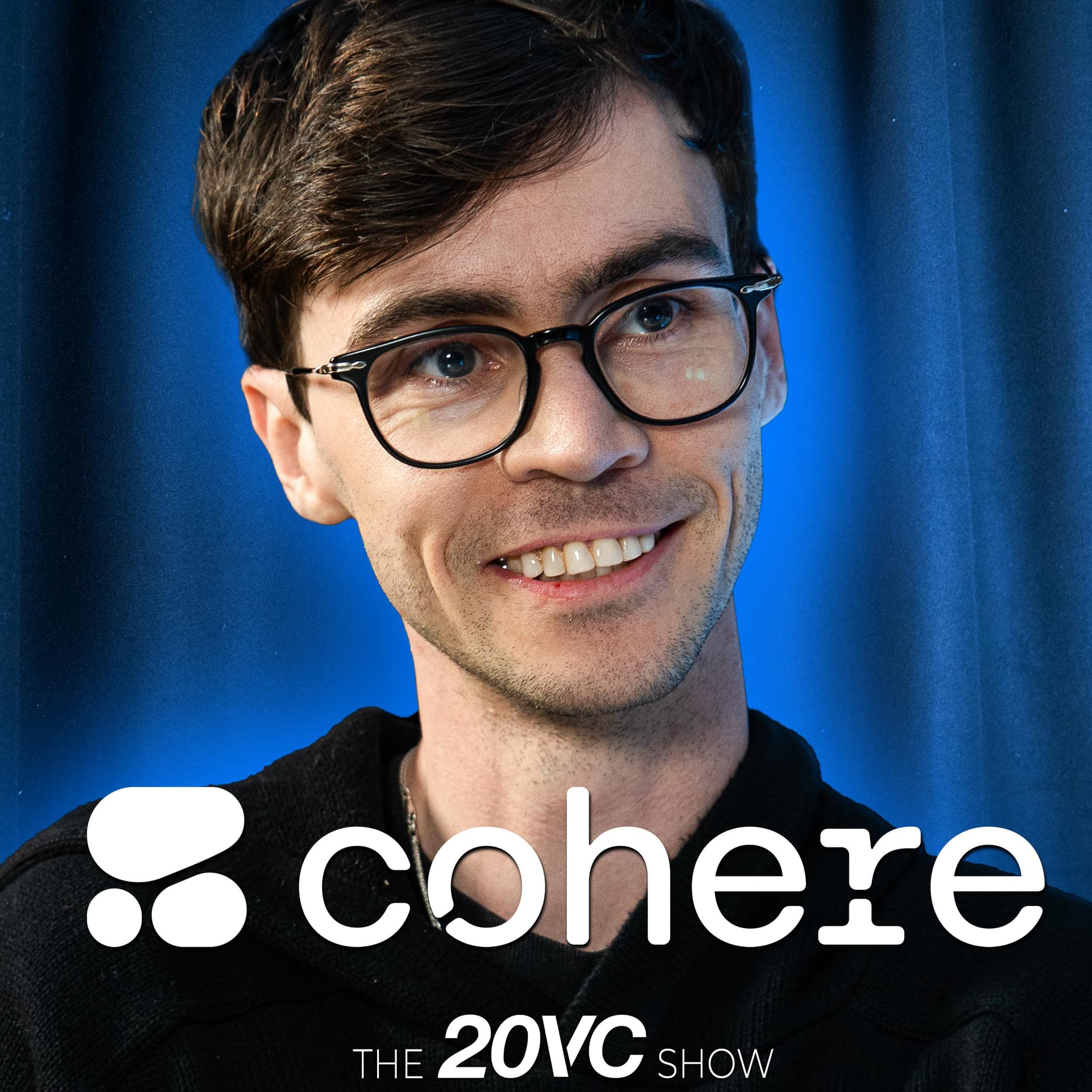
Podcast Summary: 20VC with Nick Frosst - Founder of Cohere
Podcast Overview Podcast Title: The Twenty Minute VC (20VC) Host: Harry Stebbings Guest: Nick Frosst, Co-founder of Cohere Episode Title: Cohere Founder on Competing with OpenAI and Anthropic, Model Sovereignty, and the Impact of Sam Altman on AI Episode Duration: Approximately 52 minutes
Episode Description Nick Frosst, a Canadian AI researcher and entrepreneur, discusses Cohere, an enterprise-focused large language model (LLM) company. With a recent valuation of $6.8 billion and a remarkable $100 million in annual recurring revenue, Frosst delves into Cohere's competitive strategies against tech giants like OpenAI and Anthropic. The episode also explores broader themes such as AI benchmarks, the need for model sovereignty, and the implications of AI's rapid advancement.
Key Takeaways
- Lessons from Geoffrey Hinton
- Frosst reflects on his time at Google Brain, emphasizing Hinton's creative and playful approach to research, which utilized physical analogies in discussions about algorithms.
- Google's Missed Opportunities
- The conversation raises the question of whether Google "slept at the wheel" regarding the commercialization of AI technologies like the transformer architecture, which was not quickly scaled up.
- Understanding Cohere
- Cohere focuses on building foundational language models specifically for enterprise applications, differentiating itself from more generalized models developed by competitors.
- Data and Compute as Bottlenecks
- Frosst discusses the constraints of data and compute in AI development, arguing that while synthetic data is helpful, real-world data remains crucial.
- AI Scaling Laws
- The episode questions the validity of scaling laws, with Frosst expressing skepticism about the promises of continued exponential improvement through increased compute.
- AI Benchmarks
- Frosst critiques existing AI benchmarks, suggesting that they do not accurately reflect the utility or performance of models in real-world applications.
- Cohere's Competitive Strategy
- Frosst outlines how Cohere competes with well-funded rivals by focusing on enterprise use cases, providing tailored solutions that integrate with existing business operations.
- Model Sovereignty
- The discussion touches on the idea that countries should invest in their own AI models, akin to infrastructure projects, to ensure they meet local needs and contexts.
- Critique of Sam Altman
- Frosst argues that Sam Altman has overstated the proximity of achieving AGI (Artificial General Intelligence), which could mislead public discourse and policy decisions regarding AI.
- Future of AI Interaction
- Frosst predicts a future where language will be the primary means of interacting with computers, augmenting productivity without replacing human roles entirely.
Final Thoughts Nick Frosst presents a nuanced view of the AI landscape, underscoring the importance of focusing on practical applications and the long-term implications of AI technology. He emphasizes balancing innovation with ethical considerations and the need for thoughtful policies as AI continues to evolve.
---
For more insights and full episode details, visit [The Twenty Minute VC](http://www.20vc.com).
Written by AI. May contain mistakes. Listen to the episode to check what was said.
Transcript
Automatic transcript. May contain errors.0:00I don't think Sam Oldman has done a service to the world by talking about how close AGI is. I think he has made several predictions now that are wrong and that we're obviously wrong at the time he made them. A .I. is going to kill the whole world in two years. He did a world tour where he spoke to every major leader, the world over, to tell them, hey, this technology is going to pose an existential threat. And I think that was academically disingenuous and I think did a disservice to the technology he loves. a lot of the world does not think scaling was a super prevalent. This is 20VC with me, Hi, Stebrings.
0:32And today we are joined by Nick Frost, Canadian AI researcher and entrepreneur, best known as the co -founder of Cohear, the enterprise -focused LLN, who has raised over $900 million, most recently raising a $500 million around, bringing their valuation to $6 .8 billion. Today we discuss how on Earth they compete, when competing against the billions of dollars that open AI and anthropic have. Cohe has hit 100 million in enterprise error, and before founding Cohe, it was a researcher at Google Brain alongside the incredible Jeff Hinton. But before we dive into the show's day, I love seeing the team come together to make this show happen.
1:10What I don't love is trying to keep track of all the information, the data and the projects that we're working on across dozens of platform's products and tools. That's why we use Coda, the all in one collaborative workspace that's helped 50 ,000 teams all over the world get on the same page, offering the flexibility of docs with the structure of spreadsheets, Coda facilitates deeper teamwork and quicker creativity, and their turnkey AI solution, the intelligence of Coda Brain, is a game changer. Powered by Grammily, Coda is entering a new phase of innovation and expansion, aiming to redefine productivity for the AI era.
1:45Whether you are a startup looking to organise the chaos while staying nimble or an enterprise organization looking for better alignment. Coda matches your working style. It's seamless work, it's based connects to hundreds of your favorite tools, including Salesforce, Gira, Asana and Figma, helping your teams transform their rituals and do more faster. Head over to coder .io slash 20VC right now and get six months off the team plan for start -ups for free. That's coderco .io -20vc and get six months off the team plan for free. coder .io -20vc. And while coder keeps the engine running smoothly, let's talk about Brex, the ultimate financial stat for start -ups.
2:32So when Brex was founded, it wasn't just about creating another financial product. It was about solving the really gritty challenges that Founders face daily. Let's be honest, building something from the ground up is hard enough, without dealing with clunky outdated banks that pile on fees and leave your cash idle. Brexit is different, it's the financial stack that scales with you, no matter where you are in your journey, from corporate cards to maximising your runway, to earning yield on your cash. Brexit was designed with founders in mind to make every dollar go further, so you can focus on building.
3:03And here's what really stands out to me. Bracks combines the best of checking, treasury and FDIC insurance in one powerhouse account. You can send and receive money globally at lightning speed, earn yield from day one and still access your funds whenever you need. Plus with 20X the standard protection through program banks, your cash is not just working harder, it's working safer too. It's no surprise that one in three venture buy start ups in the US. With companies like Anthropic, Coinbase and Robinhood, I mean my god these companies are incredible. Trust Brex to help them grow. If you want to join the smartest startups on the planet, head over to brex .com forward slash startups and see what they can do for you.
3:42And speaking of incredible companies, don't forget what really keeps those customers coming back. Trust is the ultimate currency in business and today customers expect it faster than ever. And that's why over 10 ,000 global companies, trust Vanta. Vanta automates up to 90 % of the work for in -demand compliance standards like SOC 2, ISO 27001 and more, using smart AI to centralise workflows, manage risk and get you audit ready in weeks, not months. So you can stop chasing paperwork and start closing deals, and a new IDC report found that Vanta customers achieved $535 ,000 per year in benefits.
4:22That's insane, and the platform pays for itself in three months. I had no idea about these. Whether you're growing fast or just getting started, Vanta connects you with trusted auditors and experts, support to help you build trust with customers. Get a thousand dollars off your first year at Vanta .com -4 -2 -0 -VC. That's Vanta .com -4 -2 -0 -VC. You have now arrived at your destination. Nick, I'm so excited for this dude. When I had Aiden on the show, he was like, you've You've got to have Nick on, he's the real star of the show, and he introduced us way back then. So I'm so excited that we can make this happen.
4:58Yeah, man, I'm happy to be here. Now, before we dive into co here, I have to ask you were Jeff Hinton's first hire at Google Brain? And so then you'll put in a room with Jeff Hinton, you get to work with him every day. What was the biggest lesson from working with Jeff, a legend of the industry? Yeah, I learned, yeah, I love working with Jeff. I learned everything I know about research from those, those, I think we were there for four years, three years. I was very surprised at how creatively and playfully he approaches research. When we would discuss algorithms or optimizers or loss functions, we would discuss them through physical analogy.
5:38So we'd spend a lot of time talking about, imagine there's a ball here and an elastic band to this thing and a pulley here. This is on this kind of a surface. and a lot of it was descriptions in the natural physical world. And that was very, yeah, playful. And a lot of it was approached with like, oh, what would happen if, you know, with curiosity. And I didn't expect, I wouldn't working with him, I didn't expect that. I expected it to be much more like, you know, just here's the equation. Let's figure out what the derivative is and let's go from there. Or instead, a lot of it's based on intuition.
6:07When you look at Google Brain and you look at DeepMind, a lot of think that really kind of Google were asleep at the wheel, given them not being at the forefront in what was the consumerization of it with chat GPT. Do you think that's fair? I don't know. I mean, it's certainly interesting. It looked like the transformer was invented at Google, right? Like there was the 2017 Aiden amongst with many other brilliant people in Google Brain published the transformer as an architecture. It wasn't then commercialized very quickly within Google. It wasn't scaled up very quickly within Google. A lot of that work had to be done elsewhere and years later.
6:39So that's interesting. Why that is, like what systems are in place to make that be the case? I don't know. I will say there's still a ton of brilliant people in deep mind, I think now. It's just can subsumed the rest of it, doing great work, and they continue to make good products. It is interesting that all the people who worked on the transformer left to continue to work on the transformer. For people who don't know, and just to set the scene for we dive in properly, what is code here and how does it differentiate from more generalized models that are maybe more well -known like your open eyes and your anthropics?
7:13Yeah, so we're a foundational model company like those other two so we build foundational models we build language models I don't I mean there's like 10 companies in the world that are building large language models in the West There's a few that have popped up recently some number less than 20 in the whole world Most of them in America a handful of them in China us in Canada and one in France So those are really the companies out there were unique in our singular focus on bringing this technology to enterprise We train a model that is good at enterprise tool use. So we train a model that you can give it a bunch of tools and APIs within your business, give it access to your business's data, and then you can ask it to help you with something in your work.
7:57And it does a good job of it. So that's what we train it for. How does the focus on enterprise over consumer change the way in which you train and build a model? Yeah. So the models themselves like transformer architecture, which is the original model that was introduced in 2017, has not changed very much. The whole industry is still using transformers. We've changed the way we train them, but the model architecture itself, we're approaching 10 years of the same model architecture. When we train our model, we're not training it to be an amazing conversationalist with you. We're not training it to keep you interested and keep you engaged and occupied.
8:32We don't have engagement metrics or things like that. We're just training it to augment you in the workplace. We're just training it to help you do your job. And that means the type of data we train it on is very different. So, recently we started doing a bunch on synthetic data, generate a whole bunch of data to create fake companies and fake emails between people at these fake companies and fake APIs within those fake companies. And then we train the model in that synthetic environment to help out within that fake business. Do you think data is a bottleneck given the ability for synthetic data to produce infinite supply?
9:05Yeah, data is still a bottleneck. you need real world data in order to start a process of synthetic data. Synthetic data has helped a lot, and it's made models better than they would be if they didn't have access to it. But getting access to high quality data is still something people think about. We still make a whole bunch of data in -house with annotators who are making real data and not synthetic data. When you think about the three pillars of compute algorithms and data, which one do you think is most constrained or the biggest bottleneck? I mean, the algorithms haven't changed very much.
9:35They've changed a little bit. You know, when we started this industry, originally we were just training base models, which are not called base models at the time, it originally called large language models, but they weren't trained from human feedback. So all they would do is take in the first part of a sentence and write the second part of a sentence. But if you tried to have a conversation with them it wouldn't work, because that wasn't the data they were trained on. Since then, now we train models in a few different steps. There's like a base modeling step, then there's a reinforcement learning step from human feedback with SFT data.
10:03After that, there might, there's a variety of other reinforcement learning techniques you can do. But the algorithms, I think, are not the bottleneck in terms of making those models more useful. A lot of it is still getting good quality data and then making good quality synthetic data from your good quality real data. When we think about the bottlenecks, that leads to potentially a plateauing that people worried about. And everyone seems to now be on the train of, hey, more compute scaling was more real than ever and we will continue this exponential progress with more compute. Do you agree that we are seeing the benefits of scaling laws for the continuous next 12 to 24 months?
10:43Or do you think that actually more compute will not just lead to more progress? Well, how much better do you think GPT -5 was than GPT -4? I actually think it was worse. It tells you something about the nature of just throwing more compute at the problem. Does it all desire to show? So why do I think it was worse? I think it was worse because actually the way that they now do my model selection is slower or more cumbersome and actually it's pain. It gets it wrong. Sometimes me, I just want to quick answer and it suddenly goes into deep research. I'm like, I have to fuck sake, it's just want to quick answer.
11:10I'm like, yeah, all right. PhD, calm down. I'm like, do you know what I mean? And so, I think it's a worst product in that respect. And I think we waited for a year or a year and a half for model auto selection. I think, like if I go back to your, your original question of like, do I, do I think just throwing more compute? Like some people are thinking there's a plateau, do I think there's more compute? Like I think we need to agree on where we think the technology is going to establish whether or not there's a plateau. Language models are incredible. I use them in my work life as often as possible.
11:42One of the reasons why we're focused on the enterprise is because that's really where I think large language models are useful. Like if I look at my personal life, there's not a ton that I want to automate. You know, like I actually don't want to respond to text messages from my mom faster. I want to do it more often, but like I want to be writing those. I want to be like engaged, you know? Whereas in my work life, there's a ton of stuff I don't want to do. Like, we need to get to a stage where I can open up North, and I can say, hey, file my expenses. And then it can figure out, okay, cool, I got to look through all your emails.
12:12I got to look through photos of receipts you've taken. I got a cross -reference that with the things you're allowed to expense via internal documentation. Then I got to figure out what the API is for how to expense things within your company. And then I got to do all of those and get approval before I do them. Like, that's a super, there's a many -step process. But that's where the technology is going. That work, the work of making a model do that, is not plateauing. That's more modeling work, that's more product work, that's like building better connectors, that's building safer data integration so that you can trust giving a model access to the types of stuff I just said.
12:44That stuff's still ongoing and that's what we're working on. I think when people are talking about building towards AGI, like I don't think this technology gets us there. When you think that's us there, what is that? Well, yeah, great question. We've had many years of people discussing AGI and not many definitions thereof. Next and none. My definition is when Sam Altman and Microsoft decide. Yeah. They've changed their definition a few times on that. When I say AGI, what I mean is a computer that you treat like a person. When you use a computer and you expect it to behave like a person and treat it that way, I'll call that AGI.
13:18Do you not think we're already there then? People do not treat language models like they treat people. Do you think OpenAi and Samaltman then now realize that more compute does not lead to this exponential progress when they look at GBT5? I don't know. Yeah, I don't know. I think they're a great company. They build a really cool consumer product. Why does the world still think scaling laws are so prevalent when you don't? A lot of the world does not think scaling laws are super prevalent. If you go out into a university and talk to the students there who are studying computer science or even the students who are not and you ask them like, hey, it's throwing more computer this problem, we're going to get us to AGI.
13:53Most of them say no. You mentioned there a couple of different use cases in terms of like a spanced management was one that you clearly articulated. A question that I think I have and a lot of people have is how far do models go in terms of value capture and the application layer and you're seeing anthropic now with Claude, really challenge a cursor of the world, you're seeing open air with a lot of consumer products, you with a lot of enterprise use cases. How do you think about whether they stay as AWS style commodity layers or whether they extend into value capture application layer. Yeah, that's a good question.
14:24I don't see the two as that different. I see the two as related. And if you wanna be making a good product with a large language model, you are best suited training that large language model for that product. That's one of the really interesting things about LLMs is that they're really phenomenal. They generalize really well, but they don't generalize as well as you might think. And if you wanna make the best model for a given interface, it's best to be training the model on that interface. So I think the two things are more related. So do we see this deeply specialized, unbundled model world where you have exactly that, very, very specific use cases where models are trained for an 11 reps of the world would be in another brilliant use case with specifically voice?
15:07Is that the world that we live in? There's like a spectrum, right? Like the old world of machine learning back in like, the old world back in like 2015, or something like that. When the world was new. Any task you wanted to do with a neural net was the best neural net you were going to get was training a model on that task. So if you wanted to make a task that was going to like a neural net that was going to identify pictures of cats and tell you how many cats were going to image, you were best suited to train a model on identifying pictures of cats. That was like the best. And the world of machine learning and the first half of that decade was all about here's a problem, make a data set, train a new model from scratch, or maybe take like sift features or maybe take like whatever some base model but pretty much find to like train a model on the dataset itself and go to production with that model.
15:55That's not the case with language. If you want to make a model that's the best at like summarization, you can't just train it on summarization. You have to train it on all language. That is the technological reality that has brought us to where we are today and that's true for like foundational models and not true for the neural nets of 2015 and before. That's super interesting, but that's like a spectrum. Right, like on one end is every single task, train a single model for it. On the other end is train a model, one model to do everything. I think the reality of what we're seeing with transformers is they're not at this end of the spectrum.
16:29They're like a little over here. And they're like train a model that is generally good at all language and refine it on the type of stuff you wanna do with it. So you're seeing that like anthropic code models, very good code, but they didn't train a model specifically like a refactoring model or a debugging model or they didn't train a model just for writing test cases, right? It's a model that is good generically a code. For us, for cohere with our focus on enterprise and like secure deployments and customizations for our customers, that means training a model that is good at helping people in an enterprise setting.
17:03So like using internal tools, reading through massive amounts of documentation. and understand the content. Because that mean the model doesn't need to be as good. Again, I've learned to be incredibly blunt. If someone wants to criticize, they say, oh, well, if you look at models or e -vals, so here's not as good. Well, there's a whole long conversation to be had about e -vals. But effectively, what we care about is not the hype, not the discourse. What we care about is if a customer uses our model and they try to do something with it, we care that it works as easy as possible. That's what we optimize for.
17:36None of those are really reflected in the various benchmarks that cycle through every year. And so we don't like focus too much on that stuff. Do you think the benchmarks are bullshit? Because we place a lot of emphasis on them on Twitter sphere, on the Reddit sphere. Are they bullshit or are they accurate reflection of model progress? Let's go back in time a little bit. When we first started in this industry, the benchmark that was used the most was called LM1B. That was a benchmark that was like taking in the first part of a text, like of a newspaper and then writing the second part of the newspaper article.
18:09After that, there was a benchmark called Hellasweck. Do you remember that one? Yeah, I do remember that one. Cool. That's like 2022. So that's like my introvertion. That's from the start. Cool. No one's talking about that anymore, right? Now, a lot of people talk about like Aime, as like a math reasoning, Aimee, or actually don't have math reasoning benchmark. None of our customers ask the model to do math reasoning. That doesn't come up in the workplace that often. That comes up in a few workplaces where mathematicians work, but there aren't a ton of people out there making a living doing math reasoning.
18:40Stuff like they arc AGI challenge is a benchmark that people talk about, but that's like a pixel manipulation challenge. It's like, you know, taking in like a grid of pixels and based on rules, predicting the next one, that's not a thing any of our customers have ever asked the model to do. So do I think they're all bullshit? It's interesting. I don't know. There's good scientific work and some of them, I think it's very interesting to evaluate emergent capabilities for models, but they're not an accurate reflection of the utility value of models. There are a reflection of how much the model had been trained on those benchmarks.
19:11So you can gamify them essentially? Oh, you can definitely gamify them. Do the big players gamify them? I don't think those leaderboards are that helpful. I think in a consumer space it's cool. I think if you're making a consumer app and it's like exciting and fun and people like to look at it and they want to try out the most recent thing, that's fun. That's cool. Given the pace of deployment, we are seeing model evolution so fast and so rapidly, that you were essentially seeing this kind of decay rate on models being greater than ever, because it's like next one, next one, next one, next one.
19:41And actually, there's still been train though on H100s or Nvidia chips from 18 months ago. Is there a misalignment in terms of the progression of models versus the progression of chips? You can cycle through new versions of models quicker. I mean, it still is very slow. Still, when I was training NERL NETS in 2011, and it would take hours to days, I remember being like, this is crazy. I can't believe this takes so long to train this model. Now we spend months training models. So that's a time scale. I didn't anticipate when I was working on this a long time, when I was working on NERL NETS a long time ago.
20:17But that's still very different than the time scale of working on ships. That's still slow. I think what you talk about, we've seen all these models iterate so quickly. Like yes, on the one hand we're seeing models iterate really quickly and people are releasing new models. On the other hand, they're still the transformer that was invented in 2017 and they're still sequence models and they still take in words and predict the next word. And we've changed how they're trained a bit. We've added on steps, like now there's a base modeling step, then a SFT supervised fine tuning from human feedback or like somebody writes a sentence, something writes the response they want and we train on that.
20:51And then there's a reinforcement learning aspect where the model is generating and you're telling it that's good, that's bad or something. So there's like new ways of training it, but fundamentally the tech is still the same. We keep making them better, keep iterating on them. But it's not as though we've like anybody has, you know, trains a model that's fundamentally different than a transformer. It's an interesting dichotomy, and on the one hand there's constantly new stuff on the other hand, and we've been working on the same stuff for a while. We have been working on the same stuff for a while.
21:16The thing that has seemingly changed is the value of the people working on the stuff. You know, we're now seeing a billion dollar people in terms of sucks willingness to pay for like chief scientists Joel Pino. Yeah, yeah, yeah, yeah, no matter my question to you is how do you think about the war for talent that we're seeing today? I think there's a lot of crazy headlines out there. I don't I don't know how much of it is real I know you don't think it's real that I'm so big a paying ten fifteen twenty million dollars for great air I'm not sure I know that there are lots of people who are adding that much value And there's lots of people who are like bringing that much value into the industry.
21:54The super impactful industry. So I know that there are people that are bringing that much value. And I know that there's lots of brilliant people. And I know that it's really demanding work. It's really hard work. It requires a lot of experience, a lot of ingenuity, and a lot of dedication. It's a good place for people to be spending their time. And I think it makes sense that many of them are rewarded very well. That being said, like when I see the stories of meta hiring people for like a hundred million, like I read as many stories of those as I read of people leaving the next day. So I don't know what's going on over there.
22:27But when you spend five minutes on an AI researcher, there are certainly lots of people who through our equity own what you're talking about. Do you worry that the industry is kind of becoming commoditized or transactionalized with the hype around it? I don't like, yeah, I do think the hype around it is misleading sometimes. Like the technology, I'm in such a strange place of being caught between the technology is the most beautiful technology I've ever seen. It's the most transformative technology I've ever worked with. It is already fundamentally changing the way I do work, and I'm very sure it will fundamentally change the way we all do work soon.
Read the full transcript
23:03On the other hand, there's a lot of hype around it. There's a lot of misleading rhetoric. There's a lot of misinformation. And I don't think the hype is necessarily helpful for getting to the truth. Can I just dig in there? What do you think is the hype and misleading rhetoric that is most damaging or confusing? Yeah, I think the hype around AGI is the most damaging and confusing. This assumption that we will all have no work to do, will all be in UBI. Yeah, this isn't really in the discourse as much this year as it was last year and the year before that. And that's because it's pretty clearly not true.
23:37But the idea that, oh, this technology poses an imminent existential threat to humanity was incorrect and not helpful for talking about the real ways in which this technology could be damaging, the real ways in which this technology could shake up a system and cause rapid changes. It was not helpful for getting people to understand what the technology is. Right, so I don't like, I don't hear that as much anymore these days. I think that's because people have realized that that's not the case, But the remnants of that discourse are still in the world, are still out there. I think the remnants are, and I think they're most prevalent in the way that internal employees in large organizations respond to AI being introduced.
24:18People do not welcome the introduction of AI in large companies. Maybe a European site, but a lot of very nervous and scared, and do not embrace it wholeheartedly. Yeah, I think we, I haven't found that as much. When we've worked with our customers, I find a lot of people are interested and excited about using an LLM. Mostly that's because I think they realize that the LLM is augmentative for the most part. And it allows them to not do the things they don't wanna do. Dr. Tick. I mean, it's in a nice way. Do you actually buy that? To actually buy that? Yeah, like, no, no, I see it. I mean, I have Benny off on the show from Salesforce two days ago and he says, oh, same, human plus agent, yeah.
24:55Yeah, yeah. You serious? Almost 25, 26 year old marketing managers or SDOs. I'm sorry to say it, they're not brilliant. They do not love the craft. They are not better than a phenomenal agent will be in the next 12 months. They will be replaced. Oh, no, yeah, I actually believe it. Yeah. Yeah, I believe what I said. Sorry. Yeah. I fundamentally believe that this technology that there are things that it's way better at you. Better than you at, but there are still lots of things that people are better at. Like, Ellen's are incredible people. People have been using them, you know, for years now. There has been no independent breakthrough that an LLM has made.
25:34Nobody has seen, nobody asked an LLM, solve this problem no one's solved before, and get the answer. The breakthroughs are still people. Is that not only a matter of time? No. That's not a matter of time. That's fundamentally the way that sequence models work. Like we are training statistical models of text. They are phenomenal. They are capable of generalizing across unseen tasks, which is why they're so useful. But when you're talking about like the 25 year old marketer or something, some portion of their work is like writing text on a computer. It's like all the information's out there. They have this document in that document, this tool, that API.
26:10They just need to take that and turn it into another form and like, you know, combine it and then put it out there. Like that's the work. That's some portion of it. That's not the majority of it. Most of it is talking to people like understanding the culture, understanding the zeitgeist, understanding like what's going to hit, what's relevant, using their intuition and their human experience to understand how they can be helpful or what they can do. And that is not in the data set of text from the internet. I disagree because in what they do now, they go, hey, I'm running a campaign for Avian come up with three different story lines that would be cool for us to do.
26:45Make it relevant to new cycles today. It's the prompt. And then they come up with three and they're like, oh, that one's pretty good. And I think that sounds like a good usage of it as a starting point, and then I'm sure it is worked on, and some of those are thrown out because of things they understand, and some of them are like, oh, that's a great insight. I'm gonna run with that, I'm gonna tinker that, like, what you just described is a good use case, and I can imagine as a jumping off point, that would be helpful. But that's not where the work ends, like that's the beginning of the work. You've just augmented, you're now starting with, instead of a blank page, you're starting with things to go for.
27:17So you don't mind that we're gonna see this dramatic reduction in team sizes. I think we're going to see changes to the nature, like to the workforce. In the same way that we saw changes to the workforce when the computer was created, when the personal computer, when the internet was created, when the printing press happened, right? Like we've seen, like in the industrial revolution, right? Like we've seen drastic changes to the workforce. And that's going to keep happening. What will the changes be? Like what will the company look like, do you think in five, ten years? That's an interesting question.
27:45I think you will arrive to work and you will sit in front of a computer and you will predominantly use language to interact with that computer. Anytime there's something to do that you know can be done and you know like the information is out there, doesn't require creativity or insight. You know that it's there. You just need to do it and doing it's kind of boring. You will get the model to do it for you. That mostly looks like sitting down, speaking to the computer, getting it to do the things you don't want to do and then spending your time talking to other people, thinking about how it can be useful, whether or not what it did was good.
28:17I think that shift is maybe chaotic. And I would like us to be spending time thinking about how can we make sure that changes as easy as possible. How can we make sure that making language models allows people to do the stuff that they're good at and that they like? How can we make sure the labor force is resilient? How can we make sure that income inequality doesn't go up as a result of that? Like those are the types of things I would like us to be talking about. And those are the important things. I want to go back to your earlier question like when talking about the risks of AGI, I think those existential threat questions made it harder to talk about the real things, like income inequality.
28:51Do you think AI does more to help or to heart income inequality? I think it depends on policy. I think if there's good labor policy, I think it could help. I think if there's bad labor policy, it could hurt. Can you explain that to me? Look, when you saw the last industrial revolution, broadly speaking, everybody looks back on that industrial revolution and says that was a good idea. Like nobody's saying, hey, we shouldn't have automated, before the Industrial Revolution, it was like, I don't know, 90 -something percent people working in farms. Now it's like five, less than that. Everybody thinks that was a good idea.
29:19It was a crazy time. And if you read stories about what went on during that moment, there's lots of things that people did that they stopped doing pretty quick, like having kids work in coal mines. That was a crazy thing. And out of that industrial revolution came a whole bunch of really good labor policies, came unions, workers' rights. Things that I think we also think were a good idea and resulted in not only better lives for people, but actually more productivity, like actually a better economy, actually a better world. A lot of those were from public policy. A lot of those were from things created in unison between businesses and governments.
29:57Why do we need to have such significant policy change if it only augments humans and it doesn't replace them? Right now we've seen income and inequality go up over the past several years. And a lot of that was happening before AI, before language models were popular. And I'm worried the technology has the potential to exacerbate that without being deployed correctly and without having good policy around employment. Can I ask you, when we think about problems to solve, I think a lot of people also get worried about the open versus closed document. How do you feel about where the future of efficient AI lands in the balance between open versus closed models?
30:34So at CoHear, we make our foundational models and then we release the weights for non -commercial usage. So we're somewhere in the between, like open and closed, right? We're a for -profit company, like we exist to make money. We release our weights for scientific and research and like, you know, you can download it on your computer and run it. That's a good sweet spot for us as a business. That allows us to like, you know, build credibility within the community if people want to check out our weights, like they can go check them out, right? like there's lots of companies that started out as open who no longer release the weights of their models or who never did right so we have our models out there you can go look at them you can use them you can validate hey today work on my problem yes ma 'am but if you're using them for commercial purposes we gotta talk to us and then we figure out our commercial relationships so that we can you know exist as as a business that works for us I'm surprised there aren't more businesses taking that tact yeah more foundational models taking that approach do you think matter will move to a closed model approach from an open.
31:31They've certainly hinted at that, right? There certainly looks like, but I don't know what they're doing over there. I don't think a lot of people know what they're doing over there. And I don't spend a lot of time thinking about it. Do you not think it's helpful for founders to be very aware of combative landscapes in case they're osspatlin by customers? In case customers are going, hey, why aren't you more open? Why aren't you more close? Is our data secure if you're as with most things? Like a little ground is the right place to be, right? You could spend your whole time as a founder only looking at competitors and being like, oh, why are they doing that?
32:01Why are they doing this? What's going on with that? And that will, I think, not be helpful for you. You could also spend your whole time with your head in the sand only thinking about what's going on in your company. And I think that would not be helpful either. You have to find some middle ground. The discourse around AI is inescapable. You would be hard pressed to ignore it is every other headline. I don't think there are many people who work in the industry who suffer from not enough information about what's going on in AI. I think there's a lot of people who suffer from way too much of it, and obsessing over the minute details of like, so and so got .2 % better on this thing, or like, you know, is constant small changes and businesses out there.
32:41And I think that can mislead you from staying grounded, whatever you're actually doing, who are you actually helping? How is this making, you know, things better for your customers? Do you think we will still have prompting as to core user input guidance mechanism in five years time. Prompting is in like, you write something to a model and it writes back? Yeah, yeah, what else would it be? The way that it changes, the way that you do it changes, you wouldn't say, hey, make it a funny tone, or hey, add in a light, personalized style that also is sincere. I think the idea of prompting as a skill will become less relevant.
33:16And if you look at like that's the new trajectory, like when I started doing this, if you wanted to get a model to summarize something, you wrote the first paragraph, and then you wrote in summary colon, new line, and then you generated. That was the skill of prompting, was figuring out how to trick a model into getting it to do what you wanted to do. And that's because they weren't trained on feedback from people, they were only trained on text from the web. And so all they were were sequence models from text on the web, and nobody on the web wrote, please summarize this for me, and then a summary.
33:44They wrote a paragraph and then wrote in summary colon. And so if you wanted to get the model to do that, that's what you would do. Language models are like, we're training them more to fit how people expect them to work. And that means that getting good at prompting is less important. So I think the idea of saying like, oh yeah, you gotta learn how to prompt is gonna go away. I think the idea of saying you need to learn how language models work, then you need to know what they can and can't do. In the same way, you had to learn how a computer works and what it can and can't do. You had to learn how a telephone works and what it can and can't do.
34:13Like I think that's gonna exist. And that means like prompting is gonna exist. The idea that you write to it, you write something to a model or you say something to a model, and then you get the response back. And if it's not what you like, maybe you iterate a little bit like that's gonna exist. That's fundamentally how the technology works. But the idea of it being a discipline that you have to train to do. We've already seen that trajectory. Yeah, it's already gotten easier. I look for you to know how a language model works. You know, one of the things that's been a necessary component of a working echo here is you can't think the technology is magic.
34:44You can't think this is like we're doing spells. You have to know how a language model works, how it's trained and what that means for it. What emergent capabilities happen, which ones don't, you can't think, oh yeah, I just ask the digital God to do my work and then it does. That's not what the technology is. And thinking that will not help you build it and it will not help you use it. If we have an in and a little bit more on you, you led a large part of the latest fundraisers we were chatting before. When you think about the fundraising journey, how was that journey? And are there any big lessons from, it was 600 million there?
35:17Yeah, I actually quite like talking to VCs and to pension funds and to people. I think it's I love co here. I love what we build and I also like talking. So I like talking about questions very similar. Oh, between them. Yeah. Yeah, actually, that's an interesting question. Yeah, I do think look the industry is a lot more matured. Two years ago, you know, when we were fundraising or three years ago, a lot of the questions were like, what is this? Like, what are you going to what? How does that work? What is this? You know, and so we'd spend more time explaining stuff. People mostly know how it works and know what it does, and now we can say, here's what we're doing for our customers specifically.
35:50You know, like, here's how RBC is using it. Here's what we're doing with Fujitsu. Here's what LG is doing with it. You know, like, we can talk about those things specifically. That's more interesting. How much of the 600 million will be spent on compute? Yeah, there's like three components that go into making language models, right? There's talent, there's like people, there's some aren't engineers and researchers. There's compute, and there's data. The importance of those has shifted. And the spend of those has shifted over time. We train very efficiently. We train efficient models, so like our model command A and the command A reasoning model, which we just released, those they're all trained to fit on two GPUs.
36:26That's like a really important part of our business strategy. It turns out if you go talk to a lot of companies who wanted to deploy models into production, they were bottlenecked on deploying because they don't have enough GPUs. Two GPUs turns out to be like a sweet spot between performance and cost and actually how many GPUs they had access to. So that means we train very efficiently as well. We have spent orders of magnitude less on creating foundational models than some of the other foundational model companies out there. Truly orders of magnitude less. And I'm very proud of the efficiency of the team and like what they've done with the resources that they have.
36:56We think about efficiency a lot for ourselves and for our customers and those two things are related. But how much of our funding goes to compute? It shifts over the years, but a lot. Computers is a... How has it shifted over these? I mean, when we first started co -her, one of the very first things we did because we had no funding was we spent next to nothing on compute and we showed that you could train a model by having like a bit of a GPU over here and a bit of GPU over here, bit of a GPU over here and you could link them together and we published a few papers on that on training models with like the scraps of GPUs in data centers, right?
37:31That was what we started with and we showed that you could do that. You can do that. It's very slow and it's much easier to just rent a big data center and train the model there. The question that everyone asks is, how do you compete against competitors who have billions and billions of dollars? Do you hate that question and how do you respond? No, I don't hate that question. I think, yeah, I think that's a fine question. We've announced funding rounds. They are smaller than some of the other funding rounds out there. We're pretty singularly focused in a way that the other companies who build foundational models are not, right?
38:02Like we don't have a consumer out. We're not trying to get anybody to spend $200 a month on something for their personal lives. We're singularly focused on working with enterprises and businesses, making sure that they get to production with AI. I help my whole AI, I'm constantly telling people like not AGI, ROI, ROI, not AGI. There's a lot of work that's the need to get done there. Using something... Do you think then the OpenAI and Antwerp it will just see enterprise? I don't know. I think right now, both of those companies have a pretty cool, they've both made good consumer products. where this technology adds the most value is in work for like personal reasons like that's where I see this technology being the most useful.
38:41I don't know if they'll if they'll start working on that. I know that making models that work in that environment is pretty different than making a model that works in a consumer environment. In a consumer environment you can make the biggest model possible you can have like complicated switches to tell you to go to this model or that model because you're just posting it on a huge amount of GPUs you can be like like losing a ton of money on every inference call, but you're getting users and something, and select that works. The types of models you have to build to succeed there are different. Another work you need to do on the interface, we've announced North, which is our agentic, framework is privately deployable, customizable for knowledge workers within an enterprise.
39:20It looks pretty different than some of the consumer applications, right? Like a big one is our models in generate images. Nobody in a workforce is really wanting to generate images as part of their work. But as a consumer, it's very fun. It's very cool to be like, oh, give me a picture of this or something. So we, the types of models, we train are different, and the interfaces we make are different. I don't know if that's, if they'll be interested in that, at some point, I think like we stay focused on talking to customers and adding value. How do you price? Entirely dependent on what the customer wants to do with us.
39:49So we do have some customers where we give, like, make a custom model for them and give them that model. So do you have forward deployed engineers? We do. Yeah. So there are crucial components of how we like go get a company up and running an interproduction with us Do you think everyone will have forward deployed engineers in a future AI world in a way that Palantin has glamourized? Yeah, I mean, I think forward for deployed engineers are a good idea right like you're selling technology to somebody It makes sense to have some engineers who come and help them get it set up and work with them to like make sure it's actually delivering value You know, I think that's a good idea.
40:19I don't know if that's true for every business Does FD is not just allow for poor technology? No, no, I think that there's this idea sometimes like, oh yeah, you can just make the thing and for every business It'll work perfectly and require no engagement. That's a way some technology works That's the way a lot of consumer technology works That's not the way a lot of enterprise technology works, right? Like there's you're selling things to people that have to be like matched to the way their business is set up And so having engineers go along with it and say cool here Here's here's the model here's what we can do to make sure that that's perfect for you in your specific use case is helpful Given the E -SELT enterprise, I'm an enterprise investor and I love enterprise revenue quality is much higher, much stickier.
40:58Growth is slower because you're working with larger enterprises. Do you think you had an enterprise discount applied to valuation because of revenue growth being slower because of enterprise? It's a question. What was the price on the last round? It was public, I think it was at 6 .7%. Yeah, yeah. It's money. It's 8. Yeah, yeah. These are all staggering numbers. These are all numbers that are impossible for an individual to conceive of. I think we're so far into that. As a single individual, this is well beyond the realm of what you can reasonably engage with in your life. So for a regular person who grew up working as a cook, yeah, like my first job was burgers.
41:39Like yeah, that's a great, you know, these are all crazy numbers. Do you care about money? Yeah, I think, yeah, certainly. I think everybody cares about money. And everybody's motivated by money. With being motivated by money, you're an incredibly acquisitive asset and it's been a very strategically important thing for large players to do. Have you had M &A offers across the journey? Oh yeah, we have at times. How's the decision making gone though? I always want to be in the room. I always picture it kind of like, thundery nights and people coming together wearing rain outside. Oh no, no, no, no.
42:12Yeah, we have. I mean, look, we've been a company for five years. Yeah, we have. not tempting. We're all being like the co -founders and now the people who work here, we're all, a lot of things they'll hear Aiden say is like building a generational company. You know, we're all really interested in building something that outlasts us and that goes beyond our involvement of it. That's really exciting. Why do you want that? I don't know, it sounds strange. Why do you want something that outlaws you? Oh, yeah, that's a good question. I remember earlier when I was like, oh, sometimes I can ask philosophical questions and that we deviate too far off the thing and this is one of those questions.
42:43That's cool. I love this. Yeah, this is why the people say like oh, AI could just replace you as an interviewer, how it's like no, it couldn't because it doesn't have the ambiguity to go off on the like, but why does that actually matter? Well, then if you think what you just said, why do you not think that that exists for all jobs? Oh, because I think what I do is a very disciplined art honed over 10 years compared to a social media manager who's 24 coming out of university, writing with real to publish our latest report. That's everybody thinks that what they do is honed and trained. And why is money paid millions and there's not?
43:19Because society places strategically more value on mine if we're being a dick and blunt and I'll take this out because very few people can do it. There's a labor that's easier to work that you can learn faster or like you can get up to speed quicker and there's things that take a really long time to do. And like the only way you're gonna be able to do that job is if you spend a really long time doing it. And there are some things that are harder and something that I have more agency and our economy is decent at figuring that out and compensating people based on the investment that they had to make and the skills they had to have to get there.
43:55But I don't think it's perfect. And I think everybody thinks and should think that the work that they do is a skill that they learned and even work at some of the hardest days I ever had at work was working at the and stressful and there was no air conditioning because it had broken and like I had to run across the street to buy extra potatoes because we hadn't prepared it. Right, like that was challenging and rewarding work. And I don't think just because I was getting paid minimum wage at the time means it wasn't valuable. But it is definitively less valuable. It's definitively paid less. Adam Smith's invisible hand would suggest that it is just definitively less valuable that you went and got like more potatoes which meant more chips for someone that didn't probably need more chips in a grill that was a single consumption model.
44:51Yeah. I mean, I'm really sorry. I'm really delighted, like I understand your perspective. The work that your team do, which has impact on thousands of employees in some of the biggest companies in the world. Look, I'm glad I do the work. I do the work I do now. I have people who have downstream impact on millions of foodchips who users or. Yeah, it is legitimately definitively less impactful and less valuable work. Yeah, again, like with a few times over this, like there's some extreme that says, the invisible hand is absolutely accurate and like whatever you're paid is exactly as much value you're creating and exactly as much value as you're worth.
45:26And then there's another side of it that's like, whatever, everything is the same, who knows who has any idea, it's all the same, right? There is some middle ground. But so going back, why does it matter that you have a generational company? I have to be detourated. Yeah, seriously. It's between me and you. Like, one thing that comes to mind is like, you know, look upon my works in despair, like, you know, Ozzy Mandeus and the idea of like, people obsessing over their legacy and building, you know, you know, some statues to their grander. And like, one day, it will also fall. Right? Like, one day, all that will be left are two legs in the desert.
45:56That's true. And that's true regardless of what you build. But when I think about building it, like, what excites me about building cohere. And when I say, like, a generational company, I mean, timescale generations. I don't mean like my generations. I mean, the idea of building something that is there for a long time. It's rewarding. And I think it's inherently human. I think we all like to think about, what are we building, how long is it gonna be there, and whether that's like a work of art or a actual building or a company or a philosophy or an idea, the idea of building something or participating in the construction of something that is bigger than you is rewarding.
46:32Totally. And it's like fundamentally human. Even though at some point, yes, it will be two feet in the desert, both those things are true. You know, it's rewarding and exciting, and ultimately, as with all things. Well, it's the biggest disagreement that you and I have had. That's also a very question. The biggest disagreement. We had some different disagreements about like API design. There was a brief moment like before RLHF, where we were talking about like, oh, we should make an endpoint for summarization, an endpoint for entity extraction or something. And I think we disagreed about that.
47:01So we disagreed on like some low level stuff, but beyond that, you know, like I've had the privilege of getting to work with both Aiden and Ivan the other co -founders like I you know, I have a huge amount of respect for and we definitely disagree and argue about like the The little things about how to run the business. Should we do this? Or should we make that policy? But there hasn't been any like I was chatting to our event from Pplasty in Monticello Yeah, I actually am chatting to him. It sounds so like behind the scenes Yeah, I'm gonna pro on stage in front of 4 ,000 people or whatever I was in a private conversation and I said Tim, it feels to me like you, Sam, Dario, all leaders of foundational model companies.
47:41You basically use kind of like presidents who sit on top of the machine, kind of shouting views because we're in a shouting views world and then everyone in the machine does the work. And he was like, that's exactly what we're all doing. Me, Sam, Dario, we just have to be like in front of every camera doing every interview, basically espousing the views of the organization constantly because it is so important to be front and center and relevant today. Do you feel that co -here is telling your story enough publicly? But they're all consumer companies. They all fundamentally make money via subscriptions from consumers.
48:19And they anthropic quasi, I would say, majority is enterprise. I would say a lot of it's most, most of it's like API calls from coders, right? Like that's a huge amount of So like, you know, maybe it's like, I think whatever, 50 % cursor or something, but now competing with cursor. But a lot of it still comes down to an individual decision of a consumer. So there, I think I understand their motivation. Like, yeah, if you're selling to consumers, you want to be telling a story. Consumers are really interested in that story right now. Yeah, that kind of makes sense for them. That's not what we're doing.
48:47You can't spend $200 a month on co -hear as a person. We don't have that offering. So it's not as important for us. Like, could we be doing a better job, you know, telling what we're doing and when I'm asked to come on here, like, yeah, I'm excited to come and say to talk to you. I like talking about cohere. I think it's important. Do I think it's the most important thing? Like, no, building a product is the most important thing. I think solving problems for our customers is the most important thing. I think making a better model for them is the most important thing. Telling our story. That's more important than discussing Adam Smith's invisible hand with me.
49:17Yeah, I do. Yeah, yeah, yeah, yeah, yeah, Yeah, back to it. Yeah, I do. That's hilarious. What area we haven't covered, which is interesting, is the area of sovereignty. We're sitting in London now. And in a mistrile in Paris, and we all say that for mistrile, it's like the Europe play. And that's why it's funded and it's continued to be funded. Do you think that we will see sovereign models and usage because of geography? I think this technology is a lot like infrastructure. Right, I think building up, like having a language model that speaks the language of your country is like building infrastructure for the people of your country.
49:56So I think that's broadly a good idea. In the past, like 20 years, longer of technological history, has been very defined by Silicon Valley. And I think a lot of people are not very happy about that. A lot of people are rightfully upset with some of the developments. Like, I used to be a real technological optimist. I used to love the way technology was built and be like, oh, it's so exciting or something. I wouldn't describe myself as a technological optimist over the past 10 years. Wow, why? What happened to change that? Oh, well wait, sorry. Let me answer that. First, let me get back to the sovereignty thing before I go off on this tangent.
50:27So yeah, I think there's a lot of people who are interested in building that infrastructure within their country and having the technology for their economies. Just using a model that is built by China or built within America might not set your country and your economy up as well as having a model that understands the context built in that language, in that dialect, in like, you know, has the cultural fluency needed to empower the people of the country. So I think that's like a good idea. What that ends up looking like, I don't know, I'm not exactly sure. Geopolitics obviously influences a lot.
50:59Do you think geopolitics has influenced customer decisions around sovereignty of models in the discussions that you see? I think us being Canadian is an asset. That's helpful for people. The Canadian companies want to buy you more. Companies around the world are interested in talking to us. And in part that's because we're Canadian. You know, over the past few years, you know, America has shown that they're willing to like, turn off access to tech based on political reasons. You know, we've seen connections between American tech and the American government is like less clear as time goes on. What does that mean?
51:31It means that Trump influences US tech companies? Seems to be, yeah. Yeah. Right, I mean, even it was like last week or something and I was there taking a 10 % stake in Intel. Right, like that's an interesting development. I'm not an economist and I don't know if that's good for the country or not, but it is an interesting Development. So I think there's a lot of companies in Canada and around the world that are interested in working with Non -American tech companies and I would say that's been an asset. Do you think governments should fund sovereign models? Is it a European imperative for us to have Mr.
52:04Hull as an asset for Europe? I think it's a good idea for countries to have infrastructure within their countries. Like I think it's a good idea for people to have power plants in the country. You know, I like the Canada has several nuclear power plants and has several water power plants like, you know, that that's great. Language models are not that dissimilar from infrastructure. Do you think our primary input device will still be a phone in five years time? I do think language, like I know language is going to be a more important part of it. Like I think fundamentally the way we should be interacting with computers is using language for the majority of it.
52:38Not all of it. There are times when language is actually not the best way of interacting with a computer. It's much better to have a graphic user interface for your link doing something. I know, like, last year there was the Rabbit R1, there was those, like, the Humane pin, and they didn't really get it right. But I think there's something cool there about, like, hey, how do we use a language model to work with a computer better? I haven't seen it done right yet, and I don't know if it will. And I don't know if that's because, going back to the technological optimism thing, I was really excited when Google Glass came out.
53:07I thought that was really cool. Yeah, so it was I yeah, and I had it as a profile picture. Yeah Yeah, and then I got on a bus one time and somebody was wearing a Google glass and they were delicate They were like and suddenly everybody saw it immediately You know, I was really excited about VR for a while and then I realized I actually don't want to strap a computer to my face I'm not interested in being Disengaged from the world more. I want to be engaged in the world more than I am I don't I don't want more things removing me. Do you just worry about this? is so massive, like the state of the world in terms of depression, in terms of loneliness.
53:41You know, the biggest pandemic, epidemic, whatever we want to, I never know the difference in pandemic in that. Wow. This is such a podcast. I haven't done many podcasts. This is not a podcast podcast either. I just, I can just do two interesting, well, I'm like, fuck yeah. No, no, these are interesting questions. I'm happy to talk about this. I'm just so nervous about the state of loneliness, insecurity, eating disorders. focus on materiality for young people. The number one job that any young person wants to be is an influencer. Yeah, there are things that you're talking about that I do worry about.
54:15I do worry about the dissolution of community. And I think what I'm talking about earlier about saying I wanna be engaged more in the world. I want the technology that I use to connect me to the world better. I don't want it to disconnect me from the world. I think a lot of people feel that. I think a lot of people are looking for ways of connecting to technology more. I play music a lot of the reason I play music is because it's immediate. It connects you to the people who you're playing with and the people who are listening and a lot of the people who come listen to the music are there to connect in the moment.
54:44So I think a lot of people are feeling that and I think a lot of people are feeling that because of the because they're experiencing what you're describing statistically in their personal lives. I also know that that worry of like, oh no, the world these days is so bad and things are going in the wrong direction and the kids these days are so weird and like, oh no. you know, things used to be better back then, is historically ubiquitous. And everybody has always thought that going back to like Greek philosophers, bemoaning the prevalence of writing, because it was gonna make people not use their memories anymore, and saying, oh no, the kids these days don't understand honor and like going back to people bemoaning spread of newspapers, because they were all sitting on the bus, reading newspapers as opposed to sitting on the bus, like talking to each other, like, I think two mutually exclusive things.
55:31One, yes I'm worried about all the stuff you're talking about and I think technology and people who make technology need to think very hard about if their technology is helping with that or hurting that. Two, this everybody's always thought that that the time that they're alive is the time when it's the worst and those you have to hold both of those two conflicting views in your mind. We'll do a quick fire but I'll send you off to this brilliant song and it's not really a song, it's like a commencement speech by Bars Lerman and it's called Wersonskreen and it basically says exactly this which is every generation always looks back and goes, oh prices are so high today and kids are so rude today and it was better in my time.
56:12It's this kind of continuous pattern of life in terms of looking back and thinking it was better than the one we have today. That all I mean, talking about intrinsically human things like that also seems to be intrinsically human. You know, wanting to be a part of something bigger, wanting to build something at it last year, human, thinking things were better than you were young. We're going to do a quick fight. Pugha Sam Altman's day, what would you be doing that he's not doing? I don't think Sam Altman has done a service to the world by talking about how close AGI is. I think he has made several predictions now that are wrong and that we're obviously wrong at the time he made them.
56:45Which one is most prescient? Oh, that AI is going to kill the whole world in two years. He's made illusions to things like he did a world tour where he spoke to every major leader, the world over, to tell them, hey, this technology is going to pose an existential threat. I think that was academically disingenuous and I think did a disservice to the technology he loves. Do you not see a correlation between the words that one has with regards to the future of AGI and AI and their requirements for funding? I don't know what this is. Do you see what I mean by this? I see that this is the answer. Yeah, yeah, for a long time do not need funding.
57:22Yeah, and they are much more balanced neutral and then other people who do need funding Have to be much more provocative and out there because I need your fucking dollars. Yeah Yeah, I don't know if that was the strategy the correlation you're pointing out exists I would say that you know We're a we're a venture capital funded company and we need funding and we don't say that I like what I use me though actually is even the rhetoric from your damace and your zuck has changed. Even their aggression towards the changes that are coming is as flipped, which does make me worry. For the reason that actually we are far closer than we think to very material shifts in labor patterns, workforce behaviors.
58:03When even zuck who does not need the money from anyone or damace who doesn't need it from anyone is going, oh shit, the change is a rule. Well, there are some real changes, right? Like I don't want to damp, you know, This technology fundamentally transformative. The same way the personal computer fundamentally transformative, the industrial revolution, steam engines, the printing press. Those are all big technologies. There's tons of legitimate things to talk about. And I'm glad people are talking about them. There's also a whole lot of not legitimate things to talk about. There's people who are spending their time on.
58:29What is your founder ritual off to closing each round? Who told you about that? Jordan? Uh, okay. Uh, that's funny. Uh, we go to McDonald's. You go to McDonald's? You go to McDonald's, yeah. I'd have the same male. Yeah, and I normally get two junior chickens. I don't remember why that started. Wow, what's the worst thing that could happen with regulation towards AI? I think the worst thing that could happen is that out of an erroneous understanding of the technology and thinking that what we're building is digital gods, which is like a large language, those models are not. But if you think that that's what they're building, then you could think, okay cool, we need to come up with benchmarks around existential threats.
59:11There are times when looking at those, at benchmarks like fixation on particular benchmarks, which can be gameed and can be trained, either to do way better on our way, or we're not helpful for establishing how the technology can be used and misused. So I think if you were like the worst thing a regulation could do is say, hey, we're gonna pick this random benchmark, we think that represents AGI, and we're gonna shut down any development on it. I think that would be a misplay. Do you think China will produce leading models in the next two years that continue to beat US models? Yeah, I'm not sure.
59:44They haven't yet. They've made good models. Definitely good models. But I don't think they've made models that are like beating, you know, the other models out there. You're not worried by China in their model capabilities. When I look at cadence of China, in like a week about a month ago, there were like seven new model providers, is really seven models. Yeah, they're pretty good. Yeah. I don't think I'm like worried about it. I think I'm gonna keep building models and those models will be useful. And they'll be particularly good and the things that they've trained them on. But that doesn't cause me like a bunch of.
1:00:15What's your boldest prediction for LLF in 2026? In 2026, you'll be able to open up a computer, log into North or whatever application you're using and say, file my expenses. And then the model will figure out what expense policy it is, what the photos are, like do all of that for you. That's my boldest prediction. And I know that's not very bold. I know in some ways that's like, oh, that sounds like not too far off. And you're getting it to actually work and be a thing you can rely on is not in every company. Most people don't have the experience I just described. And I think that becoming a ubiquitous way of using a computer is crazy.
1:00:52If you wanted to go here, which AI company would you bet your career on? Google's great, Google. DeepMind is building cool stuff, you know? That's exciting. Have there been any tools you've added to your workflow that mean increase your productivity? So like for me, like whisper flow. Oh, whisper, yeah. Curse your increases a grain coding application. Do you mandate cursor across the whole engine? No, not at all. Does anyone use windsurf or Devon? I think so. I'm not sure. We don't mandate one. I know lots of people rely on models. Are you pricentstive towards cursor costs increasing? No, but I live a life of privilege.
1:01:26So like, no, I'm not as a person. but when Corsco is up 10X and you have a hundred engineers. Oh, as a business, yes. As a business, obviously. How does that shake out? Do we see this kind of like, for us, yeah, I mean, we'll remake our own models. So if we wanted to use our own model and use plug that into an extension of VS Code, that would be something we could do if that was. Would the quality of output be similar right now? No, no, no, no. Cors has built a good product. They've built, you know, they've done really good UX stuff and it's cool. But if it was to go up 10 hundred fold, like yeah, of course then we'd start thinking of that.
1:02:01Will we see a trillion dollar AI company outside of the US in the next decade? Yeah, maybe north of the border. Okay, there's one other one that I love which is like what trait do you love and is contributed to a lot of your success, but you're also quite wary of? Of me. Oh, oh, that's that's that's much easier to answer. I'm quite curious and contrary and and that is both an asset and a hindrance. There are times when it's very helpful to be like, oh yeah, like a super interesting something and I learn about it and then like everybody thinks this and they're totally wrong. That's super helpful.
1:02:32That's why when Aiden was like, hey, do you want to found a company on language models back in 2019? I was like, yeah, absolutely. You know, that was not a view that was widespread. So I'm, yeah, curious and good to hear. But there's other times when like, the whole world has been definitely right and I've been wrong. And I've been like, oh yeah, I was super excited about this. Why do we use most wrong? I'm most wrong. When I was very young, I was very much like a technological optimist as mentioned. but I thought cool, all metrics of human improvement are gonna continue to go up. Life expectancy will go up, income inequality will go down, happiness will go up.
1:03:03We're just the path towards humans, endeavors, and success is monotonic, and that's not true. There are times like that. That was something I was really wrong with. The thing I was wrong about was the efficiency, the data efficiency of reinforcement learning from human feedback. That was just to give a real technical answer. This is back in like 2020 and I remember being like, ah, no, you can't. You can't make a small data set of feedback from people and make a model better. That was a technological, yeah, Mr. This has been a interview of many twists and turns. It's a joys of doing what I do that actually, which is like the natural conversation that's inspired.
1:03:41So thank you so much for agreeing to partake in such a wide range of questions. Thanks for having me. I want to say thank you to Nick for joining me in this studio. And if you want to watch the episode in full, you can find an in video on YouTube by searching for 20VC That's 2 -0VC on YouTube. But before we leave you today, I love seeing the team come together to make this show happen What I don't love is trying to keep track of all the information the data and the projects that we're working on across dozens of platforms, products and tools. That's why we use Coda, the all -in -one collaborative workspace that's helped 50 ,000 teams all over the world get on the same page offering the flexibility of docs with the stretch of spreadsheets, Coda facilitates deeper teamwork and quicker creativity, and their turnkey AI solution, the intelligence of Coda Brain, is a game changer.
1:04:32Powered by Grammily, Coda is entering a new phase of innovation and expansion, aiming to redefine productivity for the AI era. Whether you're a startup looking to organize the chaos while staying nimble or an enterprise organization looking for better alignment, Coda matches your working style. It's seamless work, space connects to hundreds of your favorite tools, including Salesforce, Gira, Asana and Figma, helping your teams transform their rituals and do more faster. Head over to coder .io slash 20VC right now and get 6 months off the team plan for start -ups for free. That's coderco .id .io slash 2 .0 VC and get six months off the team plan for free coder .io slash 2 .0 VC.
1:05:20And while coder keeps our team aligned, let's talk about Brex, the ultimate financial staff for startups. So when Brex was founded, it wasn't just about creating another financial product. It was about solving the really gritty challenges that founders face daily. Let's be honest, building something from the ground up is hard enough, without dealing with clunky outdated banks that pile on fees and leave your cash idle. Brexit is different, it's the financial stack that scales with you, no matter where you are in your journey, from corporate cards to maximising your runway, to earning yield on your cash.
1:05:51Brexit was designed with founders in mind to make every dollar go further, so you can focus on building. And here's what really stands out to me. Brackets combines the best of checking, treasury and FDIC insurance in one powerhouse account. You can send and receive money globally at lightning speed, earn yield from day one and still access your funds whenever you need. Plus, with 20X the standard protection through program banks, your cash is not just working harder, it's working safer too. It's no surprise that one in three venture back start -ups in the US. With companies like Anthropic, Coinbase and Robinhood, I mean, my god these companies Chinese are incredible.
1:06:27Trust Brex to help them grow. If you want to join the smartest startups on the planet, head over to brex .com forward slash startups and see what they can do for you. And speaking of incredible companies, don't forget what really keeps those customers coming back. Trust is the ultimate currency in business and today customers expect it faster than ever. And that's why over 10 ,000 global companies trust Vanta. Vanta automates up to 90 % of the work for in -demand compliance standards like SOAP2, ISO 27001 and more using smart AI to centralize workflows, manage risk and get you audit ready in weeks, not months.
1:07:04So you can stop chasing paperwork and start closing deals and a new IDC report found that Vanta customers achieved $535 ,000 per year in benefits. That's insane and the platform pays for itself in three months. I had no idea about these. Whether you're growing fast or just getting started, Vanter can ask you with trusted auditors and experts, support to help you build trust with customers. Get a thousand dollars off your first year at vanter .com -4 -20VC. That's vanter .com -4 -20VC. As always, I so appreciate all your support and stay tuned for an incredible episode on Thursday with Jason Lampkin, Rory O 'Driskel, and a special guest in the form of Canva co -founder Cliff O 'Brecht.
From the publisher
Nick Frosst is a Canadian AI researcher and entrepreneur, best known as co-founder of Cohere, the enterprise-focused LLM. Cohere has raised over $900 million, most recently a $500 million round, bringing its valuation to $6.8 billion. Under his leadership, Cohere hit $100M in ARR. Prior to founding Cohere, Nick was a researcher at Google Brain and a protégé of Geoffrey Hinton.
AGENDA:
00:00 – Biggest lessons from Geoff Hinton at Google Brain?
02:10 – Did Google completely sleep at the wheel and miss ChatGPT?
05:45 – Is data or compute the real bottleneck in AI’s future?
07:20 – Does GPT5 Prove That Scaling Laws are BS?
13:30 – Are AI benchmarks just total BS?
17:00 – Would Cohere spend $5M on a single AI researcher?
19:40 – What is nonsense in AI that everyone is talking about?
25:30 – What is no one talking about in AI that everyone should be talking about?
33:00 – How do Cohere compete with OpenAI and Anthropic’s billions?
44:30 – Why does being American actually hurt tech companies today?
45:10 – Should countries fund their own models? Is model sovereignty the future?
52:00 – Why has Sam Altman actually done a disservice to AI?