
In short
Podcast Summary: The Twenty Minute VC (20VC) - Episode with Daniel Dines
Episode Title
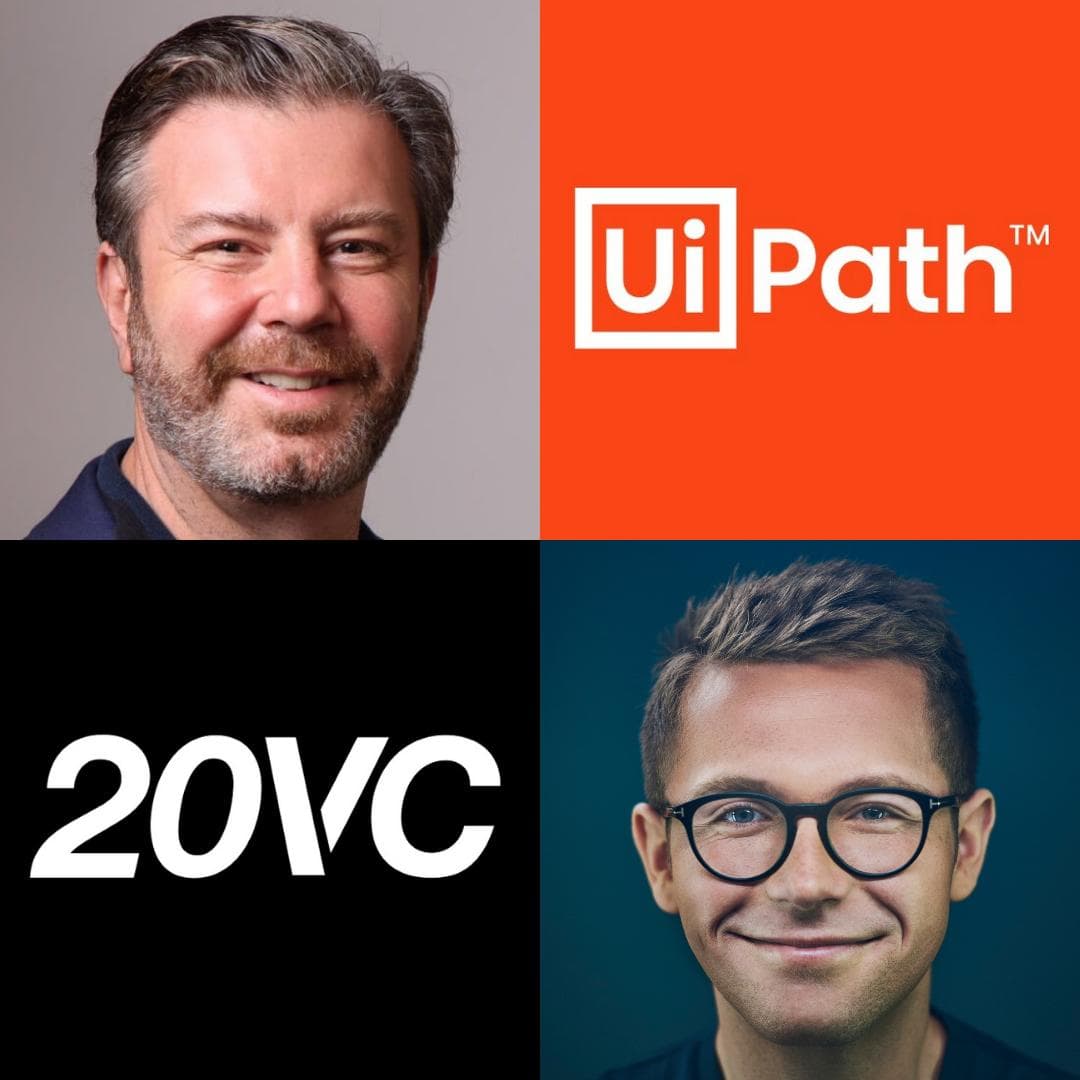
20VC: UiPath: The 10 Year Bootstrapping Journey that Turned into a $10BN Public Company
Episode Description
In this episode, Harry Stebbings interviews Daniel Dines, co-founder of UiPath, who shares his journey from bootstrapping a company to becoming Romania's richest man and leading a $10 billion public company.
---
Key Themes and Discussions
- From a Dollar a Day to Romania's Richest Man
- Background: Daniel describes his frugal beginnings, living on just $30 a month and how he became financially independent.
- Curiosity: Mentioned as a key trait from childhood, which propelled his learning and success.
- Learning to Code: His unconventional path to coding involved a pivotal book and self-directed learning.
- Becoming a Billionaire: The Mental Journey
- Mindset: Discusses how one's mindset can be a prison and the need for freedom from mental constraints.
- Relationship with Money: Daniel reflects on how his early hardships influenced his risk appetite and relationship with wealth.
- Happiness vs. Wealth: He expresses that he doesn't experience happiness in the conventional sense but seeks peace of mind and purpose.
- 10 Years to $500K ARR: The Miracle Bootstrapping Journey
- Initial Struggles: UiPath spent nearly a decade with minimal revenue before discovering product-market fit in 2014.
- First Investment: The transformative impact of raising seed funding, including how it changed his operational mindset.
- Investor Relations: Describes the dynamics of rejecting Sequoia initially and later forging a strong relationship with them.
- Journey to a $10BN Public Company: The Crucible Moments
- Challenges Faced: Shares about near bankruptcy due to overspending and the management lessons learned from scaling the company.
- Regrettable Decisions: Reflects on decisions he would change with hindsight, emphasizing the importance of managing finances responsibly.
- Leadership and Management Insights
- Management Lessons: Discusses the difficulty of giving feedback and managing team dynamics.
- Hiring Philosophy: Critiques the tendency to prioritize experience over chemistry in hiring.
- Crisis Management: Details the emotional toll of workforce reduction and the importance of making tough, ethical decisions for the company.
---
Key Takeaways
- Persistence Pays Off: Daniel's decade-long bootstrapping journey exemplifies that perseverance can lead to eventual success.
- Mindset is Crucial: A shift in mental perspective can lead to significant changes in performance and risk-taking behavior.
- Value of Learning: Continuous learning is emphasized as essential for growth—both personally and for the company.
- Work-Life Balance: Daniel reflects on the complexities of managing work-life balance in high-stakes environments.
---
Final Thoughts
Daniel Dines provides profound insights into entrepreneurship, leadership, and personal growth, emphasizing the importance of mental frameworks in navigating the challenges of building a successful company. This episode serves as a source of inspiration for entrepreneurs and those interested in the dynamics of the tech industry.
For more details about the podcast and additional resources, visit [The Twenty Minute VC](www.20vc.com).
Written by AI. May contain mistakes. Listen to the episode to check what was said.
Transcript
Automatic transcript. May contain errors.0:00I was living on like $30 a month, $1 a day. At times I didn't have money to eat properly, so I survived the worst. I knew I had to make this decision to find my financial freedom to get this fuck you money. I was almost like a prison, I behaved like a prisoner, just waiting to get out of the prison. Raising the first money was giving me such a freedom of mine, because it was freedom and responsibility in the same time. But it was...free to go big. Welcome to 20VC with me Harry Stebings and I'm so proud of the episode's day, it's with a dear friend and one of the great entrepreneurs of our time and one of the most insane stories and startups.
0:41So for 10 years, this company bootstrapped and after those 10 years, they had just $500 ,000 in revenue. Then it all changed. Today the company has a market cap on the Nasdaq of over $10 billion and revenues of over $1 .3 billion. This is the story of Uipath and I could not be more thrilled to welcome my friend, Jim Buddy, incredible entrepreneur, Daniel Dines to the hot seat today. But before we dive into the show's day, we're all trying to grow our businesses here. So let's be real for a second. We all know that your website shouldn't be this static asset. It should be a dynamic part of your strategy that really drives conversions.
1:19That's marketing 101. But here's a number for you, 54 % of leaders say web updates take too long. That's over half of you listening right now, and that's where webflow comes in. Their visual first platform allows you to build, launch and manage web experiences fast. That means you can set ambitious marketing goals, and your site can rise to the challenge. Plus, webflow allows your marketing team to scale without relying on engineering, freeing your dev team to focus on more fulfilling work. Learn where teams like Dropbox, IDO and Orange Theory trust Webflow to achieve their most ambitious goals today at webflow .com.
1:58And speaking of incredible products that allows your team to do more, we need to talk about secure frame. Secure frame provides incredible levels of trust to your customers through automation. Secure frame empowers businesses to build trust with customers by simplifying information security and compliance through AI and automation. Thousands of fast -growing businesses, including NASDAQ, Angel List, Doodle and Coda, trust Secure Frame, to expedite their compliance journey for global security and privacy standards, such as SOC2, ISO2701, HIPER, GDPR and more. Back by top tier investors and corporations, such as Google, Client of Perkins, the company is among the Forbes list of top 100 startup employers for 2023, and business insiders list of the 34 most promising AI startups of 2023.
2:46Learn more today at Secureframe .com. It really is a must. And finally, a company is nothing without its people. And that's why you need remote .com. Remote is the best choice for companies, expanding their global footprint where they don't already have legal entities. So you can effortlessly hire, manage and pay employees from around the world, all from one easy to use self -serve platform. Plus, you can streamline global employee management and cut HR costs with the remote's free HR IS. And hey, even if you are not looking for full time employees, remote has you covered, with contractor management, ensuring compliant contracts and on time payments for global contractors.
3:25There's a reason companies like GitLab and DoorDash trust your remote to handle their employees worldwide, go to remote .com now to get started and use the promo code 20VC to get 20 % off during your first year. Remote opportunity is wherever you are. You have now arrived at your destination. Daniel, I am so excited for this. I've wanted to do this for a long time. I had a great chapter brown in yesterday who gave me so many tips. So thank you so much for joining me today. Well, Abby, thank you so much for having me. It's always fun to see you, especially. This is a little bit unusual because as you know, we met a lot more often in the gym of our gym building.
4:06It's absolutely true and you put me to shame in the gym. So I'm quite pleased to be out of that. But I would love to start with a little bit on you. I think great entrepreneurs shaped in childhood. What we like as a child, Daniel, and when you think about what your parents and teachers would have said about you, how would they have described you? Maybe they will say that I was a little bit of a curious child that was argumentative, maybe at times too argumentative, especially for the likes of my parents. So I always like to engage like in debates and have my opinion and talk maybe a little bit too much.
4:43But I think I lost it at least time. So now I prefer a lot more to listen to people. But curiosity was something that always kind of stuck with me. Were you good in school? And primary school I was good. But after that I discovered I don't know other activities like girls and going to pool and hanging out with boys I was pretty average except math where I had like a natural Inglination honestly, I loved her that because I think you can sometimes hear some stories where it's like you know Super whiz from like day one and it just feels quite unrelatable I did hear that I had to ask you how you learnt to code a challenge to Lichiana before and she was like you have to ask him how he learned to code.
5:30So what was that story? Well, I think it's pretty wild after today's standard. So I am not the typical hacker that started, you know, creating his first game when he was eight or something like this. I went to university to math because it was quite easy for me to get in. Really, I I haven't studied at all really to pass the exam to the university. But I went to computer science. I went to math and computer science, so I have a dual degree. I went to computer science just because it was a little bit fancy at that time. But I was very disappointed in the university. You need to picture only 1990, Romania, just full of communism, but all the professors, the atmosphere, were still very communist, ugly.
6:23People with fixed mindset. Honestly, after the first week at university, I decided I don't want to go there. So literally I went only to like exams. No, it was not my thing. Respectfully, how did you pass when you don't attend any of the classes and you just go to exams? It was a little bit of the Wild West at that time, so it was not mandatory to attend, actually. So I went it, you know, once in a while I get to know my colleagues. I learned for exams. That was it. I started to play bridge. So it was a big passion for me and University. Maybe you should ask me how did I learn English because it's even more interesting than the cornering.
7:07How did you learn English? Because also you learn quite quickly. Sorry, I'm interrupting you, but I remember when I interviewed Brandon four years ago or something, Respect for your English was not nearly as good, like it's got so much better. Yeah, I'm a total anti -talent, you know, to foreign languages, especially to English. When I was like 1920 and I started to play bridge, I didn't know any English at all. But the only good books about bridge were in English. So actually I and the friend of my, you know, we had a little month, so we put together a month to buy a really big book. I still remember it's a guy called Gorena and it's called like American Standard something talking about bridge and I had to read the book with addiction So that's basic that I was so passionate about it because this is how I actually learn English and I know a lot of words But my pronunciation is very bad, you know the tendency was to pronounce as you read yeah, so in my musical year It's not there.
8:10So in the last four or five years, I worked quite a lot with a great professor teacher I would say of dialects. She's a great lady. She works actually with Hollywood actors to teach them English dialects that are required when they speak in the movies. So they can speak English with Russian accent like me. So if I ask you for an Arnold Schwarzenegger like I'll be back, I should go and see her. Yeah, yeah, actually it's funny. I She introduced once to Nicole Kippman and I talked with her like five minutes because Nicole was doing a movie in Australia where she played someone in Russian accent and She thought that listening to me would help and so you just have to talk to her for five minutes Yeah, you can do about anything just this weather the shopping whatever if you learn Russian Maybe you will be good to act like a Russian in London.
9:03I mean, let me get that. I'll talk too much with me. So we learn English by playing bridge with the dictionary there. I love that. What was the first job? You come out of university where you didn't really attend. So I had to learn coding before getting. Because my first job was, you know, as a programmer. Actually, not really. I had to sustain myself since I was 19. It was a tough family situation. Basically, my family couldn't support me. any longer. So I had to do all sorts of gigs. Like at some point I was buying, like doing some kind of currency art bitrash, I was buying dollars in Bucharest.
9:42You know, I went to some other town where I was born and selling to the people that I know them for a little bit of a margin. So I had to do all sorts of thing. I started actually a company in my early 20s, not a software company, but it was something to help students find jobs. At that time it was very difficult all the ads were in newspapers so you have to go and call to pay it for so talked a lot of people. So what we did actually we centralized all the jobs, called them, understand all the requirements and even booked our people. So it was like a marketplace. So it helped me you know believe for like comfortably for like a year until I got bored by Did you make money with that?
10:27A little bit. Money at that standard probably I made $1 ,000 in that year. But it was, it was good money. Because going to my first job, I was living on like $30 a month. I know, it's $1 a day, right? Yeah. We living incredibly, frugally. Incredibly frugally. At times I didn't have money to eat properly. I remember days when I didn't eat at all that leaves a mark. What mark does it leave? It's a kind of anxiety that you have in life so until kind of recently when money didn't matter. I always had this anxiety of the times. It's not clearly internalized that I'm afraid that I'm gonna get to a position where I don't have to eat but the thought can be there and I think it makes you a a little bit more, apparently than afraid.
11:23Maybe in a way it's negative and positive, obviously. I think it's positive because it keeps us a little bit grounded to reality. But it's negative because I think it can drag you. It doesn't let you go as fast as you can. Because somehow, to me, it was a very big change when I raised the first money, the first, like, the seeder home. Because I would step to Uipath for like 10 years. and raising the first money was giving me such a freedom of mine because it was freedom on responsibility in the same time but it was freedom to go big because I was completely free of my internal breaks related to my upbringing when I had to do everything by myself and some people trusted me so then I don't know something switch in my head and I stop Not having any fear.
12:17What was it that caused the switch? Was it the fact that people put their faith in you? Was it the fact that you had the money to spend? What was it that caused that switch? I don't know, maybe, all of them. But it was a clear switch because I was for quite a few years like fearless. Just go spending every single penny. That's an interesting story because between Sid series and series A that we did here in London with Axel. I had to raise bridge route from my investor from existing investors and we only go She ate in for a long time like to do a cap like 20 % cap and I wanted the cap and I wanted Uncap and we haggled until like the last day Monday were hit zero in the bank and it was company with a hundred people But I knew that you have to play a little bit this game and this guy then do put just great friend of mine and he was the first investor that discovered UIPath.
13:19King to me and say, okay, we can do unlimited but it's going to be 25 % discount. I said, okay, sure. Of course, and they wired the money and everything was fine. The thing is, I had no fear. I never crossed my mind that I might get into troubles and I put entire company. I was completely set to go forward and we went really like a rocket. So the living on a dollar a day and coming from such a frugal background gave you the mindset that you could afford to take massive risk. Correct? Maybe in a way I knew what is the worst. So I survived the worst. When you have the opportunity you really want to go big when the other.
14:00There is no point in just getting to where I could have been in the normal situation. So maybe that was the resort that freed me in a way. It was a compensation maybe for that frugal days. I really thought that I owe to myself to do it big. Touch me about the first job where you paid $200 a month. Because we're on a dollar a day there, very frugal living. And we get that scar that's framed in one's mind. And then you get a first job, was the first job $200 a month? Yes. That's correct. First let's go to learning to code. So in university I didn't learn much honestly. I learned some basics like they were teaching Pascal I think.
14:46So I met this friend of mine when I was living with 13 and I asked him what I was doing because I'm fine. I got a new job like what job I was doing like a programmer. I said okay that's fine. How much money will you make? And he said $300 a month. I was literally shocked because it was 10 times what I was making. So I thought to myself, wow, I'm missing something big here. All my gigs and all this, the life, the stupid life that I'm doing. And I just can learn to program and I can get a nice job. And that was some more time. My girlfriend at that time gave me a book about programming. It was called programming C++ written by the inventor of C++ PRN Strowthrope.
15:33And it was not the original book. It was a book that was copied in Xerox machines. It was there like a fox here. But I found at that time that book fascinating somehow, because I learned C and C++ from that book. So I really read it like an adventure book. So I read that programming book and I went through the exercises and how he described the concepts but without trying on the computer. I never wrote too much code in my life but my specialty was mostly to reason about code and make programs working the bug too. That was where I was at my best. But writing code to me was always a little bit boring to write to me.
16:16But the fun part was always when I made that code that I wrote working. It's pretty extraordinary. It's a learn code without testing, like without iteratively doing it. I think it was helpful in a way. I think there are two types of developer that I've seen in my life. Oh, there are the hacker types that learn coding, just tinkering with the computer. And they are very good at finding different ways to do things that they always know. But when you learn more theoretically and I had my math background and then you know learning more theoretical I think you can have a broader perspective things So you can be more of like a software architect and you can understand bigger systems if you have this theoretical background so it helped me even today I really like to read from time to time different programming topics nowadays of course about AI But I learned a lot of programming language just by reading.
17:16I don't have to program. I didn't program Java script But I learned I understand so I can have a conversation about Java script or a good systems And then I can extrapolate different ideas to our own system like when we build serverless So it's a lot of theoretical works by mind works best by trying to connect different concepts and try to Get the best of them and apply to solve a problem Do you think you're good at then telling others what you see in your head or the way that you want systems to be built? No, no, good at all. This is this is where I really struggle. Why? My mind speaks well faster.
17:57My thought got well faster than my speaking rhythm. So sometimes I'm trying to keep up pace with my thoughts. So maybe it's a little bit unintelligible. world. The people in front of me. So I had to develop these skills to kind of explain more what I think in a little bit in frameworks. What are the principles and then how you can fill in the blanks and being the CEO of a public company was very instructive to me because you have to talk to investors you need to clearly explain your business but you cannot go of record and show us such a thing right so you have to be pretty precise so I work a lot with our IR person Kelsey I think I I learned quite a bit from her what do you think you learned I think I learned a very simple trick actually to when you explain something go first and tell in high level terms what you are gonna talk about it and then drill down each of the items and this is kind of a framework to explain so I'm gonna talk about one two three and then you can ask the enemy to drill down in one of these points it's a little bit easier yeah okay so if we go back because I want to kind of unpack it chronologically so So we go back, we learn programming through this wonderful book, thanks to that current girlfriend C++, you owe her a lot.
19:31How is the job? The first job. It was the most amazing job I think I had in my life. So I really like my boss that hired me and I think we had an amazing human connection in the way. It was like I think 10 years older than me. A day in the view. So it was my first job I didn't he didn't ask me anything to write it was just a pure discussion And at the end you said okay, you can have the job and it was a catch a little bit They didn't have a computer to give me to work like a regular job because they it was a very small fur So during day all the computers they had to work you know occupied my people so what I had to do was to work night shifts and that was kind of amazing because during the night shift I had access to their most powerful computer it was very quiet to just be there and it was first time in my life when I had really access to a computer as much as I wanted so basically I tell for the next six months I went there every day so I stopped even seeing friends I worked literally 12 -14 hours that they even were.
20:46I went home only in the morning when they opened the first, you know, like the metro line was opened. I went home, slept and by 6 p .m. or something I was back to just working. I was transported in another world. So I think I was the happiest in my life. It's like building something. I think this is maybe what Michelangelo felt when he creates something, a sculpture, because you see it. Programmers are in a way lucky and happy creatures, because they build something, they are creators, they are in a way artists, so they get the feeling of being completely in the flow. To me, even when in the moment of most anxious to me, if I went front of a computer and I could to focus like 30 minutes and start to work.
21:38After that my anxiety was gone completely and I just got peace. Can I ask when you listen to yourself speak today and you hear yourself speak about going to work night shifts on computers that no one else was around you and the office was empty, does it feel like a different person? It is such a different life. Yeah. How do you feel when you hear yourself say that? I miss it in a way. I missed the times when you learn, it was time of extreme learning and extreme focus, single, hand it into one direction. So I miss it, now I don't have this luxury anymore. By only moments when I create something when it's the rare times when maybe I'm in an airplane and I try to write poetry.
22:25I do it only for my own sake. I share maybe only with a few friends. But this is the only moment when I feel transported in that state of flow. Otherwise, my days are mostly talking to people, making decisions and fun for me is also maybe even in the night. I'm reflecting on some kind of features that you have to build, product road map, priorities, discussions with people. But I don't have this sense of intense focus which I kind of miss I need to find a way to go back to that. Giffel, are you still learning? Yeah, you are dead when you have stopped learning And this is what I tell everybody If you feel like you didn't change considerably in the last six months That means you did something wrong So for me, all the years are kind of an accelerating, I'm in an accelerating learning mode Definitely in the last 12 to 18 months, I think I learned more than it past 5 years combined.
23:27And the last 5 years were amazing by any matter. I feel like now I'm actually in my prime of learning. Has there ever been a time when you felt stagnant or like you weren't learning at that rate? Yeah, yeah. When I was working in Microsoft in my early 30s, I was also stuck in my mind a little bit. I was very unhappy being there, not necessarily in Microsoft or in the US, but being removed from my comfortable life that I had in Romania. And I kind of forced myself, it was my decision. You know, somehow in me I know what is the right thing to do. And I have to push and force myself to do the right things, but hating myself in the same time.
24:13I didn't have the peace of mind to accept that the right decision can be actually the happy one. I think I could have done a much better time there. I could have learned more gym for instance. I could have worked with a trainer, because I went to gym quite a bit when I was there, but I always doing things in a lightweight, not pushing. You know what I mean? Yeah, I did. You have to push yourself. I didn't push myself there too much. I didn't why I'm just trying to understand why not there because you did push yourself when you were going night shifts And you were living I was in a negative state of mind I knew I had to make this decision to find my financial freedom That was my biggest desire in life to get this fuck you money my financial freedom I never wanted to be in a situation to just work for money that was to me that was very stressful So it was a thing you have to work get your financial freedom But in that in the same time that made me extremely unhappy, but it shouldn't be it was again It should have been a switch it's a simple switch.
25:19I could go back to myself and explain to myself a very simple switch And you have to do it. Okay. We all agree that's the right thing to do But what's a preferable can also be pleasurable This is also one of the biggest wisdom piece that I heard in life for the wise man, what's preferable is pleasure. It's very powerful. The switch I would have made in my mind was to enjoy the preferable things. And I would have done a lot of things better. Learning to ski better, learning to go to gym, learning to play tennis better, learning English, meeting more people. Being stuck, I was almost like a prison.
25:59I behave like a prisoner. Just waiting to get out of the prison. Even in a prison, you can have the mentality. I have to stay five years in a prison and big, totally unhappy with your cell phone. Say, okay, this is what it is. I will learn philosophy. I will do this and this. It's a switch and we exist only in our mind. The external factors are not that important as the running of our own thoughts. If you change them a little bit, you climb mountains. You climb Everest. So what allowed you to change your imperceptions to climb Everest? What was that switch that unlocked? in that period of unhappiness when you were a prisoner.
26:38I wanted to break out of prison. So I finally, I took all the courage that I had. None of my friends at that time believed that I'm going to live Microsoft and US and go back to Romania, very little money. So in five years working in Microsoft, my old savings were like $150 ,000. That even enough to buy a nice apartment in Bucharest. But it was fucking money in a way for me. I could have lived for a while without doing something that I don't want to do. But going back to Romania, the only chance for me was to build something, build a company. Before we moved to kind of going back and kind of building a Uipoth, I have to ask on the prison element, if we carry on that analogy, you can always extend your sentence.
27:31And what I mean by that is you can always be on the treadmill I remember and I started it's like when you make a million pounds that is like that's fuck you money So when I started and then it's like I got to a million and it's like It's not actually you can't buy an apartment with a million if it's in a nice area in London It's probably five million and then you get to five million and you're like well I can probably buy an apartment now But then I have no money at all and so you can always push it How do you think about that and how would you advise me who actually struggles with with that, honestly.
28:02In a weird way, I have some remaining fear of this struggle and just completely stupid for me. It makes me feel better than you. The way to deal with this is to realize that you are a valuable, professional and human being. When I struggle the most, I was actually not in the medium that put me in the spotlight somehow. When you are in the wrong medium, start to doubt yourself quite a bit. When you don't doubt yourself and you go to work and meet the people that appreciate you, this problem with money disappears. You'll always make money and you'll always make good money just getting to the right people.
28:48I think once you understand that you have an intrinsic value and it's not only to go and find the right timing and assemble yourself maybe. 10, 20, 100, you'll be free. You can enjoy what you are doing better. You enjoy what you're doing now? I do. I do. And I don't. I'm not that. You do and you don't? Yeah. I am an Antarctic type of person. So I read emotions in people. In my position, you get to know all the shit that happens. most of the shit that happens in the company and all the bad rumors and all this guy did this and this is not good for our culture and everything it comes and it poisons your mind you have to deal with all this negativity this is why when someone says it's lonely to be the CEO of the company because eventually all the shit creeps up to you creeps up to you yeah exactly I totally got that it is because you can't talk to anyone else because you can't be distraught to other team members.
29:58You can't say, speak bad, leave someone to someone else and unload that burden. Even if you speak to them and unload, then I have some good friends and I work with people for many years. It's not kind of the same. It's not the same position where it's like you cannot put yourself completely in the shoes of the other. I have the empathy but I don't feel your pain. They can understand that it's negative for me, but they don't understand how much it affects me. Did you ever have self -doubt? You mentioned there about doubting yourself. Did you ever have self -doubt? Yeah, I think I always had the imposter syndrome that causes me to make the biggest mistakes as a CEO.
30:38Because I doubting myself, my tendency was to search for and hire people with experience that have done this job before. They should have been way better than me of doing some sort of job, but the problem is then you cannot compromise Affinity between people if there is no chemistry. This is not gonna work So because of my imposter syndrome I tended to trade off chemistry for experience with very rare exceptions It always went bad. Did you correct it quick enough? Most of the time yes, this idea that higher slow fire fast, it reads good on paper, but is not applicable in real life. I prefer higher fast, fire fast.
31:26In a way it's easier, but fire fast is not so easy applicable, especially with the senior executives. There is a honeymoon, of course, and you need to give them a lot of freedom to do their jobs. so they start to hire, they build layers. Suddenly when you start to understand that something doesn't work completely, it's a little bit too late and you are in the middle of the process and all you can do is to be hopeful that it's gonna work. It's very hard to make that decision to fire in the middle, but you already see the signs that might not work. You see the better it's of them. Do you let them know at that point or do you not?
32:06Because it knocks their confidence just as they're playing the game. Sometimes it's not so easy to tell them. Either there are very little facts that maybe sometimes it sounds ridiculous to me if I go to you and say, why did you do this? And even why do you dress like this? Let's say if I hire a developer and they come to work in a suit that doesn't happen. But I'm telling you this time, it's kind of hard to go, man, don't look, you look like a clown. Get the nice t -shirt if you want to take it seriously. I'm not good of giving feedback. Even today, this is where empathy works against you. For me, it's not easy to give negative feedback.
Read the full transcript
32:45Why is it not easy for you to give negative feedback? I don't know, I have this defect in my brain. But I can easily point people that I like and I enjoy to some of their negative traits. Because in a way, I feel that my love for the compensates the pain that I'm causing them because you know it causes pain to give feedback to anyone. It's impossible for someone to receive negative feedback without pain. It can be helpful and they can heal of course because of the feedback but it's the bout of pain that they feel that it turns me off. So I can trade the pain that I feel giving feedback with the love that I give them.
33:28But when I don't feel love for them I don't have this trait so I feel only their pain. And I feel a little bit like I'm a jerk. It's a lifelong work to learn this skill. And you know, we talk about Karl Ashembaar before starting this. It only wants something very profound. We were talking about firing people and I said that it's so difficult to fire people. And he said, Daniel, that's normal. The moment you will stop feeling difficult to fire people, you become like a monster. You will not be a good see you. You mentioned Carla, I spoke to several of your investors before and I asked for weaknesses as well, O Daniel.
34:10And some of them said that you give too much responsibility to people and you let them have too much freedom. You mentioned there the exact same. How would you respond to that? Do you think you give too much freedom and too much? Yeah, also maybe I have the wrong impression about giving freedom to people. It's important to give them freedom, but also to inspect what they are doing. Inspecting what someone is doing, it's not necessarily interfering with their freedom. I think where I'm bad, it's inspecting what people are doing. And I've seen actually some other executives as well. Is inspecting not just micro management?
34:50No, I don't think so. And I'm not a micro manager, but my style is to go pretty deep in some point and test and assess and you have to understand that area but especially in the product and engineering when this is where I do actually a lot of inspecting My technique is to prove and go like with this Socrates and approach Why? Why? Why? Why did you choose this? I don't accept like this is what it is, we made this decision a long time ago. And you go to a point where they say, okay, we have to change. And it's fine. Sometimes you find the early size of cancer. It's much easier to kill it from the beginning.
35:34But you know, it was always a little bit easier for me to work with the product and engineers than to work in the other sites of the company. Because it's not a language you spoke. It's not the native language to me. It's a language that I learn. So I'm conversational in go -to -market finance, HR, marketing, but it's not my mother tongue. The impasse base also said, you know, the exact team has churned a couple of times, maybe more so than other companies. What are some of your big lessons from that? And Aaron Levy, actually at Box, a famous enterprise offer, then it says, it takes actually five exact team's churning to go to a public company.
36:16I think is his statement. How do you feel about the exact churn and lessons learned? I think it's kind of easy to explain. Most people will have a range where they can operate well. In a hyper growth startup, the company grows faster than the range. It happens. So what can you do? Usually you hire more experienced people, you put them in command, you cannot keep those people. And at times these people feel that they are entitled to get that position and they live. At times they feel this is an opportunity to grow on earth and they stay there and they were their position there. But it's normal and it was four or five probably, yes, until we went public.
37:03In that journey of game public, I do want to slightly go back the early years of Uipast, it's just the most insane story, Daniel, as he said, you bootstrap it for nine and a half years, ten years? I mean, that is so atypical compared to anything else that we see in this industry. Can you just take me to that bootstrapping journey? Why did you not raise money? What did that look like in that journey to the first race? Did you have product market fit? How many understand that? So initially, I didn't even think that was possible for someone to give money to almost nothing. I thought I have to build something, show product.
37:39I started in 2005. It was still the winter of the VC industry, even in the Bay Area. So I started to be connected more with what happened in the Bay Area from Romania than when I was in Seattle, when I was completely isolated in Microsoft. I didn't think that I would be able to convince an investor to put money. It was very remote thought. It was a good learning. I don't think I was actually ready without these 10 years. Maybe some people learn entrepreneurship maybe, if you are bored and raised in the culture of entrepreneurship, maybe it's easier. So you can drop off from Stanford and you can start the company.
38:25But for me, these 10 years were my formation years. And I don't regret that. I learn to go through adversity. I learn a lot of the treats that I use as the CEO. I learn how to write a Google ad copyright. Actually it's a very valuable thing in itself. I learn how to be succinct with my thoughts. You have to write an ad, you have to describe the product that you love with hundreds of features in just three lines. So you need to apply some kind of metaphorical thinking. It's a great learning. I learned software licensing. You know, I took like Microsoft Word license and then copy and change it and create a license.
39:09It's a lot selling, talking to customers, supporting them. I did this. My worry today, Daniel, and you know this is an investor too, obviously investing in companies, is that you get a five million seed around and come out of a great company. You can hire a great marketing person, you can hire a great salesperson, All of the things that you learned, you don't need to stay from day one. And I worry that we've lost the entrepreneur that you are and why, because of the abundance of capital. Yeah, and the abundance creates monsters. Actually, I think almost all the time. It's like you cannot have a tennis player that just go and place Wimbledon and Wimbledon.
39:50They have to go through Junior World, they have to... It's 10 years from maybe 7 to 17 that makes a tennis player. Nobody can skip it in tennis. Even in entrepreneurship. I think many people that get obviously very smart people. What I've seen, they are a little bit new dimensional so they know only their craft. I think when they will be put in difficult situations where to negotiate or to understand their they will fail. It's very difficult to do it without really going through the formation years. Don't you agree with me as an investor? I completely agree with you, but I can't. I just worry that I don't think we see it in entrepreneurs today.
40:32I look at 20 VC. We didn't make money for two and a half years. It was 450 shows before we made any money. 450 recordings before a dollar. It's a long time. It's a long time. Like, and I learned so much about it. I did every part of this business. I remember googling how to create an invoice. Yeah, because I didn't know I recognized myself And I was 19 20 and I was like, that fuck is an IO. I've got no idea. Exactly. I used to pay the salaries to go to the banking software and I created bots to pay the salaries. So where was the business at when you raised the first money? 10 years in. Like how much revenue did you have?
41:16How many customers did you have? So we raised the first money in 2015 and we finished the year with like half a million revenue. So 10 years to half a million in revenue? Yeah, but it was an acceleration since 2014. We found the product market fit in RPA. In 2014? In 2014, yes. What changed? It was an incredible lack in the way. I think we knew also that we built a good product, but we didn't know the market for it. So we built a low -code, no -code environment to create automations that kind of emulates people how they work in front of a computer. So it was pretty cool. It was not an end -to -end platform, but for what it did, it was good.
42:08It was actually the best in the world and what we built. We knew we have something valuable, but we didn't know it's all such a huge problem Being and all of my co -founders are engineers like me, so we are Naturally trying to solve more Engineering problems IIT problems with our tool and we didn't work with really huge companies work with mostly small medium businesses, so I didn't see a huge future on that approach. We were found by a guy like middle manager in an Indian company, a BPO company. That was actually in 2013. On the first of March 2013, we launched the version 10 of what has become our RPA product, version 10 called Uipaf Studio.
42:59It didn't have any traction. But this guy found it on the internet. So he worked with a British company called BluPrism. They invented actually the word RPA and they had more of an overarching platform to create bots. Only that our tool was way better than they are tool to create one single bot. So that Indian guy for some reason didn't like BluPrism. I think they thought they are a bit arrogant and flexible. So by himself he searched on the internet like competitor and BlueBriza it's also a low -code type of environment. So he searched for something that looked nice. So we had like our low -code was really nice from the beginning.
43:54We had like a flow chart engine. You can drag and drop the block so you can create easily visually. He liked this And it's crazy, he sent us an email from like his personal Yahoo address. And at that time I was doing all the customer support and queries and everything. So I watched this one and I had a tendency to skip this one because we didn't work with individuals and he wanted the demo of the product and without telling much about it. But I don't know, I had some kind of intuition that maybe I should still give him a demo. And I ask one of our developers, because we are all developers at that time, in the company like five people, maybe five, seven.
44:39And I ask one of our developers to connect with the guy, give him a demo. After one hour, she came to me and told me, Daniel, this guy is actually from a big company, you should talk to him. And I connected right away on Skype, I think, at that time. And he asked me first question was how do you compare with BluPris? And I told him, and I don't know who BluPris is, first of all, and me search. So I searched BluPris and it was funny because they had this typical corporate boring page with... You know, saying basically nothing and with career investors. and I told him, well, looks like the way this is a big company.
45:22We cannot come there. We are just a small starter. This is what I told him, you know, very friendly. But he liked it. He talked to his upper management. And they actually invited us to go there to India and held them to kind of automate the same type of processes that will please them just to see how our software is. And he said yes. And even more he said I give you a chance but you have is gonna be at cost But sometimes there are Astral moments in life when you need to seize them and you need to feel So I knew that was one of that moment. So I sent Three people including my city or that time and two Girls actually they on there they spend like three months in Chennai So I took people out of the programming job.
46:14Yeah, and three out of seven. Yeah, we understood this is a big market, first of all. And we understood the requirements of what they expect us to build. We were building a good demo because we, at that time, we, so use our software to build automations and we use the Microsoft product, or like I think orchestrator or sampling. And we create some integration with Microsoft product to deploy our bots and money to a very close pretty nice. It was a cool solution and they liked it. You did it cost, they love it. What happens? They become our client and that's I think it was the biggest single invoice that we sent.
46:55That was in 2014 I think we got like 100k revenue only from that client. It was huge from us. But Harry, most important was that we understood that this is a huge market. So that was a BPO company, but they were doing some work for like a huge American Computer manufacturing company at that time actually these big companies are flooded in Manual repetitive work and they don't know what to do despite all the advances in API's in ERPs in CRM There are so many inefficiencies and people use so many so many and our technology works brilliantly. We just need to build a nice orchestrator. I think I find so funny about hearing this in Daniels.
47:46What you hear when you tell every founder is you need to know what problem you are solving for what customer. Yes. And they should know that early on. And respectfully, nine years into your journey is when you actually realized what problem you were solving for what customer. It's true. Yeah, it's not typical. No, but the best stories never are. We built our software because we like it. It was really an interesting Engineering problem to solve so we did it. I don't advise anyone to do this It was amazing that it worked in our case But if you do this and you build a piece of engineering that you really like and you become a specialist and you become the best in the world in it If it happens later on to find a great use case on the gray market for this It's hard for someone to stop you.
48:39I know it's hard to say, but if you haven't got that email from that Indian person in that company, do you think you would have found the market? Yes, for sure, because RPX has become significant market. Also, we contributed quite a bit for RPX to become a good market. But it's possible that I would have lost one or two years, and we would never be at that size. What was the price and size of the seed round? 1 .6 million to I think 8 .1 volts. 1 .6 to 8 .1 post. It was not that bad 2015. No I think that's like a middle of the range. I wouldn't say it's expensive and I wouldn't say it's cheap. Yeah but we had half a million in living.
49:27For a company having half a million in living, it was maybe a little bit cheap. A little bit cheap but we were a company in Romania. So what was he, he was very interested in me because we negotiated for such a long time. Actually, that was the funniest thing. I knew that I am on something big. I met this guy, Dan Lupe, in March 2014. And he was kind of funny because I asked him to come to my office and the first time I dressed up. You know, I had like a jacket on me and he came with the hoodie. It was funny when I was so and that was a better way to get my trust because I was very skeptical at the time of people putting money in the company and they came initially with some outrageous terms.
50:23Like what? I don't know all sorts of drag along and all I don't remember but it was Times that weren't great at the time. Yeah, and those are not great really, but I engage in the discussion with him. Actually, no, they gave me a term sheet in August, I think, 2014. And we signed actually the deal. They wired the money in July 15th. So it was such a long time. Whoa. But eventually they invested in common stock. So the negotiation went to all these direct in the end. Discussion was money. If you want to invest, that's fine. Invest in common stock, but look we are growing at this point it looks like The interest we are talking with big companies like Kaiser permanent left the voice made was asking guys Let's connect it's kind of unheard of small startup RBA started to get traction So they invested in common stock, but with having a party pass with the next round they made billions So that's they did well sure I met them and they're very happy about that investment.
51:29Yeah, it's made their funds. How did you feel going into Excel? Respectfully that was in Romania and as great as you know, they are it's still a more local firm When you come to Excel in London and we've both been to their offices the beautiful offices Yeah, I'm happy. Please meet the beautiful office. I had an impact on me It you feel it in the storm echo a little bit At that time I was not used to go in such amazing places that you're liking the movies for me. And all fairness, Microsoft Office don't compare with Excel Office in London. You feel a little bit, it's easy to be impressed when you are young and you are not experienced.
52:11But I wanted at that time to associate with something that looks successful, Excel is one of the top firms in the world. I think it's kind of normal to get. But we have an amazing office in New York right now. Google inspired me. So when I was in Microsoft, that's an interesting story. When I think a corporation is losing its way, and they don't understand where they are in terms of like competition, I talk about Microsoft 2004 or something. Like not Microsoft today. So I receive an email about some cost reductions. Google was, wait, I think they just type you what we knew about their, how they treat employees with Michelin, stars chefs and massages and all this stuff, right?
52:59And Microsoft in that cost -cutting email. Send to everyone in Microsoft. One of the points that I still remember was that in some buildings in the basement had some showers. If you go with the bicycle, and they said they are removing the towels in the showers. Now when I read this, I said to myself, this company has lost it. No, sir, it's a company who ran. What's the psychological impact? We don't matter. I would feel like there is... Maybe I don't know, they would save some money, but does it matter for the psychological impact? What message do you send? Do you think about that today? When you're communicating to the team, do you think what message am I sending?
53:42I do. I do all the time and the message that I'm trying to send them it's always authentic. I cannot be anything else, you know, I hardly speak. So if I try to pretend and I try to make up the truth and the reality, I think I always fail. I connect with people but by speaking my mind. Do you ever get in trouble for speaking your mind? Not necessarily really. Sometimes I tend to use maybe metaphors when describing stuff I like analogies and it's a funny one. Once I had the speech to my entire leadership team and it was a big moment. I went into an house then the trouble will become the sole CEO.
54:29I wanted to give like a nice speech but I told them about my biggest learnings in leadership. I told them clarity. A leader is one that should bring clarity to people and explain. This is to me one of the biggest street of a leader. And I explained the concept of clarity using like biblical analogy, like the creation of God and Adam and how God told Adam do everything you want but don't it from this tree. And I said that in a way that's a bad leadership. It's good and bad but it's because God created clarity to add them very clear rules. What God didn't do? He didn't explain clearly to add them why the rules are there.
55:23So God created temptation and add them to it from that tree. Leader should communicate well for sure. So it's an interesting analogy to me. So a good message would be I charted all the universe since the creation up to this point. So you are safe here following the rules that I gave you because I discovered that. And this is why you have to behave in a certain way. But this is uncharted territory. And this is be careful. And we have to go together in that uncharted didn't find new rules. To me that would have been a better leadership message. But I think when you use two colorful metaphors, people are taking a back.
56:07It was kind of a lesson maybe to do something more palatable to people. And it's easy to explain that clarity metaphor in other terms because I still believe as a leadership lesson, this is my biggest lesson. Provide clarity to people, explain the rules, basically explain your decisions. You don't have to say we decided this and this because it will always create interpretations, temptations, explain them clearly, and explain what is uncharted territory. It's very important, so they understand that they have no compass. You mentioned uncharted territory there. I had, it was a rather interesting period of the company and I think it was 2020.
56:50When the company was actually pretty developed at this stage, but you'd spent bluntly a lot of money quite quickly. I think it was 400 million in a year and it was more than planned. It was 2019. 2019. Take it at that moment because that's an oh shit moment. Well, I remember it very well. Because in the middle of the summer, I think beginning of August, My plan for that year, 19, was that I will burn maximum 150 million dollars. Which was fine. We had 500 -600 million in the bank. I planned to burn 150. I had a very rough, simple plan. So we finished 2018 with the 175 million in ARR. And I said to my team guys, we will capacity this company to get 600 million next year.
57:48I know it sounds crazy, but I will accept I will give you a buffer of 150 million dollars. So if we do only 450, I think we are still fine. I'm okay to invest to burn 150. Well, reality is more complicated, but high level the math stands. In long term it doesn't stand because you can ask, but next year if we start with 150, at that time we are growing more than you know 150 % of all. Growth can help with all the diseases. So in beginning of August we assume transition from like customer success lead into leading FPNA. And he casually told me I think that Daniel, whatever we do, we will burn 300.
58:39He said, this is impossible because all the time we were working in this exception. We are getting the 450. We are getting 150. It's a huge difference. It's much easier to control costs than your own. How did you fail? Well, I feel terrible because you might lose the company. It's fucking terrible. So we had an emergency meeting. I think Luciana was there. So we met 15 of August in New York. That was the moment we decided it's we have to stop the train and hiring and we are hiring on all cylinders. So we have to stop the train. We had to do a reduction in force. Think about it was 2019. Everything was going well in the economy and we announced a reduction in force.
59:27It was a terrible moment. I think it was extraordinary difficult for me. And talking to the company, we fired I think like 10 % of the more 15 % something like this, 400 people probably out of the 3000. So it was very difficult but I think the second biggest competitor of ours at the time, behave very nasty so they were celebrating. they send messages on LinkedIn. This is what's happened. This company is just clay, legs, all this. In a very celebratory way. But the bad thing for them, they continue to hire right into the COVID and we've become a much better leaner company. So we entered COVID as leaner company.
1:00:15I think my recollection of all of our reduction in forces, it's like a surgery after the initial shock, we become a better company. What did you learn from that? Because it's really hard, as you said, 400 out of 3000s, whatever that is, 12%. No one else was doing it. It's not a great signal for the company. It's tough to do as a leader. Sucks, as Carlisian said, you should never lose the empathy of hurting when it hurts. Yeah, our rating on last doors on this, you know, plummety, that all. The learning is that in life, you have to do what is the right thing. And you just have to swallow the pay and the cost.
1:00:54And if you do the right thing, company will heal and will become better. One of my closest friends, mentors, LPs just taught me one thing. He said, you're never wrong to do the right thing. Maybe hard. Yeah, you're never wrong to do the right thing. The only question is, what's the right thing? My subsequent question. At that time it was clear that was the right thing. The question that I have associated with that is, again, speaking to many of your investors, they said, well, Daniel's approach to risk on the back of that is a little bit different to how most people think about risk. How do you feel about how you think about risk today and in the past?
1:01:31It depends. There are buckets of risk. sometimes I'm very fearful and I'm ashamed of myself. But sometimes I don't have the same sense of risk as other people, so I can go much faster and make bigger bets. I don't think of the consequences so much. What is in what bucket? Is it like kill the company in that bucket and everything else fine? How do you categorize it? I don't feel kill the company in a way, but I am more drawn to the upside than to downsides. Is that because you have money now, do you think? When you don't have money, you kind of want to... No, I did the same thing. I told you after the first round of investment that switch happened in my mind.
1:02:20In terms of the switch happening, getting sequirers and investors, is it a dream for many entrepreneurs? How did that deal come to do? Well, that's another story. But what's interesting, let me give you one piece. when I met Karl for some reason I didn't feel the most amazing chemistry with him. So I said basically no to Sequoia to our series B. Series B was led by Excell US and capital G, Kleiner, Parkings and some other people participating. But I said no to Sequoia. We didn't hit it off, but it was based only on one interaction with him. and actually told him directly. I got a good advice not to give Car the bullshit answer and reason.
1:03:09And I told him that I didn't feel that was the best chemistry between us. Then was when Car really impressed me because I expect as many people that will turn them off and they will never speak with me and that can actually turn them against the company. And Sequoia can damage a company investing in competitors. Of course, I didn't want to create an enemy of Sequoia, of course. But it was interesting because being honest with Karl, creating a little bit of a competitive spirit in him. Because he told me later, I told myself, I have so many great relationships with so many people, a lot of them are wrong.
1:03:50So made him a little bit curious, so we stayed in touch. They also talked to competitors of us, but Karl decided that if Sequoia is going to invest in RPAs, he's going to invest on Inevit. Even before signing with him, he told me upfront, very extreme candor. I really appreciate it. And since then we build an amazing relationship, but it was built on a great foundation of trust. When Sequoia invest in your business, does it change overnight? Entrepreneurs think that it does. You can get talent that you could never get. Everyone wants to invest in you. Does it actually? It has a significant effect, yeah, for sure.
1:04:33I think there are people that fall of Sequoia and they go only to Sequoia companies and they have place. It's a big sign. Can I ask another needle moving moment? Is actually when you decided that you would hand over the role of CEO? Yeah, can you take me to that decision? Why did you decide to make the decision and how did that feel? Look, I always wanted what's best for the company. I never felt that we are doing justice to this company on go -to -market leadership. You know, when I got the opportunity to meet Rob, that actually Carl introduced the two of us. I realized that Rob probably is the best go -to -market leader that we can have.
1:05:16but the only way to get him was to give him the CEO title. Was it difficult for you, EG? I ever had an EG. I built this company from nothing to more than a billion. The CEO of the company. It's enough to fit my ego. Another funny story. In 2014, when I was talking to early board. So they consider me an engineer, founder like more like a CEO profile than a CEO. And they told me also in all kind of then you let me introduce someone that might be a better CEO And I said sure yes, so I met a guy just a nice guy and I even introduced him look guys This is gonna be our new CEO, so I was always open a little bit to do what's the best for the company with this guy Didn't work so we went to pitch early bird and I think they realized that it's it's not working the pitch together was not really jelling and then they asked me to go again to just pitch myself and then was.
1:06:15Hey, there is a transformation in me and people, there is kind of a demon that takes over sometimes. I just have to access it somehow. What do you mean there's a demon that takes over? It's like an inner force. It can do damage but if you can control it, when I speak in public, I used to have a lot of stage fright and until I realized this is actually not about me, not about my ego But it's about my duty to the company, to the people I work That changed everything and instead of this force, I call it a demon But it's a force, it's an inner force that I think all of us have Instead of canalizing it against me creating the stage fright because it was feeding my ego I can't analyze it towards I am a messenger.
1:07:05So you deliver and you should see my speeches even in my early days. I always start in a rusty way, but then when I get the rhythm, I got it myself. So I deliver the message. One thing that I'd love your advice on is like I always line my happiness to the success of my company or my funds and that's not a great way to live life because you'll permanently be happy unhappy unhappy unhappy. How do you detach your happiness from the state of your company? I cannot. I'm not a happy person. Maybe this is my way to say the grapes are sour. But I am not searching happiness. What are you searching for?
1:07:47I think I'm searching peace of mind, impact, and giving my mind a framework and environment weren't worth to work the best and do it's best. When do you feel you're happiest? There are bouts of happiness, but I don't have it long. It's not long. It's like for every person. But when I feel at peace, it's more when I can focus. It's like the story, the initial story I told you and I started programming. Yeah, even meditating, even saying prayer gives a little bit of peace, but this is what I'm trying. Can I ask your advice on something? I was walking with a founder in the part this morning who had contemplating leading their series A and was talking about work ethic and he was like half the year I worked 50 hours a week and the other half the year I worked 70 hours a week and I was like well I'll give you a tip, work 80 hours a week all year.
1:08:42And he said no, you don't get it. If I did that my support structures, my relationship with my wife, My family, my friends, would break down. And then in the hours that I worked, I would be unhappy. I would be stressed. The heart of me is going maybe, and part of me is going, you just have to work harder than anyone else. Yeah, part of you would say, don't fucking stock the company man. Get the nice job, and have fun. Because I don't believe in, uh, work -life balance. It was in a way, building a company is gonna suck you into building the company. I don't think we can really put barriers. Now I'm working, now I go home, and I relax, and the kids are on me, and my mind stops thinking of the shit, and I just go and play with my kids.
1:09:30It's not working. No, it's obvious it's not working. So, to me, you are kind of connected all the time. When I don't work, it's very rare, actually, because I'm thinking all the time to the company's problem. To me, it's work. If I wake up in the middle of the night and I'm thinking how we build better computer vision or how we can collect more data to build models, I call it work, right? Because I'm not thinking where is my next location and how can I book the treat. My mind is obsessive, so in a way, it's very hard when I get into something to take off that something. This is where I work, because a lot of time I think I'm overthinking and I go in the circus when I feel out every time I tell myself this is not working.
1:10:17Let's give up on this thinking. Can I ask you one final one before we do a quick fire, which is just I'm worried today more and more about the size of incumbents. When you look at you mentioned Microsoft a few times, if you work to Microsoft, Microsoft throw off 330 million in free cash for a per day. You know, I just issued Sam at OpenAI, where he openly said, if you're in the application layer and AI startups, we will steamroll you. I'm concerned that the incumbents have never been as large as they are and that leaves little room for startups. It's possible. Yeah, I had the discussion yesterday with two friends of mine from IVP.
1:10:54They are also an already invested, invested along with Sequoia. Eric? Yeah. Eric and Alex. So we were talking exactly, is it there space in the application AI? They felt dorees and kind of vertically. I am probably it should be open. I cannot go after all the domains, but I am more with you. I think it's going to be harder and harder. I think maybe it's more like in the beginning of the internet when the big company is capture it a little bit and it was some time until big up sales force appeared. I think early years it's more difficult. Is it difficult for you now that agents are more, like, like, you know, you've been a proponent for agents for years?
1:11:41Yes. And now everyone's excited by agents and everyone's to a lot of agents. Does that make life easier or hard to fee? Well, it's both. Because it's funny enough I read yesterday that Microsoft is with their new AI for consumer. They are thinking to call it like AI for every person. And we had for many years our slogan was robot for every person. So AI is helping us. It surfaces more automation opportunities. And it helps us and more with completely an end -to -end process automation. But also creates a lot of narratives. It's going to AI completely replace automation. What if we build a GI that will do everything better than a human user?
1:12:26And then we are going to fall doomed right so we'll have two AI speaking here So I I'm not on the doomed side of the Equation I I personally feel that the current technology It's in actually the early innings of applicability we need to work quite a bit to find the right use cases in the enterprise space But I don't see it as challenging to Do you not think we overestimate enterprise adoption of AI? I'll stand this the other day. Up to the day, the adoption, I think, the most interesting cases that we've seen are in coding autocomplish. And outside this, I don't think there are a lot of money right now to be made.
1:13:14But many people are trying. It's a lot of puses. It reminds me a little bit as the early days of RPA with a lot of puses. And I think there will be certain use, especially in understanding the documents, reading documents, long documents, summarization of documents. This is going to be really where we can apply AI as of today. And if we period with automations, I think we increase the value of AI. Well, it's your most memorable, before you do a quick fight, most memorable moment from the UI posture on the SEO. The one that you think, if I, when I say that to you, you're like, that moment. Yeah, one that I like to remember, it was nice, was when we established in Japan and it was a typical for a company.
1:14:04Our growth in Japan was for a couple of years higher than in the US, so we established in the way in the same time in Japan as in the US. So I always fascinated the Japan culture. Again, really good timing like this guy that called us. In 2016, a Japanese guy called us. He said I want to bring RPA to Japan. He was the CEO of Asia Pacific Barclay Bank, I think. Very sophisticated. He came to London to meet with me and some other guys and he looked a little bit strange at time. And he was after a long flight and he was... I don't know tired, but he was some good questions. I was not sure really what they are kind of doing there.
1:14:52Fortunately, I was in Singapore when in early January, he gave me a call and said, you know, we have an opportunity with the big bank in Japan. But you have to come to Japan and meet with me that guy in person, because otherwise they will not trust. And it was again like this type of seminal moments when I already had plans to go back to Romania to do some other stuff But I changed my plans and I went to Japan first time in my life I met Koichi, this guy, our guy, and then I met another Japanese guy that was very instrumental for our development He's still working for SMBC, which is one of them Japanese manga banks So it was like an immersion into a different culture.
1:15:41And they were started SMBC at that time had big ambitious. They still have an RPA, I think they have probably to date one of the largest, if not of the largest, implementation of RPA. You meet people that you hit it off from the beginning with a felt such a good energy, such a trustable person. We want to have Shabu Shabu. So Shabu Shabu is actually a great bonding experience because he was cooking for me It puts you know the meat on my plate and it was still an amazing feeling that I get it up to date and I trust him instinctively. I Told him I want to son if you give us a chance We are gonna invest massively in Japan for us so that was like mid -January I will be back in April and by that time I will have like two people working for you at that time It was nothing not even Quitchie.
1:16:39He was not working. He was something doing part time for us And then we started to and actually in April we had like six people and then we went to another dinner He showed me to take higher like a hundred and people almost different Consulting front that we're working all on RPA I've been so proud going into this amazing building in Otematch in the center of financial district. They have an amazing, been a top floor overseeing like Imperial Garden. And I've seen so many people who have their screens open and having you I bath working in that one. Are you proud of what you've built? Yeah, of course.
1:17:20Yeah. But you take a step back and go. Yeah. Like now. It's a good moment. Usually I don't, but it's good to remember those moments. You have to. Listen, I want to do a quick fire. So I say a short statement, you give me your immediate thoughts, does that sound okay? So what if you change your mind almost in the last 12 months? I understand better how my mind works and what makes it focus better, what makes it wonder, and understand better the source of my anxiety moments, maybe how to avoid them. What was the worst decision you've made in New iPods, Johnny? It's all not thrusting my gut instinct.
1:17:59What are you most concerned about in the world today? I always have this regard to autocratic regimes. I was born and raised into a regime with the dictator, so I hate those. So I think the potential for doing really terrible things come up with I think from regimes that have once people in command and they cannot be challenged and there are quite a few powers in the world that fit the bill. Do you think you're a good operator? For many years I thought that I am not a good operator. lately I realized that actually I'm a good operator. I had this debate with a Schimphr, our CFO, and I think I realized that I made the confusion what is an operator.
1:18:53So because an operator is not necessarily a project manager that has some follow a spreadsheet of tasks and go and check them. I think more of an operator is a guy that deeply understand the domain where they operate, can challenge people can probe, can go deep into this. If we accept this perspective, I think I'm a good operator. What's the most lavish purchase that you've made? I cannot talk about this. I had to ask. Well, it's still love. Okay. What's the biggest piece of BS advice that you hear most often? You know, all about this. Only people with experience can hire people with experience, that's not working.
1:19:40Everyone's has installed up speed is the most important thing, but it took so long to get. I mean, it was nine and a half years before the seed round for you. I guess my question, does that contradict each other? No. We slow. Spend is the most important thing when you have product market feed. If you don't product market fit, the speed goes against you in a way. So because if you go fast, you'll only destroy yourself. But you learn, so I would actually disagree with you respectfully, that speed even when you don't have it, you learn faster that it doesn't work and you try again at something else that doesn't work.
1:20:18And in the sense yes, but what I mean, I've seen startups and founders for the sake of speed with the half -baked product going and start hiring go -to -market teams higher higher and they lose everything They lose the company if you go big before having problem market field. That's the fucking recipe for disaster No, I agree. I think that's a title for the episode you can have Penalty one you can have anyone join your board. He's not on your board right now Who would you have? Well, the guy that I think I learned the most in my formative years is Paul Graham. I've never met him in person, but he was instrumental to my thinking of building a company and this is one guy that I would like to have on the board for sure.
1:21:11He lives in the UK now. Yeah, I know. There we go. Final one for you. Why do you want to be in ten years, Daniel? You're not seeing it anymore. Why do you want to be in ten years? Is there another company in Daniel? I don't think in ten years. How do you think? And years times? And... Yeah, kind of six months to a year. I think we have a strategy and a vision for product for two, three years. I think it's wrong to think in so many. You know, this is a great saying that we underestimate what you can do in ten years. I think the world is going to change so much. I just aim to be healthy, keep my mind sane, the good in life in ten years, nothing more.
1:21:54Daniel, I've won this year this one for five years, so thank you so much for agreeing to do this and I've absolutely loved it. It was so fun, really. I have to say, it really is shows like that, which just make me love what I do so much. I've been very fortunate to be able to call Daniel a friend over the last year. one of the most incredible entrepreneurs I think we've seen in the last couple of decades, and also an incredible human. If you want to watch the full episode you can see us in studio on YouTube by searching for 20 VC. But before we leave you today, we're all trying to grow our businesses here.
1:22:26So let's be real for a second. We all know that your website shouldn't be this static asset. It should be a dynamic part of your strategy that really drives conversions. That's Marketing 101, but here's a number for you. 54 % of leaders say web updates take too long. That's over half of you listening right now, and that's where Webflow comes in. Their visual first platform allows you to build, launch and manage web experiences fast. That means you can set ambitious marketing goals, and your site can rise to the challenge. Plus, Webflow allows your marketing team to scale without relying on engineering, freeing your dev team to focus on more fulfilling work.
1:23:06Learn where teams like Dropbox, IDO and Orange Theory, Trust Webflow to achieve their most ambitious goals today at webflow .com. And speaking of incredible products that allows your team to do more, we need to talk about Secure Frame. Secure Frame provides incredible levels of trust to your customers through automation. Secure Frame empowers businesses to build trust with customers by simplifying information security and compliance through AI and automation. Thousands of fast -growing businesses including NASDAQ, ANGEL list, DUDEL and CODA trust secure frame to expedite their compliance journey for global security and privacy standards such as SOC2, ISO 2701, HIPER, GDPR and more.
1:23:49Backed by top tier investors and corporations such as Google, Client of Perkins, the company is among the Forbes list of top 100 startup employers for 2023 and business this insider's list of the 34 most promising AI startups of 2023. Learn more today at secureframe .com. It really is a must. And finally, a company is nothing without its people. And that's why you need remote .com. Remote is the best choice for companies, expanding their global footprint where they don't already have legal entities. So you can effortlessly hire, manage, and pay employees from around the world, all from one easy to use self -serve platform.
1:24:25Plus, you can streamline global employee management and cut HR costs with the remote's free HR IS. And hey, even if you are not looking for full -time employees, remote has you covered, with contractor management, ensuring compliant contracts and on -time payments for global contractors. There's a reason companies like GitLab and DoorDash trust your remote to handle their employees worldwide, go to remote .com now to get started and use the promo code 20VC to get 20 % off during your first year, remote opportunity is wherever you are. As always I so appreciate all your support and stay tuned for an incredible episode with Rujal Sapade, founder and CEO at ZIP, one of the fastest growing B2B companies of the last few years on Wednesday.
From the publisher
Daniel Dines is the Co-Founder @ UiPath, one of the most incredible journeys in startups. For 10 years, UiPath was a bootstrapped company that scaled to just $500K in revenue. Then it all changed, product market fit became obvious and the rest is history. The company went on to raise funding from Sequoia, Accel, Kleiner Perkins and more. Today, the company is worth over $10BN, listed on the NASDAQ and does $1BN+ in revenue.
In Today's Episode with Daniel Dines We Discuss:
1. From a Dollar a Day to Romania's Richest Man:
- How would Daniel's parents and teachers have described the young Daniel?
- How did Daniel first learn to code? Why was his first programming job on $300 per month the best?
- How did Daniel learn English by playing bridge with his friends?
- What was the a-ha moment for Daniel with UiPath?
2. Becoming a Billionaire: The Mental Journey:
- What does Daniel mean when he says everyone is a prisoner of their own mind?
- How does Daniel reflect on his own relationship to money?
- How did having absolutely nothing impact Daniel's relationship to risk?
- Why does Daniel think that he does not really experience or feel happiness?
3. 10 Years to $500K ARR: The Miracle Bootstrapping Journey:
- After 10 years, UiPath had just $500K in ARR, what was the one single moment that changed everything in 2014?
- How did raising the seed round change everything for Daniel? How did it change his approach to operating?
- What was the impact of having Sequoia invest? Does it change the game? Why did Daniel say no to them the first time they tried for the Series B?
4. Journey to a $10BN Public Company: The Crucible Moments:
- How did the company almost go bust when it spent $400M against a plan of $150M in 2021?
- What is the single proudest moment Daniel has of the 19 year journey with UiPath?
- What have been Daniel's biggest management lessons in scaling UiPath to $1BN in ARR?
- Knowing all that Daniel does today, what would he have done differently about the UiPath journey?