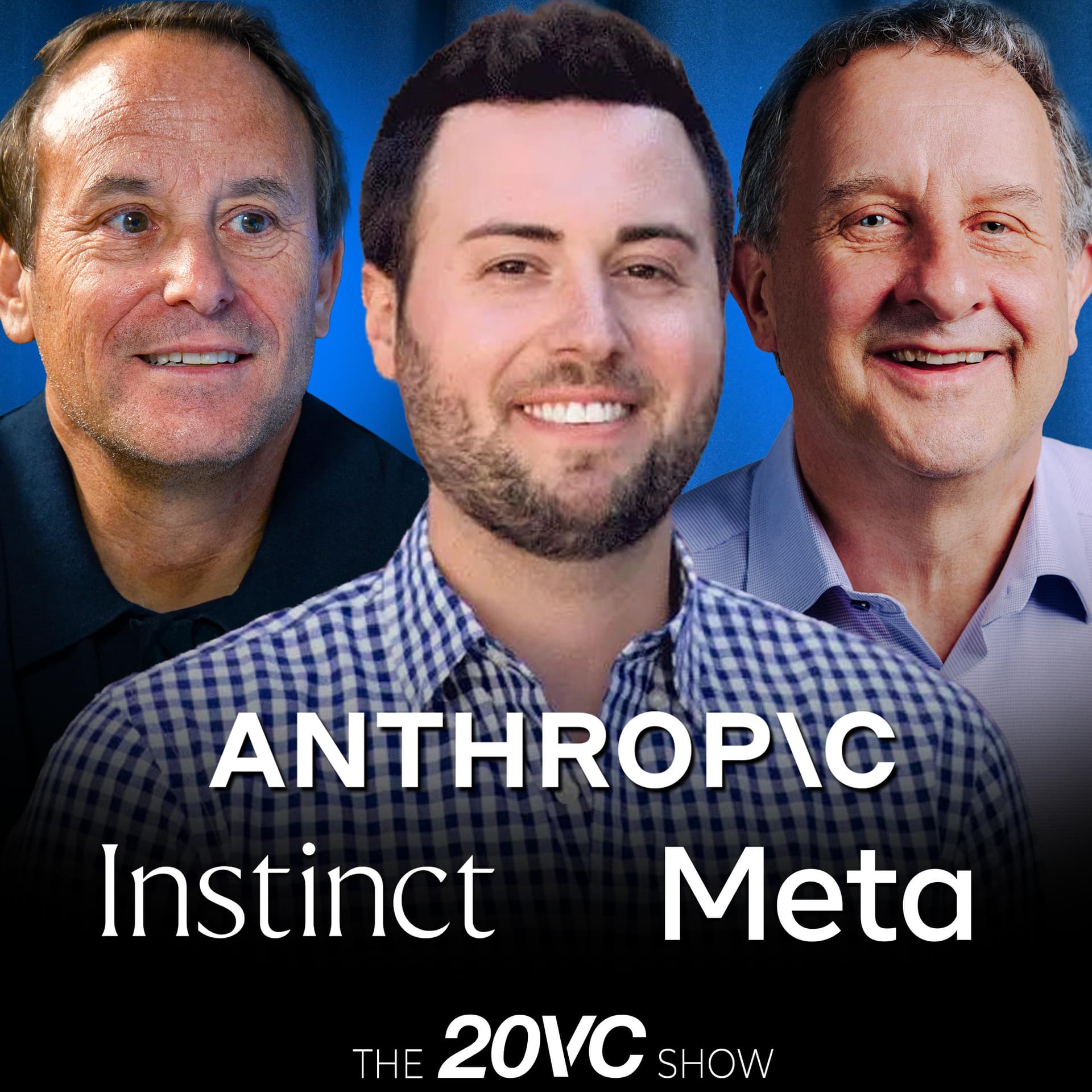
In short
Podcast Notes: The Twenty Minute VC (20VC) - Episode with Nick Chirls
Episode Overview
- Title: 20VC: Why VC is a Ponzi Scheme Today | Why Most VCs are Bankers | Why Big VCs Ruin Startups | Why Incentives in VC are Broken | Why American Dynamism is a Tool for VCs to Raise Money
- Host: Harry Stebbings
- Guest: Nick Chirls, Founder of Asylum Ventures
- Release Date: (Not provided in the transcript)
Key Themes
- Issues with Venture Capital Today
- Nick Chirls argues that venture capital has become a Ponzi scheme.
- Many VCs have lost creativity and now merely act as bankers.
- The incentive structures in VC encourage rapid deployment of funds instead of fostering great investment opportunities.
- VC as a Ponzi Scheme
- Chirls highlights that venture capitalists take management fees regardless of fund performance.
- The lack of a performance hurdle allows VCs to profit without the necessity of generating returns.
- Challenges in Current VC Practices
- Most investors are incentivized to deploy capital quickly without regard to the quality of investments.
- VCs and their services often fail to provide significant value to startups.
- Alternative to Traditional VC Models
- Asylum Ventures aims to treat founders as artists rather than merely assets.
- Chirls stresses the importance of providing an authentic alternative to the "big banks" of VC, focusing on long-term partnerships with founders.
- Investment Strategies for 2024
- Chirls discusses how to navigate investments in a challenging landscape and emphasizes the importance of investing in neglected markets.
- He believes that large institutions will struggle with returns on investments in mega VC firms.
- Importance of Founder Relationships
- Strong relationships and trust between VCs and founders are crucial for success.
- Chirls emphasizes that the level of care and attention given to founders can significantly impact outcomes.
- Critical Insights on Market Trends
- Observations about how the venture landscape is changing, with more competition and higher valuations.
- Chirls suggests that the best investments come from those willing to back founders and ideas that others do not yet recognize as valuable.
---
Detailed Discussions
- Why VC is Broken Today
- Ponzi Scheme Analogy
- Chirls likens current VC practices to a Ponzi scheme, focusing on the consistent collection of management fees without accountability for performance.
- Loss of Creativity
- Most VCs are described as "sheep," lacking originality and focusing on quick capital deployment rather than meaningful contributions to startups.
- Failure of Services
- He critiques the services offered by firms, arguing they do not add the expected value to companies.
- Making Money in VC in 2024
- Founders in Unloved Markets
- Investments in overlooked sectors tend to yield more passionate and committed founders.
- Institutional Investment Risks
- Chirls warns that large firms may ultimately underperform due to their scale and inefficiencies.
- Lessons from Successful Investments
- Chirls stresses the importance of understanding the nuances of the market and not getting bogged down in competitive pricing.
- He believes that investing in common shares rather than preferred shares may align better with founders and lead to more successful long-term outcomes.
- Trust and Relationships in VC
- Building Trust
- Chirls emphasizes that having honest and transparent conversations with founders is crucial for building strong relationships.
- Long-Term Play
- He believes that focusing on long-term value creation rather than short-term gains is essential for sustainable success.
- Misalignment in VC and Founder Incentives
- Cultural Shift
- There is a culture where founders feel pressured to raise large amounts of money rather than focusing on building a solid business.
- Long-Term Thinking
- Chirls advocates for a shift towards valuing businesses that might require less capital but can still achieve substantial growth.
---
Conclusion The episode provides a deep dive into the evolving landscape of venture capital, highlighting the challenges and inefficiencies present in the current system. Nick Chirls’ insights challenge conventional views of venture funding and emphasize the importance of creativity, founder relationships, and trust. His vision for Asylum Ventures reflects a commitment to changing the narrative around venture capital and demonstrating that a more artist-centric approach can yield better outcomes for startups.
For more insights, you can tune into the full episode on platforms where the podcast is available.
Written by AI. May contain mistakes. Listen to the episode to check what was said.
Transcript
Automatic transcript. May contain errors.0:00your junior partner, like a VP, a Goldman. They are compensated and promoted based on money velocity, not money returns. What's an ideal company for that model? It's a company that requires insane amounts of capital. Like the foundation models are like a big, big VC firms dream. They literally require billions and billions of dollars to go pie effectively in the video GPUs. What is the business model for large venture banks? Deployment? Yeah! It's raised as much money as possible. Get that money out the door as soon as possible. Raise as much money again and rinse and repeat. I mean, this is one spicy show today.
0:41We last had Nick Charles on the show nine years ago when he founded Notation. Today, he's back with the announcement that he's founded another venture firm, Asylum Ventures, a 55 million early stage firm in New York. The truly focused on treating founders like artists, not like assets, and this show is spicy, why VCs are just like bankers, why Venture has become a Ponzi scheme and how the mega firms ruin startups by funding inefficiency and even encouraging it. There is so much good stuff in this one and it is not to be missed. But before we dive in, when a promising startup files for an IPO or a Venture Capital firm loses its marquee partner, being the first to know gives you an advantage and time to plan your strategic response.
1:25Chances are, the information reported it first. The information is the trusted source for that important first look at actionable news across technology and finance, driving decisions with breaking stories, proprietary data tools, and a spotlight on industry trends. With a subscription, you will join an elite community that includes leaders from the top VC firms, CEOs from Fortune 500 companies and esteemed banking and investment professionals. In addition to mastery journalism in your inbox every day, you'll engage with fellow leaders in their active discussions or in person at exclusive events.
1:58Learn more and access a special offer for 20 VCs listeners at www .theeinformation .com, slash deals, slash 20 VCs. And speaking of incredible products that allows your team to do more, we need to talk about Secure Frame Secure Frame provides incredible levels of trust to your customers through automation. Secure Frame empowers businesses to build trust with customers by simplifying information security and compliance through AI and automation. Thousands of fast -growing businesses including NASDAQ, ANGELLIST, DUDELE and CODE are trying to expedite their compliance journey for global security and privacy standards such as SOC2, ISO 2701, HIPER, GDPR and more.
2:43Bat by top tier investors and corporations such as Google, Client, and Perkins, the company is among the Forbes list of top 100 startup employers for 2023 and Business Insiders list of the 34 most promising AI startups of 2023. Learn more today at SecureFrame .com, it really is a must. And finally, a company is nothing without its people. And so I want to talk about Coolie, the global law firm built around startups and venture capital. Since forming the first venture fund in Silicon Valley, Coolie has formed more venture capital funds than any other law firm in the world, with 60 plus years working with VCs.
3:19They help VCs form and manage funds, make investments, and handle the myriad issues that arise through a fund's lifetime. We use them at 20 VCs and have loved working with their teams in the US, London and Asia over the last few years. So to learn more about the number one most active law firm representing VC backed companies going public head over to coolee .com and also coolee .com coolees award winning free legal resource for entrepreneurs. You have now arrived at your destination. Nick dude, I am so excited for this. I can't believe it's been quite so many years since we did our last show, but thank you so much for joining me today.
3:55Thank you Harry. It's a pleasure. We were just talking about this before him, but I think the last time we did the show together was almost 10 years ago. Yeah, I was still in Hogwarts back then. Luckily, Dumbledore let me go. I honestly don't. When we lost you were running notation. Now we have asylum. Talking about this, was changed with notation in asylum. We're launching asylum this week. I decided to do a completely insane thing and start an entirely new venture firm about 10 years into notation. I ultimately felt like notation was built for a moment in time. It was the first pre -seed firm in New York and one of the first pre -seed firms in the US and ultimately I did not feel like it properly represented who I am and where I think the next 10 years or 15 years of ventr go.
4:45You know this Harry Aventra firm is a very personal expression of a GP or set of GPs and there's a new mission. Okay, so asylum is how big what exercises do we write? What's the mission? $55 million fund. We write 500K to $2 million checks. My mission is personal. I started my first job at a college at Lehman Brothers in 2007. It went bankrupt. I joke that the only good day at Lehman Brothers was the day it went bankrupt. I found startups in New York shortly afterwards around the financial crisis and it was everything that Wall Street wasn't. It was creative and it wasn't all about the money. There were these young kids building all these creative new things on the internet.
5:25It was kind, it was nerdy, everything that Wall Street was. I fell in love with it. Fast forward to 2021, I felt like basically all the same people from Lehman showed up, highly transactional, all about the money. There was no real art or creativity, very private equity like finding the company, dressing it up a little bit, handing it off to the next guy. And I was about as unhappy as I was in 2021 as I was working at Lehman Brothers in 2007. The big firms have gotten huge. They have gigantic AOMs, as you know. And so we now internally at asylum, we call them the big banks, not all that different than Lehman and Goldman and the others back in the day.
6:00My mission now is to provide an alternative to founders to the big banks and ultimately over the next five, 10, 15 years be a gigantic Thorn in the side to the big banks. That's my new mission. It's very personal. Dude, I love so much of what you said. We said this before. A conversation where everyone agrees is not a particularly interesting one. So I am going to take the effect of the debate. But I agree mostly with you. You'll also hear when I don't agree. But I want to unpack quite a few different elements that you said there. Starting on one item, you said about packaging up for different rounds.
6:35It reminded me of something you said to me before, which is, you know, it's actually that Vansha's basically a Ponzi scheme. Why has Vansha turned into a Ponzi scheme, do you think, Nick? So like, I have this view that every, particularly private asset class has its own version of a Ponzi scheme. The hedge fund Ponzi scheme. The hedge fund Ponzi scheme is you take a lot of money, you take insane amount of risk, you double that money one year, you take your 20 % of the bonus in cash, the next year it goes to zero and you don't have to give that money back. That's the hedge fund Ponzi scheme. And we saw this by the way, I saw this at Lehman Brothers back in a day, traders, you're gambling with someone else's money, so your incentivized to take as much risk as humanly possible with the bank's money.
7:16You take a ton of risk, you get a $20 million bonus that year. Great. You lose all the money next year. You get fired. You go across the street to another bank and do it again. I think hedge funds are sort of a similar proposition. The private equity scam, as like we probably all know this, is like you can invest in a company. It doesn't actually matter how well that company does. You can take a lot of money out of that company and if it goes bankrupt, it doesn't matter. The venture, Ponzi, you raise a fund. You take 2 % management fees for 10 years guaranteed, it does not matter how well that fund does, and you've taken 20 % of that fund and put it in your pocket.
7:51That seems absurd to me. It's obviously the main driver of incentives throughout the venture industry. You don't have to make a single dollar, and you take 20 % out of the capital raised, and you put it in the pockets of mostly employees that work there. The other thing I would actually say is I've never understood why venture doesn't have a hurdle that exists in most other private asset classes. You can do reasonably well and not even do as well as the NASDAQ and the S &P and you're still making money. What is about a solution, Nanik, a budget system? That's a really good question. I think a lot about how many VCs would be doing this?
8:26If they had to actually pay back the management fees, if they didn't make any money. Like how many VCs would be confident enough? You could say that about, I'm being deliberately divisive. You could say that about any job. True. How many people would do any job if they had to pay back all of the salary? if they weren't meeting targets and successful. No one would do the job. Yeah, but the job is to make money. The job is to perform, right? So like if you're... But if I said you're not financialized job. You only get paid if you deliver a three to one LTV to CAC. And if you don't, you owe me back all the money.
9:00I would have zero people outside my door, I think. And maybe or maybe you would have some of the best. But they don't need to do that. Why would I need to? So, why don't you need to do that? benchmark don't need to do that. Actually to the extent that even more so Nick, they can charge premium fees. They can charge 25, 30 % carry and 2 ,5%. If you have a long track record of producing returns for your investors, I think you have arguments to charge a certain rate. I mean, you can take Renaissance. It's probably a very good example. I think famously they had they charged like 70 % carry and produced by the way, like net to LPs like 60 % or whatever.
9:41Some insane rate of return. The reality is like most venture firms don't make money. Push back again, tracks are lagging indicator. There's a lot of firms that got lucky on a couple of deals. Go forward. They're not aspirational capital. They don't have like really different ways to find great entrepreneurs and they can't win. I think tracks a bit of a lazy way to do it. Yeah, so maybe over multiple funds. You need to pay teams. You need to pay for offices. If you want to get the best people, which we've been through. The best people who cost money. I can play the game on the field or I can not, but then I'll be sitting on my own with a budget -based system and no talent.
10:16I mean, build a budget to go higher the best talent. We did present that to LPs and don't take a single dollar above it. Is that what you did? I don't pay myself at a salary. You don't pay yourself. I'm putting every single dollar into hiring people and building the firm. What would you say to people who go, are but you're an effort that's amazing, Nick, by the way. And like, thank you. Yeah, I do live by it. I do live by it. Amazing, and I love that. But like, what would you say to people who go, well, you can afford to do that? Most of us can't afford to. That's what everyone's going to be saying in Twitter.
10:48I can. So like, we don't talk about this often, but like, the notation returns have been extremely good. First couple of funds in particular made a lot of money. And so I do have that luxury. I have the luxury of taking that and actually investing it back into a firm. I would argue that over time, even wealthy folks that have made a lot of money in this business or venture, don't put any money into their firms. Did you charge premium carriers a result? Which are just 20 % carry. 20 % carry. GP commit? Meaningful. Which, respectfully, I find is another one that LPs get very wrong, though. which is like, I'm often put in the same bucket as billionaire GPs.
11:30And like, 1 % for me as a solo GP is me. Totally agree. Everything beyond. Totally agree. Like, whatever. It's, that's a funny thing, right? Because it's like, it's hard to actually ask. Like, you could ask for people's tax returns. Like, sort of like, understand roughly what they make and how much they're worth. And then sort of back out from that. That may be of valid diligence. Can I ask, on the Ponzi team structure, I had a Doug Leone said on the show that we've moved from a boutique high margin business to a commoditized low margin industry. Do you completely agree with that? What do you think?
12:05I don't think it's quite as black and white. I do think that is the prevailing winds, but I think that there are still artisans who will thrive and succeed within that ecosystem. Like benchmark, like USV, a little bit large, but I would still say that artisans of their craft and fintech, I see a more nuanced world. Yeah, so if you extend the analogy to the big banks, large banking institutions are mostly commodity products that are very low margin. I'd argue the same is true for the large venture firms. I'd actually maybe make one exception. I think the one exception for me would probably be Founders Fund.
12:41What I've come to believe in ventures is that the only thing that is actually differentiating is actually standing for something meaningful. Sector, stage, I mean, notation was a precede firm. We were the first in New York. We had an advantage in New York because we were early in the only pre -seed firm from 2015 to 2018. I think pre -seed as a concept is it's no longer unique. It got eroded away. Got arbitrage the way. I think for the most part, stage, sector, geo -focuses, these things get arbitrage the way. They are not sustainable positions in venture, in my view. The only sustainable position is actually standing for something meaningful, standing for something meaningful, by the way, means that as many people are not going to like that thing as they are going to like that thing.
13:25That's actually what standing for something means. And there's a few founders fund. Maybe Sequoia stands for excellence. I don't know if that's differentiating enough, but I think that's the only way to actually take some margin and actually have a competitive advantage at large scale. Small scale, we can talk about this endlessly, but for the right small scale firms, those those firms will continue to produce very, very, very good returns for a very long time. I don't know. I don't know. You don't think so? No, I don't. I think that actually this is where the prevailing strong winds have come in.
14:02You see multi -stage funds provide such solid products at pre -season seed and created individual products. You know, index have a separate seed fund in particular just for this asset class. I actually think that they've come in with such efficiency that actually they've made it's so much harder for the existing pure seed players. They've increased price, they've increased supply. I think you will see returns significantly down to great. We all saw five exceed funds when our entry price is net for 12. Yeah. Well, when they're 25, we've just been hit to two and a half acts where you can get tat tannies.
14:35Totally, totally disagree. Love to hear why. I think that's true for the average seed fund or pre -seed fund. And for sure, we're not, I don't think doing this to be average. If I've learned one thing over the last 12 years or 13 years investing is that the only way that I personally have ever made money, and I think this is probably true for early stage investing, is to invest in something that no one cares about yet. That's it. And the things that no one cares about yet are not 25 posts. They're five or 10. That does not go away. I'll give you some examples. Like the way this works, right, is that I think the way that this basically works is like there's a new category It's defined by a company some VCs were in that company the big firms then say holy shit.
15:22We miss that company We need to go fund lots of similar companies like that They put out a siren call and then all the little firms run around town to try to go find that company for them They're all playing catch up. They're all playing this weird game of momentum and copycat it's not going to make you money. So like that's happening in AI right now. Open AI is huge. Everyone's trying to play catch up. Yes, every single AI company is going to be 25 or 30 posts. You should have been making these investments years ago when no one cared. That's the whole job. That is the whole job of a small firm is to actually take risk on markets and companies that no one cares about yet, that they may care about in three, five, seven years, or they may not.
16:05That's the whole job and that's not going away and you will continue to be able to make lots of money and work with amazing founders just doing that I actually agree with you there I think there's two ways to do fan should generally across stages even which is like contrarian and right With less competition, but you're going when no one else is you're finding diamonds in the rough or you're saying This is a diamond and everyone else sees it too, but I'm gonna beat you with my better cash kind of the two ways to venture. I do think you can be non -contrarian. In other words, pick the trend, invest in the winner, and win that trend.
16:41It doesn't have to be a constraint, but I completely agree with you there. So if you look today, though, I'd much rather do momentum investing or consensus investing in the winners at Series A, Series B. If I'm trying to pick the winner in a very crowded competitive category, I'd like to see some data across how the teams operate, across how the companies... I think the really interesting part there is that she series days the worst place for that, because the price in front... Or maybe B. Yeah, maybe B. But the price in Flashmore, I don't know if you find this, is very high, but the company progression rate is like a little bit less steep.
17:17And so you get a five X, but the company's only got a million or two in revenue. It's not exactly D -R -A. So maybe it's B. Yeah, I would actually say B -C, where there's that crunch, where you're not a pre -IPO growth, like growth growth yet. So yeah, come see. If you're doing really true early stage investing, I hate, like for example, like, okay, we see an idea. It's a pretty good idea. Our assumption now, it's a pretty good well understood idea. Like the market will understand this. Our assumption now is there are at least 10 to 15 competitors to that company. Maybe we know a few. It makes me really uncomfortable to invest in a company where there's 20 others that are doing the same thing that I don't even know about I don't even know who they are where they are how good the teams are what I love investing in is Companies I wouldn't describe it as contrarian.
18:07It's not like the market is like we hate this thing Actually, the market is we just don't care. This doesn't seem like an interesting big opportunity Like we just don't care My bet is that for some subset of those companies in the next three to five years people will care the venture market will care The market will care at least that's the only way I've figured out how to do this The other advantage of that by the way is that the founders are real right like if a founder is build Obsessed with a little thing that no one else cares about like that's real It's much easier to figure out what the what that founders incentives are and why they're doing that thing I think for independent -minded investors and for independent -minded founders, it actually does not matter how much competition there is in the market.
18:52You need to find the things that no one else cares about you. I completely agree. I love the way you use the word they're obsessed. I always want to start obsession capital. I think we always have restmate passion. It's easy to be passionate. It's very different to be a complete idiot. No, no, no, you've known me for 10 years. I'm fucking obsessed and I've never been more. You are. Yeah, you're right. Passing funds and going, but I just want to start, you said that seed funds will continue to do well. Well, kind of not though, Nick, because you're a little bit on your own in this respect. Most of seed funds that we actually have in market today, are trying to compete with index and with founders fund and with Sequoia on the five of those funds.
19:31But I'm like, the average inventor has never been good. So I just go from like not that good to like a little worse. But I think we've got an issue now where LPs are going, oh, you know, there's a liquidity issue, there's a DPI issue. I think it's a permanent loss of capital issue, actually. And they actually have significantly impaired books that they just don't know yet. Totally great. That was totally great. In the sense that, I mean, so I was actually looking the other day, I was looking at Cambridge Associates data, you know, they send out their quarterly thing. and I was looking back to, notation one was a 2015 fund.
20:07So I was looking back to 2015. The top quartile, okay, the top quartile, the best 25 % of venture firms from the 2015 vintage have not returned their investors all their money. We're nine years in. The top quartile has not given their investors their money back. So yeah, if you think about the 2021 vintage, I think a 1x fund will be top quartile. I think a return your LPs money on almost any time. It will be a little bit top -core tile. So in that sense, probably 70, I would guess 75 % of the funds raised in 2020 -2021 won't return money. So I think there's LPs that are probably making a lot of decisions that are not specifically related to financial performance.
20:54And then quite frankly, sovereign wealth is a totally different piece. There are people perhaps there that are getting incentivized meaningfully, but sovereign and wealth will invest for lots of different reasons, including very strategic reasons, that also have nothing to do with financial return. So you have a market where a lot of the participants are not making rational financial decisions. One of the most irrational is not allocating based on performance, but allocating based on not getting fired. You mentioned the big banks before, the big banks in venture, we all know are gonna do pretty poor numbers, But actually they're catering to an LP class at SCADA getting fired or is happy with lower returns.
21:33Is that just the continuation of their funding supply? That's just how? Yeah, I don't think they're going anywhere. I think they're probably in too big to fail. Do you know what you're like to do when you're in the 7th? They were worried that a load of endowments and pension funds are actually investing in these five, 10 billion dollar funds that are going to get really shitty returns. I think there's always another LP to replace those folks even if they go away. I think they are big enough brands. There's enough money globally. Maybe a couple of them will go away, right, Lehman and Bear Stearns went bankrupt or got swallowed up by the others.
22:05But the big folks, the Goldman equivalents, Morgan Stanley equivalents, I won't name specific names, there'll always be another dollar for them. So I don't think they're going anywhere and I think this is our new reality. Now I also think they provide an incredible opportunity for funds. Asylum would not exist without the big banks. Okay, so like the best comp that I often use, and we've talked about this Harry, but I think the best comp is A24. A24 could not exist without the rise of the massive Hollywood movie studios. They were built in reaction to them. They were built as an alternative to that for creatives and artists, and they did a few things, right?
22:48They gave artists full creative control. They had a very clear sense of taste and they treated the artist like a actual human. In stark contrast to the big Hollywood movie studios, they crushed it. I think 824 has been the most successful studio in many decades. I'm actually grateful for the big banks, Inventor. I actually don't want them to go away because they actually provide our opportunity. They provide us an opportunity to provide an alternative to founders to that system. So artists have full control, founders have full control. Do you think that is right? Have we not learned the errors of our ways in terms of lack of board controls with large amounts of money?
23:30I don't think that's a problem. I think it's ultimately like, are you backing the right founders? I didn't know that's quite, I mean, it doesn't get, you've got a lot of bad behavior, right? But like, there's, I have a new one who found it can get ill and sick and he's replaced and that's terrible. Well, she's replaced and that's terrible. But for you and me as precedence e to messes, you have to have provisions, you have to have protections. This is a real fiduciary responsibility and they get hit by a call tomorrow. And I disagree. I've actually been thinking about this. We have not done this yet, but I've been strongly thinking through like whether or not we should just be buying common shares rather than preferred like the vast majority of investors in the market.
24:11My view is that as you know, there's a few that really matter. There's a few in every fund that really matter, at least matter from a financial performance perspective. When they really matter, the common is exactly the same as the preferred, is exactly the same as the preferred to, the series A, they're all worth the same. They get acquired, they go public. Those are the ones that really matter. Why are we putting all this structure and fighting over different structure and cap tables for ultimately situations that are not going to actually matter. Because they do actually matter in times that are not boom, boom, go, go times.
24:49There is actually a big difference between a 0 .8x fund and a 1 .6x fund. I know there's no one shooting for that. I know that. But actually, those provisions exist for a reason, which is because in harder times, being able to get back 1x, not 0 .2x. Actually across several companies, which is often the case, makes a big difference. It can make a half turn on a fund. I have not seen that in my experience. Here's the debate in my head, right? Like you are right, right? So here's one example of being able to get some return from a company rather than having it be a zero with Common. Like that allows you to recycle back into the fund, right?
25:30So this is like, this is one reason why we haven't done it yet. The debate in my head is, if we just invested in common, would that on the margin help us better align with a founder when an investment or two that maybe was on the margin we might not have and be in the right companies? Will that offset some of the capital maybe that we didn't get back to be able to invest in the fund? I don't know the answer to that, but I think if the answer is yes, then we should just be buying common. Does it not create the kind of the opposite of a Ponzi scheme in venture, which is that founders can raise money from VCs and then sell for a amount that is less than funding and they get that much more than they ever started with?
Read the full transcript
26:09My experience over the last 10 years, there is the legal agreements don't matter, they don't matter. There are always ways. There are always ways for an investor to quote unquote, screw over a founder or for a founder to screw over an investor. It goes both ways, but the illegal agreements do not matter. I'm seeing this more and more now that actually against the investor, where it requires buy for little to nothing, and then have massive packages for team, have for totally notages, totally essentially an acquisition baked in post acquisition. Totally. Every single time a company gets acquired, there is a dance, right, between how much goes to retention for the founders and how much goes to the capital.
26:48Almost every time, unless it's like a true at -scale company. And so you are hoping, relying on the founder to treat you all, to do the right thing. And founders many times, it goes both ways. Founders are relying on investors to do the right thing. So my view is if you are in situations where the founder is doing the wrong thing, right? The legal agreements are not going to help you out. And you have actually made a bad disinvestment decision at the very beginning to have worked with someone that won't do the right thing. It's a little bit binary, Nick, though, which is like you can be swayed by your heroes.
27:26And what I mean by that is, you know, a founder can be sitting down with you name your great, great CEO who they've looked up to since they were 10 and they say, come on, dude, next made a ton of money on notation. He doesn't need the money. It's perfect. It happens all the time. Look at these companies we've done it before with and previously good and could kindhearted people go, ah, and they do it. It doesn't make them bad. It doesn't mean it was a bad choice, but nuanced situation is not something that you can account for. It's why we have like pre -nubs because I hope I hope they don't fuck me if we get divorced.
27:59I hear you and I think in some ways I value the way in which we come to that conclusion and the communication through it more than the actual decision. So like if a founder saying calls me and says, as, hey, look, here's the situation. It's a difficult decision. Like, I'm not sure there's a right and a wrong. Can we talk through it together? Can I hear your perspective? As long as there is an honest, real, transparent conversation between a founder and investor, there's gonna be over the course of a lifetime company. There's gonna be lots of different friction, there's gonna be lots of disagreements, and there's gonna be lots of opportunities to either destroy trust or improve trust.
28:40So my view is that as long as there is a way to communicate through it and to listen to each other honestly and to come to a place where both people feel like they've been heard their perspective has been heard and there's been a decision made that actually represents as best a founder can all the different parties. I'm totally fine with that even if I'm not getting the best deal. These are not contemplated in legal agreements. So I'm like, all the legal agreements don't matter. Maybe preferring Carmen doesn't matter that much. And really all we're talking about is trust. An honest conversation, Doth butto know, past SNCC.
29:16You cannot eat. That's like an English way of saying, right? Means shit. Oh, he had a really honest conversation and then shot me in the head. Oh, thanks. At least he had the honest conversation. And good for him. I found that more often than not, a real truthful conversation between a founder and an early investor where there's actual real trust often leads to a place where the shooting in the head at the end of that doesn't happen. Have you ever got fucked in a deal? Definitely. Wow. You don't turn to the name of the company, but what happened? Definitely. I mean, if you're doing this a long time, more than once, there's one that comes to mind around a aqua hire that you kind of talked about many years ago.
29:59So we actually introduced the portfolio company to the acquirer. It was understood the cap table would sort of get taken care of, like not again, not make any money, but like get a little bit back. And at the last minute, the deal was changed. So the investors got nothing and the founders got really big. We're 10 to backers. I think there was probably an opportunity for the founders to push back. Look, it did not end up moving the needle for us. And so like I generally move on from these things pretty quickly. I think it could have been handled. differently and I won't forget it. I'm so enjoying this night.
30:32Normally I have these really nice and chit chat and there's little passion and emotion, but this is so much fun for me to do on a Friday. What else? There's probably many. I mean, there's obviously a lot of VC on VC crime. What VC on VC crime? You said me a deal and I nick it from you and don't tell you style? Yeah, or like I think DCs will try to talk founders out of agreements that they've made. I mean, a job is also to win. Yeah, but I think there's a difference between short -term and long -term games. You agree with that? Yes. You want to win? I want to win. Where also, I think, playing a very long -term game.
31:13I'm playing a very long -term game. Decades long game. There's also a mentality. I think Silicon Valley is another banker comparison. I think Silicon Valley has become very, zero some thinking. I think that is very representative of banker thinking. At Lehman Brothers in 2007, every single thing that happened there was someone won, someone lost. Why has it become that? I think there is more money. There's money in this and I think it's become all about the money. I think winning has become all about the money. I think there's many VCs that are playing a short term game to maximize profit in the short term.
31:50I would say most of the market is doing that. And so you might say that's the optimal decision. Now there's many folks that I will never work with again. And maybe that doesn't matter to them, but like I think it will. There will be a company, there will be an opportunity where someone wants to work with a company that we work with, we'll never work with them again. There's more than a handful. Kind of speaking of these kind of massive banks, the way they operate, you said something that I thought was really interesting to me before which was, you know, we actually, what big VCs ruined startups, because they want to fund capital inefficiency, which kind of goes counter the narrative say of everything that we hear.
32:26Why do big VCs want to fund capital inefficiency? Actually, it's very simple. What is the business model for large venture banks? Deployment. Yeah. It raises much money as possible. Get that money out the door as soon as possible. And then raises much money again and rinse them repeat. You're a junior partner at these big firms. A VP at Goldman equivalent. They are compensated and promoted based on money velocity, not money returns. What's an ideal company for that model? It's a company that requires insane amounts of capital. Like the foundation models are like a big, big VC firms dream. They require, they literally require billions and billions of dollars to go pie effectively in the video GPUs.
33:14And that's a dream. And so I believe that the big venture firms defense tech is great defense tech Those companies are gonna be insanely capital of inefficient. They're gonna require insane amounts of money My view is like American dynamism and defense tech as a theme It's just a great category for huge Ventre firms to be able to deploy insane amounts of money so that they can go raise their next fund Does this not shake out in return so eventually? The returns need to just look like about the Nasdaq. It just needs to be, it just needs to be roughly in line with the Nasdaq. For them to continue to raise, and by the way, that's true for all of Enter.
33:57That's true for all of Enter, which again is why how many venture firms actually have alpha in their returns? It's just literally beta to the Nasdaq. And by the way, it's a way worse investment. It's illiquid. It's much riskier than investing in the NASDAQ. I think as long as they perform in the range of the NASDAQ, venture firms will continue to raise money. Do you blame founders for raising more? I look at that, you know, we've done 117 investments now over 10 years. The worst category of seed investments that I've made have been five on 25. They are slower, they lose urgency, they try and do too much too soon because they can do more than one thing at once.
34:35the founders lose proximity to customers, they're the worst. But if five's on the table and why take two, how do you think about that? Been hard for media convinced founders to do anything else. I've had a similar experience in that again, going back to the way I believe, really true early stage venture has to be done, right? You need to find the things no one else cares about yet. Our largest outcomes, realized outcomes to date, have been a company called Bison Trails that was sold to Coinbase for a huge amount of money. I don't know if they've ever reported this and is now Coinbase Cloud. Did that return the fund?
35:11Many, many times. Wow. That's a really interesting stat which is in the top DSL funds, they have guaranteed fund returns. Again, it goes back to the obvious but great venture returns are made by fund returns is not many half fund returns. I tell this story often, this is an ideal investment, right? And also lucky and also lucky. But Bison Trails was the first crypto -staking company. At the time, there was one crypto network, that was a proof of stake network. It was an early crypto project called Tezos. If you had done the TAM analysis there, you would have found the global TAM for Bicentrails was probably a couple hundred thousand dollars a year.
35:50If they got a hundred percent market share, they would have been making about $200 ,000 of ARR that year. Okay. 18 months later, they were doing almost 30 million in revenue, and they were monopoly on the market. It was proved that proof of stake compared to proof of work was a much more efficient way to run blockchains. And within 18 months, there were 40 or 50 blockchains that either had changed or had launched with a proof of stake consensus algorithm rather than proof of work. So you're investing in a company where no one cares. The market is tiny. How big was the round that you did? It was a small precieve.
36:26We effectively helped the company get going. We actually the same founding team. We had actually previously all as a space this side project built a Bitcoin mine together in Oregon And so those are long history. I'd actually back their previous coming. There was a long history of Working together was it an easy decision to sell it was I'm still in short. That's all I'm so happy for you So I'm so Yeah, we don't we don't talk about this stuff that often. I mean you can you can whatever I don't mind people knowing but anyway But, Bison Trills, one example, there's been a couple others like Bison Trills.
37:01We invest in the Salona Series A, kind of similar. No one cared. Well, if I'm, was that it? That was same fund. There was no competing over to get into it, anyone. So my view is that if you're doing the hot 5 on 25s, the 10 on 30s, whatever, you've got to know that that's consensus. the market already believes what you believe, and you've got to really believe that one is going to be the winner against inevitably lots of competitors that are doing the same thing because it's already well known in consensus. So if you have a strong belief that that's the one, then that can work. In my history, I have never done a good job figuring that out.
37:44I'm much more comfortable investing in a thing. By the way, in every fund I get like 25 of them. So I can be wrong a lot. Like, it can be wrong almost all of them, right? We just need one or two or three in a really great fund where, oh, that's saying that no one cared about turned out that like people care. What do you do if you don't get the space? You don't understand it. It's in deep tech, hard tech, you name it, whatever that is. You don't get the space. But you and I both know founders. We've met thousands. This is a great founder. Do you back it up anyway, even though you literally don't get it?
38:18What do you go? No. Oh, I would really like to understand it if I can. I would really like to understand the thing. I really want to understand what is the question. What is the thing that we believe about this market or this product or this category that the market doesn't care about yet? So, but Bison trails is such an easy example, right? it's we believe that this form of mining and doing consensus on blockchains, proof of stake, is as good or better than the existing way to do it, proof of work in the market. You don't have that because you don't know the space well enough to argue that thesis.
39:02That's the whole point I agree. It's like I have a thesis that's counted to market and I'm investing against that with the belief in the founder. But like you don't know the market, So you didn't, they fuck about staking. In this case. Yeah, then I think that's a much harder investment to make. Yeah, obviously, obviously. So like, then is to what extent are we truly found to let investors? I've made founder bends, right? But the founder, those founders will often do a really good job of explaining it in simple terms. So I think if you really don't understand it, if you really can't understand it, in some ways, is like, it's the founder's job to explain it in really simple terms.
39:42If they can't do it, even for really technical things, like we've invested in some bio companies and others, I'm not a scientist, but like those founders, they can explain that thing to anybody in simple terms. And they have to. It can't just be for the investor. It has to be for employees, it has to be for customers. You have to be able to explain the special unique thing that you're doing that no one else understands you. If you can't explain that and make me a dummy, understand it, there's a bigger problem than just me not understanding it. A load of the big banks sell VC value hot as a way to win deals.
40:19Do you believe in VC value hot? Why? I've never found that any investment we've made ever. I've never seen any VC be truly the difference between successful failure of a company. Period. You can maybe help around the edges. Would coinbase not have been successful if they hadn't taken money from Andrews and Horowitz and USB? No, I think they would have been just as successful. I think either no doubt those firms helped around the edges. They weren't the difference between success failure of that company. Listen, you have USB, I have Sequoia. a Doug Leone actively walked Friday, bloody back from selling service now for a couple of billion, a billion, whatever.
41:07There are quite a few stories of where that is the case. That may have helped maximize financial returns. That was not the difference between success and failure of that company. 160 billion of enterprise value, yes, but sure. Sure, but like that enterprise value would have been created regardless. The question is, who does that enterprise value go to? So that might have been a very financial, financially savvy decision around accruing more of that 165 billion in enterprise value. It was not the difference between whether or not that company would get to that value. I think there's a real under -disgust misalignment in venture when you have heavy returns in venture models.
41:49And what I mean by that is, if I do seed AB, or even I just do seed, but I have heavy reserves, The founder is not always incentivized to tell me just how bad everything is because they quite rightly want the follow -on check. They want me to lead the A, they want me to lead the B. There is this really imperfect information that comes from that. Do you agree? Do you see that? How do you think about that? Yeah, let me say one more thing on VC value -ed. It's related to that question and I think that there's different ways to define it. What I don't think moves the needle is services. I don't think that services.
42:24a business development team, a recruiter, etc. are actually going to be the difference between success and failure in company. Now, I do believe that there is value. You mentioned Doug Leone. I do believe there is value in having a really trusted partner or people around the table for a founder to make good decisions both for the company and financial decisions. Now that doesn't just need to be VCs, by the way. That can be other founders, that can be independent board members, but it can sometimes be VCs, right? It can be targeting on it. I think one of the most important, we talked about this earlier, I think one of the most important pieces is there's a financial component to venture, and I think there's a trust component to venture.
43:08I think having a track record of building real trust with founders is extraordinarily valuable to you and to the founder. Now, it's really hard to pit trust actually, right? Like whenever you hear someone being like, Just trust me, you're like holy fuck. I'm not gonna trust this person. Right? Like the just trust me is terrifying. In other words, it's much easier to say, look at our team, we have 100 business development executives here. It's much harder to say, like you should work with me because I'm highly trusted. We're gonna do the right thing. And that's really important. Like it's not as good of a sound bite.
43:47I also think it's a way to just not do the work. Like just don't bother me. You know, you need some help with like a BD thing. Don't bother me. Go talk to the BD people. I totally agree. Vinyl Cosa says that 90 % of VCs actually detract value. Do you think that's a little bit unfair? Or do you think that's right? In my experience, actually, it's a smaller percentage that actually destroy. When I think about lots of VCs in the community that we work with, like, there's not a long list of folks where I'm like, oh, this person is gonna be dangerous to the company. I actually think the biggest issue is just not caring.
44:21That's the thing that actually bothers me. They just don't care. Don't care about the people. Don't care about the investment. Oh, it's 1 % of my fund. It just don't care. I agree with you. It's not just a different case. It's not just rational. If you're thinking about concentrating finite resources, time, short -term rational, long -term irrational. But you can't do everything, dude. You cannot do everything and you have to prioritize. You can if you don't make that many investments, You can't do everything if you make a ton of investments every year, which the average venture firm does. It's one thing that's very helpful with media, by the way, on that, which is the average venture firm also does, because it helps with relevancy.
44:58Doing deals keeps you relevant, keeps you in the news, in the founder flows. The thing that I love about us is I can do fuck all deals for a year and put out some banging episodes and we're just as relevant. It's a much cheaper, it's a real advantage. Huge advantage. Huge advantage. How have VCs and founders misaligned in your eyes? I mean, I can speak for what I view as the median adventure. And certainly, I think you see this in the big AUM firms. I think there are many companies in the market that could get to where they're going and win with significantly less money. And what that means is that the founders and the early investors own a lot more of that company.
45:38I think there is a perception that you need to raise vast amounts some money to win. VCs are obviously incentivized for founders to think that or to be scared of that. Some ways it's a threat. And there's all sorts of weird incentives in the middle, right? It's I'm raising my fund. I need to show some markups, trying to get a promotion at a firm. I need my companies to raise money. Some companies just take time. Some companies would be better served to focus on building a business rather than raising money. Again, if you have a very long -term view and and you don't care about short -term markups, you don't care about raising the next fund within two years.
46:16I think you can play different games with companies where you're thinking about actually de -risking the company, proving experiments, building a real business model, rather than focusing on how to raise the next round. I think Indivisi has done a great job of this over the years in price. I think Slow is talking a lot about this. And I believe it, there are a number of companies in our portfolio over the years. It haven't raised that much money and are just quietly crushing it. Maybe we've been a part of the problem, Bluntney, 20 VC, but like you've got a generation of founders that's just to what you have an ID, you raise money.
46:51It's not you have an ID, you build products, you get customers, it's you have an ID, you raise money. But that is the chosen path. Do you agree that that is just the perception now with a generation that is so used to that as the dominant wisdom? Yeah, it makes no sense. Companies have gotten so cheap to build. You don't need this much money. Do you think that everyone is an entrepreneur? No, we've talked about this. I think there's another Silicon Valley meme where everyone should be a founder. Just everyone. I think it's similar to like the meme back in the day where everyone needed to learn to code.
47:20We've been playing around with different taglines at asylum, one of which is don't do this. I think that might get caught, but like the basic idea is that people say this but I don't think they really internalize it. Like building a startup is truly awful. It's like a truly, truly bad experience, and it will ruin your life basically in various different ways. And by the way, that's if it goes well or if it doesn't go well. Either way, it goes well, problems get harder, huge teams often, lots of capital raised, lots of pressure. It is going to take a lot out of you. And I've seen this through relationship breakups, founder breakups, divorces, bankruptcies.
48:02Like what I will say is after many years of doing this, I have more respect for the founder journey than I ever have. Like it actually even just really thinking about it makes me like a little sick to my stomach. Like actually physically sick. I'm like this is gonna be a truly awful experience. So why we get back to obsessed? So why would you do that? Why would anyone do them? Because they're obsessed. Because they need to do this thing. Because they will be up all night every day thinking about this thing. There's a problem that just can't not do. Those are the people that should start companies, for sure.
48:39And I'm deeply grateful to those people that do. I think our job in addition to trust, by the way, is to make that experience just a little less shitty. Like, it's that simple. Build trust with a founder and try to make what is going to be an awful experience. And I think our job is to be a steady hand, a place of calm, a place of trust, and to try to create an environment in which the founder can do their best work. I think that's our job and that's about it. I go back, I agree also that I don't think everyone is destined to be an entrepreneur. I do just want to before we do a quick fire. You know, we mentioned A24 and the kind of guiding inspiration there.
49:18Truth be told, honestly Nick, I've been in some rockets that turn out to not be rockets. Your clubhouse, to your hop -in, to your B -real, and they are portfolio with assets in, whether you like it or not in terms of naming, and I should have been much more proactive in terms of managing positions and exiting when I could have done. Is there a way to navigate in your mind? This much more banquelyt mindset towards positions, position sizing, liquidity timing, but also retaining the artisanal element that you like. Because I think we're both in the same camp if you do need both. My view has always been trying to find alignment with the founder.
49:56Now, when a founder selling a company, right, you're selling with some, right? So that's a line. We have sold shares in founders companies over the years a number of times. We will only do that when the founder is selling. But I will say, when the founder is selling, we almost always do it. I want to be aligned with the founder. I think there are many investors that are actually terrified to have those, even those conversations, which also again goes back to honest conversations and trust. My approach has always been, if I built trusts with the founder, if they are choosing to sell shares in a round, I give them a call.
50:31Every situation where we're basically the first investor in the company, and I say, hey, look, you're selling a little bit. Hey, it would be really helpful and valuable to us if we could sell a little bit alongside. What if that, by the way, valuable to us and to our investors, and it allows us to continue to do what we do? We never sell all of it. That would be, I think, I wouldn't want that because like quite often night, I found it will take a million or two off in the A. And I completely support that and understand that. It's to buy not lifestyle retirement, but just a home kid's school fees.
51:03Yeah, I wouldn't want to take money off though when they're doing that. Do you? Why? If I believe in the business, just because the founder needs a little bit of cash for school fees. And I believe. I think that's fair. I think that's fair. There's been situations in which it's very small amount. I'm mainly talking about like series B or C when the amounts become meaningful. What was the single biggest mistake you made ends up? I mentioned my not selling. Hey man, you can bring those learnings for you forever. I think my two biggest mistakes at notation over the last 10, 12 years, and I was in a best -for -ut -baiter works before that.
51:41I think my mistakes tend to be getting antsy, so I haven't made an investment in a while, and I start to think about that and get some my head, and now I'm much more aware of it, But I don't make many investments a year. I make three to five investments a year and When that happens and sometimes those those common chunks, so like they'll be long periods where I have a main investment I think it is human nature to start thinking am I not seeing the right stuff? Am I overthinking these things? What are my LPs gonna say? What do they think? I'm doing right like these are toxic Toxic little people in your head.
52:17I've learned to listen to them and understand where I'm at and to be patient So I've made some mistakes there. I think I've made some mistakes around, we talked about valuation. I think I've made some mistakes about being too precious around valuation. There's a big difference between a $5 million post and a $25 million post. Like that, I think you need to really think about and consider if it's five or eight and it means you potentially, you know, winning the investment or co -leading whatever, you don't need to overthink those. And I think there was a stage of my career earlier on where I got to into the minutia around is it five or five and a half or ten or eleven like these small differences do not matter long term.
53:03If it's a 2X or a 4X or a 5X difference, 5 or 25 then like that matters and you should that give that some thought and I do think you need to have the tool in your tool belt to be able to pass on valuation. I don't understand how you do a five million post because then you're going to get five Well, those are rare. Those are rare in these days. But I'm saying the very early days of notation was pretty easy. I was about to say like, shit, those are rare in these days. No, these are rare in these days. What's your average entry price today? It's exceed. Um, made to 10. And checks, so one and a half to two.
53:35Yeah, I want one to two. I love this neck. It's so good to see you again, that. I want to do a quick fire round with you. So I say short statement, you give me your immediate thoughts. What do you believe that most around you disbelieve? We've talked about various person of this, but I believe actually the less institutional and banker like you can look to founders over the next decade, the more likely you are to win. So I think that most adventure is deeply focused on becoming institutional. It feels more professional. The more you can avoid that in the next 10 years, the better. Which venture invests a few most respect to learn from?
54:13This has changed over time, but right now probably Andy Weissman and Bryce Roberts. I think they represent many of the things that I just described about being the alternative to the big the big AUM firms They think independently and they have the guts to be themselves and do it do it their own way most Contrarian or unaltered also advice for founders listening don't do a startup unless you absolutely need to and Find a person that you truly trust either do that with as a co -founder or with your first investor. Sourcing, selecting and servicing, rank one through three, what you'll best out to us.
54:50And why? Selecting, sourcing, and servicing in that order. Why? From a selection perspective, I think that 12 or 13 years of data now of hands played that I can go back to, and I think I've learned a thing or two there. and I also think I'm just more patient than 90 % of VCs in the market. Well, it's been your biggest misnick right now because they're so hot. I miss both Hugging Face and Runway at Preseed, which is painful to both New York companies. Absolutely represent the thing I'm describing, which is they were building things before anyone actually care. Great teams. To be fair on Hugging Face, it was like a very different business.
55:36I met them when they were a avatar app. So that one was a pivot. Right now it was also a little bit of a pivot. I mean, they were both sort of pivots, but they were poking around a market that was genuinely interesting. Like AI had been rapidly evolving, even before LLMs, and those would have represented, I think, really interesting bets on how AI might evolve in the years to come. Totally, I completely agree with that. Final one for you, man. What question are you never asked that you should be asked more? Maybe relevant for this conversation. I'm like, why do I hate banks so much? Why do you hate banks so much?
56:17There's actually a very personal story here. Yeah, go on. I grew up in New York City and my mother worked in investment bank. She passed away, actually, when I was a teenager. And I think in many ways I went to go work at Lehman Brothers to feel closer to her. And ultimately, what I walked away with is, I couldn't help but think that there was no possible way she wasn't mistreated or dehumanized over the course of her career at these places. And ultimately, I was obviously deeply disappointed. I went there to be closer to her and I actually came away feeling like, in some ways we both must have been mistreated.
57:03And I think that has likely led to my 20 -year revenge arc. Now, against bankers and these big banking firms, because I think ultimately they do a disservice to the people working in these places. Dude, I'm sorry about your mother. I'm very close to mine. I think mothers are incredibly, incredibly important. And I'm really sorry to hear that. And thank you for sharing it. Dude, I do this show because of interviews like this, because of relationships like this, where we don't need to talk that much. We don't need to talk for years. But when we do suddenly, it's like, this is why I love what I do.
57:38So thank you for being so brilliant. Thank you for putting up with my shit throwing back. I agree to the more most of what you said, but you were just incredible, dude. So thank you. Thank you so much, Harry. Sorry, I went a little dark for a few years there as I was sort of planning my new thing, but it's been so good to reconnect. And I'm so grateful that you are for me the opportunity really to do this. I love it when a show is a discussion like that, and it was fantastic on the show, it was such a great app, so God I enjoyed that. You can watch it all on YouTube by searching for 20VC, that's 2 -0 VC.
58:11But before we leave you today, when a promising startup files for an IPO or a venture capital firm loses its marquee partner, being the first to know gives you an advantage and time to plan your strategic response. chances are, the information reported it first. The information is the trusted source for that important first look at actionable news across technology and finance, driving decisions with breaking stories, proprietary data tools and a spotlight on industry trends. With a subscription, you will join an elite community that includes leaders from the top VC firms, CEOs from Fortune 500 companies and esteemed banking and investment professionals.
58:48In addition to mastery journalism in your inbox every day, you'll engage with fellow leaders in the active discussions or in person at exclusive events, learn more and access a special offer for 20VC's listeners at www .theinformation .com slash deals slash 20VC. And speaking of incredible products that allows your team to do more, we need to talk about secure frame. Secure frame provides incredible levels of trust to your customers through automation. Secure frame empowers businesses to build trust with customers by simplifying information security and compliance through AI and automation. Thousands of fast -growing businesses, including NASDAQ, ANGEL list, DUDEL and CODA, trust secure frame, to expedite their compliance journey for global security and privacy standards, such as SOC2, ISO 27101, HIPER, GDPR and more.
59:41But by top tier investors and corporations, such as Google, Client of Perkins, the company is among the Forbes list of top 100 startup employers for 2023, and Business Insiders list of the 34 most promising AI startups of 2023. Learn more today at SecureFrame .com it really is a must. And finally, a company is nothing without its people. The global law firm built around startups and venture capital. Since forming the first venture fund in Silicon Valley, Cooley has formed more venture capital funds than any other law firm in the world with 60 plus years working with VCs. They help VCs form and manage funds, make investments, and handle the myriad issues that arise through a fund's lifetime.
1:00:22We use them at 20 VC and have loved working with their teams in the US, London and Asia over the last few years. So to learn more about the number one most active law firm representing VC backed companies going public, head over to coole .com and also coolego .com, coolees award winning free legal resource for entrepreneurs. As always I so appreciate all your support and stay tuned for an incredible episode coming this Wednesday.
From the publisher
Nick Chirls is the Founder of Asylum Ventures, a new venture firm dedicated to the creative act of building companies; treating founders like artists, not assets. Asylum raised $55 million to invest $1-2 million in early-stage founders practising the art of making startups. Prior to Asylum, Nick co-founded Notation Capital, one of NYC's most successful pre-seed firms.
In Today's Episode with Nick Chirls We Discuss:
1. Why Venture Capital is Broken Today:
- Why is VC a ponzi scheme today?
- Why are most VCs sheep and have lost all creativity?
- Why are most investors today incentivised to get dollars out of the door and not to make great investments?
- Why are services functions within VC firms total BS?
- Why do no VCs provide significant enough value to a company that it is needle-moving?
2. How to Make Money in VC in 2024:
- What are the two ways to make money at seed in 2024?
- Why do founders in unloved markets care more than those in hot markets?
- Why will large institutions lose a ton of money investing in the large firms of today?
- Why does Nick believe VCs should always sell when their founders sell shares?
3. Lessons from 3xing a Fund on One Check:
- Why does Nick think about not purchasing preferred shares and only buying common shares?
- Why does Nick believe that investing in competitive markets is stupid?
- What does Nick believe are the conditions you must accept if you are doing a $5M on $25M seed?