
In short
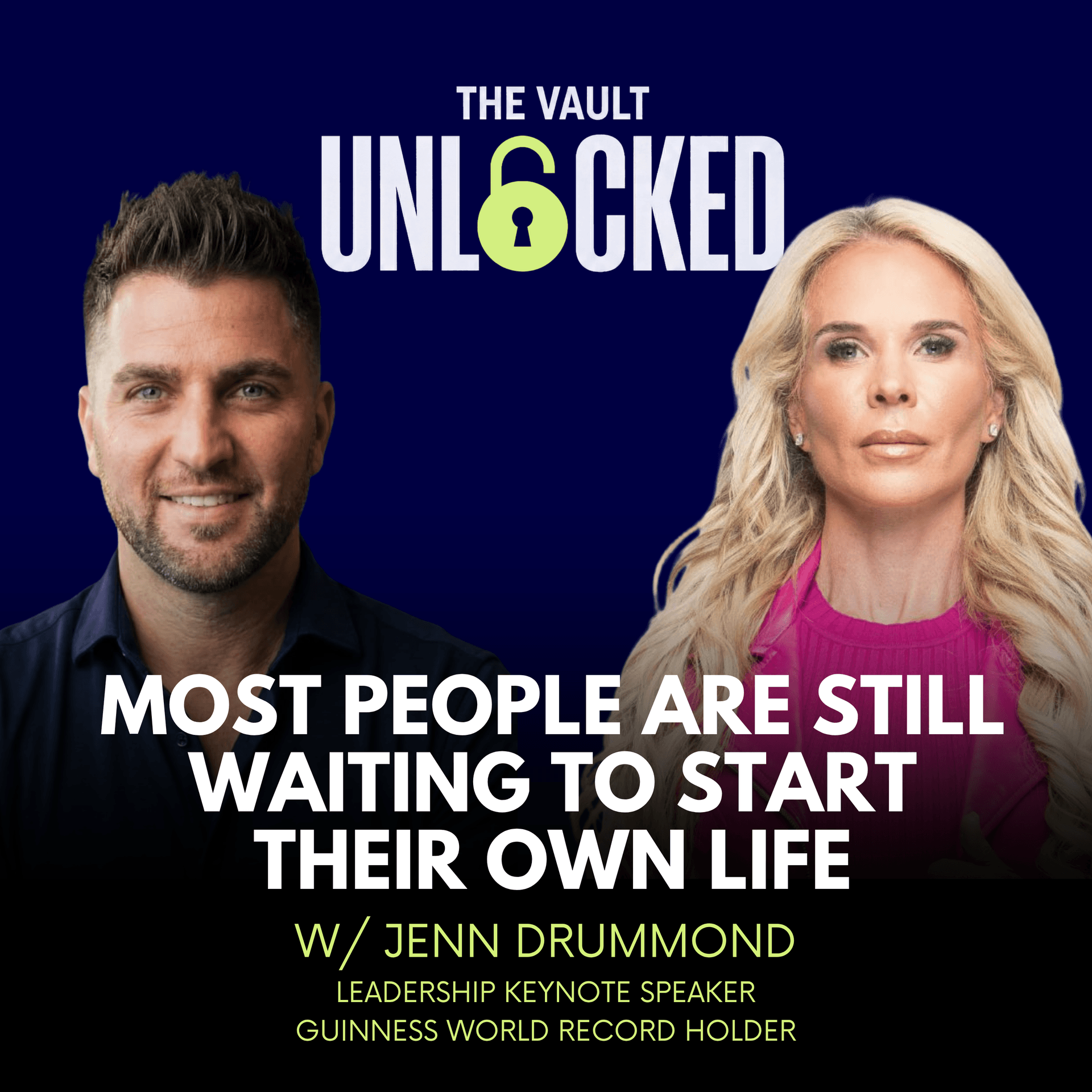
Resilience and identity rebuilding after a near-fatal December 2018 car accident, leading to Guinness World Record mountaineering: becoming the first woman to summit the seven second-highest peaks across all seven continents. The episode also covers fear management via exposure therapy, setbacks (including a teammate’s death on K2 and having to return), and a post-record shift toward “somedays” experiences with family and paying groups.
Guest backgrounds
Jen Drummond grew up in Michigan, studied medicine, pivoted to finance/business, founded a white-labeled investment platform, then became a mountaineer with “zero” background. She later had fertility struggles and has seven children.
Key claims
Resilience is built “one decision at a time”; fear doesn’t disappear but becomes manageable; “when you think you’re done, you’re almost never done”; life is analog—create experiences, don’t optimize everything.
Notable examples
Indoor climbing fear at 10 feet; Guinness continent disputes requiring Mount Rosa (Switzerland) and Sumantri (Indonesia); K2 failure after an avalanche; “somedays” plans like front-flip foam pit and indoor skydiving.
Written by AI. May contain mistakes. Listen to the episode to check what was said.
Chapters
Tap a time to open that second in VOFrom Ordinary to Extraordinary: Jenn's Journey
0:48 to 2:36
Jenn shares her background, journey into business, and the impact of a near-fatal accident.
“Well, Jen, I'd like to say, I mean, welcome to the show.”
Climbing the Seven Second Summits
2:36 to 5:04
Jenn discusses her ambitious goal to climb the seven second highest peaks on all continents.
“I made a bucket list of things I wanted to do before I die.”
Overcoming Adversity in Climbing
5:04 to 7:06
Jenn reflects on the challenges she faced, including additional climbs required by Guinness.
“And how long is not so much, would you say a dumb blonde climbing a mountain anymore?”
Training and Confronting Fears
7:06 to 9:10
Jenn explains her training process and confronting her fear of heights.
“But what happened was when I came home with the concept, my kids, I was talking to them about it.”
The Perspective of Climbing for Others
9:10 to 12:06
Jenn shares her insights on climbing for a bigger purpose and empowering women.
“It's not that hard, but you're actually rock climbing.”
The Climb for Others
14:00 to 15:00
Understanding personal motivations through shared experiences.
“And that woman is like the cook who's helping with those kinds of activities.”
Different Challenges in Climbing
15:00 to 18:00
Exploring the various skill sets needed for different mountain climbs.
“I mean, every one of them, like that's just unfolded in these magical ways that I had no idea.”
Facing Adversity in Climbing
18:00 to 21:00
Dealing with loss and the impact of tragedy on mountain expeditions.
“You're talking like seven to 14 hours of driving, 55 miles to hike into the base.”
Transformation After a Car Accident
21:00 to 27:00
How a near-fatal accident prompted a major life awakening.
“It's it's so interesting in in the car accident.”
A New Perspective on Life
27:00 to 28:00
Gaining appreciation for small moments and family dynamics post-accident.
“Someone goes by and rollerblades to our fighting.”
Show all 17 chapters
Embracing Life's Nuances
28:00 to 29:30
Explore how a near-fatal accident shifted Jenn's perspective on life and priorities.
“Like, well, you don't have the trash bag out.”
The Quest for New Challenges
29:30 to 31:30
Jenn discusses her drive for new achievements and the struggles of balancing ambition with family time.
“I mean, we do, if we didn't, you would fly the top of Everest, like take some photos and like jump on the helicopter, right.”
Focusing on the 'Some Days'
31:30 to 33:50
Learn about Jenn's initiative to prioritize meaningful experiences with loved ones.
“And so then now all of a sudden you have, like, it just, it doesn't work.”
Transforming Dreams into Reality
33:50 to 36:50
Jenn shares her journey of helping others fulfill their dreams, including creating an app.
“Why did you like do the things that you did and how did you make those decisions?”
Resilience Through Adversity
36:50 to 42:00
Explore Jenn's personal stories of resilience and how they shaped her life and achievements.
“And I thought like, well, if I have the app, then I can have the data and I can be like, oh, like a hundred people have see the Northern Lights.”
Pushing Beyond Limits
42:05 to 44:15
Learn how to push past mental limits and embrace challenges as opportunities for growth.
“I mean, I think when you have children, you realize as far as you can take the baton and whatever you're doing, you do that so that you can hand it off to them and let them go further and farther and create more.”
Creating a Life Worth Living
44:15 to 45:54
Discover the importance of defining your own life and creating meaningful experiences rather than following societal expectations.
“but know that I was going to go until it happened.”
Transcript
Automatic transcript. May contain errors.0:00Most people think resilience is something you either have or you don't. It's not. It's something you build, one decision at a time, usually when everything is telling you to stop. Today, I'm sitting down with Jen Drummond. Jen is the first woman in history to summit the seven second highest peaks across all seven continents. She started with zero mountaineering background, discovered a fear of heights 10 feet off a climbing wall, and still went on to complete nine climbs across four years to earn her place in the Guinness Book of World Records. We're getting into what it actually takes to move through fear, how she rebuilt her identity after a near-fatal car accident, and why the moment you think you're done is almost never the moment you're done.
0:46This is The Vault. Let's unlock it.
0:57Well, Jen, I'd like to say, I mean, welcome to the show.
1:01Jenn Drummond:Thank you for having me today. Super excited to be here. Well, I'm excited because before we were talking, before we kind of, you know, we jumped on, you're telling me climbing mountains, changing lives, going from achievement to alignment. I mean, all these things that, you know, even as business owners, as humans, we need, but really, and then 360, there's something you were saying about your, your, this new project you're working on. So I'm excited to jump in all of them. But for the listeners that might not know who Jen is, why don't you tell us a little bit about where you started and where you are today?
1:31Jenn Drummond:Yeah, definitely. I grew up in Michigan, smitten with the mitten and was an athlete my whole life. Went to college to study medicine. My professor said I wasn't cut out for it because I didn't like the library or knew anybody in my classes. So suggested I get into something else. And my business law teacher said, yes, you should be in business. What are you thinking? I got into finance, thankfully, because I would have probably financed purses and shoes if I didn't learn the compounding value of money. And then I started my own company that white-labeled an investment platform for institutions to utilize, which ended up doing way better than I ever imagined.
2:10Jenn Drummond:Decided to step away from that and raise children, which was super fun until they went to school all day long and I didn't know what to do with myself. And I really like creating things. I got into a car accident, which reminded me that this time here is not forever. And all these things I had pushing for when the kids go to school, then I'll do this. When they go to college, I'll do this. And all of a sudden, I brought a sense of urgency into doing those things now. I made a bucket list of things I wanted to do before I die. On that list was climb a mountain. I was going to climb a mountain named Ama de Blom.
2:46Jenn Drummond:And my son heard it as I'm a dumb blonde. Oh, wow. And upped that to Everest. And so I'm like, fine, I'll climb Everest. I'll show you whatever Everest is we can summit. So I had to hire a coach and the coach is like, I think I got one better. How about you become the first woman in the world to climb the seven second summits, which I didn't know what they were. And I'm like, what? He's like, yeah, I know the second highest peak on all seven continents. He goes, think about it. Seven mountains, seven continents, You have seven children. It's a jackpot. I'm like, I've never slept in a tent before.
3:21Jenn Drummond:He's like, oh, those are details. And so then I started on this pursuit, which really reflected a whole bunch of business lessons I had learned before on building my own company and scaling that, that we got there, did that. And here we are. Here we are. Wow. I mean, this is why I said I was excited. Where do we go? I, okay. I, I, I'm really excited about the, the seven, uh, seven mountains, seven second highest mountains. Yeah. So like K2, like that would probably be the most famous one in the list. So I used Everest as training ground to prepare for K2. Okay. Yeah. And you're, so you're the first woman in history.
4:02Jenn Drummond:Yeah. Documented history. Yep. Page 86 of the Guinness world record books, my friend. to, to, uh, to climb the second tallest mountains in seven, uh, con. Yes. And then of course, because anybody out there building, creating, or doing understands that there's fall summits. And so I sent in all the documentation, had everything ready for Guinness, all seven continents and Guinness comes back six months later after auditing everything, they're like, you know what? There's a dispute on what's a continent. So we need you to climb two more mountains. I'm like, wait, wait, wait, how can there be a dispute?
4:44Jenn Drummond:And they said, well, sometimes Indonesia is considered part of Australia instead of Asia. And if that's the case, you need to climb a mountain in Indonesia. And then because of the geopolitical turmoil in Russia and Europe right now, we really think you should climb the mountain in Europe if we exclude Russia from Europe. So I went to Switzerland to climb Mount Rosa and I went to Indonesia to climb Sumantri and then I got it done. Wow. And how long is not so much, would you say a dumb blonde climbing a mountain anymore? Right, son. Right. You're right. How long did it take you to do all that? So I started, I started in the winter of 2020.
5:25Jenn Drummond:So it was interesting. This goal kind of came about after that car accident, which happened in December 2018. 2019 was that big reflection of year, like, why am I here? What's my purpose? Why was I saved? And then 2020, I was turning 40, but then this thing called COVID entered the scene and kind of disrupts my climbing plans. And then towards the end of the year, actually Chile opened. And so when Chile opened, I climbed Ojos del Salado, which is located in the Atacama Desert. And that was my first of the seven second summit climbs. And then all of 21 climbed and then 22 and then 23. I thought I finished in June 1st and then Guinness World came back and I said, OK, well, at that time, my next mountain was in May of 24.
6:11Jenn Drummond:And then I finished it October 9 of 24 with a Sumantri in Indonesia. there uh there's so much here because i'm thinking there's so much adversity i hear in this in the sense that business life i mean comes our way to think that you've done something this big and then to find out now you gotta go not one more two more uh and it sounds like you you just were like okay no problem but surely there there must have been some things going on internally externally for you to feel a certain way? Or did you just, nope, okay, let's just go back to training and get it done? You know, for me, the entire pursuit was a unique challenge in the standpoint of one had never been done by a female before.
6:58Jenn Drummond:Two, I was 0 % qualified as a mountaineer, right? Like I relate to the Four Seasons Hotel than a Four Seasons tent all day long to this day. But what happened was when I came home with the concept, my kids, I was talking to them about it. Like, Hey, I'm thinking of doing this. Well, they started claiming continents. And so all of a sudden they were equating like a mom climbed my mountain. She loves me and she didn't climb yours. She doesn't love you. Right. And that's what kids can do. And that was kind of the first lesson in truly accountability is love. Like at some level, like when you have people around you that hold you accountable to who you are and what you're capable of doing, sometimes that rattles us, but that's love at its deepest form.
7:42Jenn Drummond:And so then when the Guinness came back and said, Hey, there's two more mountains. I had two choices. I could fight it and throw a fit and be like, no, this is why and blah, blah, blah, blah, blah. Or I could just be like, Hey, this is life. I'm going to go climb those two more mountains. What's next? Bring it to me because I'll take it. Right. And so, and when your kids are watching, you show them that when you think something is done and it's not, you get to decide how you want to respond to that. And I was going to respond to it. I was like, bring it, let's go. And that's how I hope they respond to things if someone challenges them.
8:17Absolutely. On average, just so I have an understanding, how long did it take you to climb these mountains?
8:22Jenn Drummond:Well, every one of them is different, extremely different. So for example, Mount Kenya is the second highest point in Africa. It's actually about a 22 pitch rock climb. or Kilimanjaro is like a hike right big difference um that one only takes a day to climb and in fact you have to be really quick to climb it because you're at the equator and you only have 12 hours of light so you want to be climbing this thing and repelling this thing in the light so you're racing the clock the entire time you're doing that one because the sun rides at 6 a.m and the sun sets at 6 p.m stop for a second we're talking you're you're like mountain you weren't hiking You were doing because I know like I've heard the whole Mount Everest is more of a bougie like it's not real climbing.
9:11It's not that hard, but you're actually rock climbing. You're harnessed in, but you've never been harnessed in before.
9:18Jenn Drummond:Well, no. So we knew that climb was on my list. Right. So this this is an awesome story. Everybody listening will hear this. So I'm like I do a hostel salado. I have success. So I'm feeling pretty good about myself and like the next climbing season, because mountains have climbing seasons. It's kind of like, oh, you can climb Mount Kenya. And he's like, have you ever rock climbed before? I'm like, no. He's like, do you have a fear of heights? I'm like, no, I've been on skyscrapers, roller coasters, chair lifts. Like I'm good. He's like, okay, well, I need you to go buy this gear and go hire a coach and go to the climbing gym down in Salt Lake City.
9:51Jenn Drummond:So I live in Park City and start training with an instructor just to make sure, you know, all like the key moves. Okay, cool. So I show up down in Salt Lake City, probably a little arrogant, to be honest with you. And I'm like, Hi, I'm Jen. I'm the one that booked the lesson. I just need to get some training before I go climb Mount Kenya. And so this coach is like, okay, perfect. So he's like teaching me how to tie this knot and like put the shoes on and like all the things is like the best way to move forward is for you to go get on that wall. I can see what you're doing. And then we'll build a plan around where you're at.
10:20Jenn Drummond:Like, okay, perfect. So I go up on this wall and I'm like, do you want me to follow a certain color? Cause indoors there's colors, right? There's whatever, not outdoors. Like when you get outdoors, you're like, where's my purple holds? I want purple. Why don't you have any purple out here? So anyways, I'm on this wall and I'm 10 feet off the ground and I start shaking. My heart wants to come out of my chest. I'm like my vision tunnels. And I look down at my coach and he like gives me the finger to come off the wall and come talk to him. So I come off the wall and I'm like, what just happened? Like, what's going on?
10:58Jenn Drummond:He goes, I think you have a fear of heights. How can I have a fear of heights? I can't have a fear of heights. I have to climb 17 ,000 feet. Like I can't be afraid at 10. He's like, well, that's what it looks like. I'm like, oh my gosh, what do we do? He's like, well, we're going to have to do exposure therapy. I'm like, exposure therapy? He's like, yeah, you're going to have to learn how to climb with the fear. And I'm like, okay. So he's like, what you're going to do is you're going to go on that wall. You're going to reach one handhold higher. And then you're going to come off and reset, drink some water, get a snack.
11:30Jenn Drummond:And then we're gonna go back on that wall. And when you feel the fear, I just need you to go one handhold higher. And lo and behold, after like 30 days of wanting to vomit and probably losing weight, because I was so stressed from the whole experience, like I got it. And then fear never went away, but it was something that was like, okay, here's how it feels. And here's how I can manage it. And I could, I had proof. Like I used to be scared there and now I'm scared here. Right. Like I'm good. Um, so when we got to the actual climb, I was like, oh, I really liked it when I had purple handholds.
12:03Jenn Drummond:Yeah. I mean, you, surely you climbed outside, but like a lot. I, well, no, cause I literally like climbed my first mountain in December, right. Like a summit of December 16th or something. And then I went to Kenya in February. And so then what happened is when you live in Salt Lake, you can't climb here in the winter because it's snowing. So we went to Vegas for a weekend in February before I left for Mount Kenya and then had like one weekend to practice because even though the climb is only 12 hours, it takes you, I don't know, I think like about six days to hike in to where the mountain is that you need to climb.
12:44wow yeah wow this is fascinating i i hope when people are listening to this they're they're understanding like what what's coming up for me is like the only limitation in life is your mind like it's not like it just it's insane like i i were i live actually in like what they call is like the mecca world-class climbing like outdoor climbing um and i've been on the mountain and It's no joke. I'm not a climber. I don't like it. It's not my thing. But I've been harnessed up. I've done crack climbing for 30 minutes, maybe 20 minutes. And I wanted off that mountain. And I come from a very professional sports background as well.
13:28But to go from never climbing to climbing a mountain for 12 hours on a harness is in having what it sounds like maybe a couple weekends of practice beforehand. is just wild.
13:43Jenn Drummond:It's wild, right? It's when you look back on it, but when you're in it and you land in Africa and you are with all the people that are going to help you and there's only one woman on your team because the women there do not have the same privileges that we do here. And that woman is like the cook who's helping with those kinds of activities. and you try to get to speak English with her a little bit. She can't really that well. And she looks you in the eyes and she holds your hand before you go to leave to climb that mountain. And you realize I'm not climbing this mountain for me. I'm climbing this mountain for her to show her that we all just need to keep climbing to get to where we want to go.
14:30Jenn Drummond:And we all start at different places. And so for me, it was like, anytime that fear showed up, I was like, I need to turn around or this is getting overwhelming. me. And I'm like, girl, you're not allowed to say that. Like, look at where you come from and look where these people are. You have to show these men what women are capable of. So they start believing that their women are capable too. Wow. Wow. There was a, there was a deeper reason behind all of this. You start off with the kids and then it turned into women and then it turned into like a lesson. Wow. I mean, every one of them, like that's just unfolded in these magical ways that I had no idea.
15:05Jenn Drummond:But when you got there, like, okay, this is what it looks like. This is what we're doing. And did you grab a team or get together a team that went to every mountain with you? Or was every mountain a different team, like a local team? Every? Okay. So some things I learned there too. This whole thing was like a big science experiment. Everything like you kind of, when you climb the second summits, you do have different teams because unlike the first summits that are almost all hikes, right? So Everest is a hike, Kilimanjaro is a hike. All of those are hikes at some level, some on snow, some on dirt.
15:42Jenn Drummond:When you do the second summits, like we had the rock climbing one, I had some ice climbing in Antarctica. I had to ski one in Canada. Stop. You are not ice picking up a mountain without any experience. Well, I mean, you get experience, right? Because you have to be ready, but I didn't start with experience. And so like the second summits have this whole different skill set that you need because it's not just hiking. It's all these different pieces. Yeah. And so then you have to hire different people because not everybody has those skill sets. And then also like I started with, I'm going to hire the guides in the country that I'm going to climb in to support their economy.
16:22Jenn Drummond:And then after having a few experiences, I was like, you know what? First, I'm going to hire for safety. And then I'm going to hire for the people in that country. Because you quickly realize like we have like IFMGA guides or some of these certifications that other countries don't require. And you're like, next time we're going to do things a little bit different because safety is first. mm-hmm i want i do actually want to come off this mountain and talk about it yeah yeah yeah exactly wow wow it's just it's it's crazy to me because i i understand how hard it is to train for one but out of nowhere you just went like it sounds like three years four years you did seven uh well actually you did more than you did nine i did nine yeah and then also like i like I failed K2 the first time I failed Mount Logan the first time What does that mean?
17:19You couldn't get to the top? Couldn't get to the top Tired? Exhausted? Just Worse
17:25Jenn Drummond:Worse On K2 One of my teammates died in an avalanche Oh And so when you have that happen You have a choice To continue to climb Or to go back down And I'm like I'm not climbing a mountain When a teammate passed away Like I'm going to go back down The mountain will always be here Who will show up as people is way more important than what we achieve. I'm going to go take care of my team. And so I had to go back to K2, which is like a huge deal because it's extremely expensive to climb. It takes a ton of time and training. To get to Pakistan, you're talking 36 hours of flights. You're talking like seven to 14 hours of driving, 55 miles to hike into the base.
18:08Jenn Drummond:And then you're waiting for great weather to climb that mountain. And then you reverse all of that home. And so when you make that decision of like, hey, I'm turning around, it's not like, hey, I'll be here next week. It's like next year when the climbing season opens again, I'm going to come back and do all of this. Yeah. Yeah. So we've had a while. So we I mean, that's mad. An avalanche and you're lucky you didn't get taken out. I'm extremely lucky that I didn't get taken out. Yeah. Sorry to bring that up. Man. the tribulations that go through this, right? It's not all the successes you hear about.
18:45Jenn Drummond:No, there's so much that just doesn't get said or isn't talked about because everybody loves to celebrate the highlight reel, right? And when we're building or creating or doing, there's a lot that goes on so that there can even be a highlight reel. So speaking of the highlight reel or the dim light wheel or the life-changing reel, you said you had a car accident. It's interesting because I've been in that, I've probably been in that similar situation where you're, you probably died and came back. I think I didn't quite die, but I had the choice. Like I was in that space where I had the choice of like dying.
19:29Jenn Drummond:And I was like, I'm not ready. I'm like, I promise I'll do something significant. can't like let me live. I'm sorry that I got caught up in all these false things. And I'm back on, I'm like, put me back in the game coach type of talk. So let's talk about, uh, do you want to talk about the car accident or do you want to talk about it? Yeah. I mean, so the car accident I think happened for me, to be honest, I think the universe gives you these cues along the way. And if you don't hear them, they get louder and louder until you can't ignore them. And I was not living my path. Like I, I was that mom in the school classrooms running like PTA things or holiday parties.
20:11Jenn Drummond:And there's women that love that. And they thrive in that space. I was like, their kids eating glue, like don't eat glue. Right. Like it just wasn't my like skillset. And when I kept like, that's all I saw as a successful mom and that's what made a good mom. So I kept trying to be something I wasn't. And so when I got in that car accident, And it was like, okay, are you done? Like pretending you're all these things that you're not. And can you start like standing up for why I put you on this planet? And so then all of a sudden it became this big awakening of, is this me or is this society or like whatever, because I either disappoint you or I disappoint myself.
20:47Jenn Drummond:And if I disappoint myself, I'm disappointing my creator. And so it was like, it like gave me so much permission to kind of say F you to everything that didn't feel right. And then that's when like things just went through the roof for me, like on meaning and significance and success and all of it. It's it's so interesting in in the car accident. Was it like they did it flip that it was. Yeah. So like it was interesting because I was paying attention to the side of the road and I was like thinking, you know, you're daydreaming. Why hasn't the reservoir flow frozen over yet? Are we going to get enough snow so we're out of the statewide drought?
21:25Jenn Drummond:like all these thoughts, something grabs my attention. I look at the highway and I realized I was coming up hot in a semi-truck going slower than a snail. I was like, Oh, okay. Okay. And so you look in your rear view mirror. I'm like, Oh, I can get over. I went to get over and I didn't quite make it. And I saw the second trailer of the semi-truck hit the corner of my passenger side. And then the car went like fast, right? Like externally I could go, I was flipping. So I I went like dirt, sky, dirt, sky, dirt, sky. And then I'm like, I don't have enough momentum. We're going to start going sideways.
22:00Jenn Drummond:Then I rolled sideways and then eventually it stopped and I was hanging upside down in the median. So that's all happening. What in 15, 20 seconds? I don't even know. But internally it was like slow motion in 30 some years of my life was flashing forward of like things I did or didn't do, or like thoughts I had and memories I was thinking about. And it was just really like awakening moment. And I remember hanging upside down and I started like sound started to return and like, like you're, I started to smell and I was like, huh. And this guy peeled back my windshield. And when he peeled back my windshield, he was like, are you okay?
22:45Jenn Drummond:Which I realized he'd probably been saying a couple of times, but I just wasn't kind kind of putting the words together. And so he looks at me and I'm like, I must not be okay. Because no one looks at you like that if you're okay. And I was so afraid to look at my body because I was like in my head, I was like, I said, I wanted to live. I said, I want to live, but I didn't say anything about not being handicapped. Like, why did I bring that out? Because your body's like so warm. And I'm like, okay, I don't want to look at my body. so I closed my eyes and I wiggled my fingers and toes and I was like wait wait I can feel my fingers and toes I can feel my fingers and toes and I was saying it out loud I guess and he goes if you can feel your fingers and toes you're going to be okay we just have to leave you here till the ambulance comes because I don't want to move you and have something go wrong and that was one of the first aha moments of if we look outside of ourselves to get permission to be okay we're never going to be okay because they're looking at it from an entirely different circumstance.
Read the full transcript
23:48Jenn Drummond:But if we can learn how to close that world out and close your eyes and get back in your body and be like, okay, I can feel my fingers and toes. Everything else is a story. And you can rewrite that story any single time you close your eyes, feel your body, say, okay, what do I want this to be? And then you start writing that. if we that's a quote if we are waiting for the outside world to tell us that we're okay we'll never be okay
24:20yeah that one hits yeah wow interesting wow okay so you're hanging off the median you're hanging into the median at this point car's done a couple flips and uh you've came to and you've realized that you've had another second chance or did anything happen to you uh in that moment where you just knew you were someone different or like did something change and shift internally externally or you just knew as a just consciously like this is a second chance of life that's not yeah well
24:55Jenn Drummond:Well, like, so I think it like shows up uniquely. So anyways, that what really shocked me, which is sad that I would even say this, but I like, I'm like, I'm not hanging upside down until this damn ambulance comes like cute, but not happening. So I am buckle myself and I crawl out of the car despite everybody being like, don't move. And out of nowhere are people that have water, have blankets, have like a jacket. somebody's like my I have the sunroof so like stuff through through the sunroof so they're collecting all my stuff from wherever putting it together they're like how can we help you who can we call and I just remember like sitting there thinking what a beautiful world we live in like these people like just are so loving and caring I was like I want all their numbers I want to make everything even I want to like you know like all that kind of like you're whatever And in my, like God was like, just, you just have to receive right now.
25:54Jenn Drummond:Like you're going to pay back everybody in their own way right now. You just have to receive. And so then I like received, I went to the hospital. They ran every test under the sun. I somehow like walked away unscathed, which is no one can even, you should see the car and it doesn't make sense. Yeah. And then I go home to my house and I like, don't open the front door just yet. Like my nanny's with the kids. So like, I'm sure whatever, I don't open the front door. And I just looked at that front door. I'm like, man, three weeks ago, I hung up a Christmas wreath on this front door. And I was like, I need a new front door.
26:35Jenn Drummond:I have scooter marks on this thing, dog scratches on it. Like, like, you know, like just dirt, right? Like the front doors, whatever. And I remember like walking to that door and I'm like touching it and being like, this is my life. Like these are my stories. This is proof I was here. I'm so grateful. I didn't change this front door. And then I opened the door, right. And I have seven kids and there's pizza on the counter. Someone goes by and rollerblades to our fighting. And like, I'm sitting there just taking in all these moments. And one of my kid catches me and he's like, mom, are you okay?
27:12Jenn Drummond:I'm like, why? He's like, because you're not mad. I'm like, what do you mean? He's like, well, we got a mat. Like he's like pointing out all the things that I'm noticing, but instead of responding, I'm just witnessing. And I just remember thinking, I have two kids in the corner that are fighting right now, but they're fighting because they love the other one so much that they want the other one to think the same way they do. So they feel feel safe. And instead, like before I would just butt in there and have my opinion and separate it out. And it was like, just these moments of this life is so beautiful.
27:49Jenn Drummond:Like in the most, like in the ways that I never witnessed it or experienced it or whatever. And then, you know, this accident happened a week exactly before Christmas. So the next week's Christmas and the kids are opening presents and I'm sitting there watching and they're like, mom, are you okay? I'm like, why? Like, well, you don't have the trash bag out. You're not picking up all the wrappers. Like there's rappers everywhere, mom, like what's wrong. And like, I think that mom's gone. Like this mom is just, I just love those little fingers opening those presents. I don't want to miss watching those fingers open those presents and like just everything changed.
28:22Yeah. The appreciation for, for life and just the little nuances that I think as a business owners, for sure, whatever, when you're busy doing one thing, you miss a lot of the other things that actually are more important sometimes in life. Yeah.
28:36Jenn Drummond:Or like as a business owner, we're so used to optimizing. Like, how do I optimize? How do I make it better, more efficient, more effective, whatever. Like some parts of our life are not meant to be optimized. I feel like, like the universe gave, I feel like the universe came here for you to talk to me personally, because it's like everything you're saying, I'm like, yeah, that's me at Christmas time. I'm the guy with the bag, making sure we're cleaning up everything right away. Cause my dad did that. So that's what I thought. And then right when you said optimize, I'm like, Oh boy. Oh yeah. I've been trying to optimize everywhere else in my life instead of realizing the only thing that needs to be optimized is the business and everything else just can be.
29:17Yeah. I hear that. Wow. What? I mean, this is so interesting. And now you're working on a new product. Yes.
29:27Jenn Drummond:So we're going to a new project because our personalities, like all of us business owners are on here. Like we love the build. We love the climb. We love like the challenge. I mean, we do, if we didn't, you would fly the top of Everest, like take some photos and like jump on the helicopter, right. And exit. But no, we want like the story and the setback and like, I overcame this and whatever. Um, so for me, I can get addicting, right? So I do, I do the first world record and for, and then everybody asks you like, what's next, what's next. And that is a hard question for me because I love chasing things.
30:02Jenn Drummond:I love pursuing things. I love that, like whatever. And my mind was telling me, like take a season of winter, Jen, like just don't achieve something like let your kids see what it looks like when you're not in the newspapers or you're not doing this hard thing or whatever, like let them have a chance to witness recovery. But of course, like I, like I want to say that, but then like the, the bug gets bit and someone's like, what's next? What's next? I'm like, well, I'm going to climb the highest peaks of course, because yeah, And I only had three mountains left to set the record as being the first and only female to climb the highest and the second highest peaks.
30:38Jenn Drummond:And how I justified it like this, we get tricky. People you're listening is I dropped my oldest off at college and I sobbed like a baby. And I was like, oh, my God, this time does end. He leaves like I only have six left at home. Like, how am I going to maximize time? Well, these climbs that I had left, the kids could do some of them. and so I'm like now I get to train with them we get to plan the trip together we get to do the thing together like this is amazing like this is how I'm going to like sell it to myself and everybody else and whatever and so then all of a sudden I'm like I have one mountain left and I'm like if I have one mountain left I'm going to get asked this question again like what's next and I'm like I am not going for any more mountains because the reality is is like eventually you realize the people you want to spend time with, the better you get at something, the less people you can do it with because you're such an expert at it.
31:32Jenn Drummond:And so then now all of a sudden you have, like, it just, it doesn't work. They can't go to those territories or those terrains are way too extreme. And so I'm like, okay, I know I need something or I'm going to implode. I'm like, okay, I know what I'm going to do. I'm going to focus on my some days. And we all have a some days list, like that list, like someday I'm going to do this or someday I'm going to do that. And I'm going to get serious about my some days list. And I'm going to make sure that every single date in the calendar year, so all 365, have some kind of memory tied to them. And it doesn't have to be climbing Everest, right?
32:07Jenn Drummond:It could be, we're going to go watch a sunrise together as a family, or this last spring break, all of us went spearfishing for the first time. And so it's been really this, how do I get to do these things with people that I love and care about. And then also get other people to start getting off of autopilot and getting intentional about their lives. And the crazy thing is, is like everybody I bounce the idea off of, I'm like, what's on your someday list that you haven't done? It takes everybody like three seconds to tell me like whatever that thing is. And then I'm like, let's go do it. So like last week, there's this guy who owns this company called Aegis, which is like making people over 50 cool and, you know, super successful.
32:48Jenn Drummond:And he's like, I've always wanted to do a front flip into a foam pit. And I've always wanted to do one of those indoor skydiving things. I'm like, okay, done. I sent him an email back. I'm like, I booked us the next two Tuesdays. We're going to do this on this Tuesday and this the next day. He's like, what? I'm like, no, we're doing this. He's like, I'm 67. I'm like, I don't care. You said you want to do a front flip into foam pit. We're going. And so we did, right? And then we just did the skydiving thing. And now I have like some of these adventures coming up, which are really other people some days that I get to be a part of and I'm loving it.
33:21Yeah. That's so is that, is that what you're doing or how would people implement their some days and getting to see that? Is that.
33:28Jenn Drummond:And kind of being a part of it. And like, so really what happened was I'm done with this record soon and I need something else. My grandma passed away. And when my grandma passed away, I realized like all the things that I lost about her and I don't have the chance to ask, right? Like when did you decide to play basketball or why did you give up basketball or why did you open the store? Why did you like do the things that you did and how did you make those decisions? They're gone. I know her birthday and I know her death date and that's about it. My dad just got diagnosed with early onset dementia and vascular, um, or Alzheimer's.
34:07Jenn Drummond:and I'm sitting there thinking, what are the things that I want to know about him before he leaves? And I can't access those memories anymore because he can't access those memories. And then I think about my seven kids that are watching me right now. And listen, the extraordinary takes care of itself. It's teaching them how to make the ordinary extraordinary and like what we can learn from each other and what we want to know about each other. Like if I died, I don't want them to be like, well, my mom set these world records. words like I want them to know so much more about me and so now this is giving me permission to do that and I do better when I'm with other people so now I'm like including other people and it's it's been really cool to see what's happened so far is this this is a and I'm trying to understand is this like a business or is this just more of your past time now and you're helping well so it's starting as a past time right and now all of a sudden it's like I for example I'm taking a group to Kilimanjaro at the end of July, beginning of August, because it was like all these people had always wanted to go.
35:12Jenn Drummond:And they're like, well, now I got to go with a world record holder, like done. I'm like, okay, let's do it. And then another person has always wanted to do this trek in Iceland. That is like one of the most gorgeous treks in the world. And they're like, hey, can I pay you to go do that with me? I'm like, you can, I am available. Yes. Like, yeah, I like that. Getting paid to do cool shit. And watching other people live their like Sundays in reality. Right. And like once they get this some like their first one of the momentum under it, they get so excited and then they want to get somebody else to do it.
35:50Jenn Drummond:And so we're kind of actually looking at even putting together an app where people would just put their some days in it. And then if it matches somebody else's like we could put together some stuff for people to have. Oh, they better not say that. That's interesting. Yeah. Yeah. Yeah. It's from the app. Yeah. That's a really interesting, like thinking about that, if marketed well, that's a huge product. Because there's so many people that... Are waiting for permission. Well, we're going to have that conversation. My God, they are definitely waiting for permission. But I think they've even lost their ability to give themselves the permission.
36:26They're not even waiting. And they've just lost their ability to dream or even, or a dream into existence and having an app that they can do that. And then finding out that the neighbor three doors down had the same someday and they can go do that together. I mean, think about bringing people together, bringing people together to do what they love in real life. In real life. That's powerful. I like it.
36:49Jenn Drummond:Yeah, no. And I thought like, well, if I have the app, then I can have the data and I can be like, oh, like a hundred people have see the Northern Lights. And then you could be like, okay, we're going to go do this at this time. If it feels good, like join in, it's on your list. Yeah. There's a lot of businesses. You can, I can already think of all the, the spinoffs of how you can work with the organ, like, like the places and the organizations to host this and all that. Yeah. Huge opportunity to become a, a dream maker and an event hoster. Who knows? I'm here for whatever shows up next. So I never thought I was going to climb a mountain before that car accident.
37:24Jenn Drummond:So you never know. Someone's asking the question as a parent of two kids. Nice. Seven. Seven. Seven. Yeah. But let me tell you the story on seven, because I think it tells a lot about who I am as a person and all of our experiences shape us into the decisions we make in our futures is I struggled with fertility and I had the biggest shame story about it. Like the one thing a woman's born to do is to have kids. And it's the one thing my body won't do. Like all the terrible things you can say or think about yourself. And so I went to a fertility treatment center. And again, it took us a little while to get everything going.
38:04Jenn Drummond:And then finally, they came up with a chemical cocktail that turned me into a chicken. And I hand out a whole bunch of eggs like all of a sudden, right? Like I was like, we had no eggs and I had a bazillion eggs and whatever. And so they fertilized these eggs and they planted two. I had my son, Jack. And I'm like, okay, I have at least one kid. I'm super happy. And then I got a bill from the fertility clinic. I'm like, that must be somebody else's. I paid you plenty of money. And they're like, no, these are your embryos on ice. Like, okay, well, let's walk through what all that is again. Cause I was so focused on having that child.
38:36Jenn Drummond:I wasn't maybe paying attention to all the details and like, yeah, well with embryos, you either use them, you donate them or destroy them. And I was like, oh, okay. Well, destroying them at the time was just not an option. Like, no way. It took me so long to get this one child. do you want me to just like, no, karma is going to come back and I'm going to, no. And then like donate them. And I'm like, so that means like, I grew up with Dr. Seuss and there's this book called like, are you my mom? So like, you're like, right. I'm like, no, I can't. Is that the book I read with my little two-year-old?
39:06Is that like, it goes up to like a bird or the truck. Your mom has like big ears or whatever. Yeah. I'm reading that one to my two-year-old. I love it. I'm like,
39:16Jenn Drummond:oh my God, I can't like wonder if like, are you my kid? Are you my kid? Are you my kid? Like, no this is not an option and so they're like oh you might get two maybe three because they rank them i'm like okay fine i can do like i i grew up with three like i can do three easy and so then i have three and then i have four and then i have five and then there's two embryos left like the worst ones they weren't going to survive the thaw and so i'm like okay we're going to plan them clear my conscience and we're good to go and those two embryos stuck and i have twin girls at the bottom. So I have five boys and twin girls.
39:53Oh my busy, busy, busy home, busy home, but like
39:57Jenn Drummond:the most loving, full active, amazing family ever. And here's the thing. Like it just taught me that if you just keep going and you keep going, I mean, I peed on like pregnancy tests, like every month and was like a failure, failure, failure, failure, failure, failure, failure. And then all of a sudden you have this win. It's when failures happen in other areas of your life, you're like, okay well that's just i haven't played the game long enough yeah i mean it's it's the the store every it seems like from yeah it just seems like you've gone through a lot and i've done a lot and everything that key and i said before there's something that keeps coming up for me and it it seems like there's like you have a resilience to you and i feel like that resilience was in you probably for a very least not born with it for a long time because you said you play competitive sports and you cannot play competitive sports at any elite level without resilience and then uh going through you said med school and everyone has you know we all like i've had that story too you shouldn't be here right and then you find the next path and resilience to learning and going through that and i can only imagine back then and i'm just going to say it what it was to be a woman in the finance world there's i just can imagine what you know they're like are you the are you the secretary?
41:12Jenn Drummond:I'm like, let's go. Yep. Sure. And I'm sure a lot of other, you know, not fun stuff probably. And, uh, and it just seems like whatever comes your way, you, you're like, okay, I'll do it. And then you do it at an extreme level. Where do you think that comes from? I think life is a gift and what we do with it is our gift back. And I'm just so grateful to be alive that I don't know. I don't even win or like when you're doing something big enough, win or lose you win. Yeah. Right. It's like, so if I didn't win, okay, but I attempted and it's like never been done before. So, okay. I didn't win. And if I did win, it's like, okay, amazing.
41:55Jenn Drummond:Now how to make it easier for the next person to do the thing so we can go even further. Is that how you approach life or did that come before or after the car accident? I mean, I think when you have children, you realize as far as you can take the baton and whatever you're doing, you do that so that you can hand it off to them and let them go further and farther and create more. I mean, that's how I mean, think about like how cures for different diseases come up or how different things happen. If somebody didn't keep pushing and pushing and pushing, where would we be? and you're like like I remember again from my car accident I remember like sitting outside in my backyard I said all of this was a vision for somebody all of it like the downtown and the buildings and the restaurants and the roads and the ski resort like it wasn't made like this like this was somebody's dream that they brought to life and then somebody else brought this piece and that piece and that piece and you can just sit in that for a few seconds you get that energy And you're like, okay, bring whatever you want my way.
42:59Jenn Drummond:I got it. Yeah. And that's why I said, I think I said at the beginning of the episode here is the only thing that I think is the limit is the limit we put on our mind. And especially now with AI and everything, it's incredible where we can go and what we can do. And I think it's absolutely incredible where you went from never being, I just can't, like, I know what it takes to be like, I've been down that road. Like I know what it takes to actually be a real climber. Ice picking is not something you just go pick up some ice picks and go climb. Like, yeah, I was so bad at it. I was so bad. Like if you don't throw that thing like straight.
43:39You wouldn't be bad at it. You've never done it. But that's the crazy thing is, but you did it. Like you figured out a way to keep going and keep in. Like so many people would have quit. Yeah.
43:53Jenn Drummond:Yeah. But then, right. But then what? Well, like my whole thing is like, okay, well, I might as eventually I'm going to win. Like, like, like time favors those who keep showing up. So that was just my thought. I'm like, I don't, I didn't have a, I have to do this in two years or I have to do this in four years. My thought was, is this is so significant that if it takes me a decade, it's still awesome. Okay, fine. And so like not having that pressure and just letting it be and unfold the way it would, but know that I was going to go until it happened. Okay. As we come to an end, I'm trying to think what, what, not what's next.
44:30I'm not going to say that for you. I'm not, I refuse to say that, but I'd say as you see where even where AI is going and where this world's going, where do you see yourself being part of it and giving back and or building to make it a better world?
44:48Jenn Drummond:Yeah, I think, just reminding people that life happens in the analog. Like we're not here to consume life. We're here to create it and experience it. So as long as I keep creating experiences for people to be a part of or doing things where people's like, Oh, I want to go see what that is or experience that or try that. Then it helps people keep technology in a space and also life still happening. so instead of letting like what i'm gonna get into that is be create the life you want to live don't live the life that's being given or that's being propagandized around you lately you've kind of mentioned a little earlier but yeah yeah like don't like push back like do don't defer you don't live on autopilot don't like get caught up in optimizing just realize I get to define what a life well lived is and then utilize the tools and resources around you to create that.
45:53Jenn Drummond:And AI is going to make that easier than ever. That's the truth there. Well, I think that's, I mean, thank you so much for joining the show and being here. Yeah. Thank you. People want to find you. Where can they find you? Yeah. So Jen drummond.com. So J E N N. And then all like the social handlers are the Jen Drummond. But yeah. And we'll obviously have those in the show notes as well. But again, Jen, appreciate you for stopping by. Thank you.
From the publisher
Jenn Drummond had no mountaineering experience, no tolerance for sleeping in tents, and a fear of heights she did not discover until she was ten feet off an indoor climbing wall during her first training session. Three years later, she became the first woman in history to complete the Seven Second Summits, standing on the second-highest peak on every continent and earning her place in the Guinness World Records as one of the most unlikely and most documented athletic achievements in modern history.
Jenn Drummond is a Guinness World Record holder, entrepreneur, speaker, and mother of seven. She built and scaled a white-label investment platform for institutional clients, walked away to raise her family, and nearly died in a car accident in 2018 that forced her to stop performing a version of herself and start building from the real one. What followed was nine mountains, seven continents, a teammate lost in an avalanche on K2, and a record no woman had ever completed.
The episode opens on the car accident. Not as backstory. As the diagnostic. The universe gives you cues, Jenn says. If you do not hear them, they get louder. The crash was loud enough. From there, the conversation moves into what it actually looked like to pursue a world record in a discipline she had no business attempting, hire the wrong guides and learn from it, develop a fear of heights mid-training and build a thirty-day protocol to climb through it, and turn back on K2 after a teammate died in an avalanche rather than summit without him.
They also get into what Guinness told her after she submitted seven mountains' worth of documentation and believed she had finished. Two more mountains. Different continent interpretation. Different geopolitical boundary. Jenn's response was not a fight. It was a calendar invite for the next climb.
The conversation closes on what she is building now, a project built around the someday lists people carry but never act on, and why she believes the founders most at risk of living on autopilot are the ones who have optimized everything except the life underneath the business.
If close rate is still your primary metric for a life well lived, this episode will change how you run the numbers.
Questions Answered
-
What does it actually take to pursue a world record with zero relevant experience?
-
How do you rebuild your identity after a near-fatal accident?
-
How do you respond when the finish line moves after you believe you already crossed it?
-
What is the difference between external validation and internal authority?
-
Why do the most optimized founders often have the least examined lives?
-
How do you model resilience for your children without performing it?
-
What does it mean to stop deferring and start building the life you keep postponing?
-
What is the real cost of waiting for outside permission to pursue the life you already know you want?
-
How do high-achieving people know when to stop optimizing and start experiencing?
-
What happens to your sense of purpose when the goal you built your identity around is finally finished?
Looking to dive deeper into these conversations and connect with our host and guest?
Follow Jenn Drummond
Follow Kayvon:
Want to go deeper with Kayvon?