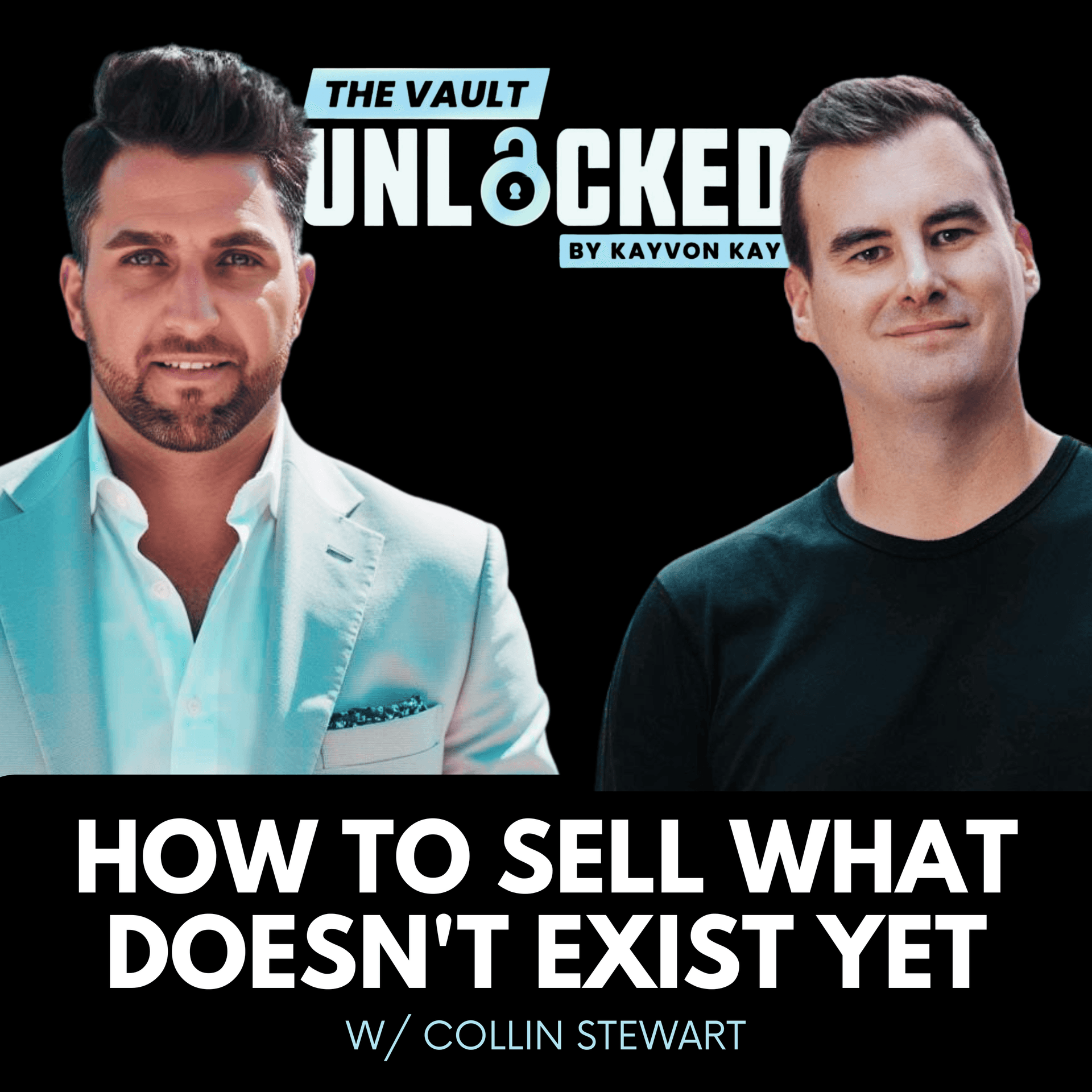

In short
How SaaS founders can get first customers and revenue before building the full product using customer development (interviewing, validating via next steps, and converting to paid pilots). Colin argues most founders do “customer validation” by pitching their idea, instead of asking questions and building a funnel of interviews that measures conversion and velocity.
Guest backgrounds
Colin Stewart is a go-to-market strategy expert. He spent 10 years in sales and helped entrepreneurs start companies/divisions. He went through zero-to-one multiple times, including an 18-month CRM attempt with one deal and no traction, then later built predictable revenue.
Key claims
Product-market fit is a multiplier for every go-to-market tactic. Stronger PMF makes channels easier; copying tactics from other companies (e.g., LinkedIn) fails without context. Relationship-first prospecting and “ask for money/referrals” drive the funnel.
Notable examples
His CRM pivot (2012) from feature-building to manual “wizard-of-oz” service for SDR Salesforce automation, reaching ~$1,800/month then scaling to ~$0-to-$1M ARR in a year. Uber Eats: 327 meetings in a month vs typical 60, credited to Uber’s positioning/offer, illustrating PMF strength (not just sales skill).
Written by AI. May contain mistakes. Listen to the episode to check what was said.
Chapters
Tap a time to open that second in VOColin Stewart's Background
0:58 to 2:30
Colin discusses his journey in sales and the challenges he faced.
“Today, I'm excited because I know you were behind and worked with the guys with Predictable Revenue, which was a phenomenal book I read back in, I think it was 2018, I was handed that book.”
The Struggles of the First 18 Months
2:30 to 4:25
Colin shares the difficulties he encountered while trying to sell his CRM idea.
“Trying to sell this CRM system that was like my idea.”
Understanding Stubbornness and Persistence
4:25 to 6:20
Exploration of Colin's mindset and need to keep pushing through failures.
“It's like, I know I'm good at what I'm doing.”
The Moment of Realization
6:20 to 8:10
Colin reflects on a pivotal moment when he acknowledged his approach was wrong.
“You were 140 % last year, you know, now you're back to 0 % in January.”
Customer Development Insights
8:10 to 10:05
Colin explains the importance of asking the right questions to customers.
“And then I'd work on the weekends from home.”
Transitioning from Idea to Action
10:05 to 12:10
Details on how Colin pivoted to a new approach based on customer insights.
“It was like my daily planner, my agenda, like my pen and paper and suddenly they were gone.”
Finding Success with Manual Processes
12:10 to 14:03
Colin highlights how he successfully generated revenue through manual efforts.
“And then the hypothesis was, well, you know, who has this sales productivity problem the most?”
Initial Customer Development and Validation
14:03 to 16:41
Learn about the first steps in developing a service and securing initial customers.
“It was like, I couldn't, I couldn't handle it.”
Understanding the Go-To-Market Strategy
16:41 to 18:14
Explore the nuances of effectively understanding customer needs before launching a product.
“And so we had paying customers for our like alpha crappy product, like very, very, very early.”
The Importance of Product Market Fit
18:14 to 21:02
Discover how product market fit affects sales strategies and overall business success.
“And then the next times I was going through it, I was like, well, that seems like a pretty strong signal of like the people that go through this as a funnel.”
Show all 19 chapters
Leveraging Relationships for Sales
21:02 to 23:25
Find out how building relationships can enhance sales efforts and customer acquisition.
“We came to the conclusion that Uber gets the credit.”
Customer Feedback and Iteration
23:25 to 26:39
Learn how to effectively gather customer feedback to improve product development.
“Not good for me, but for the audience as well.”
Building a Referral Network
26:39 to 28:00
Understand the strategies for creating a robust referral network to enhance outreach.
“I would say is making sure you're speaking to the right people.”
Connecting with Target Customers
28:00 to 28:34
Learn effective strategies for identifying and connecting with target customers through referrals.
“And then every round, you get closer and closer and closer to the target customer because you're just relying on people that know people.”
The Live Case Study Proposal
28:34 to 29:55
Discover the exciting proposal for a live case study to demonstrate customer development techniques.
“It gets better and better and better the deeper you get.”
Resources for Going Zero to One
29:55 to 30:58
Explore valuable resources including newsletters and books for entrepreneurs looking to start businesses.
“You can also, yeah, I've got some, some stuff I can share at the end, but yeah, I happy to happily do that.”
Understanding the Customer Development Funnel
30:58 to 33:18
Gain insights into the customer development funnel and its importance in validating business ideas.
“So happy to share that if that would be helpful.”
Maximizing Referrals for Sales
33:18 to 34:56
Learn how to effectively leverage referrals to boost sales and grow your customer base.
“And so in, and like, I'm saying this, not as like, I'm the greatest salesperson in the world.”
Deep Engagement with Design Partners
34:56 to 36:29
Discover the process of engaging deeply with design partners to refine your product.
“On average, are you having with somebody from the moment you say, hey, can I pick your brain to them hoping that you continue to move that meeting forward?”
Transcript
Automatic transcript. May contain errors.0:00Collin Stewart:Most founders build for 12, 18 months, then they pitch, then nothing happens, and they spend the next six months trying to figure out why nobody wants what they spent everything building. My guest today went through that. 18 months, one customer, zero traction, and what he figured out on the other side became the framework he now uses to take SaaS founders from zero to their first real revenue before the product is even finished. His name is Colin Stewart. He helped build predictable revenue. He has done the zero-to-one journey more than once. And today, he is breaking down the customer development process that most accelerators skip entirely.
0:42Collin Stewart:If you are building something right now, this conversation changes the sequence. Let's unlock it.
0:58Colin, welcome to the show. Today, I'm excited because I know you were behind and worked with the guys with Predictable Revenue, which was a phenomenal book I read back in, I think it was 2018, I was handed that book. And today, you've taken all the things you learned in that time, and you help founders, SaaS companies go from zero to one. You are the go-to-market strategy expert. And in marketing, going to market is all about that. So welcome to the show. Thanks, man. Appreciate you having me on. Welcome for being here. So tell us a little bit about your background so people understand who you are, why I can confidently say you're the go-to-market strategy expert, and what people can expect from listening today.
1:45Yeah. I mean, spent 10 years as a sales guy. I had the opportunity to help two different entrepreneurs start either a company or a division within a company. And I got to do the zero to one journey a couple of times, which was really fun. And then I always wanted to start my own thing. And so 14 years ago, I thought, hey, I'm that geeky kid who's good at sales, who's got pulled into every CRM project. I think I'll build a CRM system. And I'm a guy who knows I can close. And I probably, when I started, I'm probably, I'm definitely a much better salesperson now than I was when I started. But I thought when I started, I was very good.
2:23Turns out that wasn't necessarily an accurate assessment, but there's a whole other bunch of reasons there. But, you know, I went 18 months and I had only closed one deal. Trying to sell this CRM system that was like my idea. And that was, that was hard. Cause you know, you go from like a million and a half dollar year, 240 % quota, like all of that kind of stuff. Like you're just used to performing and then to go from that to zeros, you're like, Hmm, this feels different. And so, you know, demoralizing really demoralizing. And so, I mean, honestly, it was my like startup founder education, you know, if I would have just headed off the, if that tool made it to any sort of revenue, I would be an unsufferable asshole.
3:08hole right now. Guaranteed. Okay. Um, it was a humbling experience. I'm pretty sure. And I hate admitting this, but I'm pretty sure I said the words, the Steve jobs of CRM, like more than once, at least I said it a bunch up here and it was just the, it gives you an idea of like the cocky, arrogant mindset that I had kind of coming into this and that 18 months of like not delivering anything of value really chips away at that, which I think was a valuable experience. Yeah, I actually kind of want to talk about that because I know a lot of people starting out, I almost feel like you kind of have to go through that.
3:43Unless you get really lucky, you're going to go through the pain first before you get to the pleasure. But my question is, why did you stay in it for 18 months if you weren't making, you know, we know in business, the first thing to do is, you know, sell, right? Like no sales, no business. um so i'm wondering what what what kept you in the game for so long for 18 months and then when was it when you're like oh this is definitely not going to work insanity stubbornness like i refusal to quit i like i'm not very good at quitting anything you know um whether it's you know giving up on a a board game taking a joke too far being like the last guy at the party because people like hey it's like morning you need to you need to get out of here like it's uh yeah i call it the athlete dna and it's one of the biggest factors which is you hate to lose more than you love to win 100 everybody everybody hates to lose winning's fun temporarily losing yeah sucks terrible yeah yeah 100 and like so it was part that and it was part like i really wanted to be an entrepreneur i enjoy sales i I hated selling for somebody else and like just feeling that value creation go to somebody else.
5:00It's like, I know I'm good at what I'm doing. And I feel like I'm only capturing a teeny tiny portion of it. And that, I didn't enjoy that. I also didn't enjoy that. Like, hey, congrats. Like I had one good quarter. I closed a million and a half in a quarter. And which was like, I've already hit, like I'm already 150 % or whatever it was, or I don't know. I was a hundred and something percent of quota for the year in Q1. And by Q3, they were going to fire me. I was like, guys, this is like long sales cycles. Yeah. I just happened to have everything lined up and a deal came in early. Otherwise it would have been like half and half and we'd be not stressed about anything.
5:35I'm like, so you're punishing me because I got lucky. And some client, like instead of an 18 month sales cycle, it was a seven month sales cycle. Is that what we're talking about here? And so it just, I didn't enjoy that side of it. I like really enjoyed the sales side. I really enjoyed the learning piece. And then I just felt like I capped out, you know, you like, you get good. It was like snowboarding. I got good at it. And then I'm like, okay, this isn't as interesting anymore because I feel like I can go anywhere on the mountain and like, ah, such a Canadian reference, but I can go anywhere on the mountain and I'm not really worried about it.
6:07And it just felt like I wasn't getting any better. And once I'm not getting any better anymore, then I just wasn't interesting. And so candidly, I wanted something harder. I wanted something where I wasn't resetting the clock back down to zero every year of like, okay, you know, good, good job, salesperson. You were 140 % last year, you know, now you're back to 0 % in January. And I just, I hated that. Like you work for the year and then it resets. Whereas like, I love the idea of you work your ass off and it's building something. And the harder you work, the higher probability it builds towards something that's sustainable.
6:43and keeps going. And that's, I think one of the things that that was probably the biggest driver of like what kept me going is like, I knew I could go back to sales. I, at the same time I had my, my old boss. So I told him I'm not coming back, but he would still text me monthly, like pictures of commission checks and be like, yours would be bigger. Wow. Yeah. So let me ask you this. What was the pivot? What, when, when you you're, So you're 18 months in. You at some point you got to realize you got to wave the white flag, right? You know, you don't want to, but you do. And then you have this pivot.
7:16And then where does it go from there? So I was at this coworking space and one of the mentors there sat me down and said, I can't wait until you're working on something where you have a chance of being successful. I was like, oh, that hurts. and it kind of made it was kind of one of those moments where you just had to realize you pull your head head out of your ass and be like okay you know what if everybody is saying this that i'm doing it wrong i'm probably doing it wrong and the results kind of point to i'm doing it wrong and so i was like all right the stubbornness approach isn't working i need to do something different and when i took the time to like because i i'd gotten into this like you know before 996 was a thing, I was working like all the time.
8:01Like it was more than 996. Cause I would get, I get to the office at like eight in the morning, I'd get home at 11 or 12 o 'clock at night. And like, I would do that five days a week. And then I'd work on the weekends from home. Or sometimes I'd go into the office. It was really busy. So it was like working all the time. And I think one of the things, like there's an upside to having that kind of capacity to just like grind. But I think the downside is you get so, you get so worn down. You don't have your good brain to like really pull back and focus on like, am I grinding towards the right thing?
8:33And I think I maybe got caught in that loop a little bit. So when Roger had that conversation with me, I pulled my head out of my ass. I was like, okay, well, what is it that I'm doing wrong? Like, what is the fundamental thing? And reflecting, talking to customers, talking to the team, it was that I was showing them what I'd built and said, Hey, look at this cool thing. Isn't this a great, cool thing that I built? And they're like, yeah, I'm like, cool. I did customer validation. I showed them the thing. They went, yeah, validated. And I did that a lot. And, um, I realized that that's not how you do customer validation or customer development.
9:05That's how you do look at my idea. Isn't it cool? Thanks. And, uh, how you get, you know, interview 150 people and zero of them buy from you. And so the realization was I needed to ask them questions and not share what I was working on first. And because the crazy part is, like another piece of like why I kept going is I knew I was right. Fundamentally, the core insight I had was the transition from CRM being something you installed on your laptop to something that you accessed in the cloud. And keep in mind, this is 2012 when we were talking, the timeline we're talking about. So CRM is Salesforce, or Cloud CRM is Salesforce, and you're accessing it through Microsoft Internet Explorer 7 or Google Chrome, which is like Chrome was good at the time, but most people in the enterprise were using IE7 or whatever it was, Internet Explorer 6, 7, 8.
9:58And like it was 28 clicks to create an account, create a contact and send them an email in Salesforce. And so CRM went for this from being this thing that I installed on my laptop and it was my personal productivity tool. It was my Rolodex. It was like my daily planner, my agenda, like my pen and paper and suddenly they were gone. Now my boss kept them in his office and said, I'm going to tell you how to organize your agenda. I'm going to tell you how to organize all your things. And now you have to use this crappy web UI. And so it stopped being a personal productivity tool for us salespeople and it started becoming a sales tool for my managers.
10:31And as somebody who identifies as a salesperson, I took that personally and I didn't like that. And so I think the insight was correct, but I think I was like, I was also wrong at the same time. And so if we kind of, if I had to roughly guess, I was about 40 % correct in like the whole vision of everything and 60 % wrong. And so 40 % right. And that the insight was sales, Salesforce isn't a personal productivity tool. And then the 60 % wrong was how I wanted to solve that problem. Okay. And the thing that I got wrong was like how my idea of how to solve it was terrible. It was like, hey replace salesforce with my new sassy around people were like no make your tool work with with our salesforce and i was like no that's the wrong model then i'd argue with them like an idiot and so when i realized hey stop arguing with them start and listening to them you might do a whole lot better and um turns out i did we started listening to people we started interviewing them we we were bootstrapped at the time and we made the call to stay bootstrapped and because we had terrible metrics.
11:35We weren't going to raise. Nobody knew who we were. We were in Vancouver. The VC game in Vancouver was, they were, they were here, but it was, there were some pretty barbaric term sheets being handed out. Like, I think my buddy gave away 60 % of his company for 400 K like pretty not good stuff. And so it just wasn't worth our time to go out and try and raise and we figured we could bootstrap it. And so I started asking people questions about, Hey, I'm going to do this process manually for you. This thing that I did to book all those 150 customer development emails was I'd read Aaron's book, Predictable Revenue.
12:05And I was cold emailing folks, cold emailing. I was hitting them up on LinkedIn. And then the hypothesis was, well, you know, who has this sales productivity problem the most? Who has to do the most clicks in Salesforce? And this was my CTO's question to me. I was like, oh, hands down, it's SDRs, right? Like it's such a crazy workflow. Outreach didn't exist. Sales Loft didn't exist. Think about all the stuff those things do for you that get updated in Salesforce. And people were like manually copying and pasting and logging emails. Salesforce still does that. It's crazy. Don't get me started on Salesforce.
12:44We're going to not talk about Salesforce. Okay. Moving on. Yeah. And that's for stay away. And so once we had this focus of, hey, it's sales development reps, right? This is, they have the personal productivity problem the most. let's start talking to people about solving this and let's find a way of solving this manually so I don't have to ask the engineering team like Preston and Francesco are my two like co-founders hey can you go build some shit that people might buy because we did 18 months of like chasing features of like building shit for customers that might buy from us and I was embarrassed because like they bought zero of them and I asked those guys to do a crap ton of work and what it led to was nothing and so I was like all right here's the deal we're gonna try this pivot I'm gonna see if I can find five people to give me 500 bucks a month and I'll do it wizard of Oz style, like fully manual, pay no attention to the man behind the curtain.
13:35And I'm like, if I can find five, that's a strong enough signal that there's a, it's worth us building a tool around this. And I went and I sat down and I interviewed five people and two of those five people bullied me into letting their friend join the beta. And I was like, huh, we got$1 ,800 in revenue. I think we were up to like 1800 bucks a month in revenue from the CRM product from our first customer and now we got tripled that in a month for one month and it was all manual I was like that sounds interesting and so we did that we finished that pilot and like it was hectic it was me twisting the knobs cranking the dial like it was it was nuts and we finish up and it was like end of November and my buddy James goes, I give you 500 bucks for this.
14:27I was like, yeah. He's like, what if I give you 10 grand? It was like, I couldn't, I couldn't handle it. It was all manual. Um, like manual list building, manual sending manual. I can imagine. Yeah. Yeah. It was nuts. I literally couldn't handle it. I think I talked him down to 5k cause I was like, I, I want to, I want to take your money cause I like money and I would like to afford meat this month, but also, you know, it's producing value. So let's do it. And so that was the like first indication that we were on something. And so we, we built that out as a service. We ramped that zero to a million in ARR and like services revenue in a year.
15:02And along the way we built out the SaaS platform that was going to be the sales loft outreach killer. Well, we didn't know sales loft outreach existed at the time. I think they might've had a year headstart on us and a sales loft was working on their, well, it was just called sales loft at the time. This is pre the pivot to cadence. And then outreach was a recruiting tool that was using outreach to send emails to candidates to like four on behalf of recruiters. So they both kind of pivoted into the space, I think around the time when we were running the service. So we all kind of hit on the same idea around the same time.
15:40And then when we started like we got the business, that bootstrap business up and running. And then when I started interviewing potential customers about the software tool, man, it was like, people were trying to pull it out of me. They're like, is this ready? Can I use it? I want to test it. Like, it's the first people I asked about customer development interviews or about like, Hey, I want to pick your brain about X and Y. Uh, I think it was like SDR productivity or something like that, or Salesforce automation. I think it was the term of the day back then. I was like, hey, I want to talk about your SFA and how you're doing it.
16:14And people were stopping me. They're like, wait, are you building a tool to do this? I was like, can I ask? I don't want to skew the sample. Can I ask a couple of questions first? They're like, no, tell me if you're building this. And there was this like, they were stopping me. They're like, are you working on this? Promise me you're working on this. And I was like, oh, that's a really good signal. That I don't have to fight with them about you're doing it wrong. They're just telling me that build this thing. I'll give you money. And so we had paying customers for our like alpha crappy product, like very, very, very early.
16:47So there's a nuance here for people listening. I think it's very important to hear this nuance because we're already talking about the go to strategy. Well, the go to strategy and what I'm hearing, I want you to talk about this because I know we super important is you're actually calling out to who you know has the problem that you want to solve. And instead of calling and saying, Hey, I got a product, you know, I got a product to solve your problem. You're totally flipped it upside down and said, Hey, I want to interview you. I want to understand what's going on. I'm thinking of maybe being able to solve this thing.
17:27Can I have 10, 15 minutes of your time? Yeah. Yeah. And we call that customer development. um and this is like you can read about this in the mom test or any of steve blank's books on like how and where to focus the the thing that i the thing that i think i got wrong was like i'm tactically i just i was i was thinking of it as customer validation which is like hey this is the thing i built you know the when i started getting it right what i realized was what the books don't teach you is that you're talking to potential customers, but all the books just kind of say, Hey, go interview people. And then that's step one.
18:07And then step two is build a sales team and go sell it. And I was like, but what about all these people? And, and honestly, that thought didn't connect to, for me until after the fact, when like the second time going around everybody who I interviewed, I shouldn't say everybody, but a high percentage of people that I had interviewed turned into paying customers. And then the next times I was going through it, I was like, well, that seems like a pretty strong signal of like the people that go through this as a funnel. And like, you know, I had a couple, we had a couple of clients in the services business that kind of showed me that like product market fit is not binary.
18:43And like it exists on a, I had this, this argument with founders all the time. They would hire us to do like cold email for them. And I'm like, I don't think this is going to be helpful because you don't know who you want to email. And if you don't know who you want to email, I, if you're, if we're, you're trying to sell like accounting software and we're emailing farmers in Nebraska, it's not like, it doesn't matter how good the messaging is. And so I kept fighting with founders of like, you don't have product market fit. And they are like, no, no, of course we have product market fit. And I finally, it helped the experience that helped kind of sharpen that was when Uber launched Uber Eats, their VP of sales, their new VP of sales was one of our old customers.
19:18And Steve came to me, He was like, Hey, I need this. Can you like, I need, I need the check, the checkmate. Yeah. I need the checkmate deal, but I need it for my new company. I was like, Oh, cool. Happy to help. Who's the new company? Uber. I was like, Oh shit. And they were launching Uber. Everything is what they initially called it. And, um, when we, to cut a long story short in the first month, we booked so many meetings that it broke everything. A typical account strategist for us would handle like five, 10, five to 10 customers and book like 60 meetings a month total across those like five to 10 customers.
19:54And when Uber started, Uber booked 327 meetings in the first month. And I was like, okay, did Krista magically get like six X better, 10 X better, or is there something special about Uber? And like Krista's amazing. She was definitely our best account strategist. That's why she got the Uber account. But who do you give the credit to? It was very clearly Uber. It was very clearly all the stuff that they had done with the brand, with the positioning, with the offer. Everybody knew who they were. And the offer was, would you like to save money? And can we make you some more money? It was like the best offer, right?
20:39You don't have to pay a delivery driver anymore. And we're going to bring you customers. It was the only offer I've seen that hits on like two of the three kind of core value drivers, which would be like make money, save costs, reduce risk. Right. And they had two of the three. And it's really hard to it's very rare to see a real two out of three value driver. But anyway, so who gets the credit? Krista or Uber? We came to the conclusion that Uber gets the credit. And that was kind of the seed of the idea that product market fit has the strength. And it's not zero or one. It's like zero to one to Uber, which is like 150.
21:16And like, okay, so there was that idea. And then when you look at like Uber got from their investment, they, they got the same, roughly the same service that everybody else was getting, but they got, I don't know, 20 X more results out of that same investment. And so that's where the second idea came from, which was that the stronger your product market fit is, the easier your go-to-market is going to be. Hands down. Yeah. Every salesperson knows this, right? If everybody needs the product, if everybody wants the product, it's going to be easier to sell. But it was not obvious to me at the time, especially in the CRM days where I was trying to sell this thing nobody wanted.
21:58And I was like, man, why is just nobody buying? because nobody frigging wanted this thing that I was selling. Suddenly you find an opportunity that a lot of people want. It's very easy to sell. Product market fit is a multiplier of all your go-to-market efforts, everything, marketing, sales, whatever. And you go to market channel, tactic, anything. And this is, it's a multiplier. And this is why you can't learn anything from LinkedIn because just because it worked for somebody on LinkedIn, who's working at Snowflake or any major company that you've heard of, Rippling, do not copy tactics from Rippling.
22:39Like the things that they are doing, I've seen some of their stuff. I've talked to their CRO, know the benchmarks that they're hitting and they're doing like amazing work. They've got incredible people. They've got a really strong tailwind because of Rippling, right? Like the reply rates they get are circa 2015, right? Like that's what they're getting like industry standard benchmarks from 2015, which is incredible because Cody Mill now is very, very hard. And like, yeah, so it's a multiplier of your go to market. And so if that is true, then for folks like for any entrepreneur that's out there, I mean, I know you're building something.
23:20I'm building a bunch of things. What's the best thing that we can do? Right. Obviously, let's have that conversation. Not good for me, but for the audience as well. Like what is the best thing? Cause I, how it's funny when you say email marketing, cause I know it works cause it works for companies. I don't understand how it works cause it doesn't work for me. I won't even go on LinkedIn because every message I have is a sale. I won't. So I don't even go on LinkedIn and I don't check my emails because it's every, I get bombarded probably 40, 50 emails a day and wild emails. Like people who've gone out of their way and like done looms on my website, people who've like given me scripts, like they've written me scripts to use and they've done like SEO search.
24:04Like you're like, wow, like so much work goes into it, but you get it all day. How do you stand out of the crowd? Yeah. I mean, I'm a big fan of relationship first prospecting and not trying to sell folks and not trying to start off the, start off the relationship with a, Hey, let's, let me sell you some shit. You know, like if after this podcast, you told me, You're like, Hey, Colin, I've got something that's, I've got a tool that's perfect for go-to-market consultants, you know, that helps startups go zero to a million. I'd be like, Oh wow. Yeah. I'd have a look at that. And now I'm in your funnel.
24:36Right. But we met through this podcast. We've created the relationship first, then we do business later. And to me, that's the thing that's working. You know, like I help, I help not a crazy amount of clients, but like, I've got a bunch of clients right now and startups zero to a million helping them do the thing. And the relationship first prospecting thing is the thing that's working really well across the board. It can be done with a number of different channels with a bunch of different mediums. It doesn't have to be a podcast. I can send you a link for the show notes. I've got a blog post on my newsletter.
25:08I think it's just called Relationship First Prospecting, foundersedition.co. If you look at Founders Edition, Relationship First Prospecting, you'll find it there. But that's the thing. and like if you're super super early you know what a great way to start off a relationship is hey can i pick your brain i don't know what i'm gonna build yet but i think i'm gonna build something in your space can i have some advice from you and like that's just the very very very very very tip of the spear it starts with customer development and then after you interview them for the first time you say hey you know when i figure out if i'm going to focus on this would you be open to giving me some feedback on that next thing you know on the idea and everybody's like yeah sure i really appreciate it um then you go do the focus interview you say hey we decided to focus on this can i ask you some questions great at the end hey when i got a rough sketch would you give me some feedback on that they go yeah sure i like this calling when i show them the rough sketch they're like that's ugly as shit i'm like i know but it's not built yet it'll get better if i built this, would this be 10x better than what you currently have?
26:13Yes or no. If they say yes, great. I'm going to go build that. When I build it, would you be open to giving me feedback on my crappy first version? They say yes. I show them the crappy first version. I say, what features do I need to build in order for you to use this full time and actually get that 10x value? I listen. Great. Next interview, built those features. What do I got to build to give you some money? Also, give me some money right now. Yeah. And then the last, I do this. Yeah. I've done this a bunch. This is, you got to curate. The biggest thing is curating the list. I would say is making sure you're speaking to the right people.
Read the full transcript
26:49Yeah. Yes. And no. Okay. So the thing, there's one thing I do at the end. We'll come back to that. The, the, where this came from is my training as a salesperson, every salesperson knows at the end of the call, you put the next step. And I was just doing this naturally and not even noticing it. And people in the, I remember being in launch Academy is this co-working space and I was surrounded by engineers. This is like 2012. There's everybody's in engineers, the Ruby on rails and no JS and arguing about all these different things and no SQL databases or yeah. Came out and people are like, Oh, Mongo's crap.
27:23I was like, I don't know what any of this means. And I remember my buddy, Matt asked me, he's like, dude, what the hell are you doing all day? I was like, what do you mean? He's like, you're talking to people all day long. How do you get anything done? I was like, oh, I'm talking to potential customers. I was like, that's who I'm talking to. I'm interviewing them. Then I book the next step. And so one person I keep interviewing, but at the end of every conversation, I always book the next step. And then if they seem into it, and I shouldn't say if they seem, especially in the early days, I always ask for a referral.
27:53Hey, Kayvon, who should I talk to next about this? Do you know, do you know anybody else who's struggling with this? And that was the biggest thing because you can start with the worst list in the world. You can start with your, like, pick your parents, pick like two people they know, and then you ask them, and then you ask, you know, you interview those people and say, hey, do you know two people that I could interview about this? And then every round, you get closer and closer and closer to the target customer because you're just relying on people that know people. And so your starting list can be like, you know, just a few people.
28:25And as long as you're asking for referrals and you're connecting with enough people that are connected enough, like eventually you'll get, the list has a self-healing kind of quality to it. It gets better and better and better the deeper you get. And so I, at the end of every interview, I ask for the next step and then I ask for a referral. Yeah. I mean, you get, you're giving all the good, the good stuff right here. As, as you're, as you're going through that, I, I kept thinking, I said, do I want to put them on the spot? And, and so, and go, well, Hey, if you're this good, right? And you're, and I can tell you're so confident behind this.
29:00Why don't we do a live case study for our viewers and our listeners and say, we come back again and we actually do this and, uh, and use it as a case study, uh, for you and for people to see how, when done right, the effectiveness of it. Sure. Yeah. What do you want to do? Like, how do you want to do that? Well, I think we'll have that call, I would say, offline to just ensure it's the right fit. But I want to leave the guests hanging here. And I think it'd be interesting for them to say, if they've been hanging with us this long, going, all right, we're going to go do this. The goal is we're going to do this.
29:42And we're going to show you how we do this live on episodes until it's successful and show you that with the right systems in place, the tools in place, it could be easier than you think. For sure. You can also, yeah, I've got some, some stuff I can share at the end, but yeah, I happy to happily do that. Well, as we are coming there, I was going to ask if for people that are saying they, you know, maybe they're thinking about, they want to go to zero one right now, they can use this strategy. They don't want to wait. Where can they get some information? I read a weekly newsletter, foundersedition.co.
30:16And I initially started that because I was writing a book on the subject of going zero to one from a revenue perspective. So that's a good spot. Obviously the book, Terrifying Art of Finding Customers. I think it's terrifyingart.com or Terrifying Art of Finding Customers on Amazon. I can send you a deck that I've done in a couple of startup accelerators recently. And it's skipped to slide 15 and it lays out the customer development funnel. And so I found that I was kind of doing this naturally. And then And when I work with founders on like how to do this, they typically need to see it. And so I can share this deck with you.
30:52We can throw it in the show notes. Anybody can take a look and you can see my customer notes and my silly jokes and my, all of that. So happy to share that if that would be helpful. I do want to add one thing to the customer development funnel because we didn't finish. I didn't finish that kind of idea. Absolutely. Please. After you ask for money, because what we're looking for here, right? Like if we step back of like, why do we think, why do we think of this as a funnel, right? What we're looking at is the number of people we put into the top of the funnel and how many people make it to the bottom.
31:22When you offer, hey, let's take the next step, are people like, hell yeah, let's do it? Or are they saying no? And if nobody is taking that next call, it's a very strong indication that you're not working on a pain that's important enough to them. And so that's why I think about it as a funnel is you want to look at the ratio of one level to the next. So you can see like, what is the volume of people? What is the conversion rate from one stage to the next? And then how quickly, what's the velocity? How quickly do they move? I would say, man, we keep going because I would say, and it's easier than ever with AI to actually have the real conversations of not actually having a product developed, but have an idea and having your target market picked out.
32:08And as they are literally telling you this, you can start working on it. Gone are the days, as you know, we're waiting 8, 9, 12 months,$50 ,000 to build a software. You can build a software in overnight. You can build software in three hours. So I think it's important that people understand that you can do this starting today. You can curate the problem, the person you want to help, start having those conversations, and starting off with, which I'm hearing from you, is conversation one is, hey, can I pick your brain? Yep. Yep. Yeah. And that's the easiest way. And if you do get to the end of the customer funnel and you get the, get some money from them, the next thing is what features do I need to build to get you to refer me to three of your friends?
32:55The ask to the, for the referral never ends. Cause if you think about to my, think back, if I think back to my carb experience, we went zero to a million in ARR in three months selling$500 a month deals. It's a lot. I mean, it's not a crazy amount, but it's still, it's good volume. It was a lot and it was fast. And there's no way we generated that number of meetings. Like we had a very high close rate. And so in, and like, I'm saying this, not as like, I'm the greatest salesperson in the world. The product did 95%. I just showed up and didn't screw it up. Right. That was my role as a salesperson.
33:30You could have had an old loaf of bread on these sales calls and it still would have closed 80 % of the deals. So. but i think and what you're saying is you didn't have that many calls a lot of those deals came through networks and referral networks and asking the question who else in your network needs this product that's one of the biggest actually i saw a study on that exact thing where uh there was a there was a sales team that and there was one guy that was just out selling everybody and the manager you know after a couple months like couldn't figure it out looking at the numbers, couldn't figure it out, and then started listening to calls and realized the one thing that changed everything that no other sales rep was doing at the end after they said yes, he asked that, right?
34:15Who else in your network do you know that can also use this? Double the sales of everybody else on the team with the same amount of bookings. Yeah. Just from that one question. If you don't ask, you never know. Yep. And candidly, I didn't even have to ask that very many times because we got to the point where I would close a customer and like three days later, two people would reach out and be like, hey, Steve just told us about carb they bought and we went in. We were technically in beta the whole time. And it just exploded with growth. So how many meetings would you say? I think the question is as many as you can get, but would you say it's three, four?
34:59How many meetings? On average, are you having with somebody from the moment you say, hey, can I pick your brain to them hoping that you continue to move that meeting forward? Yeah. I mean, let's see. I'm currently doing this with, I'm going very deep with three people right now. I've been working with off and on with them for six months now where we've basically, I've interviewed, I've got a startup I'm working on called Reply Loop. It's an email tool for residential property managers. I started the process about a just over a year and a half ago doing the customer development it's an email platform so we've it's taken some time to like you want to build it stable you can't you can't just like vibe code this like i could probably code something that would look exactly like our tool very quickly and it wouldn't work very well i tried it didn't work at all um so i'll put that there but i started the customer development process in like this november december of 2024 we spent all of 2025 interviewing folks.
35:58And then about six months ago, I had three people picked out and said, okay, these are going to be the three design partners. And we meet monthly. They give me feedback on all these things. I've probably met with Lance and Sarah and AJ 20 times, 25 times because we want to learn and we're getting deep and there's lots of workflow. There's lots of stuff to learn. And so for these folks, for these first folks, they're getting a very hands-on, like get to know Colin approach for, you know, other folks, I've probably done two to three. Uh, and we got to a point where I was like, okay, I think I've learned enough.
36:33I would have gotten farther, but like the product isn't ready to sell yet. And so I don't want to, I don't want to create too much momentum that I can't capture. And so as we get closer, now that we're getting closer, I've started to pick up and actually I've been doing a podcast as well. And the folks from the podcast are folks that I've been reaching out to, to get them to give me some feedback on what I'm working on. Yeah, you might have to get, I'll give you some feedback. Yeah, love to. I'm your buyer. Well, listen, we're going to leave in the show notes where people can get you. Again, thanks for stopping by.
37:04I'm looking forward to seeing how we can do maybe possibly a case study together and get it out to the world for you. For sure. Kevin, thanks for having me on, man. Thank you.
37:21you
From the publisher
Most founders are building the wrong thing.
Not because they lack skill. Not because the market isn't there. Because they skipped the one conversation that tells you whether any of it is worth building in the first place.
By the time most SaaS founders realize they've been validating their idea instead of the market's problem, they've already burned 18 months and a team's worth of goodwill. Collin Stewart lived that. He built anyway. Nobody bought. And what came out the other side became one of the most repeatable zero-to-revenue frameworks operating in SaaS today.
This episode is that framework, unfiltered.
Collin went from 18 months of zero traction on a CRM nobody asked for, to tripling monthly revenue in a single month, fully manual, before a single line of new code was written. He didn't pivot because of a blog post or a course. He pivoted because a mentor told him the truth, and he finally stopped arguing with his customers long enough to hear it.
What changed wasn't the product. It was the sequence. Talk first. Build second. Sell before you ship.
This conversation is for founders who are early, moving fast, and quietly unsure whether they're building toward something real or just building. It is also for operators who've hit a ceiling and suspect the problem starts at the top of the funnel, before the pitch, before the demo, before any of it.
Collin breaks down how to identify the right customer, how to conduct a development conversation that actually surfaces pain instead of validating your assumptions, and how to move a prospect from "can I pick your brain" to paying customer across a structured sequence of meetings. He also covers why referral asks at the end of every conversation function as a self-healing list, why most cold outreach fails at the signal level, not the copy level, and what it actually looks like to run a pilot before committing engineering resources.
This is the go-to-market strategy conversation most startup accelerators skip. Customer discovery, early revenue generation, SaaS sales without a product, zero to one frameworks, and founder-led sales systems are all covered in direct, practical terms, drawn from a decade of hands-on zero-to-revenue work.
Topics covered:
-
Why showing customers what you built is not customer validation
-
The customer development funnel and how to move prospects through it
-
How to run a manual pilot before building anything
-
The Wizard of Oz method for generating real revenue signals
-
Why referral asks function as a list-building system
-
Relationship-first prospecting vs. cold outreach that dies on delivery
-
What AI has changed about the speed of the zero-to-one window
Looking to dive deeper into these conversations and connect with our host and guest?
Follow Collin Stewart:
LinkedIn
The Terrifying Art of Finding Customers book
Predictable Revenue website
Founders Edition newsletter
Collin's Slidedeck
Follow Kayvon:
Instagram
Facebook
LinkedIn
TikTok
Want to go deeper with Kayvon?
Subscribe to the newsletter
Book a discovery call
Get your Revenue Engine Scorecard™️
Hire the right salespeople