
In short
Emotional energy as the “real X-factor” for scaling businesses, framed as holistic value creation (material, emotional, spiritual/connectedness). The episode argues most leadership training is wasted because it measures participation, not results, and because culture initiatives often lack integrity and genuine leader intent.
Guest
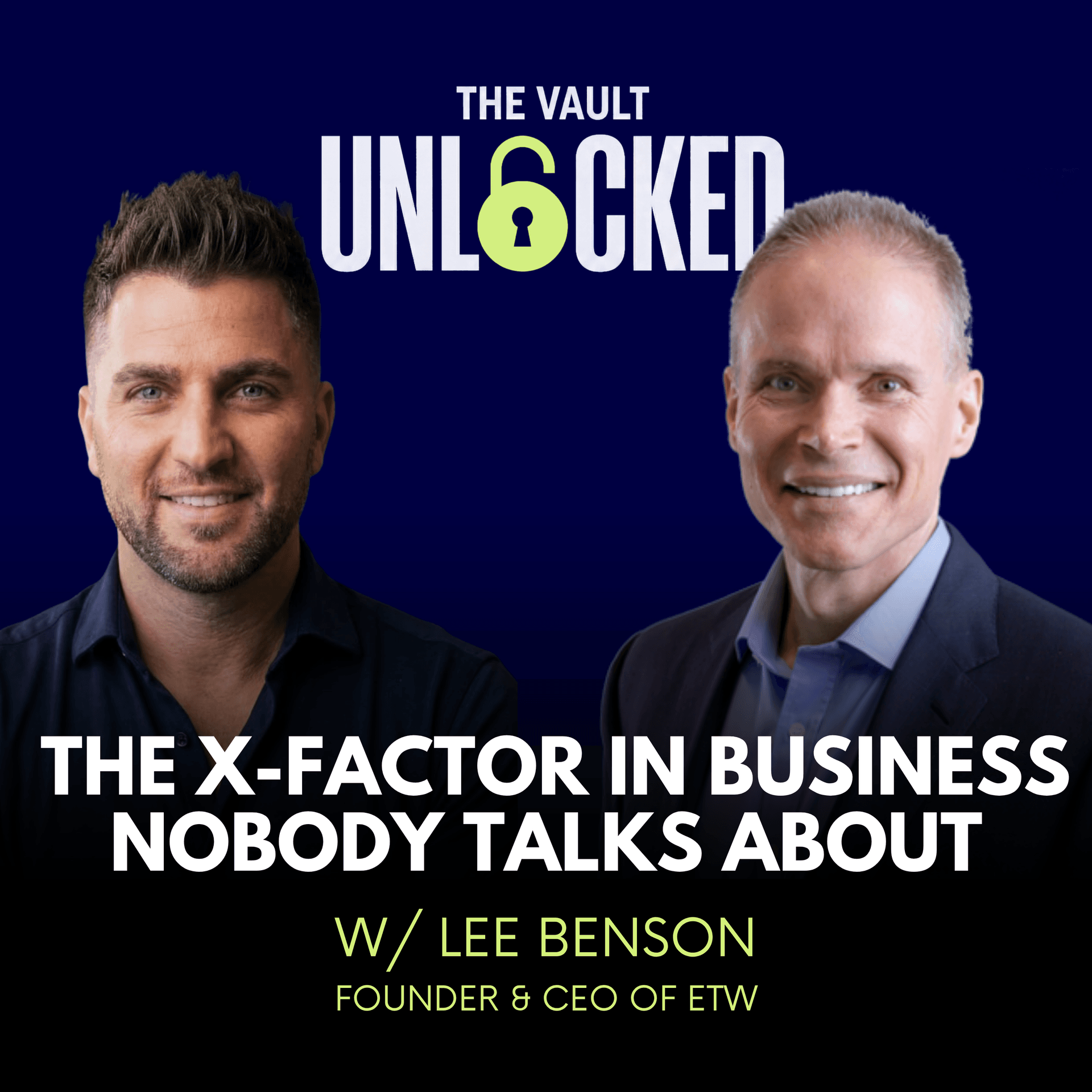
Lee Benson. Background: built eight companies from scratch; currently CEO of two businesses, invests in others, and coaches ~30 CEOs via mastermind groups. Major success: Able Aerospace (aviation aftermarket parts for aircraft maintenance/overhaul), grew from zero to $100M without outside investors; sold in 2016 for a 21.6x EBITDA multiple. Led with profit-sharing and intentional culture; also teaches/creates leadership programs (ETW) and runs Dinner Table for family value creation.
Key claims
Emotional energy is infectious and supercharges everything; leaders must keep it high via self-care, self-talk, and intentional leadership traits (e.g., passion, execution/results, resilience). Leadership development often fails because companies don’t track metric changes afterward. The biggest shortage isn’t talent—it’s leaders who are capable and moral simultaneously.
Notable examples
Able Aerospace’s “22% of pre-tax profit monthly” profit distribution; “we’re all in sales” customer-mission framing; zero in-service failures across hundreds of millions of flight hours; leadership training stats ($166B US, $300B+ global) and “80–90% wasted” claim.
Written by AI. May contain mistakes. Listen to the episode to check what was said.
Chapters
Tap a time to open that second in VOIntroduction to Emotional Energy
0:00 to 0:56
Discover the significance of emotional energy and its impact on business success.
“22 % of pre-tax profit every month handed back to every employee proportionate to their income.”
Lee Benson's Journey in Business
1:07 to 4:06
Lee shares his journey in creating successful companies focused on holistic value.
“I'm seeing, I'm looking at watching you for those that can see.”
Understanding Emotional Energy
4:06 to 6:04
Lee explains what emotional energy is and how it affects our performance.
“Well, the vault unlock is all about this.”
Creating High Emotional Energy
6:04 to 10:00
Strategies for maintaining and enhancing emotional energy in oneself and teams.
“And if it is on the, say, three, the four, how does someone tap into that or can implement things to keep it up at an eight, a nine, a 10?”
Key Leadership Traits for Success
10:00 to 12:44
Exploring essential traits that define effective leadership.
“So now as a coaching tool, I've got these leadership traits and very quickly leaders get on board.”
The Cost of Leadership Development
12:44 to 14:03
A deep dive into the financial investment in leadership training and its effectiveness.
“results but if you want to really be good you have to be passionate about it and then i think execute is an amazing leadership trait.”
The Wasted Investment in Leadership Development
14:03 to 15:12
Learn why most leadership development spending fails to yield results.
“Spent on leadership development in the United States, and it's north of$300 billion globally.”
Overcoming Limitations Through Experience
15:12 to 18:21
Understand how personal challenges can reset your perception of limitations.
“Other than we're building relationships throughout the company, you might know who to talk to about something.”
The Value Creation Cycle Explained
18:21 to 21:49
Discover the process of building capabilities and creating value over time.
“Even if this doesn't work, I'm going to learn so much that I can apply to create more value in the future.”
Navigating Challenges in Business Leadership
21:49 to 24:29
Explore how emotional reactions to challenges impact leadership effectiveness.
“And I mean, like, and the more, the more you're willing to do that again, you know, like you're saying ultra running, like you could quit or you can just keep staying through the pain.”
Show all 27 chapters
Creating a Culture of Value Creation
24:29 to 28:00
Learn how to build a culture that emphasizes continuous value creation and teamwork.
“What's the lens that you go through and the message that is maintained throughout that entire time through the ups and the downs?”
Value Creation Through Team Engagement
28:00 to 30:28
Learn how team input and engagement can drive value creation in a business.
“leadership, the, the enterprise resource planning or ERP system that we built from scratch.”
The Role of Passion in Leadership
30:28 to 32:52
Discover the importance of passion and emotional energy in leadership and business success.
“If this stuff resonates, that's where we talk about a lot of this stuff.”
Finding Balance in Value Creation
32:52 to 34:21
Explore how material, emotional, and spiritual values contribute to business success.
“So I'll be 65 in a few months and I'm kind of in the legacy part of my life and everything I'm doing is about this right now.”
Connectedness as a Spiritual Value
34:21 to 36:26
Understand the importance of connectedness and its impact on emotional and material success.
“But if I had one of the three that I think is probably my strongest of the three, and I work on all three still today and I'll never stop, is the emotional energy piece.”
The Interplay of Material and Spiritual Value
36:26 to 38:51
Learn how spiritual connectedness enhances material and emotional value creation.
“I've got a large global martial arts network because I taught for 23 years.”
Integrity in Workplace Culture
38:51 to 42:00
Get insights into creating a culture of integrity and genuine engagement in teams.
“But I get a song that kind of flows into me, a new song idea that I'm, as I'm working on this new album, virtually every day.”
Integrity and Expectations in Company Culture
42:00 to 43:59
Learn about the importance of integrity and clarity in job expectations within a company's culture.
“We want them to feel this way and do that.”
The Role of Leadership in Culture
44:00 to 45:51
Explore how intentional leadership shapes and influences company culture effectively.
“But realizing that there are huge corporations that can create really, really positive culture.”
Value Creation vs. Criticism
45:52 to 48:10
Understand the importance of focusing on value creation rather than solely criticizing existing cultural issues.
“There's so many things that are going on there, but I believe every single employee, no matter what company is great culture, terrible culture can influence culture in a better direction.”
Navigating Political and Ethical Challenges
48:11 to 50:24
Discuss the complexities of leadership in the face of political agendas and ethical dilemmas.
“Again, that just goes to your positive mental attitude, right?”
The Value Creation Mindset
50:25 to 52:38
Learn about the continuous battle between value creation and forces that seek to undermine it.
“And I look at elected leaders literally around the world and they make it seem like the most important thing is for one person or another to be elected.”
Handling Dissonance in Beliefs
52:39 to 54:26
Explore strategies for engaging with individuals who hold different beliefs about media and governance.
“You can start losing a little morality just to save your position or save your seat.”
Challenges of Leadership and Influence
54:27 to 56:00
Understand the struggles of leaders in promoting critical thinking among those resistant to alternative views.
“And with the best of intentions, a lot of folks out there, they believe government has their best interest.”
Engaging with Skeptics: The Role of Emotional Energy
56:00 to 1:01:51
Learn how to navigate conversations with those skeptical of new ideas and the importance of emotional intelligence in leadership.
“Like if you're speaking to somebody who actually believes that the media cares and, and, and is bringing you the real knowledge, like how do you have conversations with those types of people?”
Creating Value in Business and Family
1:01:51 to 1:03:06
Discover strategies for value creation in both professional and family contexts, emphasizing intentionality and community.
“I like, you know, Lee, I appreciate you stopping by and giving us this wisdom.”
Final Thoughts on Value Creation
1:03:06 to 1:04:39
Reflect on the broader concept of creating value and how it applies to everyday life and work.
“As we depart, any last words for the audience?”
Transcript
Automatic transcript. May contain errors.0:0022 % of pre-tax profit every month handed back to every employee proportionate to their income. Not a bonus program, a philosophy. Lee Benson ran that philosophy through a company he took from zero to$100 million in aircraft parts of all things. Zero outside investors sold it for more than double the multiple anyone in that industry gets. But money is the easy value to create. The two Lee spent decades chasing are harder to measure and impossible to fake. Emotional energy and connection. He calls it holistic value creation. In this one, we get into why$166 billion a year gets spent on leadership training that changes nothing.
0:47And why Lee thinks the biggest shortage on the planet isn't talent. It's leaders who are capable and moral at the same time. This is The Vault. Let's unlock it.
1:07Lee, welcome to the show. Good to be here, Kayvon. Thank you. I'm seeing, I'm looking at watching you for those that can see. We got music behind you. Got like a full stage behind you. Tell us a little bit about that.
1:19Lee Benson:I do. Music's been part of my life for a really long time. I started playing guitar so young, I don't remember not knowing how to play. played over a thousand shows in the first half of the 80s in a rock band playing guitar and singing and i still play music today so i'm actually sitting in my home music recording studio it's this really cool 4 000 square foot building um where i still have music projects i work on i'm actually in the middle of writing an instrumental guitar album right now and a lot of fun love it but that's not what we're here for today for today i know we were talking about earlier before was this idea about holistic value creation.
1:58Lee Benson:Yeah, I built eight different companies from scratch. I'm currently CEO of two businesses. I'm invested in a number of others. I coach about 30 CEOs in my execute mastermind groups. And everything we do is about holistic value creation. It's material, it's emotional, and it's spiritual value creation. So material's important. We need cash flow. We need all that profit. We need it to be able to grow. Emotional energy to me, when it comes to value creation, it's the scarcest commodity on the planet. It supercharges everything else we do. I think it's the X factor for leaders. It's literally the X factor for all of us.
2:37Lee Benson:And then spiritual value creation is about connectedness. And then all of my businesses, I've always really made an intentional point to make sure we had programs where people had the opportunity to really strengthen relationships. And my companies that I personally started from scratch have ranged from 10 employees to about 540, I think was the biggest one. And these programs worked amazingly well. In fact, the biggest one I sold in 2016 went from zero to$100 million business, sold it. It was in the aviation aftermarket. So imagine repairing, overhauling, manufacturing aircraft parts to keep aircraft flying.
3:15Lee Benson:It wasn't for new manufacturing, it was maintenance to keep the mission ready at any point in time. It went from zero to$100 million, very profitable business, and sold it for a 21.6x multiple of EBITDA. And that's because of the way we led that business, the way I led the business. On the majority of the stock, I controlled it. The only employees at Equity were ones that earned it over time. There were no outside investors, never took a dime of anything to grow this. thing, very capital intensive business, but managing through this holistic value creation lens, which evolved for me over the decades, I would say, helped me create so much more value in terms of the value of the business, but also what it felt like to work there, what it felt like for me, like the harder I got, the harder everybody laughed.
4:05Lee Benson:It was amazing. Wow. All right. Well, the vault unlock is all about this. And I'm excited because I want to actually go behind this and I'm not going to let you get away with the surface level stuff. So I want to start off with you. You said one of the biggest one is the scarce or the X factor that we have is as an entrepreneur or maybe as a CEO or as leader is the emotional side, the emotional energy. What does that mean? How did you find out like where did all that come from? Yeah. Think about the days where you feel like you can do anything. And those are the days where your emotional energy is on 10 on a scale from one to 10, it's on nine or 10.
4:45Lee Benson:It doesn't matter what happens. You'll get through it. You're, you're calmer, you're confident, you're just flying towards this value or this thing that you're trying to create or accomplish. But when it's on one or two, you get a flat tire and it can ruin your week. You're, you're irritated, um, by just about anything. Yeah. So whatever we can do to keep our emotional energy, positive emotional energy as high as possible, it does supercharge everything. And I think for leaders, you know, we are creating an environment from which all of our team members are creating value. And if we come in with really low energy, it's infectious.
5:21Lee Benson:So it lowers the energy of everybody else. And I look at like employee engagement to me is about engaged with creating value. And if we want productive engagement, we want them charged and going for it. We want the whole team, myself, everybody going for it. And so that environment we create as leaders and emotional energy is a really big part of that really influences productive energy from every team member inside the business. As a leader, how do people create or how can we create the emotional energy? What are some ways that people can even just tap into a little bit of that emotional energy, but understand where their emotional energy is on the, say, the one to 10 scale?
6:04And if it is on the, say, three, the four, how does someone tap into that or can implement things to keep it up at an eight, a nine, a 10?
6:13Lee Benson:Well, I believe, and you can check me on this, that everybody has those days where they're, you know, really high emotional energy. They feel like they can accomplish anything and they have days where it's really low, right? That's, I think that's true. We, everybody listening has that if they think about it. So there are a couple of hacks in here. You know, just personally, how well do you nourish yourself? How well do you recover? How well, you know, do you do you move, you know, in terms of exercise and all that. So if you take care of yourself, I think that hack alone without doing any personal work will elevate you if you haven't been doing it two to three points on a scale from one to 10.
6:51Lee Benson:Right. So there's a simple hack. Now, and I'll stick with personal, I get to the business. what about self-talk and you know somebody said once and it just a long time ago i heard it made so much sense like if you heard somebody talking to one of your kids the way you talk to yourself what would you do and most people like a wide i'd be really upset you know and they would do other things potentially and so well why are you doing that right so take care of yourself the easiest hack maybe it's hard to do it's hard to eat well because there's so many tempting good tasting things out there, I guess.
7:25Lee Benson:But once you get in the groove, it's easy to do. I mean, I've gotten to a place where my diet is literally perfect. And I'm addicted to feeling good. So it's easy for me to do that. It's not even interesting to look at sweets or any processed sugar, any of that. And then the self-talk. When we wake up, what are we thinking about? Where are we going? You know, that self-doubt and I can't believe this. I can't believe that. I really screwed up here. I screwed Why are we even saying those things? Why don't we just say, I'm going to create this value today, this way. And here's where I'm going over time.
7:58Lee Benson:And everything I do is in that direction. Wow, I learned a whole bunch over here. I didn't screw up and that was terrible. No, I learned a ton. How can I apply that to go forward? So I think self-talk, internal belief structure, like what do you really believe? If we work on those and taking care of ourselves, that elevates emotional energy significantly. And I think any belief about what you think you can accomplish by definition to me is a limiting belief. Because I don't think any of us have any idea what's possible. We have no idea. And now I go to the company environment. So I've heard you talk about with your guests and having an intentional culture.
8:41Lee Benson:And I've listened, I think, five of your podcasts now. And if you want to have an intentional culture, what we agreed to do, how things get done, the behaviors, all of that, the belief structure, everything inside the business. well, let's be intentional about leadership. And let's just say, you know, let's have a set of leadership traits. We want, for example, positive energy in good times and especially bad times. It's easy to have good energy when everything's going amazing. But when it's not, where's this productive, positive energy to get through it, come out the other side even better. And then maybe another one, create an energizing environment.
9:15Lee Benson:So we want to create an environment where every single team member is fully energized and feels empowered to create more and more value you over time. So if we just state a couple of things like that, and maybe up to six different leadership traits to drive the intentional leadership culture you want inside your business, now at least we're doing it with intention. And it's an amazing coaching tool because if I see a leader that's down in the dump, something didn't go right, I can look at them and say, well, part of your job is to have this positive, productive energy, especially in bad times.
9:48Lee Benson:And you're not creating an energizing environment for your team members. and another leadership trait that I love is resiliency. Well, you're not being very resilient and everything was perfect all the time. We wouldn't need leaders, right? So let's get our act together. So now as a coaching tool, I've got these leadership traits and very quickly leaders get on board. And I don't know about you, Kayvon, but I've never had a day in business where everything was amazing. It's like I look over at one spot and it's this beautiful beach and it's it's amazing i look behind me there's a tornado coming up i look over there there's just an earthquake that just happened and i've got this majestic view over here that looks incredible it's always this mix of all this stuff right in our job as leaders is to kind of hold this together and keep this amorphous blob whatever you have you want to think about it metaphorically moving in the direction of creating more and more value and for a business i know i'm doing the right work when the value of the business is continually increasing responsibly, of course, over time.
10:50Lee Benson:How does that land on you? There's a lot there. And I want to go down a couple of things here because we were talking, we kind of moved to some of the leadership traits you were talking about, which I thought was, okay, interesting. So then I wanted to ask that question of what would you say are the top traits? Again, you've had a very successful, it sounds like a very successful career, multiple exits. What would be some of the key traits of a leader? I heard you say resilience is one of them. Positive mindset, obviously, is another one. But were there any other ones that you know that you're like, these are what makes a great leader?
11:32Lee Benson:Yeah, there's a few others that I really like. And I think it's important. And there's so many definitions of leadership and culture and that kind of stuff that are directionally, I think, right. And there's no one that's perfect. But my definition of leadership is creating value with and through others. We have things we can control and we have an order of magnitude more things that we can influence. And that to me, that's about being a leader. We love working with people. This is amazing. We can influence so much value creation and we have no idea what's possible. So that's my definition of leadership.
12:06Lee Benson:And then what does a leader do inside an organization? Well, they get results and they foster an environment where every team member is intrinsically motivated and empowered to create more value over time. I think that's what the leader does. We have definition and this is what they do. And then if you want to be super intentional, a little bit more granular, get into the traits. I mentioned the three. I like passion. if you're not passionate about your you know being a leader one passionate about the business that you're working in and what that how that fits into the world and everything and your function with inside the organization how can you really be good at anything if you're not passionate about it i just i just don't think it's possible to be stellar you can go through the motions and get okay results but if you want to really be good you have to be passionate about it and then i think execute is an amazing leadership trait.
12:56Lee Benson:We have to get results. Without results, none of the rest of it matters. It just doesn't. So there's a couple more. And I think what's important is that each company comes up with their own set. I'm not a believer in one size fits all. There's so much leadership training out there. And most of it's one size fits all. And I get it. They're trying to scale a company and we can't scale personalized leadership development, which I disagree with. that they can. We do that at ETW. Do you know what the number is in terms of how many dollars are spent when you look at Gartner and others doing the studies on this?
13:35Lee Benson:Dollars spent on leadership development in the United States last year? I know the sales training numbers, but I don't know the leadership. But if it's anything like that, I know it's enormous. And And then I'll tell you another stat, too, I'm sure that you're going to say. But, yeah, what's the dollar amount? $166 billion. Yeah. Wow. Wow. I think. Wow. I just want to hear that again. $166 billion businesses, small and big businesses, are investing into leadership training. Spent on leadership development in the United States, and it's north of$300 billion globally. and I one of my partners in ETW before he passed we became partners in 2011 I met him in 2008 was Jack Welch the former CEO of General Electric and when we talked about this you know we both agree of course he was doing things way bigger scale than I ever did but 80 to 90 percent of leadership development is completely wasted the dollars the dollars spent right and and that's a pretty big number.
14:40Lee Benson:So there's a big opportunity here for people to get it right. And there's so many experts out there and they completely miss the boat. And so when I talk, for example, to an HR leader at a larger company, it could be 10 ,000 to hundreds of thousands of employees. They say their leadership development programs are amazing. People love them. Well, how do you know? We do a survey and they say they had a good time. And then I always ask as a follow-up question, have you followed up on that leadership development to see how your leaders metrics changed? Did the results change? And 100 % of the time we got nothing.
15:10Lee Benson:No, we don't do that. And what are you doing here? Other than we're building relationships throughout the company, you might know who to talk to about something. We're not doing the kind of leadership development that we should be doing. Does that make sense? That's a lot of wasted dollars. Probably sales training and all that too, right? Most sales training has forgotten the first three to six weeks and almost 75 % of the training that is taught isn't even understood or taken in. And so just same thing, dollars is being wasted. And we can go down that conversation, but I actually, I don't because there's so much here.
15:48I want to talk about more about like your experience and what you're bringing to the world. One thing you said earlier too, that really stuck out for me is you said we do not know like putting limitations on what we think is a or what we think we can do is just not the right thing because we actually do not fully understand
16:08Lee Benson:what our actual limitations are is that yeah we i don't think anybody knows what's possible in terms of what they can accomplish and i i've done a few um you know ultra endurance type events so I've done three Ironmans. I've done some ultra marathons, you know, running 50 miles up a mountain. And the reason I like doing stuff like that is because when you want to quit with every cell in your body and you keep going, you just reset what's possible for you. I think the same thing is true in business. It can be really hard, but this is your healthy struggle as a leader to figure out as a business owner, how do I go to that next step?
16:53Lee Benson:And as you go through that, I call it the value creation cycle. And again, all this stuff, it's so easy to evolve over the decades because I'm currently on my 64th year of my overnight success story and I'm still working on it. But we evolve as we go through it. But this value creation cycle, it's like you struggle to build a capability, it builds confidence, use it to create value and keep taking bigger steps. So people will ask me, where did you get your start? Well, it was 25 cents an hour back in the mid-60s pulling weeds when a neighbor asked me to do that. Back then for a six-year-old kid, that's a lot of money.
17:29Lee Benson:And then I went to shoveling snow and mowing lawns and paper routes, dishwasher, busboy cook. By the time I was kicked out of my house at the beginning of my senior year in high school, it was a non-event for me to afford an apartment. Yeah, I spent one night in my truck, but the environment wasn't great at home. It was one of the best things that ever happened to me. And so I'm I'm off on my own. And then it was playing music and then starting a business and another business, you know. But I just kept taking these steps. And my mentality going through it was and it could be hard and it's easy to act like a victim.
18:02Lee Benson:Like, oh, I can't believe this. Can't believe that. But I kind of shifted to developer, not victim. The majority of the time to where no matter what's happening, if it doesn't go the way I wanted it to, how can I develop better strategies? myself people around me all of it to move you know faster in a particular direction to create a certain amount of value and so if we're running a business none of us are are victims in my view when it's really hard that's our opportunity to learn and i've gone through this value creation cycle so many times when it gets really really hard and it's like well maybe this isn't going to work i start to get this you know warm feeling inside i know it sounds kind of strange but i I just know because I've done this so many times when I come out the other side, it's going to be amazing.
18:49Even if this doesn't work, I'm going to learn so much that I can apply to create more value in the future.
18:57Lee Benson:You know, material value, emotional energy or connectedness, you know, around around that, too. Yeah, I love what you said to a little earlier when you said, you know, you got the beach on one side, You got the monsoon coming or the hurricane coming on the other side and the earthquake. And and I couldn't agree more in that. There's like I always I lived life for so long where it was not make, you know, conducive to anything for me where it was like when I get to. Right. And I thought as soon as I get to that first hundred million dollar business sold all the money in the world, like all the problems go away.
19:35And I realize problems will always like great things will always be here. problems will always be here both can exist in the same world that's how we deal with it in the moment in time so that really stuck out for me what i liked was is it sounds like there's like yeah there's a lot of forgiveness as a leader and and failing and or not being the greatest leader doesn't mean it's over doesn't mean you're a terrible leader it means that there's something to be learned, whether it's material, emotional, or spiritual. And it's what type of value are you bringing from those learnings into the future that makes the difference?
20:16Lee Benson:Well, to me, there's a big distinction between this is a problem or challenge that has to be solved. And it could be something that's potentially catastrophic for a business. So there's that. And the facts just present it this way. This is true. We need to solve for that or we're going to be in a lot of trouble. And then there's the emotional reaction to it. Right. And I think that's where that's what most of us are talking about. Like this is, you know, it's really challenging because if we're just solving a problem, you and I advising somebody else, we quickly look at all the assets, the things they have to work with.
20:48Lee Benson:I'll just do this, this, this, and this will be fine. But when you're emotionally swirling around in the middle of it, that's the thing. And so when I hear you say there's always going to be problems, well, there's always going to be challenges and our emotional reaction to it is going to change over time if we have a healthy approach to this value creation cycle. Struggling, building capability, understanding what that feels like, responding to all of it, not just getting emotionally hijacked when things come up. And realizing that if we're leading a business or even a leader in a business, people look at us and go, wow, that's so cool that you're doing it.
21:25Lee Benson:I don't have the guts to do it, to run a business. I don't want to step up and be a leader because of all the things that can go around that. But I think as we get more professionally sort of mature, the way the more we grow internally, personally and professionally, the emotional reaction to these things gets healthier and healthier over time. And then we just get better at solving the problem or the challenge or whatever that is. Right. right yeah yeah yeah uh well i remember when i was uh when i first got into kind of entrepreneurship um i forget exactly how the mentor said it but it was like it really stuck with me he said you get to a point and he just used his hands like you get to a point where you feel like you can only do so much right you feel like you get to your max capacity i can't take any more on and he and he explained that most people at that point will actually start slowing down they'll start saying i can't do as much and then they just kind of stay at this level he said in that moment is when you just got to keep going through it and through it through it and then you just get to another level of capacity and then it'll happen again and happen again he goes and eventually you look back and and go what you thought you couldn't do last year to what now you're doing this year and just the level of capacity of what you could take on whether it's a leadership role and how much projects you can take on at once and and and responsibility it just you got to get through it and you've been saying it throughout the whole call like you got to go through the shit to get to the promised land.
22:53And I mean, like, and the more, the more you're willing to do that again, you know, like you're saying ultra running, like you could quit or you can just keep staying through the pain. And the growth is where, I mean, we all know that's where the growth happens outside our comfort zone.
23:07Lee Benson:Yeah. That's where we, we, we actually reset what is possible for us and there's, there's no limit to it. And I actually think this is the healthiest state for all of us to be in this continuous, you know, learning growth development mode, because that's, to me, fulfillment is my most important internal metric, if you will. And, and, you know, over every single year, if I'm doing the right work and developing and creating value, the way I'm describing my internal fulfillment continues to climb, can't be happy all the time, things get challenging, whatever, but fulfillment can climb over time and and then personal growth i think elevating human consciousness is the purpose of this whole you know existence you know for humans in the and the the more we elevate that the more we figure out the more we develop them you know the the the the better everything gets the easier things are we go to the next level what a real challenge is and what's a real challenge there would have buried you 10 years before and a challenge from 10 years before once you get there there will be nothing.
24:16Lee Benson:It'd be like, of course, you know? So I, I just think, um, when we, when we think about creating value and, and, and growing and all that, this is, this is the right path to be on. It's when, when I see self-esteem climb the most in people, when internal fulfillment goes up with our team members inside our organizations, because we're accomplishing challenging things and they're growing, everybody feels the best. Like that's an incredible environment to create because we're all creating value together yeah that's what i was going to ask is like when you go into an organization or you think about like this organization with the with the airline um services what was the lens you were going in and what was kind of the message that was that was being said for the company to go from zero to a hundred million no dollars raised you You know, the right people, you said the right people getting equity in the business and whatever that, you know, and all and being able to share in the profits.
25:19What's the lens that you go through and the message that is maintained throughout that entire time through the ups and the downs?
Read the full transcript
25:27Lee Benson:There are a lot of structural things that you have to get right to support this. But generally speaking, my message to every team member was think of Able Aerospace, this business, as a large value creation machine went from very small to very large. And we all have a part to play in that. And every one of you in one way or another touches the customer. So we're really all in sales. That was always my my thing. We're all in sales. And by the way, I did have marketing and customer service and sales all lumped together in one part of the building. engineering was tied into it because their product development production of our stuff was tied into it.
26:09Lee Benson:So I view it the way I've heard you talk about it. Everybody should be at the hip around it. But this is what we're doing. We're all here to create this value. We're creating a better and better experience for the customer. Think of it as our product, if you will. And we had a lot of different products, but our product was making sure our customers that flew helicopters or large fixed wing aircraft were mission ready when they needed to be. And there were no safety issues. We had, gosh, a few hundred when I sold a million flight hours on our parts with zero in-service failures where the thing broke and they had to take the aircraft out of service.
26:47Lee Benson:No accidents, nothing. I haven't been able to find anybody else that was in business that long, that many flight hours that could say that. And that was because of how we got everybody working on our mission of reducing aircraft operating costs safely and creating a better experience for customers. And then structurally, it was probably around 22 % of our pre-tax net profit every month was given back to all of the team members proportionate to their income. That was the fairest way to distribute a bonus, in my view, because we've done our best to make sure we're all paid fairly in our base wage relative to each other inside the company.
27:27Lee Benson:So if, for simple round numbers sake, if payroll's a million bucks and there's$100 ,000 in bonus as a percentage of profit, then everybody gets 10%. Whether you made$200 ,000 a year or$10 an hour, it doesn't matter. and I have some really interesting things. 10 % of their wages you're saying of their wages. That was like the fairest way. So they were, they were all incentivized to help everybody else earn a dollar for the company, no matter where it was, wherever the opportunity came up. So that's just one of the structural things, you know, the intentional culture, intentional leadership, the, the enterprise resource planning or ERP system that we built from scratch.
28:08Lee Benson:Like all of that was just this continuous development, moving in a direction of creating more and more value for our customers and everybody's input mattered everybody i don't care as soon as you start and and some leaders would ask me um this went away later but early on in our bonus programs well we should make people wait you know 90 days or six months before they can qualify for it and i said well how long should they wait to get fully in the game i want them in the game from day one and if we if we miss it and they shouldn't be here that's okay we'll help them find another role somewhere else.
28:42Lee Benson:But like, I want them in the game from day one, let's go for it. And, and the ideas that came from all the frontline team members all the way up through to senior leadership were amazing. It was like, I thought of value creation as team out. Every single team anywhere can infect the rest of the company with even more value creation energy, if you will. Oh, I love the idea of that 20%. How much percent did you say exactly of profits? was it you said 22 yeah ended up being about 22 there were a few kickers in there to where you know there we would give 16 of the profit to everybody proportionate to their income every single month and then if you were a frontline supervisor you got a little bit of a kicker a middle manager a senior leader a senior leader in business development because i had folks traveling the world we were doing business in 60 different countries totally fun going to most of Those places were growing the business for me.
29:39Lee Benson:But they were they were without the sales. Nothing else happened. And everybody knew they were supporting sales and we're all working together going through. But it ended up being about 22 percent. Now, a lot of folks would say in total, a lot of folks would say, well, we're not going to do that. We wouldn't give that away. But by the time we sold it, look at the growing value for me as the majority shareholder. And I controlled 100 percent of it. we sold for 21.6x multiple of EBITDA. In an industry where if you got eight, that was incredibly strong. Like PEs would just almost never pay that much.
30:18Lee Benson:We found the perfect strategic buyer. They won, we won. It was incredible. And the company's still there today, a strong global brand. I'm so proud of what they're doing. And so what are you working on now? Well, I've got ETW and ETW.com. If this stuff resonates, that's where we talk about a lot of this stuff. But I have CEO mastermind groups that I lead. We have leading for value workshops that we do. We have a leadership value lab where there's a growing membership in there where we every month have a live call and lots of resources, interactions with a growing community. and then built software to be able to easily sustain and scale operating a company this way.
31:05Lee Benson:And I wrote a book a few years ago titled Your Most Important Number. And it outlines this, what I call the mind management system. Mind, men, most important number and everything that drives continually improving it. And it's kind of a cool, simple, elegant way in terms of how I run my businesses. Even the bigger ones, I can see the most important number for the company, the most important number for every function, for every team below that, and whether they're on track or not. And I can see the best work they're doing to improve it. In seconds, I've got the lay of the land of the whole company.
31:39Lee Benson:And I think that's a challenge for a lot of businesses. How do you really know what's going on? And they just typically don't. Whereas I can see that. And if I go into a team within minutes, I can see if they're checking boxes or doing really good work. But anyway, so that's there. So we have the software as well. The other thing I'm doing, I'm CEO of a company called Dinner Table. And dinnertable.com is where you can learn about it. And it's about helping families intentionally create value. Kind of starting with this foundational family meeting. How do you talk about refined family goals? Everybody's job for the family, what it means to be a leader in the family, going through the family budget as a team sport.
32:20Lee Benson:You know, kids as young as five, six years old have line items on the budget. This is ridiculously cool. And so it's, you know, it's kind of threading what's important to me, which is driving holistic value creation behaviors out into the world. I'm doing it with for profit, nonprofit families. We have over 40 ,000. We're two years in. We have over 40 ,000 parents in our dinner table family community. And I'm driving this holistic value creation throughout all of it and everything that I do. and it's so rewarding. It's cool. So I'll be 65 in a few months and I'm kind of in the legacy part of my life and everything I'm doing is about this right now.
32:59I could tell. And I could tell that you were talking about the first thing you talk about is every leader, business owner needs passion. And I can tell that you're absolutely passionate about just the idea of even the holistic value creation and bringing value. It sounds like Really, the idea is where can you bring value in every little piece of the business, no matter where you are in the business? Where can you bring value into the world? Where do you bring value to your families, to your communities? And just always having the, I would say, the wherewithal of looking or understanding what type of value can I bring?
33:35And in turn, things will open up. The doors will open up. You'll start seeing different opportunities while looking through a lens like that.
33:45Lee Benson:Would that be fair to say? Yeah. Where can we actually create measurably, objectively measurable value in the world? And whether it's material, the money is the easiest one, emotional energy. That's a little bit more challenging, but you can. And the spiritual, which is connectedness, like family, team members at work in a community, higher power, whatever is important to each of you. And I recommend that we all come up with the right balance of creating value in the world for us. So what's right, material, emotional and spiritual for me. And everybody gets to create their own balance. And if I had one, you know, so I've done really well financially.
34:27Lee Benson:But if I had one of the three that I think is probably my strongest of the three, and I work on all three still today and I'll never stop, is the emotional energy piece. because again, it just supercharges everything. But finding that balance is really important when it comes to creating value. I find the emotional piece was something that you've worked hard on and you've trained your mind and your body and your physiology on of how to maintain and ensure that you're in a peak, high emotional state. Yeah. Over time, I want it continually going up and you're going to go up and down. We all have days that go back and forth.
35:12Lee Benson:One of the ways, you know, Kayvon, I think about this, when you explain a concept to somebody and they nod and they say they get it, how many times have you done that where, you know, they have no idea what I just said? But they intellectually, they kind of understood the words and what's happening. So if I were to say, you know, start a business and you're going to go through all these different stages and then you can you can create money. Some people have never done think, oh, anybody starts a business or instantly millionaires. And it's so easy. Well, it takes a lot of work to be able to do that for most of us to figure out and go through those unless you get incredibly lucky.
35:46Lee Benson:But for most, it's a hard road, most fail. And you have to a lot of work into the material value creation piece. you have to put just as much work into the emotional energy piece and you have to put just as much work into the connectedness piece so when i when i think about connection like we're more digitally connected than ever but we're also lonelier than ever like we don't have this human interaction and all of it and i say it's it's by choice if you really embrace spiritual value creation this connectedness piece of value creation and you lean into different communities that resonate with you in a way you're really helping them create more value.
36:22Lee Benson:It'll expose you to incredible opportunities everywhere. I've got a large global martial arts network because I taught for 23 years. Haven't taught for, you know, eight to 10 years now, but I'm still sponsoring kids to compete in world events and I'm still connected. I could go just about anywhere in the world and stay with one of my Taekwondo brothers or sisters. Same thing in aerospace. I can't travel anywhere on the planet and not run into people that I've worked with over there. So I've got that giant network because I intentionally worked on strengthening that connectedness piece of it. And there's more opportunities if it was just about money.
36:58Lee Benson:There's more opportunities for me to play to earn more money by helping them earn more money that I could ever possibly take advantage of. So that's why the spiritual piece is so important. Does that make sense? the the value create i'll be a create i'll be honest with the value creation makes sense the material uh creation makes sense putting yourself into the environments like you know your taekwondo brothers and and creating so much value in the aerospace that people always remember you that makes sense what didn't where where i lost it was where the spirituality comes in all that like where it is your like for me spirituality is more of an internal uh maybe uh the way i think about spirituality it's my it's me and my connection to the world and my connection to god or to whatever it might be so i'm wondering where does that come in when it comes to uh the emotional and or the material side for you it's a great question so uh material and emotional get that spiritual i think at its core is about connectedness okay i believe and so there's levels of that.
38:06Lee Benson:It's connected with ourselves. As leaders or really anyone, the more you can improve self and social awareness, those become superpowers and help you be more successful in life. So that's connected with yourself, connected with family, connected with team members. It works strengthening those relationships where it just feels amazing to be running through walls with them to create huge value in our businesses. So that's connectedness. Out into different communities important to you. I wasn't raised religious, but connectedness goes to a higher power. It can go to God. It can go to whatever you want.
38:43Lee Benson:And it's wild to me, the more I'm open to being connected with the universe, whatever you want to call it. I don't even know what to call it. It's so big and powerful. I don't know what to call it. But I get a song that kind of flows into me, a new song idea that I'm, as I'm working on this new album, virtually every day. and they're amazing and when I wasn't connected to this because I wasn't intentionally working on it back in let's say the late 70s early 80s when I'm playing in bands back then it was really hard to write a song and and I wasn't feeling it I wasn't connected to it and and now that I am so there's no end to that either and so for some folks um you know have a relationship with God is is incredibly important to them for others it's not and it's it's it's always crazy to me when you get into politics, you'd seem to turn off half the brains in the room.
39:32Lee Benson:When you get into religion, you seem to turn off half the brains in the room. But we all want better conditions to work, live, learn, and play and be more connected to things that are meaningful to us. So that's why I talk about it the way I do. For me, spiritual is connectedness. And there's so much that goes into that. And each individual gets to decide how they want that to go. But if I just picked a category and said, God, um, it wouldn't open up half the people on the planet because they're so adverse, um, averse to this that, that, um, you know, they, they wouldn't experience those. So does that make sense?
40:08I mean, it's like what was coming through me was it's, it's, it's, it's where the energy go, right. You hear where the energy goes, the money flows, where the energy goes, the spirituality grows, right. Where the energy goes, the relationships grow like it's and for me it's it's if you want to have the sound the all three the trifecta i'm going to call it the trifecta you call it a holistic value creation but the material the emotional spiritual they all they all need the equal amounts of energy if you put too much in one the other two will suffer if you and it sounds like uh to have the highest spirituality you need to have the energy there you cannot have the spirituality without putting energy or work towards that is what I'm hearing through this.
40:53Lee Benson:Yeah. And they're, they all, they're all synergistic. They all, you know, they all reinforce each other. You know, the more, the more money that I earn or my companies earn, the bigger impact we can have in the world and do other things. And you don't need to have a ton of money to have impact. You can do it one person at a time. And it all really matters. Inside our businesses, we want really high levels of productive engagement. We want everybody in the game and going for it. And one thing that's always interesting to me when people talk about it, it's almost like they talk about it as though this isn't their intent, but like they're trying to manipulate the employees to feel a certain way, be a certain way, behave a certain way.
41:40Lee Benson:And any program to improve culture and increase productive engagement so your teams are creating a whole lot more value, when you start exploring it and how it's going to be communicated and all of it, put yourself in the shoes of team members that aren't leaders and how would it land on them? Because the feedback that I get, most of these programs, like 90 % of them come in, they're super smart and do this. We want them to feel this way and do that. They feel like they're trying to be manipulated. That's terrible. Anything that we do, and that's not the intent of most putting these programs in, right?
42:16It's anything we do should be about creating an environment from which they create value.
42:22Lee Benson:And they'll either get on board with it or not. And that's okay. Our company's culture is going to be perfect for everyone. But I'm never thinking, I need to get you to feel this way or believe this or do that. We'll have a set of alignment tools to drive an intentional culture and you'll get on board or you won't. And then there's this whole other piece that's super interesting to me and I wouldn't let anybody get away with it. It's an integrity challenge. So an employee signs up, we're going to pay you X to do this work. We're really clear on this work. We're investing in you. We're going to keep our end of the bargain 100 % of the time.
42:57Lee Benson:And you need to be at least achieving this because that's what we're investing in. And they always say yes when they start. Most companies aren't that clear about what they want them to do, which is a problem. But let's say you are. And then when they're not, it doesn't work out. OK, well, this isn't working out. You know, thank you for trying. That's ideal. And that's how I like to do it. But then there's this notion out there that if the company doesn't show up perfectly for every team member, somehow it's OK for them not to have the integrity of doing what they agreed to do. So this isn't some leadership company culture crisis to me.
43:32Lee Benson:it's there's a giant integrity issue out there um if we agree to do something let's do it and and if you don't want to do it anymore go find another environment to work in i don't know that how that lands on you but i'm so tired of giving everybody excuses not to do what they agreed to do because integrity is incredibly important yeah and every employee the last thing i'll say that that complains about the culture of the company they work in well aren't you part of the culture like what are you doing to influence it you know it's like like you're all experts in what's wrong with everything big companies have terrible cultures they don't know why don't you try to lead a giant company and see how you would get any better like you have you have no idea and by the way you're part of the culture i i have a short jack welch story if you want to want to hear i know i love it i i i think culture is like it's so important um and then one of the one of my sayings always tell people no culture is culture uh and you know if that makes sense but the culture i mean i personally left like the uh the corporate world because of one but you know one bad experience in uh in a poison culture that and i just knew i was like i just had it i just saw it so many times through other people that i'm like this is just what the corporate culture is so that's why i became an entrepreneur because I didn't want to be part of that.
44:55But realizing that there are huge corporations that can create really, really positive culture. But when you have so many people, you just said it, when you have so many people in a culture, it starts taking its own culture on its own. And how do you intentionally make sure that everybody's on that same mission and not being a leaky bucket. Intentionally, intentionality is what I kept hearing from you is from the leader. It has to have the intentionality behind it. If I bring in a leadership company, but I don't really care, I'm just bringing it in because that's what my board members are telling me.
45:33The people are going to feel it. They're going to know it. And that's why most leadership projects don't even probably get off or they fail because the people bringing in don't even want to bring it in. They're being told or they don't actually believe in what they're bringing in. Yeah.
45:49Lee Benson:And a lot of this is an emotional reaction. It's confirmation bias. There's so many things that are going on there, but I believe every single employee, no matter what company is great culture, terrible culture can influence culture in a better direction. And so what are you, what are you doing to do that? And when they look at large companies and we're super critical of them, the Jack Welch story I'll share, you know, he had his, his 2070 10 program, like top 20%, middle 70 and bottom 10. And every year the bottom 10 have to go. Some people responded to that and said, you know, Neutron Jack, he's terrible.
46:23Lee Benson:I can't believe this. And it's like, what a terrible cutthroat culture. And others are like, well, 15 to 18, maybe 20 % of team members every year probably should go because they're not performing. And so here's a guy running a conglomerate over 400 ,000 employees and managers won't let low performers go because they go to church together they have barbecues together they build new relationships so since they won't actually follow the program to make sure you keep folks that are at or above what they agreed to do when we hired them he had no choice but to say um i just need to force it the bottom didn't have to go and and and in a few occasions you're letting really good people go which is terrible but in most occasions there probably should be you know 50 to 100 % more than half ago.
47:11Lee Benson:So that was a policy. And then those complaining about it, I always ask, well, what would you do differently? How would you approach it? Well, just tell everybody to do it and they'll do the right thing. Well, but that doesn't work, right? So you have to have policies, you have to go through it. And that's where he and I built a relationship when he looked at what I was doing in my aerospace business. He goes, if I had that, the results at GE would have been exponentially better because you wouldn't be getting rid of anyone that was, you know, performing at or above where we wanted them to be.
47:42Lee Benson:And you would identify all the others to be, you would develop them better or offload them better. So it's, it's just, it's always interesting being, being an expert on what's wrong with everything. And everyone isn't in my view, a great mindset to have. We should, we should have a developmental mindset, a value creation mindset. Every interaction is about moving in a positive direction, not pointing out what an expert you are and what's wrong with the world. Does that make sense? It's not healthy being that way. I don't think. I couldn't agree more with you. I love that. Again, that just goes to your positive mental attitude, right?
48:20And your ability to see the bigger picture. And I couldn't agree more with what you just said is it's not, again, it's not about trying to make someone right or wrong. It's about what can we learn in the moment, how do we grow in the moment, and how do we still like that long-term vision, right, is how can we stay anchored to the vision. I always had a mentor. We call it Australia, right, and he always uses this as analogy and when he's teaching is imagine you started out on the West Coast. You started in L.A. and you had a job and you said, I want to get to Australia. So you go on the road trip, and he's like, a lot of people, right, Sometimes you'll venture off.
49:01You'll end up in Alberta. And he says, and that's okay. He goes, you want to stop off in Alberta, you want to stop off in none of it, whatever, or in Mexico or wherever it is. His analogy is like, it's okay as long as you don't lose the vision of where you're actually going. He said the problem and the challenge is if you stop off in the Mexico or you stop off in Colombia and you've lost the vision, you forgot where you're going. That's when the problems start happening. So for me, it's I kind of get the same. What you're saying is whatever the problem is today with either the employee or the team or whatever, the problem, whatever it might be, don't stop losing the vision of what we're actually trying to create.
49:41And in your world, it seems like you have this divine power to bring this holistic value creation to this world. The idea of how much value can I bring to this world in three departments, again, materially, emotionally, and spiritually.
50:01Lee Benson:And I believe, Kayvon, that the biggest deficit on the planet is that we do not have enough leaders that are both moral and capable. And just because somebody else isn't behaving in a good way, it doesn't help the situation for any of us to start behaving that way or get off our value creation mindset or path. And I look at elected leaders literally around the world and they make it seem like the most important thing is for one person or another to be elected. And they're driving fear, contempt, anger. How do we move through life and not let those folks influence how we think about the world and how we create value and then maybe understand it a little bit more so we find people that will create net positive value in the world?
50:57Lee Benson:I mean, just in the United States, we literally, I believe across the board, we could spend half the money on government at all levels and get more done. It's so bad. Like their job is to create better conditions to work, live, learn, and play to lowering relative cost over time. And they haven't made it about that on average for the last few decades. And it's gotten us to where we're at. I'm optimistic that we can get there. I really like a lot of things are happening. We just had a month where we had, you know, positive cash flows for the government. Finally, the first time since the Clinton era, you know, so certain policies are working.
51:35Let's go that direction and not make it all about.
51:40Lee Benson:Who's going to who's going to get elected and then manipulate everybody with fear, anger, contempt and all the other stuff that's going on. But that goes back to we have leaders that were capable of doing those things and moral moral is they make decisions. that are going to be win-win, at least with the intent for all the stakeholders involved with it. We need more of that. Yeah, it's a hard one for me because, again, I don't want to get too much. I don't want to make this a political show. I'm not going to go into politics here. But it's a hard way hearing that. I'm like, yeah, isn't that like in a perfect world what you just said would be great?
52:17But what happens in the real world when there's donors and there's big businesses that want their agenda and the big, big boys that are running this world. And you're just trying to appease everybody just so you can be in this position. And now you're working multiple people's agendas at some point. I could see no matter how moral one is, you can start losing who you are. You can start losing a little morality just to save your position or save your seat. Or depending on how you get, safety of your own life. I do know.
52:57Lee Benson:Well, yeah, it can be. But how is this any different than these large companies that people say have terrible cultures? You have all these forces. And what we're talking about is never going away. So you have one side that creates value, one side that takes value out of the world by rigging the game. You could call it good and evil if you want. But I think about good as net positive value creation, the intent, and evil is taking it out of the world in some way, materially, emotionally, all of it. and it's never going away. So we could say all this is going on, and I guess it really doesn't matter.
53:32Lee Benson:No, it does matter. We need to keep fighting because the side rigging the game to take value out of the world, they never sleep. That's their whole thing. It's their superpower. So the side that creates value just needs to step it up, keep their foot on the gas, never give up, keep shining a flashlight on all of it. So you've heard that term, happy warrior. I mean, I think that's the right way for all of us to be. It's been here for all of recorded history, never going away. Let's just strengthen the value creation side and the game riggers. Let's just squash them, shine a flashlight on them and squash them.
54:08Well, let's leave it there. The giant, let's squash them. Because I would ask, you know, how do we do that? But I think the question is...
54:15Lee Benson:The behavior. I mean, metaphorically, the behavior. And I think shining a flashlight on it, exposing it so people can really see it. And they don't fall for the manipulation. I think that's how we sort of squash that energy, that taking value out of the world piece of it. And with the best of intentions, a lot of folks out there, they believe government has their best interest. They believe mainstream media wants to keep them informed of what's really going on. But there's a lot of manipulation going on and it works. Psychological nudging works. I don't I have. OK, so tell me where I'm wrong is, you know, I'm going to admit it.
54:54I don't care. This is this is going to get me canceled. I don't care. I have a hard time, like for me as a leader, let's just say, you know, I'm a leader in my business and, you know, my businesses that I have and I'm leader at my home and I try to be a leader in, you know, in my community. I have a lot more to go with my leadership. I will be the first to admit that I am. I got a lot of things I got to work around my leadership. One of the ones I fail is right there. I do not have room, capacity, or any like, I don't even want to call it any energy towards towards somebody who can sit here today and actually tell me that the media care like that we that the media is telling the truth and that the governments care about our well-being like for me i have no tolerance for that like it's like i'm talking to a you know they say you're trying to get a um what do you call a fish to climb a tree that's what it is to me like you're you're speaking to a tree.
56:02Like if you're speaking to somebody who actually believes that the media cares and, and, and is bringing you the real knowledge, like how do you have conversations with those types of people? Yeah.
56:13Lee Benson:Part of my job, whenever that happens and it happens regularly is to help them think a little bit more clearly. See, that's why you're such a great leader. I can, you, you, you, you actually believe that your job is to help them think clearly in my job. I guess my emotionality is like, I just, I don't have the patience for it. I just think like they're so far from like, how do you get them to open up at this point? I guess my, my, my view is this, if I can see it and I was the guy who was in the bottom half of the class, like I was the guy, like I was the D's and E's and F's. Like, so my, my brain's always like, if I get it, how can you guys not like, how are you not seeing this?
56:55Like what is going on in this world? Yeah,
56:57Lee Benson:almost. Well, I mean, a hundred percent of the time their math doesn't, add up. And so how do you come up with examples that will cut through all their biases around it? Yeah. What I what I don't think most appreciate is that the most powerful weapon in the world to me is weaponizing false morality. And every one of these manipulative approaches will take some moral concept out of context with false pretenses to get a lot of folks to go around it. Like, don't, you know, I can't believe that this, you know, agency killed somebody. It's terrible. And then we, we burned down millions, you know, billions of dollars in property and all.
57:34Lee Benson:And then you look at it. So if the bigger issue is we don't want people to die unnecessarily, well, last year, because of policy changes and what's going on, 20 % lower homicide rate, that's over 4 ,000 people that are alive that otherwise wouldn't be. The drug overdoses dropped from somewhere between 110, 150 ,000 a year down to 60 something thousand. So now we've got, so if you really cared about people not dying unnecessarily, we have 60 to 80 ,000 people alive that otherwise wouldn't be because of these policies. And yet you don't want to talk about that. You want to talk about one person or you want to talk about you spent whatever, a hundred million dollars on this or that as a federal government.
58:18Lee Benson:I can't believe this leader, But wait a minute, we just had a net positive month on cash coming in as opposed to cash going out. We haven't had that in a really decades, in a really long time. We're capturing all of this fraud. I mean, there's hundreds of billions of dollars. So they don't, me helping them think is just like, let's look at the bigger issue, the moral issue that you're talking about here. And where's the bigger impact? And that's getting them to kind of flip. But but if we can't give up on this, I don't think I think I think all of us have to keep this side of the value creation side to be working and nudging.
58:57Lee Benson:And even if they walk away really frustrated, you planted some seeds that are probably going to make them think. It's hard for people to be wrong when they've taken a position for so long, too. And I understand that. And it's usually with good intent. usually the leaders of of these political parties around the world i can't say that about but uh for for a lot of them but for individuals it's with good intent they they want to believe that others have their best interests in mind yeah do you believe that that a lot of people want to believe that yes if you if you read but the leaders know like they'll They'll say they're for something, but they're only leveraging it to get something.
59:39Lee Benson:If you read Victor Davis Hanson's book, The End of Everything, it's such a great book. My biggest takeaway from the book is that throughout recorded history, every civilization or culture was wiped out or way significantly diffused. And right up to the point where it happened, they all said the same thing. Oh, it can never happen here. And I talked to history teachers in the U.S. that know this and they say, oh, that could never happen here. I'm like, oh, yeah, yeah. Well, I mean, this is going to be again, I stopped saying never, ever. Honestly, the moment Donald Trump became president the first time, that was the first time in my life where I because I used to be never, never, ever.
1:00:29never ever and the moment i saw that happen i was like i'll never say never ever anything is possible in this world and you said it i loved what you said the beginning of the show it was it was it was really it it hit me and we the moment we think we have a limitation or we even put an idea of what our max potential is we we've just shut off our actual greatest potential of what could be because we do not have as humans, as individuals, as spiritual beings, we actually do not have the ability to understand truly how great our potential can be. And the only thing we can do is what I'm hearing from you is every day, be the best person we can be, create the most value everywhere we can create it, continuously learn and grow, understand that we live in a world that's up and down.
1:01:25It's not about taking the motionality of the up and down. It's just being able to be consistent throughout. And in that, in those tribulations and those times of, of struggle and greatness, the potential will reveal itself is what I'm hearing from you.
1:01:44Lee Benson:Yeah. A hundred percent. Let's keep growing and keep growing and let's create positive value and push back on things that are taking value out of the world. I do. I try to do both every day. I like it. I like, you know, Lee, I appreciate you stopping by and giving us this wisdom. I can see how much it means to you. There, there, there's a lot of, there's a lot of wisdom and spirituality in you. I can see it. I can feel it for those that want to, uh, I love the round, the dinner table too. I think as a family, like, you know, with two young kids, I love that. So for those that are in business and want to learn leadership and learn how to bring value creation to their businesses or families or whatnot, where can people find you?
1:02:27Lee Benson:Yeah, thank you. Yeah, if this stuff is resonating on the professional side and in the business world, go to etw.com. And there's a number of ways that we can help. A lot of free resources there, and there's different programs to get involved with. And then for family value creation, being really intentional there, please visit dinnertable.com. I do live calls several times a month. Love to see you in our community and give us feedback there. Like I said, we're two years in, 40 ,000 parents. I want over the next five years to reach millions of families with us. I love it. I love it. And we'll make sure we have those in the show notes.
1:03:06As we depart, any last words for the audience?
1:03:11Lee Benson:I think just reinforcing the bigger concept here that we've been talking about, you know, think about how you create value in the world. Ask your kids, how would you like to create value in the world now and when you become an adult someday? And even your jobs, you know, wherever we're working, how do we create value for the business? How does our company create value? And it just kind of resets where our focus is. And it actually makes it a little bit easier. Like every day, even my lower emotional energy days when I'm focused on creating value, I climb out of it really fast. I love it. So the question that is stated is, where can you bring value into your day-to-day, no matter where you are, no matter what position you have, no matter what you're doing, there's some value you can bring, look for it, create it, offer it.
1:04:04Awesome.
1:04:14Warmog hamlet Im ry ate me
1:04:38worry a
From the publisher
Most founders think strategy is what separates the businesses that scale from the ones that stall. It isn't. Lee Benson built an aerospace maintenance company from zero to over 100 million dollars with no outside investors and sold it for a 21.6x EBITDA multiple, in an industry where an 8x is considered a strong exit. He says the real driver wasn't the strategy. It was something almost nobody tracks.
Lee Benson is the founder of ETW, where he runs CEO mastermind groups and coaches roughly thirty CEOs at a time, and the founder of Dinner Table, a family value creation platform now serving over 40,000 parents. He has started eight companies from scratch, currently runs two as CEO, and wrote the book Your Most Important Number. His biggest exit, Able Aerospace Services, went from zero to a hundred million dollars in the aviation aftermarket business, repairing and overhauling aircraft parts, and sold in 2016 for a multiple most private equity buyers would never approach.
In this episode, Lee breaks down what he calls holistic value creation, a framework built on three inputs: material value, emotional energy, and spiritual value, which he defines as connectedness. He argues emotional energy is the scarcest resource in business because it supercharges everything a leader touches, and it is contagious inside a team whether a leader wants it to be or not. He walks through the specific habits, self-talk patterns, and recovery routines he uses to keep his own energy at a nine or ten instead of a three or four, and why he believes nobody actually knows the ceiling on what they are capable of building.
The conversation goes deep into how Lee structured Able Aerospace around a strict integrity model. Every team member had a clearly defined role, results were tracked without exception, and roughly 22 percent of pre-tax profit was distributed back to the team every month, proportionate to income, starting on day one of employment. No waiting period, no tiered eligibility. Lee explains why that structure outperformed traditional bonus models and how it turned frontline employees into people as invested in outcomes as leadership.
Lee also unpacks why he and his late business partner, former GE CEO Jack Welch, believed 80 to 90 percent of the 166 billion dollars spent annually on leadership development in the United States is wasted. He explains what most companies get wrong when they measure the wrong things, why he refuses to accept the idea that anyone is a victim of their own circumstances inside a business they lead, and the leadership traits he coaches into every CEO in his mastermind groups.
This episode is for founders, CEOs, and operators who are scaling past the point where hustle alone gets results. It is for leaders who have hit a ceiling they cannot explain with numbers and are starting to suspect the missing variable is not tactical. It is not for anyone looking for a motivational pep talk. Lee does not deal in that currency.
Throughout the conversation, Lee connects emotional energy to sales leadership, team performance, and long-term business growth, and explains why founders who ignore this input plateau no matter how strong their systems or strategy look on paper. He talks about building intentional culture, why productive engagement drives value creation at every level of an organization, and how leaders can diagnose whether their own energy is quietly lowering the output of everyone around them. The discussion also covers what it actually takes to scale a company without outside capital, why equity should be earned rather than granted, and why most leadership development spend never gets measured against real results.
Questions answered in this episode:
-
Why is emotional energy considered the real X-factor in scaling a business
-
How did Lee Benson scale Able Aerospace from zero to 100 million dollars with no outside investors
-
What is the holistic value creation framework
-
Why do most leadership development programs fail to change actual results
-
How should profit-sharing and bonus structures be built to actually drive performance
-
What leadership traits predict whether a leader can scale a team
-
How does self-talk and personal recovery affect a leader's decision-making under pressure
-
What did Lee Benson learn building his leadership philosophy alongside Jack Welch
Looking to dive deeper into these conversations and connect with our host and guest?
Follow Lee Benson:
Follow Kayvon:
Want to go deeper with Kayvon?
Get your Revenue Engine Scorecard™️