
In short
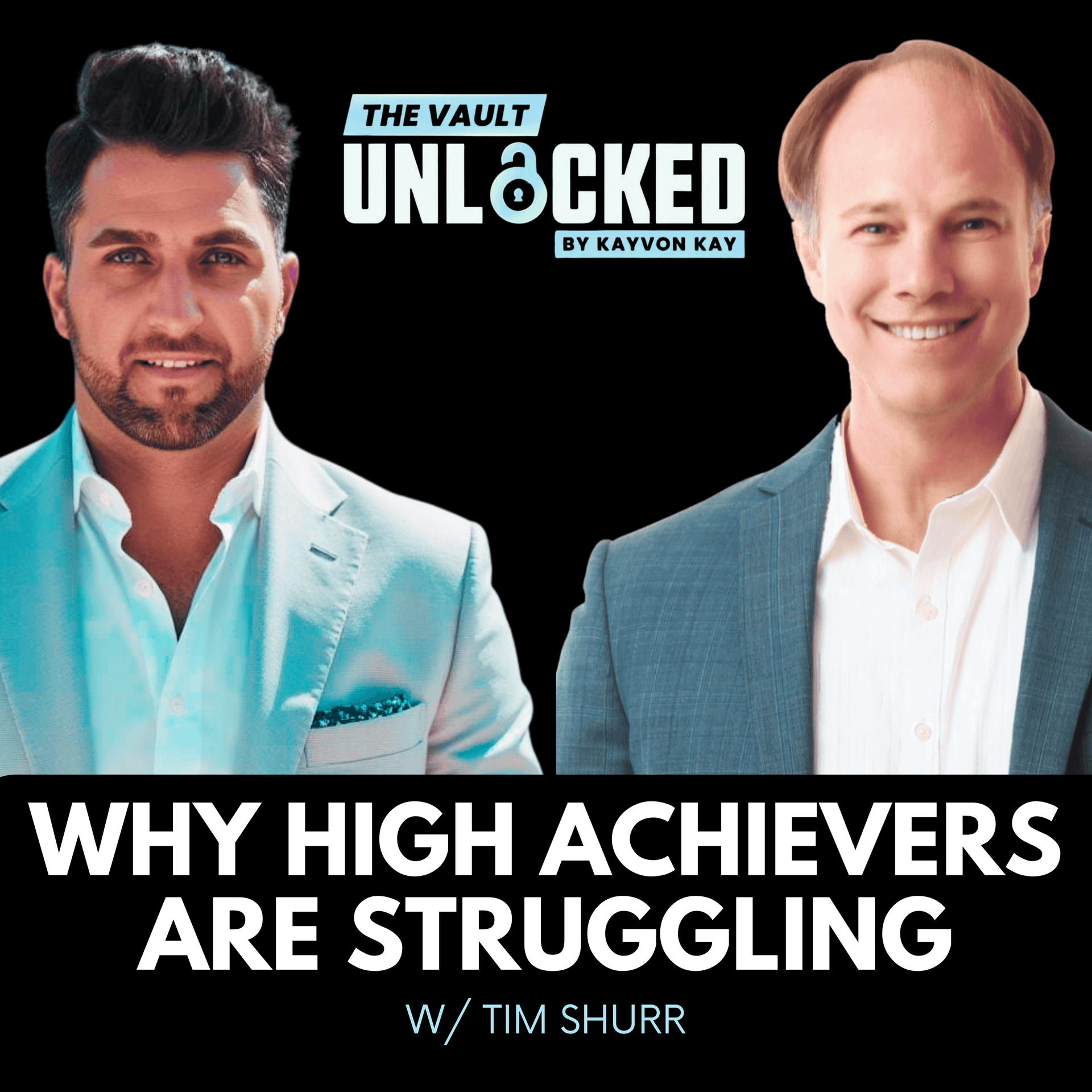
The Vault Unlocked - Episode Summary: "Why High Achievers Struggle With Anxiety (The Hidden Belief Driving Achiever Syndrome)"
Podcast Overview Podcast Title: The Vault Unlocked Episode Title: Why High Achievers Struggle With Anxiety (The Hidden Belief Driving Achiever Syndrome)
Guests
Tim Shurr - Peak Performance Hypnotist and Executive Coach Host: Kayvon Kaye Episode Theme: Exploring the psychological underpinnings of "achiever syndrome" and its impact on anxiety in high-performing individuals.
---
Key Concepts and Discussions
Achiever Syndrome
- Definition: The constant pressure to succeed, leading to anxiety and a feeling of never being "enough."
- Symptoms:
- Inability to relax or take time off.
- Persistent feelings of inadequacy despite external achievements.
- Anxiety that manifests even when outwardly successful.
Underlying Psychological Factors
- Unconscious Beliefs:
- High achievers often have deeply ingrained beliefs formed during childhood (ages 0-6) that drive their behaviors and feelings of inadequacy.
- These beliefs can lead to self-sabotage, imposter syndrome, and emotional distress.
- Impact of Early Programming:
- Negative feedback from authority figures can create lasting detrimental beliefs.
- Many are unaware that these childhood experiences shape their adult behaviors and mental health.
Traditional Therapy vs. New Approaches
- Limitations of Traditional Therapy:
- Often revolves around talking about problems without addressing root causes.
- Patients may feel stuck in cycles of discussing issues without achieving real change.
- Need for New Methods:
- Emphasizes the importance of addressing deep-seated beliefs and emotions to facilitate real change in behavior and mental state.
---
Framework for Change
The 4-Step Process
Step 1
Upgrade Beliefs
- Identify and address the initial sensitizing event that led to the negative belief (e.g., "I am not enough").
- Replace it with a healthier, empowering belief (e.g., "I am more than enough").
Step 2
Release Emotions
- Engage in exercises to release negative emotions such as anger, guilt, and shame.
- Introduce forgiveness techniques to let go of past hurts, which alleviates emotional burdens.
Step 3
Develop New Responses
- Train individuals to respond differently to triggering situations using new cognitive tools.
- Reinforce new responses and behaviors through practice, making them habitual.
Step 4
Reinforcement
- Use audio programs or other techniques to reinforce new beliefs and behaviors during sleep or downtime.
- Encourages consistent practice to maintain and strengthen new habits.
---
Key Takeaways
- Awareness and Acknowledgment: Recognizing that one’s anxiety and feelings of inadequacy stem from deep-rooted beliefs is crucial for change.
- Empowerment through Self-Work: Individuals can actively work on changing their mental frameworks, leading to improved mental health and performance.
- Importance of Inner Work: The journey of understanding and upgrading one’s internal beliefs is essential for sustainable success and personal fulfillment.
- Potential for Rapid Change: With the right strategies, individuals can experience significant shifts in their mindset and behaviors in a short amount of time.
---
Conclusion This episode emphasizes that achieving greater mental freedom and performance does not have to be a painful, lengthy process. By addressing subconscious programming and upgrading internal beliefs, high achievers can unlock their potential, alleviate anxiety, and foster healthier personal and professional lives.
Call to Action For those feeling stuck or experiencing "achiever syndrome," consider exploring the framework discussed in this episode. Engaging with professionals trained in these methods may offer the breakthrough needed to transform your mindset and experiences.
---
Follow Tim Shurr
- [Instagram](https://www.instagram.com/realtimshurr)
- [Facebook](https://www.facebook.com/timshurr1)
- [LinkedIn](https://www.linkedin.com/in/timshurr/)
- [YouTube](https://youtube.com/@timshurr)
- [Website](https://indyhypnosis.com)
Follow Kayvon Kaye
- [Instagram](https://www.instagram.com/kayvonkay)
- [Facebook](https://www.facebook.com/kayvonkayy)
- [LinkedIn](https://www.linkedin.com/in/kayvonkay)
- [TikTok](https://www.tiktok.com/@kayvonkayy)
---
This summary encapsulates the core ideas from the podcast episode, illustrating the connection between early programming, anxiety, and the potential for transformation in high achievers.
Written by AI. May contain mistakes. Listen to the episode to check what was said.
Chapters
Tap a time to open that second in VOTim Schur's Journey to Understanding Anxiety
1:12 to 3:30
Tim shares his personal struggle with anxiety and how it led him to become a peak performance hypnotist.
“For anyone that's listening, they don't know who Tim is.”
The Nature of Anxiety and Its Origins
3:30 to 5:26
Discussion on how anxiety is formed and the impact of childhood beliefs on high achievers.
“I think there's a problem in this world with anxiety.”
The Role of Deep Unconscious Beliefs
5:26 to 7:47
Exploring how deep unconscious beliefs formed in childhood lead to self-sabotage and anxiety.
“and not beliefs that we developed recently, but beliefs that we picked up in childhood, beliefs that we absorbed as a kid.”
The Impact of Early Experiences on Adult Life
7:47 to 9:45
Tim discusses how early experiences shape beliefs that influence adult behaviors and decisions.
“That's not, But so, and it's not the anxiety.”
Recognizing and Addressing Self-Sabotage
9:45 to 12:40
Identifying signs of self-sabotage in personal and professional life and how to address them.
“I, I wanted to jump in there quickly just to say, okay, I want to break that down a little bit, right?”
Building Trust in Yourself
12:40 to 14:06
Discussion on how to build self-trust and make better decisions despite underlying fears.
“There's an old saying that says, if you learn to go within, you'll never go without.”
Understanding the Roots of Anxiety
14:06 to 16:44
Explore the complexities of subconscious beliefs and how they affect self-trust.
“It seemed like a big bowl of spaghetti noodles all mixed together.”
Challenging Traditional Therapy
16:44 to 19:35
Discuss the limitations of traditional therapy in addressing deep-rooted issues.
“we're just all we're doing is actually watering it, fueling it, and it actually leading to negative impact versus positive impact.”
Resistance to Self-Exploration
19:35 to 22:20
Examine why individuals resist looking within and fear confronting their past.
“Our brain is always trying to avoid pain.”
The Power of Surrender
22:20 to 24:41
Learn about surrendering to old wounds for growth and deeper connections.
“There's always going to be your 20%, you know, who are your best clients, no matter what it is.”
Show all 24 chapters
Redefining Change and Healing
24:41 to 27:47
Understand how healing doesn't have to be painful and can be transformative.
“Surrender is letting go of anything that's not serving you in a positive way and that's good for those around you as well.”
Debunking Myths of Therapy
27:47 to 28:00
Challenge the misconception that change must be hard and lengthy in therapy.
“And, you know, our phones get updates all the time, but we don't.”
Challenging Traditional Therapy Paradigms
28:00 to 29:20
Learn about alternative approaches to therapy that yield quick results.
“You had to go for years, sometimes your whole life, right?”
Upgrading Beliefs Through Rapid Sessions
29:20 to 30:50
Discover how quick sessions can upgrade limiting beliefs effectively.
“I want to, I want to understand how you, it's not the hypnotism part.”
Identifying Initial Sensitizing Events
30:50 to 32:30
Understand how to trace anxiety back to its origins for effective change.
“and this piece and I'd take clients through these sessions.”
Changing Memories and Beliefs
32:30 to 34:00
Learn how altering memories can lead to empowering new beliefs.
“We go back and we kind of rescue ourselves or we reparent ourselves, however you want to say it.”
Releasing Emotional Residue
34:00 to 35:40
Explore strategies to release emotions tied to past traumas.
“I know I put Norton on the virus to clean it up, but Norton missed something.”
Understanding Emotional Attachments
35:40 to 37:20
Learn about the emotional attachments that hinder growth and healing.
“And I'm never going to have that happen to me again.”
Developing New Responses to Triggers
37:20 to 39:00
Discover how to create new responses to emotional triggers.
“Because I'm just trying to really understand.”
Rewiring the Brain for Positive Outcomes
39:00 to 42:00
Gain insights on how to rewire your brain for better emotional responses.
“into a habit, which is just something you do a bunch of times until it becomes automated.”
The Power of Pleasure in Achieving Goals
42:00 to 44:19
Learn how associating pleasure with tasks can enhance motivation and reduce anxiety.
“So you learn to slow down and then you're more effective.”
Accessing Support as a High Achiever
44:20 to 46:01
Explore how high achievers can access help and support without barriers.
“you know, if we're in corporate America, my executive coach.”
Overcoming Fear of Change
46:02 to 47:22
Understand how addressing subconscious fears can lead to breakthroughs.
“The easiest place is just go to Indy Hypnosis.”
One Belief Away from Breakthrough
47:23 to 47:55
Realize that a single belief can unlock significant life changes.
“programming of keeping them safe is kicking in.”
Transcript
Automatic transcript. May contain errors.0:00Welcome back to The Vault Unlocked. I'm Kayvon Kaye and today we're diving into something that almost no high performer wants to admit out loud. Achiever syndrome. That constant pressure to win. The anxiety that creeps in the second you take your foot off the gas. The feeling that no matter how much you accomplish, it's still not enough. My guest today is Tim Schur, a peak performance hypnotist who spent 36 years studying the human mind and has done over 16 ,000 sessions helping high achievers break the unconscious patterns that keep them stuck. We're talking about the deep programming formed between ages zero and six, the hidden beliefs driving imposter syndrome, burnout, addiction, self-sabotage, and even success ceilings, and the one core shift that upgrades the software running in the background of your life.
0:53If you're building at a high level, if you look successful on the outside but still feel the pressure inside, this conversation will hit. Let's unlock it.
1:12I'm super excited. Deep dive into this. Tim, welcome to the show. Thank you. Thank you. Pleasure to be here. For anyone that's listening, they don't know who Tim is. Tell us a little bit about Tim and how did you get to where you are? Yeah. So I started out looking for the cure for anxiety. I wanted to get rid of that feeling that something bad was going to happen if I took my foot off the gas. You know, I always felt like I could never just relax. I wasn't comfortable in my own skin. So I had to do something to feel worthy of love, right? Or do something to get people to like me. And it kind of turned me into a super achiever and a workaholic.
1:55And I accomplished a lot. And I found that even though I had accomplished a lot, I still had that anxiety inside. I still had those worries and fears. And so I spent my whole life looking for the cure for anxiety. And I went to school for psychology and got my degrees, but I found that it wasn't cutting it. You could talk about your problems forever, but it doesn't actually change it. And I walked over coals with Tony Robbins and jumped up and down at seminars and did all these things. And I still wasn't feeling that peace I was looking for. And so over the years, I found that it turns out that there's these beliefs that we have in our minds that are holding us back and keeping us stuck.
2:40It's like the software in our brain. And when you upgrade that software, it unlocks you from the fears, from the worries, from the stress, from what I call achiever syndrome. So I've been actively trying to figure out us humans for the last 36 years. Most people know me as a peak performance hypnotist. I'm one of the top hypnotists because I've been able to help so many people. I've done 16 ,000 sessions. And I specialize in working with people who are really high performers. They're not into the BS. They need results immediately. They don't want to spend years in therapy. They want to get it done.
3:19And a lot of the people have told me I want an easy button and I better get results today. And I'm like, bring it on. And so that's me in a nutshell. There's so much to go from there because if we go right back where you touched on the anxiety, I think there's a problem in this world with anxiety. And I call it fake anxiety. I'm not saying the anxiety is fake, but it's like manufactured fake anxiety is just from just being on social media. There's tons of studies showing kids with all this anxiety because of that. And then you discussed, which I loved, traditional, I'm going to call it traditional medicine almost, right?
4:00Psychology to real life psychology of what you're seeing, the gap there is. So I definitely want to deep dive into those two things I think are very important. And then And I also want to get to the most important is the one thing. You know, how did you come to this one thing of getting over achiever, high achiever syndrome and what you see? Why do people have that? So with that being said, let's discuss that last part right there. Why do you think people have high achiever syndrome? Where does that come from? so no matter what we're able to accomplish if we have this belief that we're not enough or if we have this unconscious belief that if i stop winning then i no longer matter or if we have this belief that if i let up it could just fall apart and it keeps us going and achieving and winning and striving and people on the outside will look at your life and say, this is incredible, you know, what you've accomplished.
5:04And you're like, yeah, it's amazing. But you know, what have I done lately? Or I still haven't achieved this goal. Or yeah, it looks great on the outside. But my wife is going to strangle me because I can't even go on a vacation because I can't relax enough. Because my mind's always worrying about the next thing I need to go fix. Right. And so it comes back to these beliefs in our mind. and not beliefs that we developed recently, but beliefs that we picked up in childhood, beliefs that we absorbed as a kid. So every time I work with somebody, even people that are like, no, that's not it. I had a good childhood.
5:40You know, I got a great mindset. This isn't about mindset. This is about deep unconscious programming. And so most of the people I'm working with have a fantastic mindset. It's not that, right? It's the deep unconscious just programming. And so every time I work with someone, we go back to try to figure out where that belief was formed. Because if we can kind of upgrade it at that moment where it was formed, then that's where you have the biggest breakthroughs and really fast. So people are going back to when they were four years old, seven years old, 12 years old. And they went through some experience where their brain is, you know, we're always trying to figure out what things mean and where brains always making up meaning.
6:20And so that's when most of our beliefs are formed by the time we're 18 years old. And so some of those beliefs are empowering, but some of them are also destructive. And that's what causes the imposter syndrome. It's what causes self-sabotage. It's what causes addictions. So it causes the bad habits we can't seem to kick. Right. And so so when we go back and we identify those situations and we find the beliefs and then we upgrade them, that's when magic, literally magic begins to happen for people. So how important is it? Because I know there's science around it, but I'd love to hear from you as a professional, like the importance of that zero, basically like zero to six age and how most of your beliefs and thoughts, ideas are formed in that period of time, which then science prove is what controls our everyday actions and our everyday actions comes from our everyday beliefs.
7:12Yeah, you're exactly right. You know, they say that by the time we're 18 years old, we've heard like hundreds of thousands of negative thoughts and, you know, and either coming at us or in our own mind. And, and we've seen all kinds of, you know, simulated murders and, you know, just saying, so, and now kids have growing up with social media, this generation, they've been exposed to things that they should definitely not be exposed to, you know, repeatedly. And so it's causing, yeah, it's causing a lot of, I mean, people are saying my four-year-old has anxiety now, right? Like what? That's not, But so, and it's not the anxiety.
7:53It's the feeling of not being good enough. Anxiety is a symptom. It's like a fire alarm that's going off, even though there's no fire. The cause is a belief that we're not good enough. And so where do you pick those beliefs up? Well, we pick them up when we're younger. And a lot of times we pick them up accidentally, right? So I'll give you an example. So there was a guy who was doing really well in his business, but he could not take it to the next level. He just felt stuck no matter. I went go this way. I go that way. You know, he hired coaches, didn't seem to make a difference. He'd get so far and then it would just seem to fall apart.
8:26So he came to me and what we did was we went back to the belief that might be causing this. And so he goes back to a memory of when he's six years old and his dad was a car guy. So his dad was always working on cars. So he goes back, he's six years old. His dad's working on this car. He's a six-year-old for a Phillips screwdriver. Now, the kid is six, right? And so he hands his dad the wrong thing. And his dad goes, you moron, you can't ever learn anything. Now, that wasn't very nice. And his dad probably wasn't thinking, I'm going to screw up my kid for the rest of his life. Yeah. Okay. But the kid's brain, you've got an authority figure, your father, something that scared him because the dad all of a sudden yells at you.
9:11That puts you in a hyper suggestible state. And then he gives you a suggestion, right? You can't learn anything. And all of a sudden that gets into his brain. And now he's, you know, 40 years old and he can't learn enough to get to the next level. And he can, but for order, in order for him to be successful, he would have to get rid of that belief because that belief is like a parking brake in his brain that he didn't know was there. And so he would continually sabotage himself because the belief has to match your reality. And so even if you change your reality, it won't, you got to upgrade the belief.
9:49I love that. I, I wanted to jump in there quickly just to say, okay, I want to break that down a little bit, right? Because you said he would self-sabotage. So someone with a belief of, uh, I can't learn, or I'm, I'm a moron, let's say, right. Uh, what, what are ways that that person would self-sabotage? Or what are ways that someone you would see going, ha, you're self-sabotaging yourself because of this. What would be showing up? Sure. So you might be getting really stressed out and then you lose your temper and then you take it out on your employees. Or you come home and you're afraid that you're not good enough.
10:29So you overcompensate by always trying to be in charge and in control. And then that causes a whole bunch of friction with you and your spouse. And now that's on your mind. and now you're going to work, but you're feeling like you should be at home saving your marriage. And then when you're at home, you feel like you should be at work saving your business, right? So that's a way of doing it. You're sitting up at three in the morning because you can't turn your mind off because you're worried about this situation and that situation and what's going to happen if this doesn't work. So then you're exhausted.
10:57Then you're missing meetings, right? It could be you got to get rid of the pressure and the stress. So now you're drinking, you know, now you're drinking just a beer, you know, and then all of a sudden it's, it's a couple of beers and then pretty soon you know it's like five or six beers you know every night you know or people are smoking weed or people are trying to drink energy drinks to push themselves harder because we got the youtube motivation of go harder do it do it do it right and so what that does is when you all of a sudden hit your 50s you have a big heart attack because you can't handle that pressure anymore yeah right and so worse we've seen worse when when, you know, men take their lives.
11:37So I'd even say worse than that. Yeah. It becomes heavy. That is, I see that more with the veterans, you know, with the veterans that I've worked with over the years. So more veterans die from suicide than from actually being in combat. And, uh, yeah, so it's, I mean, it's serious. And so you have the imposter syndrome, you have, uh, you know, you're creating a culture in your workplace environment. That's really stressful because you're always stressed out. Right. Or you're either You're communicating with people in a way where you're tearing them down, or you're not saying what you need to say and you're tearing yourself down, but you're not having those crucial conversations.
12:14And so you're not letting go of people that aren't good for you, or you're in a business with a partner who is sabotaging everything, right? Or embezzling money. And so there's a thousand different ways that we can sabotage ourselves if we don't feel that we're worthy or we don't know how to move forward with a heart at peace. Wow. That's a lot. But those are a lot of ways that people can self-sabotage themselves. So if that's happening in someone's business or even in their lives, is that an indication then that means, oh, there's something going on, you said, up in the software that probably needs addressing?
12:52Yes, exactly right. That's exactly right. Every time, it's a belief. There's an old saying that says, if you learn to go within, you'll never go without. So the answers are always inside of us. And a lot of times we're always going to the next coach, the next training, the next seminar, because we feel like we're missing all these pieces. But most of the time, we're not missing the pieces. We just don't trust ourselves enough to connect them inside. So how does someone build that trust? Like, say, if they have the syndrome of overachiever or not good enough or I'm, you know, the afraid of success or afraid of failure, imposter syndrome, those things, what I'm hearing from you would relate to them not being able to fully, completely, authentically trust themselves in their decision making.
13:40so how what would come first right like how do you trust yourself to make better decisions so that you don't feel like a imposter but making you feel like an imposter or making you know feel a failure of success or feel whatever i mean if you're a feel a fair oh my god fear of failure like that becomes to me kind of almost like a rat's nest here right a spider web of emotions of thoughts of subconscious and conscious living and beliefs, how through all of that can one even begin to trust themselves? Well, that's a brilliant question. And I felt the same way. It seemed like a big bowl of spaghetti noodles all mixed together.
14:22Turns out though, it's not, right? It's very linear. Okay. So if you have a row of dominoes, what a lot of people are doing, or they're taking a, you know, you got a row of dominoes and you're taking one out here and you're taking one out there, you know, and they don't, they all just keep getting messed up. And that's kind of what traditional therapy is like. Traditional therapy is using, you know, cognitive behavioral therapy, which is like positive thinking on steroids. And, and so you're trying to logically change a deep unconscious belief, and an emotional feeling. And so it's like cutting the top off of a weed, you know, you're not getting to the root.
14:56And then of course, using pharmaceuticals and alcohol and sugar and weed and all the other stuff we do, uh, porn, all the ways that we try to distract ourselves. Uh, that's like throwing dirt on top of the weeds. And so what you got to do is you got to pull the weed out at the root and plant it with, uh, replace it with flour, right. And empowering belief. I am loved. I am safe. I'm enough. I can do anything that I put my mind to. And when you believe that, then you can trust yourself. And then when you can trust yourself, you can trust others more. Right. And then that starts to create a new way of thinking, feeling, showing up, which then creates a new experience, new feedback that reinforces the new belief.
15:35So the first thing you do is you go back to the belief, the core belief that I'm not enough. And we upgraded at the source and I can walk you through how we actually do that. And then we, we upgraded at the source, we build a new foundation. And then all the other tools and mindset training and everything else will then work more effectively, because it's all great tools, but you got to have the foundation first and then you can build on top of it. So let's, I want to, I want to see how that is built. I want to go there, but before we do, I just want to understand a little bit more of the, of the playing field we have, because you brought it up twice now, like, like I'm going to call it traditional psychology.
16:15Let's call it traditional medicine, psychology, cognitive behavior. There's actually reports now. I I believe there's science. I'm not going to say that. I don't know if they're true. I haven't fact checked any of this, but I believe there's reports out there saying that actually therapy, traditional therapy is actually not great for you. It actually causes more depression because we're thinking and talking more about our problems instead of, I think, what you're saying, addressing the root of the problem and then coming up with a strategy to actually get rid of it. we're just all we're doing is actually watering it, fueling it, and it actually leading to negative impact versus positive impact.
16:51Have you heard anything like this? Are you familiar with this? I have. Yeah. And so there are great practitioners in every field and nothing works 100%. I think that therapy can be very beneficial because having someone to talk through your issue and share what's going on inside. I've had people come to me as an executive coach and they're like, I just want a place where I can dump my poison and trust that you're not going to tell anybody, right? Because they're very high profile situations. And so sometimes that can be very helpful because you just want to be able to unload and share. One of the problems that we have, especially as men, is that we just shove it down.
17:31We've been taught not to cry and shove it down. And that causes all kinds of health problems. You know, the body keeps the score. So, but you're right. Just talking about problems over and over doesn't really help. And if you're getting tools where you're trying to just look at a situation and reframe it differently, but you don't really believe it, or you're creating vision boards and you're telling yourself affirmations, but your mind is saying, yeah, you're full of crap. You know, this is not how it is. Then it causes more conflicts and it caught, and it can also cause you to feel worse because you feel like, you know, I'm doing all this stuff and I'm still not getting better, what's wrong with me?
18:10Why am I such a loser? Why am I such a failure? Or sometimes we get really hard on ourselves because we have somehow picked up the idea that if you really emotionally beat the crap out of yourself, it's going to somehow motivate you. And for most people, it's going to end up doing the exact opposite long-term. With all the people that you've worked with and what you see out there, I'm sure this is your profession, why do you think people are afraid to go within? Why do you think they're afraid to actually acknowledge, hey, maybe there is something from my zero to six or zero to 10, whatever, zero to 18, right?
18:44That is causing me to operate like this. I know some people don't even want to have that conversation. They don't even want to have, they're not even open to the idea of that conversation. And then there's people on the opposite side where it's almost It's like they're so open and they're working so hard that they're missing the mark of what's really going on. And they're using therapy as the pharmaceutical drug or something like that. Yeah, you get addicted to going to seminars and doing healing work. And then you start to get real metaphysical and you're into just the trip of it. But you're not your life isn't getting any better.
19:20You know, you've been to 37 seminars, but you're still your life's a train wreck. Right. And so that's really great. I love your question. So, you know, first, when the people are getting resistance, resistance is just a fear that somehow it could make things worse. Our brain is always trying to avoid pain. Right. But I have found over the years that your biggest breakthroughs are hiding in the places you don't want to go. So if you want to create a breakthrough, just look at the places where you're resisting and go there. And then all of a sudden you're going to start to experience leverage, motivation, momentum, you know, what we call a breakthrough.
19:55so um uh people are just either afraid or they don't understand so like you know being a hypnotist i wouldn't have never chosen it but it's worked so well over the last 30 years and it's not some weird magical state that people can go with some can do and some can't get into it's really brain science i mean everybody goes into hypnosis twice a day right before you fall asleep right before you get out of bed in the morning so it's just a natural state of mind where you're able to access your unconscious more effectively. But people see movies, they see stage shows, and they're like, you're not getting into my mind.
20:31Or, you know, are you going to, I've had people say, are you going to get in there and mess up my mojo? Because, you know, I need my brain. This is what's made me millions of dollars. I don't want you in there messing anything up. I'm like, that is not how it works. We're going to elevate your success and not just your wealth, but your inner wealth, right? Your health, your peace of mind, your marriage, your connection with your children, right? Your spiritual health. And so, so most people, but most people, the resistance is they think that somehow it would make things worse. A lot of guys, they don't want to slow down.
21:04They don't want to talk about feelings. They just want to go harder and go faster, right? They don't understand the power of aiming before you fire, right? They don't understand the power of, of having a new insight. It makes sense if you're solving problems like if you have a funnel or you want to increase conversion or something it makes sense to dig around test things you know try it out but if we do that internally people are like no wait a second like it's different so so i think it's a lack of of understanding yeah okay i maybe lack of understanding education uh and again i don't want to uh direct the conversation too much down this road.
21:43But the reality is, if everybody did this and everyone got the results of what this has, then what happens to the pharmaceutical world? What happens to all the people part of it that's feeding the negative, right? That gets shut down pretty quickly. So I'm wondering, that's probably why the education isn't there. Well, yes. I mean, we have a lot to say about our educational systems. We have a lot to say about, you know, and especially this country, we talk a lot about how our healthcare system, you know, are they, are they trying to keep us sick, you know, so that they can keep cashing in on us and things like that.
22:20There's always going to be your 20%, you know, who are your best clients, no matter what it is. And so, you know, the people who are ready are going to be the ones that step up. And those are the ones that you hear their stories and the testimonials and the breakthroughs. And then there's going to be a group of people, 20 % that are not your buyers and they're never going to be, and they're just going to keep going in circles, right? And then there's the people in between and those who, who that's who we're going after, right? With, uh, that's why we have shows like this show, like your show, right?
22:50You know, what you're doing is providing such an incredible service because you go beyond just showing people how to make money, right? You're the, by the questions you're asking me, you go much deeper to that because you care about making a difference. And so, you know, by, by having a show like yours and by having lots of podcasts and shows out there, there's thousands of them now. That's how we make a difference. It's a grassroots movement. I've always tried to do it as a bottom up instead of a top down. And so we're making a difference. Someone who's listening to this show, their life's going to change.
23:23I can't wait because we have I know we're just getting started on how we do this. So I'm excited. I wanted to add that comment because it was interesting. So you said it and I'll just make sure we nail it. The guys that come to you that are afraid that you're going to change their mojo and they go, oh, but I got to make money, right? They're missing the fact and the point that actually, if you do this work and you do it properly, you'll actually 10X your income. But that's not where even the fun begins. The 10Xing of your relationship to your wife, to your kids, to your employees comes to another level, which 10 X is your income, your relationship and your ability to connect spiritually, whether whatever it's God, I'm just going to say spiritually, because you trust and authentically love and are complete yourself.
24:16That alone is helpful to your ability to be creative and your ability to ask better and deeper, harder conversations, which then 10 X is your wealth. But men call wealth is their income. So it's interesting because that's why, well, what comes first? The surrender, which we didn't talk about, right? Or a fight towards trying to make it better. Yes. Well, what is surrender? Surrender is letting go of anything that's not serving you in a positive way and that's good for those around you as well. And so surrender is not losing and giving up and sacrificing. I like to have addition conversations, not subtraction.
24:59Most people in life are accidentally playing not to lose. We're constantly trying to not get hurt. I was just watching Bill Burr, the comedian on TV, and he has a new special that came out and he's standing outside the club. And he said, you know, it's funny because my whole life I've just been going to places where I could get the least amount of hurt. Right. He says, I like stand up comedy because I can stand in front of a group of strangers and get them all to like me. Right. And love me. And here's a famous guy who's afraid of being hurt. And so many celebrities, so many successful people that I've had the privilege of working with and and or watching their stories.
25:38It doesn't matter how much success you have. If you have never cleaned up those old wounds from the past, if you have those traumatic experiences, if you've been abused in different ways. You know, that's another reason why people don't want to open that closet door. They're afraid if I open it up, I won't be able to close it and a whole bunch of crap is going to come out and it's going to wreck my life. Right. That fear that it's going to get worse. It's never happened. And I've opened thousands and thousands of closet doors. And all that happens is that you heal. This stuff comes up and you heal it.
Read the full transcript
26:10And you heal it quickly with this one belief way approach that I'm using. You're able to heal it very quickly. So it's not about surrendering and your life gets worse. It's like you said, you surrender and your life gets 10x better. And in ways you maybe hadn't even considered. yeah so that's interesting because you said oh these the stuff comes up and people fear that it might get worse and you said it doesn't now you've kind of shaking something to my brain because i thought the answer would be yeah it might get worse heck it might get worse than you ever expected but you stay through it long enough it then becomes better but you're saying you don't even have to go through the worst pain to get through the game like to get to the other side because i always was under the impression you've got to die and completely die of any version of the person you are so you can birth the version you want to become because you can't have both.
27:09Yes, you can. Yeah, those are all limiting beliefs. Okay. Yeah, because yeah, because why would we want to kill off you? You've worked your whole life to get to who you are and where you want to I mean, there's so many amazing things about you. Why would we want you to go away? We don't we want more of you. Okay. We just need to do some tweaks, right? So if your computer downloads a malware virus, should we throw away the computer and go get a new one? No. Right? We just get rid of the virus. And then all of a sudden the brain works great or the computer works great the way it was designed to to begin with.
27:43Right? So it's just that we've got this HOS, this human operating system. And, you know, our phones get updates all the time, but we don't. And so this is a way of getting rid of the mental malware that might be holding you back. Now, where you came up with this idea of change has to be hard and difficult is from the old therapy models, because the model itself was difficult and hard. You had to go for years, sometimes your whole life, right? There was a joke when I was on the track to be a psychoanalyst, kind of like the Freudian guy, where you sit there and, you know, for and then just listen to people and go, tell me more, right?
28:20Which is a total waste of time. Yeah. But they had the old joke that I'm going to get 30 clients and I'm going to retire 30 years later with the same 30 clients. Now that's great for lifetime value. Okay. But I think that's horrible, you know, for getting results. I'm getting results with people in the very first session, in the first 30 minutes. Right. So, so it was this whole idea, this whole paradigm that it's long and it's struggle and you got to go talk about your worst things you ever dealt with. And then there's something called exposure therapy, where you just keep talking about it over and over.
28:53And then eventually you lose the emotion because you've told the story so much you don't care anymore. That's an awful approach, right? We don't have to go and relive the negative stuff. In fact, some of my clients, I don't know what happened to them. They've never told me, but we upgraded the beliefs and it didn't matter because they instantly felt lighter and more peaceful. And then it showed up as results, new results in their life. So let's talk about it. It's the time has come. The time has come. I'm ready. I want to, I want to understand how you, it's not the hypnotism part. Cause I know that that's a kind of a science, but like, how did you find this way?
29:31Like, what are you doing to be able to upgrade the software without breaking down and understanding and getting people results within 30 minutes, 30 minutes can change someone's life for the next 30, 40 years. if what you're saying is to be true is the results that I'm thinking, which is removing someone's limiting belief of, in the one example, I'm too stupid or I can't learn, or I'm afraid of success, or I love what you said, oh, I wanted to go down this even further, was most people live life like they're playing not to lose versus living life and playing the game to win. Because when you play the life to win, it exposes you, and you can lose big.
30:16But without playing life like that, you don't get to live big. So how do we get somebody in that state to change in 30 minutes? I can't wait to hear this. All right. So step one, and I figured this out from doing thousands of sessions, trying this, trying that. Every time somebody said, I got this new technique from NLP or from EFT or EMDR, I mean, all the letters, right? Any technique. I'm like, okay, prove it to me because I was skeptical, right? Because I wanted to figure out, does this work? And then I would take this piece and this piece and I'd take clients through these sessions. And then eventually these experiences begin to appear, right?
30:58And then taking them through specific experiences allowed people to have rapid breakthroughs. And these are sustainable results. This isn't something that wears off. Like regular hypnosis, you get someone relaxed, you give them affirmations, you hope it sticks, Right. But we're upgrading unconscious beliefs. So when you're upgrading new beliefs and you're creating new neural pathways in your brain, that's something that stays with you unless you go change it again. Right. So when you go from I'm not enough to I'm more than enough, you're more than enough the whole rest of your life. And like you said, that's what is so exciting.
31:29So. So in session one, what we do is we go back to what we call the initial sensitizing event. Right. This is where did that feeling of anxiety that you have? Let's follow it all the way back to the very first time you ever felt that feeling. And then what's amazing is I'll go three, two, one, and their brain will take them right to that exact moment in time. What I thought you had to sit there for years and free associate and come up with ideas and piece things together. And now people are having dreams and beating it into Chad GVT. Right. I thought you had to have this whole process. No, you go, your brain will take you right to the right a moment in time where that belief was formed.
32:09So now you have this experience. And what we do is we give you resources that if you would have had those resources that like you're going to look at life differently, when you're six years old, as opposed to if you were your age right now, going back and looking at that situation. Yeah. And if you had the wisdom and the resources, right, the different perspective, the understanding of how life works, right, more power than you had back then, and you were able to take that back with you, it didn't have to be traumatic. it no matter what it was you could go through that situation in a different way recognizing that you're not that experience you're the experiencer you're way more powerful than the experiences you've had so we can go back to that moment in time with these new resources we can look at it a different way we can change the way that you're remembering it and then we can ask what the new belief is that you want to have instead so people go from i'm not enough to you know what, I'm more than enough that I am love, that I am safe, that I am going to be okay.
33:08We go back and we kind of rescue ourselves or we reparent ourselves, however you want to say it. We're loving that inner child. Okay. So that starts to build the foundation. And that's step one. Questions about that? Yeah, yeah, I do. How do you make it stick? Because I've been, you know, I'll tell you personally speaking, hey, man, this is about being raw and authentic here. I've done what do you want to call it? Coaching therapy. I've done some hypno myself as well where I've had those conversations. We've done the exercise where you're almost reliving and you're changing how you relived it.
33:45And you feel good for a bit, but it never stuck. It never actually changed completely. It's always as lingering there. So now the association too is I understand I'm aware, but but it's still running. The software is still running. So I know I have a virus. I know I bought Norton online. I know I put Norton on the virus to clean it up, but Norton missed something. You know what I mean? Like there's like, there was something that was missed. So that would lead, that would lead to step two. Yeah. That's why. Okay. So I'm ahead of the game here. I love it. I led you right to step two. Yes. So step two, they'll just say there's four steps.
34:22Okay. So step two. So in session one, we upgrade the belief. In session two, you got to upgrade the feelings. You got to upgrade the emotions because we can have that experience, but not feel an authentic change. It still feels like you're fighting yourself, right? You still want to go back to those habitual ways of being. And so in session one, we upgrade the belief. In session two, what we do is we go through a releasing experience and that's where we release the anger, the guilt, the shame, the resentment, the self pity, right? The reluctance to let things go, what we call self-righteous indignation, right?
35:00It's just, we just don't want to, we don't want to let go of it because we think at some level it's fueling our desire or it's, if we let go, we're going to get hurt again. So Wayne Dyer gave me the best, yeah, Wayne Dyer gave me the best example for that. He said, you know, when you go through a traumatic experience, it's like getting bit by a poisonous a snake. Now the snake bite hurts, hurts real bad sometimes, but that's not what kills you. It's the venom that's, that's left inside. And our job is to get the poison out, but we don't because we don't know how, or sometimes we protect it because we think that venom is keeping us from getting hurt again.
35:37Or that venom is what allows us to show up and kick ass and take names, right? And I'm never going to have that happen to me again. And so then we just go through life, always having to win, you know, take no prisoners. We go through this situation where we're able to confront and have a conversation with the people who have hurt us. And even sometimes have that conversation with ourselves, and then bring in forgiveness, right? Where we're able to forgive others, because that's what releases you. It's not really about them. It releases you from, it helps you to get the poison out, right? And that's step two.
36:14okay so you were like step one is we're going back and we're meeting and we're kind of facing i want to call it fear because it's way more than fear it's we're facing the situation head on and equipping the little child uh this is called the situation the little child the uneducated child with education of how would you have done this differently then session two we're going we have the we have the ability to go back there we feel a little safer to go back there so we go back there. And now we're talking about how do we release the emotions as a result of that situation? And I love what you said, whether it's the anger, the shame, I'm not good enough, all this stuff.
36:50You said something with the self-righteous, what'd you call that? Indication. Yes. Indignation. I love that, which is the idea of like, this is my identity. This is who I become. I use this to protect me. I can't, what, if I let this go, then what do I have? I don't know who I am. If I let this go. I'm going to be more hurt. I don't want to deal with more hurt. So I'm going to hold on. So we're going to go and deal with all of that in step two. That's what we do in step two. Okay. Am I leaving anything behind here? Because I'm just trying to really understand. You do a beautiful job of recapping this.
37:25It's kind of like being in the middle of the ocean and you're splashing around, you got your life jacket, right? And even if that life jacket is heavy and has bricks in it and it's dragging you under the, it's all you have. So you hang on to it. That's why we have addictions because we don't know what else to do to feel better. So we hang on to what we have. You know, I pull up in a boat. So, you know, this is about trading up. And so each session, I'm also giving you simple tools, simple strategies, right? So we're upgrading the beliefs and we're upgrading how you're feeling. So each session, you're feeling lighter, you're feeling more peaceful, you're sleeping better.
37:57You know, all of a sudden, your thoughts are more positive and supportive. Even if you got ADD or you got OCD, your thoughts are being more positive and supportive anyway. And then as you move into session three, we start to develop KVON 2.0. So this is where you use the tools and you use the strategies. And now all of a sudden, you're showing up in a more empowered way. And you're retraining your brain to show up automatically in this more empowering way. You're recognizing that you have more tools. There's an old saying that's in neurolinguistic programming that the person with the most behavioral flexibility controls the show.
38:35That's the one who's most in control. Whoever has the most tools who communicate in the most diverse type of ways is the one who's really in charge. And so you have a new toolbox, right? Or maybe you've got a great toolbox, but we've added some power tools. And so now all of a sudden you're imagining yourself in old situations showing up in new ways, and that's rewiring the brain. And then we're going to reinforce that and turn that into a habit, which is just something you do a bunch of times until it becomes automated. That's all a habit is. And so that's step three. Okay. So in step three, if I'm hearing this correctly, we're understanding how we've been triggered and what triggers look like for us and how we once behaved and we're adjusting our behavior to that.
39:25So reliving maybe past experiences and asking the question, if I knew what I know now in this moment of how I react and why I was reacting, how would I have changed that situation? And also thinking about current situations of how we're acting and how we can change our behavior in that. My question then is once you're out of the room and I'm now back into my regular life a week later and something triggers me again. And I love what you said. The person, the smartest or the wisest or the fastest person in the room is the ability that has the emotional regulation to know, hey, I'm being triggered.
40:05Hey, I know I can identify. This is why I'm being triggered all in a split second where you don't even know what's happening. And I'm not going to let that bother me or push me off my game. How does one who's going through and hasn't done the hard work or and or is in the process of doing the work, not letting those re-trigger, re-trigger? because every time you get re-triggered, you got to go back to step one. No, no, you don't. So what you do is, you know, we got these buttons that get pushed. And a lot of times what we're trying to do is block people from pushing the button. So you get away from me or we put a wall up to protect us.
40:39Okay. Other people, I used to say, well, let's just get rid of the button. And then people can do it, but there's no button so they can't get you. Right. But what I've been doing lately is I take that button and I just connect it to a new response. push your button and it just causes you to respond in a new way and it just takes a little bit of practice and so i'm giving you audio programs that you're listening to while you fall asleep at night or while you're sleeping at night in between our sessions and that speeds it all up because you're getting that reinforcement every night while you're sleeping so there's no extra time because most of my clients are too in demand i don't like the word busy too in demand to uh to be spending a half hour doing hypnosis sessions unless they're in their sauna or you know whatever but um uh so they just do it while they're sleeping at night and that speeds up that whole process and creates that that uh repetition yeah so that by the time we get into session three we're creating that new response and it feels good right so someone says something and catches you off guard you start to get upset but then all of a sudden you're taking a power breath in you're asking a power question.
41:43All right, what's my outcome here? How do I want to handle this situation? What can I learn from this? Right? How do I want to feel a half hour from now after I've handled this situation? Do I want to be proud of myself or do I want to be like, oh, I got to go fix that mess? You know, and a lot of us are always fixing messes because we're going too fast instead of slowing down. So you learn to slow down and then you're more effective. You hit your target easier because you're slowing down and aiming, right? It's not as much stress and pressure. You're not thriving on adrenaline anymore. You're thriving on wisdom, you know, and more peace.
42:17And that all starts to create a pleasurable experience inside of you, which is going to make your brain want to do it more because your brain likes pleasure. And so you're just systematically rewiring yourself so that you don't have to talk yourself into it or rely on willpower. Which will, I think there's science. It's willpower. It's brute force, and it can get you so far, but it can't get you through. Willpower is like 10 % left on your cell phone battery. You see 10%, and then all of a sudden it turns off. That's what willpower is. Willpower is trying to get ourselves to do something that we don't really want to do.
42:57The fix for that, that's just procrastination. The fix is to associate pleasure to the activity. instead of pain. Then all of a sudden, you're going to want to do it. I don't have to get talked in to go and do a movie. It's like, yeah, I'll go to a movie. Because it's pleasurable. I've got to do my taxes. Okay, well, but how can I make taxes more fun? We associate pleasure to the activity, and all of a sudden, you feel better. We have the ability inside of us. We have the treasure. It's just that a lot of us, it's like a safe. We got two numbers of the three number combination. And if we had that third number, that door would swing right open and we can access that treasure.
43:40It's just most people just don't have that third number. So how close are people to that third number, do you think? I think it's really close, but it feels like a million miles away. Because if I can take you through this experience and in half hour, you start to shift what's going on inside and then you go through the other sessions. you know so let's just say in four to six hours your whole life changes because you're you're changing how you're perceiving the world you're taking you're putting on a different pair of glasses you know and that's incredibly fast and the way that i'm doing it feels fun and it feels relaxing and it feels empowering and so you look forward to your sessions it's not like oh i got to go to therapy right you know most people are like i got my hypnotist you know and then uh or you know, if we're in corporate America, my executive coach.
44:28Yeah, exactly. Right. The name. Yeah. I love it. I love it. So it's interesting because you didn't allude to this and I never said at the beginning, but you don't just work with everyday business owners. You're working with some of the top business leaders in the world. I know you can't mention names, obviously, but never want you to. But you're working with some of the top actors, Hollywood actors and, and people that you would never know or ever think you're working with some of the elite, elite. How does everyday people get to work with you? I started my career with everyday people. And I never wanted to be the guy that was so out of reach.
45:10A lot of times I still answer my own phone because I didn't want to be out of reach. I don't have 20 gatekeepers. You can easily get a hold of me. I've just always been that way. because I started off poor, you know, broken and felt broken. And, and, uh, you know, there's a lot of times where I reached out to people and they just, you know, they didn't want to mess with me or, you know, even getting on podcasts when I first started out, you know, like, well, what are your numbers or how many followers do you have? You know, and I want to get on their shows, even though I would have been an amazing guest, but, you know, so I did it now that I've got some power, I'm, I'm not like that, you know?
45:48So, so if you need the help, you can get to me And, you know, I have a school and so I've trained a lot of talented people. And so you can work with my coaches that I personally train and they'll take you through the experiences. Where where can people find you? The easiest place is just go to Indy Hypnosis. I-N-D-Y. I built my practice in Indiana. So and then I was in Los Angeles for a few years and I'm talking to you from Florida right now. So I'm kind of all over. But but I built my business in Indianapolis. So Indy, I-N-D-Y, hypnosis.com. Yeah, thanks for asking. Awesome. And as we come to an end here, I mean, what a great, great, I think, podcast just for people to really understand how, what I got from you is it's actually not as hard as you think it needs to be.
46:40and by doing the right cognitive thing, I'm not going to call it cognitive therapy, but doing the right type of therapy, coaching, executive coaching, hypnosis, AKA being able to go to the actual root of your problem and re-changing or re-forming what that, how you view it, how you operate from it, how you see it, how you let it trigger you can change everything that you're doing in your life from the way you talk to the way you move, to the energy you bring, to the decisions, the creativity that comes from it. And it doesn't have to be as scary or as long as people think. So for somebody who's sitting on the fence right now, somebody who knows this is for them, but the fear is kicking in, their subconscious programming of keeping them safe is kicking in.
47:33What would you say to them in the last couple words. I would say that you are one belief away from your next breakthrough, right? Your next big breakthrough. Now, all we got to do is, you know, make your move. Wayne Gretzky always said you miss 100 % of the shots you never take. So take the shot. You'll be glad you did. Bingo. I'm leaving it right there. There's nothing more I can say. That is another episode of The Vault Unlocked.
From the publisher
You built the business.
You hit the numbers.
You "won."
So why can't you relax?
If your success still feels fragile… if slowing down feels dangerous… if your mind never turns off even when everything looks fine on paper, this conversation will land.
This isn't about stress. It's about the belief underneath it.
In this episode of The Vault Unlocked, I sit down with Tim Shurr, peak performance hypnotist, executive coach, and operator behind 16,000+ private sessions with high performers, founders, celebrities, and elite executives.
We go straight at the real issue behind achiever syndrome: The unconscious belief that you are not enough.
Not because of your mindset.
Not because of your strategy.
But because of programming formed before you even knew what business was.
We break down why traditional therapy often misses the root, how subconscious beliefs form between ages 0–6, and how those beliefs silently drive anxiety, imposter syndrome, self-sabotage, addiction, burnout, and overachievement.
This is not philosophical. It's operational.
You'll hear the exact four-step framework Tim uses to help high performers upgrade the "mental software" running their decisions, often in a matter of hours, not years.
We unpack why many successful founders are "playing not to lose" instead of playing to win. How childhood moments create revenue ceilings decades later. The real reason self-sabotage shows up in business and relationships. Why willpower fails (and what actually rewires behavior). The difference between upgrading beliefs and just talking about problems. And how emotional triggers can be reconditioned instead of avoided.
This conversation bridges psychology and performance, not for self-help, but for real business growth.
Because when anxiety drives the operator, the business feels it.
When a founder operates from unresolved shame or fear of failure, it leaks into sales, leadership, hiring, partnerships, and culture.
And when that belief upgrades, revenue, influence, and clarity often follow.
This episode is for:
Founders stuck at a ceiling they can't logically explain. Operators who look confident but feel pressure underneath.Executives who can build companies, but can't turn their mind off. High performers tired of white-knuckling success.
If you're casually curious about mindset, this isn't for you. If you're responsible for outcomes, it is.
Topics covered:
-
Achiever syndrome and high performer anxiety
-
Subconscious programming and early belief formation
-
Imposter syndrome in business leaders
-
Self-sabotage patterns in founders
-
Rewiring emotional triggers
-
Willpower vs behavioral conditioning
-
Mental performance and business scalability
Looking to dive deeper into these conversations and connect with our host and guest?
Follow Tim Shurr:
Instagram
Facebook
LinkedIn
YouTube
Website
Follow Kayvon:
Instagram
Facebook
LinkedIn
TikTok
Want to go deeper with Kayvon?
Subscribe to the newsletter
Book a discovery call