
In short
Sales negotiation in real estate—why preparation is the most undervalued skill, how to avoid assuming you know the other side’s interests, and how to create value beyond price.
Guest
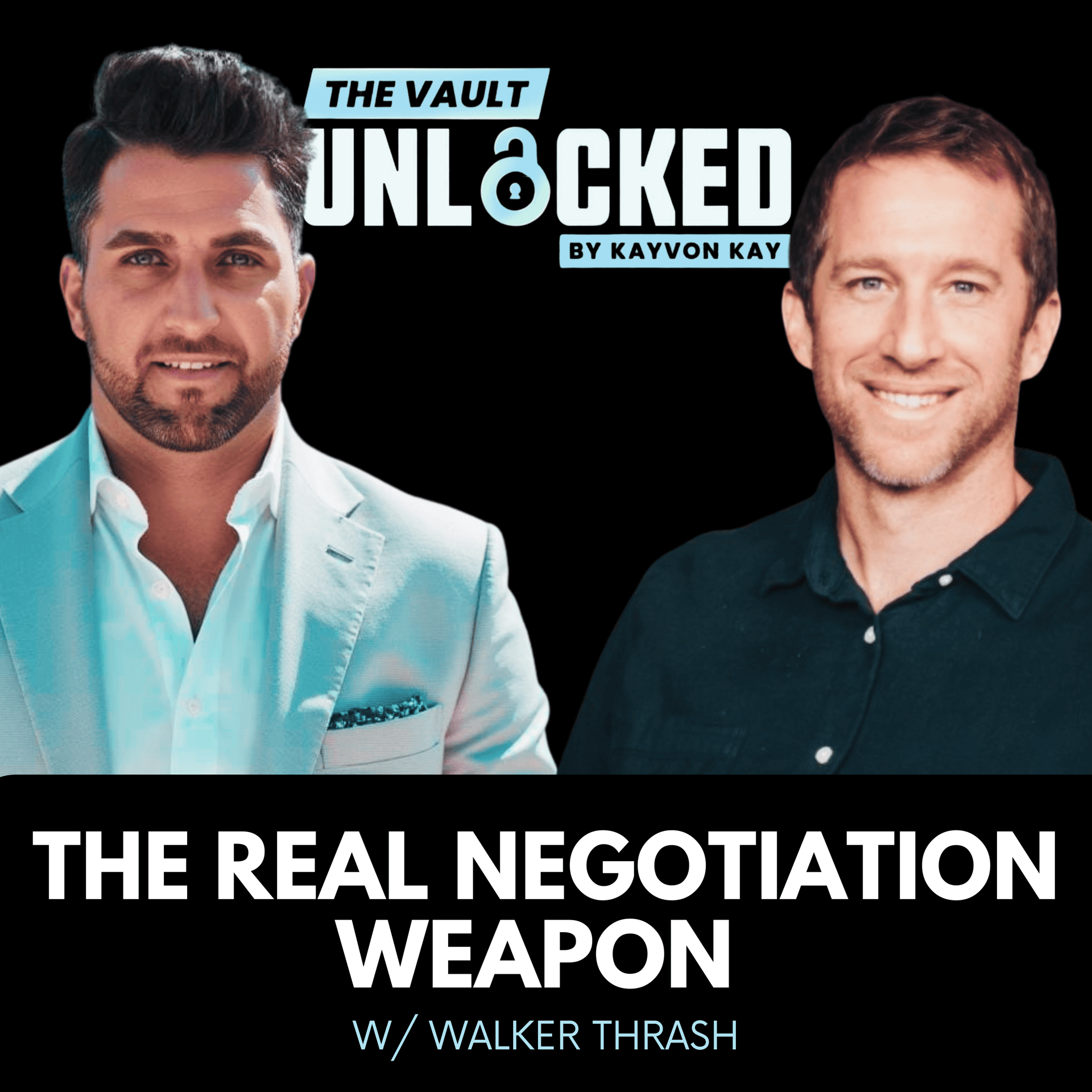
Walker Thrash, real estate negotiator and founder/leader at Vertical (public-private partnering firm). Background includes family lumber/real estate (apartments) and hotel development/hospitality projects across 6–7 states; specializes in development deals that solve city/state-level problems and invests private capital on the private side.
Key claims
Price is rarely the most important lever; everyone is self-interested (including you). Best deals happen when both parties leave satisfied and believe they created more value than expected. Preparation enables asking more questions, identifying “authority” in the room, making underwriting/math objective, and inviting the other side to help solve gaps.
Notable examples
A Colorado mixed-use bus terminal/office/raw land project using city/state funding plus tax increment financing; standalone deals weren’t attractive, so Vertical structured private development fees to fund public infrastructure, solving timing and enabling the city to move forward.
Written by AI. May contain mistakes. Listen to the episode to check what was said.
Chapters
Tap a time to open that second in VOWalker Thrash's Background and Approach
0:54 to 3:55
Explore Walker's history in real estate and his unique negotiation strategies.
“Today, we got Walker Thrash, the real estate negotiator, the tycoon.”
The Importance of Self-Interest in Negotiation
3:55 to 6:01
Understand how recognizing self-interest can enhance negotiation outcomes.
“And really, I'd say more importantly, learning how to navigate the public side of negotiating real estate deals.”
Creating Mutual Value in Negotiations
6:01 to 8:16
Discover how successful negotiations generate more value for all parties involved.
“Like you said, value and money are not equal.”
The Undervalued Skill of Preparation
8:16 to 13:21
Learn why preparation is crucial and how it impacts negotiation success.
“The best negotiations are when not one, when both parties provide more value than they thought they were getting into.”
Deep Dive into Effective Preparation Techniques
13:21 to 14:03
Find out what levels of preparation are necessary for successful negotiations.
“We just, we feel like you got to be smart, quick, and the quips have to flow.”
The Importance of Preparation in Negotiation
14:03 to 18:18
Learn why thorough preparation can significantly impact negotiation outcomes.
“Are we talking about knowing the surface level stuff?”
Identifying Deal Breakers and Priorities
18:19 to 20:57
Understand how to identify key priorities to prevent negotiations from derailing.
“And it doesn't matter what your title is.”
Making Price Discussions Objective
20:58 to 24:25
Discover techniques to make price negotiations less tense and more collaborative.
“Well, I like it because by understanding what's not value about, you know, to them is getting you closer to the one thing that is valuable to them.”
Factors for Efficient and Effective Deals
24:26 to 28:00
Learn about key factors that contribute to smooth and successful negotiation processes.
“So, all right, there's, there's one rule from the book that, and I believe this into my core is that good deals become, become, you know, good, good ideas, become great ideas when you gift them to other people.”
The Importance of Preparation in Negotiation
28:00 to 29:25
Preparation is crucial for successful negotiations and impacts outcomes.
“But the reason I say that is we didn't go into that deal assuming that that would be a structure we were looking at.”
Show all 13 chapters
Key Strategies for Effective Negotiation
29:25 to 31:38
Learn strategies like asking the right questions and understanding authority.
“Let's just say that I can't guarantee you, you'll be successful.”
Recognizing Unpreparedness in Meetings
31:38 to 32:40
Acknowledging unpreparedness can lead to wasted time in negotiations.
“You could write those rules 10 different times.”
Final Insights on Negotiation Success
32:40 to 33:57
Understand self-interest as a core principle in negotiations.
“So imagine walking in a negotiation and I'm having that feeling like what a way to stop negotiation.”
Transcript
Automatic transcript. May contain errors.0:00Most people walk into a negotiation thinking the goal is to win. They prep their numbers, they sharpen their pitch, and they walk in ready to take. That is exactly why they leave the table empty. Today's guest has done what most operators only talk about. Walker Thrash has closed public, private real estate deals that others could not figure out on their own. He doesn't just build buildings. He solves problems by mastering the one thing every negotiator avoids, self-interest. Not yours, everyone's. On this episode, Walker breaks down how the best deals are never about price, why the most dangerous assumption you can make is walking in thinking you already know what the other side wants, and how the operators who close the biggest rooms are the ones who learn to look in the mirror first.
0:54Let's unlock it.
1:04We're live. Today, we got Walker Thrash, the real estate negotiator, the tycoon. I'm happy to have you on the show. I'm excited to deep dive into obviously your experience in real estate, but really unlocking, when we talk about unlocking in the vault unlocking those things that must happen or that must be implemented or employed when it comes to real estate deals and real estate negotiation. Walker, welcome to the show.
1:34Walker Thrash:Happy to be here. Thanks, Kayvon. Yeah, this will be fun. Just so the audience knows a little bit more about you, why don't you explain a little bit, tell us a little bit of who you are and how we got to, you know, how you got into this role. Sure. So my company is called Vertical, spelled with a K. But we are really we're a public private partnering firm. So our emphasis is all real estate transactions, real estate development. But we really, you know, we don't just build buildings. Our intention when we walk into the room is really trying to solve either a city or at the state level, solve a development problem.
2:16Walker Thrash:We specialize in, I would say if you boil it down, ultimately, we try to place risk on the correct sides of the table. And then what sets us apart a little bit from a lot of people that, you know, kind of quote unquote consult in the public private realm is in almost every project. We actually invest all or most of the private capital that goes into the private side of the development. Okay. And how did you tell us the history? Like, how did you get to this point? because I don't think you just wake up and just start investing and becoming the tycoon of negotiation when it comes to real estate.
2:56So tell us a little bit of the history here.
2:57Walker Thrash:No, my family, my grandfather was involved in both grandfathers in the lumber business. My father, very involved in real estate, mainly in apartments. So I kind of grew up around real estate, right? Real estate deals, talking through that. For years, spent time in my family business with my father and younger brother, but really started to have somewhat of a passion for hotel development, hospitality. I ended up forming a small brand. It was part of the group that's formed a small hotel brand that's in six or seven states at this point. And what you learn in putting together hospitality projects, because these hotels were full-served has had restaurants in the bottom is that financially, a lot of hotels have some kind of public incentive to make them work.
3:49Walker Thrash:So somewhat cut my teeth putting hotel deals together, learning the public private nuances where those buckets of capital were. And really, I'd say more importantly, learning how to navigate the public side of negotiating real estate deals. interesting okay so we're the navigation on the public side tell me a little bit more about that well i and i think this is true in private deals as well but it's highlighted when you're dealing with the public realm because to simplify it's no one at the table is their personal checking account on right when you're in a when you're in a public arrangement these are hired people, either it's city or elected, right?
4:37City manager, mayor, city staff, state staff,
4:41Walker Thrash:they're trying to put a deal together. Their number one objective is to execute and deliver on whatever promise they've made. So what you don't see in the forefront, or what I would say is really the tripping hazard in a deal is to make it all about dollars and cents and price, because that's just a commodity in the deal. It's really more about execution, delivering on vision, aligning the party's interest and understanding. And the more deals you do in the public-private realm, the more you somewhat kind of understand the intentions and motivations of the different factions or parties around the table.
5:24Well, it's interesting you say that because we're talking about, I know we're talking about big real estate deals, but that just goes to everything, even the smallest little deal. Like people will buy not because the price is wrong or the too high. It's because they don't see the value. And what you kind of just indirectly said there is if you can execute their vision, execute the speed, the time. So if they see the value in what you're doing, the price is never an issue. Yeah.
5:55Walker Thrash:And prices, I don't want to pretend that price isn't important, right? It's real estate. It's going to be the capital that trades hands, but it's almost never the most important thing in the negotiation. Like you said, value and money are not equal. There's a lot of different value that can be traded around the table. That's nothing to do with dollars. But I would even put in the sense of if you just kind of set aside, and you may not think this way. I do. I'm a believer. Everyone is self-interested, myself included. Yeah, absolutely. I don't. That's not a negative thing. I say this all the time.
6:37Walker Thrash:I mean, that feels like a negative comment. The reality is we're all just trying to make it. We're taking care of our families. We're trying to reach the next step, next rung in the ladder, whatever that is. if you can walk into the room and understand that everybody around the table is the same as you, they have their own self-interest and your objective at some levels to deliver their interest in a way that creates the value you need in the deal, it's a better starting point. To pretend like you're the only one who really needs to have your interest met is, again, that's just a stumbling block.
7:11Walker Thrash:We all need to get past quickly. i couldn't agree more i mean i correct me if i'm wrong i've not i haven't done a lot of like you know studying of negotiation and all that but uh the one thing i remember an old mentor said the best negotiation is when both peoples are like are leaving i'm like almost like not like just satisfied they're not happy they're not ecstatic they're they're almost they're almost like he made it seem like it was almost like they're they're leaving okay because if you're leaving he said if you're leaving happy that means they're leaving upset and that's not a good negotiation if you're leaving upset they're leaving happy that's not a negotiation a good negotiation is when both parties can leave on you know with a with a neutral kind of feeling and i always thought about that i would agree with that and that's that's a really good negotiation and oftentimes that's the best it's going to be if you add one thing on top of it a great negotiation is when the parties leave the table and they feel like they created more value than they thought coming in.
8:15Walker Thrash:And those are the best deals you'll ever do. That, I love that. I love what you just said there. The best negotiations are when not one, when both parties provide more value than they thought they were getting into. Tell me about that. Tell me how there are, I want to unpack that Cause I think that's so important because that can be translated through so many different things in life. It's like, you know, the whole camps, you know, the campsite kind of theory, right? Leave the campsite better than when you last found it. It's the same thing here to me is like leave the negotiation better off, more value, more excitement, more output than what everyone thought it was.
8:57So tell me a little bit, how does, how do you get to that place in negotiation? How do you find that place when in negotiation to look for those things of value?
9:07Walker Thrash:Well, one, I'd say it's over time you do gain experience. You learn the questions to ask. Right. But just in starting off, if you're if you're fresh and you say, hey, what's just a way to change the mindset? And I've been guilty of this as much as anybody is walking into the meeting and assuming I understand what everybody's interests are and I've got a great idea and we're all going to agree on it. And if you can turn that 180, it's, hey, instead of talking about the deal, here's my pro forma or whatever that is, opening up a conversation, asking questions, assuming you have no idea what their interests are when you open the room.
9:51Walker Thrash:You'll end up teasing out things that you didn't think were there. And then, you know, and everybody's in such a hurry. It's like, let's get it all done in meeting one. Sometimes meeting one really is just uncovering, turning over rocks, trying to get information you can take on and think about. But in that question asking, and if it's genuine, there is an appreciation around the table. You'll see that, you know, those questions will come back to you. But the other party really sees and appreciates the fact that, hey, you're trying to understand what they need and want. That is that's just a much more open dialogue.
10:28Sounds like sales 101 to me. Ask the questions first before you speak. Learn. Really try diagnose. Try to figure out what is going on. What do they need? What does success look like? All of the things before you start projecting, like I say, projecting your own opinions, your own facts, your own BS onto the prospect. Yeah.
10:51Walker Thrash:I mean, you know, the more you quote unquote, no going in and want to teach everybody in the room, I mean, the worse off you are. Right. You're not getting their idea, especially you're going to frustrate whoever in the room has the biggest ego. And those are those are real like dynamics around the table. but I if you talk about asking questions this is one thing I have seen a lot I think we all we dismiss the generation beneath us and we shouldn't because there's some tactics that I believe that they actually really good at bringing to the room that you should take note of and if you find yourself in the room let's just say you're not the center of attention you are not getting the questions you're not you know the guy or the woman in the room that that's fielding everything and you're trying to figure out how to get that edge and get into the conversation, here's a novel idea.
11:49Prepare, right?
11:51Walker Thrash:Put together whatever the math is that's going to be on that deal. Or if it's the slide deck, if you have information in your hands, it's amazing. The direction of the questions will start to flow to you. You'll get to ask more questions because of that. And all of a sudden you're a, you're a player in the game, you know, and you may not have been. But if there's a rule beneath all of this, preparing for your negotiation and preparing for your meetings, it may be the most undervalued skill in the game. Wow. This is super important because you said most undervalued. I mean, to me, maybe I'm too naive or maybe just who I am, but I'm thinking, how do you go into a negotiation not prepared?
12:39How do you go into no negotiation not having all the facts.
12:44Walker Thrash:I mean, I just, I'm shocked when I go into meetings and we're busy. I'm going from one meeting to the next, the other two or three people, five people in the meeting are doing the same thing, especially now. I mean, you're going from a team's call to an in-person meeting, trying to grab a bite to eat in between. I see it all the time. I mean, everyone in the room walks in and says, all right, what are we talking about today? Wow, yeah. And if you're holding the singular parts of information, the questions do get, you know, they start to be directed to you. You get to then direct questions back.
13:20Walker Thrash:Preparation. I think part of it is that we like, you know, we watch too much TV or our phones. We just, we feel like you got to be smart, quick, and the quips have to flow. I mean, the best deal makers and the most authentic deal makers, I know they just do a lot of preparation. so preparation i would assume that's a huge opponent i wouldn't that's not surprising me so you know i'm just kind of writing these things down as we're going because i'm just thinking about hey how can i extract the process of of the the art of the negotiation and one of the ones that i'm hearing is for sure without a doubt you need preparation so if we talked about preparation because now i'm going you know thinking about okay how deep are we talking about what level of preparation are we saying here?
14:05Are we talking about knowing the surface level stuff? Or are we talking about going deep and knowing not just the surface level stuff about the deals, but knowing about who you're playing, the preparation of the player, what they like, what they eat, where they live, all of those things?
14:20Walker Thrash:Look, I think there's a little bit of both. But I would say this. I would caution one thing. It's just like I said, I never think it's a great idea to walk into the meeting with everything figured out. Now, it's also the preparation is different as you progress through a longer negotiation. Some of the deals we work on take a year, right? Yeah. 18 months. So you may have several meetings, but let's just put it in. Let's drill it down into something tight. So let's say it's a land deal. You may walk into the first meeting. It would be helpful to know all the comp sales in the area. what the zoning is, like some very baseline things.
15:07Walker Thrash:And I know, you know, half the people listening are thinking, well, obviously you would. I can't tell you how many meetings I've walked into where that information wasn't there, you know, and something that baseline. But when you, when someone has the information, like I said, they become a critical part of the conversation. They get to ask more questions. I think the power is in the people that get to ask the most questions in the room. Well, they say, right. The loudest one in the room isn't the strongest, the weakest, right? And the strongest one in the room isn't the one that has all the answers, is the one who asked the right questions.
15:40Walker Thrash:Yeah, and the quantity of questions matters. You ask enough, you'll ask some good ones. Yeah, absolutely. But it is helpful. I mean, again, at a baseline, preparedness is critical. But I think once you're prepared, being able to speak from your authority is a skill. And it's something you should contemplate before you walk into a meeting. Because give me any business situation, the authority shifts and you may have a different authority in a different situation. but you know if it's real estate related and i walk in and let's just i will do like comparable sales if there's an appraiser in the room he or she is the authority on value right um i then may speak from a different angle and my authority in the room is historical knowledge of deals that have happened in the area.
16:47Walker Thrash:Right. But, but understanding, and everyone has an authority. I mean, the lowest ranking member around that table knows something at a higher degree or at a better level or in more detail than the rest of the people in the room. You need to think about that before you have, you know, a prolonged protracted negotiation. It's important. I'm loving it. Cause like now I'm seeing it right in here is like, okay, preparation to asking the questions and you can only ask the questions if you have the preparation. Number three here, it's, it's really, it's about, no, I put knowing your audience, but really knowing your authority, knowing what the authority is in the room, who's in the room and where they kind of lay in the authority hierarchy.
17:32Absolutely.
17:33Walker Thrash:Okay. Because even if, if you walk into a room with somebody you admire, Like they are just far beyond where you are in your point in life. You know something around that deal at a more greater level than they do. And it may be understanding that authority is born from your preparedness and you understand some of the nuances of the math or the research that's been done. You can create that authority, like I said, by being prepared. And then as you speak from it, you will start to gain a little more traction in the meeting. And like I said, questions start to flow to you as well. This is, it's nuanced, but I've just seen it play out over and over again.
18:19Walker Thrash:And it doesn't matter what your title is. what would you say some of the uh some of the reasons or some of the things that stick out to you when you think about all the negotiations you've done that have stopped deals right in their tracks that like taking deals right off course and um assuming interest and being misaligned with where you're trying to take the deal is a great way to get one off the tracks. By that, I mean, you think it's all about this and it's really about that. And you fail to really take the time to tease that out on the front end. And I mean, we've all been guilty of that where I'm like, here's the carrot.
19:06Walker Thrash:This is going to be the one that really moves the deal forward. And you just realize it's never been about what you thought it was day one. Happens a lot. So is that as simple as just asking the negotiation, a conversation and just saying, whether it's the beginning, the middle or even here, the end is what does success look like here for you? Yeah. OK, it's that's that's I think there's 20 ways you could do that. Um, but in, if you were going to figure it out in a, maybe a few questions, I'm trying to just arm a listener with, okay, let's, let's keep it tight, simple. What do you need in the deal?
19:54Walker Thrash:And that can be a question. That's also a question you need to ask yourself. what do you need what would you love to see happen in this deal which is different than what you need and again i think these are more important asked of the other party than asked of yourself but you need you need to understand both sides of that and then this is the one i think people don't ask themselves enough what does it matter to you at all and that is that's also an important one It doesn't matter to you. Yeah. We assume everything matters. And so often there are deal points that are on the table that they're like, I don't care about that.
20:37Walker Thrash:But you find value in it. And really the nuance there is trading value that's not all about dollars and cents. and understanding what's not important to them is one way to start to figure out where you might be able to capture value and then push value back to them for what is important. Well, I like it because by understanding what's not value about, you know, to them is getting you closer to the one thing that is valuable to them. And they might be holding their poker cards close to their chest where they're not going to tell you what's the most value to them. So it's an indirect way of getting to there, I would assume.
21:22Walker Thrash:Yeah. And in large deals, I've seen a lot. You talk about what kills deals. I love to talk about things in the negative.
21:34Walker Thrash:Again, I'm a big offender, have been in my career on this one, holding the cards too close to the vest in a long drawn out. negotiation or a higher stakes negotiation, oftentimes you do it to your own detriment. And one of the ways I've seen that happen is price is such a sensitive subject. Once you get there, it's always, everybody tenses up and says, what are you willing to pay? What is that? When it's not, I'll give you my, where I think you can take the tension out of the conversation is to make your math objective. And the way I've seen to do that in real estate is, here's how I'm underwriting this deal, and here's my gap.
22:28Walker Thrash:Let's not make this about a secret that I've got tucked away in the closet. Here it is. Let's figure out if we can solve this problem. And when you bring the other side around to helping you solve the problem that you see, I just see that's a much more successful path. It's interesting because people get tense, you said around price. And I was going to say, well, really, is that true? Is that true or not? And then I was thinking it's probably because you read in the books, the person who says the price first loses, right? And you think about that. And it's true. I mean, the science shows that.
23:03But there's a way in discovery, I believe, to figure out what the price range is so that price has to be or needs to be such a shocking thing.
Read the full transcript
23:14Walker Thrash:Agreed. And that's what I say. I try to make math objective. Now, to do that, it can't be overly greedy. It has to have a sense of reasonableness to the discussion. But it is subjective. It will always be subjective to say, this is what I'm willing to make, or this is what I'm willing to pay, or this is the gap that I'm willing to close. That is inarguably a subjective thing, right? Even if you use some metric that's reasonable, you are deciding what that gap is or what you're willing to pay. But when you lay it out on the table, it really becomes an objective criteria of the deal. It's like, okay, well, Walker's willing to do this when it comes to price.
24:03Walker Thrash:Maybe we can trade some value around that. And that price actually adjusts. You have to be malleable there. Because once you lay that on the table, you need to be confident that you did that correctly. Because now it's out in the open. But I just find that's... I don't like to hold them close to the vest because I feel like the other party actually will help you solve the problem better if they feel like you're being open with them. So what are the things you've seen then when deals have made deals go quicker or, you know, the deals that you can think about were the most smoothest, what were the, what were the main factors or the two or three things that have to be in a deal for it to move fast, efficient, effective, and everybody happy.
24:52So, all right, there's,
24:53Walker Thrash:there's one rule from the book that, and I believe this into my core is that good deals become, become, you know, good, good ideas, become great ideas when you gift them to other people. And for a deal to go smoothly, then really, I feel like to be efficient in the process. When you can do what we were just talking about, when you can make the math objective, or you can be open in conversation and you've asked enough questions and you feel like the parties are somewhat in the same stratosphere. asking for help from the other side and having them be a thought partner on how you solve this gap. That is such a, when it's, when it's employed or deployed directly, and the other side buys into that idea that you were genuinely asking for their help, because you're trying to solve for this equation, the deals can take off.
25:53that kind of goes to the he who plans the battle doesn't battle the plan a little bit yeah
26:01Walker Thrash:absolutely i mean you know how many ideas that you had did you think were great several i'm sure so so does the other person across the table when all of a sudden the help becomes part of their idea how you're getting there they're they're creating with you i just find that the deals flow a lot more smoothly and quickly. I love it. And, uh, and the deals that you're in right now, are you in deals right now? Oh yeah. I mean, we try to stay active. You're staying active. What, what deals that are coming up for you right now that we can learn from that are, that are maybe finding, you're finding challenges in and how you're being creative to work around them or deals that are going so fast, so quickly, and you can go, that was because of this one thing?
26:58Walker Thrash:Okay, so I'll give you an example right now. It's a deal in Colorado where there's a city, there's city funding, state funding. There's also tax increment financing. It's just a complicated math deal. But ultimately, it involves a big bus terminal to office buildings and some raw real estate. So it's a mixed use project, a little bit of retail. And there's some users already at play. Well, where the value is getting created from both sides is that as a standalone private deal, it doesn't make sense. And as a standalone public deal, it's not sexy enough to attract the tenants. If you really just want to call it what it is.
27:47And so we are creating some development fees at the private level that actually help to develop some of the public infrastructure.
27:59Walker Thrash:Now, the only reason I say that is not because I don't want to get in the weeds on that since it gets boring. But the reason I say that is we didn't go into that deal assuming that that would be a structure we were looking at. But what we found in asking questions is that was the biggest issue for the city to be able to get the project off the ground was the timing and being able to put that infrastructure in. And so we just figured out a solve between us. But that would absolutely not be possible if we weren't sharing our information, if it wasn't an objective conversation about how are we as a team going to put this deal together?
28:45yeah i i love it because it it really goes back to what you were saying at the beginning of this conversation and i and i just wrote around is again we know this too right what happens with that i assume right makes an asset a year and me right um and it's just so true so what i'm hearing right now people are following along like i'm following because i'm always looking for the process i'm always looking for the steps is preparation is everything you want to you want to make sure that you are fully prepared. And you and I sat there and thought, you know, even me, I was like, how are people not prepared?
29:19But the reality is, is people are coming into negotiations are coming into meetings are coming into the fight unprepared. That's a sure way to lose. Let's just say that I can't guarantee you, you'll be successful. If you're not prepared, I can guarantee you won't be successful by not being prepared. Right. So, um, preparation is what I heard. Number one, are you prepared? Number two is, are you ready to ask questions? Those who are prepared can ask the right questions. Three, which I love, which is you got to know your authority. Know who's in the room, know who has the power, where that power is and how you're going to flow the power either through or to or from that authority figure, but don't ever, ever lose the idea of who's in control right now.
30:04And then we moved to what I love was the opposite. Instead of asking, what is it you want? We're looking at the negative almost and going, what is it you don't want? Let's get what you don't want off the table first, because that's just going to get us closer to what you do want. And then from there, we have enough knowledge that we can make, which I love is make the math objective.
30:29Walker Thrash:Yeah, that's just a major one. And the bigger the math is, the more major that that becomes the bigger the math the bigger the bigger the ability to make it objective and the impact of what that objective math can do will dictate a good negotiation and then i love this and once you've done this and if you're not it sounds like at that level if you're still at a standstill or there's still things you're having a hard time figuring out you put the other side in the thought leadership as a thought partner you ask them well what do you think we should do which is getting them involved because those who battle the plan don't battle so those who battle who plan the battle don't battle the plan and then uh what i've wrote here big star never once through the preparation through asking the questions through knowing the authority through knowing when they're telling you what they don't want, when you're making the math objective, probably big time here, and when you're asking for the help, never ever just assume anything in any negotiation.
31:38Yeah.
31:39Walker Thrash:I mean, you've wrapped it up. You could write those rules 10 different times. You'll have commonalities. Yeah. I mean, well, there it is. If people are listening, I mean, there it is. For me, that's a basic, like to me, that's basic, basic negotiation. And here's what I'd say. Is it going to make you the richest person in the world? No, but guess what? That alone, I guarantee you, will make negotiations a lot easier, a lot better, a lot more efficient. Absolutely. And look, you do one extra, you get to one extra deal in a year. Makes a major difference. Especially in a relationship. Yeah. Yeah.
32:17Walker Thrash:I mean, we're always trying to be efficient with our time. And I'm going to drill back to on the prepared side. You know, next time you walk into a meeting, just think about how many people really are unprepared. It'll shock you. Yeah, no, I'm going to be looking at that. I was thinking about the meeting this morning where I was in a meeting. Nobody, we were, it was a negotiation, but nobody was prepared. We wasted a colossal time. It was a waste of colossal time. So imagine walking in a negotiation and I'm having that feeling like what a way to stop negotiation. For those of them who are listening, they want to learn more.
32:48They want to learn where they can get your book, be able to take what I just did and get the more nuance of it. Where can they go?
32:55Walker Thrash:Yeah, I mean, Amazon, Barnes & Noble, all the online channels, bookstores in several areas, especially regional in Colorado. But I'm mildly active on LinkedIn. But if any of the listeners have a real estate public-private deal, they can always find us online. it's verticalco.com and we'll make sure we have those in the snow in the show notes so again Walker thank you so much for being here if we're going to leave the audience with one thing one tactic one last comment statement that sits behind the vault when it comes to negotiations when it comes to getting them through the finish line and or getting them back on track what's something you can leave us with look in the mirror see that you are at your core self-interested and then understand so is the person across the table so just a good way to start look in the mirror and see that you are self-interested and the same person you're speaking to is self-interested.
34:12I love it. It's just a fact. Basics, but facts. Everyone is in it for themselves. Hate to say it, but it's true. We're going to leave it there again. Thank you. If anyone wants to learn more, they can always come to the show notes and get the links to where they can find you. Thanks so much for being here.
34:34Walker Thrash:Perfect. Thanks, Kevin. Enjoyed it.
34:42Let's go.
From the publisher
Most deals don't die because the price was wrong. They die because someone walked into the room unprepared, assumed they understood what the other side wanted, and spent the entire negotiation reacting instead of leading. That is not a price problem. That is a systems problem.
Walker Thrash, from Vertikal Collaborative, has structured public-private real estate deals across multiple states, navigated city councils, state agencies, and private capital partners simultaneously, and built a firm that puts its own money on the line in nearly every project it touches. He does not negotiate from theory. He negotiates from skin in the game.
In this conversation, Walker breaks down exactly how the most sophisticated real estate operators approach high-stakes negotiation from the first meeting to close. The framework is not complicated. It is just rarely executed. Preparation unlocks authority. Authority unlocks questions. Questions surface the real deal. And the real deal is almost never about price.
They talk through the mechanics of how preparation shifts power in any room, why the person asking the most questions holds the most leverage, how to identify the true authority at the table and speak directly to it, and why making your math objective eliminates the tension that kills deals before they start. They also get into the counterintuitive move that separates good negotiators from great ones: asking the other side to help you solve the problem. When the opposing party becomes a thought partner, the deal moves faster and closes tighter.
This episode is for founders, operators, developers, and executives who negotiate at a level where the stakes are real and the margin for error is not. If you are still treating negotiation as a conversation about price, you are starting from the wrong place.
Real estate deal-making, public-private development, commercial negotiation strategy, and high-stakes business leadership all depend on the same foundation: knowing what the other side actually needs before you say a word about what you want. That principle applies whether the deal is a $5M land acquisition or a $500M mixed-use development.
Topics covered:
-
Why preparation is the most undervalued skill in real estate negotiation
-
How asking questions outperforms presenting solutions
-
Identifying and speaking from authority in any negotiation room
-
Why price is rarely the real issue in a failed deal
-
Making math objective to remove tension and accelerate close
-
The "thought partner" move that gets deals off the ground faster
-
What kills deals before they ever reach the table
Looking to dive deeper into these conversations and connect with our host and guest?
Follow Walker:
LinkedIn
Website
Buy Walker's book
Follow Kayvon:
Instagram
Facebook
LinkedIn
TikTok
Want to go deeper with Kayvon?
Subscribe to the newsletter
Book a discovery call
Get your Revenue Engine Scorecard™️
Hire the right salespeople