
In short
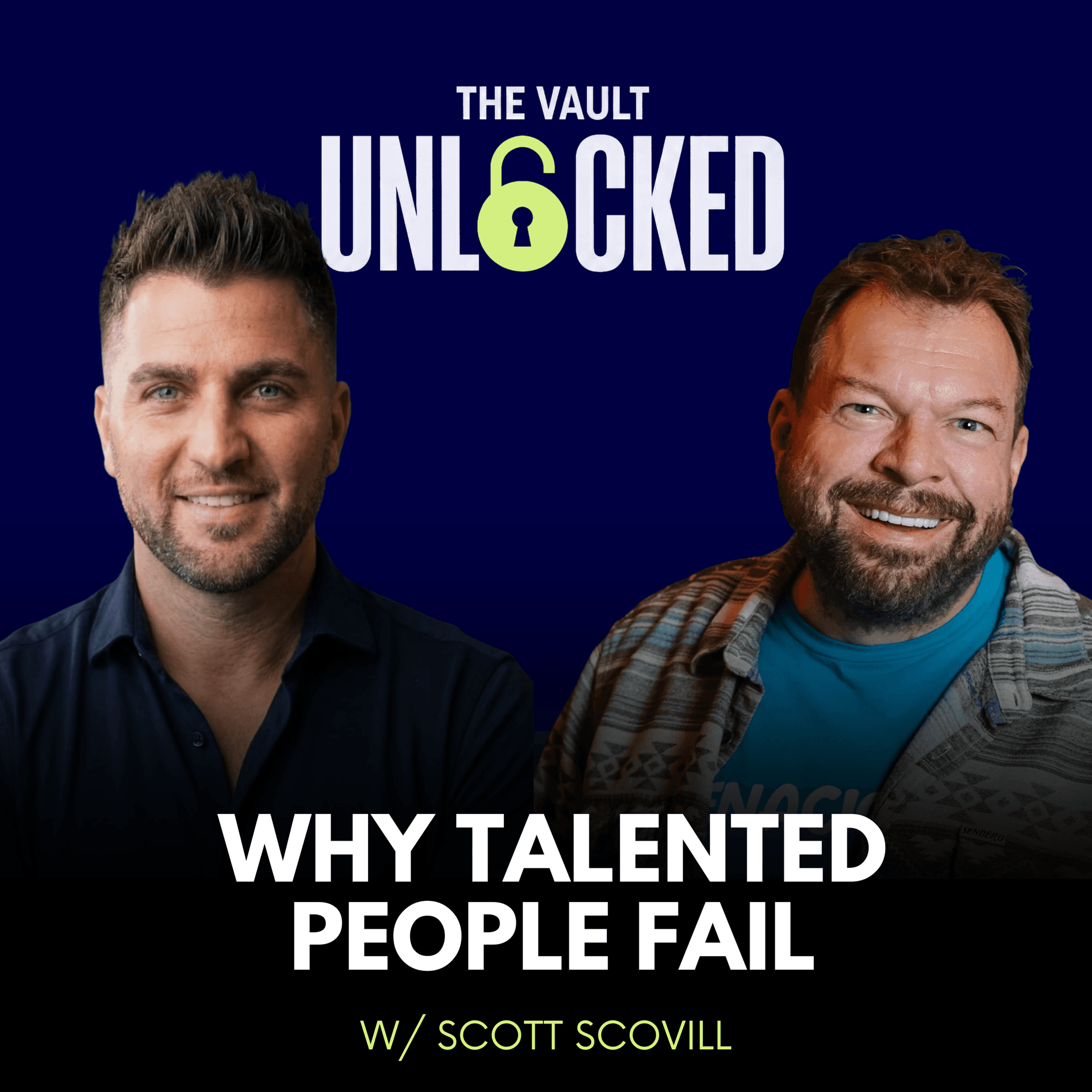
Tenacity over talent; how Scott Scoville overcame an extreme fear of failure to build a career in live music production and performance.
Guest background
Scott Scoville is a former roadie/video tech who followed U2 as a teenager, later worked on the Rolling Stones’ massive 450-crew tour, and now runs video for major country artists. He wrote the book Tenacious with contributions from Garth Brooks, Peter Frampton, and Alan Jackson.
Key claims
Talent isn’t what top performers credit; they emphasize not giving up. Failure is a stepping stone, not death. Fear often paralyzes through avoidance; progress comes from taking one small step anyway.
Notable examples
Flunked out of college; waited tables at a Highway Howard Johnson’s; sneaked into U2 shows for five weeks with a fake laminate pass; later trained in new video projector tech; opened for Brad Paisley in Norway; discovered he could sing (baritone) in his 40s.
Written by AI. May contain mistakes. Listen to the episode to check what was said.
Chapters
Tap a time to open that second in VOFrom Fear of Failure to Tenacity
1:03 to 4:50
Scott shares his experiences with failure and how he developed tenacity.
“How about a young man who traveled and chased you two across the country, ended up on stages and opening up for Brad Prasley.”
Sneaking into U2 Shows
4:50 to 8:08
Scott recounts his adventures sneaking into U2 shows, driven by his passion for music.
“You hear every story has that rock bottom in the moment where the lights go down.”
Life on the Road with the Rolling Stones
8:08 to 12:18
Scott discusses his transition to working with the Rolling Stones and learning through challenges.
“Cause I, I mean, that can spend the whole time on that story alone.”
The Importance of Failure
12:18 to 13:20
Scott emphasizes the value of failure as a crucial part of learning and growth.
“I still wasn't first five months of it were all, well, I would say torturous, like here's the dream, but you want to be awesome in your dream.”
Overcoming Imposter Syndrome
13:20 to 17:00
Scott reflects on overcoming imposter syndrome while on tour and embracing his success.
“doing a month of shows at the Tokyo dome with the biggest band in the world.”
Lessons from Successful People
17:01 to 18:48
Exploring insights from successful individuals about tenacity and persistence.
“I don't know if anyone who's listening heard the natural plug in there, but in his book, Garth Brooks, Brad Paisley, astronauts.”
Writing a Book on Tenacity
18:49 to 21:04
The author discusses the motivation and ideas behind writing his book on tenacity.
“But I think that when I first started writing, I was like, what would I write about?”
Discovering Hidden Talents
21:05 to 23:08
A personal story about discovering the ability to sing later in life.
“Because that's what my character is doing at this moment in the book.”
Singing Journey and Revelation
23:09 to 24:57
The moment of realization about singing talent and its implications.
“And they turned on the radio and this guy who's in a band goes, you're singing with us tomorrow.”
The Band Experience and Friendship
24:58 to 28:00
Recounting the experience of joining a band and performing with friends.
“I mean, you don't want to do it exactly like the artist did it, right?”
Show all 17 chapters
The Journey to Norway and Opening for Brad Paisley
28:00 to 29:54
Learn about the unexpected journey of becoming an opening act for Brad Paisley and the excitement it brought.
“And I started flying to Norway to do a couple of guest songs with the band and loved it.”
Overcoming Fear and Embracing Tenacity
29:54 to 30:48
Discover how confronting fears, particularly public speaking, has transformed the guest's life and career.
“I mean, I was afraid of public speaking.”
Understanding Fear and Procrastination
30:48 to 33:18
Explore the psychological mechanisms behind fear and procrastination, and how they affect personal growth.
“Like that's not a, it's not something we just take easy here.”
The Power of Taking Small Steps Towards Dreams
33:18 to 35:15
Learn the importance of taking incremental steps towards achieving your dreams despite difficulties.
“You just say like, all right, I'm frozen.”
Creative Endeavors and Personal Life
35:15 to 38:15
Hear about the guest's current projects, including music, caring for family, and promoting their book.
“Uh, in the book, you'll see that I do psychedelic therapy.”
Creative Endeavors and Personal Life
38:19 to 38:29
Hear about the guest's current projects, including music, caring for family, and promoting their book.
Advice for Overcoming Performance Anxiety
38:29 to 41:31
Receive advice on overcoming performance anxiety and taking the first step in creative pursuits.
“Ed Paisley has a funny quote about that.”
Transcript
Automatic transcript. May contain errors.0:00A psychologist once told today's guest that it would be easier for him to grab a red-hot stove and hold on than to actually try at anything. That was the diagnosis, an extreme fear of failure. He flunked out of college. He waited tables at a Highway Howard Johnson's. Then, a U2 tour bus rolled into the parking lot and changed everything. Scott Scoville quit his jobs, sold his car, and spent five weeks living in a pickup truck, sneaking into U2 shows with a fake pass, working for free. Three years later, he was on tour with the Rolling Stones, the biggest tour in the world. Today, he runs video for the biggest names in country music he just opened for Brad Paisley in Norway, and he wrote a book called Tenacious with contributions from Garth Brooks, Peter Frampton, and Alan Jackson.
0:54This episode is about the one trait every one of those names credits for their success. It is not talent. This is The Vault Unlocked. Let's unlock it.
1:14This is a story about tenacity. How about a young man who traveled and chased you two across the country, ended up on stages and opening up for Brad Prasley. I'm excited to hear this story because I think everybody needs to hear it. Today, we're going behind the vault about how you can make your dreams come true. Scott, welcome, welcome, welcome. Welcome to the show. It is so good to be here. So I can't wait. Where do we begin? Well, I guess we can begin at rock bottom. That's a great place to start any story, right? As a kid, I barely graduated high school. My teachers literally got together with me and said, we think we're going to push you out.
2:07I went on to college. I flunked out of college. And at that same time, I was diagnosed with such an extreme fear of failure. my psychologist said it would be easier for you to grab a red hot stove and hang on and maim yourself than to actually try. Powerful, crazy diagnosis, but it felt right. Every time I tried to do my homework, I'd end up in tears. I just couldn't apply myself. And that put me in a pretty dark place because my fear of failure had me flunking out of college, had me actually failing. It was manifesting my worst fear. and I end up waiting tables at Howard Johnson's on the side of the highway, not my dream job.
2:48And I wasn't even a very good waiter, but this amazing tour bus rolls in with a space shuttle painted on the side of it. And I'm like, I want to wait on them. I honestly thought they worked for NASA. Like why the space shuttle? I didn't know what a tour bus was. I was really disappointed when they walked off the bus and they all were wearing black and had long hair. I'm like, they don't look like they work for NASA, but I took their drink orders and said, why the bus? And one of them in the thickest of Irish accents goes, we work for the band, you too. We put on the show. That blew my mind. And I had a million questions.
3:23And I'm like, I don't understand. How can you work for the band, you too? What do you mean? I would have thought you had to be Bono's cousin to do that. And the guy in charge laughs and he goes, Scott, seven of us are the very best in the world at what we do. We put on the show, the lights, the sound, and he puts his arm around the guy next to him and goes, and this is AJ. Jay, he's Bono's cousin. And so everyone starts laughing and they revealed to me a world that was incredible. And finally, after a million questions, they said, we have to go. Why don't you just come to the next show and we'll answer more of your questions?
3:58Yes. So I go to that show. I have a million more questions. I'm so fascinated about it. They introduced me to Bono and Edge and I was more interested in their career that I had discovered than the fact that I just met two of my heroes. I was like, what? Lights went out. Crowd went nuts. I'm standing in the middle of 15 ,000 screaming fans and I had a paradigm shift. This is what you're going to do with your life. You love music. You love technology. You love travel. Oh my gosh. You're going to see the world with you too. A moment later, my heart sank when I realized to do any of this, I was going to have to try.
4:36I made myself a promise standing there in the dark that I was going to start trying and never stopped trying no matter how bad it got or how much it hurt. In that moment, tenacity was born within me. Now, it was a struggle for the next few years, but that's where it started. Wow. You hear every story has that rock bottom in the moment where the lights go down. It's just you and the world, and you have to face the question, do I actually want to change my life? Do I want more? And it sounds like, it seems like that was one of those moments for you. Yeah. They're few and far between, right? A pivotal moment like that.
5:20I've had maybe two or three of my life. This was a massive one for me and it led to the dumbest plan ever. I decided that I was going to quit my three jobs, sell my super sport Camaro. The school was flunking me out, so no big deal leaving there. And I moved into my Subaru Brat, those tiny little pickup trucks. And I started sneaking into U2 shows and working for free. My plan was I was going to make myself invaluable to them. And somehow they didn't have me arrested. The police almost arrested me three times getting in the building. But the crew was like, what are you doing in here? And I'm like, I'm just figuring it out.
6:00Don't worry. I'm just another one of the stagehands. And for five weeks, I snuck in every day, worked for free while they were all sleeping on the bus. I was driving all night to the next city. I just killed myself doing it. But it was a start. I was finally moving. And then I mean, most people to me, even there, I have to tell you, it's like it just seems unbelievable. So how are you even getting in? Like, so you show up and you're like, I am. I'm just the hands here, obviously. Like, and then, and then who do you know who to speak to, to get you to do a job and how, like the safe work policies, all that stuff.
6:37Like how, how does, how does that even happen? It's, there's a lot to all that. So maybe check out the book, but I will say to answer your first one, I had a fake laminate, but it wasn't totally a fake laminate. I just, the backside of their laminates that was white. Who does that nowadays? They're never white. I made a laminate that was white on both sides. And then I saw that they had like radio channels. They also had laminates passes hanging around their necks that had like radio channel numbers and things on them they needed to remember. And so I made that, but not the official pass. And then I would just pile it.
7:13Now, when you're trying to get in during the show, security is high. If you wait till after the show when the stage hands are showing up, way lighter. So I did that. I wasn't going to the shows. I wasn't a groupie. I was a roadie groupie. I wanted to be in with the work. And so it was lighter and I would just look like I didn't want to be there with my fake laminate hanging around my neck. And if someone caught me and stopped me, which happened pretty often, I would act freaked out that I had lost my laminate and not seem like I was worried about getting in trouble with them. I'd be like, oh my God, they're going to kill me.
7:47God, maybe it's on the bus. And I would turn around and like run back up the ramp. Like I I was going to the bus to find my laminate and I would sneak in a different door. And only, only three times did it get to where I was talking to the police and having to do some fast talking, but they didn't arrest me. No, there was a man on a mission there. So, so fast forward here. Cause I, I mean, that can spend the whole time on that story alone. So what happens now? You're, you said you've been following them for a couple of weeks, couple of months. Yeah. Yeah. Yeah, and I'd become something of a mascot.
8:22They were rooting for me. The truck drivers and all that were pulling for me. And every now and then they'd lay on the horn if I was swerving a little bit. And they'd yell at me at the truck stops. You got to pull over. You can't make it all night. And I'd be like, okay. And then I would just pull out way behind them so they couldn't see me anymore. Because if I lost them, I'd have to find the place. And GPSs didn't exist back then. This is 1987. I'm doing this. So I'm using a Rand McNally Road Atlas to find the venue. you. No, thanks. I'd rather follow the bus. But I did all that for five weeks.
8:56Felt like I was maybe making some impact. But the reality is they were all experts at what they did. I was just figuring out how to coil cables and latch road cases, right? Like I was, I didn't belong. But five weeks in, the union in Buffalo had a dispute with a band and someone was saying something about me and that ended up in the union's ears. And so in their argument over a bigger problem. They said, and you have non-union labor here working with you. And that's stealing union jobs. And they find the band$5 ,000. Now, I don't think the band ever had to pay it, but that event drew attention to me and upper management went, what are you guys doing?
9:37You're letting this kid roll around. Like he's going to fall asleep in the middle of the night, crash his car and his parents are going to sue us. And his life is going to be on our hands. he has to go so i made it five weeks before that moment that's still i mean i mean it's still impressive that's very eternity living in try living in your car for five days i lived in it for five weeks i couldn't imagine i can't imagine so then what happens you find you get caught uh obviously tenacity is in yes so where does it go good timing right because uh video was brand new to the industry and so i was had a lot of time to think while i was driving from city to city and I'm like, if I'm going to get into this industry, I want to do the thing that's brand new.
10:19Instead of getting on the bottom rung of the lighting ladder, I didn't want to be like brand new at the thing that people have been doing for 30 years. Why don't I be brand new at the thing that's been around for a year? The video was literally brand new at shows at that point. And so that's what I did. I got some great advice from the crew who were great friends to me and they said, you know, Hey, go to school for this. Lawrence Anderson from the crew said, go to school for this projector. Cause nobody knows how to run it and you'll get work. And I did, I was hired before I even got out of the one week long class on how to do the projector.
10:55A company out of DC hired me. I did corporate video for a year and a half. The company was great. My coworkers were great. I hated the work, no loud screaming fans no music just ballrooms and videos on why software is good you should buy it and things like that but i i learned the gear and kept trying to put myself in the right place at the right time and managed to uh be in the right place at the right time and draw interest from someone who had just gotten a rolling stones tour uh so within three years of that you two encounter, I was on tour with the Rolling Stones doing the biggest tour in the world.
11:33Wow. Wow. But the important thing is that whole thing where I would fall into tears trying and couldn't try in those three years, I got over that. And I learned that failure is not death. It is not the end of the world. It is in fact, it's a stepping stone. It's necessary. It's where you learn everything. You learn everything in failure. You learn nothing from not failing and hanging out there. And with that knowledge and that tenacity that I had to build up to overcome my dysfunction, I've just applied that time and time again throughout my life to chase dream after dream. So, yeah, it got me my first dream.
12:17But more importantly, it has been the key element in this life I live. yeah i mean i i couldn't couldn't agree more when you talk about you know we learn more in failure than we ever do in our in our successes that's the truth um so i again i just i can't like five weeks of following you two and now you're actually on tour traveling with the rolling stones still hard because i felt like i was in over my head i felt like i was failing all the time. I still wasn't first five months of it were all, well, I would say torturous, like here's the dream, but you want to be awesome in your dream. And instead I felt like I was failing every day and I, I just, but I didn't give up and I kept trying and little by little, I got better.
13:08And somewhere around we did, uh, we did the first six months or so we're in America. Then we took like a little bit of time off for Christmas. Then we went to Japan and I'm sitting in Japan where we're doing a month of shows at the Tokyo dome with the biggest band in the world. And somewhere around there, I went like, am I, am I okay? I'm okay. I think. And that by the end, by the time I left Japan, I'm like, I'm like, okay, I can have fun. This is okay. I'm not terrible. I could be better, but holy cats i'm on tour with the rolling stones and by europe it was like a victory lap and and so much fun and so many stories that's there there's a story with this story there it almost sounds like when you were in rolling stones which is the biggest tour on stage at that time guaranteed it was the biggest in the world um for for decades it was 450 crew members it was massive.
14:08And I was one of the 38 that had to be in every city. Interesting. Cause it sounds like in that moment, your identity hadn't caught up with who you were actually being in the world. Imposter syndrome. I mean, I really wasn't as good as I wanted to be, but are we ever, but to me at that point, it was still, that was still like death. You had to be perfect. So we all have our reasons why we have dysfunctions like this. And I could write a whole book on why I have those dysfunctions, but instead I chose to write a book on how I got over them. Cause I think it's the same way you get over any dysfunction, whatever it is.
14:44And that's by just don't let the fear of what it is. Keep you from trying, keep you from getting out there and failing. Cause man, not trying is failing and failing is nowhere near as bad in reality as it was in my head. And that is so true. I think that's, I, I, Wow. Failing was nowhere near as bad in reality than it was in my head. Yeah. And I think that's always the, there's a great quote in the book. Amelia Earhart says, your fears are paper tigers. And I'm like, yeah, like they look really scary and you get close up on them and you're like, this isn't even a real tiger. Like this can't even bite me.
15:27And maybe the failure hurts. Um, and it does. Right. But it's not the end of the world to me as a kid, It was so terrifying that it just froze me in my tracks. But getting over that has helped with everything. And, you know, I have 17 guests in my book that chime in and write some things, some really interesting people. And they all agree. And these are people that are household names, you know, Alan Jackson, Brad Paisley, Peter Frampton, you know, Garth Brooks. Let's see. a couple of astronauts, entrepreneurs, when you ask all of them why they made it, they're all like, oh, I just didn't give up.
16:13And that's what they all want to talk about. And we all kind of, maybe we all do, but I think I did. You think, well, these people are just so talented. That's why they're there. But even though some of them might have a photographic memory or pitch perfect hearing or the incredible ability to build muscle and balance some of the athletes, none of them talk about that when you ask them how they made it. They're like, oh, I didn't give up. And so I'm like, well, why don't you talk about your talents? And they're like, well, sure. Hopefully I have some talent. But then they'll tell you people they knew that were more talented than they are.
16:48And you're like, who? And you're like, oh, you've never heard of them. They gave up. But this person had more talent than me. And you're like, wow, this is just something we should be talking more about. I couldn't agree more. I don't know if anyone who's listening heard the natural plug in there, but in his book, Garth Brooks, Brad Paisley, astronauts. I mean, this is no joke of a book here. Obviously, you've got a network. And I love what you just said. And all of those people, all different walks of life who have done some, I'm going to say, some great things, probably gotten to the top 1 % of their careers.
17:29they don't look at it and go it's because I had this the talent or some special skill they look at it and they say I'm only here because I never gave up yep all of them feel that way and you know an eidetic memory a photographic memory would be incredible to have but if you don't have one you don't have one you can't develop that or pitch perfect hearing right you can get better at pitch, but not that thing. But tenacity, if that's the most important ingredient for them, that is 100 % developable because you can decide to be tenacious. And so long as you stick to it, you are. So you can go from zero to 100 % of the thing that's the most important factor in their lives and more simply mine.
18:18And I just felt like that was something that had to be discussed and we had to shine a light on it. So let me ask you this, because I think I'm interested. You're writing this book on tenacity and you're hearing these perspectives of all these great people. When was it or what clicked when writing this book when you said, oh, now I really understand what being tenacious looks like or what tenacity means. So I'm going to ask you that question right now from all of this, what does tenacity mean to you? I think that there's just layers of it. But I think that when I first started writing, I was like, what would I write about?
19:04Because a friend suggested, he's like, you're such a storyteller. Please write a book. And I was like, I don't think so. And then without asking me the next day, his publisher called me and said, I hear we're doing some books. And I'm like, no, but if I did, what would I do? And I started thinking about it. And the moment I thought tenacity, I was like, well, that's the story I have to tell. Cause the first thing you say is why would anyone read my book? Like I'm not that cool. Um, there are people that I admire that are way cooler than me, like read their books. But then when I started thinking about it, I was like, well, that's the story that I would tell, but surely it's been told.
19:42And I Googled it and looked, and there are books that are entitled Tenacity or Tenacious, but they're always one story that they just felt like it was a tenacious story. It's not about tenacity. The closest was a book called Grit by Angela Duckworth. Fantastic book. But she wrote it from a scientific point of view. She is a professor and has a psychology degree and she wrote more of an analytical book. And I think it's absolutely wonderful, but I wanted to come on the other side of that with very personal stories told by the people who live them. And because I don't like to be told what to do.
20:24I am awful at that. And so, so many books that maybe are geared to help you, I struggle with because they tell me what to do. And unfortunately, to my own peril, I will very often not do that. But if you tell me a story that you lived through and I can celebrate the victories with you and die a little bit with you when it goes south, I will learn from that and I'll enjoy the ride. And so that's the kind of book I wanted to write. And that's how I wanted to present my thoughts on it. So I never tell you what to do. And I ask my guests to never do that either. What we will occasionally do is ask you a question.
21:03Like, you know, do you wonder what it would be like if you had made different decisions 10 years ago? Because that's what my character is doing at this moment in the book. I get that. Let me ask you this. How would you feel 10 years from now if you realized that this was the moment when you made a different decision and started acting differently? And so I ask people questions like that. But I never say, hey, do this. because if you tell me what to do, I probably won't. Probably like most people. So how does how do you go from I can see maybe a little train here, but I feel like something there was a little bit of a gap.
21:42But how do you go from chasing YouTube to imposter syndrome, you know, with the Rolling Stones of Japan to I love what you said. I really love the comment you said to a celebration tour of oneself. I'm going to call it the celebration tour of of the identity, meeting the person you actually are in the world through Europe to writing, I guess, the book with all these professionals to opening up now because you were. tech guy rolling coil or you said coil or whatever you said you know carrying the equipment to learning some tech to actually opening up or you're working for the people that are opening up for brad no i'm opening um like not singing you're not singing i am i'm singing you're you're singing i'm opening an opening act now yeah i headlined some festivals now over in europe um I was told as a kid I couldn't sing.
22:42And this is a great example of what you can do when you start employing tenacity and just embrace it. As a kid, I was told I couldn't sing. There were a lot of things I thought I couldn't do. I accepted that. And I believed that until I was in my 40s. And I got drunk at a party and it's about 4 a.m. in Norway. I'm on vacation and I start singing along to a Johnny Cash song on the radio. And they turned on the radio and this guy who's in a band goes, you're singing with us tomorrow. And I go, no, I don't sing. And he goes, yeah, you do. You're singing with us tomorrow. And I was just happy enough at that point that I went, okay.
23:23Well, the next day I was so terrified by all this. I'm like, what is happening. Like what? Oh my God. Like, no. But I got up on stage and I sang the song hurt Johnny's rendition of that. I thought to a polite applause, I hopped off stage, ran to the bar and went like, why did I do that? That was a terrible idea. No one needed to hear that. And I said to the bar maid, I want all the beer, please. All of it. And I'm, I'm ruminating and I look up and realize she's not moving. And I'm like, yeah. And she looks at me and says, I have goosebumps. And I'm like, what? It turns out I am a baritone and I grew up in the eighties where everyone is singing.
24:07Like one of my guests, Jonathan Cain from journey. Don't stop. They're all up in this stratosphere and I sound terrible up there. I'm a baritone. If you put me down in a low register, I can sing. And I found out in my forties after a life in music that I could sing. The band gets off stage. You just did it up there. I was, I, I was like, I love it. Cause your people haven't talked to my people and there's no, no one said I cannot do X or Y. So I have to just, I'm, I'm dying to hear like just one or two lines of you singing hurt. Cause I love that song. I got to love Johnny Cash. If you may hurt myself today.
24:49To see if I still feel. Whoa. Anyway. No, no, no, no. Not anyway, man. Like goosebumps. Yeah. Check out my version on Spotify. I start yelling at the end. Okay. I will. It's fun. I mean, you don't want to do it exactly like the artist did it, right? So by the time at the end, he's going, if, you know, Johnny's like, if I could start again, not my version. I'm like, if I could start again, it's fun. I'll definitely, you know, we'll put that in the show notes too. Okay. This is awesome. Wow. It's fun. Wow. It's fun. Life should be fun. So yeah, I, I, the band gets off stage and they're like, join our band.
25:44And I'm like, no, what? What? You're a Norwegian band. I live in America. No. So there's a fun backstory here. Tim Ferriss and I got to be friends. We hung out at a conference four years in a row. And I asked him a question that I immediately regretted asking. I said, did you really do all that crazy stuff you said you did in the four hour work week? And he got quiet and I went, I shouldn't have asked him this question. And by the way, also probably one in the morning, two in the morning. I probably also had a few too many drinks. I don't drink anymore, but I used to be quite well trained at it.
26:20But he hesitated and he goes, I did. But here's the first few chapters were life happening to me. When I saw my company do great, when I got out of the way, I said, this is an experiment I got to run. And he said, so all the other crazy stuff I did, I was running an experiment and I knew I was writing a book about it. And I was like, oh, that's a great answer. And so I moved on other subject, but I woke up the next morning and sat straight up in bed and went, son of a gun. My friend Tim had a life worth writing about because he was writing a book, not the other way around. Now, granted, Tim's had a really interesting life, but I made myself a promise.
27:05This is one of those moments where I made myself a promise. Only a few in my life. I said, you know what? I'm I'll never write a book that turned out to be a lie. I didn't know I was lying to myself at that point. I said, I'll never write a book, but I'm going to start living my life. Like I'm writing a book and I'm going to constantly ask myself what would make the next chapter more interesting? Because metaphorically, this is the book I'm going to thumb through when I'm sitting on my rocking chair and maybe I don't have the energy I do now to like climb mountains and do crazy stuff. So how can I make the book of my life the most interesting.
Read the full transcript
27:37And I made myself a promise I was going to start doing that. And Tim, so the band asked me to join the band. And I sat there and thought about it for a little bit. And I'm like, this would absolutely make the next chapter more interesting. So they asked me again about a drink later. And I went, yes, everybody cheered. And I went, okay. And I started flying to Norway to do a couple of guest songs with the band and loved it. And then I was like, it's just evolved. And to the point where we ended up being Brad Paisley's opening act, I hid it from everyone in town and they announced us as playing on the main stage.
28:21We're doing pretty good. We're at this huge festival, biggest festival in Norway, um, in cell yard. And two weeks later, they announced the headliner as Brad Paisley. And I'm like, oh my gosh, I am the opening act for one of my best friends who has no idea that I sing. And it was pretty wild telling him I was the next day I was with him. And I said, so Norway, and he's like, yeah, you got to come, come with me. You always come with me. We'll have so much fun. It'll be great. And I'm like, yeah, I'm your opening act. Oh my God. Come on people. I hope you're listening these stories here this is like what no and he's like this is not funny i go it's not a joke he goes but it's not funny i go i know it's not funny it's not a joke and finally he finally he goes okay sing something for me i'm like i don't want to just belt out a lot so he had me sing a line i heard and i finished the line and he goes you're my opening act i'm like yeah and i go and i need you to do me a favor be kind i'm just having fun like don't hold me to your standard of perfection, which is part of why he's so great.
29:28Like everything has to be perfect. And that's part of what makes Brad Paisley, Brad Paisley. Uh, but here I am singing in front of an entertainer of the year going a little, but he has been kind. And, um, yeah, I mean, I'm his opening act yet again this year in Europe. Um, so if you are in Norway on June 11th or 13th, I'll be singing in front of 10 ,000 people singing originals I wrote and having a great time. And And would I have done any of this were it not for being tenacious all those years ago and learning that tool? Absolutely not. I mean, I was afraid of public speaking. But as soon as I realized I'm afraid of anything now, I charge straight towards it.
30:09I don't. I remember when fear had power over me, and I hated it, and I was ashamed of it. Now when I realize something scares me, I run towards it. And thankfully, I conquered my fear of public speaking because that's the only way I could have gotten up on stage that night. And how great is my life because I was brave enough to do to go overcome the public speaking part? You say some things and you kind of roll past them like they're not big, but they land to me in ways that I think should be discovered and really pronounced. I now run towards the fear. Yeah, that that's not light. Like that's not a, it's not something we just take easy here.
30:53Like so many people, I don't like generalizing. So I'm going to say there's a lot of people that I even know my own personal network and myself included sometimes, sometimes where the fear is paralyzing. You want to get past it. You want to, you hear about running to it. You hear about these people, they run to it and you do it. But right when you get to the tip of it, you get paralyzed. Or in some cases, there's some people who don't even know. They run, if anything, they run far away from it. They live on the opposite side of it. With your stories and the people that have gone through your path.
31:32And I mean, this book that I cannot wait to get my hands on. When we're talking about that, and we go deep to a deeper level about that. What happens for you or what you've seen in this book? when people are faced with this fear and the wall of fear is there or the cliff of fear is there and they run to it. I'll back it up to say, sometimes it's a cliff, sometimes it's a wall. And sometimes, you know, you're afraid. Sometimes you're doing something that you don't really need to do, but you tell yourself you have to do it. And, you know, you might be in your yard picking up sticks from the storm.
32:16You might be doing the laundry. You might be doing all sorts of things because they need to be done instead of the scary thing. And you don't even realize that you're sublimating, if that's the right word, you're deflecting away from the scary thing. You don't even realize it a lot of the time. So yes, sometimes it's a cliff and a wall and a holy shit moment. And sometimes it's a, I'm going to get around to that. But, um, it's for the mechanisms in your brain, just sort of carefully protecting you. Your ego is like, what if we do other things that won't hurt us instead? And I think that, uh, between those things, yeah, it's, it's more often the little subtle things than the big, obvious, scary moment, but both of them freeze you in your tracks.
33:03When you're picking up sticks in your yard, you're not writing a book to try and release it in front of everybody. You're not chasing whatever your dream is. So, yeah, I think the way that you get over that is one step at a time. You just say like, all right, I'm frozen. I liked your analogy. You said you're just, you know, you're frozen. I think that's, I don't remember exactly how you put it, but you're not moving forward. It freezes you. I guess it's paralyzed. Yeah, you're paralyzed. That's the word you use. You're paralyzed. Well, take a step forward and you go from being the person who was afraid, too afraid to do it, to you're still a mile away from your dream, but you're one step closer and you're no longer the person that was too afraid to do it.
33:51You immediately with the tiniest step become the person who's doing it. And that feels good to me. The former feels bad, just holding still and going, man, I really need to do that someday. Probably should do it today to you become the guy who's doing it. Yeah, I did this today. So I'm moving towards my dream. And so I encourage people just take one little step because that makes a huge difference to me in my mindset. I go from the guy who's not doing it to the guy who's doing it. It might take me 10 years, took me seven years to get this book out. A better author would have had a book turned around in a year.
34:30But that's the whole point. You don't use tenacity to do the things that are easy for you. You use tenacity to do the things you'd really like to do, even though they're hard. So for me, writing a book was hard. It took me seven years, seven times longer than a better author. But because I really wanted to do it and it was worth it to me, I plugged away at it. I took one little step at a time after another, after another. And I got to tell you, it feels awesome that I get to share this story and hopefully help some people. I am. I'm proud. I'm proud of what I did. And I did it one little step at a time.
35:12You should be proud of what you did. Absolutely. You should be. I think it's fascinating, your story. And I love it. I'm asking, I'm sitting here going what's he doing with his time where where do you spend your time you got the like the book is written you get to go to norway you know uh to i can't brad pate praisely like it's to me it's like wow okay and uh what where else do you spend your time what do you what are you doing where are you you know yesterday i was in the studio recording three new songs okay uh it makes sense to release music when you're doing big shows so i'm gonna have something out either my hangover song or my song about murder.
35:52Uh, I don't really kill anybody. Uh, in the book, you'll see that I do psychedelic therapy. I have a whole section on being the best version of yourself. And so I wrote a book, uh, I wrote a song called, I'm going to put you in the ground and man, there's an antagonist. That's just awful to my character to the point where my character is ready to kill him. I mean, he, he makes him feel stupid. He, he steals his sweetheart. He He tells him love is not for him. He crushes his dreams. And my character has to, he's just to the point where he's ready to kill him. And he does. And that's the song. But your listeners will know that the gun is actually the psychedelics.
36:35And the terrifying moment that I decided to go ahead and try and help see myself better. and who what I'm killing is fear and doubt that doesn't belong to me that was hardwired into me through some things that happened in my childhood and yeah so the last line of the song is really fun it says as the smoke clears I find that I have all of me standing over what's left of who I used to be and I'd love to shoot a music video for it'd be fun to do like a western right You never see the bad guy until the final frame. And you realize that the bad guy and the good guy are the same person. So, yeah, I did that.
37:17I love creating. I love making music. Tomorrow I fly to New York to take care of my mom. She has dementia. She is my hero. She's one of the contributors to the book. And I love being with her and taking care of her and spending what time I can. Next week it's more stuff promoting the book and more music stuff. stuff. And then on the next weekend, I'll be at a Luke Combs show in Knoxville because he's one of my acts. We forgot about Luke Combs. Sorry. I forgot about Luke Combs. Yeah, yeah, yeah. Yeah. Well, he's not in the book. Sorry, Luke. Yeah. No, maybe the next one. I love Luke. He's a fantastic client.
37:53He and I aren't personally as close as the ones that I put in the book, but he's a great human, great human. So yeah, life is really interesting. I probably do a little too much, but I kind of like it that way. So I know people are dying. Where can we get this book? Well, everywhere. Honestly, search my name, Scott Scovel, and it's available pretty much everywhere with Simon and Schuster doing distribution. But go to tenaciousbook.com. There's a good place to get steered in any direction. It's obviously on Amazon. There's also scottscovel.com. There's no Eon Scovel. I'm not like the unit for hotness.
38:28Although Brad Ed Paisley has a funny quote about that. But yeah. So yeah, the Scott Scott's global.com tenacious book.com. But of course, it's on Amazon and Barnes and Noble and my Norwegian friends. It's at Ark bookstores and it's pretty much everywhere. your story guy so i'm going to try to visualize this last question because it's coming to me it's and i don't even know why but i think it's powerful i want you i want you to imagine you're walking on the stage the lights are out it's dark and you get to the right to the end of that long stage the guitar is around your you know around your waist there and in order for the lights to turn on, you have to strum that first beat.
39:14And you're sitting there and you're paralyzed and you're in your head going, I'm not worthy. There's no way I should be here. But the show must start. What advice would you give that person or yourself in that moment to just pick up they're the the pick and let it rip you know what to do like not you're not frozen because you don't know what to do you're frozen because you're afraid it will go wrong just just pick up that pick and strum man just hit it you know what to do and the moment you start so i'll i'll give you a better a more specific example in my show i like to open acapella with a slowed down version of Folsom.
40:05So in pitch black, people hear me singing. I hear that train coming. It's rolling around the bend. And I walk out and the spotlight hits me and it's just me with no band. And I do the first chorus of Folsom by myself. And I am terrified listening to the hum of the crowd backstage. stage. And then that first note comes out and I'm realize I know how to sing. And then a moment later I realize I'm hitting the note. And then a moment after that, I realize this is amazing. And from there on in, it's easy. So there's your first step. Just open your mouth and let the, let the song come out. scott i just gotta tell you it i i we could almost do another episode because i know we just starting to scratch the surface here i want to thank you thank you for taking the time on your busy day uh traveling and obviously promoting the book and stopping in and having a conversation with us uh i'll be putting all this in the show notes everybody uh you where you can get the songs where you get the book all of that and again we uh we we here at the vault unlock just want to say thank you.
41:22Thank you so much for being here. Thank you. Super fun. I love your work and really great to spend some time with you and your listeners. Thank you.
From the publisher
A psychologist told Scott Scovill it would be easier for him to grab a red-hot stove and hang on than to try at anything. His fear of failure was that severe. It flunked him out of college and left him waiting tables at a roadside Howard Johnson's.
Then a tour bus rolled in one day, and everything he believed about talent, fear, and what it takes to make it got dismantled.
In this conversation, Kayvon pulls apart how a college dropout with a clinical fear of failure snuck into U2 shows for five weeks with a homemade laminate, lived in his car, worked for free, and landed on the biggest Rolling Stones tour in the world within three years. Scott breaks down the pattern he found when interviewing household names for his book, including Brad Paisley, Alan Jackson, Peter Frampton, and Olympic champion Scott Hamilton. He also spoke to NASA astronauts, athletes, CEOs, a Navy SEAL, and many more. None of them credit talent. Every one of them credits refusing to quit. He explains why the most talented people you've never heard of gave up, why fear operates through small deflections more than big walls, and why one step forward instantly changes who you are.
This episode is for founders, operators, and sales professionals who have been hiding behind preparation, credentials, or perfectionism instead of moving. If you believe talent is the reason others are winning, this conversation will take that excuse away from you.
The episode covers overcoming fear of failure, building a business from nothing, the mindset behind long-term success, how top performers in music and entertainment think about risk, and why tenacity is the only success factor that is one hundred percent developable. Scott's story maps directly onto sales, leadership, and entrepreneurship, where the gap between knowing what to do and doing it decides everything.
Topics covered:
-
The clinical fear of failure that froze Scott's early life
-
Sneaking into U2 shows for five weeks
-
Landing the Rolling Stones tour within three years
-
Imposter syndrome at the top and how identity catches up
-
Why household names credit tenacity, never talent
-
Learning to sing in his forties and opening for Brad Paisley
-
The Tim Ferriss conversation that changed how Scott lives
-
Fear as deflection: the small avoidances that cost you your dream
-
The one-step rule that turns "someday" into momentum
Looking to dive deeper into these conversations and connect with our host and guest?
Follow @scottscovillcreative
Instagram
Facebook
Spotify
Apple Music
X
TikTok
Website
Get your copy of 'Tenacious' by Scott Scoville
Follow Kayvon:
Instagram
Facebook
LinkedIn
TikTok
Want to go deeper with Kayvon?
Subscribe to the newsletter
Book a discovery call
Get your Revenue Engine Scorecard™️
Hire the right salespeople