
In short
Why trade show ROI is suffering and how to fix booth strategy with a structured engagement-to-conversion system (the “trade show triangle” and an infotainment-based booth experience).
Guest background
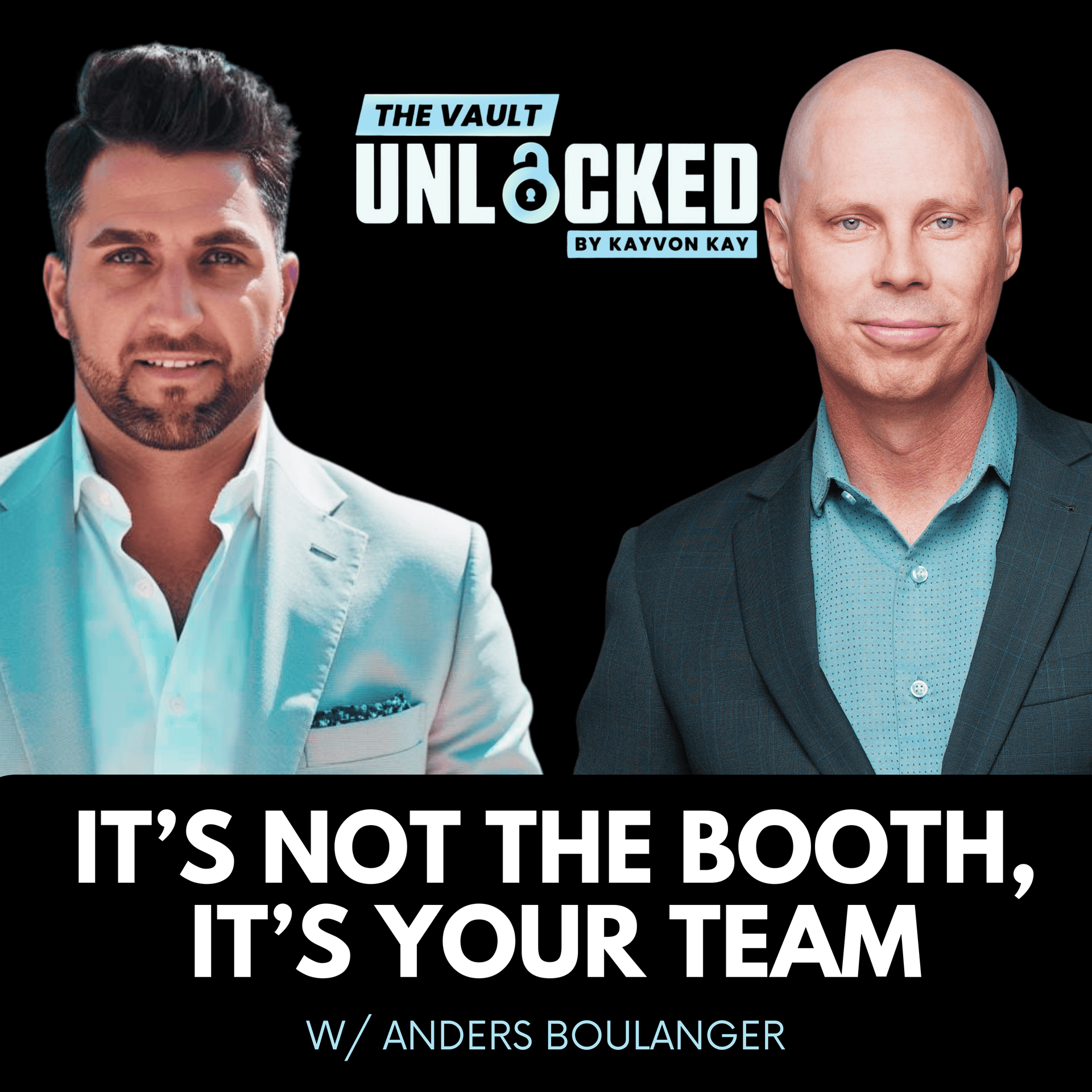
Anders Boulanger is a trained magician turned trade show “infotainer.” He has a physics degree, learned a trade-show approach around 2007 from a mentor, and now trains booth marketing via the Certified Trade Show Marketing designation (Exhibitor Group/Exhibitor Magazine faculty). He uses psychology, crowd dynamics, and qualification to generate MQLs/SQLs.
Key claims
Most companies don’t have a lead/traffic problem; they have a system problem. Many booths are “booth buyers” who wait for “if you build it, they will come.” 70–80% of leads go un-followed-up (per cited scanner stats). Booth staff behavior drives most success; 49% rarely/never train staff.
Notable examples
VMware VMworld booth amid Tony Hawk skateboard signings and other high-energy attractions; other “wild” booth ideas (American Ninja Warrior-style course, bicycle-powered Ferris wheel) that only work when paired with relevance and connection.
Written by AI. May contain mistakes. Listen to the episode to check what was said.
Chapters
Tap a time to open that second in VOIdentifying the Real Problem at Trade Shows
0:45 to 1:55
Discussing the overlooked issues businesses face at trade shows and the importance of engagement.
“experiences using psychology, engagement, and what he calls infotainment.”
Introducing Anders Boulanger and His Expertise
1:55 to 3:05
Guest introduction and his innovative approach to trade show presentations.
“But I think one of the things that we talk about, we talk about the trade show triangle and it's like, there's different levels of exhibitors.”
The Evolution of Trade Shows
3:05 to 6:10
Exploring how trade shows have changed over the last 15 years and the impact of technology.
“that, you know, who we're speaking to and how you even found, you know, this niche in the niche.”
Analyzing Trade Show Data and Engagement
6:10 to 9:50
Discussing new analytics tools for measuring trade show effectiveness and lead follow-up.
“attaching even conversations, almost like the AI conversation recording.”
Creating Memorable Trade Show Experiences
9:50 to 14:09
Strategies for making trade show booths engaging and memorable for attendees.
“And so it seems like from what I mean, when I said, what's the difference?”
Creating Engaging Trade Show Experiences
14:09 to 16:10
Learn how to transform a stagnant booth into an engaging event that draws in attendees.
“And that's where we can kind of plug in and take something that is very stagnant, very passive, people just waiting and make it an event happening in the booth that people want to be a part of.”
Psychological Techniques for Booth Success
16:10 to 20:26
Discover psychological strategies to attract and hold the attention of potential customers at trade shows.
“there's a few things happening there one thing too is the optics of a busy booth right when you have a crowd around a booth, they're like, what's going on there?”
Gamification and Crowd Building
20:26 to 22:55
Explore how gamifying presentations can boost audience participation and interest.
“the more I, I, I touch someone or interact with someone, the more interesting that is.”
Managing Trade Show Logistics and Expectations
22:55 to 24:20
Gain insights into how to manage booth operations and expectations for trade show performance.
“I mean, I haven't done a lot of trade shows.”
Unique Trade Show Experiences and Competitive Strategies
24:20 to 28:00
Understand how unique experiences and competition impact trade show effectiveness.
“Sometimes it's that sometimes it's, it's, uh, usually the, The only thing that sometimes is a snag is some shows don't allow sound either at all or they don't allow it for a certain size of booth or sponsorship.”
Show all 16 chapters
Memorable Trade Show Experiences
28:00 to 28:39
Explore unique and engaging attractions at trade shows.
“Tony Hawk was signing skateboards and they were giving away skateboards.”
The Impact of Novelty and Branding
28:40 to 30:24
Understand how creativity can enhance brand visibility at trade shows.
“the shorter amount of time that's actually going to happen.”
Effective Trade Show Strategies
30:25 to 32:16
Learn essential do's and don'ts for maximizing trade show success.
“And there's like a dime-sized logo on the back.”
Investing in Booth Staff Training
32:17 to 34:38
Discover why training booth staff is crucial for trade show success.
“Like, you know, you want to face the aisle.”
Creating Engagement at Trade Shows
34:39 to 36:54
Learn how to develop engaging personas and attract the right audience.
“What's the giveaway that we can create to really the end, which is the most important, the spike dopamine is what you said.”
Quality vs. Quantity in Trade Shows
36:55 to 38:10
Understand the balance between attracting visitors and filtering quality leads.
“Three is the idea of how are you going to engage?”
Transcript
Automatic transcript. May contain errors.0:00Welcome back to The Vault Unlocked. Most businesses don't have a lead problem. They don't even have a traffic problem. They have a system problem. And today, we're talking about one of the most overlooked and most expensive places where problems show up. Trade shows. Companies are spending$50 ,000,$100 ,000, sometimes even more to show up, set up a booth, and hope it turns into a pipeline. But there's no structure, no engagement strategy, no real conversion system behind it. So what happens? They burn money and call it brand awareness. Today's guest is Anders Boulanger, someone who spent years inside the trenches of trade shows, not just watching them, but engineering them.
0:44He's built a completely different approach, one that turns passive booths into high converting experiences using psychology, engagement, and what he calls infotainment. We're breaking down what actually separates the booths that get ignored from the ones that generate real ROI. Let's unlock it.
1:13So I have to ask or at least put out the statement because I've seen this too many times. Companies say most companies spend at least$50 ,000 to go to a trade show. and then they send their worst closers or their worst people there and hoping something comes from it. But today, Anders, you have a solution for this big problem. I want to hear all about it. One solution, maybe not just one. We're going to have like a kind of a multi-pronged attack and look at that. I mean, 50 grand and it depends on the industry. That could be super cheap. You know, I've been in million dollar booths. I've been in, you know, all kinds of, and then, you know, it depends on the scale of the business that you have, right?
1:54What kind of investment you want to make. But I think one of the things that we talk about, we talk about the trade show triangle and it's like, there's different levels of exhibitors. And so many are in the bottom part of that triangle where they are what we call a booth buyer. They buy a booth, they show up and they wait and they build, they buy into that myth. If you build it, they will come, which is from field of dreams. And if you believe that you're dreaming that this is going to work for you, right at a trade show. So, um, understanding that, that engagement is so key, understanding that it's going to take some energy, some being proactive.
2:32You know, there's a lot of things that you need to do to be able to make your investment worthwhile. And those who do crack that code are getting, you know, the, the three X, four X ROI, you know, from their trade show investment. And it's not an expense. It is an investment. So let's take a step back here. I wanted to open up with that kind of, you know, a statement there, but I do want to take a back, you know, back step here and go ask the question. Okay. Well, who is Anders and, you know, what do you do? I just went off on you. Yeah. You're like, all right, let's get into it. I love it. No, I love it.
3:04But yeah, you know, like just for the audience listening, let's, let's make sure we understand that, you know, who we're speaking to and how you even found, you know, this niche in the niche. Yes. Yeah. So a bit of background, when I was five years old, got a magic set for Christmas, became a magician, a kid magician, I guess, if you will. Paid my, well, did birthday parties, paid my way through university. I got a physics degree, went full time doing magic. And then at some point, well, around 2007, I got trained by my mentor who taught me how to do trade shows in a new and different way. And so what I became was what we call an infotainer.
3:42So I take magic, but I tell a story with it that is a marketing message. And this builds a crowd of people. It excites people. It kind of creates a peak state for people. And then we do qualification and a call to action and then lead a big crowd of people over to a demo. And we're creating MQLs, SQLs, creating opportunities. And I found a higher and better use for that skill set. And, and so over the years, you know, there's things that, you know, I'd see time and time again play out. And I'm, I'm a bit of a human AB test. Like I'm always going, well, is this going to work better? Is this going to work better?
4:21And, and seeing what moves people. And then also where, you know, exhibitors drop the ball, you know, like where I'm doing my best, but I can only, you can lead a horse to water, but you can't make him drink. Right. Like sometimes I'd bring them over to the demo station. I'm like, where the heck's my demo guy? Like, you know, like we can't, you know, so, so there, there were these things that I noticed and started making notes on it. We started building trainings around it. And so now I'm on the faculty for the certified trade show marketing designation that's through exhibitor group and exhibitor magazine.
4:56And, and so it's just kind of all of this experience is kind of culminated into, you know, the expertise that we have now. So let's talk about trade shows as a whole, because I know I have my take on trade shows. And obviously, you support and do great work at trade shows. But have you seen trade shows evolve, I would say, over time, especially since we've got out of the 2020 era where trade shows came to a complete halt? Now, people coming back in and you can see they're starting to pop up a lot more. People are wanting to get back to them. how they changed i would say in the last 10 15 years to where they are today for sure if we go back 15 years ago uh there was still a lot more business card you know fishbowls and and and that kind of like how the lead was acquired i was watching video of my mentor from years ago where used to have this they pass out pencils and a piece of paper and you had to fill in your information on a sheet you know like so they were like passing stuff out to the crowds It's like, it was just wild.
5:58So now, of course, it's more scanning, you know, as far as whether it's a QR code, whether it's the near field. But now what we're also seeing too is, you know, this scanning is getting so smart and attaching even conversations, almost like the AI conversation recording. You know, there's a company called Backtrack. So you and I, Kayvon, you could come into the booth and we could just chat and start talking about what your pain points are, all that kind of stuff. And I say, hey, can I scan your badge? And in that moment, I could scan your badge and go back in time five minutes with our conversation.
6:34And that conversation then attaches to the lead. So when you think about following up in terms of relevance, you get all the follow-up. And I guess this is a whole other point, but you want that follow-up to be relevant so people open it the big dirty secret way back when 15 years ago was that 75 to 80 percent of leads are never followed up on now i think things have changed because we are more data driven i work with mostly tech companies so they got their tech stack and their you know go to market they got stuff figured out and yet swap card which is a company that makes these, you know, scanners and things like that.
7:17They're saying still that 70 to 75 % of the leads are never downloaded. So because they can see the fact. So I like, I have trouble believing that, but that's what their stats are saying. So it's just, so, so it's kind of like, I thought we were past that in terms of evolution. And yet two depends on, on which industry. So whatever industry you're in, you know, just take that professionalism up and be those ones that are actually, you know, using those leads and following up. So that was one side of, you know, that evolution. And then the other side, too, is analytics. So it used to be that you if you were the marketing person going to your CEO and they say, like, you know, how was this show we invested in?
8:06And you say, well, it felt slower this year. Like, yeah, it's hard to go to the boardroom to the C-level executives and talk about feelings. Right. So nowadays there are different solutions that allow you to actually have analytics. So whether it is based off of cell phone signatures so that you can actually heat map a booth and see where the hotspots were, how long people stayed, you know, the impressions around the outside. We actually use a solution that measures eyeballs. So it's AI, but it's ethical AI. There's no facial recognition, but there is facial analysis and it just makes that into numbers.
8:45So it's counting how many people walk by, how many people, what's the stop rate? How many people stop and look at the booth for 15 seconds or more? How many people come in? How long do they stay? What's their gender roughly, right? Like it's law of big numbers. Wow. Over, over 40, under 40 in terms of, you know, that the age demographics, and then it can, there's a few, oh, and energy. So energy meaning like really happy and excited would be like 85, 90, they put a number to it and like focused and serious would be like, you know, 65 to 70 kind of thing. So, so sometimes you can see the difference between what's happening in the aisle and what's happening in your booth.
9:26And, and if it's a, it's by a demo station, typically people People are getting more serious because they're watching, you know, and if and if it's a cocktail hour, you know, or you're giving away booze in your booth. Well, maybe it's going to be the higher energy. Right. So so anyway, so you can see all of this and now we can start testing and seeing what are we doing? Is it working or is it not? And then really applying those learnings to the next show. Right. And so it seems like from what I mean, when I said, what's the difference? It's AI completely advanced. I mean, just the data that you just mentioned, I'm sure there's more data points too, but just the data there can tell you instantaneously, is it successful?
10:09Is it not successful? I mean, when you were talking about people's facial recognition, like recognitions, and when people are coming to the booth, you'll be able to tell it doesn't even speak. Right. Does this booth itself aesthetically speak to the people? Are they being attracted before they even have a call or talk with the demo person or the quasi, let's call it the sales rep that's sitting at the trade show? Now, I know what you do is different, which I love. And that's why we're here because I've never even heard of this. And I think it's awesome. And you, I want to call it, you're the hype man at trade shows, but the hype man that has a plan and that delivers results.
10:45So talk a little bit about like exactly how that works and how you see companies, you know, in the sense of businesses that hire you versus don't at that same trade show. What are we seeing? Yeah, for sure. So I think what trade shows, you know, one of my frustrations with a lot of ways that other people look at it is there's like if we can just get more people at the booth. Right. Like it's just all about that, you know, and that is an important piece, you know, and we kind of talk about a three step model of we want to attract. the people, give them a reason to stop, but we also want to connect with them, give them a reason to listen.
11:22And so often we're so caught up of the attracting thing that, you know, we're giving away coffee. Like there's a barista giving away coffee in the booth and no one's even talking to anyone in that damn line. You know, like there's, there has to be reasons to connect and talk and just, you know, have meaningful interactions, right? Because at the end of the day, people are going going to visit 14 booths or something like that on average? And are they even going to remember being at your booth? Right? And you can't buy what you don't remember. So, so, so that they attract, give them a reason to stop the connect, give them a reason to listen, and then the convey, give them a reason to buy.
12:01And that's really where we're talking about, you know, conveying the message and the, the sales message that we would think about having at a booth. So oftentimes people have gaps in that and we're not getting there, right? It's sometimes it's a cry for attention. So what we do with our infotainment presentations is we bring all of that into one piece. And so we're kind of like a turnkey experience that we can even work in a 10 by 10 booth. So, you know, where sometimes you think, oh, I can't have an experience. I don't have enough space. Well, we come in and we start off by just entertaining to spike dopamine, right?
12:37People see that there's kind of a payoff. They want to be a part of something. So that's where that magic and the entertainment demonstrations that we have. And then once we win them over, we start then integrating in the messaging. And so what happens is they are now learning at the same time as they're being entertained, hence the term infotainment. And every time we do a new demonstration, we're taking people from point A to point B, and there's an aha moment in the middle. And that aha moment is usually where there's something amazing happening in the magic effect, but it's also where we introduce the solution of the company we're talking about.
13:13So what's happening is they're actually inductively learning, meaning they're putting it together in their heads. They're going, ah, and they're also seeing the connection with what we're doing. And that's what creates this peak experience that people can have. And meanwhile, we're kind of cheerleading them on a little bit. We're conducting the energy. And oftentimes I have people yelling out the company name. And this happened yesterday that someone introduced me to someone else on LinkedIn. And they said, oh, Anders was at the eFax booth. And this was the booth I was working at last week in LA.
13:50And she said, I remember that because he made us remember that. We were yelling that name out loud in the booth. And so these are those little like psychological, you know, kind of, you know, crowd dynamics kind of stuff that we really engineer engagement in the booth. And that's where we can kind of plug in and take something that is very stagnant, very passive, people just waiting and make it an event happening in the booth that people want to be a part of. And then we do the qualification. We'll ask some questions. Who's going to blah, blah, blah, blah. You know, you got to, we work with the company, whatever that is.
14:26We see the hand raising and then we take those people and we bring them over to a demo and then we kind of just lay them, put them right in your lap. Right. I love it. Layups already pre-framed. Yeah. Psychological warfare, I'd like to say, but I know it's not, but it's using psychology, which I love, which is, you know, why I got into marketing and what I love about marketing. I love to go deeper into some of that psychology, if you don't mind. of even where did you, you know, identify that? Holy moly. Like, because what I'm looking at when I see this is like, there's the booth with the business who already has its people there, like the sales, you know, the trade people there.
15:09Their booth staff. The booth staff, thank you. And then you are kind of sitting on top of that to really set the booth staff up for success. To me, I'm like, when I think about it, Like I, now I even know what exists. How do you even compete? Why would I even go? Like, why would I go to a trade show and not have someone like you? I just doesn't, it doesn't make sense. I go, okay. Like if there's 20 people at a trade show, one of them is using psychological warfare to get more people to my booth already indirectly or directly pre-framed. so now they've already raised their hand in a way of knowing i'm interested in what this is so my guys are not at my booth as a business owner they're not wasting time talking to the people who shouldn't even be at the booth and they're pre-framed we call those home runs where where i come from it does it does like cut to the chase and then so there's a few things happening there one thing too is the optics of a busy booth right when you have a crowd around a booth, they're like, what's going on there?
16:20Right. They're a going concern. They have what we call a net creating a magnetic presence. Okay. I love this is the stuff I want to talk about. Yeah. Presence. And so when I'm building a crowd, I don't care who the heck you are. You're not quite like, I will take a security guard if I need to, right? Like I'll, like, I always say I'm badge agnostic, you know, come, everyone can watch. We're all good. Let's make something happen. So I'm trying to build up that gravitational pull because we need to get past that, that critical mass, right? Like if I'm talking to three people, that's almost not quite a crowd yet.
16:55It's like three's company, four's a crowd. Then I get four people and now it starts having a little bit of more of a pull, right? And, and so if we really break down what's going on and I'll just slow down because you want to get into the psychology of this is, is, is I give, I gamify the presentation. So I give someone a chance to win$2 ,000. Wow. And so I fan out a fan of cash, you know,$40,$50 bills. I throw them down on the floor and then I do a magic demonstration on the floor. So I'm kneeling on the floor by all this cash and I might have one or two people watching me right now. So there's not a lot happening, but I'm on a microphone and I'm swinging for the fences, meaning I'm not playing small and not being on a microphone.
17:39and I'm doing a show. Like this is a performance and they can tell by the way that I talk about it, that this is going to happen. It's not like if we get enough people, we're going to do a little show here. Like that's not, that's not how it is. Right. It's like, we got like busker style. Yeah. There is, there is that there's a street performance for corporate, you know, it's street performing. I often say, uh, so then people watch me do it. And, and what happens is basically I'm using a shadow on a deck of cards cuts itself. It's like, it's, it's impressive. And it's, that's what I open with.
18:12And, and, but then I say, that's the warmup and everyone's like, where's he going? Like, okay. So now more, a few more people are standing around. So maybe we have five or six people. They're standing shoulder to shoulder. I do a thing where I, I, I take a marker and I draw an X sharpie on my hand and we do a fist bump and everyone fist bumps all the way around. And I'm like, we're going to create some connection. And this literally does create connection in the way that all these strangers now have touched each other. But what I want them to do is I want them to, I want to congeal the artery.
18:42I want to bond them together in a sense that I don't want them to leave. I want them bond them to me too, right? So we're a group. So what ends up happening, the last person who had already put their hand behind their back, brings their hand out, does a fist bump, opens their hand. They have the X, the X has gone off my hand. And they're like, whoa, right? So this is all just magic at this point. This is all just entertainment, dopamine spiking. And there's a little bit of like, what is going on? How did this, like, where am I? I'm at this booth and now all these things are happening. Then I get up on my stage.
19:15And when I get on the stage, I get on page, meaning I bring in the scripting, what we've planned to talk about. So we built rapport on the floor and now we get on stage and get on page. So now I usually say a little something to kind of get people to be in on it. Right. And I'll say, how many notice this is not your normal presentation. It's not a lot of PowerPoint here. Right. This is not a presentation. It's an experience. And we're going to co-create this experience, meaning it's not me doing it for you, but it's us doing it for each other. Do you want to have a good time? Say, yeah. And everyone goes, yeah.
19:51Like now they're like, yeah, let's do this. Right. And I go, take a step in. And then they come a little bit closer. And so I always want to keep them nice and close. The closer they are, the less chance they're going to leave. It's also more, everything's more impressive and they're shoulder to shoulder with people. So they're feeling their energy. And so we're, we're really, you know, architecting what, how they experience manufacturing. Yeah. Yeah. Yeah. So, so that's kind of how, and then I get into the different routines, but we're just building out the crowd now and we're more people are stopping.
20:25Typically, the more I, I, I touch someone or interact with someone, the more interesting that is. And then at the end of the presentation, um, I'm going to give someone a chance to win$2 ,000. Um, at that point, when I say, okay, we're going to give someone a chance to win two grand, man, nobody's moving a muscle now, right? Everyone's listening. And then I can pretty much say or do whatever I want in that little minute or two minute before their patience is up, right? Yeah. But that's where throughout the presentation, I've said, who wants to win 2K? Raise your hand. And people raise their hand.
21:02How many people are having this problem? Is this true? And people are nodding their heads And I'm gauging their level of either frustration or the fact that they are right fit people throughout the presentation. And so at the end, I can ask these more direct qualifying questions and people are already trained to raise their hand. So they will out themselves at that point, right, whether or not that's the case. And then I make a case to go check out a demo. Now, whether we've incentivized it by a special gift that we're giving away, maybe it's just kind of like I sometimes say, we're going to do a three-minute save session.
21:42In three minutes' time, we're going to show you how to save time, save money, and save your sanity. You've already spent 15 with me. What's another three? Right? So see Suzanne over there. She's going to talk to you. I'll bring you over. And Suzanne's just smiling and ready because she knows. She's like, bring them all. She's a bright star. Yeah. Yeah. So, so that's kind of, and then, then I, I say that the loudest person who yells the company's name, if you need a cue card, it's right behind me on the count of three is going to get picked to have a chance to win my cash. And then I play a game with them that the odds are stacked in their favor.
22:18And yet I basically do it for a living. So I, you know, I I'm good at it. And the question is, do they get the cash? The odd time they do. I am very good at the game. So I try to keep my cash. And if the company wants me to give away some cash, I will give away some cash and intentionally lose. So there is there's some. So and if and if we wanted to, we could do it for less cash and lose every time. But this is just kind of the way that I choose my presentations. Yeah. Yeah. Yeah. So how many presentations would you do in a if I had brought you in or a business brought you in? Yeah. You know, say an eight.
22:54I'm going to say a typical 10 hour, 12 hour day at a booth. I mean, what shows are you doing? Well, there you go. I don't know. You tell me, yeah. I mean, I haven't done a lot of trade shows. No, it's all right. I'm not a trade show guy. Typical trade show is probably seven or eight hours a day. Sometimes I was just at one that was 10 hours a day. Yeah, okay. So as I say, it's a little long. But yeah, you're right. You're right. So typically we contract for - Like 10 to six, 10 to seven, right? Or usually - Yeah. Yeah. Yeah. We typically contract for five presentations a day during the five easiest hours.
23:24Yeah. So the first hour is sometimes dead. Last hour is sometimes dead. Middle five, and maybe there's a lunch in there. You know, so it works out pretty well in a seven hour day. And then and then kind of rinse and repeat. Right. So we make the booth busy, make it happening and then let it go back to normal, which is always kind of a good like this. If you didn't have me, this would be like all the time, by the way. Right. You know, that kind of experience what that looks like. But it's also a little bit of a break for the booth neighbors because I can get sound complaints. And if I'm on, if I'm going all the time, they're like, Oh, like this guy's killing us.
23:59So it's kind of nice to have that like ebb and flow through. I was going to say there's, there's a couth to this and even, you know, and a respect, obviously. And my question is how do the, the trade show and the trade show, uh, do they give clearance on this or are they businesses just bring you? It's like, it's on my booth. I paid for the booth, love it or like it kind of. Sometimes it's that sometimes it's, it's, uh, usually the, The only thing that sometimes is a snag is some shows don't allow sound either at all or they don't allow it for a certain size of booth or sponsorship. So let's say a 10 by 10 or a 10 by 20, they didn't pay enough to have a sound system in their booth is kind of what they're saying.
24:44So I've done that. Sometimes I can do – I've actually in Europe one time in Barcelona, I had to do a show with no sound system. and it was interesting because I don't try to do that. That's like hard on the voice because you're trying to project and everything. But I found something interesting was that with a sound system, let's say I've got my crowd and Kayvon, you're like maybe 15 feet deeper and there's a bunch of space between the crowd who's actually having a good time. And you're kind of, I call these people like energy vampires. They're just gonna absorb and watch from afar, but they're not gonna give it back, right?
25:21They're not going to be part of it. I love it. And, and so if I was on a microphone, you could hear me from there. And so you could, you can enjoy the show from there. But what I found was when I wasn't using a microphone, those people, they had, they were tempted to come in closer because they couldn't hear. And so I was like, Oh my, you know, this is, it was, it wasn't so bad, but it's not a real, you know, you could still do that with the microphone with voice friction. Right. Right. That's well, I know that's true, too. And but there is almost kind of like a sweet spot where to do that. So you're saving your voice, you know, at the same time as as, you know, creating that intimacy.
Read the full transcript
25:59Right. And not taking off all your booth neighbors. But but typically what I'll do is I'll go to all the booth neighbors around, especially the ones that are kind of indirect line with my speaker. And then I'll say, hey, you know, I'm going to be doing this thing over here. My job is to put a bunch of people right in this intersection. so uh when we're done with them tap them on the shoulder bring them into your booth you know and they're like oh okay great great so i try to frame it so that they realize that this is kind of a fun and unique thing that they're going to be around and you know you can you can benefit from everyone wins which they probably would benefit just from a little bit more higher traffic so well we've yeah and and you know what the funniest thing is i've had complaints from from these booth neighbors they said your crowds are standing in our booth and i'm like well then they're yours like you take them take them like really you're welcome you're welcome but you know that's all i've seen i've seen you know things online just videos of like just i'd call them like angry uh trade show goers that you know they've been doing for 10 years and they just they hate themselves they hate being there and they hate anything that's unique or that's actually bringing a positive vibe i've seen that too many times yeah definitely i mean you can get jaded you know spending good money at shows if you're you know not not getting results i can understand that but there there are other things out there you can try there's a science there's a science to this for sure i'm dying to ask because i'm gonna say you've been to you've seen all the greatest shows you've seen the smallest to the biggest the widest to the tallest i mean all different types when when you think about all the greatest shows you've gone into, like what's one thing like that stands out the most, whether it was the most interesting or shocking thing you saw or unique thing you saw comedy do, like what, what stands out?
27:51Well, I'll tell you, there's, let me tell you one, one, there was one moment at, uh, at VMware, uh, VMworld, I should say one time where I was doing a presentation, but two booths to my right at IBM. Tony Hawk was signing skateboards and they were giving away skateboards. Two booths behind me was the mountain from the Game of Thrones, like the world's strongest man. And then Clay Thompson was shooting three pointers in a, in a basically a half court that they constructed as a trade show booth. This was all happening all at once. And so I was kind of like, okay, anyone who's not into fantasy skateboarding or, you know, basketball, you're my people.
28:30Come on, let's do this kind of thing. So celebrity appearances are kind of a neat thing that we see, but those are kind of fleeting, right? Like that's only going to be for a short amount and the more famous the person, the shorter amount of time that's actually going to happen. I do remember seeing like an American Ninja Warrior course in a booth one time, which is kind of memorable. So people would try to do these things. And it was a very dumbed down version because obviously those kind of athletes were not attendees of the show. So, but there was a foam pit and there was, you know, things that you would fall into and try to do.
29:06There was a skateboard half pipe beside my booth one time. And that didn't really work that well. It sounded like a cool idea, but they, you know, it wasn't as big of a draw as they thought it would be, right? Sometimes you get this wild idea. Like there's this one company called Fusion.io. And that was the company that used to, they're no longer, they got bought. But that was the one that did the, the Ninja American Ninja Warrior course. They did a bicycle powered Ferris wheel one time. So you got in this thing and you like pedaled it and it would make it go around, you know? And so people could ride this Ferris wheel that they construct.
29:48Like, so wild and different, you know, whether or not they pulled business out of that, right? Like this is that whole, you gave them an experience, you give them a reason to stop. Is there relevance? Is that connection? Is there that other piece to it? And sometimes if it's more brand building, more of that new kids on the block, like we're here and you want that brand recognition, that wild stuff is good for that too, right? It depends. You got like brand marketing and then like direct response in terms of like showing ROI, right? there is some crazy sponsorships that are sold at trade shows that you'd pay$40 ,000 to give away popcorn for a two-hour reception.
30:34And there's like a dime-sized logo on the back. It's like, I guess that's brand building, but it doesn't work. I mean, those are the things I think are mostly hard to track. But again, even like you said, nowadays with scan and codes and all that, it's becoming easier and easier. yeah so i if someone's listening here and thinking hey i i'm i haven't done trade shows or i you know i've been thinking about trade shows and we wanted to give some actual like you know good knowledge i would say to them what would be like couple do's and don'ts like if like i'm talking basics we're talking basics yeah just simple like yeah sure sure in a trade show here are the three things to look out for here's the three things you must have uh just yeah to have that conversation i I think it'd be great.
31:17Yeah. Well, I think we kind of mentioned a little bit in terms of capturing attention. Typically, spiking dopamine is how we do that. And if we give a gift, if there's novelty at sake, you know, people, oh, oh, I want that. Right. And then you create FOMO. So that's why giveaways and, you know, raffles and things like that are always so common at trade shows. Right. So definitely some sort of giveaway is a good idea. Right. It's a reason why you continually see it. It goes way back and it'll continue to go way forward. Another thing I would say is invest in your people. Trade shows are like a different world.
31:56And to really thrive in that world, you need to be operating at that level of energy to be there all day, to show up, and to really be on your best booth staff behavior, if you will. So stay off your phone, you know, don't eat in the booth. We, we always talk about, you know, you want to avoid clustering, meaning don't be get internal and having this conversation with your other booth staffers. Like, you know, you want to face the aisle. We say butts to the booth, not asses to the aisle, right? Like, it's like, you want to make sure you're facing in case someone walks by. I did this last week.
32:35And if anyone follows me on LinkedIn and I post a lot of these videos where I kind of do walk and talk videos. And I took a picture of three people who are all heads down on their phones sitting in a booth. And you're going to see this all the time. But the fact that I could get away with taking the picture and they never saw me do it. Right. It's like I could have been a perfect fit whale of a customer for them. Right. Right. And whether I not I looked at your booth or not, I walked right on by, but they'll never know. Right. And so my message in that last video I made was like, don't be complaining about, you know, the ROI you're going to get at trade shows if you're pulling that kind of crap.
33:19Right. Like so. So when I say invest in your people, 49 percent of companies rarely or never train their booth staff. So the 51 % that do train their booth staff regularly or quite often, most of them do it internally. And I've been at those internal trade show trainings. And here's what it is, Kayvon. It's an event manager taking a phone and just going, okay, don't eat in the booth. yeah uh staff your phone and it's just it's just someone reading yeah it's just reading a thing right so so we we have um boost staff trainings on our on our website on engageify.ai that are meant they're just they're very affordable per person and it's the idea that we just we don't want to give people an excuse not to train their boost staff and the thing that we've found is it's the number one thing that companies need it's the last thing they'll ever spend money on and and so the the the eye candy of the booth and the whole like oh we're gonna do this we're gonna do they pour all of their investment into that right and getting their people there and but they don't think about that engagement piece and and 85 percent of your success at a trade show is because of your booth staff okay so there's all kinds of stats i can spout i don't want to get into it too much but that is you know it is no matter how much you click from place to place it'll never replace face to face that's you know it's trade shows are about face to face and then what are like uh i guess there was a little bit do's i guess in there and don'ts in there yeah a little bit i just got up on my soapbox and started ranting no i mean i think it's great though i mean i just want to really get make sure people heard that like what i'm hearing is we need to have a giveaway and a giveaway it means that they're a gift you got to create some novelty some fomo that's kind of step one that's like a step one must have so when when thinking about even going through a trade show, the question is, hey, what's the novelty?
35:17What's the FOMO? What's the giveaway that we can create to really the end, which is the most important, the spike dopamine is what you said. Number two, I'm going to call it trade booth etiquette, which is salesman etiquette, which is everyday human etiquette, but people, we've just lost that etiquette, which is what are the tools and what's the responsibilities of how do people common sense at the booth again, typical things like not eating at the booth, not clustering at the booth. I love what you said, ass is facing in, not out, um, you know, being able to, uh, to, to bring out that energy.
35:52So it's really people etiquette. Uh, what's one more. What's one more. Um, one more is, you know, for, I talk about what is the kind of person we want to engage with? I call it creating your own engaging persona, meaning, you know, Sometimes people, especially if they're on the technical side, they might be a little quiet, this kind of thing. We need to kind of bring a different version of ourselves just to amp it up. Whether that is smiling, being open, just being more personable, trying to crank up your warmth. So we talk about Kobe Bryant was the Black Mamba, right? We had Sasha Fierce was Beyonce's alter ego, right?
36:32You might have a pumped up version of yourself and just bring that to the shows. When it's showtime, when the show hours kick up, kick into that extra gear. Because a lot of people are not going to do that. And how are you going to stand out at the end of the day? We want to have these memorable interactions with people. Personality, then I would say, okay, really what's engagement? Three is the idea of how are you going to engage? We're going to rely just on your people to engage. We're going to hire people like you to engage. We're going to use music to engage. How are we going to create the hype?
37:08And, and no, and I love what you said too, is also know the people we want. So what are the people we want to attract here? And I can tell you those three simple things. I feel like a lot of businesses just don't even get right. A lot of them just sit back and wait, right. And just see what they're going to do. And even, you know, and there's another thing that I just had a call the other day with a company. Like they, they sometimes say, well, we want quality over quantity. So we're going to scale back on this and just try to get quality. And it's like, well, the whole trade show booth is a funnel, right?
37:43Like, it's like the more people you get to the booth, the more good ones you'll find. Right. And so just making sure that you are filtering them and, and, and being able to find the good ones that are there. And that's why we do that whole, we find the quality and the quantity with our, with our call to action. But it's sometimes they feel like they're just like, I'm just going to find quality. It's like, well, how are you going to do that? You just sounds like you just want to sit back and see what comes to you in a haystack. Right. And you said what makes them want to come to you versus the 50, 60, 70 other booths.
38:15Listen, from what I'm hearing is that I said it in between and I want to make sure this is not a paid promotion. But from what I'm seeing and I'm understanding here, if I was I have a business myself and if I was ever even thinking about doing a trade show, I wouldn't be doing one without calling you first. Because you, to me, seem like you are the the recipe for success if you want to have an effective promotional and conversion, high conversion trade show. With that being said, where can they find you? Yes. So I did drop it before, Engagefy.ai. So it's E-N-G-A-G-I-F-Y.ai. We're not an AI company.
38:56The AI stands for Authentic Interactions. That's what that's about. So on that, we have a learning hub. We have past webinars we've done. We've got our trainings. We've got all kinds of tools there. Check that out. And then follow me on LinkedIn, Anders Belanger. I'm going to spell it, sorry, A-N-D-E-R-S. and then looks like Boulanger, B-O-U-L-A-N-G-E-R. I post all kinds of videos, you know, in the field at trade shows talking about these different tips. Awesome. Thanks for being here. Appreciate you. Thanks for having me, Kayvon.
From the publisher
If you're spending $50K+ on a trade show and hoping it works… you've already lost.
Most booths don't fail because of traffic.
They fail because no one knows how to convert it.
And the worst part?
You won't even realize how much money you left on the floor.
This episode breaks the illusion that trade shows are about "showing up."
They're not.
They're about engineered attention, controlled engagement, and conversion systems that most companies never install.
Kayvon sits down with Anders Boulanger, a trade show performance specialist who's worked inside everything from $10K booths to million-dollar builds. What he exposes is simple:
Most companies operate like booth buyers.
They pay for space, stand around, and wait.
The ones who win?
They manufacture demand, control the crowd, and pre-frame every interaction before a sales conversation even begins.
This conversation goes deep into the mechanics behind high-performing booths:
Why passive traffic kills ROI, how psychology outperforms design, what actually makes people stop, stay, and buy, and how the best companies turn trade shows into predictable revenue channels instead of expensive brand plays.
If you've ever questioned whether trade shows "work", this will show you why most don't.
This episode is for: Founders investing in live events, expos, or trade shows, operators responsible for pipeline, lead generation, and conversion, sales leaders tired of low-quality event ROI, companies spending real money on visibility without measurable return.
If you're not responsible for revenue, this isn't for you.
Trade shows are one of the last true face-to-face sales environments where attention, influence, and execution collide in real time.
This episode unpacks how business growth at events is driven by human behavior, not booth design. It shows how sales systems, buyer psychology, and real-time engagement determine whether you generate a pipeline or just collect badges.
From lead capture failure rates to conversion gaps inside booth teams, this is a breakdown of how money is won or lost in live environments where most companies rely on hope instead of structure.
Topics covered:
-
Why most companies send their worst closers to their biggest opportunity
-
The "booth buyer" mistake that kills ROI
-
How to engineer crowd psychology and create a magnetic presence
-
The 3-part model: attract, connect, convert
-
Why 70–75% of trade show leads never get followed up
-
The real role of booth staff in revenue generation
-
How top companies generate 3x–4x ROI from the same events
-
The difference between traffic and qualified attention
-
Simple execution mistakes that cost companies millions
Looking to dive deeper into these conversations and connect with our host and guest?
Follow Anders Boulanger:
Follow Kayvon:
Want to go deeper with Kayvon?