
In short
This Week in Startups - Episode E2266 Summary
Episode Title
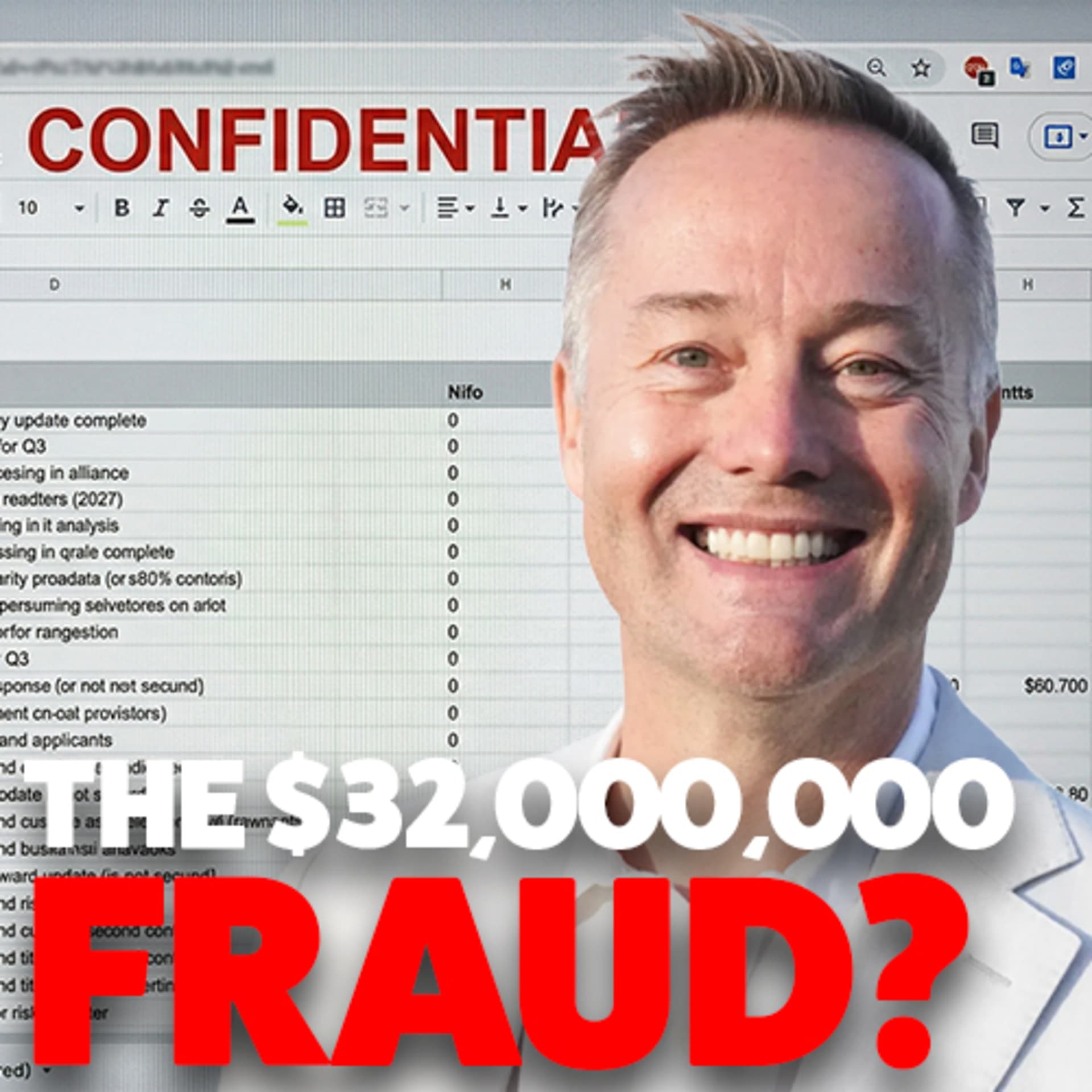
Compliance Startup Scandal... Is Delve Guilty?
Episode Overview In this episode of "This Week in Startups," Jason Calacanis hosts discussions on the evolving landscape of AI in venture capital, a compliance scandal involving the startup Delve, and innovative energy solutions from startups like Brick and LeadPoet. Guests include Elizabeth Yin from Hustle Fund, Ryan Mahdavi from Ceel, and Seb Sheng from Brick.
Key Sponsors
- Northwest Registered Agent: Business formation services.
- LinkedIn Jobs: Recruiting and hiring solutions.
- Sentry: Debugging tools for software development.
- Plaud: Note-taking tool for conversations and meetings.
- Ro.co: Health insurance checker.
Episode Breakdown 0:00 - 1:18: Introduction
- Jason introduces the episode and mentions the skiing season's end, humorously reflecting on personal experiences.
1:18 - 3:45: Sponsor Messages
- Highlights from sponsors, promoting their services.
Segment 1
The Impact of AI on Venture Capital and Startups
Guest
Elizabeth Yin (Hustle Fund)
- AI in Venture Capital:
- Discusses how AI tools have dramatically changed workflows and startup creation.
- Founders may require less initial capital due to AI’s efficiency, affecting their reliance on venture investment.
- Raises existential questions about the future role of venture capital.
- Startups’ Growth Dynamics:
- Startups can now grow faster and with lower capital due to AI.
- There is a significant improvement in founders' ability to learn necessary skills quickly, which raises the competitive bar.
Segment 2
The Delve Scandal
Guest
Ryan Mahdavi (Ceel)
- Delve's Allegations:
- Accused of overselling compliance tools and misrepresenting capabilities.
- The scandal involves potentially fraudulent practices with boilerplate reports and zero auditor findings.
- Cultural Context:
- Discussion on Silicon Valley's culture of bending rules and the implications for startups.
- The need for due diligence and the red flags investors should watch for in startups.
- Investor Perspective:
- The episode emphasizes the trust-based nature of startup investments and how investors often rely on founders’ narratives.
Segment 3
Energy Solutions
Guest
Seb Sheng (Brick)
- Brick’s Model:
- Combines hardware and AI to help buildings and data centers reduce energy costs by up to 35%.
- The discussion includes the technology’s reliance on data from various systems and its impact on energy savings.
- Business Model:
- Pricing based on energy savings, with an emphasis on scalability and future potential in the energy tech sector.
Segment 4
LeadPoet and Decentralized Lead Generation
Guests
Gavin Zaentz and Pranav Ramesh (LeadPoet)
- LeadPoet Overview:
- A decentralized platform for lead generation that utilizes a network of miners contributing valid leads.
- Explains how the platform compensates miners and ensures lead quality through validation processes.
- Value Proposition:
- Focuses on delivering high-quality leads and how the platform operates similarly to Mechanical Turk but in a decentralized manner.
Key Takeaways
- AI's Role: AI is transforming startup viability and dynamics, reducing the capital needed for initial growth.
- Ethics in Startups: The Delve scandal emphasizes the importance of honesty and thorough due diligence in startup funding.
- Innovative Solutions: Startups like Brick and LeadPoet exemplify how technology can solve real-world problems, whether in energy management or lead generation.
- Investor Strategies: A focus on due diligence, recognizing red flags, and understanding the startup's operational realities is crucial for investors.
Conclusion The episode covers a range of pressing topics from AI's impact on startups to ethical considerations in venture capital, energizing discussions about innovative solutions in compliance and energy efficiency. Each guest brings unique insights, contributing to a rich dialogue about the future of startups in a rapidly changing technological landscape.
Timestamps
- 0:00 - Intro
- 1:18 - Sponsor Messages
- 3:45 - Elizabeth Yin Interview
- 13:17 - Ryan Mahdavi on Delve Scandal
- 45:24 - Seb Sheng on Brick
- 56:02 - Gavin Zaentz and Pranav Ramesh on LeadPoet
- 1:24:16 - Closing Remarks
Final Notes The episode encapsulates critical lessons for founders and investors alike about transparency, the transformative power of technology, and the evolving nature of venture capital.
Written by AI. May contain mistakes. Listen to the episode to check what was said.
Chapters
Tap a time to open that second in VOSki Season Reflections
1:50 to 3:00
Jake shares his experiences and reflections from the ski season.
“my pinky, which I dislocated playing basketball yesterday, and make sure I send a note, I can do that.”
Introducing Plod
3:00 to 4:40
Discussion on the benefits and features of the Plod device.
“People can get a good deal, I think, on a plod, yeah?”
The Evolution of Startups
4:40 to 6:20
Elizabeth Yen discusses how AI is changing startup creation and investing.
“And, uh, you know, just playing with all the tools and using them a lot, open, open claw, cloud cowork, cloud code, like, et cetera.”
The Role of Venture Capital
6:20 to 8:00
Exploration of the evolving role of venture capital in startup ecosystems.
“So that was a hundred K and servers, probably 50, a hundred K plus 10 ,000 a month, 5 ,000 a month.”
Churn and Customer Retention
8:00 to 9:40
Discussion on the importance of churn and customer retention in startups.
“more important at the earlier stages of vetting a startup?”
Legacy Challenges in Startups
10:30 to 12:20
Elizabeth talks about the challenges existing startups face with new tech.
“So that, that playing field is changing as well.”
Delve Scandal Overview
12:20 to 14:00
Introduction to the Delve scandal and its implications for startups.
“We just talked about Plod, like you don't need a note-taker.”
Introduction to the Compliance Controversy
14:00 to 15:00
Learn about the emerging scandal surrounding compliance startups and AI.
“This is your straight up heads up competitor.”
Allegations Against Delve: Overview
15:00 to 16:40
Understand the serious allegations facing Delve and their implications.
“That said, whoever put this investigation piece together, bravo.”
The Leak and Its Consequences
16:40 to 18:30
Explore the details of the data leak and its impact on the industry.
“You know, copied errors across different documents from different companies, a web of auditors that appeared to be, I would say, less than above board, if you will.”
Show all 44 chapters
Culture of Silicon Valley: Hustle or Fraud?
18:30 to 20:30
Discuss the culture of bending rules in Silicon Valley and its consequences.
“But there is an underlying issue here, I think, Elizabeth, that you and I deal with.”
Investor Perspectives on Compliance
20:30 to 21:40
Gain insights into how investors view compliance issues and due diligence.
“But on the founder side, like, I think, how would you have protected yourself if you were a Delft customer?”
Identifying Fraud in Startups
22:30 to 24:10
Learn how investors identify fraud and the importance of transparency.
“the office every day, and you're listening to the conversations, and then everybody submits your work, and you validate it.”
The Fine Line Between Exaggeration and Fraud
24:10 to 26:00
Understand the distinctions between exaggeration and fraud in startups.
“He got a, you know, slap on the wrist, basically, but you also lost control of his company.”
Challenges in Startup Due Diligence
26:00 to 28:00
Explore the challenges faced during the due diligence process in startups.
“letter saying, I want my money back, or I'm going to the sec with this.”
Understanding Due Diligence in Startups
28:00 to 29:30
Learn about the importance of diligence in startup investments, especially in high-stakes situations.
“The way I view it, and for us was pretty clear, a simple 30-minute demo I think would have exposed a lot of so-called features that don't even exist.”
The Role of Pressure in Investment Decisions
29:30 to 31:22
Explore how pressure influences investor decisions and the need for independent diligence.
“from doing diligence and to put pressure on them.”
Identifying Early Warning Signs in Startups
32:12 to 33:31
Learn how to spot potential issues in startup platforms based on industry insights.
“How early did you think there was an issue over at Delft?”
Growth Tactics and Their Implications
33:31 to 35:01
Examine the implications of growth hacks like sending donuts for gaining client engagement.
“They were sending donuts to people to get them on a exploratory call for their product?”
The Fine Line Between Marketing and Deception
35:01 to 36:39
Discuss the ethical considerations of using brand associations in marketing strategies.
“Like we would, you know, and the most trusted industry at that time, it was airlines, right?”
Governance in Startups: A Necessity
36:39 to 38:49
Understand the critical role of governance and board involvement in startup success.
“any red flag do you walk around a city and you see stuff very fitting like this I would say all over the place.”
The Importance of Structure in Corporate America
38:49 to 41:12
Learn about the structural necessities for startups to ensure accountability and success.
“We're not going to take it because we can't possibly take all those.”
Navigating the Hype Cycle in Startups
41:12 to 42:00
Explore how the hype cycle impacts investor behavior and startup performance.
“we have a structure in America that made us the most competitive entrepreneurial force in the history of the universe, not since the Greeks has there been so much innovation.”
Understanding Compliance and the Role of AI
42:00 to 44:24
Learn about compliance challenges in startups and how AI can provide solutions.
“a Delaware corp, they have in your charter board meetings, board members, you know, reports, audits, whatever.”
Introduction to Brick and Energy Efficiency
44:24 to 45:14
Discover how Brick utilizes technology to enhance energy savings in buildings.
“I'm going to have posters all over the place.”
How Brick's Technology Works
45:14 to 47:54
Understand the hardware and software integration Brick employs for energy management.
“So we're going to interview a company here that we're considering for our syndicate and would love to have you give some thoughts.”
Business Model and Customer Engagement at Brick
47:54 to 52:42
Explore Brick's business model and how they engage with clients in energy sectors.
“At the end of the day, look, there are different types of devices here.”
The Future of Brick and Industry Challenges
52:42 to 56:00
Learn about the challenges Brick faces in scaling and the unique qualifications of the team.
“seems to get stuck around the same thing.”
Scalability and Crypto Insights
56:00 to 56:45
Discussion on Tau, Open Claw, and crypto trends.
“and really the rest of the roadmap going forward is about scalability.”
Introduction to Tau's Ecosystem
58:14 to 1:00:11
Exploration of how Tau's subnets operate and their benefits.
“Elizabeth, I don't think you're on a GLP.”
Understanding Subnet Acquisition
1:00:11 to 1:02:36
Detailed explanation of how to acquire and stake a subnet in Tau.
“I can earn Tau or the subnets tokens by doing this.”
Market Dynamics of BitTensor
1:02:36 to 1:04:21
Discussion on the market dynamics and future plans for subnet expansion.
“This thing bounces around 10 % a day some days.”
LeadPoet's Innovative Approach to Lead Generation
1:04:21 to 1:07:28
Description of LeadPoet's process for generating quality leads.
“Well, you know, actually, it jogged my memory that one of my founders did tell me about this, and that is how they are funding their business.”
Compensation and Efficiency in Lead Mining
1:07:28 to 1:10:00
Insight into how miners are compensated and the efficiency of the lead generation process.
“You would plug in a specified prompt, which essentially said, give me a thousand leads in the SaaS industry that are located in the U.S.”
Understanding Customer Acquisition Cost
1:10:00 to 1:10:50
Explore how the startup approaches customer acquisition and lead quality.
“First or second degree of connections, getting us in the door.”
Lead Guarantees and Market Limitations
1:10:50 to 1:12:00
Learn about the limitations in lead availability and how the startup addresses client needs.
“You'd spend$2 ,000 in your average customer scenario.”
Startup Funding and Structure
1:12:00 to 1:13:00
Discover the startup's funding status and corporate structure.
“But our whole thing is the higher quality standards to ensure that you're getting the highest quality leads and the leads with the most intent, regardless of the market.”
Value Creation from Tokenomics
1:13:00 to 1:14:10
Understand how the startup's tokenomics and services interrelate.
“Have you raised money for it or are you just bootstrapping it now?”
Disruptive Business Models in Lead Generation
1:14:10 to 1:15:50
Examine the innovative approaches to lead generation and market competition.
“synergistic - See, what I like about this, Elizabeth, which is challenging for us, because we're usually equity holders, is they're building a real company, charging dollars, Alex, to the customers.”
Compounding Effects in AI and Lead Generation
1:15:50 to 1:17:30
Learn about the competitive landscape and advancements in lead generation technology.
“Because the validation we have is, you know, it is adversarial with these miners.”
Investing in Crypto and Future Projections
1:17:30 to 1:21:40
Discuss investment strategies in cryptocurrency and potential market trends.
“You You have to have credibility to get a job, but how are you going to get that without the job?”
Final Thoughts and Reflection
1:24:00 to 1:24:12
The hosts and guests share their closing thoughts on the episode.
“Anybody have any closing statements or questions here?”
Investing Experiences and Strategies
1:24:12 to 1:25:30
Discussion on personal investment experiences, particularly in crypto and stock trading.
“But you know, I've never done well with crypto.”
Themes for the Future
1:25:30 to 1:26:34
Hosts outline the themes and topics to focus on for the remainder of the year.
“because I've had crypto go all the way up and then come all the way down.”
Transcript
Automatic transcript. May contain errors.0:00All right, everybody, welcome back to This Week in Startups. Yes, it's your boy, Jake, Al. I'm here with Alex Wilhelm, the one and the only. This Week in Startups is brought to you by Northwest Registered Agent. Get more when you start your business with Northwest. In 10 clicks in 10 minutes, you can form your company and walk away with a real business identity. Learn more at northwestregisteredagents.com slash twist. LinkedIn Jobs. Hire right the first time. Post your first job and get$100 off towards your job post at linkedin.com slash twist. And Sentry. Your team should be focused on shipping features, not chasing down bugs.
0:40New users can get$240 in free credits when they go to sentry.io slash twist and use the code twist. As you can see, teardrop behind me if you're watching us on YouTube. Ski season over. I'm shutting the house down in Tahoe and I do two days of skiing. So I hit 30 for the season. I'll do one half day tomorrow in the slush. A lot of people have been asking me about my tweets about Tao and my fascination with Tao and Stillcore Capital and everything. We're going to talk about Tao at the end of the show, right? In the back third, why I am a bit obsessed with Tao. And as you know, I'm obsessed with a lot of technologies, including my plod pin.
1:26It's time for us to applaud. Golf clap. Plod. As you can see here, I have it on my t-shirt. How did I get it on my t-shirt? I didn't use the clip you usually see me use when I'm wearing a suit. Well, I'm in Tahoe, so I'm not suited up. It has a magnetic one, so you can put it right behind you. Then, Alex, I got you on the plod train. I'm recording my applaud right now. So if I have any ideas, like, hmm, I should go to the emergency room and get my pinky, which I dislocated playing basketball yesterday, and make sure I send a note, I can do that. And you just flash your applaud, Alex, you're using the attachment that lets you wear it like a wristband, which is kind of cool, too.
2:09It's totally privacy first, because you have a button, you You press it, the red light goes on. Everybody knows what you're doing. And for meetings, it's amazing. People say, well, why wouldn't you just use your phone? Getting your phone out, opening an app, starting it, closing it. Okay, all that's great. It's gonna take you 30 seconds, a minute. Whereas here, you just press the button, one second or less, and you're recording. And it's got multiple microphones on it. And the battery lasts forever. And if your phone's in your bag or your jacket, and you're skiing, but you want to leave it on like a lunatic all day, Alex.
2:43I just leave it on when I'm skiing. And I just talk to myself when I'm skiing alone. And, you know, if I ever go down in a tree well or whatever, it'll be my last will and testament. Didn't we just talk about you not skiing alone anymore? Like 10 days ago? It wasn't that far back, man. We have a promo code. People can get a good deal, I think, on a plod, yeah? If you go to plaud.aiplod.ai slash twist, use the code twist, save 10%. Jason, I'm using mine to take ideas for blog posts when I'm out and about. Love it. And because I have the wristband, my children can't yank it off my body. So not really a clip-on guy yet, but give me like five years to have older children, and then I'll be able to safely wear it like that.
3:23But yeah, I'm loving it. Long's loving it. You're loving it. Kind of a hit here at Twist HQ. Everybody's loving it. And thank you to them for supporting the program. If you use that URL, they know we sent you. And tell your friends about it. Shout it out on your social medias. Big show today. Got a couple of great guests. Why don't we get started, Alex? We have Elizabeth Yen from Hustle Fund. If you don't know Hustle Fund, it is one of those venture capital firms that actually will invest in you very, very, very early. Or as they put it, they invest in hilariously early startups. Think Foundry University, if you will, adjacent people with an idea, but not yet product market fit or anything that far along.
4:00I love their fund. I know her co-partner, Eric, and just some of the nicest people in the entire world. Elizabeth, welcome to the show. Thank you. Thanks, guys. It's been a while. It's been a minute. So good to see you. How has this AI revolution in the last two years or so impacted what you and I do, which I call now year zero investing from the front lines? How is it changing? How startups are created? Who's creating them? How fast they grow? Product market fit, whatever. And maybe even how you run your firm. Oh, my gosh, it's been crazy. Well, first off, my own workflow has changed. Like on my computer over here, which you can't see, I have multiple terminals going, cloud coding away, press one, one, one.
4:42And, uh, you know, just playing with all the tools and using them a lot, open, open claw, cloud cowork, cloud code, like, et cetera. So, so internally we built a lot more, um, to help us, you know, run our operations. But I think that also has informed a lot of our investment decisions as well, right? Like everybody can be spinning up these apps over a weekend. And so now a, the amount of capital you need for software has gone down dramatically. So there's this question of, you know, why do people even need us? That's the existential question. But I mean, we have noticed actually companies get faster growth and so they need to pay for their compute bill.
5:18So we're still needed on that level. I don't know if you've ever seen your own Claude bill or mine, but like there's money that is needed. But what are you up to? What was the biggest day slash month you've had? Have you had a thousand dollar a month? Not quite there, but getting there. Yeah. Yeah. So 700 bucks a month. You've had a$200 a day. We'll probably cross that this month in March, over a thousand. Yeah. Yeah. And I just wrote my CFO note, like it'll probably be more than 3000 by the end of the year per month. Yeah. Crazy. It is nuts. And I share too, your observation here. You have to ask, well, what is the role of venture capital?
5:58And people have been saying that for a long time. Sure. It does seem like, you know, the cloud computing revolution, the WeWork revolution, getting rid of those big ticket items, Alex, that we used to negotiate a hundred thousand, 200 ,000 for the lease of your office to your commitment, you know, used to stand up 20 years ago, your own rack of servers in a co-location facility. So that was a hundred K and servers, probably 50, a hundred K plus 10 ,000 a month, 5 ,000 a month. Plus you needed a sysadmin to do all that work all that got abstracted away okay github you know digital aws whatever you know you're going to use um but now this is different because those two or three first developers you're going to hire maybe okay yeah maybe we don't maybe we hire one but we don't yeah you don't need them at least not in the beginning right so that's a big c change and And then what is the moat?
6:54That's the other question everyone's asking, right? So it's like, okay, you back this company, they're doing well. But, you know, I've had a couple of companies, Jason, where they've gotten to 10 million ARR and then somebody else comes along and does the same thing. And it's like, sort of game over. Yeah. And that never used to happen. So that's sort of the other thing that everyone's thinking about. So we've been looking at a lot of infrastructure rather than apps. So you're going one layer down the stack, essentially, to prevent from being vibe-coded out of existence? Exactly. Exactly. We've been looking at more hardware than ever.
7:27We didn't used to look at so much hardware. Now we look at a lot of hardware for the same reason. So, so I don't know, I think in some, some ways that nothing has changed, but everything has changed, right? Still looking at the same fundamentals, customer acquisition is important, but you know, how, like, how are you going to kind of maintain your position? Do you pay more attention to churn than you did before? It's always been a very important thing, especially in the SaaS era. People wanted to have net positive retention and so forth. But if someone can show up to your 10 million ARR business and crush it, is churn now even more important at the earlier stages of vetting a startup?
8:05Yes and no. So there have been some high-flying marquee companies, and I won't name names, but we all know them in the sort of vibe coding space, that have had awful churn numbers. And some VCs have been passed because of that. But I think one of the things that will change is as the AI models get better, and that's what everyone is riding on, then they will ride that wave to getting more accurate and being a better product. And that will actually help your churn. So there are some things you can control and other things that I think the LLMs will control and make your product better over time.
8:38Are you referring to like hateable and Zeppelin? Yeah, maybe. be. Well, you know, I kind of think we've seen this before. People did do a lot of sampling, you know, in mobile. When the PC came out, there was a lot of sampling. People would do it as a hobby. They would go to CompUSA and buy a bunch of package software. Internet comes out. People would, you know, pay for websites. Apps came out. People would pay for a flashlight app. So there's a lot of sampling coming out, but it will come out in the, I think, in the end. The thing that I I think is also pretty tremendous is the ability for founders to get better at the job of being a founder by learning new skills very quickly.
9:20So if you were a founder, you didn't quite understand the legal issues, or maybe you didn't understand cap table issues, or you weren't good at go-to market strategy, you're sucked at design, whatever you sucked at, you will suck a lot less instantly. And then you might even become good at it quickly. And then if you can be good at, you know, the dozens of things it takes to do the chores at a startup, man, that's a big breakout. Yeah. A hundred percent. And anybody. And so that means that everyone's bar is higher. Like everyone has to level up and anybody who is not, then it's just going to get harder to get funding.
9:58Yeah. Everybody became a superhero. Yeah. It was like somebody got the serum and everybody becomes a mutant and has crazy abilities. So it doesn't matter if you used to be a mutant. now everybody is. But I don't know if you're seeing this Jason, there is a bit of a bifurcation. Like when we see startups, like there are some people who are just exceptional and using all the tools well. And then there are people who still haven't really gotten the memo, whether it's for coding or whether it's for, you know, general business ops or sales and marketing. Like there are a lot of people who have not leveled up.
10:31So that, that playing field is changing as well. Debugging sucks and it takes up time your team could be spending on awesome new features and products, but now there's a better way. Sentry's AI-powered debugging agent, Sear, isn't just guessing about what might have gone wrong with your system. It's analyzing your actual data. And because it has context, it spots buggy code before that code ruins your entire day. Plus, Sentry works alongside coding agents like Cursor, passing along an idea for a fix that can then be applied to your code base and sent to a human team member for review. End-to-end automation, all the way from bug detection to pull request.
11:10So join the millions of devs and companies like Claude and Disney Plus who use Sentry to move faster. Check them out at sentry.io slash twist and use the code twist for$240 in Sentry credits. Is that founders that are seeking their first check from your fund? Or are you thinking about companies that are more like series B, series C, and aren't evolving to meet the moment? Both. So we have definitely had conversations within our existing portfolio where the companies are further along, they've got a built out team. And then now it's like, okay, we're kind of in this weird dichotomy where maybe some of their existing engineers are not going to make it.
11:51And that's actually really tough. And then there's also this dichotomy of, okay, I have these people, but now who do I hire next? Do I hire someone? Do I have to kind of change what this person's doing? So actually in some ways it's a little bit trickier, I think, to be an existing startup with all of this sort of legacy stuff. And now you're changing versus, oh, I'm starting from scratch as a one person shop. This is what we're seeing at the big companies too. If you had an overhang of middle management or too many PMs, product managers, you're kind of like, well, product management was a lot of note-taking and like, what?
12:28And now it's not. We just talked about Plod, like you don't need a note-taker. You just get, literally you spend a hundred dollars on a Plod and you're done. Like we're here folks. So that note-taking role or just every day checking in on the changes, that is kind of over. And if you're a founder who doesn't embrace this, you're at risk. It would be like being the founder who doesn't embrace cloud computing during that change, or you didn't embrace mobile. So just pause for a second, right, Elizabeth, and think about our friends who had an incredible website. They never figured out mobile. They had an incredible, you know, business for SAS or whatever, but they never figured out cloud, you know, and like Dropbox had to make that change, right?
13:11Like, okay, we're not going to set up our own servers. We're going to use storage. We have to put more money into the application level, yada, yada. All right. Lots more on the docket. Let's get to work. All right. So the biggest startup story of the last couple of days has to deal with a company called Delve. Now, if you don't know about SOC 2 compliance and other bits of Enterprise Arcana, this is a little bit esoteric to you, Jason. But the issue is, did a company, did a startup that was backed by both YC and some major VCs, essentially cook their entire business out of thin air? As in, did they do some fraud?
13:41So we're going to bring on a founder, Ryan Madabi. He's the founder and CEO from Seal, which is from Launch Accelerator cohort number 35, Jason. And Seal does automated compliance, very similar to what Delve claimed to do. Ryan, welcome to the show. Thanks for having me. Good to see you guys. Yeah. Ryan doesn't have an axe to grind here. This is your straight up heads up competitor. This story is crazy. And there's also like Vanta, which came before this. So this is a pretty wide space. And they came in with the concept, Alex, of disrupting the vantages of the world and using AI to make this go faster.
14:19Yeah. Absolutely. The idea was to bring AI and automation to a very boring process. Compliance is kind of like doing your personal taxes. Like you have to do it, but everyone absolutely hates it. And it always involves more paperwork than you think. So why not use tools to go faster? Well, if you fake it, you can go really, really fast. So, Ryan, I want to start with just a very broad point here. You've seen all the materials. You've seen the substacks and leaks and so forth. How credible are the allegations against Delve from your professional standpoint? And what are they? Let's explain to the audience what the actual granular accusations are, if you have them there, Ryan.
14:55Yeah, yeah, yeah. There is a lot to unpack there. It's quite in-depth. I want to just start off by saying that this is a very genuinely unfortunate situation, not just for Delve's customers, but the entire industry. that effectively runs on trust. That said, whoever put this investigation piece together, bravo. The level of forensic detail is impeccable. And like I said, there's a lot to unpack there. We'll try to do the TLDR for the audience. But I'm curious whether you guys think this is a disgruntled customer or a coordinated hit piece. Either way, these are very serious allegations, which if proven will likely have criminal implications.
15:30So on a high level, there was an incident that happened, right? This incident happened in December. there was some leakage. Since then, the biggest problem here is 500 boilerplate reports, same errors, logos just simply swapped. Of those 259 type 2 reports, which is effectively the more rigorous version of SOC 2, zero auditor findings across every single client, which is almost statistically impossible. And this has affected brands like Lovable, Bland, Cluey, and then duos edge which is a public company um and of course subsequently they have that super based bucket league which publicly exposed background checks right tokens i mean it's getting messy so that's the latest and keep in mind we're at part one part two is set to drop this week um which you know we're all unfortunately grabbing our popcorn for but this is what's happened at a high level okay so alex just a step back there somebody released these allegations in a substack anonymously, am I correct?
16:30Yes, they went by Deep Delver. There was a leak of customer information. The company said that's all fake. They went through the leaked information and said, hey, this looks incredibly fishy. You know, copied errors across different documents from different companies, a web of auditors that appeared to be, I would say, less than above board, if you will. And as Ryan mentioned, just a lot of indication that these were not personalized reports that indicated how a company actually did, but were instead essentially compliance theater uh ryan so there was a leak of data and then somebody did a sub stack based on that leak or the the the sub stack is the leak just so i'm clear it's it's hard to say because the leak definitely exposed a lot of information but there's so much detail here that and that's that's the piece where it's like there has to be a collaborative effort um it seems like that leak alone doesn't necessarily paint the whole picture like there's it's very very detailed i mean um you know look we you know see this is a broader problem than just delve um we can get into the details of specifically how this goes into delve but there's a difference between hustling and faking it and to be fair there's a lot of over promising and hype across the board in this space and maybe ai in general but 500 boilerplate reports nearly half of which are um basically identical zero incidents it's you know this is not cutting corners it's proven true this is you know, gaming system.
17:56Yeah, it's pretty clear from what we saw in it that they, if it's true, because this is all allegedly, if this is true and they did those reports and they just changed the logo on them and it's like AI slop or it's cut and pasted, that would be, you know, like definitionally fraud. And you could have gotten your customers into trouble with their customers. So there's like lots of second order impact here. But somebody leaked this. Was it an internal whistleblower? Is it somebody who is a customer of Delves? Those are all the questions. But there is an underlying issue here, I think, Elizabeth, that you and I deal with.
18:41the area of Y Combinator specifically. And, you know, startups generally can attract hackers. In fact, Elizabeth, on the application for YC, they asked this very specific question, which is like, tell us sometime you hacked something. And when Paul Graham talks about, you know, Sam Altman, he was like, oh my God, he was such a hustler, a hacker, you know, got through all these things. There is a hacker culture, white hat, black hat, gray hat in between. So I guess we have to also think how much of this has to do with the culture of Silicon Valley saying, hey, bend the rules and where the line is there, Elizabeth.
19:24So take the audience through what you and I see on the back end when we do diligence, how often you see people bending reality and how often are they just straight up lying? It's really tricky because the audience we attract fundamentally is trying to think out of the box, which may push the envelope and break some rules. And in fact, actually, for some companies, they may literally be breaking the law, but then the laws may change over time, right? Airbnb, Uber. Yeah. The biggest companies we admire. Yeah. So I think that that's tough. But I think let's take it from the investor perspective. I mean, from our perspective, Jason, like the companies we look at are so early, and we don't often know what is happening on the day-to-day basis.
20:08Like, do they actually have auditors? Are these accredited auditors? We don't know, like, candidly speaking. So we're just kind of going based on what the founders say, et cetera. And that is actually what every founder wants, like investors who can move fast and make a decision. So there's going to be some of that. But I think that's also why we need checks and balances in the ecosystem, journalists who can discover these things. unfortunately it seems like the the regulatory bodies haven't discovered this yet but i'm sure based on this they will come in and take a look but that that is why we have these different parties i don't actually think it's our job as investors to get into the weeds no one would ever get a check if we were to get into the weeds because you can scrutinize everything uh ad nauseam so that's on the investor side and unfortunately we like i think there's just going to be a percentage of every cohort, whether you're YC or whoever, who will end up in a problem like this.
21:02And that's sort of the price we pay. But on the founder side, like, I think, how would you have protected yourself if you were a Delft customer? It is really important to ask your vendors, like, for, you know, their credentials. Like, you could ask whether the auditors are accredited. Like, you know, show me that proof. Of course, they could still make it up. I'm sure there are ways they can fabricate paperwork, but that, you know, helps a little bit. But that's the kind of thing I do think that founders need to, you know, ask their startup vendors, like how they're doing this, et cetera. And to some extent, suss out whether it makes sense.
21:41Hiring can be its own full-time job. And hey, guess what? I already have a full-time job. I make podcasts and I invest. But when you're running a small company, we both know every hire matters. You don't want to waste any of the seats you have at your company. And the best partner you can have is LinkedIn Hiring Pro. Why? There's a billion people using LinkedIn. All the great talent are there. If you're proud of your work, you build a LinkedIn page and you update it. LinkedIn Hiring Pro is going to streamline and simplify the entire... Jason, tell me more about how to find fraud at companies and what are the red or pink flags that you look for when you're talking to a founder for the first or maybe even third time?
22:18Yeah. So Elizabeth makes some really good points here. we live in a trust-based environment. Now, there might be some people who are in the media or just naive who think, oh, well, you're an investor in the company, so you're sitting at the office every day, and you're listening to the conversations, and then everybody submits your work, and you validate it. Not how it works. When you're a minority shareholder under 10%, you have information rights, which you never call. You rely on the trust of the founder, send you a monthly, quarterly update every six months, whatever it happens to be. We like to get monthly in the early days and quarterly thereafter.
22:59So you're relying on them to tell you the truth. But we do diligence. And when we do diligence, there are some very simple things. We will ask the founder, has there been any legal action taken against the firm? Has anybody threatened legal action? Have you had an email, a letter sent to you about that threatening legal action? or of a legal nature. So, you know, we really expand it. Now we're trusting them, you know, to do that. In our accelerator, we take great pains to explain to our founders, and we love a good hacker. We love somebody who can, you know, bend the will of the world to their vision.
23:39But we tell people, when you are doing something for a selfish reason, so for your own gain, like, you know, there was an issue where, uh, Zenefits was helping people hack, uh, their insurance, uh, licenses. Right. And this was like the big battle, uh, at that company and the founder, um, Conrad Parker, I got that right. Yeah. He got ousted. He did his revenge startup, Ripple and all this stuff. You know, he made a mistake. He got an SEC fine. He got a, you know, slap on the wrist, basically, but you also lost control of his company. In that example, the reason why helping your insurance brokers, in the eyes of the law, cheat on their insurance test or just not take it properly, that was to benefit them.
24:28Now, if you're Airbnb and you're saying, hey, we believe that people should be able to rent a room in their house, that doesn't benefit Airbnb as much as it benefits the person renting the room and the person renting it for having more options. So you have to put it through that lens. Okay, put that aside. Then we also do training, Alex, very specifically around, and Ryan, you went through this, don't ever exaggerate reality. So when you have your customers, like people, I don't know if you've seen this a bunch of times, Elizabeth, they have a slide. These are our customers in pipeline. And we're like, okay, two different things.
25:03Customer implies they're paying. User implies free. Pipeline means you put them in a database and you sent them an email. So put that on three different slides. So we'll train founders to do that. Or they'll say, like, this is our pipeline or weighted pipeline, all this like weaselly language that can unintentionally get you in trouble. I will give you an example. We had a company. They said that they had certain customers. They also said they had certain employees in their deck. They pitched an investor. Investor puts 50K in it. company's not working out. They're not getting information from the company.
25:42This angel investor went, uh, called the people who were listed as employees. And they said, I never worked there. Like I met the guy, but I never worked there. And then they, he called the people who they said had pilots and they said, we never had a pilot. We took a meeting with them. He then sent a demand letter saying, I want my money back, or I'm going to the sec with this. They gave the money back. the whole thing blew up. The founder was exaggerating slash lying while raising money. When you do those two things at the same time, Alex, you make claims and you raise money. Do you know there's a special term for that, that the SEC has?
26:18Could it be securities fraud, perhaps? Correctable enough. I've heard of that. People go to jail for that. Prison. That's a serious... Okay, but the line, Jason, between exaggeration and, and, and lying, it seems fuzzy based on what I've heard from both you and Elizabeth, can you boil that down for founders so that way they know how to stand the right side? Maybe with some practical and examples that you obscure a little bit like I did. So this last example that Jason gave is probably the number way, one way that we ding founders around sort of this fraud thing, because usually the business is not far enough along such that, You know, they may not even be doing compliance actively at that point when we're investing.
27:00So but the way that we do suss this out is you need to be crystal clear about the the state of everything. So if somebody is not actually your customer, like you're talking with them, et cetera, and you say they're your customer, like and we find out about that difference as much as it may be they may be your customer tomorrow. if they are currently not your customer, we will ding for that because that suggests future behavior in exaggerating in other ways. Is that a lethal infraction? If a company does that in, let's say, one case, would you just not fund them based on that alone? Yeah. I've been very upfront and direct with people.
Read the full transcript
27:38It's like, you told me on this slide, they're customers. It turns out they're not customers. You're talking with them. Then people usually say something like, well, we're so close, they have the contract in hand. It's not totally out of thin air, but they have the contract in hand is very different from they are a customer. I have a question for you guys. You guys invest quite broadly and you do this from a diligence standpoint and you have the investor angle much better than us. The way I view it, and for us was pretty clear, a simple 30-minute demo I think would have exposed a lot of so-called features that don't even exist.
28:10This does not require domain expertise and bringing in someone to do for their diligence. I'm just wondering, Like what's the, uh, cause we're not talking about just a seed stage or pre-seed. We're talking about inside partners and$32 million checks been being written here. So I'm just curious, like if that changes things for you guys. If it was an accelerator that wrote the check, right. You'd be like, okay, it's an accelerator. The product's not even done, whatever the product's just in market. Hey, you know, um, and this is like a really good question. Um, you would understand that now, how does a big company make this mistake?
28:42How does a big company make this mistake? And how did they make the mistake in FTX? As the stakes get higher, the diligence should get deeper. So if you were writing a 25K angel check amongst 20 angels, you know, Elizabeth and I are doing this in the old days, there would be a lead who put in 250 and they would do the diligence. But at the earliest stage, again, back to a trust-based ecosystem that we live in. Now you're FTX. Nobody did any diligence. And the reason was that those founders, specifically that founder, I believe, this is what I believe. And then he went to jail, was found guilty.
29:26So the court of law also believed this. I believe he used other people's reputation and the momentum behind crypto to dissuade people from doing diligence and to put pressure on them. So we as investors will deal with this high pressure. Hey, you know, this person's leading. I have this many days. I'm oversubscribed. Need the money now. Yada, yada, yada. You have to rely on their diligence. And then diligence by proxy is the issue here. People will say, oh, these other people are in the deal for Delve for Theranos. I can use their diligence as a proxy. That's the cardinal sin. People have to do their own.
30:07And then the founder will come back to you and say, listen, I don't want you calling our customers. They've already been called by this person. And we say, great. Can that person send me their notes? And that's the high level of diligence. So when founders say that to us, hey, we don't want you to talk to the customers. We don't want to burn them out. We're like, okay, hey, that's reasonable. Can you have, you know, inside venture partners, Sequoia, Pear, VC, whoever's doing it, Elizabeth, Hustle Fund, can you just share with us the document? And Elizabeth and I have, I think, probably shared this in the past.
30:36Yeah, Elizabeth? I think so. For some of these really high-flying companies, you may not have that opportunity. They may say, you're either in or you're out, because I have so many people who want in. and there are so many late stage investors now that you either want to be in this and just take a risk that, okay, the traction's amazing, let's go, or you say, okay, I'm out. And the late stage investors don't want to miss out because there are very few deals that will really make their fund. It's easier than ever to build a great new product and launching a startup, even as a solopreneur, is getting easier and easier.
31:13But as my experienced founders already know, there's a lot more to starting a company than just putting up a website or even building a product. If you're serious about going into business, you need a Delaware C-Corp. That's going to give you a serious leg up on your competition and you can be taken seriously by investors. That's where Northwest Registered Agent comes in. Just a few clicks, they're going to give you the perfect start to your new enterprise. A real identity, a domain, a custom website, a business email, all the public filings done, and even a phone number. And you'll complete this process in under 10 minutes.
31:47Plus, you're going to get all sorts of free tools and resources from step-to-step guides, compliance reminders, and an online account that's going to keep everything organized, even as your business grows. So get all the advantages of a Delaware C-Corp, regardless of where in the U.S. you're operating out of. NorthwestRegisteredAgent.com slash twist. Okay, so that's the generalist non-domain expert take on this, Ryan. You are a domain expert. How early did you think there was an issue over at Delft? I mean, we saw the signs like six months ago. And look, we haven't gone in. And I'm actually curious.
32:23I want to go back to this point. We haven't spent a lot of money on marketing. I would say basically nothing on marketing. It's all been referrals and imbalance and focusing on the product itself. So that said, obviously, we're in the industry. We're talking to other founders. We're seeing customers. I mean, over half of our customers came from incumbent players like Vanta, Drada, etc. etc. We started to see like both claims are fine. Marketing stuff is fine. Everyone's kind of, you know, over posturing and doing whatever they need to do to be competitive. But I'm telling you, it was like five or 10 minutes into seeing the platform and saying like, we were actually joking around like this is screenshot native rather than AI native.
33:02And you don't even have to be an expert. Like you could just say, hey, these are the features you say you have. Where are they? Show minute demo with anyone who has a baseline understanding of tech would probably catch this. Now, for me, I'm always also skeptical when a company's early growth tactics consist of dishing out donuts and doormats, you know, and just going extremely heavy on growth tactics. I don't know if that's a red flag for you guys very early on. I understand aggressive growth. Explain what happened there? They were sending donuts to people to get them on a exploratory call for their product?
33:38Yeah, these were what was considered growth hacks, right? Which I mean, I can dish you guys out some donuts and doormats today. I don't know. I understand that hack. I understand the send a pizza. Can we do a call? We'll send a pizza. Yeah, yeah. It's like a branded doormat for their offices or prospective clients, you know, offices, something of that nature. I have seen those techniques from sales departments. They started in the pharmaceutical industry where what they would do is they would call the nurse's station and they'd say, hey, would you guys, we're going to be coming over from Pfizer.
34:11We wanted to buy the nurse's lunch. You guys want Italian or you want Chinese or you want Mexican. And they'd say whatever. And they spend 200 bucks bringing some food or in the morning, some donuts. And then they would come and give them samples and talk to them about the drug. Totally fine. That uses the effect of reciprocity. I give you something, you give me back your time. There's nothing illegal about it. There's nothing untarred about it. But if you're spending too much on that and not enough on the product, that would be where you'd have breakage. So Dell went around SF Handy now donuts to different people, Jason, and also they use them per the Substack report as a way to smooth over things.
34:52The report says when clients ask hard questions, Dell dodges, they demand calls where founder's charm promise and name drop uh and when that fails donuts arrive so it appears to be a donuts on the front end and donuts on the back end strategy well elizabeth did you notice that they used uh they they used other brands so this brand washing strategy is what a lot of criminals use a lot of the most notorious uh there was that movie with leonardo dicaprio catch me if you can and he was trying to figure out like how do i cash a check there's like this great scene in the movie And it's like, well, who's the most trusted person in the world?
35:27Like we would, you know, and the most trusted industry at that time, it was airlines, right? Like Pan America was like, and a pilot for Pan America was like, wow, that's like God coming in and cashing a check. And sure enough, they would cash his check. So that's what happened with FTX. They said, hey, we have all these investors and they bought all those celebrities. And apparently, allegedly, perhaps, allegedly, allegedly, allegedly, insert that all over the place, Elizabeth. Maybe that's what happened here is they were using those names to try to get people to stand down on diligence. That may be true.
36:01At the same time, there are so many great, reputable companies also using social proof of other brands. So I wouldn't use that as a bad signal like, oh, Salesforce is a customer. That's not a bad thing. That's a great thing. No, it's great. I think the question is not necessarily the donuts. I think it's like, I mean Jason you were here last week right was it last week I don't know you guys walk around SF you see Vanta everywhere yeah now you see Delve everywhere now Vanta has raised something to the tune of half a billion dollars these guys are in their what series a 33 million whatever it was you guys as investors is that something that you're happy with is that something that raises any red flag do you walk around a city and you see stuff very fitting like this I would say all over the place.
36:46Yeah. So now let's move to Elizabeth and I are on the board of the company, right? And this is another place where things can break down is governance. A lot of folks, including YC, they don't want people, they don't want the investors to have ball control. They would rather see you do smaller rounds. They kind of advise against this, you know, don't have any major investors. Don't give anybody a board seat. I think when you raise over$3 million or you've got over a million or 2 million in revenue, you need to have board meetings. Why? There's something at stake here. And you will make a mistake and you might flip the car.
37:21And you might flip the car unnecessarily because you just don't know how much speed to take on that turn if we're using, Alex, one of your beloved F1 or whatever racing analogies. And that's where a good coach and a good team would inform you. So if you told me, Ryan, I'm in a board meeting and they're saying, hey, we've got a million dollars in revenue. We have a$4 million ad campaign. I'd say, let's slow down one second here. How did we get to a million in revenue? How many customers? Oh, it's 50 times 20K. Great. How did we get those 50? We used email and we got word of mouth and we have an outbound sales team.
37:58It's okay. Let's double the spend on the outbound sales team. Let's see if that works. Pouring that kind of gasoline that early seems very dangerous. Very dangerous. It is a red flag. What do you think, Elizabeth? Go ahead. That is a red flag. But I would say as a performance marketer, sometimes you can get amazing buys on those billboards, obviously, depending on the supply and demand situation. And I don't keep a pulse on that, but I'm not critical immediately if one of my companies wants to take out a billboard. I don't know what, but I think like understanding how much are you paying and how much you're getting out of it is something that I think - Which is what a board does, right, Elizabeth?
38:33You've taken board seats before, I assume. But I imagine they would have a board. You would think they had a board at 30. Somebody will check that right now. A Series A, almost always somebody joins the board. What we do in our firm is we say, if we have over 5 % or 10%, we want a board observer or board seat. We're not going to take it because we can't possibly take all those. But we tell the founders, like Ryan, we probably had this conversation with you. And your attorneys might have said, why are you giving them a board seat this early? And we say, no, no, it's an option to have one. and it's only if we have like a certain large amount of, um, a large amount of equity and you want us engaged, you, you want your large investors engaged unless you pick the wrong investors or you're doing something where, you know, oversight would be not good.
39:22Um, and this is where the whole industry has fallen down with governance. And it's because in the early days, too many founders got ousted from their own companies. And then the pendulum swung to, hey, founders get 100 to 1 shares at the seed round. And that was like maybe six months of that nonsense. But yeah, that would be where Ford would come in and review spending and have a budget and a plan and the accountability. So the CMO would say, yeah, we're going to do this$4 million thing. It's going to generate$12 million in pipeline. We are closing 50 % now. Even if we close just 33%, it's going to break even.
39:58And that's what we want to do. Yeah, I guess the argument there is like with tech being so commoditized, is distribution something that people are going to start spending more heavily on? I think this is something you guys brought up earlier as well. So to some degree justified. On the other hand, it's like, what are we competing on? Is this like marketing agency with a software layer? And of course, that leaves room for us smaller players to compete because usually they're falling behind. There's marginal differentiators between different companies. I guess it's a balancing act of how to do that.
40:29Right. So it's interesting how many things can be high trust and low trust and good and bad, because if you think about the billboard point that Elizabeth made, Twilio's billboards are like historic SF milestones, you know, Twilio, ask your developer. And then if you think about C3.ai, they had tons of billboards. And that company is an absolute dumpster fire. They, you know, Dell have used a lot of IRL advertising. Not so good. But then again, Brex did the same thing because they leveraged the arbitrage that Elizabeth was mentioning. It's amazing how many things are just not exactly black and white in this case.
40:57and it really boils down to rust. And you know where context comes? From adult supervision. I'm going to sound like a grandpa here. I'm going to sound like JGal. But there's a reason why, you know, we have a structure in America that made us the most competitive entrepreneurial force in the history of the universe, not since the Greeks has there been so much innovation. And, you know, listen, us Greeks, you know, it's just in our blood. But... Persians. Persians as well, which are, you know, kind of the Greeks, you know, kind of expanded from the Greek peninsula all the way down. We share a lot of blood, the Greeks and the Persians.
41:37We claim everything. Yes. We believe everything came out of Greece. Went to Turkey and Italy. Roman Empire came from the Greek Empire. That's our story. We're sticking to it. We believe. We're sticking to it. But, you know, if we were looking at this just first principles, you need to have some adult supervision in the corporate structure in America, which is why when you file as a Delaware corp, they have in your charter board meetings, board members, you know, reports, audits, whatever. You have to define these things. And that's what you work with your attorney on. Hey, we're going to define how many board meetings we're supposed to have.
42:17Do we have them or not? these rules came out because of previous lawsuits, previous issues in the marketplace. So the fact that they're bubbling up again is because sometimes in a hype cycle, which we are in peak hype cycle right now, people let their guard down because they're greedy. So the greed index is off the charts right now. The fear index is very low. After 2008, fear index all-time high and greed index very low. And that just keeps happening back and forth, back and forth. And you get weird behaviors during this. But Ryan, just to wrap up here, your company uses AI and tools to automate this, but explain why we can trust CL when Delve maybe we shouldn't.
43:06How do you make sure that your AI is not producing slop or making errors? And how should customers look at CL, Vanta, whoever they choose to use to make sure that the product is good and it's tight? Yeah, great question. I think, look, everyone is shitting on Delft now because they basically got accused of doing something that's fundamentally wrong. The idea was great. I mean, it's something similar that we're doing. We want to make it easy. Sock 2 is not a one size fits all. These guys have a choke hold on the market. And look, board meetings and meeting minutes for a two-person startup, And you guys just talked about it.
43:45We're going to see companies that are going to be sub five people doing potentially billions of dollars in revenue. If we're not headed there already, it doesn't make sense. There needs to be changes. There's a huge need for this. So we have AI tools that help. We make sure that guardrails are in place. We're not cutting any corners. So you have to be competitive on the marketing side, but you have to deliver. So people come to us and they're often a little bit disgruntled, like, why is this taking so long? This is taking longer than what we expected. We were promised X, Y, Z. Well, this is the perfect opportunity.
44:13So we have a huge influx of people already reaching out. And we're going to take this one step at a time and not create a leaky bucket like they did because it's going to backfire on you. So for anyone affected, please feel free to reach out to me directly. It's Ryan at seal.io. That's my guy. That's my guy, Ryan. That's a perfect. One of the great marketers. We'll take care of you. That's my segue. I haven't even started yet. Wait till they give me more money. I'm going to have posters all over the place. Here's what you have to do. Remember, if we give you the first money, you have to prove a second person can give you money, and then we'll come in after them.
44:49That's how the game works. We can't be the never-ending source of revenue. Although I have done that a dozen times in startups, it never works out well. You need founders to be able to raise money. All right. Great job, Ryan. We'll drop you off. Good to see you. Everybody go to seal.io. Seal.io. C-E-E-L. We have our syndicate. We like to share deals we're doing. So we're going to interview a company here that we're considering for our syndicate and would love to have you give some thoughts. You're awesome and you can evaluate companies. So let's have our next founder on. All right. Coming up next is Seb Sheng, the founder and CEO of Brick.
45:33Jason, I love this company because we're talking endlessly about power consumption and how to make the overall grid more stable as we add data centers. Well, the idea behind Brick is bringing a piece of technology into a building or a data center, plugging it into key systems, and letting it learn about how that building or data center uses energy to save up to 15%, 30 % step, I think you told me. Right, up to 35%. Which is an enormous amount of energy, an enormous amount of money. And if this works the way Seb and company think it's going to, well, maybe our grid won't collapse by the time OpenAI finishes Project Stargate.
46:04Welcome to the show. Awesome. Thanks, Jason, Alex. Obviously, pleasure to be on. Look, Brick is an AI-native energy tech company. What that effectively means is we are effectively building an energy-saving agent that, as Alex mentioned, puts all these energy-consuming systems from our everyday HVAC systems to industrial-level chillers or heat pumps on autopilot. We all have that silly thermostat in our everyday households. It doesn't work. It makes tons of mistakes. Obviously, CloudBot of latest, we all have probably come across Indri, Kaparthi's podcast, all these new smart home optimization leveraging these new tools.
46:46Once that bot as such can find every single device on their local network, things can be automated. But really in the enterprise world, things are much more complex. So what we do is we have a hardware piece that gets connected to these complex systems in reference and effectively build a software, learning the data, everything from system data to environmental data to power data, training this AI agent, which again, we all know is overused notion nowadays, but we have an AI agent that does real work in our case scenario, coming up with all these energy saving rules slash strategies, introducing temperature thresholds, pre-cooling, pre-heating based on power prices, power prices, so on and so forth.
47:27and the end result, as Alex, you alluded to, 15 to 20 % in energy savings on average, up to 35%, and decarbonization is just a natural byproduct such. So that's really the 20 ,000-foot view. Seb, just to go one level deeper, tell us more about the hardware device that you have to bring on site, and then also move past the temperature element of this and tell me about data centers, because I think everyone is freaking out about how we're going to fuel, essentially, our AI revolution. At the end of the day, look, there are different types of devices here. as we all know, right, the underlying principle being garbage in garbage app.
48:00You know, this agent does not only need system data, but environmental data, power data. What we have perpetually internally at Brick is a universal gateway. So think of this universal gateway device as this black box size of this width of this. It gets connected to a master unit of the HVAC system. Again, it's a silly notion of master, you know, slave type notions kind of within the HVAC world. But effectively what that means is the master unit is already connected to these life units. So very much via a one-to-many relationship, simple gateway gets connected to the master unit, we'll be able to cover the entire building.
48:34So all of a sudden you have a$2 ,500 device that can cover the entire building footprint that gets all the system data. From there, like we discussed, whether it's a data center, commercial office building, hotel, we effectively are getting the nitty-gritty data such as coil temperature, flow rate, refrigerant. So all of a sudden we are not just controlling things via on and off. We're doing much kind of a deeper level analytics. In terms of the data center, guys, think as follows. It is getting oversaturated. It is overcrowded space in terms of development, in terms of solutions providers. It's just another data aggregation platform.
49:07So it's another dashboard plate. What we need is taking the relevant data set from the existing operating system, in this case, the DCIM, be able to drive intelligent decision-making on top of that. So you have a hardware device, connects to the system. You get AI to analyze it and then give actionable real-time decisions that will save money. Who are the customers and how do they pay for it? Are you charging for by square feet? Are you charging for the number of HVAC units? Are you charging by outcomes, a percentage of what's saved? How do you think about pricing this product? And Elizabeth, I'm sure you have some questions.
49:45Hopefully I didn't steal yours, but we always like to know the business model as investors. Great question, Jason. The end outcome being it's all tied to the actual energy savings we can generate for clients. So it's a rapture of energy saving as the core of the business model. We certainly have two bivocated payment models that we work with clients, which are commercial and industrial. So again, taking a step back, we engage with commercial office buildings that essentially managed to hotels. On the industrial side of things, obviously we have our internal packing order, but for industrialists really working with industrial manufacturing clients, such as Lucid Motors, Tesla will be next in line with, we've been pushing for a lot of the, kind of a sales motion and conversations on the front end to the data centers on the industrial too.
50:32And who are the current customers? You have current customers using it? So we've worked with the likes of JRL on the commercial real estate side of things. to hotels, Power DoubleTree Hilton to Sheraton Grant for data centers, DTCT, INSPIR, as well as industrial manufacturing, such as Lucifer. So you said worked with, are you currently working with all those, just to be clear, or are there previous one-off engagements? They're all existing customers to BRIC. Okay, great. Just wanted to parse that language. You can see Elizabeth and I were just talking on a previous segment about making sure we have that dialed in.
51:02Your questions, Elizabeth? Just to understand where you are life stage wise, like where are you? It sounds like you're pretty far along and you have a lot of customers. Like how much are they typically paying you? We're still very much early stage. So look, the company was formally incorporated back in March 24. So over the past two years, really the year and a half timeframe is on our actual product development, our D side of things. We kick off commercialization just about eight months ago. So within past eight months, right now our AR at this stage is about 450 live AR to 400 contracted AR.
51:39The difference in that definition being the contracted AR, the folks have signed the contract, but yet the full deployment hasn't started. That's the key distinction. And what does it take to do a full deployment? Because it seems like the hard part is getting these brand names, which you have, and they have many buildings. Exactly right. So at the end, it's a portfolio plan. We obviously have to land expand in a sector that's relatively stale, slow moving. it's not only about you know adhering to continuous of a direct DTC type of sales motion it's actually working with the channel partners which can be the HVAC OEMs which can be you know energy efficiency existing energy efficiency players that are already plugging to these environments that need more of a smarter controller on top of their existing offering so look for us at the end of the ACV on average will stand at minimum for$30 ,000 to$50 ,000 per facility.
52:35On average for each client, we'll be working with at least two to three facilities as a starter. Yeah. I think very directly, I've seen a number of companies do this exact same thing and everybody seems to get stuck around the same thing. The big logos are willing to try or talk with you or whatever, but then somehow there's this hurdle of how do you get JLL to roll this out to all of their buildings. And so I think that's really what my question is. You're suggesting you have to go through another third party to get this onboarding? Or how do you get everyone to move faster or prioritize this?
53:08Or is this candidly not a priority because they're swimming in money and they don't actually care about saving that much? Good question. I mean, here are the two aspects of the fact of the matter on hand, right? On one hand, like you said, slow moving counterparts we're working with, they have been approached by tens or 20 dozens of these energy efficiency players. Really, the existing barrier to entry is always boiling down to two things. It takes extremely long to get a deployment started, and it takes a lot of money to get deployment started. So it's always going to boil it down to the time and cost of the equation.
53:39And for us, because of the hardware capability that we have, effectively, all of a sudden, you have a$2 ,000 to$2 ,500 device that can help the entire building company. And the deployment timeline is exactly the 46-week pilot that can prove the ROI right outside of that timeframe. And we extrapolate that to determine the actual pricing point of our ACV. That's how it works. So all of a sudden, again, the other beauty thing with our underlying software model, it's the scalable nature of it. We have a foundation model for each of the sectors that we tackle. So all of a sudden, you have an agent that can repeat, rings and repeat for a second or third building underlying in the same sector.
54:18Lightning round. How long have you been working on the company for? When were you incorporated? When did you have your first customer? March 24th. We had our first customer, paying customer, not just pay the customer, paying customer in July, 2025. Perfect. So two-year-old startup, how many people work at it? Where are you based? We have four full-time employees and two part-time. And we are based in SF. Have you gone through any of the accelerators yet? Have you raised capital before? Tell us a little bit about the history of the company? Yeah. So, you know, obviously great to walking through this, coming around with you guys as we're wrapping our second capital race, which is the pre-seed round that we have.
54:56So we only have one prior capital race, which is the accelerator rate around that we did with Forum Ventures and Rise. Forum Ventures has an accelerator in San Francisco. Awesome to know. We'll make a note of that so we can trade deal flow. And what makes you, last question uniquely qualified to pursue this vision for the next decade at the end of the day it takes a blend of not just technical aptitude kind of a taking refresh lens on the same problem that's been around two or three decades uh you need the commercial leadership in terms of network and channel partnerships as well as the domain expertise uh being deeply embedded in the space that that we operate it in you really need to think not just from an operator standpoint but also from the building engineers and owners standpoint.
55:43Each one of these has different set of incentives underlying. So it's really about getting everybody on the same page, understanding, okay, for building owners, they care more about bottom line, OPACs decrease for building engineers about checking box for technical side of things. And again, it's really the blend of those three things that can make brick outcompete everybody else and really the rest of the roadmap going forward is about scalability. Okay, great. Seb, stay on the line. We've got a little surprise for you. I've been obsessed with Tau and Open Claw for the last 50 days. I've gotten very involved in it.
56:16We've got somebody running one of the subnets. A lot of people have been asking me, Alex, about my tweets this weekend and then just the last couple of weeks of having a lot of subnets and bit tents for topics here on the program. We'll get into that in a moment after we talk to, yeah, here it is, not financial advice, not financial advice, family member. What's this Tau you keep talking about in the pod? Me, sell half your BTC. and buy some Tao. I don't give financial advice, but maybe to family members, I might give a little bit of advice. And, uh, you know, uh, it'll become apparent why I'm so bullish about Tao.
56:51And I'll tell you about my specific trades, um, right after we have our next guest on. And before we have our next guest on Alex, 30 days of skiing. Look how she felt. I look, Elizabeth, you notice I've lost 40 pounds. Thanks for noticing Elizabeth. I do appreciate it. Um, I didn't do it alone. Row.co. Get yourself a GLP. If you're so inclined and you want to be fit and you struggle with weight loss, like I did for a long time. I used to be a very Svelte 166 when I was running marathons. I gained two pounds a year while I was married, having kids, building companies. I woke up one day, I was 213.
57:29Now I'm a Svelte 172 again with a little bit more muscle on my frame. Skiing 30 days, sleeping great, feel awesome. I'm going into my 50s. in my dad bod era with 40 pounds less of fat on my body. And I feel great. We did it for my daughters and to stick around a little bit longer. Plus my energy levels twice as much. If you want to check this out, row.co because they have an insurance checker. You can just check, Hey, does my insurance cover this? They're going to tell you like lickety split if your insurance covers it. And if it doesn't, they've got a lot of options for you that are very affordable.
58:05Very proud of my association with row.co. And I think we have a special URL. Yeah, Alex? Yes, we do. It's row.co slash twist. Very simple. Row.co slash T-W-I-S-T. Okay. Elizabeth, I don't think you're on a GLP. You've been in incredible shape since I've known you. Oh, thank you. Yes. I don't know. I've fallen off the train a little bit, but thank you. All right. Well, you know, Alex has been lifting. He likes to wear a tank top on the show. I banned him from wearing a tank top, so he's serious here. But he does have great shoulders and definition. Please don't call the HR department. If you want to be healthier, go to road.co.
58:44All right. So Tao is a crypto project. Have you heard of this, Elizabeth Tao? No, I haven't. I'm not really a crypto seamster. Neither am I, although we've made some decent crypto bets in the household. I have been waiting for it all to get more legal, and I've been looking for a use case. The basic premise I had, Alex, was like, yeah, Bitcoin is like this incredible store of value, but they're burning a hole in the ozone layer, running this crazy network, doing math proofs for what purpose? To the integrity of the network. Sure. In a competition, it gets harder and harder to make the next coin.
59:24It's brilliant. But we're using a lot of compute. Why? and do we need to use that much compute? Everybody's kind of realized like, hey, maybe the infrastructure here could be better utilized. Well, something very important happened on the way to Valhalla, which is the road to Valhalla is we need more data centers. We need more compute. We need more storage. We need more bandwidth. We need more services. Distributed services are more resilient and they grind down the cost of things. What Tau does is it creates subnets. Each of those subnets is run by entrepreneurs. They then try to use the Tau ecosystem to define tokens and to give rewards.
1:00:07They stake, reward people for doing various projects. What's an example of that? Storage. So I put up some storage in the cloud. I can earn Tau or the subnets tokens by doing this. And then there was one language model you may have seen on All In. Chamath brought it up. I didn't even know he was going to bring it up, but he brought it up. Jensen, that they trained a large language model on a distributed compute network. This is the future. We can't possibly have enough compute. Tokens are expensive, as you know, Elizabeth. So imagine being able to get storage, tokens, bandwidth, or other services over a network that just grinds down the price lower and lower and lower.
1:00:47And we've got somebody with an interesting subnet here. There's 128 of them right now. BitTensor's Covenant 72B. Joining us now on the show are Gavin Zainz and Pranav Ramesh. They are the co-founders of LeadPoet, BitTensor's subnet number 71. Jason, they met when they were working at NASDAQ, and now they're working on this great project that uses BitTensor's economics to help companies find the leads they need to land their next 150 or 500 customers. So, Gavin and Pranav. Gavin, Pranav, welcome to This Week in Startups. Last couple of weeks, I've been talking a little bit about my exposure to BitTensor.
1:01:25and you maybe heard my description of it. What did I get right in my description? How would you describe this BitTensor moment and why did you join it? In terms of how we look at BitTensor is it's really commodifying digital services and products. And what that does is allows you to tap into either a lower price or higher quality output. And that's really why we were gravitated towards the network was to build out sales technology that outperforms all the other products out there. Now, you had to, Pranav, somehow get one of the 128 subnets. Explain how you get a subnet, how you buy a subnet, how you stake Tau to get a subnet.
1:02:06How does it work? So the way you actually go ahead and buy a subnet is when a subnet becomes available, you need to have a certain amount of Tau that's being demanded by the network at that point of time to purchase it. And then you stake the Tau to that specific subnet number that you want, and then you receive the subnet and you can start building on it. It's a pretty streamlined process, pretty easy to do, but you need to actually have the Tau ready to be able to do that, which a lot of people may not have when they first start getting into the network. How many need a 500 Tau, a thousand Tau?
1:02:32Tau is trading at 275 or something right now. Yeah. It's pretty volatile, by the way. It was 205 last week. It was 300. This thing bounces around 10 % a day some days. Yeah. So the amount of Tau itself varies as well day by day. It's quite volatile, the amount that's required to buy a subnet. So it could range from 200. It could range all the way up to 500, 600 Tau. It really depends on the date that you're looking at it. Now, do you give that Tau to somebody, or is it just to stake and set up your server and your subnet? Yeah, so it depends on if you're buying that subnet from another person or if it's been deregistered, and now you're just buying a brand new subnet, essentially, because it's been deregistered and there's no other owner for it.
1:03:16So if that's the case, then you would just stake, and you could receive your Tau if you get deregistered back. But if you're buying it from somebody else, you actually have to give them the towel directly. And it's a one-time process. And Gavin, are they going to go from 128 to 256 to 1024? What's the plan here for subnet expansion? Is it like the NBA where they do it once every 20 years? Or is it more like, hey, we just have more technical work to do on the infrastructure and then we'll release it? And then who are the gatekeepers who approve it? The first limit after they kind of opened the gates was 64.
1:03:49That filled out pretty quickly. They upped that then to 128. Once we reached around that level, the foundation kind of decided, let's focus on quality entering the network before we just start having 10 ,000 projects and maybe only 100 are good anyway. So let's get a solid number of good ones in that 128. Then they're going to start to expand the network. So now you wanted to make marketing tools. So show us what you built. Elizabeth, when you're hearing all this entrepreneurial energy going into these subnets and the tokens, what does it remind you of? Well, you know, actually, it jogged my memory that one of my founders did tell me about this, and that is how they are funding their business.
1:04:28They didn't raise that much. But I know nothing about this, so it's very intriguing. Right now, I'm about to do a mock request for Brick. I wanted to get some leads specifically out to him. Obviously, I'll send it over after the call so you can actually access and take action on these leads. I'm just going to walk you through the general process. So the first thing that we allow users to really start their requests with is their website to pull some criteria of their ICP, some relevant signals. The whole idea of our platform is not giving you a list of 100 ,000 or 10 ,000 leads. We want to give you 10 or 100 leads that are actually exhibiting intent and are actually relevant.
1:05:08So first we analyze the website or you can type in your ICP, which is going to be your customer profile, the exact product or solution you have, and then the signals you're looking for. After you submit that request, your leads are then loaded in a pipeline, which is pretty much a Kanban board of a CRM where your new leads are populated in the new lead section. And as you action those leads, you can maneuver them to the contacted, responded. Did they end up going to a meeting? Are you negotiating with them? Did you win those sales or did you lose them? And you're storing in all that data to actually make the system more smart, know more about your ICP and know really what signals are relevant.
1:05:49So looking at this request that we ran for Brick, ultimately what came up through the system were companies that really have some solid signals around potentially wanting to leverage his technology, whether that's that they've committed a lot of funds to actually a green energy program and being more efficient, or it may be that they're hiring some new people in that renewable energy I'm sorry to interrupt, but it was just done by AI, a human with AI. Who's on the other side of this, a global group of SDRs? What the miners are doing is two tasks. So the first task is them sourcing leads, which they have to submit a lead, which is all of these attributes up here, which is the person data and the company data.
1:06:38And then ultimately, that's the first part of the subnet is producing that data. We have about 5 million leads in the database, all verified to a higher degree than, you know, Apollo's. So you have a database and then you have these miners. And in the case of a miner, they're not mining Bitcoin, like with a high GPU cluster. They're more like doing mechanical Turk work where they're saying, hey, we want to add this lead and they could be doing it by whatever means they find. Yeah, exactly. Exactly. So miners run a variety of different sourcing pipelines to discover and construct leads right now.
1:07:15The most common one that we've seen is they use scrapers. So they're scraping the web, they're scraping company pages, contact pages, company directories to provide us with the lead data that we're looking for. The second most common one, and this was actually the most common one when we started LeadPoet, is using an LLM-based approach. You would plug in a specified prompt, which essentially said, give me a thousand leads in the SaaS industry that are located in the U.S. you'd get the names and you'd get the companies, and then they'd use a suite of APIs to enrich that data. So by any means necessary, they get the leads anonymously, put them into the system.
1:07:49And then you have another group of people who verify that it's a good lead, or just the customer verify it's a good lead who verifies that it's not slop. That's a great question. And we have validators on our network that run the code that we provide that actually do that entire process. And it's not just a single point of validation, We run a consistent point of validation throughout the entire process. For example, the first point is we check whether the email is valid. The second point is we check whether the LinkedIn profile is valid and associated with this lead. The next thing we check is whether the LinkedIn profile is indexed by Google.
1:08:20And if a LinkedIn profile has a low authority, it will not be indexed by Google. Totally get that. How much tau would the person who puts in 100 leads get? It varies based on the day and the amount of total leads submitted. but it could be around like$200 to$300 of$2 a lead, $2 a lead on certain days. Yeah. All right. So the sub, so you're paying in towel. Like the, so technically it pays out. It pays out in our alpha token, which the underlying is towel. And in terms of the average cost per lead, now it is down to, you know, three to five cents when we started, you know, a couple of months ago, It was around the$2,$3 range, but we've really lowered that cost because BitTensor really pushes prices into that commodity pricing.
1:09:08And the goal is to continue to push that lower as we've seen more supply enter this kind of free market for data. Elizabeth, do you understand how disruptive this is? You don't even know who's putting the leads in, right? It's just this distributed group of lunatics competing to get the best leads at the lowest price. It's like mechanical Turk globally off the rails, but you had a second question. Go ahead, Elizabeth. Oh, yeah. And so just confirming, like, then you charge your customers in dollars and you're selling packages of that, or how does that work? Bingo. Exactly, yeah. We charge our customers in dollars, and the miners get compensated who are actually providing the leads in the back end in our alpha, which essentially can be swapped for Tau.
1:09:53It's brilliant. What are you currently paying essentially effectively per lead that you bring in? And would what LeadPoet has essentially put together here for you be interesting to break? Our CAC today is effectively zero. Funded ourselves, right? First or second degree of connections, getting us in the door. We funnel, we pass the hardware costs through to the customers. Now, after the four to six week timeframe, if we don't deliver any savings, no hard feelings, we will reimburse our clients back for the money. Now with that tool we just saw, I'll be intrigued, you know, great job. And you guys effectively resurrected my interest in looking at outbound marketing again, which I try, we pay for it too.
1:10:34We pay about$2 ,000 for a trial, which didn't really yield any results. So on my mind, it's really about, okay, before we even talk about CAC, it's lead quality. Right. So if they got you a thousand leads that was filled in and at result that would cost a thousand leads at$2 each would be$2 ,000. You'd spend$2 ,000 in your average customer scenario. If 10 of those leads were qualified and you closed one or two, you'd be all in. Yes, Seb? Correct, Jason. 10 times ROI right for the bet, right? As little as that$20 ,000 ACV. That's something that's a result we're starting to be able to. Yeah. All right.
1:11:09Really interesting. Alex, any final questions there for the team? Yeah, I'm just curious about capacity and how many leads you can kind of guarantee to people. Because if you're charging for lead poet on a SaaS basis to the end customer, and I show up to you and I say, hey, you know, I have my thousand credits from the Accelerate plan, and I'm looking for X number of leads in this super niche area, and the miners can't find them, how do you kind of square that circle? There's two uses of the credits. There's going to be the high intent leads where 98 % of our users, they live and die there, and that's going to be 10 credits a lead.
1:11:41So the accelerate plan will get you a hundred of the high intent or a thousand of the target fit. But to your point, if we're targeting someone in Antarctica and there's probably not even a thousand people there, maybe there are, correct me if I'm wrong. Penguins, et cetera. Yeah, yeah, yeah. Exactly. So we're limited by obviously the size of the market where any other lead providers also limited there. But our whole thing is the higher quality standards to ensure that you're getting the highest quality leads and the leads with the most intent, regardless of the market. So you're able to save all the time that you would be researching, qualifying, and checking if the emails are right, all of these other tedious tasks.
1:12:19Are you putting these on molt launch? No, not yet. So what's coming up, so we just had our product launch last week. So we had a closed beta since the end of January, had a lot of users join there and got some amazing early action. But the launch just happened last week. In terms of the roadmap, we're going to have autopilot outreach, intent monitoring, also skills for agents. Obviously, that's where the puck's moving. We want to be there and welcome that type of agentic commerce. And just so people understand the architecture here, Gavin and Pranav, you have this company as a Delaware C corporation.
1:13:01It's a startup. Have you raised money for it or are you just bootstrapping it now? So we've raised some initial funding from a fund native to BitTensor, but we are looking to start accelerating. Who's that, Barry Silbert's fund? No, a fund out of UK, a DSV fund. They've been really great early partners helping us get on that. cash to own equity in your company? To own the part of the alpha with the subnet. So they helped us get the subnet, which was amazing for us. So they own part of the subnet, but the corporation, is that where the value will be? Because that's where the revenue is coming into, or is the value going to be in the subnet token or both?
1:13:40Definitely both. The way that we see it is the subnet is the commodity layer that produces these commodities. Whether it's going to be automated research, automated outreach, or this lead data. And us as an entity that has leadpoet.com, we're going to also have to access that backend commodity. And the way that will ultimately will be is through burning that alpha, almost like an API credit in order to actually access that data. So both of them will ultimately have value here and drive value to each other with a very synergistic - See, what I like about this, Elizabeth, which is challenging for us, because we're usually equity holders, is they're building a real company, charging dollars, Alex, to the customers.
1:14:24It just feels like a normal company. Hey, we're a lead poet. We'll get you leads. Great. Awesome. I'd love to be involved in that. I'll give it a shot. I have a startup. I have an at-scale company. I've got a small business. If it works, it works. I'm happy. But then how they get those leads in there is a contest, and it's open to anybody. Anybody can go, like let's say you had a job you hated and you worked in sales somewhere, you worked from home, you could have like a second laptop over there. Theoretically, when you're working, you could be just doing lead gen for these dudes into the system, anonymously pulling out Tao and all the extra capacity in the world.
1:15:02You're not judging it based on somebody in the Philippines versus somebody in India versus somebody in South America versus somebody in San Francisco or Arizona. All of that is abstracted away. Just whoever wants to provide the leads can do so. Whatever technique you want to use, you're a developer and you're scraping or you're a human who's got a LinkedIn account that's a pro account that your company pays for and you're able to find these things because you're really great at sourcing them. A million different techniques can bloom and the price just goes down. So your cost of goods, Gavin, will just keep getting compressed, which means you could undercut the other people who are hiring people in America to do SDR research for 50 bucks an hour.
1:15:45Exactly. That's the disruptive part of this. A hundred percent. And not only undercut, which is something we've looked into in terms of the target, but provide a higher quality standard. Because the validation we have is, you know, it is adversarial with these miners. We've had to build out a system that is likely more robust than any of these providers that are currently, you know, Zoom Info, Apollo, RocketReach. a part of the way they validate their leads is looking at each other. Like, like who's really checking this data? Um, it's, it's really funny when you, you know, you look into it. Um, and yeah, this whole idea of like the global competition, like, are you familiar with like image net and that whole, um, you know, compounding.
1:16:21So it was pretty much, um, a global competition around this vision model to see how much it could improve. I think it was probably a decade ago. Um, and the ability for everyone to compete had this compounding effect where it, it, it beat like the top experts in these fields like radiology and a wide array of fields way quicker. And this didn't even have, you know, rewards in it like BitTensor does. BitTensor is not only has that competitive layer, but it also has the reward, which, you know, allows it to compound in the quality even more. Yeah. Every day I tell my open claw that it's got to go out there and earn its keep and it's Mac mini.
1:16:59So I would love for it to do this job. Yeah. And Mark actually, you know, that's what he's been using his open claw on. And it's been cool to watch his journey doing this exact thing. Yeah. Like, okay, my open claw is idle. Let me have it. Yeah. Mine a subnet figure out how to intelligently create a commodity. Yeah. No, I think that's a great use. That's why I said about Malt Lunge. The other interesting thing is right now, there isn't really a good way to get ratings for your AI agent, you know, kind of like on Upwork or Fiverr or any of those, it's a little bit chicken and egg, right? You You have to have credibility to get a job, but how are you going to get that without the job?
1:17:36So for MaltLaunch or any of these other marketplaces, I would be willing to have my open call go and do jobs for free to get those ratings because right now it's on MaltLaunch. It can't find a job because no one will hire it. I love that. Did you get to invest in MaltLaunch? Is that like some open source project? No, we're not investors. And there are a number of marketplaces that are starting, but I think they have this cold start problem, right? Because none of these agents have any reputation. No work history. Yeah, no work history. They have no LinkedIn page. We're going to need to have them listed properly.
1:18:09All right. A lot of people have been asking me my involvement in the ecosystem. A lot of people are like, oh my God, are you pumping? Alex, you probably have some questions. Have at it. Well, I'm just really curious how much Tau you own, because we've talked about your family's Bitcoin investments historically. So what's the Jason Tau AUM? So if you go to stillcorecapital.com, S-T-I-L-L-C-O-R-E, capital.com, my friend Mark Jeffrey started this. He asked me to be a partner in it. So I seeded this fund with a couple of hundred thousand dollars. They've got a couple of million dollars under management, and it's just a classic fund.
1:18:50What they're doing is anybody can buy Tau on Coinbase. She can't buy Tau on Robinhood or other places yet. On Coinbase, she can. So I got a Coinbase set up. I have probably a half million dollars in Tau I've bought personally. And then I have a couple of hundred thousand in Stilcore Capital, where I'm a partner. They're working on the subnet. So they might talk to Gavin and Pranav and say, hey, what's the market cap of your subnet right now, Gavin? I think it's about like 7 million or so. I mean, there's the fully diluted, but the circulating is, let me pull it up. 10 million, 10 million. We could go in and with Stillcore Capital, ask Gavin to do a trade.
1:19:41We would negotiate a price with them. Hopefully, maybe since we're higher profile, we could say, hey, can we get a 30 % discount? We'll buy$700 ,000 or$200 ,000 or$70 ,000, whatever. So we could own the subnets. Now to own the subnet tokens requires a wallet. And it's not, the 128 are not on any of the other exchanges, right, Gavin? Yeah, none of the major exchanges. They're on some, you know, let's say tier two, tier three exchanges. But yeah, not Coinbase, not the Kraken. What would be an example of a tier two or three exchange that has the subnets on them if people were curious of how to buy your subnet token?
1:20:19Are you on any of them? No. So for us, we're just targeting the tier ones of when we pursue a listing, but that'll be MEX Global, I think is one that has some subnets on it. And I think that's the only one so far, but Kraken, they're pretty deep in the ecosystem, could definitely see them listing them when the liquidity is there, when the time is right. So just so people understand how I look at this, The market cap right now, Elizabeth, of Tau, the ecosystem, has been$2 to$3 billion. It's basically an easy way to do it, back of the envelope math. When it's in the$300 range, it's a$3 billion. When it's in the$200 range for the token, it's$2 billion.
1:20:58I believe that that could become as big as Solana, let's say, or Ethereum. Probably not as big as Bitcoin, because Bitcoin is a phenomenon. That might only be a once. And you have somebody like Michael Saylor and Mr. Buying up all the Bitcoin. I've always said there would be a better Bitcoin and that there would be a better opportunity. I think the game of Bitcoin has ended. And it ended when Michael Saylor got to three, four or five points of ownership of Bitcoin, Alex. And other corporate interests bought a certain amount. It's not punk rock anymore. It's not. It's a store of value. But now you have USDC and other stores of value that are not volatile that you can get into.
1:21:39Crypto is now legal and is becoming organized. I had the SEC chair and the CFTC chair on All In, did an interview with them in Chamath. I believe crypto now has been blessed. The rules of the road are there. So I'm very curious about what happens under that circumstance. Therefore, I think making a bet on a crypto project that is distributed and that solves real world problems like startups, which is my area of expertise and yours as well, Elizabeth, there's something there that could compound to, you know, a$500 billion market cap for, you know, Tau, which would be roughly, you know, if it's trading at$2 or$3 billion, let's put it at$2.5 billion, that's at 200x from here.
1:22:26That's my base case, is I think we could be sitting here and Tau in five to 10 years could go 200x. Now you say like, well, how does JCal even come up with that number? Just historically, I've seen things of value. When I see entrepreneurs like Gavin Impranov trying these things across 128, I know it'll be 1024 eventually if this works. And if it works, it's going to be cloud computing, storage, and my God, you're doing something very creative, lead gen. It's going to be everything. Everybody's going to try to play one of these games to lower the cost of basic services. That's my bet. The chances of this happening are low.
1:23:08Like 500 billion is a big number, but we've seen it happen before. Therefore, I am fine losing all my money, hundreds of thousands of dollars, close to a million dollars, whatever I want to putting in all this. I'm okay losing it. I haven't put any of my fund money in it, but I would like my fund to track companies like yours, Gavin and Pranav, and buy equity in your parent company if you choose to do that or have you come to our accelerator or whatever. So anyway, I'm in the learning phase here. I like, Alex, place a bet and learn, not deliberate forever and then place a bet. Given my experience in life doing this for a long time, I just go all in.
1:23:46I place a bet. Then I figure out, did I make a wise bet and should I double down or should I get out of the bet? I could always leave. Tao could go down to 100 all the subnets could fail, nobody would make progress and I lose two thirds of my investment. I'm okay with that. Yeah. I'm okay with that. No crying in the casino. That's what I was about to say. All right. This has been another amazing episode. Anybody have any closing statements or questions here? Elizabeth, you might have a couple. I don't know. No, this is very interesting. Actually, I learned a lot in this. So I'll have to check it out.
1:24:16But you know, I've never done well with crypto. I think I've only lost money. So I'll have to - Here's what I'll say, Elizabeth. Go take out your questions. Coinbase account. Look, I don't give investment advice, but what do you like to waste money on, Elizabeth? You waste money on like World of Warcraft, on sneakers. What is your advice that you waste money? You buy dummies. What is your, you buy croissants. What do you, you, what do you go, oh my God, I'm just an idiot for wasting money on this. What is your advice? No, I don't know. I'm kind of a cheap person. Probably angel investing though.
1:24:51I wouldn't call it wasting money. It was, they were learning. So here's how I look at it. If that's your addiction and you typically write like a micro check size of five or 10 K like I would look at it in the same exact light. Hey, this is a flyer. I'm going to buy$5 ,000 worth of tau. And now I'm watching it every day. Now I'm interested. And if it goes to 2000, okay. Yeah. But it's liquid. So you could probably sell it. It's, you know, it's trades on like startup investments. And if it goes 10 X, you could sell your cost basis and then have a free roll. Yeah, it's true. It's true. I'm also not very good at watching these things, which is also why crypto is not a great investment for me, because I've had crypto go all the way up and then come all the way down.
1:25:33It's like, oh, shoot, why didn't I sell? I did this with Opendoor. I bought some Opendoor when these lunatics were like, oh, we're going to bring everybody back, the bands back together. I was like, great, buy a bunch. I knew what would happen. This is my trading strategy. I bought some. And then I said, and I think I bought it at$5 a share, whatever it was. And I said, okay, when it hits$7 a share, sell like 10 % of my position. When it hits$8 a share, sell 10%,$9 a share, 10 % sell 10%. I did that, covered like almost my whole cost basis. And then I got the other half for free. So that was like a silly, goofy thing to do.
1:26:07But I bought it, yeah, at like$4 a share right there in September. It went, I knew it would, and then it came right back down. But now I'm free rolling. If these guys figure it out, great. If not, okay, here we go. So anyway, I don't want to give you advice, but yeah, you should just - I'll check it out. You should go down the rabbit hole. And so the two themes we'll have for the rest of this year, it's OpenClaw and these agentic technologies and Tau and these crazy entrepreneurs trying to ground us down. Thanks to all the partners. Thanks for everybody coming on the show. See you next time. Bye-bye.
From the publisher
This Week In Startups is made possible by:
Northwest Registered Agent - https://northwestregisteredagent.com/twist
LinkedIn Jobs - https://linkedIn.com/twist
Sentry - https://sentry.io/twist
Plaud - http://Plaud.ai/twist
Ro.co - http://Ro.co/Twist
Today’s show:
Hustle Fund general partner Elizabeth Yin joined Jason and Alex to discuss how rapid advances in AI have changed the venture capital game, and how the same AI updates are changing how founders build. Founders may need less capital than before, which could reduce their reliance on venture dollars over time.
Ceel founder Ryan Mahdavi joined next to help Jason and Alex dig into the Delve story. Well-funded Delve was publicly criticized for allegedly overselling their compliance tool’s capabilities and not being honest with customers. Delve has responded to the allegations, though Mahdavi said that he had his doubts about the competing startup even before the news story broke.
Next, TWiST invited Brick founder Seg Sheng on to explain his startup’s plan to use a combination of physical hardware and artificial intelligence to help buildings and data centers reduce their energy bills. Given how much juice the AI era demands, Brick could be onto something big.
And to close out the show, Gavin Zaentz and Pranav Ramesh from LeadPoet (Bittensor Subnet 71) to show off their technology (the pair put in motion a lead hunt for Brick while on-air). It’s a packed show with something for everyone. Let’s go!
Timestamps:
0:00 Intro
1:18 Plaud: If your work depends on conversations — interviews, meetings, calls — you need a Plaud NotePin. You can check it out at https://Plaud.ai/twist and use code TWIST for 10% off!
3:45 Elizabeth Yin from Hustle Fund on how AI tools have changed her workflow
9:21 How founders use AI to learn how to suck less
10:34 Sentry - New users can get $240 in free credits when they go to https://sentry.io/twist and use the code TWIST
13:17 Ryan Mahdavi from Ceel joins to explain the Delve SOC 2 scandal
18:39 Is Silicon Valley's "bend the rules" culture at fault?
20:38 Red and pink flags, and how investors can spot potential fraud
21:41 LinkedIn Jobs - Hire right, the first time. Post your first job and get $100 off towards your job post at https://LinkedIn.com/twist
23:45 How to not do securities fraud: a simple guide
26:50 Ryan asks: How did the company get through diligence?
31:03 Northwest Registered Agent — Get more when you start your business with Northwest. In 10 clicks and 10 minutes, you can form your company and walk away with a real business identity — Learn more at https://northwestregisteredagent.com/twist
32:25 Were there early warning signs about issues with Delve?
33:26 On Delve's use of tactical donuts
36:55 What about the Delve board? If there is one?
45:24 Seb Sheng stops by to tell us about how Brick Data saves companies massively on energy costs
49:38 Who are Brick's customers and how much are they paying?
54:16 Lightning Round: A quick history of Brick
56:02 Why Jason is so bullish on $TAO
56:45 Ro.co: Ro's insurance checker will let you know if your coverage includes GLP-1s for FREE. Go to https://Ro.co/Twist for your free insurance check.
1:06:35 How do LeadPoet's "miners" track down the best leads?
1:13:09 How Bittensor subnets map to traditional startup forms
1:17:15 How can agents build up authority if they can't get hired for their first job?
1:21:03 Jason: "I think the game of Bitcoin has ended…"
1:23:22 Why Jason likes to place a bet, then learn
1:24:16 The inherent risks in crypto investment
Subscribe to the TWiST500 newsletter: https://ticker.thisweekinstartups.com
Check out the TWIST500: https://www.twist500.com
Subscribe to This Week in Startups on Apple: https://rb.gy/v19fcp
LinkedIn: https://www.linkedin.com/in/alexwilhelm
Follow Jason:
LinkedIn: https://www.linkedin.com/in/jasoncalacanis
Check out Jason’s suite of newsletters: https://substack.com/@calacanis


