
In short
This Week in Startups - Episode E2128 Summary
Podcast Overview Host: Jason Calacanis Guest: Lon Harris Episode Title: Drones, Design, and Digital Espionage Episode Description: This episode explores various tech innovations and regulatory challenges, including student-built drone defense technology, corporate espionage between startups, and the importance of world-class design in startups.
---
Key Topics Discussed
- Drones and Legal Framework
- Jason and Lon discuss the legality of shooting down drones in the U.S., particularly in Texas.
- A coherent framework exists that classifies drones similarly to aircraft, making it illegal to shoot them down without authorization.
- The conversation references a real-life case where a man shot a drone, leading to legal consequences.
- Corporate Espionage: Rippling vs. Deel
- Rippling is suing Deel over allegations of stealing trade secrets.
- The case involves a former employee who allegedly spied for Deel while working at Rippling.
- Lon and Jason explore the implications and ethical considerations of corporate espionage in the tech industry.
- World-Class Design in Startups
- Jason emphasizes the importance of world-class design as a critical success factor for startups.
- He outlines a playbook for recognizing high-quality design that stands out to investors.
- Reference to Apple’s design philosophy, suggesting that if Steve Jobs would advocate for an app, it qualifies as world-class design.
- FireCrawl's Innovative Hiring Practices
- FireCrawl, a Y Combinator-backed startup, is hiring AI agents as employees to generate content.
- The discussion highlights the humorous and provocative nature of this hiring strategy and its implications.
- Prandtl Dynamics and Non-Lethal Drone Defense
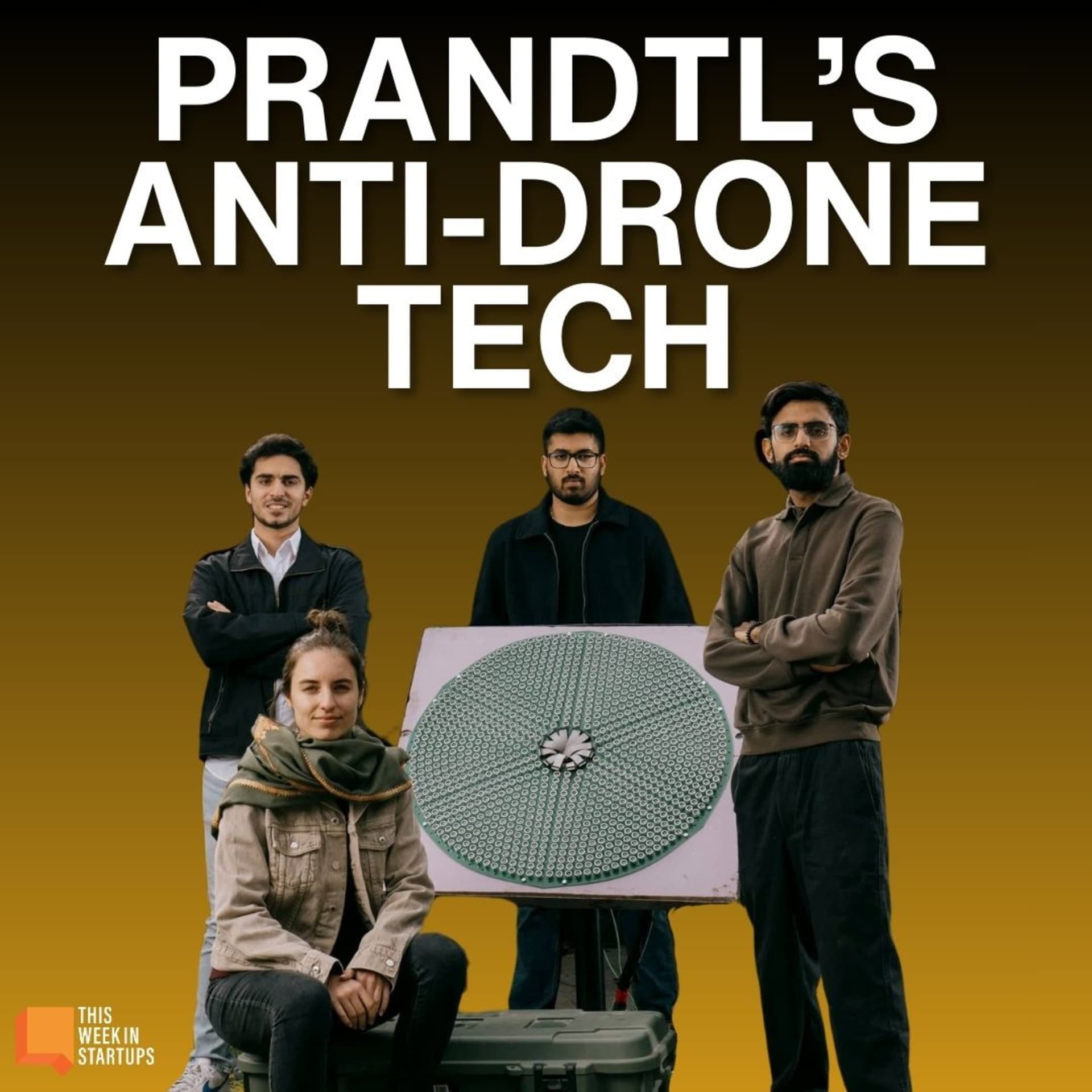
- The episode features a guest interview with Parth Mahendru from Prandtl Dynamics, discussing their ultrasonic technology designed to neutralize drones without harming humans.
- Parth elaborates on the practical applications of their technology at military bases and commercial venues.
- Design and System Thinking
- Jason discusses how meticulous design and system thinking can differentiate startups from competitors.
- He cites examples from successful companies that have prioritized design and system efficiency.
---
Insights and Takeaways
- Legal Gray Areas: The episode highlights the convoluted legal landscape around drone usage and defense, illustrating the ongoing need for clear regulations.
- Espionage Ethics: The corporate espionage discussion reveals a growing tension in the startup ecosystem, raising questions about ethics and competitive practices.
- Importance of Design: World-class design is not just for aesthetics; it can significantly impact investor interest and customer trust.
- AI in Workplaces: The conversation about AI agents raises intriguing possibilities about future workforce structures and how AI can disrupt traditional employment.
- Innovative Solutions: Prandtl’s focus on non-lethal technologies presents a paradigm shift in counter-drone strategies, emphasizing safety and legality.
---
Conclusion This episode of "This Week in Startups" offers a mix of lighthearted banter, serious discussions about legal and ethical issues in the tech world, and deep dives into the significance of design and innovation in startup culture. With a blend of insights and industry news, Jason Calacanis and his guests navigate the complex landscape of startups, technology, and market dynamics.
---
Subscribe & Follow
- Newsletter: [TWiST500 Newsletter](https://ticker.thisweekinstartups.com)
- Follow on Social Media:
- Twitter: [@TWiStartups](https://twitter.com/TWiStartups)
- YouTube: [This Week in Startups](https://www.youtube.com/thisweekin)
- Instagram: [thisweekinstartups](https://www.instagram.com/thisweekinstartups)
---
This summary encapsulates the main discussions and insights from the podcast episode, organized for clarity and ease of understanding.
Written by AI. May contain mistakes. Listen to the episode to check what was said.
Transcript
Automatic transcript. May contain errors.0:00I'm going to need some counsel here. if somebody flies over my ranch, it's your ranch, it's my ranch. Can I take them out? Because I think Texas law might be different. I don't know. What have you found out so far? Because obviously this is a moving target, so to speak. Definitely, definitely. And Texas has probably the most different laws is the rest of the United States. For the most part, you're not supposed to mess with the internal functions or the flying of unmanned air vehicles because you classify UAS or drones the same way you classify aircraft. So think of it as shooting down a Cessna.
0:38That's how the law currently sees it. I can't do that. Not even from your ranch. If it's flying over the ranch, if it's doing a flyby. This Week in Startups is brought to you by NetSuite, the number one cloud financial system bringing accounting, financial management, inventory, and HR into one platform, giving you one source of truth. Download the CFO's Guide to AI Machine Learning for free at netsuite.com slash twist. Northwest Registered Agent. Starting your business should be simple. With Northwest Registered Agent, you can form your entire business identity in just 10 clicks in 10 minutes.
1:11From LLCs to trademarks, domains to custom websites, they've got you covered. Get more privacy, more options, and more done. Visit northwestregisteredagent.com slash twist today. And Google Gemini. Unlock the
1:37Hey, everybody. Welcome back to This Week in Service. I'm your host, Jason Calacanis. With me, my co-host, Lon Harris. Alex Wilhelm has the day off today. We're going to get right into the news. Tons of things going on. There's more updates on this crazy deal versus rippling espionage story. Anthropics getting to ASL-3. There's a new app for whistleblowers. What else do we got on the docket? Oh, there's so much. Yeah, I want to talk about Floweth. They're calling it the first infinite AI agent. That sounds interesting. There's a company, a YC company called Firecrawl. They're hiring AI agents.
2:12They have a job posting up for three AI agents that they want to hire. There's Blue Sky News. We got to talk about 23andMe got bought. Plus we've got Parth from Prantel coming in for office hours, it's a packed ship. I was driving here in my new Corvette that GM lent me a Corvette for a couple of weeks. How nice of them. Nice to be an influencer. But I've always been a Corvette lover. So I was driving this incredible E-Ray, which is like their hybrid Corvette. They have a little battery in it. It makes it sort of powerful. So here I am going down, I don't know if I was on Fifth or Sixth Street, whatever I'm going down here in downtown Austin.
2:48And look what happens. Looky here. I'm sitting there at the traffic light and I see a little R2-D2 go by. Oh, there's a little guy, yeah. I don't know, which brand is that one? I can't see it from here. A.V. Ride, it said on the side. A.V. Ride. And look, it gets to the corner and it's like, gotta make a little decision here, but your burritos, your tacos, they're coming. They're coming with that robot. They're on their way. They're in LA everywhere, yeah? Yeah, they're all over Hollywood. You walk around Hollywood Boulevard and there's always one of these scooching by on this way to bring some Chipotle.
3:19I have a punch up for this. they got to teach these things how to go up and down elevators. That's so obvious, the next step. But think about how much work that will be for that company. So when you talk about how much work is left to do for door to door, what I want is that to go to your WeWork and not be downstairs, but to go right up to your hotel room, go right up to your floor, and wait for you in the lobby. These things are incredible. Yeah, that is – but it's interesting. every task like that that you add, the layers of complexity. Like you have to teach the robot not just how to get on an elevator, how to like get to the right floor, how to figure out when you're at the right floor.
4:00You know, like if it stops on three, but you're not bringing the burrito, you're bringing the burrito to a guy on five, it has to know don't get off on three. For right now, it's obviously gonna be the lobby. Yeah. But I'm just thinking like what's next is this thing tapping on your door. Right. is gonna be pretty amazing on an R2-D2 basis. I'm sure you finished Andor. Oh, of course. I mean - Finished Andor. Because Lon is just such an oracle of this doing the inside streaming newsletter. Is that not like the best Star Wars ever created? I think it is. I think it might actually be the best Star Wars.
4:35At least since I feel like Last Jedi I really liked a lot. It's definitely the best since then. But it might even be going back to like original trilogy. Empire Strikes Back level. I think it might be as good as Empire and Return of the Jedi. So, so good. I just want to thank them for creating it. Here's what I was saying. Finished it last night. One thing they did that I didn't even think about at first that's so good is it goes, it sort of retcons the Death Star and it makes it the Emperor's plan all along. Yes. Even when he was Senator Palpatine, when he was first drawing all these things together, it was always about creating the Death Star, which makes Return of the Jedi better.
5:10Because the Return of the Jedi, it's like, oh, they're building another Death Star. Okay. It feels repetitive. But when you go back with the insight of Andrew, you're like, well, of course he would try to do it again. Yes. He'd been leading up to this for years. The whole energy project was to Death Star. Yeah, and it's really interesting that they're filling in the timeline. So it's 17 years, I think, is when he takes over as Palpatine, is like 10 to 17 years before the battle, BBY, the battle of Yavin. Before the battle of Yavin. Yavin, yeah. And then it's after the battle of Yavin. So they're really trying to educate the audience on all of this.
5:41Yeah, here's the timeline around the major events of the original Star Wars. Incredible character and literally not a lightsaber in the series. No. At the very end, one of the last lines is Benjamin Bratt, as Bail Organa tells him, may the force be with you. Yes. I think it's the first time they've mentioned the force. Yes. Which that's like such a brilliant masterstroke is just the patience with the series to not go for what would have been easy layups for them. There's no Darth Vader, spoiler alert, no Palpatine. I thought for sure, you know, when that one, so there's a couple of spoilers here, when that one ISB guy kills himself.
6:24Part of gas. Yeah, when he kills himself at the end, when they said, they're ready for you, I was absolutely hoping that he would have to face Palpatine and Vader. Oh, sure, or something. Yeah, I feel like the temptation to put the Emperor in there, even just in one, like a Zoom call where the emperor is waiting. They should have, right? But I guess restraint is great. Yeah. Tony Gilroy said he purposefully didn't want to do that. He wanted Krennic to be like the big bad of the show. And, you know, he's the ultimate authority. Another thing I wanted to talk to you about is I just want to shout out to designers everywhere.
6:54I just love great design. One of the great things you can do for your startup and one of the 13 reasons we have to invest in a startup, we have this like secret playbook that you're now privy to. One of the 13 qualities we look for is world-class design. World-class design, you know, when I first told everybody, look for world-class design, they kept checking off this box, my researchers, my analysts, who were looking at the incoming pitches for startups for us to invest in. And I said, that's not world-class design. So they said, please tell us how to define world-class design. I said, well, you know it when you see it.
7:24It still wasn't enough, right? Right. So I have to, like, take what's in my brain and put it into a team of 11 investment team members. So I said, if Apple would feature that app at a keynote and Steve Jobs would tweet it or Steve Jobs would introduce the person, that's world-class design. Right. Right? So com.com was app of the year. Other apps get featured. Apple doesn't feature it unless it's great. And I saw this guy, Mark Hemion. Hemion. Hemion, who you know. LA tech guy. LA tech guy. And he did this great thing where he took the Airbnb icons but made them in Dieter Ram style, who is the German industrial designer.
7:59Sure. Yeah, I got it. And let's just show this on the screen here. These are all the Airbnb designs. We didn't cover it, but last week, Airbnb took a second swing at experiences. So when you're at an Airbnb, you're in your city, they want to kind of be the everything app. So we now have multiple people going after the everything app, and they just took some icons and put it here. If you don't know that style, look at this, because they're doing something, I guess, called detailed 3D isometric icons. Yeah, I pulled up. Look at this prompt that he used to generate these. It's huge. A highly detailed 3D isometric icon of a insert object inspired by Adidas Ram's Braun design.
8:40Style, Airbnb, 2024 icon language, miniature diorama, emoji-like objects with crisp edges, realistic textures, and soft handcrafted realism. Material, a mix of matte plastic, brushed aluminum, ceramic, or leather, depending on the original object. Like view, three-quarter front left, isometric view with a slight top-down angle, lighting, soft neutral studio lighting from the top left with double shadows. Still going. Still going. And I've just read you the first half. Now, what I think is so fascinating, I used to play around a lot in the early, early days of generative AI when it was first becoming viral.
9:11Stable Diffusion was like the first app I played around with. And people used to use all of these very subjective terms in their prompts. They'd be like cinema quality, high definition, beautiful angles, picturesque imagery. And I think what we've learned over the years of working on prompts and what people have gotten so much more sophisticated at, it doesn't need any of the flowery language. A computer doesn't know what to do with that. But the more details like this, that you can add specific, actual physical details, like brushed aluminum, front left isometric view with a slight top-down angle.
9:45Like if you give the computer specifics, it knows exactly what you want. Prompts do still matter. And asking the LLM, How would you do this prompt might be helpful. Design matters. Steve Jobs was obsessed with design. If you do world-class design like this that you're seeing here, you will get 30 % more investor meetings. 30%. And I think you'll get taken 100 % more seriously by your customers. So is it worth it to spend money on design? Well, if you don't have the money, of course not. But we're moving into a world where you can constantly iterate on your design and make it better and better and better because of these language models, because of the tools.
10:28Doing business and making deals would be a lot simpler if you had a crystal ball, obviously. Hey, if you've got a future prediction startup, contact me. I'm going to write you a check. You're coming to my accelerator. But until then, one way to future-proof your business is with our amazing partner, NetSuite by Oracle. It's the number one ERP tool on the market today. and it's trusted by over 40 ,000 businesses for a reason. But you might be asking, what does NetSuite do? Okay, you're at a startup. Maybe you wonder, who is this NetSuite I keep hearing about? Well, it's going to take all your accounting, inventory, financial management, and HR and put it into one easy-to-use platform, one source of truth, one resource to check for anything you need to know about your business.
11:10That's going to give you real-time insights and allow you to forecast with the visibility and control you need to make great decisions. It's like being a fighter pilot. You've got all those important instruments right at your fingertips so you can go fast, beat the competition, and grow your business. So NetSuite is going to help you have all that reliable information when you need it. Founders, you're going to need to know about it. And a great first step is to get the CFO's Guide to AI and Machine Learning. So speaking of opportunities, go ahead and download the CFO's Guide to AI and Machine Learning at netsuite.com slash twist.
11:45The guide is free for you at netsuite.com slash twist. That's netsuite.com slash twist. Maybe you can pull up a couple of the inspirations that Steve Jobs had. I put a couple in the Slack room for you there, if you could open one or two of them. And, you know, Steve Jobs obviously really cared about design, but he also wasn't too proud to be inspired by it. So what you see on the left here, if you don't know Dieter Rams, is this German designer. On the left, I think, is a radio. Braun Transistor 3. Radio. Yeah. Transistor radio. You look on the right, it's the iPod. You guys seeing a pattern here?
12:24Like Steve Jobs was very much inspired by his design. Show the next one where you can see like, yeah, this one, if you make it bigger, here we go, go command plus plus maybe. Sorry. No problem. We can edit it in post. Okay, good. So here you're looking at that, right? The Braun Pocket Radio 58 Apple iPod 2001. Give us a couple of the other ones we're seeing here. This is the Braun T-1000 radio. That's from 1967. And obviously on the right, the Power Mac G5, your tower. Yeah, the tower. And look at that. He's got that almost exact. Yes. Now, what's this on the left here? This is the Braun LE1 speaker from 1959.
13:03And you can see how similar it is to that iMac generation. 48 years later. That's almost 50 years later. or let that sink in for a second. Design can be timeless and simplicity is, you know, elegantly simple as I think one of the concepts. Steve Jobs won Designs, Design Awards, was considered the tip of the spear in design for many decades. Did you see The Brutalist, that movie? This reminds me of a lot of that Bauhaus sort of style as well, which was also German. Absolutely. And my point here is you don't have to reinvent the wheel. What's the last two? It's worth looking at. This one is a T1000 radio from 67.
13:45And then again, the full case, if you look at the Power Mac, Mac Pro from the early aughts. And then this last one is on the left, we've got a Braun calculator from 77. And on the right, Apple's calculator app from 2007. Which is an exact copy. I mean, it's literally exact down to the yellow button. Made it a Braun calculator in your iPhone. And the point here is, immature artists copy, mature artists steal. Well, you can just, with your startup and your design, be inspired by designs that happen before you, adapt them, and get all that credit and build on the legacy of other designers. I think it's fair game if you're upfront about it and you give a little bit of credit and a nod.
14:27You don't want to just deal for the stealing sake. And when people – I find design is very intimidating for people. Here's what you do with design. You just say, who are the designers who inspired X, Y, and Z? So find some things you like in the world. say which designers are related to these designs I like, ask an LLM and then go find some books, buy a couple of like books, put them on your shelf. And when you're not in front of your computer or your device, just take them in and then think about your startup and how you're designing your product to make it better, your logo, your website, how your interface works.
15:00This is one of the things that made Superhuman do so well. Superhuman has a very constrained, awesome design And that made that startup really appeal to investors, employees, and of course, customers, most of all. Another thing I want to talk about is I got an email this weekend from Athena. Everybody knows Athena provides those assistants. I'm an investor in the company. I have two Athena assistants. They're assistants from typically the Philippines who work for you and are just super dedicated and make you more efficient. They have a newsletter. I don't know how to sign up for it. But anyway, you can look for the Athena newsletter.
15:39It's on Beehive, I think. It is on Beehive. So do a search for it. And you can go to athenawow.com if you want to get a couple of weeks for free. But they did this really interesting summary. And what they do in this newsletter is they talk about people who are efficient and how to be more efficient in your life, how to get more done with less. And they talked about Hillstone's only choice system. David Chang calls their French dip haunting. Danny Meyer confidently orders the usual without glancing on the menu. Haunting. Haunting. That's a good French dip if it's haunting. Yeah, I mean, I want a haunting French dip.
16:14I want to be haunted by French dip. I'd like to be haunted by my French dip. They're talking about Hillstone, one of America's most consistently extra restaurant. What is Hillstone's secret? Meticulously designed systems that completely remove friction. I saw that sentence and I said, this is what I talk about all the time, right? You want to remove friction in your startup. You want to make things go faster and easier, and you want systems over goals. You want to create systems over goals. And so I'm always trying to do this in our business when we sort for founders. We look for them, create systems that remove friction, get us closer to founders, and get us supporting them and figuring out what they need, right?
16:52And you're seeing that firsthand because you're also working on the investment side of the business. Hillstone founder George Beal famously drills every table into the floor so the tables never wobble. Good idea. It's like such a simple, great idea, but how many times you've been in a restaurant, it happens like one out of five times, right? It's like a 20 % problem. Yeah, well, we recently, I won't shout out and shame the restaurant because I love the restaurant, but we recently went to a very nice kind of fancy place in Austin. It was Ucci. and they sat us at a high, weird, wobbly table and we had to go ask for a second table.
17:29Yeah, we were those guys. It was that, well, because it was, it was weirdly wobbly. And it felt like they added that table to a well-designed room to just add a six top. A little bit. And it was so weird. I love Uchi, I wasn't gonna call it. Uchi was the greatest, I'm going there tonight, actually. The table was one third higher than all the other tables. It was a little bit of a weird, awkward table. One third higher. It stuck out to me all this time And the chairs were also like a different level of height. Yeah, we were a little bit above everybody around us. But basically our food would have been at our belly height.
18:04Correct. So we would have been like these giant NBA players. It's what it felt like. It felt like when Patrick Ewing goes to a diner. It was just crazy. Shout out to Patrick Ewing. Shout out to Patrick Ewing. Okay, so that's one tip, right? So he said, and I went to their website. if you go to their website, look at their rules on their website because they have a rule that they only do like four tops and they don't allow kids. But if you do bring kids, like they're like admonish you that if they're crying to get out of there and they don't do big parties. That's another one of the things. Every, and I'll read some here from this.
18:37Every table is a booth, each equipped with its own spotlight, eliminating guesswork around seating and lighting. So this is also another issue, right? Because everything's a booth. You know what everybody wants when they go to a restaurant? What do they ask for? The booth. They asked for the booth. Yeah. You get a booth. That's it. You want the booth. Everybody wants a booth. Yeah. Right? Booth is the ultimate restaurant move. So the booth is bolted. It's a default. On their website, they talk about like their rules around dining and – did you find that page on their website, Hillstone? If you look on the Hillstone website, you'll find this.
19:11Checking it out now. Yeah, yeah. Go take a look. The Hillstone has like on their website their rules around – and dress code. then servers handle exactly three tables never four because the restaurant layout in itself enforces this rule so they lay out the restaurant in little pods you have three each so this was like really informing some of my thinking around our ratio of number of founders to you know an investment team professional right i found well other restaurants pile tasks on managers to fixing Hillstone builds systems that prevent problems from existing. And so this is something that's a really important point.
19:50Excellence doesn't rely on oversight, but on systems designed to make the right choice the only choice. The right choice is the only choice. Founders, if you're serious about raising money, you need to set up your business the right way. tight is right. And it all starts with having a registered agents. Investors simply won't fund your business if it isn't structured correctly. Before a VC can wire you the first dollar, they're going to check, is your company incorporated? Is it in good standing and compliant? Missing a filing or losing your status? I mean, it's just going to be a deal breaker for the VC.
20:27It's like you're not taking things seriously. And that's what happens during due diligence. That's when a VC makes sure they're not making a mistake by giving you investment dollars. And hey, angels do this as well. And that's where Northwest Registered Agent comes in. For just$39 plus state fees, they act as your registered agent. They handle all the paperwork, they keep you compliant, and they make sure investors see you as a serious business that's worth funding. In just 10 clicks and 10 minutes, your business is officially set up and investor ready. Northwest handles filings, they protect your privacy, and they ensure that you never miss a deadline.
21:03These are the chores that you don't want to have to deal with. You need a partner and Northwest Registered Agent is that partner. Thousands of founders trust Northwest because they keep businesses in good standing. And with their expert corporate guides, you get real support. You don't get bots. You get real people on the phone. So here's your call to action. Very simple. Easy peasy, lemon squeezy. Don't let bad paperwork cost you your next funding. Go to northwestregisteredagent.com slash twist and get your business investor ready today. For just$39 plus day fees, you can set up your company the right way, fast, private, and compliant.
21:40Go to northwestregisteredagent.com slash twist today. One of the systems here at our investment is we want multiple co-founders. That is a system level decision that we have decided. We want people who are going after the English-speaking market, and we want people who are incorporated in the United States. Why? But we don't have people who speak Japanese, so it's hard, and we don't understand the Japanese law around investing in startups. That would take another 10 people to set up a Japanese office. So we'll leave Japanese investing to the Japanese investors. We focus on that. We focus on early stage.
22:15People want us to invest in 25, 50,$100 million rounds all the time. We say, no, no, we want to focus on our programs. So make a good system choice, and then you don't have to have as much management. This is why I created, like, here are the 13 qualities we look for in a startup. If they have two, three, or four of them, let's go ahead and meet the company. And then I made a systems choice. If when we do the$25 ,000 check, which we offer people a$25 ,000 check to incorporate their company at Foundry University, I just said, if any one team member wants to do it and they write up a review of the company and two other team members, give an answer, which could be no.
22:55The system is you could still make the 25K investment. So we never are going to have a situation where somebody wanted to make a 25K investment and didn't because there was some debate. The rule is one person wants to do it. Who cares? 25K investment. Worst case scenario is they lose the bet and they learn something. Best case scenario is they make a crazy bet on an Uber or a Robinhood or a DoorDash, something that doesn't seem possible. Let's get into the news here. I think for me, the corporate espionage stuff is incredible. Tee up the corporate espionage. All right. So everybody bear in mind Rippling and Deal, they are two sort of HR, payroll, fintech kind of companies.
23:36They help small businesses and startups to handle and manage and pay their teams. Rippling has sued Deal, alleging that their rivals stole trade secrets, conducted tortious interference, and unfair competitive practice is basically they're saying a Deal employee covertly worked at Riffling and passed Riffling data over back to Deal. Deal has countersued. They argue Riffling was also attempting to spy on them. So all of this is going on in Ireland courts right now. Deal filed a new motion asking for Riffling to hand over more behind the scenes information about hiring. I'll going on so all of these allegations center around a former rippling staffer named keith o 'brien he has admitted in legal documents to being a spy for deal so he was working for deal then worked for rippling passed rippling secrets back over to deal according to deal rippling fired uh keith o 'brien paid him a termination fee then rehired him and has agreed to help him with his legal expenses relating to the Rippling versus Deal saga.
Read the full transcript
24:51So Deal is saying that's very unusual. It's very unusual for a company to fire someone for cause and then rehire them during a legal proceeding and help them pay some of their legal fees. So what Deal wants now is for Rippling to turn over all employee agreements with Keith O 'Brien unredacted so they can figure out what's going on with this guy and why he was hired and fired and rehired. Wow. This is like that Robert Hansen guy, the FBI agent back in the day who worked for the Russians or something like that. Like it's a little bit like that. Yeah. They keep flipping. He said, these guys are, yeah, are they double agents or now it seems to be, are they triple agents?
25:32Like. So O 'Brien was working at Rippling. DL got him to flip. Yes. Stayed at Rippling. Then. Maybe. Maybe. And then he got fired by Rippling. They terminated him. And then Rippling was like, you know what? We probably should keep this guy on staff. That's what it sounds like. It sounds like they're like, let's keep this guy happy. Let's pay him some kind of salary. Let's help him out with his legal fees. It's all speculation. We have no idea what this guy was really up to. This is really dumb. If you really want to understand what you're – I'll tell you how corporate espionage works in the real world in startups without actually having a spy.
26:10You literally don't need to do that. This is literal espionage. Like we have an inside man in the other company passing us information. If you interview people who work for a company, let's say you were to, gosh, let me really make sure I do this deftly here. I would never be involved in anything like this. I just want to be totally clear. But I have heard stories because I've been around for a long time. Let's say, pick a company. Any company that has like, it's on top of its game and you want to get information for them. Google. Perfect. Okay, so you want to understand how Google's ad network works.
26:47Yeah, I do. You're Facebook. I very much do. Facebook's like a new startup. You go find people on the LinkedIn or, you know, whatever, who worked at Google. Yeah. You put out an ad. You look at people who worked in Google's ad network on optimization, client, whatever, and you figure out what they got paid. you put out an ad you hire an agency like a recruiting agency to put out an ad that doesn't have Facebook on it you tell them we want you to ask all these questions, record the call perhaps and then have five or six people from that company target them with the ads for the job you put the job out for$450 ,000 base and$1 million in total comp for ads, for, you know, RSUs.
27:42You know, make it so that they can't not take the interview. You have no intention of hiring them. Right. You're just pumping them for information. Pumping for information. They sit in a meeting. You get to the third, fourth, fifth question. Hey, so what are you working on? Yeah. Tell me about that. I mean, they're talking to a recruiter. The recruiter then meets them for lunch, talks about stuff, and then they just dump all that information back to their client who hired them on retainer to do this. Yeah. So they don't even need a success fee. And when you work for a tech company, when you're interviewing with other tech companies, that seems totally normal.
28:14That's what the interview process is sort of like anyway. You've got to talk about what you've been working on, what are some of the biggest challenges you face, what are some of the projects you've managed. I've been in interviews like that. I don't – never for untoward reasons, but it wouldn't seem that strange. And then there are these information networks. I don't know if you know about those. So there are information networks. There are expert networks. Expert networks. Let me just pull up like an example of this. But there are expert networks and there was an SEC investigation of these. So expert networks were set up to pay people who worked inside of corporations to anonymously get paid to give information to researchers.
29:05Okay, sounds interesting. So people work at Walmart. Right. They get asked to do – and they get paid$1 ,000 for an hour,$5 ,000 to talk to an analyst who just asked them questions about the market. Now, these people think, well, I'm just an expert. I'm getting paid for my expertise. But it's actually somebody who's trading or competing against Walmart or Target. So it's either Target going after Walmart, Walmart going after Target. But this being presented as like we're not going to get what's called material nonpublic information and MNPI. But people are doing it explicitly to make the trade.
29:46So if you watch the TV show Billions, like they're using all kinds of ways to get inside information from companies. These expert networks became the ultimate way to do this. And so you can look up expert networks. That's how people do this. And there are ways that they enforce compliance in these things. But most companies now say if you do this, it's actionable. You cannot participate in these. So many companies are developing powerful new AI apps that are going to radically improve your productivity. But Google has been off to the races. They got a new product. It's called Canvas. And this platform comes with Gemini 2.5 Pro model baked in.
30:31It's a vibe code ready. Ideal for control freaks like me who have ideas and want to see what they look like in practice right away. So you can go from a rough concept to an image or even a functioning website. in just minutes with a few prompts. You know how like you build a website for a project you're working on, you don't touch it for three years? I want you right now to go use Canvas in Gemini 2.5 Pro. And I want you to go say, make this website better. Here's my goals. We're talking about rich, robust, fully functioning prototypes near instantly. Gemini Canvas is reinventing front-end development.
31:03So if you got some ideas and you want to turn them into documents, code, or prototypes right now, get your vibe code on Gemini Canvas with the Gemini 2.5 Pro model. Visit gemini.com slash canvas to see for yourself. So that's how it actually works. We don't know how much of this is true, but these are just the allegations. Also, you could just use a product. Like if you have a customer, if you're a Rippling or DL or, I don't know, ADP, whatever company competes against each other, you can just talk to one of your customers who previously used them and tell them, hey, what did you like about the system?
31:39What didn't you like? This was my thought upon reading. Like I have a former, I've used both Rippling and Deal. Yeah. They're very similar. And I couldn't even tell you what technology they're trying to steal from the other one. It seems like it's pretty straightforward from a technology, not a knock on either of them. They're fine at what they do. Yeah. But what's the high tech thing that they're doing? They're just keeping track of everybody's payroll. It doesn't really seem like that convoluted or like cutting edge. None of it makes sense. Yeah. Tell me about this. I guess maybe the startup that wants to hire AI agents.
32:14Oh, I loved this. Yeah, we got to talk about this. So Firecrawl is a Y Combinator back startup. They are a scraping tool that gathers data from around the web to train LLMs. That sounds scummy, but they're actually trying. Their whole bit is they're trying to do it with clear ground rules, with guardrails. They're trying to responsibly scrape the web. So like a lot of their customers are enterprises that are scraping their own web data for AI training. And then a lot of the other sites they work with are opt-ins. So companies that want to have their data scraped to help train AI. They honor the robot.tech settings.
32:50They only scrape websites. So it's a lot of like more responsible. That's their company. So they put up three job board postings. They are exclusively looking to hire AI agents. They've set a$1 million budget to fill three positions. So far, there are about 50 applicants. They want AI agent employees. I'm doing air quotes for those of you listening. They want AI agent employees to autonomously create SEO-friendly blog posts and tutorials for their website. So it's like, imagine a content farm, but instead of humans doing the content farming, it would just be AI agents. But the extra wrinkle would be the AI agents watch the engagement metrics and then tweak their own blog posts based on what's getting performance.
33:38So they're basically SEO consultants, but AI. This is stunt? Of course. It's a stunt, obviously, because they're putting this out here to get people who are interested in AI agents to talk about this in the media. They know dopes like me are going to talk about it on our podcast. And they know you're going to put it here. But anyway, well done. And I put the link in here. Pull it up, if you will. content creation agent, AI agents only, San Francisco, California, remote US, any, new grads okay, junior software. And I guess this is the job board for Y Combinator has a job board. Yes, this is the Y Combinator job board.
34:12I just want to point out that they're also looking for a founding engineer for 150K to 250, ahead of customer support engineering, 200K to 300K, with the amount of equity, creator and community lead, et cetera, et cetera, founding AI engineer. But if you look at the top three, no equity, no 0.3 basis, 0.7. Well, why would you give equity to an AI agent? Well, the AI agents are going to need a union, apparently. But look at the salary for the content creation agent. Yeah, 5K to 25K. I'm not taking it. You're not taking it? Not taking the 5K job. Well, what if you created the prompt and you just ran it and checked on it every day for 15 minutes?
34:54Yes, I mean, obviously - Incremental 15K a year? If you are one of the guys who invents the AI agent, it's passive income for you. Your job is done. I'll be honest. If somebody could make me an AI agent that read all the news stories that were related to what we're doing here. How dare you? And summarized it a lot. Okay, but if you could hire them and they were$500 a month, would you come to me and say, hey, for but$20 a day, I could eliminate an hour of work and put an hour into other work? I will say if we could have an AI agent put the entire docket together to a – even to a point that I could spend an extra 30 minutes to an hour cleaning it up and fixing it, that would be pretty amazing.
35:38Okay. So somebody make – this is what I want somebody to make. Make an agent for us that reads Hacker News, Reddit, you know, some choice Twitter handles, tech meme, everything else. And just say, like, based on what we've talked about on the docket previously, what should we have in the docket now? Make suggestions and then just have it give us a thumbs up, thumbs down if we like it or we rate it and then get better. That's the biggest. Based on my use of AI tools, I feel like that would be the big. Everything beyond story selection, I already feel like an AI could basically do. Yes. It's the picking the stories, just the stories we're going to like and not just picking any startup news.
36:21Like that's where AI tends to struggle in my experience. Yeah. I mean maybe somebody on our team knows how to do this and they can start building these agents. I need some agents to get going here. I got a lot of ideas for agents here that would give us the ability to do more work. And we talked about static team size as a trend. And I'm putting some of my trend stuff together because I'm doing my – every year I do a keynote at KPMG in the summer. It'll be the second year I'm doing it where I go through my trend report. Sure. And I did it last year. I got to look at my trends from last year. But static team size is what I talked about.
36:51And boy, has that one. Oh, my gosh. Yeah. Come to manifest itself. Lots of people talk about it. I estimate with these agents, we're going to see the 5 % to 10 % faster that everybody gets at their job using AI first go to 10 % to 20%. I think the agents, because none of us here are using agents. We know about agents, but none of us are building agents on a daily basis. No, no. I mean, I might have one or two people on the team who are doing ones. Yeah, I feel like Lucas is starting to play around with some of these agents. But it's not getting to everybody in the organization. We have to figure out how to get everybody to be able to make agents quickly and to maintain them.
37:27Because it's not just about creating them one time. It's about the reinforcement learning. Using them and making them better by reinforcing from using them. Yes. Yeah. So anyway, I think it's a great story. I give a shout out to this team just for being precocious enough to understand what's in the zeitgeist. I mean, it is worth talking about just from a one thing that we talk about in Founder University and with these companies all the time, early stage companies. They're all looking for how do I get the word out? How do I virally market what I'm doing? How do I get people interested? Earned media.
37:59Yeah. And so this is a great example of, I think, you know, use, lean on what you know reporters like to talk about and media people like to talk about it. People losing their jobs to AI. Is AI going to take my job? That's a huge topic right now. If you can come up with a way to interact with that story, even in kind of a silly way, people will talk about it. Let's talk about, speaking of socialists, blue sky falling. I think that's actually a good story for blue sky. Oh, there's kind of two stories from Blue Sky. So the big one, the news item today is that during NBA playoff games, Blue Sky Post, Skeets, as they're called on the site.
38:39What? They call them Skeets? That's so dumb. They let Blue Sky users vote on what should posts be called, and they voted Skeets. So yes, Blue Sky Skeets from the official NBA account, while playoff games are on, NBA posts will be marked with a red border, and they'll have live on them. And if you click on the NBA icon, it'll take you directly to where the game is streaming or the NBA hub. TNT, NBA on NBC coming back next year, ESPN. Wherever NBA wants you to go to see the game, you could just go directly there from Blue Sky. As it should be. Yeah, so it's like their attempt to sort of make it, like, draw everyone's attention to the fact that you can externally link.
39:22They don't derank posts with links in them. Like X does, like Facebook does, like Instagram does, like TikTok does. They're trying to keep you inside their walled garden. I like that, yeah. So COO Rose Wang explained that they don't want to trap you in Blue Sky. Her quote, we want you to use Blue Sky to discover what's happening. Blue Sky is a nonprofit or a company? They're a company. There is the open source standard, which is called Atmosphere, I think. Okay. And then Blue Sky Social is a private for-profit company that's on that open source standard. So they're part of this whole network, but they are a for-profit company.
40:01That ties into the other thing going on with Blue Sky today. Wired published a profile of their CEO, Jay Graber. So she gave some general background. They're at 34.6 million users. They have 25 employees, but they're looking to bring on five more. at 30. They're working on ID verification and identity. They're working on communities and they have all these external Blue Sky feeds that they're working on integrating into the main platform. But she did also talk a little bit about revenue. They don't have any kind of revenue share in the works, but because they don't down rake links, they're sort of, that's the, that's the strategy.
40:38You can't earn money from your Blue Sky post, but you could grow an audience on Blue Sky and use it to link back to your Patreon or your sub stack or wherever else you want to send people. They're a public benefit corporation, just to put a finer point on it. Public benefit corporation is a way of pretending your for-profit is a nonprofit without actually being a nonprofit. Right. And the way you play this game is, and like, listen, I don't want to be too cynical here, but, you know, like Ben & Jerry's, Tom's of Maine, I think some of the, or Tom's Shoes or whatever. Some of those are public benefit corporations.
41:11What that means is you state a mission and that all stakeholders instead of shareholders are taken into account when the board makes decisions. So this is the game, the shell game that Sam Altman is playing. I was about to say this is the open AI game. Right. It means nothing. It is literally window dressing. Yeah. Because they are talking about they're going to make money via subscriptions. That's what Graber says in this interview. They're also considering marketplaces, sponsored posts, and even experiments with advertising. So we will see more revenue driving on a blue sky starting this year probably.
41:49Their publicly stated mission or like the public benefits mission, develop and drive large-scale adoption of technologies for open and decentralized public conversation. In other words, create an open, decentralized. Yeah, an open source town square. I think censorship resistance town square. And it was founded or backed by Jack, right? Yeah. So this is the bizarre. Although Jay Graber now says he's not involved at all in the day-to-day in this Wired interview. Yeah, but he is the guy who backed it. Yes. And he backed it while he was at Twitter. Correct. Because he had that whole open source. Like he backed a lot of different open source projects.
42:28Bitcoin. Yeah, Jack was just sort of generally committed to open source as a concept. He provided$13 million in funding to Blue Sky, public benefit. Does that mean he owns a percentage of it? I wonder if he's an investor or it was a donation. But he did it via, is he on the cap table, I wonder? This is the question I have about it, I think. Did he do it through Square? Did he do it personally? and you got to give Jack some credit. He's like one of the few founders that built two publicly traded, two what were publicly traded companies worth over a billion dollars at the same time. I think it's only him.
43:09She says, I was a contractor. I wanted independence because old Twitter moved slowly. Jack Dorsey was our biggest champion, but then Elon Musk said he was going to buy Twitter and that threw off everything. No projects were going to get shipped, especially not something as ambitious as Blue Sky. That's when we started thinking we should experiment with building our own app. But did he get, is he a shareholder? Yeah, he provided funding, not a donation. Right. So yeah, she says Jack isn't involved anymore. He had a portfolio approach to decentralized technologies and early on he helped several projects get off the ground.
43:43He funded another distributed protocol that I think today he prefers, Noster, N-O-S-T-R, which shares many architectural similarities to Blue Sky, but works more like a cryptocurrency wallet. it. See, I think that's interesting too, is like this whole decentralized piece to it where when I post to micro blog, it gets all the replies from all the different services and pulls them back there and it posts to all of them except for Substack, Twitter, Facebook, Instagram, all the places I want to post to, LinkedIn. So it's like literally it doesn't work. Yeah, maybe he's got very small ownership. It's not publicly disclosed.
44:24It seems to be the case. If anybody knows what's going on here, I would like to know. We have a guest. We do. Office hours time. Parth Mahendru from Prantl. They're one of our twist companies. They're in our current accelerator, I believe. Okay. They're a Toronto-based startup. They develop non-lethal solutions that counter unmanned aerial systems, UAS, using ultrasonic technology. It's basically an acoustic laser that can take out a drone. So this acoustic laser, they focus the sound waves. It disrupts the gyroscopes that allow drones to fly and know where they're at in 3D space. So that's how sort of my rough layperson example of how it works.
45:06They designed the system. It was for engineering students from University of Toronto, which includes our guest Parth today. And they sort of devised this whole system. They're currently working on a prototype the size of a carry-on suitcase, as well as a backpack model that foot soldiers could bring into the field with them. All right, let's welcome our guest, Parth Mahendru from Prantle. Parth, thanks for being with us here. Thank you so much. Morning, Jason. Morning, Ron. Nice to meet you guys. We met because you had a Wall Street Journal story about your college team that had built this technology.
45:41Tell us a little bit about how it's going and maybe we'll play it and you can explain to the audience as basically as you can what you built. For sure. What we do is we take down drones with sound because our tech is safe and it's legal, meaning we have a sound cannon that shoots drones out of the sky, but the sound cannon does not harm humans because the sound frequencies that it uses is the ultrasonic frequencies, which humans cannot hear. So it puts us in a very interesting niche where we have civilian infrastructure, say prisons or military bases that are close to houses and civilians where you cannot readily use lasers and missiles.
46:21And that's kind of where our system shines and that's our use case. So here we see the drone, it's flying, you're chasing it down, you shoot it with this cannon, it falls out of the sky. You can sell these or you'll be able to sell these eventually to prisons or if I had a, I don't know, a music venue and I was concerned about terrorism or just people videotaping. Now, have we built laws yet for shooting things out of the sky, being legal? Because I know there was a lunatic, it was probably Florida, if I had to put my money on it. Some guy literally shot a drone. Really? Yeah. With a gun? Yeah, do a search.
47:03You'll find it. It's a guy literally shot a gun. he got arrested and it was like literally an old man i think this guy was in the korean war and he had flashbacks and he was just like walmart drone and he shot i don't know if it was a walmart drone i'm looking at the article 72 year old lake county man who shot a walmart drone he believed to be surveilling him has been ordered to pay the retail chain five grand i mean charged with one count of shooting or throwing deadly missiles into dwellings vessels or vehicles one count of criminal mischief and one count of discharging a firearm in public.
47:35I'm going to need some counsel here. If somebody flies over my ranch. It's your ranch. It's my ranch. Can I take them out? Because I think Texas law might be different. I don't know. What have you found out so far? Because obviously this is a moving target, so to speak. Definitely, definitely. And Texas has probably the most different laws is the rest of the United States. For the most part, you're not supposed to mess with the internal functions or the flying of unmanned air vehicles because you classify UAS or drones the same way you classify aircraft. So think of it as shooting down a Cessna.
48:13That's how the law currently sees it. I can't do that. If it's flying low over the ranch, if it's doing a flyby. It's kind of funny that we're even having this conversation because I've had people flying over the ranch in basically go-karts with a fan on the back. I don't know what you call those things. Any idea what those are called? Go-karts with a fan on the back? Have you seen these? Like paragliders, maybe they're called? Yeah, okay. They have a fan and you're sitting in a seat and then they have a parachute. Sure, yeah, okay. There's a guy, I don't know if it's my neighbor or whatever, but he's flying around in one of these things.
48:46I don't know if people are just randomly taking off from land. Yeah, it's a powered paraglider. Yeah. So I can't shoot that guy down, apparently. No, I don't think so. But for the most part, precedent has been if someone's below 300 feet, then it's technically on your property. Anything above 300 feet or something along those lines, you could take it out. But then that's also an illegal gray zone because you're not supposed to shoot down aircraft. So without proper authorization, it's just a messy situation, especially when you're shooting bullets at it because it could hit people nearby. Got it.
49:21That's why we need non-lethal. We need non-lethals, yeah. So if I have a paintball gun, I could hit the guy with a couple of paintballs. That might be fun. Or pepper balls. There's non-lethal pepper balls that you can spray at people. Anyway, we don't condone any of this here at This Week in Startups, to be clear. Certainly not. Don't shoot anyone down. How's the startup going? You're one of the first investments we've made in what I'll call military tech or adjacent tech. And how are you thinking about your startup? Are you thinking, hey, I should go military, and there's tons of investors interested in that?
49:51or should we be going with venues or should we be in between maybe the local police? How are you thinking about your startup and go-to-market? Because I know you've been in the laboratory building this for a year or so. Yep, yep. And again, thank you so much for your trust in us. That really means a lot. Currently, we're still building our tech, but we have demos set up very soon, starting in the next five days. So that's going to be our first unveiling of our product at a private demo with certain military stakeholders. That's going to be happening towards the end of this month. We're super happy and very pumped up about that.
50:32Other than that, our major clientele, the people that we're focusing on our go-to-market strategy. The overarching goal is obviously getting into the military-industrial complex. But the way you get there is through years of solicitations, testing, and then making your device mil-spec. That's what they call it, making it vibration-proof, dust-resistant, waterproof, so on and so forth. And these things usually take a long time to get certified and a lot of money. In the meantime, with whatever we've built, we've started demoing and we've started starting to have pre-orders and leases upcoming this summer with commercial entities and government agencies such as prisons and police forces.
51:16Those have been a pretty they have a pretty big interest in our tech. And obviously, like you mentioned, concerts and sports venues. There was a Taylor Swift concert in Toronto a while ago, and I saw the security team have like fishing nets trying to fish drones out from the barcadies. Yeah, so there's a kind of opportunity. These drones are also – they don't fall out of the sky that often. They're relatively safe. It's kind of hard to crash a drone now, I think. You have to have like a drone that is one you built yourself, kind of like Ukraine is doing. Most of the commercial ones are designed to not crash into things.
51:55They have a void in systems, et cetera. Yeah, I think it used to be if you went out of range, it might just plummet out of the sky. But now it can sort of land itself. It returns to sender. It basically knows where – it knows the waypoint where it left from. Right. And when it loses connection to the handset, it just starts heading back to that. Right. Am I correct? Pretty much. They have the go-back-to-home feature, most of the commercial drones nowadays. Yeah. So any questions or challenges you have? It sounds like you're off to the races. It sounds like you're going to need to raise money, and you've got a one - or two-year process of getting this thing ready for purchase by the military or militaries around the world.
52:34How are you thinking about international and questions for me? One of my questions that I had might not be a very straightforward question. it might be very specific, but it is us going from demos to full scale products. There's a lot of things that we need to do, a lot of polishes that need to be made to make sure that the operation is seamless. But right now we have a balance, so to say, either we perfect the product or we have a semi-functioning product to give to stakeholders. Now, usually if this was software, I would think to get something out the door as soon as possible. But given that these are pretty major stakeholders, like a major airport that we're going to be leasing out the next month, it begs the question, should we invest more time into finalizing our design, perfecting it?
53:28Or do we produce more designs, for example, to give to more stakeholders? Yeah, this is a resource question. I'm typically in favor of listening to the customer and the partner and hearing what their needs are. It's quite possible this airport wants a solution immediately and will deal with it being, you know, maybe not as polished around the edges. If you don't have the industrial design done, if, you know, it's not waterproof, whatever the case may be, the airport might say, good enough. We want to pilot this with you, and we're okay with the fact that we're a pilot customer. We've piloted things before.
54:08So that would just be level setting with the customer. And then there are international customers who also might invest. So if you look at what's happening in the Middle East region, you know, they have monarchies there. And the way the monarchies and the investment funds work is, you know, you have families that are connected to the monarchies. They literally could be cousins or adjacent to them. They may want very much to invest in your company. They may very much need the technology at their airports or their oil fields, just to give two examples. And they might have the ability to say, here's a magic wand when it comes to regulation.
54:43We can get this done. So if you look at the VTOL companies, my understanding, if we were to look up Joby and some of the other VTOL companies, a lot of their first, you know, things, pilots that they're putting out there for the vertical takeoff and landing companies are in Dubai, Abu Dhabi, Bahrain, the kingdom, Saudi Arabia. And your second question, yes. Yep. Sorry. My second question was, it builds on to the first one. It's we have some pre-orders. we have potential leasing agreements that we've signed. How do we fulfill them, so to say, given certain constraints that we have? For example, our team is not massive.
55:24We don't have salespeople on the floor. We don't have technicians on the floor. And if we were to give someone a few devices of ours to, say, test for a month, we would definitely need to be checking in on it. I'm not sure if this is a hardware-only issue or if this is because we're at that stage. How would you recommend we deal with it? I recommend finding a customer who can spend a decent amount of money because they have an acute need and that will be willing to let you be on site and you could bear hug them. So you got two or three team members say, hey, listen, we want to be on site for 100 days with you during the pilot.
55:59We want you to pay a half million dollars in advance. And so you might have like a really – you might be able to solve two problems at once. One, you get an amazing lighthouse, you know, killer customer who also has a need and who's also willing to pay. Is that helpful? Definitely. And just to follow up on that, would that mean, say, pushing off certain clients or certain potential customers who were interested in getting our tech but not really the lighthouse customers? You have to prioritize. You can't boil the ocean. You can't service all markets at once when you've got a startup. So when Tesla came out, they came out with the Roadster and they figured out there were rich tech people who wanted to see electric cars and they were willing to pay$150 ,000 for a car without power steering and barely had air conditioning and a heater like the HVAC and it was very small.
56:53And that would pay the$150 ,000 up front. So they picked a customer base that wanted a sexy sports car that had the most ridiculous acceleration ever and could beat a Corvette or a Porsche or a Ferrari off the line because of the electric motors and wanted to have the latest technology that had ever been built. They didn't build the Model Y, the Model 3, CyberTaxi, Cybertruck, or the Model S at the same time. You know, startups are about compromise. And you can actually use this to land that best lighthouse customer. You say, listen, we've got seven different customers. You go to the seven, say, we're looking for somebody who can make this commitment.
57:33And then you can make the sacrifice as founders, which might be hard if you have families, et cetera, to say, hey, we're going to be on site. So we all got families. Let's say you had three co-founders and you have a couple of co-founders. If all three of you have families, you might say, hey, listen, I'm going to, like, be away from my family for 10 days. It's kind of hard to do. You have to talk to your spouse, et cetera. and I'm going to be on the ground for these 10 days. We're going to have one of our founders who doesn't have a family relocate there for 90 days. The other founder is then going to rotate in for 10 days so that person can go on their vacation, whatever it is, and make that big sacrifice to make sure that first customer, that's the lighthouse customer, that's spending so much that you bear hug them.
58:10You bear hug them so that you can't lose. You got to make that deal work. And then you can use that to show how serious you are to investors. Look, we have this airport, Dubai airport, whatever, the new airport in Abu Dhabi. I mean, there's some incredible airports over there. And we really relocated ourselves there for 60 days to get this done. And that's our commitment level. We're all in this race for credibility. And investors are looking for the most dogged teams. We were talking earlier on the pod about how somebody had asked me, is there a venture fund I can put money into that only invest in in-person teams?
58:49It's like, huh. They really think that like as an LP, that is the determining factor. And they're now asking venture firms, are you in person or not? And why or why not? And so you're starting to see that. Awesome. And let us know who we can introduce you to. You know, we're good with the warm intros, I hope. For sure. And I completely agree with the in-person thing. Like that's a big point, especially for hardware startups. We're just doing – we're working every day. We're testing every day. Even right now I was soldering some boards while I was waiting. You just got to do what you got to do.
59:26Yeah, absolutely. And keep your periphery vision open. The peripheral vision, sometimes you start with taking these drones out of the sky. But you start talking about sound-based weapons or deterrents. Maybe there's other ones. I saw recently there were some people writing. I think it was in the EU somewhere. I don't know if it was Spain, et cetera. And they cleared a street with a sound weapon where these protesters were getting too frisky. Now, I'm not saying I'm endorsing this, but in the case of a riot lawn, would you rather have people get hurt and beaten or have their ears hurt? That seems like the most non-lethal thing you could do.
1:00:05Rife with abuse, like pepper spray, but better than bullets. I mean, better than being shot, so sure. They're saying earlier this year an illegal sonic weapon might have been used on protesters in Serbia. Oh, Serbia, okay. Yeah, people started a subdued sound lasting only two to three seconds, but one person called it very unusual and very frightening, like a sound from hell. He's there. I think once you mentioned that, I think I could just quickly tell you that we're doing this one other thing with a company that we haven't disclosed yet, but you see CCPV cameras that are surveillance cameras.
1:00:44We can, say, disable them from a distance without physically touching them. So that helps teams, say, clear out rooms and that includes teams and police forces. So we're currently testing some of those with this undisclosed company, but we're very excited and we'll keep you updated on how that goes. Yeah, that's what I mean. like keeping that peripheral vision open. And when you talk to venture capitalists, you can say, hey, listen, here's what we made. Here's the core technology first application. Here's two, three, four. And there's things that have to happen for three and four to happen in terms of scientific breakthroughs.
1:01:18But the second one is a realistic one for us to launch in year two. And then we're selling two products into people. Incredibly well done, continued success. How can people find out more about the company and reach you? Go to prantaldynamics.com or just call in our phone number. That is actually my phone number. I will pick up 24-7. Okay. All right. Thank you so much for your time. We'll see you next time. Bye-bye. This is a big concern. I hate to even bring it up, but as a person who was there for 9-11, I constantly am vigilant in a way maybe I wasn't pre-9-11. And when I got my drone and I started playing with one of these DJI Mavericks and I was zipping it around, I just thought to myself, how on earth has there not been a major drone attack in America.
1:02:05Yeah. And when I saw this company, I read about it on the Wall Street Journal that this team had created this in a competition. I just said, you know what? I might lose my money on this because it might be too far-fetched, too sci-fi. You know, maybe the world's not ready for it. Maybe it won't work. Maybe it will. There's so many risks when you're doing startups. But I was like, we do need to be thinking about how to stop these drones. Sure, absolutely. How has it not happened? I mean, we keep talking about, you know, how huge of a shift it is that the military, it's always been, you know, like, well, where are our planes and where are our troop stations?
1:02:40Like, how quickly can we get them to the operating theater? You know, like, so it's like, oh, the aircraft carrier, and then it's at sea right near the country, and that's how we get our guys over there. And, like, drones and unmanned, it just changes that whole thing. You literally put it in. It's like, well, now you could be anywhere, and you could send your drones in to drop bombs. I could have a luggage roller with five of them. Yeah, and so it really, like, everything we think of about how wars happen and how wars are staged and military sort of strategy, it's all thrown away. All right, everybody, it's been another amazing episode of This Week in Startup.
1:03:13He's x.com slash L-O-N-S. I'm x.com slash Jason. And you can look at the docket, thisweekinstartups.com slash docket. Sign up for our newsletter at thisweekinstartups.com and go ahead and post a comment, follow us on all the socials, and we'll see you next time. Bye-bye. Bye. You
From the publisher
Today’s show: Jason and Lon explore the wild edges of tech innovation and regulation — from a student-built acoustic weapon that takes down drones (without harming humans) to the legal gray areas of drone defense over private property. They also unpack the escalating espionage drama between Rippling and Deel, and dive into FireCrawl’s viral move to hire AI agents as employees. Plus, a deep look at how world-class design and systems thinking can set startups apart. Packed with insights, laughs, and cutting-edge ideas across defense tech, AI, and startup strategy.
Timestamps:
(0:00) Episode Teaser(1:39) Intro and Jason and Lon share their love of Andor(6:52) How to spot "World Class Design" and why it matters(10:27) NetSuite - Download the CFO's Guide to AI and Machine Learning for free at https://www.netsuite.com/twist(15:50) Athena, Hillstone, and creating the right system(20:00) Northwest Registered Agent - Form your entire business identity in just 10 clicks and 10 minutes. Get more privacy, more options, and more done—visit northwestregisteredagent.com/twist today!(23:21) So... corporate espionage is BAD? is what you're saying?(30:14) Gemini Canvas - It uses AI to help you write, code, and create in one interactive space. Try it at gemini.google.com/canvas.(32:11) Why Firecrawl is hiring AI agents for staff positions(38:28) Bluesky might not be falling after all?(44:39) How Prandtl Dynamics is shooting drones out of the sky
Subscribe to the TWiST500 newsletter: https://ticker.thisweekinstartups.com
Check out the TWIST500: https://www.twist500.com
Subscribe to This Week in Startups on Apple: https://rb.gy/v19fcp
Links from episode:
Prandtl: https://prandtldynamics.com/
Follow Lon:
Follow Alex:
LinkedIn: https://www.linkedin.com/in/alexwilhelm
Follow Jason:
LinkedIn: https://www.linkedin.com/in/jasoncalacanis
Thank you to our partners:
(10:27) NetSuite - Download the CFO's Guide to AI and Machine Learning for free at https://www.netsuite.com/twist
(20:00) Northwest Registered Agent - Form your entire business identity in just 10 clicks and 10 minutes. Get more privacy, more options, and more done—visit northwestregisteredagent.com/twist today!
(30:14) Gemini Canvas - It uses AI to help you write, code, and create in one interactive space. Try it at gemini.google.com/canvas.
Great TWIST interviews: Will Guidara, Eoghan McCabe, Steve Huffman, Brian Chesky, Bob Moesta, Aaron Levie, Sophia Amoruso, Reid Hoffman, Frank Slootman, Billy McFarland
Check out Jason’s suite of newsletters: https://substack.com/@calacanis
Follow TWiST:
Twitter: https://twitter.com/TWiStartups
YouTube: https://www.youtube.com/thisweekin
Instagram: https://www.instagram.com/thisweekinstartups
TikTok: https://www.tiktok.com/@thisweekinstartups
Substack: https://twistartups.substack.com
Subscribe to the Founder University Podcast: https://www.youtube.com/@founderuniversity1916


