
In short
This Week in Startups - Episode E2241 Summary
Episode Title
How Decriminalization Led to an Explosion in Cannabis Startups
Guests
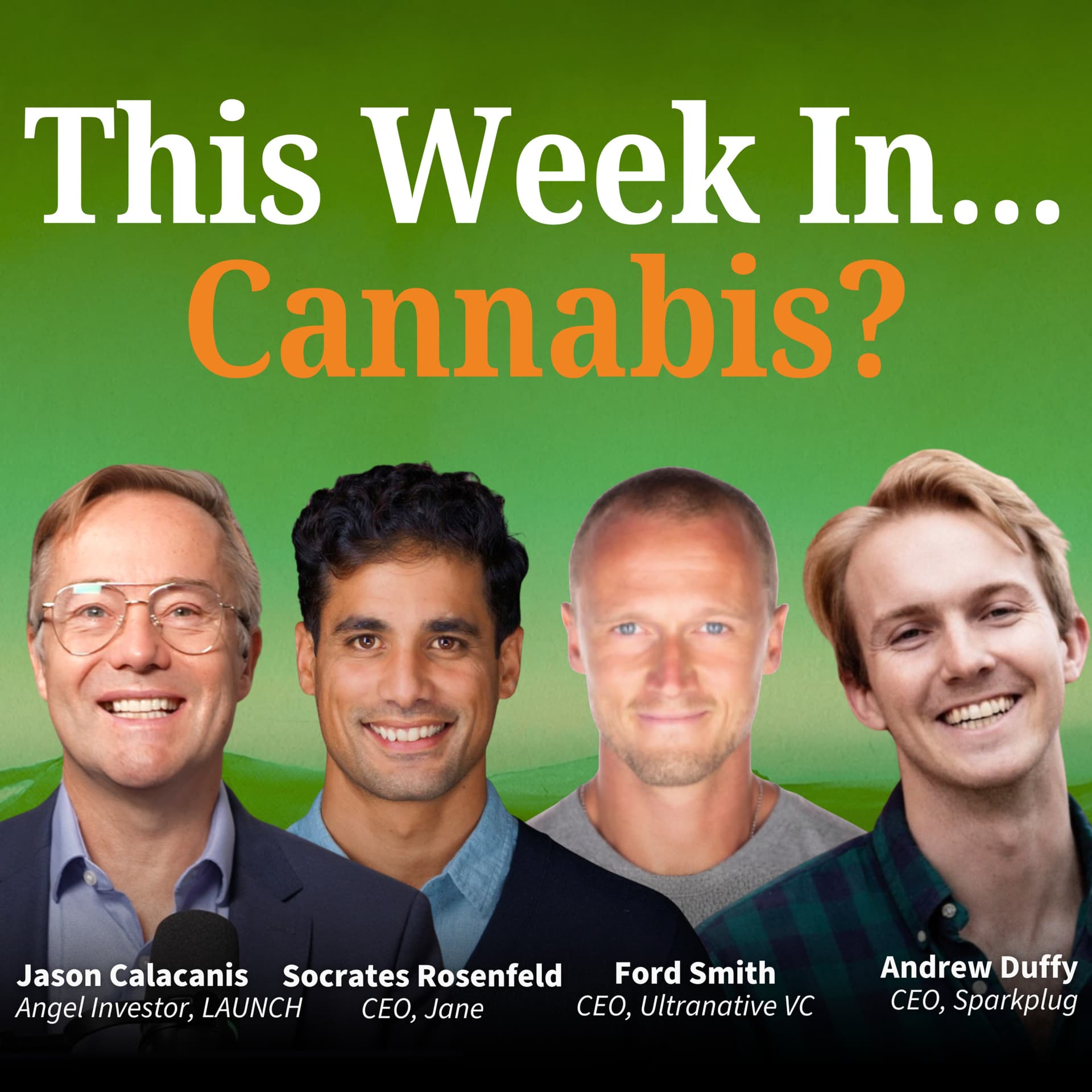
- Ford Smith: Founder of Ultra Native, a VC firm investing in transformative startups.
- Andrew Duffy: Founder and CEO of Sparkplug, a retail incentives and brand partnerships platform.
- Socrates Rosenfeld: Founder and CEO of Jane, a cannabis product marketplace.
Episode Overview
In this episode of *This Week in Startups*, Jason Calacanis leads a discussion with three cannabis industry leaders on the evolving landscape of the cannabis market post-decriminalization. Key topics include the impact of changing regulations, the competitive nature of cannabis startups, and the shifts in consumer behavior regarding cannabis consumption compared to alcohol.
---
Key Discussions
Introduction
- Guest Introductions: Jason introduces Ford, Andrew, and Socrates, highlighting their backgrounds and expertise within the cannabis industry.
Cannabis Market Growth
- Industry Growth: The cannabis market has exploded from a $3 billion industry to a $30 billion industry in the past decade. This growth has been primarily fueled by the liberalization of cannabis laws across various states.
Investment Dynamics
- Investment Sentiment: Ford discusses the challenges of cannabis investments, highlighting that the market has attracted traditional consumer packaged goods (CPG) investors. There's a growing sentiment that cannabis is becoming a legitimate investment opportunity.
Regulatory Landscape and its Effects
- Regulatory Changes: The panel discusses how potential federal rescheduling of cannabis could drastically change the market landscape. Rescheduling could allow for interstate commerce and more unified regulations, which would benefit cannabis businesses significantly.
- Schedule III Transition: Discussed are the implications of moving cannabis from Schedule I to Schedule III, which could ease regulatory burdens and open up new investment avenues.
Consumer Behavior
- Cannabis vs. Alcohol: The conversation shifts to generational shifts in consumption habits, with alcohol consumption declining among Gen-Z, who increasingly turn to cannabis. This demographic shift is seen as a significant opportunity for cannabis businesses.
Product Potency and Safety Concerns
- High-Potency Products: The episode addresses the rise of highly potent cannabis products such as shatter and concentrates, drawing parallels to alcohol consumption.
- Health Risks: Concerns are raised about the potential for cannabis psychosis and other health risks related to high-potency products. The speakers emphasize the need for responsible consumption and regulation.
- Regulatory Gaps: Socrates highlights the lack of regulation around certain pesticides used in cannabis products and advocates for better oversight to ensure consumer safety.
Community and Economic Impact
- Local Economies: The discussion emphasizes that cannabis can boost local economies by providing jobs and generating tax revenue. The importance of sustainability and ethical practices within the industry is also mentioned.
---
Key Takeaways
- Emerging Opportunities: The cannabis industry is evolving rapidly, with significant opportunities for startups as regulations continue to shift.
- Investment Potential: A growing number of traditional investors are recognizing the long-term potential of cannabis, moving beyond early skepticism.
- Health and Safety: As the market matures, there is an urgent need for regulations that prioritize consumer safety and product quality.
- Cultural Shift: Changing consumption patterns highlight cannabis as a substitute for alcohol, especially among younger generations.
---
Conclusion In the current landscape, cannabis is positioned as a potential cornerstone of the next great American industry. The panelists express optimism about the future, advocating for responsible consumption, effective regulation, and the continued growth of cannabis businesses.
---
Links
- [Gusto](http://Gusto.com/twist) - Payroll and benefits platform.
- [Zite](http://zite.com/twist) - Business software building tool.
- [Circle.so](http://circle.so/twist) - Community platform for creators.
Subscribe
- [This Week in Startups on Apple](https://rb.gy/v19fcp)
- [TWiST500 Newsletter](https://ticker.thisweekinstartups.com/)
Hosts Socials
- [Jason Calacanis on X](https://twitter.com/Jason)
- [Andrew Duffy on LinkedIn](https://www.linkedin.com/in/andrewsduffy/)
- [Ford Smith on LinkedIn](https://www.linkedin.com/in/fordhsmith/)
- [Socrates Rosenfeld on LinkedIn](https://www.linkedin.com/in/socratesrosenfeld/)
---
Written by AI. May contain mistakes. Listen to the episode to check what was said.
Chapters
Tap a time to open that second in VOThe Future of the Cannabis Industry
0:00 to 1:49
Learn how the cannabis industry is evolving and the potential for emerging companies.
“The way to look at this is it's going to force the best companies to emerge.”
Growth of Cannabis Startups Post-COVID
3:40 to 5:48
Exploration of how the cannabis industry has expanded rapidly post-COVID.
“Wasn't a name you chose, just to be clear.”
Innovations in Retail Software
5:48 to 8:25
Discussion on how retail software can enhance employee engagement in cannabis sales.
“So an order of magnitude of growth, primarily fueled by more and more new states opening.”
Navigating Cannabis and Hemp Markets
8:25 to 12:18
Insights on the differences between cannabis and hemp markets and their regulations.
“work well with your cannabis beverages, because you have to explain the sort of value prop.”
Socrates Rosenfeld on Cannabis Business Landscape
14:43 to 17:48
Socrates discusses the evolution and future of the cannabis industry.
“Socrates, explain a little bit about your business and how long you've been in it.”
Industry Perspectives on Federal Rescheduling
17:48 to 19:58
Guests share insights on the potential for federal cannabis rescheduling.
“And then one day we'll probably bring this into other retail goods that are very difficult to ship direct to consumer, groceries, alcohol, et cetera.”
Investment Trends and Market Opportunities
19:58 to 22:20
Discussion on current investment climate and potential arbitrage in cannabis.
“And I think pain reduction is a key there.”
Challenges and Future of Cannabis Industry
24:44 to 28:00
Exploring the ongoing challenges and future prospects for cannabis startups.
“Andrew and Socrates, people thought this would happen during Obama's second term, didn't.”
The Endurance of the Cannabis Industry
28:00 to 33:00
Discover the challenges and potential of the cannabis industry in a changing landscape.
“And now it's a game of endurance rather than speed.”
The Role of Community Tools for Creators
33:00 to 34:20
Learn how community platforms can enhance engagement for creators and brands.
“That's why I'm so happy to partner with Circle, the complete community platform for creators and brands.”
Show all 16 chapters
The Evolution of Cannabis Potency and Consumption
34:30 to 39:50
Explore the differences in cannabis consumption methods and the rise of potency.
“It's kind of like a trope now that, hey, weed today is not like the weed you smoked in high school in the 80s.”
Understanding Cannabis Risks and Benefits
39:50 to 42:00
Analyze the risks of high-dose cannabis consumption versus its benefits to society.
“But really what it's doing is it's extracting all the plant matter that when you consume it and smoke it, it smokes.”
Benefits of Cannabis Legalization
42:00 to 44:24
Explore the impact of cannabis legalization on opioid use and overall societal benefits.
“So I think that's where thinking about cannabis as something that is part of our tradeoffs as a society, but also has many benefits.”
Regulation and Consumer Safety in Cannabis
44:25 to 46:40
Discuss the challenges of cannabis regulation and its implications for consumer safety.
“So this would be 40, maybe 100 times more, which you don't want laying around.”
Understanding THC and Product Potency
46:41 to 49:46
Analyze the risks associated with high potency THC products and their effects.
“Once the report came out, about like 70 % of all of the brands that were about 95 % of the brands that were tested failed.”
The Role of Education in Cannabis Consumption
49:47 to 53:09
Highlight the importance of consumer education in safe cannabis consumption.
“It's almost like you can make any of these things into a fentanyl equivalent concentration if you are determined to.”
Transcript
Automatic transcript. May contain errors.0:00The way to look at this is it's going to force the best companies to emerge. we're going to have to think creatively and resourcefully like this industry has for decades. People will find a way to this plant. People will find a way to sell this plant, whether it's legal or not, whether the financial markets are backing it or not, because this plant helps millions and millions of people. I think this is the next great American industry, period. Cannabis is a scheduled drug, but hemp is not a scheduled drug. It is a federally legal product. So when you jump into the federal hemp market and you can start shipping D2C and you can hack your way around, you know, meta and Snapchat to start running, you know, normal CPG type focused ads, it's a much more efficient business.
0:46It's true consumer packaged goods at that point. And so we decided to not go into that space because we thought it was a little too risky. We had a conservative investor base. It felt a little gray area at the time. In hindsight, I wish we had done it because there's been a lot of brands that have done really well and quickly grabbed a lot of market share nationally. There's an insane amount of these brands on the shelves now.
1:49All right, everybody. Welcome back to Twist. Today is Wednesday, January 28th. We've got a great show for you today. We're going to be talking about the cannabis industry with three experts and specifically around startups, the opportunity there, and the changing legislation and regulation in the industry. But before we get to that very important note, I wanted to give a little memorial here to a friend of mine, Herman Kotler. Herman, like me, was a kid from Brooklyn, him from Bedsenhurst, me from Bay Ridge. He was also the father of Matt Kotler, who has been my partner here at launch and this week in startups for many years.
2:24But Herman was a bit of a storyteller, also from Brooklyn, as I mentioned, may or may not have been in a foreign three-letter agency, may have, you know, worked for the government. I'm not saying that those rumors haven't happened around me as well. But Herman and I, we get together once in a while and talk about a son, Matt, who we love dearly. And it'll be missed. Okay. So let's get back to the show. With me today, my good friend, Ford Smith, CEO and founder of Ultra Native VC. How are you, Ford? I'm lovely, man. It's good to see you. Excited to be here. That was beautiful, dude. I've always appreciated your sense of humility.
3:03So thank you for that. Yeah. Thank you. And Ford is the CEO and founder of Alternative VSA. And he has a cannabis company himself doing cannabis oil manufacturing. We'll hear about that. Noble Pacific. He's an advisor to Cannes, which makes cannabis beverages. And he's been in the business for a while. Socrates Rosenfeld is the CEO and founder of Jane, which is a cannabis and product marketplace. Welcome to the program, Socrates. Thanks, Jason. Not easy having that name, is it? Wow. A lot to live up to. I fall short. Now, this was given to you by your parents? Yes. My mom proudly named me Socrates.
3:42So I'm still living up to it. We'll see. Wasn't a name you chose, just to be clear. Was it a name I chose? It's the one that was given to me. and I'm growing into it, as they say. What a great name. Now, were you named after the philosopher? It's an inside secret with my mom. The world thinks I was named after the Greek philosopher. I know you're half Greek, Jason. I also have Greek blood. So she appeased the in-laws with that name. But deep down in 1982, the World Cup was going on while she was pregnant with me. and there was a Brazilian, the captain of the Brazilian soccer team who ended up winning the World Cup was named Socrates.
4:27And so she was in her - So double meaning. She pees the in-laws and yeah, she got her passion for the sport. Also with us in our little quartet here is Andrew Duffy. He's the CEO and founder of Sparkplug, which is enterprise software for retailers. But when I met Andrew, which was now probably five or six years ago, he went through the launch accelerator cohort 20, which for those of you who are LPs is Launch Fund 3, so you can get excited. And he had a really great idea for incentivizing the clerks, the retail workers, by educating them on different products in order to increase sales, to increase their engagement.
5:07I said, hey, this is a great idea. He said, oh, there's only one problem. It's cannabis. I said, well, you're an enterprise software company. You have cannabis as one of your clients, but you have all these other clients. So we were in the clear. We're invested in an enterprise software company that services anything legal. But how's the business been going? I'll start with you, Andrew, just in terms of looking at how things have changed in the five or six years since we got into business together. Absolutely. Well, business is booming. As any of the other folks on the panel can tell you, the growth of the industry since COVID really has been astronomical.
5:43In the past 10 years, it's gone from about a$3 billion industry to a$30 billion industry. So an order of magnitude of growth, primarily fueled by more and more new states opening. So in the early days, Washington, Colorado, but now as we've proceeded along and more and more states have liberalized their cannabis rules, we have huge population centers like New York and California online, as well as now some pending legalization in other states like Pennsylvania, Florida, all those places you see on the election map, those are the ones that are starting to legalize and are becoming the big population centers, adding consumers to the business.
6:21Got it. And how's the business itself doing? Is the business still centered around the core premise you shared with me five or six years ago that I fell in love with? Yes, absolutely. And did I describe it well? Yes, very well. Very well. We've grown since then to expand from not just that core premise of accessing the point of sale employee, which still is one of our most important products, but actually to become a coordination co-pilot for wholesalers to influence every aspect of the physical retail space. So not just that point of sale employee getting commissions to recommend particular products like a real world influencer, but also managing promotion schedules, managing inventory, any way that a wholesale operator wants to influence that physical retail space where today 80 plus percent of commerce still happens in the US.
7:10That's what Sparkplug can do for them. And yeah, it's been going well and adding that surface area to the product has helped us expand from cannabis into verticals like outdoor gear, beauty, specialty nutrition, anywhere where you have that influential point of sale employee, we have a pretty meaningful opportunity. And the retailers like this as well. It's a win-win. They don't mind a commission or a little spiff going to their retail employees? Do they view it as like a tip or like a little bonus that doesn't interfere or maybe even takes a little pressure off of them in terms of salaries? Yes.
7:45The latter is precisely the outcome that we see. So essentially, they're able to offer their employees a dollar or$2 an hour raise without having to pay for it, all fueled by the marketing budgets of these brands. So that is great for them for reducing turnover, for increasing output from employees, for making people happier working for them. And, you know, overall is a win-win-win for all the folks. And, you know, a lot of these employees are really changing their lives through the platform. You know, we have employees making 20K a year in additional payments from Sparkplug when they're earning 20K in wages.
8:19So it's a pretty significant source of income for a lot of these folks, which we're, you know, really happy to be able to provide. This sounds like something that could work well with your cannabis beverages, because you have to explain the sort of value prop. Tell me a little bit about when you got into this area and how it's going, because that's one of the things I haven't been able to get a handle on. Is it like a great investment opportunity or is it flooded with competition? Because making the flowers seems to be not like a proprietary or a very difficult thing to do. So I've heard these reports that the market's gotten flooded with stuff, and I'm sure Socrates will have some input on this as well.
8:57But has this been a great business or is it a good business? I'd say it depends on when you got in. And then if you kind of maybe had the foresight to pivot or jump into the hemp market, there's some regulatory framework that needs to be kind of set up to understand this. So many states, and I couldn't give you the exact number, but they have these state regulations like California, Oregon, Colorado, things like that. Inside of those state regulations, you've got to go and apply at a state level, get a license, and then you get certain types of license types, you know, types. Some of that's cultivation, manufacturing, distribution, product sizing more or less, and then retail or like direct to consumer.
9:30And what's happened over the past, you know, in 2018, Trump passed the farm bill and the farm bill essentially legalized, it didn't essentially, it legalized hemp. Hemp is a, it's, it's not another, it's not a separate type of plant other than, it's not different from cannabis. Hemp is a legal definition. So whether you're consuming some product from the hemp plant or from cannabis in a regulated retailer, it's still the same plant species at the end of the day. It's It's just a different form of genetics. Hemp, the legal definition of hemp is less than 0.3 % of dry net weight of an actual bud per se.
10:05And so what happened was because the farm bill legalized hemp and they defined hemp as less than 0.3 % THC, they technically still nationally, federally legalized THC. So there is a weird loophole that would allow these farmers or extractors or brand builders to say, hey, by the way, I grew a whole bunch of hemp. California, let's say, on average, you're seeing 25 % to 33 % THC content in cannabis flower in these regulated markets because patients kind of like to spend or get the biggest bang for their buck. So farmers are incentivized to cultivate higher yielding THC crops. What's happened since 2018, somewhere along the way, people realized, oh, wow, we could actually go make the argument that this 0.3 % THC, we can extract that out of hemp and we can concentrate it and then infuse that into gummies, edibles, pre-rolls, etc.
10:58And increase that THC content to the same level of what state regulated operators are producing and selling through retail. So it took a couple of years for that to really kind of like catch hold. But as soon as kind of the word had gotten out, a lot of the original operators like myself, I've been in the California industry for since probably 2014. 2014, I set out, I raised a whole bunch of money in 2020 to go and enter the cannabis beverage market in California specifically. And within about nine months, all of a sudden we started hearing about people running into the hemp market to go and launch their cannabis beverage brands, because now you're not dealing with the same taxation issues.
11:38There's no 280E issues, which at 280E, just for simplicity is most of the cannabis operators, because cannabis is a schedule one narcotic, they can't write off their cost of goods, which this makes the business extremely cost prohibitive because cannabis is a scheduled drug. But hemp is not a scheduled drug. It is a federally legal product. So when you jump into the federal hemp market and you can start shipping D2C and you can hack your way around, you know, meta and Snapchat to start running, you know, normal CPG type focused ads, it's a much more efficient business. It's true consumer packaged goods at that point.
12:10And so we decided to not go into that space because we thought it was a little too risky. We had a conservative investor base. It felt a little gray area at the time. In hindsight, I wish we had done it because there's been a lot of brands that have done really well and quickly grabbed a lot of market share nationally. To answer your last question around just market saturation, yeah, there's an insane amount of these brands on the shelves now. There's a lot of fly-by-night operators. There's a lot of operators that really truly don't give a shit about the quality of product they're putting in it.
12:39Most of them, there's a very well-known lawsuit right now. You can go look at it online. There's a company called Virtosa that people are claiming have actually been buying distillate THC oil from regulated, like call it California, Oregon kind of state operators, and then black marketing it into the hemp channel and infusing that and selling that into beverage companies claiming it was coming from hemp. And there's really no way, if you can't follow the paper trail, there's no way to actually know if it came from hemp. Oh, wow. So basically giving people more bang for their buck or backdooring it when they shouldn't.
13:10Exactly. Yeah, yeah, yeah. They're saving themselves an insane amount of money by doing this. I'm not claiming that I'm not making any statement around that case other than that's out in the public, but these are the things that, yeah. Five states have complete prohibitions, as I'm reading here from producer Claude, Idaho, Kansas, Nebraska, Wyoming, and Idaho.
13:31Launch is a fast-growing organization. We've got more than a dozen employees working with me here in Austin and another dozen spread out all over the world. But there's so many moving parts when it comes to hiring and managing employees. There's the onboarding, of course, payroll, you got to pay them. And listen, I've got all these podcasts to do. I don't have time for payroll benefits, HR taxes, answering questions, nor do I want to hire a full-time person and then have them do five hours of work a week. No, I have the perfect partner, Gusto. They're the all-in-one payroll and benefit product that's built just for your small business.
14:05Easy to use. It's incredibly fast to get started. And it's designed specifically with remote offices in mind. And Gusto is not just giving you helpful tools. They're going that extra mile to keep your workers happy and keep everything running smoothly. And they're now offering level funded health plans to keep your insurance costs down and on demand pay to help workers get access to their cash faster without paying extra interest or hidden fees. So here's your call to action. We want you to try Gusto today. So we're giving you three months free when you run your first payroll. That's right. Three months free.
14:36F-R-E-E. That's my favorite price, folks. Go to gusto.com slash twist. That's gusto, G-U-S-T-O dot com slash twist. What an amazing service and a partner. Great partner. Socrates, explain a little bit about your business and how long you've been in it. And then what is the business outlook here for cannabis going into 2026? I've been in business, been doing this full time since I left the military. I did a stint with McKinsey and then came over here in 2015, 2016. So I've been doing this for a minute. And it's been a lot of fun to watch this nascent industry go from an elicit market into more and more of a mainstream market.
15:18And the truth of this plant is coming out, that it helps a lot of people. What we do at Jane is essentially similar to what, Andrew, you've been doing with your technology is taking cannabis for what it is. It's a 30, 40 billion dollar market. It's fragmented across thousands and thousands of supply side retailers. There's no direct to consumer capabilities to Ford's point where now you can do that through, you know, hemp. You can ship a six pack of can to a doorstep. You can't do that in cannabis. And so I was very interested in what the future of e-commerce was going to look like with my founders.
16:00And this was agnostic to any industry. And we held this thesis 10 years ago and we see it coming true that the future of e-commerce would be in the complete digitization of all commerce. It wasn't going to be taking an Amazon model and trying to beat Amazon at its own game. It's been tried multiple times. Amazon's not going to let that happen. Shopify, another monster in the direct-to-consumer business, is doing extremely well. It's going to be very hard to displace them. And so what we saw was, could we take existing retail infrastructure, brick-and-mortar stores, the CVSs, the Walgreens, the grocery stores of the world, and in some automated fashion, take all that offline inventory and push that online so the consumer has an Amazon-like experience?
16:47when shopping, except now the value is being pushed into local economies rather than being consolidated at one Amazon.com, if you will. And so we saw this as an opportunity that was once in a generation and we jumped on it. It also helped that personally, myself, cannabis really helped me as a veteran coming out of the army. And what I struggled with was I couldn't get the consistent feeling from one product from an illicit dealer to another. If you think about how you shop on Amazon, you can have full purchasing power. You know exactly what you're getting. You get recommendations. You get social proof through millions of verified reviews.
17:28And we want to bring that same level of consistency and transparency to the industry and launch this. And so we've developed technology that in real time can take live inventory off a brick and mortar store shelf, create a turnkey digital storefront and connect those storefronts so that we're building the Amazon for Main Street, applying this here in cannabis and proving this at scale. And then one day we'll probably bring this into other retail goods that are very difficult to ship direct to consumer, groceries, alcohol, et cetera. Here's the reality of the framework changing on a federal basis.
18:03We talked about states, you know, the United States, America, we get 50 different sets of regulation, but here's your polymarket weed rescheduled by March 31st. 9 % chance looking at this polymarket. But you see, I guess right around Christmas time, it spiked up to well over 60%. I think that was when Donald Trump was talking about it. So Andrew, what's the chances this gets rescheduled during the Trump second term? What is the buzz in the industry? I think the chances are extremely strong. Anyone who's been in the industry for as long as we have knows that the hype cycles of it's going to happen, it's not going to happen are constant, but this is the first time that we have seen truly bipartisan support at the executive level.
18:49So the Biden administration tried to reschedule cannabis. They were slow ruled by the DEA until the transition to the Trump administration. So the Trump administration coming out and saying, hey, our intention is to reschedule. This is the first time that both sides of the aisle at a federal level have said that this is a priority for them. Previously, it has been a small group of Republicans in Congress and the Senate who have said this isn't a fit with our values. This isn't a fit with what our constituents think. But broadly, at a population level, cannabis is one of the only bipartisan issues right now.
19:26Over 70 percent of individuals believe that cannabis should be legal in some capacity, whether that's medical or recreational. And it really is across party lines. It's about freedom of access. It's about medicine. It's about economics. It's about personal liberty. It's about all of these philosophical ideas that aren't owned by one party or the other. So I feel quite optimistic that this is something that we can actually generate momentum behind, particularly if in advance of the midterms, the Trump administration is looking to get a little bit of a populist boost. Ah, very interesting. Yeah.
20:02And I think pain reduction is a key there. Your thoughts for it on the potential federal approval of this and what impact that would have on the industry? Because it did many years ago become legal federally in Canada. Yeah. And I'm curious what the effect there was. I would agree with Andrew. I mean, I think there's strong tailwinds. I think that the Maha movement has definitely brought to light. It's funny. We've been bouncing these topics back and forth from the right and the left for forever. And somehow it's landed on the right. And now the left is, I don't know, not too thrilled about it.
20:33But regardless, we're here. I think the reality is at some point in the next three years, I don't know if it's going to happen for the midterms. I would hope it does. I think that's a great theory. I keep kind of pushing that too. Whether that happens or not, or he has the foresight to think to do that. We'll see. If it happens, I think it's a big boom. I mean, I think right now you're already starting to see, you know, whereas traditionally when I was raising funds from investors, I've historically had to go to family offices here in Texas to go back these companies. They're usually like high risk, high reward.
21:03They write a check. That was their bet in cannabis. Don't ask them for another investment again. And let's see how it goes. And now you're starting to have the conversations with like traditional consumer packaged goods investors. You've got guys like Clayton Christopher and Brian Goldberg. and you know there's a hand i mean the list goes on of these like really top-notch like you know skinny pop kind of c4 coca-cola kind of type executives that are coming in that really understand capital markets they understand how to raise capital they know they don't take things public and how to get things sold and those conversations like i was hoping they were going to have five years ago but ever since this announcement um that's when things have really started to heat up so i think there's some spacks out there that are going to happen everybody's getting their documents ready sitting them on the shelf and then trying to like read the tea leaves to see when this thing happens.
21:47And then I know conversations or I'm having conversations actively right now with a bunch of cannabis beverage, cannabis slash hemp beverage companies to try to put a little portfolio together. Because I think that right now there's this weird, it's almost as an investor, I think this is interesting. There's a weird moment of like almost arbitrage you could play right now because there's still uncertainty. I mean, everybody's like these eternal optimists that it's going to go through. And I'm ultimately one of those too. But there's a couple of brands out there that have unfortunately had burned through a lot of marketing dollars.
22:13They may have, you know, Cannes is a great example for it. They're like this, I'm not going to call them the cockroach, but these guys are, they're one of the top selling beverage companies in the United States and the THC sector. They've been the darling of cannabis for five years now. They raised a whole bunch of money to go and focus exclusively on state regulated markets, starting out in California. Two Stanford graduates that founded the company, raised a whole bunch of venture capital. Then they saw this opening in the hemp market. They pretty much paused all of their developments in like the 10 or 14 different like state regulated markets they were entering.
22:43They said, we can build, you know, our margins are going to be significantly better in hemp, kind of focused over there. But now you've kind of got, again, I don't, I'm an advisor to the company. I don't fully understand the cap stack. And I know that this isn't just them. There's other companies out there like it, but you've got companies that raise an insane amount of money to go and fight against strict regulation taxation in these state markets. And then they pivoted into these, you know, this federal market. And so now, you know, there's a lot of dilution that's happened in the business. A lot of capital has been raised.
23:09And I think there's this weird arbitrage opportunity where the guys that have been sitting on the sidelines watching the cannabis and hemp market for a long time are now coming to play and they're having these conversations. And I think there's interesting pricing that can happen right now because there's uncertainty. And so when somebody swoops in with a check in the next nine months before rescheduling or whatever, I think you might get a nice discount on buying these businesses.
23:38Your startup needs custom software, but building your own secure production ready apps is hard, right? And not every founder has the expertise or time to get started. Well, now you don't have to just use ZITE, Z-I-T-E, make whatever you need from idea to a working app in just minutes, easily all on your own. Plus you can fill it in with forums, apps, databases, and other automations that you need as part of your product. So many of the no code and vibe coding tools are just flashy demos where they work on legacy systems that take so much time and effort to learn, let alone master. But Zyte is both easy to use and powerful enough to build out the apps you want.
24:15And it quickly connects all the other tools you're already using. For example, earlier this month, they added the ability to bulk create and update records. So it's easier and faster than ever to design data heavy apps that are constantly syncing between systems. That's the kind of attention to detail that sets Zyte apart. Start using the number one AI powered business software generator on the market. I'm going to give you 50 % off your first project. Go to Zite.com slash twist to get started. That's Zite.com slash twist for 50 % off your first project. Andrew and Socrates, people thought this would happen during Obama's second term, didn't.
Read the full transcript
24:53Then they thought, oh, well, it's going to clearly happen during Trump or Biden's and it hasn't. And it went legal in federally, I think in 2018, as we discussed in Canada. So here we are seven, eight years later, it still hasn't happened. Here's a graphic, from Claude, thank you, producer Claude, of the amount of capital raised. And as you can see, it was a little bit of a boost here in 2021. I think that was probably post-COVID, people thinking that we would pull this off or Biden would pull it off, and he hasn't. Yeah, over$70 billion has been raised. That's a big number, but it's declined since, and we're in a holding pattern.
25:28This follows what you've seen, Andrew? Yeah, well, interestingly enough, I think actually a huge amount of that investment capital in 2021 was going into ancillary technology startups, in particular one called Dutchie, which is one of the startups that's taken in the most capital in the industry. But unfortunately, that was pretty much peak ZERP and it was also peak cannabis. And right after that, there were a lot of challenges for capital formation in the industry. It wasn't coming online as fast as people expected. And ultimately, a lot of companies struggled. And the Steve Jobs quote holds here, success in this industry is spelled survival.
26:06It's all about continuing to exist and being able to be poised to take advantage of the opportunity when the market becomes that real explosive once in a generation opportunity that it can be. Because like we saw in Canada, Canada was a very different market onset than the US. In the US, we've done this patchwork state by state thing, whereas in Canada, they just said, all right, federally, we're just going to do this. There wasn't that same lead up of state by state infrastructure. And what that means from my perspective is that now there is a great deal of pent up infrastructure that wants to be unleashed in the U.S.
26:47cannabis industry that has been built up in all of these states, like all of the cultivation built up in California, which is getting sent into the illicit market because what it really should be doing is getting sent to all the other states where you probably don't need to be growing cannabis. So the ability to have interstate commerce with federal level legalization would totally change the shape of the industry and allow it to progress and mature and grow all at once in the way that all these other industries that we've talked about, these classic CPG industries have been able to. Yeah. And a question from one of our Nody gang.
27:18Those are the people who watch the live stream and have notifications on. We call them the Nody gang. Sam Houston, SF says, haven't most of the cannabis company shut down or have had major layoffs? What's the state there, Socrates? Has it been a bloodbath in the cannabis startup space? It's followed the same trend line as the broader market since 21, right? Where it's shifted from growth at all costs to you better be profitable and growing. To Andrew's point, it's been a challenging road. And to your point too, Ford, because we've seen it across the board, whether that's operating businesses, producing manufactured products or ancillary tech companies, 21 was peak.
28:03And now it's a game of endurance rather than speed. And this is something that cannabis has faced as an industry and as a plant for decades now, Jason. It hasn't been easy for cannabis at any point in this American history. On one hand, it's really challenging and can be daunting and frustrating at times when we're not treated similarly to other industries. But on the other side, a way to look at this is it's going to force the best companies to emerge. We're going to have to think creatively and resourcefully like this industry has for decades. People will find a way to this plant. People will find a way to sell this plant, whether it's legal or not, whether the financial markets are backing it or not, because this plant helps millions and millions of people.
28:53I think this is the next great American industry, period. And it's a matter of when, not if, that our friends in DC are going to realize that. Obviously, there are some closed-door conversations with the alcohol and pharmaceutical and banking industries that are inevitably happening. If you go through those, banking, I think, would be pretty stoked to be able to have this as a customer base. Pharmaceutical will not be stoked because there's no patents here, so they're bummed out. And we'll fight it. And really, I think that the clearest way to get this federally legalized, regulated, is to just say, look, think about pain management.
29:32You want to be at end of life for cancer patients. We all know somebody in our lives who is dealing with massive pain, had never tried cannabis. And then during, you know, their hospice care or whatever it was, was giving cannabis and was like, oh my God, I should have been doing this for the last 10 years when I was in pain instead of taking OxyContin or other, you know, things. And so pharmaceuticals know CPG companies, hey, they need something because alcohol is absolutely in decline between Ozempic and young people just not drinking. I was reading a statistic the other day, Ford. My lord, the alcohol companies are sitting on massive, massive caches of premium and just regular liquor and spirits.
30:15So they can't move it. Wine, nobody, people stop drinking. Yeah. I read the other day Gallup. I think Gallup said that alcohol consumption is down to 54%. 50 % of Gen Z's drinking when previous generations were at like 70%. That's insane. That's a massive dip. A lot of the newest, we talked to Total Wine the other day. And Total Wine said that most of their new, 30 some odd percent of their new consumers are actually coming into the store looking for THC beverages. And they're not walking out with alcohol either. They're not even like, it's not like a lead generation. They're finding alcohol. They're coming specifically for that and they're leaving with that.
30:49So yeah, it's happening. And the taxes are significant. Yeah, Andrew from Sparkplug, it's 15, 10, 15, 20 % is what you could expect to pay in taxes as a cannabis company in a retail? Certainly. Well, taxes for cannabis companies are extremely onerous. On the one hand, there's the classic excise taxes that you're talking about. What do you pay at the counter over and above the purchase price? But as Ford mentioned, tax code 280E prevents these businesses from deducting most of their expenses from their tax bill. So they're paying 60, 70 % effective tax rates. So if you were to legalize and remove 280E, then these businesses would be profitable overnight instead of losing money or just barely getting by.
31:38So from our perspective, when we see our customers under that burden, operating successfully with the grit to actually power through that. Imagine if any of these big tech companies were paying 70 % effective tax rates, that would not be okay. We would not like to see that on the P &L. Well, these businesses, if they can get over that hump from a legislative perspective, it's a game changer. And then, yes, those state level excise taxes, which today are putting a really challenging burden on them, would be survivable. They would be workable. And the states would be able to take in that tax revenue without unduly pushing customers into the illicit market.
32:15Like the California market has really struggled with getting people to transition from illicit purchasing to legal purchasing because of that difference in taxes. The expense is just a lot higher. But if you were able to give those businesses a fighting chance by removing that overarching federal tax burden, I think that would change the game and allow states to take in more revenue. That's incredible that this exists, but it is a hangover from the war on drugs. It makes total sense if you were dealing heroin to say like, yeah, you don't get to take the farming of the poppies out of your profits and you just pay your taxes on the profits.
32:56Completely reasonable. But in something that's become legalized, completely unreasonable. When we get back, I want to talk about the downsides, specifically some of this cannabis psychosis and these incredibly potent strain shards resins and how we look at those you know compared to the classic cannabis industries if you're an independent content creator or you're building any kind of community oriented business like i am just making great videos or awesome websites it's not enough you need to spend real time with your community and you need to do that with tools that allow you to see what's going on and communicate smoothly and crisply with your community members.
33:39That's why I'm so happy to partner with Circle, the complete community platform for creators and brands. With Circle, you're going to get an easy way to build branded websites that help you with email marketing strategies, that's super clutch, and AI agents that can help you design, manage data, and even do the branding. We use Circle here at Launch to keep up with our Founder University community. We've done 14 Founder Universities around the world, and they've helped us grow that from this tiny little program out of our office in Austin to this bona fide international movement. And they can do the same for your startup.
34:13Twist listeners can get$1 ,000 off Circle's professional plan by going to circle.so slash twist. That's C-I-R-C-L-E
34:27Socrates, your Jane is in the business of retail, essentially, right? Delivering cannabis to people. There's this category. You can explain it to the audience. It's kind of like a trope now that, hey, weed today is not like the weed you smoked in high school in the 80s. It's like much more potent. Okay, we get it. Be careful. Pace yourself. You can always take more edibles. You can't take less. There's a lot of rules of the road. But then there's this new category. And I don't know too much about it. I have never tried it, but there are shards. There are resins. There are dapping. Explain to us what all this is and how it compares to taking a three or four milligram gummy or taking a hit off of a joint at a party or hitting a vape one or two times.
35:15Full disclosure, I've been in the cannabis world for a minute. I've never heard of shards. so unless Andrew or Ford if you've heard of it let me know I have heard of resin and rosin I think people refer to the resins as shards as well they're like a hard version of it that cracks from my research yeah shatter oh shatter okay I said shards it's not the best marketing because I don't think anybody wants to ingest anything called shatter or shards so there's two things I want to highlight in that question it's a great question Jason One is potency and the other is four factor. Talking about potency first, because it's a real one.
35:54I don't know if anybody's ever tried moonshine, but I had a roommate from West Point, from North Carolina, who grew up, his family grew up distilling moonshine. I tried it for the first time and I'm still getting my eyesight back. And the reason I say that is because moonshine was a result of prohibition from alcohol. If you think about it, you know, if you're going to go and take the risk of distributing and manufacturing and selling alcohol, or if you're going to take the risk of actually going and buying an illicit product, you want to make sure that you get the most, I think, before you said this, bang for your so-called buck.
36:35And we've seen that now where this was coming about a decade, two decades ago, people were talking less so about the strain itself and more so about one specific cannabinoid. There's over 100 cannabinoids, but the one that everybody talks about is THC, which is the psychoactive, quote unquote, high feeling. And when you're paying$80 or taking the risk to go to the illicit market, you want to make sure that you get high. And so the conversation went away from all these different beautiful terpenes and cannabinoids that go into the whole plant and more so of this specific variable called THC. And that's why you saw this out of the ordinary spike in products being genetically modified to get the highest THC percentage.
37:29What we've come to realize is that's like drinking wine based on alcohol percentage. Jason, I imagine you have a nice wine collection. I'm not a big wine guy, but Chamath does and some other friends do. Vinny does. And so I'll partake in a one ounce. But I would certainly not want to drink moonshine, which I think is probably 10 times, I don't know, five times more potent. But no one's basing their wine purchasing decision based on how much alcohol they have. Maybe back in Prohibition, they were doing that. So that's what you're seeing. This is why legalization needs to happen. So tell me about the shards or shattering and resins.
38:08Like what is the... Now we're shifting into form factor. Form factor is actually a beautiful thing. If you think about what alcohol is, is you can just consume it as a social, like, hey, I want to have a good time at the Super Bowl. I can drink it. Cannabis comes in hundreds of different form factors. There's beverage, you can eat it, you can put in gummies, chocolates, you can have it as lotion, you can put bath salts and take a wonderful CBD bath. The products you're talking about, shatter, rosin, live resin, is different ways to take the plant, extract the medicinal benefits of that plant, and present it to the customer in a way that they consume it.
38:49So dabbing and shatter is a result of prohibition, meaning how concentrated can I take this and put it in? For it, Andrew, explain how people take this, because I think that's what the audience is missing. We understand it's more potent, but how do people consume this, Andrew? If you could explain it. You could probably think of it as quite similar to the mechanism that's happening inside of a Juul or a nicotine vape. You're basically taking a concentrated liquid or in the case of dabs and shatter, it's more like a gel, which is essentially 80 or 100 percent THC. You've compressed the plant and taken out all of the THC content and turned it into this sort of gel.
39:31And so you take a very small amount and then you superheat it and you would smoke it similar to a bong or, you know, the way that you would consume any other flower based. yeah i mean it sounds like smoking is it a way to say this for it might be this is the crack version of it is the crack it is the crack of cannabis yes you nailed it yes and people take this in the ram it actually doesn't i i do i in the spirit of not of not putting out misinformation it is highly potent but what is actually extracting is all the plant medicine from it Now, people are advertising it as like, hey, this is going to get you so high.
40:14But really what it's doing is it's extracting all the plant matter that when you consume it and smoke it, it smokes. It's not good for your lungs. And it's actually pulling all that out. So it's a distilled version of the cannabinoids. Here's a look at what it looks like. Here's one of these pipes. You heat it up. I guess that little stick is the hot thing. And then the resin is what's in the little bowl there. And I've seen this online. So this is five, 10 times more powerful per hit than smoking a J or hitting a vape pen. And this can cause a pretty serious psychosis. Kids are getting taken or adults are getting taken to the emergency room because they hit this too hard.
40:53That's, I guess, people's concern. So I'm not trying to demonize anything, but this is... This is a really important part of the conversation because I think what people in the cannabis industry who have a responsible approach to cannabis don't believe that there are no consequences to widespread high dose cannabis consumption. I see those consequences and I believe in them, but I think that we should compare them to the things that we accept in our everyday life amongst other substances. And how do these things actually work out when it pertains to personal liberty and personal decision-making?
41:26So, you know, based on the ratios that we've just described, this is basically the difference in concentration between having a beer and having some vodka. You know, that's a choice that people make when they're consuming. And there are a lot of problems that happen in our society as a result of overconsumption of vodka, death by traffic effectiveness, death by overdosing on alcohol, alcoholism, all of these consequences that occur based on a substance that ostensibly doesn't have any medical benefit. And we accept because it's something that people want to consume and it enhances their life from their perspective.
42:01So I think that's where thinking about cannabis as something that is part of our tradeoffs as a society, but also has many benefits. There is a ton of great research that you alluded to, Jason, that indicates that when you legalize cannabis in a state, opioid consumption and opioid deaths plummet precipitously by in some cases up to 30 percent. That is huge. If we're trying to handle the fentanyl crisis, if we're trying to handle the opiate addiction and deaths of despair crisis, cannabis is one of our best solutions. And I think we can probably do the math to show that the risks of cannabis and the consequences when not consumed responsibly are outweighed by the benefits of responsible consumption on personal lives, as well as from an economic perspective, you know, for the entire country.
42:51I want to say, Socrates, I completely agree. I appreciate what you said just about not putting out misinformation. I think, again, not to touch on the too much THC side or it's like it's just too potent. This is a product of prohibition and it's now a product of overregulation. We're being overregulated. And so when you're going to the consumer and you're trying to, you're still buying on a price per milligram dosage basis. And when you're getting the shit taxed out of you, you're going to make sure you're getting the highest potency THC out there. So prohibition and Gavin Newsom, I think amongst many others are like the key.
43:20He does not have a really good track or anything. I would say that both of those are factors that are influencing this high potency market. And this is where you could have regulation, actually a federal regulation help sort this out. Because Everclear, which is like 190 proof, which I guess means it's like 85 % alcohol or 200 % proof, 100 % alcohol for industrial use. These things are banned. There are places where they say, hey, there's a certain potency where we're just not going to allow you to sell it. There might be a reasonable concept here as well. You know, maybe don't sell gummies that are.
43:54What's the highest potency gummy you can buy, Socrates? Before legalization, actually, in the state of California, you could buy like a 400 milligram candy bar that was unregulated. Did you say 400 milligrams? 400 milligram. And it would actually, in the vice, the flip side of that, you could buy something that says it's five milligrams. And it could actually really be 400 milligrams because there wasn't testing. Sure. But a 400 milligram, just so people know, like I think a reasonable dose is five or 10 milligrams. Correct. Yes. So this would be 40, maybe 100 times more, which you don't want laying around.
44:34That's the issue is like if this stuff is laying around or kids get access to it, you know, it's always about protect the kids. But the same thing could be said about moonshine, right? You just don't want the stuff laying around and then somebody taking a shot of it and winding up getting really sick or just underestimating the potency of it. There's also a question here of core CPG principles, which is that the businesses in cannabis are responding to the market that they have. And because of the stigma around cannabis and the continued prohibition, there's a huge slate of the market that is not comfortable entering into it.
45:08So the classic unicorn consumer that every cannabis business is always talking about wanting is the soccer mom. The soccer mom who's having her vape You know, she's watching the soccer game. She's having a great time and she's having a low dose, high quality branded experience. Those consumers are a diminish, a diminuous percentage of cannabis consumers by volume. Right now, it's heavy consumers that are purchasing based on THC content are driving most of the revenue for cannabis businesses. And so, yeah, they're going to respond to that and make those high dose products. But if you expand the network of consumers that feel comfortable entering into the space, which is slowly happening over time, then more diverse businesses with low dose or differently branded or different form factors can start to provide real, reliable products to those people that can actually sustain their businesses, rather than having to lean into some of these products that maybe don't feel as comfortable or familiar to the typical consumer.
46:06And to touch on your point around the consumer safety piece and the psychosis piece, because I know that's what you asked earlier. In California, a year and a half ago, the LA Times wrote an expose. They pulled pretty much all the top cannabis brands off the shelves in California. There's a set of pesticides. There were 66 pesticides that the regulators are supposed to be regulating for. They tested those products off the shelf against the California regulations and the FDA regulations for nicotine or for tobacco. There were seven pesticides that the FDA regulates for tobacco production that are not regulated by California for cannabis.
46:38That doesn't make any sense. Both are heated up with the flame. Both have the same type of risk profile. So we went in. We looked at the data. Once the report came out, about like 70 % of all of the brands that were about 95 % of the brands that were tested failed. And every single one of those brands got hit 50%, 70 % sales. I mean, their sales declined after that LA Times piece came out. There was a group, there was a coalition that came together. We set together, we put together something called ECHO Certified, the Environmental and Consumer Compliance Organization. We said, because of this fragmentation regulation, the feds aren't talking to the state, the state's not talking to the feds.
47:13So now we've got pesticides that are, first off, the regulators are not regulating. So now you've got all of these pesticide-laden products on all these shelves that are being tech, that are, you go to the consumer, you know, you feel like you should trust them at the end of the day. They're clearly not doing their job. The regulators aren't showing up like that. We built a set of standards and now there's an auditing process out there. We've got 30 of the top 30 brands in California are all on the platform. It's a nonprofit. There's an independent technical advisory committee that's doing the job of the California regulators and the FDA when they should have oversight on this and they don't.
47:41They're coming up with the standards and then the brands that actually care, the good actors are coming in. And they're saying, look, we're going to we're going to pay monthly dues. We're going to send out secret shoppers to do random audits, test the products. And then they essentially run this pretty cohesive auditing process. What we found is, and I'm speculating here and I've talked to a handful of doctors and they think that we're like somewhere on the right track. Yes, there's a chance that you're seeing psychosis coming from this high dose THC intoxicating products. Most of them coming from hemp markets or 33 % kind of like shatter, wax, etc.
48:14What we found was a really interesting correlation. The lab partners that were running these audits were looking through thousands and thousands of certificates of analysis, understanding the makeup of these genetics and the pesticides that are using these products, heavy metals, etc. And what they found was the prevalence amongst like 90 % of the lab samples came back with neem oil. Now, neem oil specifically is used in a lot of different pesticides. And there's something called neem oil toxicity. Neem oil toxicity has the same exact symptoms as what we're seeing in, I can't remember, it's not causing psychosis, it flirts with psychosis, but specifically there's this cannabis induced nausea that will happen where people will continuously vomit.
48:59So we might have a correlation, not a causation. We might be pointing at the wrong substance here, which means even more regulation. In fact, there was a bunch of hand-wringing not long ago because people were selling caffeine, like actual caffeine drops or powders. To understand how powerful these were, I was just asking Producer Claude, people were selling powdered caffeine that was the equivalent. One teaspoon, not even a tablespoon, was 28 cups of coffee. A half a cup of the concentrated liquid was 20 cups of coffee. And there were deaths from this. It was also for Loco, if you remember that, where you're just putting too much caffeine, too much alcohol in a serving can.
49:40So people will associate a serving or a chocolate bar, you know, whatever it happens to be, or a teaspoon of sugar, teaspoon of honey, you know, with an acceptable dose. It's almost like you can make any of these things into a fentanyl equivalent concentration if you are determined to. And that's what regulation, whether it's industry regulation or the government or some compromise of the two could really have a dramatic effect on protecting people because there is a, you know, harm can happen. I think, Andrew, you said it, you know, people get some personal freedom, but, you know, young people, they see a can of soda.
50:17They're like, I drink cans of soda. I drink Arizona iced tea. So it's four local. It's got some alcohol and caffeine in it. It's just like having an Arizona iced tea and they just don't know that it's four. Arizona is, it's four or eight. So they have two and they really having 16 and they just, we had jolt cola i think when i was in college and jolt cola was marketed as two times the caffeine so it's like hey if you want to drink one coca-cola instead of two you know but there's some reasonable uh yeah there's some reasonable compromise here i think socrates yeah yeah i as you were talking it's a great example i don't know how many documented accounts there are but i imagine people uneducated to the effects of what Four Loko was, was drinking it.
51:03And you could call it, they went crazy that night. I've certainly had some run-ins on Four Loko where I'm like, I think I might be going nuts. So I think that's what you're seeing, Jason, is largely kids or uneducated consumers going probably to the illicit market. So you're not buying a 400 milligram candy bar to a dispensary. You're going, you're saying, okay, I have$50. The person's going to give you the highest potency product. And you're going to think that you're going crazy because you have no expectation of what you're supposed to feel like. And you assume like, obviously, it's not going to send me to the moon.
51:43And this is why just echoing what you're saying, and what this group is saying, the way to solve that is let's legalize it. Let's study it. Let's research it. Let's put smart regulations around the plant so that people aren't put in a position where they could be putting themselves in danger like we do with alcohol and sugar, etc. 100%. If you're an operator right now, and this is more of a public service announcement, I consume cannabis. I have a cannabis beverage. We have two milligrams and a five milligrams and a 10 milligram. If you're selling anything above 10 milligram, you have no regard for like this market existing further than a few more years because you're actually the issue that's that's happening right now to get the regulators up in arms and not really knowing what to do with this there's brands in market right now i can go to the gas station the corner of south congress i can walk in and i can grab a hundred milligram dose beverage what a hundred percent yes absolutely that is the issue is that there's these fly-by-night operators that don't give a shit they're selling and again this is prohibition this is regulation these are all the issues already talked about but there's you got to have like some backbone out there and just do you know you know this isn't right you know and so i think that look i i i hear the regulations on the hemp side are going to settle between three milligrams and five milligrams per dose per unit of dosing that's a reasonable that's that's totally reasonable yeah i mean if you wanted to have more you can have a second skittles or breathman or whatever the format is there's some reasonable here for loco just for background on this banned beverage it was the equivalent of like almost three cups of coffee and a bottle of wine.
53:17So now you think, hey, I drink three of these at a party. I've now had nine cups of coffee, eight, nine cups of coffee and three bottles of wine. That's not going to go well for you. There's no instance where a human being on planet Earth has had eight or nine cups of coffee. Like I love coffee. On my worst day, I had six cups, five or six cups. I have friends who love wine. I think they might have had two bottles like in, you know, a long night individually, maybe, but never three, an individual three bottles. What would that be? 15 glasses of wine. It's insane. Now put them both together. I mean, you have to really love what you're having here.
54:00All right. Listen, gentlemen, this has been amazing. Uh, where, where can people find you online? And just a little bit of plugs here at the end for what you're working on. Go ahead. Uh, Socrates. Yeah. Visit our site. I heart Jane.com and reach out to us anytime. We love hearing from the market. Info at iHeartJane.com and find me on LinkedIn if you want to connect. Andrew? Likewise, I'm out there on LinkedIn, Andrew Duffy and sparkplug.app. That's sparkplug.app is where you can find us and take a look at my podcast where we talk about some of these. Yes, the influence of cannabis and it's really rare combination of retail traits on the future of retail.
54:37It's called High Touch with Jake. Love it. High Touch. great and ford smith go ahead uh yeah ford smith uh you can find me on linkedin you can find me on x at ford h smith and then the venture firm is ultra native that's u-l-t-r-a-n-a-t-a-v-e.com and then if y 'all are interested in the the consumer certification we need a lot of support out there so start looking for it it's showing up on a lot of packages it's uh echo e-c-c-o certified.org all right and all of those links will be in the show notes or in the youtube description. And we're going to start doing QR codes. Today, our first QR code is for Spotify.
55:12Go ahead and take a picture of that. And it'll be on the screen for about 60 seconds. And to the Kotler family, just bookending this, we're thinking about you. And yeah, I'm going to miss you, Herman. What a classic he was. Kid from Brooklyn. He did great. And Matt, what a son. All right, we'll see you all next time. Bye-bye.
From the publisher
This Week In Startups is made possible by:
Gusto - http://Gusto.com/twist
Zite - http://zite.com/twist
Circle.so - http://circle.so/twist
Guest links:
Andrew Duffy, Founder and CEO, http://sparkplug.app — Retail incentives and brand partnerships platform
Ford Smith, Founder of http://Ultranative.com — Investing in transformative startups
Socrates Rosenfeld, Founder and CEO of http://iheartjane.com — One stop shop for cannabis products
Today’s show:
On TWiST’s first Cannabis Roundtable, Jason is joined by three top Cannabis founders and investors: Ford Smith of Ultranative, Andrew Duffy of Sparkplug, and Socrates Rosenfeld of Jane.
How will the regulatory environment and the move to Schedule III change the industry? Are those regulations shaping consumption? How are investors thinking about cannabis startups given the difficulty with exits? Most importantly, what’s the deal with the increasing potency of cannabis?
Each guest has their own perspective, Andrew sees it as a natural reaction from CPG brands to power users, Ford points to “flyover” operators unconcerned with long-term health of the industry, while Socrates refers to moonshine drinking during the prohibition to say that regulations create these problems.
Speaking of moonshine, alcohol consumption is dropping dramatically among Gen-Z, with many pointing to cannabis consumption as a substitute. Some perceive cannabis as healthier and lacking caloric nature of alcohol, which could explain why there are now more daily smokers than daily drinkers!
Timestamps:
(0:00) Guest Introductions for the Cannabis Roundtable!
(2:50) Why Jason invested in Sparkplug
(6:44) How Ford Smith got into Cannabis investing — is it Cannabis a good investment?
(11:40) Gusto - Check out the online payroll and benefits experts with software built specifically for small business and startups. Try Gusto today and get three months FREE at http://Gusto.com/twist.
(12:46) Socrates breaks down building a major cannabis marketplace
(18:13) Canadian legalization and tailwinds for cannabis.
(20:25) How Cannabis startups are pivoting to deal with high competition and regulatory pressure
(21:47) Zite - Zite is the fastest way to build business software with AI. Go to http://zite.com/twist to get started.
(27:07) Who benefits from legalization of cannabis? Healthcare? Retail? Banking?
(28:03) How the alcohol industry is getting crushed by cannabis usage
(31:27) Circle.so - The easiest way to build a home for your community, events, and courses — all under your own brand. TWiST listeners get $1,000 off Circle’s Professional Plan by going to http://circle.so/twist.
(32:47) Is new cannabis too potent? Is high potency cannabis a result of illegal rules.
(42:05) Why heavy consumers are driving CPG startups to high doses
(44:14) Cannabis psychosis and the problem with brands selling potency items.
*
Subscribe to the TWiST500 newsletter: https://ticker.thisweekinstartups.com/
Check out the TWIST500: https://twist500.com
Subscribe to This Week in Startups on Apple: https://rb.gy/v19fcp
*
Follow Lon:
X: https://x.com/lons
*
Follow Alex:
X: https://x.com/alex
LinkedIn: https://www.linkedin.com/in/alexwilhelm/
*
Follow Jason:
X: https://twitter.com/Jason
LinkedIn: https://www.linkedin.com/in/jasoncalacanis/
*
Thank you to our partners:
(11:40) Gusto - Check out the online payroll and benefits experts with software built specifically for small business and startups. Try Gusto today and get three months FREE at http://Gusto.com/twist.
(21:47) Zite - Zite is the fastest way to build business software with AI. Go to http://zite.com/twist to get started.
(31:27) Circle.so - The easiest way to build a home for your community, events, and courses — all under your own brand. TWiST listeners get $1,000 off Circle’s Professional Plan by going to http://circle.so/twist.
Check out all our partner offers: https://partners.launch.co/


