
In short
Podcast Episode Notes: This Week in Startups - Episode 2257
Episode Title
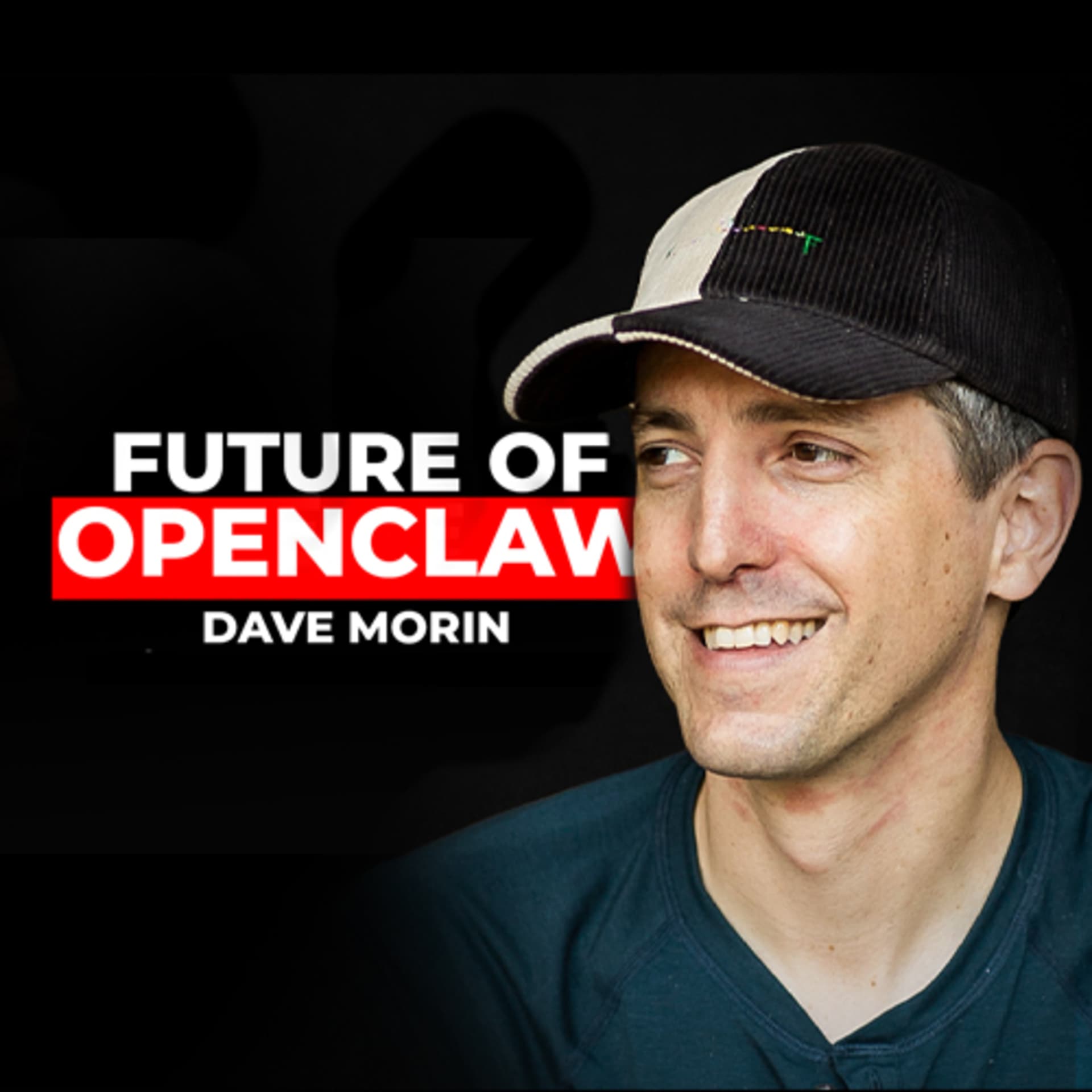
How the OpenClaw Foundation Bullet-Proofed Its Future (w/Dave Morin)
Episode Description In this episode, Jason Calacanis interviews Dave Morin about the creation and future goals of the OpenClaw Foundation. The discussion also includes insights into the latest developments in AI and demonstrations by other guests.
Key Guests
- Dave Morin: Co-founder and board member of the OpenClaw Foundation.
- Greg Kara: CTO of Runtools, demonstrating a 3D interface for OpenClaw.
- George Yameen: Founder of PickleWatch, showcasing an agnetic workflow using OpenClaw.
Key Topics Discussed
- OpenClaw Foundation
- Foundation Origins: Dave Morin explains how the foundation was established to ensure the sustainability of OpenClaw as an open-source project.
- Maintaining Control: Peter Steinberger retains decision-making authority over the project despite the formation of the foundation.
- Corporate Sponsorship: Discussed the need for well-heeled sponsors and maintainers to support the project long-term.
- AI Insights
- Anthropic-DoW Fracas: Morin's perspective on the tension between Anthropic and the Department of War (DoW), questioning whether OpenAI and Anthropic are closing the gap on OpenClaw.
- Market Position: Debate on whether OpenAI will concede its consumer dominance to Anthropic.
- Demonstrations
- Runtools 3D Interface for OpenClaw: Greg Kara showcased a 3D interface demonstrating real-time agent monitoring capabilities.
- PickelWatch's Workflow: George Yameen illustrated how OpenClaw can be integrated with AI tools to enhance workflow efficiency while being cost-effective.
Timestamp Highlights
- 00:00 - 02:31: Introduction of guests and overview of the episode.
- 14:40 - 20:21: Discussion on the founding of OpenClaw and its governance.
- 19:20 - 23:15: Explanation of project management dynamics within OpenClaw.
- 53:49 - 57:27: Demonstration of PickleWatch capabilities using OpenClaw.
Key Takeaways
- Sustainability of Open Source: The importance of corporate backing and a structured foundation to keep open-source projects viable.
- AI Technologies: The evolution of AI tools like OpenClaw offers unprecedented customization and efficiency, but with varying cost implications.
- Integration of Tools: Demonstrated how different AI applications can work together efficiently, emphasizing the current trends in AI integration into daily workflows.
Discussion Points
- OpenClaw’s Role: How OpenClaw is positioning itself against competitors in the AI landscape.
- User Experience: The need for a user-friendly interface for developers and non-technical users alike.
- Future of AI: The potential for OpenClaw to become a key player in personal AI, allowing users control over their data and AI applications.
Conclusion The episode provides valuable insights into the future of open-source AI with OpenClaw, the dynamics of maintaining such projects, and the evolving landscape of AI technologies. The discussions highlight the importance of community, governance, and effective resources in ensuring the longevity of innovative tech solutions.
Additional Resources
- Sponsors:
- [Circle](http://circle.so/twist)
- [HubSpot](http://clickhubspot.com/twist2)
- [Uber AI Solutions](http://uber.com/ai-solutions)
Follow Us
- Podcast Links:
- [TWiST Twitter](https://twitter.com/TWiStartups)
- [TWiST YouTube](https://www.youtube.com/thisweekinstartups)
- [TWiST Instagram](https://www.instagram.com/thisweekinstartups)
---
These notes provide a comprehensive overview of the podcast episode, capturing the critical discussions and insights shared among the guests, while also laying out key themes and takeaways for listeners interested in startups, AI, and technology entrepreneurship.
Written by AI. May contain mistakes. Listen to the episode to check what was said.
Chapters
Tap a time to open that second in VOReintroducing Dave Morin
1:36 to 3:05
Jason welcomes Dave Morin back to discuss Open Claw.
“Alex is here and he's ready to rock and roll.”
Getting Claw-Pilled: Dave's Experience
3:05 to 6:41
Dave shares his excitement and experiences with Open Claw.
“Late December, I'm in a couple of group chats that go back to like the early 2000s, like when you and I met.”
Key Features of Open Claw: Memory and Skills
6:41 to 10:46
Discussion on the memory feature and skills within Open Claw.
“But I told my original agent, Deckard, hey, go use this last 30 days skill.”
Establishing the OpenClaw Foundation
14:21 to 18:08
Dave Morin discusses the inception and goals of the OpenClaw foundation.
“Sorry to monopolize the first part of our discussion.”
Managing Open Source Contributions
18:09 to 20:36
Exploring how contributions to large open source projects are managed.
“But at the end of the day, Peter built this thing.”
Success Metrics for OpenClaw
21:17 to 24:48
Dave explains how success for the OpenClaw foundation will be measured.
“There is a group of people called the maintainers.”
Technical Setup and Recommendations
24:49 to 28:00
Dave shares his personal tech stack and preferences for AI development.
“just continue to push towards that frontier.”
Curating Personal Content with AI
28:00 to 30:20
Discover how to use AI for curating bookmarks and gathering intelligent feedback.
“send it a clip and it then puts it in my g drive for me but i was like i want it in my apple photo So then we have a shared photo.”
Investment Opportunities in OpenClaw
31:29 to 35:36
Explore the potential opportunities for investors in the OpenClaw ecosystem.
“level, you and I were very disappointed that OpenClaw did not become a for profit slash, you know, open source thing.”
Navigating AI and Entrepreneurship
35:36 to 41:33
Understand how to approach business ideas in the age of AI and automation.
“And it seems that everyone's having the same crisis that you're talking about, like what will work in a year, what will be alive in three years.”
Show all 24 chapters
Lightning Round with Dave: Current Events
41:33 to 42:00
Get Dave's quick takes on major news stories impacting the tech landscape.
Lightning Round News Stories
42:00 to 44:36
Dave shares his thoughts on controversial news stories, including Anthropic's military terms.
“I feel like I don't know enough about what's going on with this one.”
OpenAI vs. Anthropic's AI Challenges
44:36 to 46:36
Discussion on the competition between OpenAI and Anthropic and the implications of AI data control.
“In the last couple of days, we have seen OpenAI announced the new stateful runtime environment and also Anthropic dropping the auto memory feature.”
Consumer AI Market Dynamics
46:36 to 49:11
Exploration of the potential shifts in the consumer AI market and the roles of various companies.
“In response to Anthropics Choice to not work with the DoD on its requested terms and OpenAI saying yes to a very similar set of terms.”
Greg Cara of Run Tools Demo
49:11 to 56:00
Greg Cara presents Run Tools, showcasing AI agents and their functionalities.
“We have two more guests and demos, I think.”
OpenClaw vs. Claude Demo
57:06 to 1:01:22
A detailed demo comparing OpenClaw and Claude's capabilities.
“We are going to show a task being done using both OpenClaw on one side and Clawed Chrome plugin on the other to show their different strengths and weaknesses.”
George's Journey with Pickle Watch
1:01:22 to 1:06:30
George shares his entrepreneurial journey and the development of Pickle Watch.
“And I think open claw wins the test is what you're saying.”
Discussion on Ethics and Military Contracts
1:06:30 to 1:10:00
Jason and George discuss the implications of tech companies working with the military.
“You're invited to join us March 16th and 17th.”
The Role of Robots in Bomb Defusal
1:10:00 to 1:10:17
Exploration of how robots are replacing humans in bomb defusal scenarios.
Anthropic's Role and Patriotism
1:10:17 to 1:10:34
Discussion on the transition from Anthropoc to OpenAI and its implications for national interests.
“they're working really hard to make sure this transition off of anthropic onto i guess open AI technology is smooth.”
Community Perspectives on the DOD
1:10:34 to 1:10:54
Debate on the community's view of the Department of Defense's influence on technology.
“Because Anthropoc has taken a lot of stick lately, and I don't think it's entirely earned.”
Funding Controversial AI Projects
1:10:54 to 1:12:03
Jason shares his stance on funding AI projects related to surveillance and military applications.
“So Jason, would you personally fund a startup that said they were training an LLM to power domestic surveillance and autonomous killing machines?”
The Ethics of Autonomous Defense
1:12:03 to 1:12:49
Discussion on the ethical implications of using autonomous robots for defense and warfare.
“to have some common sense, thoughtful legislation about that.”
Investment in Non-Lethal Technologies
1:12:49 to 1:14:04
Jason articulates his interest in investing in non-lethal defense technologies.
“And what I would like to actually see, and this is what I would love to back, is non-lethals.”
Transcript
Automatic transcript. May contain errors.0:00Jason Calacanis:Hey everybody, welcome back to Twist. March 2nd, 2026, AO39 in the year of our Lord, the Open Claw. 39 days after we first talked about Open Claw here on the pod and cackling in the background. My old friend, a true bestie, one of the great investors, human beings, entrepreneurs, commentators, podcasters of our generation here, Dave Morin.
0:31Dave Morin:This Week in Startups is brought to you by Circle, the easiest way to build a home for your community, events, and courses, all under your own brand. Twist listeners get$1 ,000 off the Circle Plus plan by going to circle.so slash twist. HubSpot. Check out the guide Advanced ChatGPT Prompt Engineering from Basic to Expert in 7 days. Download it for free at clickhubspot.com slash twist two. That's clickhubspot.com slash twist and then the number two. And Uber. Bad data equals bad AI. Your AI is only as good as the data it learns from. Uber. That's right. Uber AI Solutions now works with enterprises around the world to source, label, evaluate, and scale real world high quality data for every industry everywhere.
1:24Dave Morin:so that you can focus on building the next big thing. Higher quality data means smarter and faster AI. Uber.com slash twist.
1:34Jason Calacanis:How are you doing, brother?
1:35Dave Morin:Good to be here, Jason. Thanks for having me.
1:37Jason Calacanis:Oh, it's so great to have you. Of course, my co-host Alex is here. It's been a minute. It's been a minute. Alex is here and he's ready to rock and roll. Yep. Yes, sir.
1:47Dave Morin:All right. Alex with the best podcasting voice. Oh, he's great. Yeah, you missed out. Dave was giving me props before the show. It was the best day of my life.
1:55Jason Calacanis:You know, some people are gifted with the broadcaster voice. Other ones of us, you know, not so much. We just make it work. We make it work with the limited resources we have. Dave, I wanted to have you on because you two have been claw-pilled. You first, and then, of course, when OpenClaw was acquihired, slash we'll get into whatever the transaction was, and our friend Sam Altman bought it, sort of. They said, big concerns. Open source project is going to get the plug pulled on it. This is a disaster. Everybody has a moment of panic. And then it's announced that you will become the first board member of the Open Claw Foundation.
2:39Jason Calacanis:And everybody took a deep sigh of relief because putting you in there was obviously the signal that this is going to be done right and done fairly because that's your reputation. Tell us two questions. Let's start with how did you get Claw upheld and why is this technology so inspiring that it went to the top of GitHub today, even beating React, which was another one of those cult-like phenomenons in the open source community?
3:04Dave Morin:Yeah. Late December, I'm in a couple of group chats that go back to like the early 2000s, like when you and I met. Web 2.0. Yeah, it's the old web to, you know, just guys that are always tinkering around like it. Funny enough, it's like people from the old foo camp days and things like that. Yeah, there's an old reference. Yeah. And one of them said, you know, hey, has anyone seen this open claw thing? It was called Claudebot back then. And so I gave it a try. This was like the late, late December, early January. and within the first 24 hours it was super clear to me that this was different and the future in a way that I hadn't really experienced since maybe the early 2000s like I got genuinely excited about building things with this and it was I think I had sent a tweet at the time I was like this is first time I felt like I've been living in the future since chat GPT and in my mind I was like this is like iPhone this might even be like lamp stack like this is like this is like Linux level interesting and so I just started building things with it every single day and very quickly you know the one of the first things that I did is I reverse engineered the mural photo frames in my house so that I could update the photos on them because the software doesn't work.
4:38Dave Morin:And I, you know, in 15 minutes, I built a new web interface to update my photo frames. And they, you know, it built me this beautiful interface. I updated the frames. I got new photos on them. I was super happy.
4:53Jason Calacanis:This, Alex, is one of the great moments that everybody has. We should name it when you get claw-pilled because this is a sub-moment.
5:01Dave Morin:Yeah. Yeah.
5:02Jason Calacanis:And I have two moments. One is when it actually builds you a piece of software or ask you, shall I just build you a piece of software? Because that would be like, I don't know, you're in some incredible fine dining restaurant and they just delight you, you know, in the 11 Madison Park, you know, unreasonable hospitality way. I'll call this like the unreasonable open claw hospitality, where it said to me when I was doing some work on like a bunch of names of people in Japan that I wanted to do like a little networking with. And it was like, shall I build a CRM? And I was like, you go, girl. And it was like, here's your CRM.
5:41And I was like, what?
5:44Jason Calacanis:Insane.
5:45Dave Morin:Yeah.
5:45Jason Calacanis:What? Insane. The second moment I had, and I want to know if you had this one. then Alex, I'll give you a chance to get in here because it's just such a great guest that it's you and I are going to be battling for questions here. The second moment I have is when it goes recursive. And I was like, okay, tell me about your soul MD file. Tell me about your skills. And then I had Matt Van Horn on and another old school, uh, web two.
6:13Dave Morin:By the way, I have a Matt
6:14Jason Calacanis:van horn's story but keep going absolutely he also has been pilled uh claw pilled so that might have been my fault yeah oh so you're to blame i see yeah he's all in so um and he's got an interesting new startup i'll leave it at that he tested here um that you know we all probably have an affinity for a little affinity um wink wink nudge nudge what i mean no conflict no interest conflict interest, all that stuff. But I told my original agent, Deckard, hey, go use this last 30 days skill. And in the production room, look at thumbnail images on YouTube. And just every week on Saturday, learn a skill of the best practices for thumbnail images and look at our thumbnail images and rate them.
7:04Dave Morin:And then tell us how to make them better.
7:07Jason Calacanis:This is a good idea. Right. So it comes back.
7:09Dave Morin:I'm going to do this for more or less. Game on.
7:11Jason Calacanis:You should do it for more or less. Another amazing podcast with two great couples, four great individuals. And then it said, oh, you know, this VP at Mr. Beast did an interview on this other podcast I'd never heard about. And he said on the podcast that they use heat mapping to test 50 thumbnails in YouTube searches. then they take the five best ones and then they test those using the youtube tool then they pick their best one in the bake-off and i'm like well that's a little bit too much for me but i'm glad i know that and then it said should i when i hear about do it well yes and i'll build you some software and i'll go rent a human but that recursiveness and that's like by the way a lot of the things i learned this week i already have and it's other people talking about the original research I found.
8:03Jason Calacanis:I'm not going to include that because that doesn't make sense to just repeat it. And I'm like, you go girl. Yep. A hundred percent. Okay. So those are the two moments for me is the recursive and the unreasonable hospitality software developer.
8:19Dave Morin:Well, I think that the other thing that I really fell in love with immediately was the, there were sort of two things. Well, three, the memory feature, right? Like all of us using AI have used ChatGPC in the big models, right? And it has like some memory of you and you can kind of go check it out. And there's probably, there's some other like voodoo magic they're doing in the background to like make it so you can access your former chats. But it's like, it's like loose and you never really know whether it's going to work. And so the idea that like I'm getting this, these memory files on my own computer that I can then use and reuse and do things with.
9:02Dave Morin:And there's like basically a journal every day. Like that was number one. Number two, the skills feature, uh, which, you know, you've seen skills, like you said, Jason, there's skills on cloud code, like skills is like this new emerging primitive that's happening. But the idea that you could tell the cloud bot or the now open claw to build itself a skill and then simply share it with the community using Clawhub and then other people immediately start downloading it. I did this with a snow report skill right out of the gate, of course, and built some other ones. But this really easy ability to build your own skills and then share them with the community, I think, is an underrated feature.
9:45Dave Morin:And then the third thing is this crazy idea that Peter had, which is called heartbeat which is he gave the bot a heartbeat and you know we've all built anybody who's built software builds these cron jobs and you get the there's these things called demons and cron jobs and you can run like demons are sort of running always in the background and cron jobs run like at a certain time and do something the idea that like the machine has a heartbeat and it will do things each time it does this heartbeat is like really thoughtful and interesting and it adds this new layer of kind of being able to to your point like run run recursive things like have it do things like every five minutes every 15 minutes and it it has this alive feeling to it that i think um has uh is really really interesting it feels like it's looking out for you and wants to help you proactively.
10:44Dave Morin:And that's a new kind of experience for software products.
10:46Jason Calacanis:Every major advancement we've seen in AI really comes down to better and more refined data from autonomous vehicles to human-eyed robots to LLM chatbots that we use every day, day in and day out. And when models are trained on high quality, diverse, real world data sets, well, they get smarter and they get smarter faster and it's more reliable. That's why Uber has introduced AI solutions to help your company build great AI products on top of world-class data. Now, obviously, Uber has mastered the art of data collection and labeling. They're using it right now. Millions of trips around the world every hour.
11:22Jason Calacanis:And Uber has an international collective of experts that is going to help you source, label, and evaluate real-world high-quality data on the scale that best fits your project, whether that's super broad or hyper niche. You can get on with the real job, building the next best thing and have Uber as your partner for data. Book your demo today by going to uber.com slash twist. That's uber.com slash TWIST.
11:46Dave Morin:All right, now, Dave, we're going to get into the Pete Frant transaction and the foundation stuff. But first, we have to take a short break to talk about something very important, which is plod. Now, Jason, here at launch, as part of our executive training, we focus on the importance of note taking. If you don't write it down, it doesn't exist. If you don't have a checklist, you won't get it done. And we all move a bit too fast to allow time for forgetfulness. And this is why we love the Plod note pen. All right, I got it from here.
12:13Jason Calacanis:Okay, I got it from here. This is the first time Plod's been on, but I've applauded Plod before. Dave, you see this thing on the back? Is that a wallet? It's a wallet. It looks like a wallet. But inside the wallet is my Plod. And what it is, is it's a little thin piece of hardware. And you'll see there's a light on it. And there's a little button that you can barely see. When I hold the button down, it starts and stops. and it does a little haptic. So I hold it and then it starts recording. When I go out on the ski mountain, I started recording and I have a plot pin I wear, which is a different form factor.
12:43Jason Calacanis:And so when I start my day, I record. Now I'm on this podcast, it's recording my side. It can't hear your side, but I just talk to it all day long. And if I'm in a meeting, I use it and I put it on the table and it has like a little indicator that it's recording. So it's like moving a little strip across. Then at the end of the day, it knows when I say action item, it knows when I say tell this person to do this or ask this person about that or remind me about stuff. And so I do production meetings now for the podcast. I pop up with my pod. I do the production meeting. And I say, here's what I want to talk about in the pod.
13:20Jason Calacanis:These are the four or five topics. And I will be talking to two producers or two executives at the firm. And then I can just summarize it. It has a whole gallery of different transcripts, summaries, action items, all different ones being created. like the skills. And then I can send a link immediately to another team member and they just have it. And because it's part of the hardware, I don't have to open my phone. It's so not intrusive. Does it break down who's talking, Jason, at any given time or is it just a blob? Oh, and it remembers it. So if I say Alex, Lon, Dave for the next conversation, it has it.
13:52Jason Calacanis:And this has made my life like I'm saving hours a week with this thing. Send me one. Not only am I going to send you one, I'm going to send you two of each. Take a memo, somebody on my team. I want two Plod pins and I want two Plod pros and I want a one-year subscription to Brett for Brett and for Dave. All right. Thanks to Plod.
14:12Dave Morin:Check it out at plod.ai slash twist. P-L-A-U-D dot A-I slash twist. Use the code twist. 10 % off. 100 % off for Dave, but 10 % off for everyone else.
14:22Jason Calacanis:Perfect. All right. Alex, you must have a question here. Sorry to monopolize the first part of our discussion.
14:27Dave Morin:Oh, no, you're fine. When it comes to friends, I just sit back. But Dave, the foundation was amazing news as jason said everyone was very excited that there was something in place to ensure the open claw would continue so what i want to know is how early were you guys working on the foundation who else is involved and then of course what your goals are for in the next three to six months you know from the first conversation like i reached out to peter early january out of pure gratitude just to tell him like thank you for building this um and uh that started a conversation and this was before anybody I mean there were there were like hundreds of people in the discord and you know we now have over a hundred thousand and we also just passed Linux and React yesterday and GitHub stars were the number one open source project in the world immediately my impulse was to just tell Peter, like, look, whatever this turns into, I want to be part of helping protect it.
15:29Dave Morin:Like it's too important. Um, I think Jason, like you were saying, as soon as you, uh, become claw pill, like you're immediately just like, this is so important. Um, have to protect it. Yeah. And having been around the technology business a very long time, um, and been through several different platforms, even having been part of building, you know, the Facebook platform back in the day, I've seen a lot of what can go right and what can go wrong. And so I just immediately told him, like, let's get started trying to figure out if there's a foundation here, no matter what you decide. You know, he's been very open about his thinking.
Read the full transcript
16:10Dave Morin:I mean, you can just go on Lex or any of the podcasts that he's done. And he was very open about his thinking and what he was thinking through. And so that was the idea. It was just like, let's make sure that we have an open source project here that's a real thing, that has a real 501c3 nonprofit foundation behind it. There's a lot of precedent for this, be it Linux or any number of the open source foundations, Apache, Mozilla, there's a lot of this stuff out there. And let's do this right and make sure that both the technical side, Peter never loses decision making authority over and on the open source side that we set this up with good governance.
16:57Dave Morin:Let's try to get as many of the big labs involved as possible and try to make it the Switzerland of AI, because that's really, I think, the experience that people have once they start using it. They're like, wow, I can use my own Mac as an orchestrator to interact with all the different AIs however I want. And so the foundation should play the same role in the ecosystem. And so So that's what we're working towards. Dave, we'll get back to the major labs in a second, but tell me more about Peter maintaining essentially direction or decision making. What is his continuing role and how much authority does he wield still?
17:39Dave Morin:Look, it's his project. We're still working out all of the governance. We're like deep in the middle of it right now. But it's Peter's project. And so I think you can expect that he's going to make the decisions, especially the technical ones. And the foundation exists to protect it, not to control it, try to influence its direction. The foundation has to be in the middle of the broader community like you guys and taking input, making sure that the global conversation is heard. But at the end of the day, Peter built this thing. And so, you know, we're just here to serve. On the sponsorship point, you do have OpenAI, Vercel, Blacksmith, and recently announced Convex as sponsors of the project.
18:27Dave Morin:You mentioned getting other AI labs in there. Anthropic famously got a little bit twisty with the project originally over some naming rights and so forth. But do you expect to get Anthropic, XAI, I don't know, Mistral, and maybe even the Gemini team to also support? Yeah, let's hope so. You know, we've got conversations going with everyone. We'll figure it out as time plays out. And, you know, we're just excited to see where it nets out. These open source projects, when they get this big, you get a very large community involved.
19:00Jason Calacanis:What becomes the dynamics in terms of just to explain to the audience, because I think it's confusing for people. who gets to, or how are all the different changes, how does air traffic control work for the different changes at a at scale project like this? Because there's so many people wanting to contribute. Obviously skills can be done independent of the core code base, but how does that work? And is that what the foundation needs to do is like maybe higher air traffic control to manage it?
19:34Dave Morin:Yeah, so the way that it works is that anybody in the world can download the project. You can go on GitHub, you can download a copy of it, you can make changes, improve it, and then you can submit pull requests. Or as everybody, you're probably on Twitter, if you're not familiar with the nomenclature, people call them PRs. And what that means is that you're submitting a change to the open source project and you'd like to have it included next time there's a release. Now, when a project gets this big, the number of PRs goes through the roof. I actually haven't looked today. You know, I think we're up above 5000 at any given time.
20:20Jason Calacanis:Listen, we all know ChatGPT is amazing when you just need to look something up quickly. But if you're not going really deep and getting strategic when you write your prompts, you're not getting the most out of this incredible tool. But I've got a free resource from our friends at HubSpot. It's called Advanced ChatGPT Prompt Engineering, from basic to expert in seven days. HubSpot is giving you a complete system for structuring ChatGPT prompts using the ROSES framework, role, objective scenario, expected solution, and steps. Thinking about your prompts this way is a huge game changer, and it's taken me from just hoping I get the right output I'm looking for to knowing with confidence that I'm going to get the information I need organized the way I want it.
21:01Jason Calacanis:So level up the use of your AI and download the guide for free at clickhubspot.com slash twist two. That's clickhubspot.com slash TWIST and the number two. Or find the link in the description. And thanks to HubSpot for sponsoring this episode.
21:16Dave Morin:I mean, it's so many more PRs than are possible to work through. There is a group of people called the maintainers. The maintainers of an open source project are usually a much smaller crew. You know, I don't know, different projects of different numbers, 20, 30, 40, 50 people that watch all of the PRs coming in. They also have their own ideas for what needs to be improved, and they prioritize what's most important. So the most important thing for the last few weeks has been security. Whenever you have a really large project that a lot of people start working with, security becomes number one.
21:55Dave Morin:And so there have been a lot of security updates. But also, you know, in this case, we're working on AI. And so there's a lot of different models being released every week. There's a lot of new things happening, trying to include more models, more integrations, stuff that makes sense, a lot of requests to integrate this, integrate that. Like, I want to have this part of my workflow. Will you put this in the core project? Right? Like, all those kinds of things. And so the maintainers have to look at all of that and make editorial decisions as to what will improve the project. And we've really been in improve the project, uh you know from a stability security like how it works today uh we have not been working on you know uh as much the uh new features uh right do the maintainers get paid by the foundation or are they just like super volunteers that have extra right now privileges right now they're super volunteers um and uh we ideally would like to you know bring on some of the best the people that are most interested, those kinds of things.
23:05Dave Morin:And yeah, once we have the capital and the foundation and these kinds of things, then we ideally will pay them for their work to the extent we can. So Dave, how do we measure success here? Because we've been watching the GitHub stars go vertical for weeks now, incredibly impressive. I don't mean to diminish that. But for the foundation, what does success look like in stewarding this project? And what's kind of like the North Star, apart from improving the product, handling security issues and interacting with the community? Like, where do you want it to go? Yeah, I think that success looks like a stable and growing ecosystem, right?
23:41Dave Morin:Like you could perhaps look at how many projects are there out there, both not, you know, open source that have included OpenClaw. You could look at commercial projects that are built on top of OpenClaw and that we have a, you know, a really just stable, beautiful, growing ecosystem, not unlike Linux. I think most of the early internet was built on Linux, right? Most people don't know that, but that's the truth. And so, to the extent that this can be a huge part of how people build things going forward, I think that's success for us. I also think we have to continue research, improving things going forward, making it better.
24:28Dave Morin:OpenClaw at the end of the day was a very powerful idea. The idea that you can give people the power of AI on their own computer, this idea of a personal AI that actually does things, takes actions for you. I think this is a major part of the future. And we have to just continue to push towards that frontier.
24:52Jason Calacanis:Is it possible to donate to the foundation yet? Is there like a donation page yet? And then not yet. Not yet. Okay. Yeah. We're hoping,
25:01Dave Morin:you know, yeah, we're hoping within the next couple of weeks, um, as you probably know, anybody who's set up all the various types of business entities in the world, uh, 501c3s are one of the most sophisticated. So, uh, we're working through it as fast as we can.
25:16Jason Calacanis:Learning from the comment section asks, what hardware does Dave Morin recommend? What's your stack? You're in a virtual machine. You got a studio. What do you think?
25:26Dave Morin:I use a Mac mini. I have several Mac minis. And I also use virtual machines. So, you know, for my venture capital firm, we use a DigitalOcean virtual machine that operates in our Slack. and my team there has absolutely loved it. And I've also got a bunch of testing right now. Like Alex said earlier, Vercel has been an amazing partner to us at OpenClaw. Guillermo and his team are just world-class. We love them. They've got a new virtual machine environment called Sandboxes. And so I've been doing a bunch of testing using Sandboxes. They're not really set up yet for OpenClaw to be super effective.
26:14Dave Morin:You have to keep them alive every five hours and these kinds of things. But I'm doing a bunch of testing there. But I think the answer to the question is whatever your use case is. You know, I just moved mine, Dave, to a Mac studio. I'm hoping to do that. I was going to see if there's new chips coming out this week. There are.
26:32Jason Calacanis:I don't think they'll come out this week. I think they're doing that new MacBook. That's like super entry level Chromebook.
26:38Dave Morin:I was hoping for an M5 Mac studio this week. I think they're saying June for that.
26:43Jason Calacanis:I taught, yeah, which is a bummer. But the reason I got the Mac Studio is because I wanted to run Kimi 2.5 locally. And we have that. I want to try this. And my replicant is using it right now. So the last 48 hours I've been on Kimi. How's it going? Couldn't notice a difference. Really? I didn't know we had switched. Really? Now, that was really weird. Really? Yeah. And so here we are, folks. But I think we're going to hit some of them.
27:15Dave Morin:Are you running one or two Mac studios?
27:17Jason Calacanis:Just one right now. But this is like a very light instance. But I find running it on a Mac. I was on a Mac mini. I find running it on an independent hardware stack much better because when you want to write software or you want to use native things, it's so much better. So one of the things I'm trying to get it to do is create its own Apple Photos. I'll give you another use case. Many times I want to use a clip on the program. and then i have you know you want to download a clip and i'm like that's a lot of work so i told it hey do me a favor like there's all these like open source projects to rip you know an instagram twitter um youtube youtube video and they all get shut down when they're on the web but the open source projects are still there so and it's like okay yeah i popped that up for you and now i send it a clip and it then puts it in my g drive for me but i was like i want it in my apple photo So then we have a shared photo.
28:09Jason Calacanis:So that's not working yet. It's a little bit janky. Once I get that up and running, then I was like, wait a second. I don't know if you're like me, but do you bookmark stuff on Instagram or TikTok constantly for like, next time I'm in Japan or Paris, I got to try this? Do you do that? Are you part of that?
28:24Dave Morin:Only Twitter. Yeah. Only Twitter. Okay. I don't use Instagram or TikTok. Right. So interesting.
28:31Jason Calacanis:It's too addictive. Smart man. Smart. But anyway, this is like how I, you know, like this man's fashion. there's like books I want to read or, you know, movies I want to see. And I'm constantly bookmarking them. And then I got to remember the bookmarks. Now I send the clip to my open claw over Slack. And I say, fashion, media, inspirational, docket for like the docket of the podcast.
28:59Dave Morin:Yep.
29:00Jason Calacanis:It rips it. Then I gave it an instruction, Dave, go give me intelligent feedback on whatever I send you and you determine what intelligence is. So I'm like, bad fashion choice. Yeah. Well, and I'm like, so if it's fashion, tell me like comparable brands, tell me about the history of this piece. So I was looking to get my sweater game going, educate me on that. Then for like movies or books, tell me about the director, tell me about the author, tell me the Goodreads score, tell me the Rotten Tomatoes score, all that stuff. So now it's like, okay, this is not just my bookmarks. This is my curator who's understanding what books I want to read and what fashion I'm interested in and what places I want to stop when I'm in Japan next.
29:44Dave Morin:Yeah, Jason, but this is Kimmy 2.5 being the intelligence nexus that makes those
29:50Jason Calacanis:decisions for you, right? So it would have the opinion on your sweater just to be sure I'm tracking this? Not exactly the opinion. What I wanted to do is just intelligently reflect back to me more information on whatever I send it. That was like how I said it. Got it. And I am going to work on that skill. I started doing it this weekend, but now that I've got, hey, just might as well take the whole video, transcribe it, put it into a Notion page, and then I'm going to develop a skill, which is my curator. And so I'm going to create a curator skill and then boom, I'm all done. Building a community business is really hard.
30:24Jason Calacanis:And if you're a first-time founder or independent creator, you may not be prepared for everything you need to accomplish. But now there's Circle, the complete community platform for creators and brands who are building new customer groups. Maybe you're teaching a course or you're starting a membership program. Circle's going to help you with every single aspect of forming and maintaining your new community, from creating a branded website to tracking and monitoring all discussions, announcing and planning events, email marketing, and everything else. It's extremely fast to get started, and you maintain total control over your new community's design.
30:57Jason Calacanis:The branding is yours, and your data is your data. It's not shared with anybody else. Circle is by far the cleanest and fastest way to set up a home for your new community. Maybe you've got a book club, maybe you're teaching a course, or like me, you have an accelerator and a pre-accelerator, Founder University. We've been using this product for five years at Founder University, well over five years now. It is the easiest to use all in one platform and so powerful. So try out Circle today and get$1 ,000 off the circle plus plan by visiting circle.so slash twist. That's circle.so slash twist. On an investment level, you and I were very disappointed that OpenClaw did not become a for profit slash, you know, open source thing.
31:41Jason Calacanis:I'm sure we were both lobbying heavily for that outcome. But hey, to each founder their own and happy for Peter, obviously. What do you think the opportunity is for investors and OpenClaw? Because I created OpenClaw at launch.co and said, anybody with an idea and a decent team and a prototype, whatever, just email us. We want to invest. I think we've done two so far. I just want to invest in like 20 of these companies, incubate like 20 of them. What do you think? What do you think is the opportunity?
32:09Dave Morin:I think that is the opportunity. I think we're at the beginning of an ecosystem that there's going to be a lot of interesting stuff. There's already a Cambrian explosion of people doing different things. Usually, you know, anyone who's been around technology for a long time knows that, you know, the first wave is always kind of the first ideas out the gate are, you know, simple. There's a lot of people trying the hosting thing and the this, that, and the other thing. It's usually the second wave where things get really, really interesting. And so I guess the opportunity is just to stay in it, encourage people to try things, try building things.
32:51Dave Morin:I'm hearing a lot of college kids actually say like, what am I going to do? There's going to be no jobs. And I keep telling them every entrepreneur I know could not be more excited right now about what's going on. They have more tools and more things to build with than they've ever had. OpenClaw is one of the best ways to build things and try out your ideas. Just start building things. And the goal of having an open source foundation here is to enable a stable ecosystem where entrepreneurs and investors can expect that this project stays around for the long term. Yes. And so you can build things and trust that you can build things and that it's not going to be ripped out from under you.
33:36Dave Morin:No rug pulling.
33:37Jason Calacanis:That's the key. And as we've seen, a lot of times, large corporations will be excited about a developer program. Twitter had a very robust one for some period of time. Facebook had a very robust one. And our pal Mark Pinkett is like, oh, my God, this is gonna be the greatest Zynga and Facebook forever. Heart, heart, heart. And then, you know, at some point, the platform, Microsoft as well, you know, oh, we have WordPerfect and, you know, we've got WordStar. Yeah, build whatever you want on Windows. And then at some point, the platform says, you know what? There's like 20 really big opportunities on this platform.
34:11Jason Calacanis:We're taking all of them. Now, Apple might be very generous about it and they very slowly will say, oh, well, our notepad will add some features to it. But we're not going to like kill it, you know, Evernote year one. They just, you know, we're going to keep it very simple. So great for them. But yeah, that is the challenge as an entrepreneur, isn't it? Like, who can you trust to keep the platform open and free? And a nonprofit with a leader like you, Dave, puts the trust level right at 100 for me.
34:44Dave Morin:Yeah. I mean, I think that's what I hope we're going for here. You know, there's a lot of aspects of the AI ecosystem where people are trying to make these decisions, whether you're an investor and an entrepreneur, like, can I build this product? Can I build this idea? Or is it going to be eaten in a year? Like I hear that every week at our investment committee table and in talking to other investors, like people are just like terrified that the, you know, the idea that they're working on might be consumed by the big AI models a year from now or even sooner. Right. And so I think that's what one of the positives here of OpenClaw is that, you know, it's all being built in public.
35:23Dave Morin:You can build on it and you can expect that it's going to be around and, you know, and build whatever you want. Dave, intuition partner, Hugo Amsela, he said that he's heard that, quote, half the current YC batch has already pivoted. And it seems that everyone's having the same crisis that you're talking about, like what will work in a year, what will be alive in three years. So what's your mental model for founders to understand what will be accelerated by OpenClaw and Agentic AI and what will be utterly subsumed by it and turned into a skill.md file? Yeah, I mean, I think that you want to stay at the orchestration layer as much as you can.
36:01Dave Morin:And you also want to be focusing on areas where you're creating unique data that is not trained into the models, for example. I'm doing a lot of robotics investing right now. And one of the, I know that's the thing to do du jour, but one of the main diligence questions that we're looking at is, is this robot creating a distinctly new data set that only it would know and that therefore the company has access to either real world data or digital data that is net new in society. And so I think you have to think about these kinds of questions. I think just doing like your standard, I don't know, vertical co-pilot AI for XYZ is getting pretty dangerous.
36:52Dave Morin:And, you know, I think you want to focus right now, if you're going to do digital work, you want to focus on what's the agent that I'm building? What's the, you know, am I building an agent for any number of use cases? Like, can I be the best agent for this type of job, right? Like a lot, what you're seeing is people building these, um, you know, uh, agents to handle different parts of their business as if they were, uh, employees. And so I think there's going to be a lot of innovation around this and, uh, what happens when you do that, you're basically training an agent, um, on something that you uniquely know.
37:30Dave Morin:Right. And so I think that's that's very exciting. And I guess back to the first thing I said, the orchestration layer is very interesting. We have this company in our portfolio that I've been working with a lot called Pulsia. it's p-o-l-s-i-a.com and this is a solo entrepreneur who spent the last year building a agent orchestration system that enables other people to build their own businesses so think shopify but for the agentic world you have an idea you want to start your own small business or even maybe even in big business. Pulsia will help you think through the idea, do research, do market research.
38:19Dave Morin:It will start running your ads. It will build your website. And every day you come back and it has new tasks for you to do. Oh, we just had Pulsia.
38:28Jason Calacanis:We just had Pulsia on the pod on Friday. He's great. So you invested in this. See if you can talk to the founder about getting a very high profile podcaster who's good for a tweet once in a while with a big social fall and a couple of big podcasts to sneak into the last round. I'll see what I can do. I'll see what I can do. Just a quick 100k because I want to be I want to I want to do more deals with you, Dave. So we have an excuse to like just hang. So just slip me in for a hundy. Or if he wants to go plus 10 percent from the last round and open a note, I'll put in 250, maybe 100. I just I was so taken by his idea.
39:04Dave Morin:I think it's It's amazing. Right. And he's working at this orchestration layer, right? Like how do you orchestrate agents? I think of it as like, if agents are kind of like the orchestra, people have to build symphonies and Ben's built a beautiful symphony here. Right. I've been calling it the maestro.
39:21Jason Calacanis:I've been, you know, after that, uh, you know, uh, movie that came out, like who's the maestro of all of these agents. And did you solve that for yourself? Like I'm assuming you have multiple agents. I know Brit's got agents working. I'm still working through it.
39:35Dave Morin:You know, there's a lot of different ways to do it, but I think we're all kind of thinking through the various different ways to do this right now.
39:41Jason Calacanis:I had one, I have two concepts. One, I have my like super replicant that has the keys to the kingdom. Only I can talk to it. And it's pretty cool when you give it access to every Gmail at the company, every Slack at the company and every notion edit at the company and every Zoom. Cause now when I'm doing executive coaching, Dave, I say to the replicant, um, Hey, tell me Dave's previous week, all the emails he sent based on category, sorted by importance, every notion that he made, every Zoom he had, and every calendar entry. And what do you think was accomplished this past week? And how should that inform next week?
40:25Jason Calacanis:And be an executive coach and go research executive coaching. So I don't know if you remember this theory, but it was Travis's, which was everybody's private driver, like everybody gets a chauffeur. So there's this concept, take whatever a rich person has, private jet, give them jet suite, their own private driver, Uber, their ski house or their house in Hawaii, Airbnb. So I was like, you know, what's interesting is executive coaching is something that's like, what is an executive coach cost in Silicon Valley now, Dave? Like a good one? I don't know.
40:55Dave Morin:That's a good question.
40:56Jason Calacanis:I think 10K a month is probably the S probably five or 10, maybe more for the best ones.
41:01Dave Morin:And for the best ones, they're probably at
41:02Jason Calacanis:25. And you know what, if you're on the board of a company worth a billion dollars, you're like, yeah, I'll spend 300 grand a year, you know, just making my CEO 5 % better. Yeah. Totally worth it.
41:11Dave Morin:Yep.
41:11Jason Calacanis:So what if everybody had an executive coach? Well, what does an executive coach do? They watch you work. So for a CEO, that's like not creepy. It's like Steph Curry wants every video of him shooting ever for a rank and file employee. They're like, Oh my God, I'm being micromanaging. No, you're being macro coached yeah like change your mindset so i created um this executive coach skill i've been refining and then i just said give people their week and review is this an open class skill i haven't started making these public skills yet but i will because i want it send it to me man when i make it a public skill i will send it to you or send it to me privately i'll send it to you privately and then it opens up your coinbase and it just sends me a satoshi every hour so don't worry about it if you see anything about satoshis being sent don't worry it's all good okay i wanted to ask you a lightning round a couple of news stories i know you got to go yeah alex there's been three big news stories i want dave's opinion all right here we go 90 seconds for each one i'm gonna hit you we're gonna hit you with the hard ones go ahead let's go was
42:18Dave Morin:Is Anthropic correct to decline to meet the DoD's terms as last week ended and maintain his red lines? Spicy. Spicy. I feel like I don't know enough about what's going on with this one. You can't group chat, claim it.
42:36Jason Calacanis:Come on, Dave.
42:37Dave Morin:I didn't read much about this.
42:38Jason Calacanis:Okay, here's basically what happened. Anthropic is like, I have two red lines. Number one, we're not ready. This software is not ready to build murder bots, so please don't use Claude. to create bots that kill humans. And then number two, we don't want to be involved in building a surveillance state against Americans. So please don't use our software to spy on Americans. If you can do those two things, we're happy to sell to you. But we are not going to give you a license if you do those two things. Your thoughts on a private enterprise giving terms to the military of how they want their tools to be used end saying, we don't need the money so you can cancel our contract.
43:19Jason Calacanis:That's what they basically said.
43:21Dave Morin:I guess I just feel, I don't know, I tend to use an Apple frame on this, which is like, if I'm selling Mac minis to the DoD, the DoD is going to use the Mac minis to do what they want to do. It's a utility, right? I did see that there's Starlink mini terminals on top of these new drones that we're running, right? Wow. Are they like is Starlink selling them Starlink terminals and then saying like you can't use it for this or that? Like, I don't know. I'm not a military expert. I don't know like the various different, you know, variables going into what's actually going on. These two points seem pretty political and kind of advantageous for marketing to me.
44:05Jason Calacanis:Interesting take.
44:06Dave Morin:You know, Anthropic has a pretty consistent past of using the Doomer narrative to do marketing. And so both of these points feel identical to me. You know, it's like, oh, you can't do surveillance of all Americans. Like, I highly doubt that the DOD asked for that.
44:26Jason Calacanis:And they're technically, it's illegal for them to do it because they're not allowed to spy on Americans. CIA, FBI, we have like some, you know, division there. Okay, second story, Alex, tee up a second one, lightning round.
44:38Dave Morin:In the last couple of days, we have seen OpenAI announced the new stateful runtime environment and also Anthropic dropping the auto memory feature. It's clear that the AI labs are getting agentic with it. Do they actually challenge OpenClaw or are they too far behind to catch up? My take is that OpenClaw is your own personal AI. You run it on your own computer. That's a very different thing than running any of the things you just said in the cloud. They're just different things. So I just don't, I think it's comparing apples and oranges. Even if you had the expanded cloud memory feature and you threw in like a computer use agent in there, to me, you're getting close-ish to the same idea.
45:18Dave Morin:Yeah, it's fine. But again, like if you've got a computer in the cloud that somebody else controls, like you don't have control over it, you know, to the last question, like that could get subpoenaed. It could get, you know, you can get all the data pulled out of it. Like it's, I think people, Maybe not everyone, but I think there's a large amount of people that just like you like having your own MacBook and carrying it around in your backpack, you might want to have your own personal AI agent that sits on your own computer, right? That's the key for me. That's the thing.
45:51Jason Calacanis:This is so important. They're different things. It's so important for people to start thinking about their data, the proprietary nature of it, and do you want to, and this is no dig to Sam, but we both know Sam for a long time. It's fine. Yeah, but he's got sharp elbows, and he has to build a trillion-dollar company here. If there's any revenue opportunity, he's going to take it. So if you're shipping all your data up there, don't be surprised if you wake up one day and he creates a legal co-pilot, a coding co-pilot. That's his right to do that. But it's also your right to say, you know what? All my venture data, all my secrets, all my podcasting secrets are on my Mac studio.
46:29Jason Calacanis:And we're never updating them to the cloud. And we use an open source project. That's your counterbalance. Viva la difference. Last one. Alex, do you have a last?
46:40Dave Morin:I do. In response to Anthropics Choice to not work with the DoD on its requested terms and OpenAI saying yes to a very similar set of terms. People have been dropping OpenAI and sending Claude to the top of the iOS app store. Mr. Dave Morin, do you think that there's any chance OpenAI loses the consumer AI crown to the dweebs over at Anthropic who previously have been the Enterprise crew? All right. I think it proves my first answer right, which is the marketing worked.
47:09Jason Calacanis:Yes. It's like I'm giving up$200 million in a military contract, and I'm going to get$10 million. Number one. Users, and I'll go right to number one. which is hard to do.
47:19Dave Morin:It's the K-Fabe theory of internet engagement, right? Like you have to be a face or a heel and whether you get cheers in the ring or booze, they both work. Can I just say that I'm shocked at how cynical we are on this point because I watched the Dario interview on CBS, I read everything about it and like I still get this vibe of they actually have some moral fiber to them. I think they do. Like look, I think it's fair to give them credit. it like they clearly operate out of principle, like clearly, right? Like I also, I also think they are great at marketing. Uh, and those two things can be true.
47:58Jason Calacanis:In related news. I just got Opus 4.7. Uh, I got the early release. Yes. I got, I got it from, uh, Dario sent it to me directly. And it says here that I have been misgendering people and that I now have a misgendering negative score and that I have to work on that. And that will be on 60 Minutes this week, a woke opus four points. I'm joking. Where can I invest immediately in 4.7? Yes, get your pronouns correct. Dave Morin, he's the guy. You can listen to him every weekend on an exceptional pod with his wife, Britt. It's called More or Less because Dave Morin is on it and the lessons are on it, including Jessica Lesson from The Information.
48:48Jason Calacanis:Yeah. What a great pod it is. Oh, thanks, man. I enjoy it. When somebody's out sick, when we surprise the audience and have me come on, I think that'd be hilarious. All right, let's do it. Just don't announce it. Just like, I'll come on. Just like act like whoever's off, just act like I'm now in a relationship with the other person.
49:05Dave Morin:All right, sounds good.
49:07Jason Calacanis:Perfect. All right, brother. We'll see you soon. Great kefabe. Great kefabe. We have two more guests and demos, I think. And we can keep moving here because we're 53 minutes into a show. It's a lot of show, folks. It's a lot of show. Oh, look, I put my plot pin on. Oh, very nice. This is what I wear when I'm skiing. And then, you know, during the day I have my other one and you can have two different plots working for you. Anyway.
49:29Dave Morin:Now, Jason, I mentioned Founder University just a few minutes ago, and I want to bring up a founder that is in Founder University. This is Greg Cara of Run Tools. You might be familiar with this product. It was called something else back in the day, but now it is all about the world of agents. And Greg is going to show us how it works, spin up a bunch of open claw agents, and then put them somewhere, Jason, I don't think you've ever seen before. So please welcome to the show. It's Greg.
49:55Jason Calacanis:Hey, everybody. Thanks for having me on the show. Hey, Jason. Hey, Alex. Thank you. So we're Run Tools AI. I'm the CTO of Run Tools AI. We are a AI native infrastructure company. It's actually kind of crazy how much our thesis aligns with the conversation that's been going on in this podcast. We provide workspaces, sandboxes, workflows, agents, interchangeable with OpenClaw, tools and code execution. Okay, so this is hosting. You're hosting OpenClaw, making a better front end for it. Am I correct? Absolutely, yes. Hosting OpenClaw, making a better front end for it, but also all the primitives needed to kind of complete the picture, right?
50:31Jason Calacanis:And if you don't want to use OpenClaw, you can build custom agents or you can use OpenClaw. It doesn't matter. so um so everybody's doing hosting how do you stand out from the thousand other people who are now like oh you know what i'm gonna do i'm gonna host open claw like open claw foundation maybe they'll have a hosting option like wordpress does so how do you think about that is this like um like a temporary business or how does this become like a sustainable long-term business basically we started by building uh an open club before open clock came out where uh we're software developer. So we kind of started with a coding harness and then I started adding all these integrations and I'm like, hold on a second.
51:10Jason Calacanis:And this is around the time that 4.5 came out where tool calling got really reliable. And I was like, hold on a second. This is really cool. Let us build something with it. But we pivoted when OpenCloud, before OpenCloud came out, we pivoted. Yeah. It's like you're trying to brick by brick build something. And then all of a sudden this castle gets built and there's like a million people working on it. It's like, why would I want to build a car from scratch? This is the dashboard. We kind of gamified this intro. So, uh, you know, people that are not technical can make their agents. So you can just click continue.
51:39Jason Calacanis:Okay. So instead of having to set up your open claw, this walks you through it like a wizard really fast. Exactly. Exactly. Really fast. Got it done. Um, so this is the dashboard. We have, um, our agent hub. This is where you create your agents, different agents, connect them together, select the sandboxes they run in so on and so forth. Uh, our tool hub tools, You just install tools here and we have an SDK. So everything is declarative in code. So anything you push through your repo also ends up on a dashboard. And then this is our sandboxes page. This is the sandbox we just created right here.
52:13Jason Calacanis:And if you click on it, you can get access to its desktop environment real quick. So can your agents. That's nice. You have the desktop running in the web interface. Great. Yeah. You have your SSH here. If you're a technical user, you can do run SSH commands on the left and or you can watch your agent work on this desktop environment and then if we go back to code execution this is the endpoint i talked about so if we click run python returns if we click javascript javascript returns so all you have to do is just curl this you know just you know make a make a call to this api endpoint with the language and the code and you get the result this is for building more secure enterprise agents that don't need to run code on on-prem and then these are the workspaces like i showed you you can go into all of the folders and see the files your agent created and see what it's doing in there this is what i like to call workflows it's like a natin type tool because nowadays these agents you kind of let them loose right that's the point you want them to do things on their own kind of but sometimes you want deterministic outcomes like you want one agent to read your email you want the other one to create a csv out of it you want the other one to do something else you can drag and drop and create flows here and connect many agents together.
53:22Jason Calacanis:Oh, that's kind of, yeah. Yeah. And then, and then this will also, once you deploy this, this will also give you an API endpoint. And as a skill, you can install this to your OpenClaw. So your OpenClaw can actually use this workflow as a skill. This is our virtual office. And if I start this, you're going to see these agents come in and have a seat here. So you've created with the Unreal Engine, essentially a first-person shooter of your office. So you can run around like you're playing Doom. That's going to take a lot of CPU, but that's super fun as a SIM tool to watch. It's like a Black Mirror episode, Alex.
54:01Jason Calacanis:We get to watch people walk around and do their job. But also maybe completely unnecessary. What's the value here, Alex?
54:08Dave Morin:Well, what I like about this is it lets you see your agents, what they're doing. and the reason why i thought this was demoable is that the screens that they have in front of them are actually what their individual screens are doing and so you can literally go up behind your agent and look over their shoulder and see what they're working on and that that to me was like okay cool so this is not just a toy it's a tool and i'm going to go ahead and show you that like
54:33Jason Calacanis:the um the black mirror episode where they're stuck in this star trek thing and the simulation and the guys like torturing them in the black mirror, USS Callister. Yeah, that was a great episode. And the cool thing about this is we do truly believe that this is where work is going. Each organization on our platform will get their own virtual office. So all of your agents that are doing work on the dashboard, you can come in, check them out, see what they're doing. You can go to your little CEO office here and you can control them from your CEO computer. And when they have no work to do, they kind of get up and kind of walk around and talk to each other and share information.
55:08Jason Calacanis:And also, if you don't like VR and if you have like an AR headset and if you have a physical office, you can bring your agents into the physical world and have them sit next to you on the desk. That's actually the big win. So this is let me give you some advice as an expert in demoing. You start with what's strongest. What's strongest is this insanity and the vision of having AR glasses. So what this would mean is for our replicants, we would look over in our Austin office and at the conference table during our management team meeting would be Deckard, Roy, Pris, whoever. And we would see them through our headsets, which is nuts.
55:44Jason Calacanis:This is a great vision. Well done. And yeah, this is an interesting vision. I give you credit for this. Good job. Thank you very much. Thank you very much. Let's drop him off. We got one more demo to go. Yeah. Thank you, Greg. And by the way, Greg, you can come to the launch festival. Go to launchfestival.com. We're selling only 50 tickets. I think half of them are gone already. For people who are not founders, thousand bucks each. Then we give the other 350 tickets to our investor guests who are judging and the speakers and to founders. Keep the event free. You can just buy one of the thousand dollar tickets.
56:19Jason Calacanis:Come to lunch with me both days. And you will support all those 350 founders coming for free. Greg gets to come for free. I got one of those precious founder tickets for you. So go to launchfestival.com. We're doing it on March. I can't see. Somebody help me out. 16th through 17th. 16th and 17th. Monday and Tuesday, March 16th and 17th in two weeks in San Francisco, 400 investors, founders, and a couple of folks who support those two previous groups, Launch Fest. All right. Who's next on the program, Alex?
56:52Dave Morin:I'm really excited about this one. And we have George Yamin of Pickle Watch. He's building an app that helps track your pickleball swing using your Apple Watch. It's very, very cool. And he has been playing around with Agentec Automation. And we have a demo planned for you, Jason. That's really, really cool. We are going to show a task being done using both OpenClaw on one side and Clawed Chrome plugin on the other to show their different strengths and weaknesses. George, welcome to the show.
57:17Jason Calacanis:Jason, what if I told you I could save you thousands on operating costs with your organization? what you're looking at here my screen on the left is open claw with chrome sonnet 45 okay on the right you see claude sonnet 46 with the chrome plug-in on chrome got it have you used the claude plug-in at all all the time so i have yeah yeah yeah i mean i don't use the i don't use codex or any of the programming tools i've used co-work i have the downloaded app and when you have the downloaded app a lot of times it needs to use um mcp i guess through the claude chrome extension and then it gives instructions to your browser to do things like maybe go into my linkedin and read my inmail and make it into a database of my inmails or whatever i got a video demo because it's a long task that i ran and i'm just going to speak through it speedrun On the left, what you're seeing and on both these browsers is with Pickle Watch, the Apple Watch app, I track my users live with something called Smart Look, where I can literally see my user screens, where they're at at the onboarding, and if the onboarding is converting, yes or no.
58:28Jason Calacanis:What I'm doing with this agent is watching user behavior in real time and then updating the paywall based on what's working and what's not in real time. Ah. What this 10-minute little demo is going to do is it's going to go through my sales, what's working. It's going to go through my Google Analytics, where are my users coming from, how long are they waiting. And it's going to literally be watching user screens. All right. So I gave basically the same prompt to OpenClaw. You can see my Telegram window here. On the right, I gave the same prompt to the Claw plugin. And I'm going to talk about the strengths and weaknesses.
59:05Jason Calacanis:So on the right, this one jumped straight into an active session of my app of someone using it live. And it's taking screenshots. It's clicking. It's just going through. This one on the left, it's just like, hey, I see this browser. I see these windows. Whatever. It's getting to the environment. And let's click through. Let's speed run. OpenClaw is jumping straight into completed sessions, active sessions. uh claude code uh sorry claude chrome plug-in on the right is creating events custom and and tracking that way so let's just speed through a little bit uh as you can see on the left open clause quite chatty which is in five minutes open caught amazing opened up my the paywall and is creating an ab test paywall in real time that it could test and either wow i know that's crazy So, all right, just to catch the audience up, if you are a founder, you will watch user sessions.
1:00:04Jason Calacanis:There's different services you can do and different software you can get to watch the user use your app. Typically what happens is somebody who's a product manager or somebody in customer support or a founder will watch those videos and they'll look at their Google Analytics and find where like, oh, people don't click the purchase button or the try now button. Or maybe you want to say, try now or purchase. And you want to A-B test those two calls to action. So you set that up all manually, you do a test. What this is doing is you've got on one side, OpenClaw, looking at whatever the software you use for your testing.
1:00:45Jason Calacanis:And there's a million different testing frameworks. And then on the right, you've got Claude's, which is different than OpenClaw. claude is the product from anthropic and they have a chrome extension that chrome extension is looking at actual users live on the site then telling open claw here's what i learned and then open claw saying let me form a test based on that or what they're both they're it's doing what you the ladder that you just said separately and i'm just trying to show the pros and cons and jason Got it. Okay. So there's two different ways to do it. And I think open claw wins the test is what you're saying.
1:01:25Jason Calacanis:It's faster. It's better. It's more customizable. It's amazing. I've been quad filled, mind blowing. But Jason, here's what I really need to hit you with. This one on the right cost. And Alex, I corrected the math. It's 10. It's an order of magnitude of 10 cheaper than we bought point. It's three cents to seven cents versus on the left. It cost me$16 in API.
1:01:47Dave Morin:So you used$16 of API credits to run the work using OpenClaw. It worked. It was fast. It was good, but it was expensive. And then the Claude Chrome plugin cost you a couple of pennies. Is that API or is that like your fraction of your subscription cost?
1:02:02Jason Calacanis:It's a fraction of my subscription. Yeah. And, you know, it refreshes every eight hours. But, you know, use your OpenClaw to max out the subscription. That's a ton of money. So this is just a bit in the weeds, Alex, but a good point. And it's great that you put some dollars on it. So this is really a great demo. Well done. Thank you. Pro Max plan is like 100 bucks a month from Anthropic. Anthropic probably loses money on this or some users who max it out, they lose money on, but people who like use it lightly, like it's just a chat GPT, they probably make a ton of money on those. So that's why they banned OpenClaw from using your Pro Max subscription, because that's not what they wanted to do because they know the Pro Max, they know that the open claw users are going to rip through the credits and then that would turn their economics upside down.
1:02:54Jason Calacanis:So there's a lot of inside baseball going on here, but George, what's your story? Are you an entrepreneur? You run a company, you work for a big company. I do. Which one is it? Walk me through. I'm full-time into Pickle Watch. I found out my wife was pregnant and I got laid off in the same week and my life coach, therapist, mentor at the time told me, stop applying to jobs, build something. So Pickle Watch is your company? Yes. Yes. And Pickle Watch competes with what? Have you played pickleball? Yes. Awesome. Okay. So this is going to be really easy. I have the app running here. I have a pickleball paddle and when I swing, it's going to color my watch green, yellow, red, depending on how that swing quality was.
1:03:38Jason Calacanis:Got it. Okay. so pickle watch is a an app yes pickle watch is an app to make you better at pickleball yes and there is a there is one of these called carve for skiers alex which goes on your boot and it does the same thing on a very refined so you actually have a consumer app and you just use this to figure out how to make your consumer app better now i got it okay perfect yes traction swings speed and it gives you real-time feedback uh after this is the simulator you can keep score uh in real time as you're playing it's going to give you feedback custom to your game and how you're playing all right so pickle watch there you go i'm looking at it right now well done uh and so can you make enough money here to support your family or no um we're getting there we're having a slow grow but the potential's there you know this is it pickle watch track pickleball is this i got the right one yes that's it yep wow it's good looking out um you got some good ratings 44 ratings and you charge 100 bucks a year for this thing uh no 40 uh 45 a year two dollars a week and then 80 a year it's gonna go up if anyone's curious pretty soon so you can get it out of this now but it's free to use free to try it but that's not we're going to hard paywall this pretty soon because it's growing.
1:05:05Dave Morin:Yeah. George, I'm just curious about how many people you'd have to hire to replace the agents you're currently using. Cause I know you're building this by yourself and I know you also worked a lot to get ready for us today. So like, you know, if you had to hire people to replace your little, your little friends, how many would it take?
1:05:20Jason Calacanis:Definitely like probably one or two marketing people like that paywall thing I showed you with the AB testing. I was dreading doing that guys for like three, four months. And I did it in one night with one prompt and it blew my mind. I was like, oh my gosh, like so, so powerful. Awesome. Hey, listen, great job, George. I think, you know, sometimes you build something you're passionate about, which is great. Obviously your pickle watch is great, but you may stumble onto something. So I always tell founders, keep your peripheral vision open. What you may have stumbled on is that there might be a bigger opportunity for you in doing watch and app experiments, refinement, and making a tool for people who build that.
1:06:05Jason Calacanis:So you might have like an even better concept that you could pivot to because those people might pay$500 a year. And you might be able to get 1 ,000 of them. And you get 1 ,000 people, you're paying you$500 a year. a solo entrepreneur, you make 500 grand. And then you said you got a wife and kids. Yeah. Yes. And then they might be like, oh, okay. Yeah. Don't get a job. Cause this may going to pay you four times as much. So just a piece of advice from a, from a husband and an entrepreneur. Great job. You're invited to join us March 16th and 17th. Join us at launchfestival.com. So you George get to come to launchfestival.com.
1:06:41Jason Calacanis:Thank you, Jason.
1:06:42Dave Morin:Jason, before we, before we let you go, I want to put you to the same test we gave Dave. It's only fair to ask you the same question. So when it comes to the anthropic DOD, Department of War, sorry, situation, where do you come down on private companies and their rights versus the government and its needs? Yeah, you know, this is America.
1:07:02Jason Calacanis:And we have a long tradition of people getting to be pacifists if they want, they can literally for religious reasons not join the military during a draft and not be deserters, I guess. And so, you know, if the people at Anthropic don't want to participate in the military, and it seems like, you know, the, it seems like this administration has like some issues with Anthropic. So, you know, there's, there's a lot of gamesmanship going on here between those two parties. I liked Dave's take that maybe this is being done by Anthropic to get press or whatever, but I just want to say, you know it's not um anybody in america can make the choice if they want to work with the government if i said to with with a very rare exception of like the we're actually in a war and the country's being invaded and then you can take over production like yes you know you're tesla and you're making cars and all of a sudden the country's being invaded and we have god forbid another pearl harbor or 9-11 and the government said to you hey listen elon we need you to make tanks or we need you to make submarines or whatever it happens to be you know it's like life or death okay fine yeah makes total sense however you know in the case of like a peacetime situation like let the company do what it wants to do and i don't think they need to ban them as like some terrible contractor across the whole thing that seemed like an unnecessary escalation do i think it's patriotic for a company to make tools and then not allow the government or the military atheism personally, I think that's a little like ungrateful, but listen, we allow people who are religious or who have like certain philosophies to hate gay people.
1:08:45Jason Calacanis:Like I'm Catholic. We don't allow women to be priests or I grew up Catholic. I should say I'm Christian, not Catholic, but they're allowed to hate gay people, not allow them in the church and say it's a sin. And they're allowed to not let women be priests. Okay. It's sexist. It's homophobic, but I guess in this country, you're allowed to be sexist and homophobic. If you say it's for religion, you're also allowed to be a peacenik and say, I don't want to participate in this. And you can also be like, I just sell PCs and chips and batteries. And if people want to use a battery, I can't tell them what to do with the battery.
1:09:19Jason Calacanis:So both of these arguments make sense to me. And I think we just need to settle this down. And if somebody is building a war OS, like a war-based language model, what a great opportunity. Just, you know, build a language model explicitly for the military. And that actually seems like an incredible opportunity for somebody. Where is the Anthropic or OpenAI or Grok or Gemini specifically for the military? That sounds like a great thing to do. If murder bots are not ready, it would be a lot better for society if instead of sending humans into combat, we sent robots sent to combat and they took care of bad guys and by the way with a bomb what do we do alex do we send humans to defuse a bomb anymore like the hurt locker or do we send a robot i believe we
1:10:04Dave Morin:have many robots for this task now precisely can i throw in just two two cents before we wrap here yeah anthropic has been pretty clear that they are super content to work with the dod have are they're working really hard to make sure this transition off of anthropic onto i guess open AI technology is smooth. So I think that when we discuss patriotism, it's important to not conflate it directly with just what SecDef wants, but instead what makes sense for the nation as a whole. Because Anthropoc has taken a lot of stick lately, and I don't think it's entirely earned. I think there's a lot of posturing to your point, and I don't want us as a community to say, hey, you don't get to have moral stances simply because the DOD or DOW says so.
1:10:50Dave Morin:So I give them a little more credit than the average Twitter poster. All right, Lon has a question.
1:10:55Jason Calacanis:Here we go. Go ahead, Lon. You can break in, Lon, and ask. So Jason, would you personally fund a startup that said they were training an LLM to power domestic surveillance and autonomous killing machines? I know the answer to this. Well, domestic surveillance, definitely not. I don't think that that's a great idea. I think we have to really think about new laws and regulations because AI makes domestic surveillance a lot different than just, I happen to have a camera in my 7-Eleven in case I get robbed. Like now you can have a camera that tracks across all the ring cameras, you know, a lost dog, completely noble.
1:11:34I think that was a great product, but you could also have a ring camera
1:11:37Jason Calacanis:that surveils people and knows their entire pattern. And that's wrong. Now the cameras I have for my different properties. On my properties, I have cameras from Unify that record license plates, record facial recognition. It just comes like that out of the box. But that's for my property. Do I want that on every lamppost everywhere? No. Why? Because it's going to be abused. So we need to have some common sense, thoughtful legislation about that. So I wouldn't want to be involved in that. If you explicitly said we're going to track everybody domestically, no, I wouldn't want to best known. For murder bots.
1:12:12Jason Calacanis:Chilling machines. Yes. Now for murder bots, I think there's an important discussion to be had of if crazy dictator Kim Jong-un decides to send 10 ,000 troops from North Korea into South Korea, South Korea should have autonomous robots that could counter them. And that yes, if fired upon, would neutralize. Would I back a company doing that that was run by very thoughtful people that, you know, had a philosophy about it? Yeah, I would. Just, you know, it's not exactly in my interest. It's not in my kill zone, if you will. But I do think that that's better. And what I would like to actually see, and this is what I would love to back, is non-lethals.
1:12:59Jason Calacanis:I've always thought non-lethals was a really great investment category. Non-lethals include stun guns, right? There's nets and webbing. There's foams. And so I did do a deep dive on that a decade ago when there was a bunch of police killings. And I said, why don't we use these foams and stuff like that? Pull up foams that on YouTube. There's a foam you can spray on rioters or an emotionally disturbed person or a person with a knife or a shooter. Now, if it's a school shooter, whatever, I don't care, take them out. But if you have an emotionally disturbed person with a knife who's distraught or, I don't know they lost all their money investing in micro strategy and they're destitute alex you know what i'm saying lon there's a foam that you spray on people that immobilizes it's an immobilization foam this looks like something science fiction but they immobilize this guy with a foam you spray the foam on them they can't get up they can't reach their gun so and it's sticky and it's not lethal i think this could be like an incredible so that this falls under the category of non-lethals what i would like to invest in if somebody has an idea for this i would like to do a military tech investment i'm very you know pro military startups i've got some favorites in fact and i'm very fond of the executives who run these companies so i would like to look for non-lethal um murder bots so non-lethal bots is what i would invest in to uh just put it plainly all right there's been another amazing episode of twist.
1:14:27Jason Calacanis:March 2nd, 2026. In the can, as my friend Leo Laporte would say, Sundays, watch This Week in Tech. He's Alex. I'm Jason. X.com slash Alex and X.com slash Jason. We'll see you on Wednesday. Bye-bye.
From the publisher
This Week In Startups is made possible by:Circle — http://circle.so/twistHubspot Creators — http://clickhubspot.com/twist2Uber AI Solutions — http://uber.com/ai-solutionsToday’s show: *Dave Morin joined the show today to explain how the OpenClaw Foundation came into existence, and what its goals are. Fear not, Peter Steinberger retains directional control of the project. But if you want to sustain an open-source project over time, you need a corporate entity, well-heeled sponsors, maintainers and more. Morin is helping make sure that OpenClaw can stay true to itself well into the future.TWIST also put the day’s most critical AI stories to Morin for his insight: What’s his take on the Anthropic-DoW fracas? Does Morin think that OpenAI and Anthropic are catching up to OpenClaw in agentic terms? And will OpenAI cede the consumer crown to Anthropic? Next came two amazing demos: Runtools’ CTO Greg Kara showed off a 3D interface for OpenClaw that his team built, allowing ‘Claw users to watch their agents work in real time, and even read over their shoulder. Then PickelWatch founder George Yameen showed off an agnetic workflow using OpenClaw and Claude’s Chrome plugin side-by-side. The gist? Make sure that the agentic service you select is cost-effective. **GUESTS:**Dave Morin: https://x.com/davemorin?lang=enGreg Kara: https://x.com/GregKara6George Yameen: https://x.com/GeorgeYameen**Timestamps:** 00:00 Dave Morin Joins the Show
02:31 How Dave Morin got Claw-Pilled
05:01 Jason’s critical OpenClaw moments
08:38 How Dave showcases his OpenClaw skills
10:47 Uber AI Solutions - Your trusted partner to get AI to work in the real world. Book a demo with them TODAY at http://uber.com/ai-solutions
14:40 How long has the OpenClaw Foundation existed?
17:21 How much authority does Peter Steinberger retain?
00:20:21 Hubspot - Check out the guide “Advanced ChatGPT Prompt Engineering: From Basic to Expert in 7 Days.” Download it for free at http://clickhubspot.com/twist2
19:20 How ‘air traffic control’ works for a project like OpenClaw
23:15 The economics of open-source maintainers
25:13 Dave’s physical OpenClaw setup
27:45 How Jason uses OpenClaw to curate his reading, fashion, and travel
30:23 Circle - Circle gives you everything you need to build and scale your community-led business. TWIST listeners get $1,000 off the Circle Plus Plan at http://circle.so/twist
32:18 Why the second wave of ideas is where things get the most interesting
34:06 Apple’s slow movement and hesitance to depricate products
39:51 How Jason uses OpenClaw to coach the next generation of executives
44:52 Are Anthropic and OpenAI catching up to OpenClaw?
49:40 Introduction to Runtools.AI
53:49 Runtools.AI demo of 3D OpenClaw environment
57:06 Introduction to PickleWatch
57:27 PickelWatch demo of Claude Chrome vs. OpenClaw
01:03:38 How PickleWatch ups your pickleball swing
32:56 Jason’s advice for founders on stumbling onto new ideas
42:16 Jason on the DoW’s handling of the Anthropic mess
01:11:08 Would Jason fund the tech that Anthropic won’t supply?Subscribe to the TWiST500 newsletter: https://ticker.thisweekinstartups.com/Check out the TWIST500: https://twist500.comSubscribe to This Week in Startups on Apple: https://rb.gy/v19fcp*Follow Lon:X: https://x.com/lons*Follow Alex:X: https://x.com/alexLinkedIn: https://www.linkedin.com/in/alexwilhelm/*Follow Jason:X: https://twitter.com/JasonLinkedIn: https://www.linkedin.com/in/jasoncalacanis/*Check out all our partner offers: https://partners.launch.co/*Follow TWiST:Twitter: https://twitter.com/TWiStartupsYouTube: https://www.youtube.com/thisweekinInstagram: [https://www.instagram.com/thisweekinstartups](https://www.instagram.com/thisweekinstartups/)TikTok: https://www.tiktok.com/@thisweekinstartupsSubstack: [https://twistartups.substack.com](https://twistartups.substack.com/)


