
In short
Podcast Summary: This Week in Startups - Episode E2234
Episode Title
How to Make Billions from Exposing Fraud
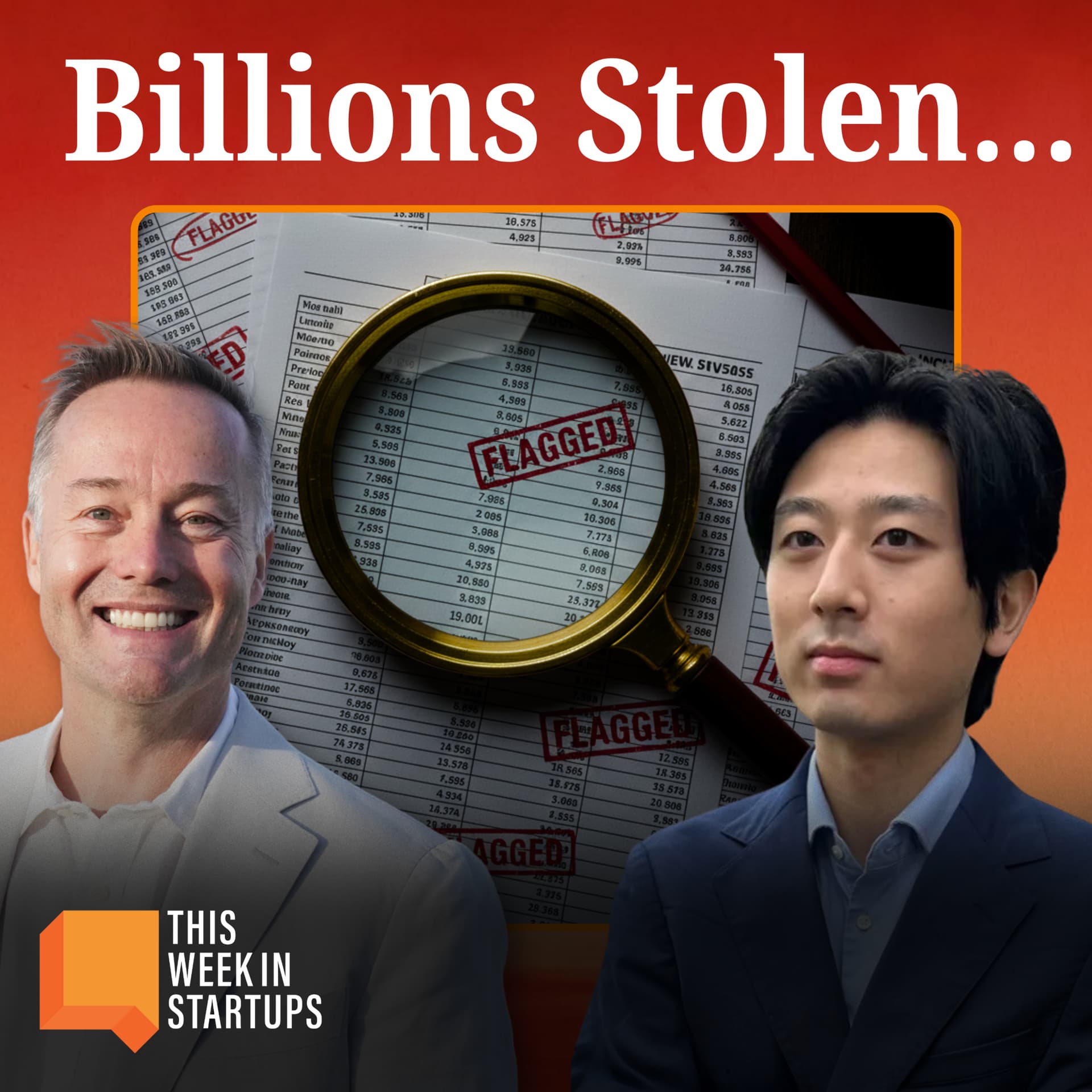
Episode Description In this episode, Jason Calacanis interviews Alex Shieh from The Antifraud Company to discuss how the False Claims Act allows citizens to expose fraud and receive financial rewards. The episode also covers BOOM Supersonic, a startup aiming to bring back commercial supersonic flight, and concludes with a live Q&A session from Founder University Tokyo.
---
Key Topics Discussed
- Government Fraud and Waste
- The episode begins with a discussion on the rising issue of government fraud and waste, especially in light of recent events.
- False Claims Act: Under this act, citizens can claim a percentage of the money recovered from fraud they expose, incentivizing investigative journalism and whistleblowing.
- Interview with Alex Shieh
- The Antifraud Company: Alex explains that they act as whistleblowers themselves, using investigative journalism and AI to uncover fraud.
- Business Model:
- They monetize through the False Claims Act, collecting 15-30% of recovered funds.
- Alex emphasizes the importance of this model as a means to expose fraud that hasn't been previously reported.
- The State of Fraud in Government
- Estimates suggest that anywhere from $500 billion to $1.5 trillion in fraud occurs annually against the federal government.
- Current recoveries under the False Claims Act are minimal compared to the total fraud estimated, indicating substantial room for improvement.
- BOOM Supersonic's Journey
- The conversation shifts to Blake Scholl, CEO of BOOM Supersonic, who is aiming to resurrect commercial supersonic travel.
- History of Supersonic Flight:
- Discussion on the failure of the Concorde and why it couldn't succeed in the long term.
- BOOM's approach differs, focusing on efficiency and modern technology to bring down costs.
Key Points from Blake Scholl
- Mach 2 Flight Efficiency: Aiming for a 30% improvement in fuel efficiency compared to the Concorde.
- Design Innovations: Using modern materials and design techniques to create a more aerodynamically efficient aircraft.
- Market Strategy: Initially targeting business-class pricing for tickets, with hopes to democratize access to supersonic travel over time.
- Live Q&A at Founder University Tokyo
- Jason engages with aspiring founders in Tokyo, offering insights on entrepreneurship, fundraising, team building, and the importance of resilience.
---
Key Takeaways
- The Impact of AI on Fraud Detection: The integration of AI and data analysis is crucial for uncovering hidden fraud.
- Potential for Growth: There exists significant untapped potential in fraud recovery, highlighting a lucrative opportunity for dedicated companies like The Antifraud Company.
- Supersonic Travel: BOOM Supersonic’s ambitious plans signal a possible return of a revolution in air travel, focusing on efficiency and cost-effectiveness, unlike previous failures.
- Resilience in Entrepreneurship: The live Q&A session reinforces the idea that challenges in startup growth can lead to valuable lessons and stronger teams.
---
Conclusion This episode of "This Week in Startups" provides a rare glimpse into the intersection of investigative journalism and entrepreneurship in combating fraud, alongside the exciting developments in aerospace technology with BOOM Supersonic. Jason Calacanis’s discussions explore the potential for innovation and disruption in both sectors, offering insights and inspiration for founders and investors alike.
Written by AI. May contain mistakes. Listen to the episode to check what was said.
Chapters
Tap a time to open that second in VOInvestigative Journalism and AI in Fraud Exposé
0:00 to 1:09
Learn how AI and journalism can uncover fraud and drive penalties.
“And we talked about investigative journalism and how important it is.”
The Rise and Fall of Supersonic Flight
1:50 to 6:15
Explore the history of supersonic flight and the downfall of Concorde.
“As we go through episode 638 and pull out the key moments from our first chat with Blake.”
Blake's Vision for Boom and Supersonic Travel
6:15 to 8:34
Blake Schull discusses his passion and vision for a new supersonic airline.
“than the fact that it eventually came to an end.”
Technology and Economics of Supersonic Flight
8:34 to 11:29
Understand how modern technology can make supersonic flight economically viable.
“Then you can do a supersonic seat for the same fuel that a lay flat bed in business class would take.”
The Future of Supersonic Flight and Sonic Booms
12:52 to 14:00
Discuss the potential future rules and technology regarding sonic booms.
“That's actually almost terrifying to hear it laid out like that.”
Exploring Supersonic Flight Limits
14:00 to 15:20
Learn about the challenges and innovations in supersonic flight technology.
“I'd start reaching for my credit card right away.”
Startup Approach to Aviation
15:20 to 16:40
Discover how a startup mindset is applied to building supersonic aircraft.
“How are they going to get from an idea actually into the sky?”
Funding and Orders for Supersonic Planes
16:40 to 19:40
Understand the financial aspects of launching a supersonic airplane.
“or you've already started taking orders?”
The Importance of Checklists in Aviation
19:40 to 23:40
Learn how checklists improve safety and efficiency in aviation operations.
“You know, there's some days you get up and you think, oh, that'd be awesome.”
Building a Team for Innovative Aviation Projects
23:40 to 26:20
Explore the strategies for recruiting skilled professionals in aviation.
“Also, if you want to build an airline, you're kind of barking up a pretty tough tree because people like United Airlines trade at roughly 0.5 times revenue and Boeing trades more close to two.”
Show all 30 chapters
Hacking and Innovation in Aviation
26:20 to 28:00
Discover the parallels between software hacking and aircraft innovation.
“You have to get some crazy angels and be a crazy founder yourself who made a little bit of cheddar.”
Building an Airplane: Lessons in Aviation Engineering
28:00 to 29:18
Learn about the unconventional methods in aircraft engineering from a startup perspective.
“And he said, oh, that's a great question.”
Hiring the Right Team for Aerospace Innovation
29:18 to 30:46
Discover the challenges and strategies in assembling a top-tier aerospace team.
“Especially with experience, you start to learn what knowledge really feels like, what clarity feels like, and what it feels like when you don't have it.”
The Evolution of Funding in Aerospace Ventures
30:46 to 31:38
Understand how funding dynamics have changed for aerospace startups over time.
“Mars, which case they should go work at SpaceX.”
Learning and Growth in Aerospace Entrepreneurship
31:38 to 32:41
Explore the importance of continuous learning and adaptability in building a startup.
“Small people, small groups can do quite a lot of work very, very quickly.”
Addressing Fraud with Investigative Journalism
33:57 to 35:11
Learn about innovative approaches to uncovering fraud through investigative journalism.
“All right, next up on the program is a fascinating project.”
The False Claims Act: Understanding Whistleblower Law
35:11 to 37:20
Gain insights into the False Claims Act and its implications for whistleblowers.
“And then when it settles or you have recovery or you went at trial, then you're entitled to 15 to 30 percent of whatever you end up recovering.”
Startup Origin Story: Uncovering Waste and Fraud
37:20 to 39:50
Explore the origin of a startup focused on uncovering fraud and waste in institutions.
“I think Senator Chuck Grassley of Iowa was the one who pushed this, who broadens, who can bring these whistleblower lawsuits.”
The Co-founders and Their Unique Backgrounds
39:50 to 42:01
Discover the diverse backgrounds of the co-founders and their motivations in addressing fraud.
“Give us the origin story, because this is one of those startups that I would say is, when you're an investor, confusing.”
Insights on Government Oversight and Co-founders' Backgrounds
42:01 to 43:19
Learn about the challenges of government oversight and the backgrounds of the co-founders.
“But I ended up testifying before the House Judiciary Committee really about issues about what was going on at Brown and how this was implicating financial aid and our tuition dollars and federal funding.”
Business Model and Legal Case Dynamics
43:20 to 45:58
Discover the business model tied to fraud cases and the timeline to settlement.
“And he wrote the book, and then it became a federal class action lawsuit.”
Understanding Litigation Finance Firms
45:59 to 47:25
Explore how litigation finance firms operate and their role in funding legal battles.
“I mean, I can guess from the term, but explain to us how long they've existed, how they work, and how they sell an interest in a case.”
Techniques for Detecting Large-scale Fraud
47:26 to 50:04
Uncover the methodologies used to identify big fraud and the impact of AI.
“How much do you have to give up to access this kind of financing?”
The Role of Whistleblower Companies in Fraud Detection
50:05 to 53:00
Learn about the unique benefits of being a whistleblower company versus individual whistleblowers.
“is we're going through textual data with LLMs.”
Challenges in Investigative Journalism Today
53:01 to 56:00
Discuss the current hurdles facing investigative journalism and its evolving business model.
“it just makes the information processing so much easier.”
Exploring New Business Models in Investigative Journalism
56:00 to 56:30
Learn about innovative business models that are emerging for investigative journalism.
“these investigative insights that are non-public.”
Challenges in Recruiting AI Talent in China
56:30 to 59:37
Discover the complexities of recruiting top talent in China for AI roles.
“All right, we have a question from our amazing founders.”
Finding Passionate Talent on a Budget
59:37 to 1:01:55
Understand strategies for attracting talent when budget constraints are present.
“Japan media is kind of anyone can create and sell manga and anime with AI.”
Lessons from Tough Times in Building Teams
1:01:55 to 1:04:38
Learn how past experiences shape resilient leadership and team dynamics.
“Hey, this is Mickey Vito, co-founder and the CEO of Cashier Technology.”
Kintsugi and the Strength of Resilience
1:04:38 to 1:05:17
Explore the concept of kintsugi as a metaphor for resilience in entrepreneurship.
“it and you glue the pottery back together with gold and they stole it for Star Wars.”
Transcript
Automatic transcript. May contain errors.0:00Well, now he's built a company that wants to do exactly what you just said, use investigative journalism and also the power of AI to uncover fraud and collect fat penalties from the government for saving us all some money. And we talked about investigative journalism and how important it is. It turns out there are whistleblower laws. Whistleblower laws allow you to get 50%, a third of the money recovered. I think that we're probably not like any other company that is in the world because we don't have any customers. So this, it turns out, is a way that you can monetize information, investigative journalism about frauds that haven't been previously reported.
0:36We're not a law firm representing the whistleblower. We're not a law firm at all. We are the whistleblower.
1:08Welcome back to Twist. This is Alex. And today we're going back in time. One of my favorite founders in the world is Blake Schull. He's the founder and CEO over at Boom. Had him on the show a couple of times. I got to catch up with him in late 2025. And if you want to learn more about that, go check out episode 2168. But we've talked to him through the years. And I don't just mean a couple of years back. Jason actually had Blake on the show back in 2016. This is when Boom was more idea than product. It hadn't put a test aircraft into the sky yet. It had only raised a few million dollars and was miles and miles and miles further away from its goal of getting a consumer supersonic passenger jet into the sky.
1:47So I'm very glad to be joined today by producer Marcus. Marcus, hey, how are you? Hey, Alex, how are you doing? I'm doing great. As we go through episode 638 and pull out the key moments from our first chat with Blake. Here's Jason and Blake talking about why the Concorde died and how Boom got started. Taking off on the wrong runway, over max weight. They landed just, you know, very, very close to a diversion runway. Crashed close to the diversion runway. They almost made it. Wow. Yeah, it's really sad. Did that crash derail supersonic flight or was it the expense? Why did we get so fast, have this amazing technology and then not have it continue?
2:25When did that happen? When did they decommission the final? It was 2003. So it went back into service after the accident. That wasn't really the showstopper. But the reality is the death of supersonic flight happened in the 70s. Okay. Supersonic flight never changed the world, never took over the way the jet age did. And the reason was that we really rushed into it. And we built Concorde before it was possible to do it economically. So a ticket, yes, a ticket on Concorde cost$20 ,000. And yet there were 100 seats on the airplane. You just can't find 100 people who want to pay 20 grand to go somewhere twice a day on very many routes.
2:59And so the result is then you get no economy of scale, only 20 airplanes ever built. That's further pressure on ticket prices. And the whole thing is more thud than boom. You have this crazy idea that you're going to bring it back. Yes. Who are you and what qualifies you to bring back what the French and the English could not? Well, Jason, like you, I never got to fly on Concorde, and it pissed me off. And the first part of my career was all doing internet stuff, startups, tech things. But meanwhile, I got my pilot's license, and since the 2000s, I've been waiting for somebody to do this. Because I want to go Mach 2.
3:37And eventually I realized that I might have to start the company if I want to have it happen. Explain to everybody what Mach 1, Mach 2 is. Where do current planes fly? Where did the Concorde fly? Where does the boom fly? Yeah, so Mach 1 is the speed of sound. And all the major commercial aircraft, private jets, everything except a few military aircraft fly subsonically today. So about 85 % of the speed of sound is typical speed, 500 and some miles per hour. Concorde flew at Mach 2, and Boom will fly at Mach 2.2. Mach 2.2 is like 1451 miles per hour. Wow. Yeah, it's really fast. I mean, the way to think of it is what it does for your life, though.
4:13Like you leave New York, first flight of the day, 6 in the morning. you land in New York with the time difference, 2.30 in the afternoon, London time. And then you can get downtown, get business done, go out drinking. You can have seven hours in London, still get back to New York by 8 o 'clock New York time. Wow. So you can tuck your face to the bed. So you think three hours is - About three and a half hours each way. Three and a half hours each way. You're a former internet guy. You made a little bit of money at some point, I guess. And then you started flying around in a plane. Why do all these internet cats want to go fly planes?
4:43What is it about internet people and private aviation? Because it's obviously a trend. Is it just because it's like an expensive thing or because you want to be like in control of something very technical? Why did you take up aviation? Yeah, I mean, it's been a passion since childhood. There's something magical to flying a plane, especially a small one. On one hand, it's kind of technical. And so if you're a geek, you like that. And on the other hand, it gives you this very direct experience of having your life in your own hands. And so to a certain kind of person, that's very appealing. Okay, so you have the idea for Boom.
5:14When did you have this idea that, and how did you go about vetting that it could be not just an idea, but a company? Yeah, what started about two years ago. So I sold my first startup to Groupon, spent a couple years at Groupon, then left. And I wanted to do another startup. And I wanted to work on something that I was super passionate about. Because many times what makes the difference between success and failure in a startup is are you working on something that you care so much about that you keep going through the thick and the thin. And so I figured I would make a list of all my ideas in descending order of how awesome it would be if they worked.
5:44And I'd worked on that list. Great. And so I thought I'd get the supersonics thing out of my system in a couple weeks of research. That was number one? That was number one. I was trying to eliminate science fiction. Right, exactly. And so I thought I would get into this and find that it was science fiction. And Alex, in a tale as old as time, it turns out that being early is just as bad as being wrong. I think Blake laid it out really well. $20 ,000 for a seat just for one flight. Far too much money. I had no idea it was that expensive. I thought it was maybe half that much. So I'm actually more surprised that it lasted as long as it did, Marcus, than the fact that it eventually came to an end.
6:17But he's right. You know, the jet age did revolutionize first military aircraft and then, you know, the civilian world. And certainly military jets can go supersonic, but passenger jets can't. So it's an interesting situation. I do think, though, this is a good clip for another reason, which is that Blake is clearly the right founder for this project. He was a pilot. He had an itch. He had a grievance he wanted to go out there and take on. As Josh from Lux says, you know, chips on shoulders, put chips in pockets. Well, he was peevish. He wanted to take this flight and Mach 2. No one was working on it.
6:45So screw it. I'll go out and build it myself. I just hope that more internet entrepreneurs take this as a license, if you will, to go out there and build things in the physical world as well, and not to be constrained to just things that are digital and also, you know, go out there and touch the metal, if you will. Absolutely. I think a top line from that section of the podcast was when Blake said that after selling his company to Groupon, he created a list of the top five craziest ideas that would be just not at all possible, but the craziest, coolest ideas that he could think of. And supersonic flight was at the top and he went for it.
7:20All right. Now, in this next clip, we're going to talk about how technology has improved from the day of the Concord, why boom may make economic sense today, and also how fast can we go over land without pissing off everyone that you know? Take a listen. It was September 2014, kind of officially. Okay. So in 2014, you made a company to do this. How did you go about figuring out if this is a real business or not? And is it a viable business? Because frankly, my understanding of it was, and you'll tell me which are my misconceptions, number one, it's very expensive because it burns a lot of fuel.
7:53Number two, the planes were extremely expensive to maintain and complex. There was a small audience for it because it didn't save enough time to make people want to spend And the two hours was$15 ,000 extra or$10 ,000 extra. It wasn't worth it for people. What did I get right? What did I get wrong in my assumptions? Well, that's all true, except you can do better today. You can do better today. You can do better today. So the Concorde was 1950s technology. And today we've got better aerodynamics. We've got software-optimized aerodynamics. We've got better engines, lighter materials. And here's the key thing.
8:26If you can improve on Concorde's fuel economy by about 30%, just 30%, then you can do. So yeah, very doable. Then you can do a supersonic seat for the same fuel that a lay flat bed in business class would take. That's the key. That's what makes this feasible. So you looked at it and said, hey, I will give you a non-reclining seat. Like you're not going to get to lounge out and be in a sleeper seat, but you're going to get there super fast. So you're trading a little bit of that creature comfort for speed. Sort of, but not really. Flying from San Francisco to Tokyo in time and experience will be like flying from San Francisco to New York.
9:06So you get like a first class seat, but it's not lay flat. You get there so fast, you can sleep in a real bed. Making it 30 % more efficient. The design is obviously a little bit different. I'm looking at the plane right here. It looks longer and narrower than the Concorde. Am I correct in looking at it? So explain to me what is unique about the design and did you get that 30 % just from the design? Yeah, there are a bunch of pieces in the design that out of part aerodynamics, part engines, part materials, and all adds up to that 30 % actually with some margin. Concorde, so 50 years old technology, right?
9:40It was a big, long tube made out of aluminum because when you're working in aluminum, big, long tubes is what are easy to make. But for a subsonic aircraft, that's fine. For a supersonic aircraft, it's much more sensitive to the shaping. So think of, like if you're familiar with the B-1 bomber, take a look at that. Very dynamic shape. that was built in aluminum at enormous expense. But today we've got carbon fiber composites. And what you can do with carbon fiber is mold it in any shape that you want. So you can use software to design an optimized shape and then you can use carbon fiber to actually realize that.
10:13So if you look at our airplane, it's not a big long tube. It's a little bit fatter up front. It's a little bit skinnier in the back where the wings stick out. That's a principle called area ruling, which makes a huge difference in aerodynamic efficiency when you're supersonic. What do you think the efficiency will be, the efficiency gains will be between boom and Concorde. Well, it's a minimum of 30%. We've got some margin in there too. Oh, so it might even be better. Might even be better. Okay, now I've been reading about sonic boom. Mm-hmm. And they say that they're going to be able to narrow the boom.
10:43Do you see a time when boom will go New York to LA or New York to San Francisco in an hour and a half or two? Yes, I mean, that's absolutely coming. It's just a question of timing. And today in the United States, there's literally a speed limit. No supersonic overland. Doesn't matter how quiet you are. It doesn't matter if you go and you play Beethoven while you fly. Right. You're not allowed to do it. The technology exists to quiet the boom quite a bit. And so this airplane, our design, will be about 100 times quieter than Concorde. So that's a huge improvement. Is that enough to get the rules changed?
11:17I don't know. And I think smart startup thinking on this says don't count on any regulatory change. So we're thinking over water, supersonic, and when the rules get changed and we can fly supersonic over land, hallelujah. But you could take the Lyft or the Airbnb or Uber approach and just sort of break the rule and see what happens. That'd be interesting, wouldn't it? Can you imagine you'd start flying supersonic over the United States? I think they might shoot you down. They would definitely ground your plane.
11:47I meet with a lot of companies, and I'm telling you, every founder I know is asking themselves the same question. How do I get more out of AI? We all know these tools are making people more productive. They're making people more efficient. But a lot of founders still have reasonable concerns about data security or just finding the right application for their way of doing business. But waiting on the sidelines is no longer an option. So I recommend founders use NetSuite by Oracle and put AI to work for your company. NetSuite is the number one AI cloud ERP, and it's trusted by over 43 ,000 businesses.
12:23They're going to give you a unified suite of products, all safely sharing interconnected data. And that's going to help you automate routine tasks, dive into your analytics for clear, actionable insights, all while keeping your costs low and making your team faster. Right now, get the free business guide, Demystifying AI, at netsuite.com slash twist. The guide is free to you at netsuite.com slash twist.
12:521950s technology? That's actually almost terrifying to hear it laid out like that. The Concorde looks super modern, but apparently it was already dated when it was put out. The really key statistic to focus on here is the 30 % efficiency rule. Not only is it great just for explaining the business model, but even just for narrowing down what an investor might be thinking when they meet with Blake. You can see Jason starts out that clip a little bit concerned about if this is even feasible. And Blake just takes all of those concerns. How are you going to get billions of dollars for the capital expenditure needed?
13:22How are you going to get this team together? Are the unit economics going to work? And he brings it down to one statistic, 30 % efficiency. Just a masterclass right there in fundraising. I think also he did a great job putting it into context that you can get a supersonic seat for the same price as a lay flat seat today in business. Everyone knows what that costs, right? Because everyone's bought one at some point in time. So everyone knows the price point and also what you get for it. And so the trade-off here, I think is really interesting. You don't need a bed if you're going to get there faster.
13:50Like I would so much rather spend less time sleeping on a plane, which is terrible and more time on the ground. So I really think kind of the double hit there is a fantastic way for people to understand how to pitch a business and also how to get people like you and I super duper excited because it absolutely worked for me. I'd start reaching for my credit card right away. I got to put my hand down. It's a couple of years away still. Another thing that I really appreciated though, Marcus, in that segment was the discussion of sonic booms and the fact that there is a speed limit over the country.
14:17You know, we think about speed limits so much being this terrestrial thing we have to deal with with signposts and cops and radar and all that. But up in the sky, I guess I kind of implicitly knew that there was a speed you couldn't go over because of the sound barrier, but I didn't actually think it all the way through. So I love that framing of it as a thing that we're going to go out there and not only just deal with, but eventually, eventually, break. And I think VCs also love that idea. Absolutely. We're going to go from two gunshots in the air to a little thump. I think we don't handle a little thump in our lives.
14:44It means going supersonic. Actually, let me help out a little bit there because this interview, as we said, you know, 2016, very old. When I talked to Blake in 2025, nine years later, they've solved the boom problem and they've effectively figured out a way to fly above the speed of sound that doesn't create a boom on the ground. So I think that this is going to be not just something to get us from, you know, New York to Paris or from San Francisco to Tokyo, but instead really to get us from my favorite route in the world, SFO to BOS. And if I can do that in like what, two and a half hours, oh, your boy's going to be so glad.
15:16They're going to have all my money, Marcus, all of it. Absolutely. All right, next up, the clip we're going to talk about is taking the startup approach. Now, how do they build this plan? What's the plan? How are they going to get from an idea actually into the sky? Take a listen. Was it like a deals-based email type thing? It was mobile e-commerce technology, Totally, totally different as far as capital intensity. Yeah. You made an app. You made some software before. Right. Now you're talking about building. What I think looks, I'm going to take a guess here. I don't know. I haven't done the research.
15:45But I'm thinking, look, it screams to me of a billion dollars to get the first one out the door and$150 million, no,$300 million per plane. What does this cost? You're not too, too far off. $300 million per plane? So I like to tell people that we can build the entire company and get to break even for less money than Uber races in a round. Okay. But it's still a lot of money. But it's not an obtainable amount of money. And so you approach it like a startup and you do it sequentially. We're flying next year with a subscale prototype, which will go Mach 2.2. It'll set speed records. But it's much less expensive to build versus the full-scale, certified-to-take-passengers, proven-safe airplane.
16:27So you're actually making one for next summer. Oh, end of next year is when it will fly. End of next year. So in 19, 20 months from the taping of this, you will have a smaller version of the boom. Correct. And if you prove that, then you can start taking orders, or you've already started taking orders? We've already started taking orders, actually. This surprised me that it was possible this early. We have 25 airplanes on LOI. Okay, letter of intent. Letter of intent, correct. So not binding yet. Not binding. Does it include a deposit? It will. It will. Not yet, but it will. So like the Tesla, to reserve your spot in line, you're going to have to put something down.
17:03I'm assuming slightly more than the$1 ,000 that Elon's charging for the Tesla Model 3 will be the deposit for a boom. If not, I'm going to put down a deposit for the first 25 planes. Right. What will the deposit be? And what will the cost of the plane be? Ballpark. Hundreds of millions? The price of the plane is$200 million. OK. $200 million. And deposits, we'll see. What did the Concorde program cost? And they built 25 planes or something? They built 20 planes. 20 planes. They spent 10 billion? It's remarkable the thing ever flew. Right. So it was a joint venture between the French and British governments.
17:36Right. So this screams efficiency, right? They couldn't, for example, the technical documentation was in French and in English. They couldn't decide how many factories to build, so they put one in France and one in Britain. Yeah, they were fighting. I think I saw a special on this where they were fighting over who got to build which pieces. Yes. Which on an engineering basis, when the unions were fighting over who got the jobs to do different pieces, That was a little bit weird, wasn't it? Oh, yeah. Yeah. I mean, so you can do things way more efficiently. And Elon has really shown the path to this with SpaceX of what happens when you're scrappy.
18:07You hire a smaller number of really phenomenal people. You put them all in one room. You keep them around the hardware. You can execute way faster for way less money. Who's ordering these, by the way? Is it Virgin Atlantic or? The first ten are for Virgin Group, which basically means that Richard can use them in whatever airline he chooses. Okay. So Richard ordered 10. Mm-hmm. And at 200 million, kind of the billionaire crowd would be attracted to having these, I think. Mm-hmm. But it wouldn't be reasonable to operate for private aviation. It'd be probably a stretch. I mean, some people can make it.
18:46There's a guy in Saudi Arabia who purchased an A380. That's the double-decker. Yeah, I heard about that. For his own personal use. So some people will have to have this. But we're aiming at, you know, our vision is to make Earth more accessible for everybody. So the ticket prices out of the gate will be about business class. And over time, we're going to chip away at that until everybody can afford to fly. So$5 ,000. $5 ,000 round trip. Round trip? Round trip. To London. I thought Virgin Atlantic was$5 ,000 each way right now. It's like$10 ,000. I mean, it depends when you look at the price, right?
19:19Ah, right. And you have to model, when you're doing the business, you have to model out what are the average actual prices, net of all the discounts. So the average will be able to support us about 5 ,000 round trip. We talked a little bit about SpaceX. They're a full stack company. Uber's a full stack company, but you're going to sell the planes to other people. Have you thought, well, why don't I just create the boom and then create boom airlines? You know, there's some days you get up and you think, oh, that'd be awesome. Yeah. But, you know, it's one hard problem at a time. And airlines are a complicated business.
19:48Building a supersonic airplane is a complicated business. So one thing at a time. There's a lot of appeal to working with airlines. There is? Yes. What are they? Well, you get to accumulate an order book, for example. That's key to this business. If you want engine companies to work with you, you want to be able to raise the capital you need for this. Typically, the way it works for new airline programs, new airliner programs, is you show that you've got a bunch of orders, and then you go finance that. So if my business plan is I'm going to sell a bunch of airplanes to myself, that's hard to finance.
20:23We're AI First here at launch, and I have a team try out every cool new app and tool just to keep track of what's the state of the art, what's possible. And we found the closest thing on the market to a real AI-powered post-production tool. It's called Ray3 Modify from Luma AI. And with most AI video apps, you're just plugging in words and you're hoping for the best. But with Ray3 Modify, you build on top of Luma's Ray3 model. This gives you precise, nuanced control over your outputs, allowing you to actually direct your AI videos, not just guests. So let's check out some examples. We animated the launch logo, keeping its recognizable font and lettering intact.
21:02Oh my God, this came out incredible. Here you have producer Oliver going from just pretending to surf to having an actual surfing video. This stuff is wild. And we can drop this Tesla into about any environment we want. Stop guessing and start directing your videos with Ray 3 Modify from our friends at Luma AI. Try it today at lumalabs.ai slash twist or via the QR code you see on the screen right now. Less money than Uber raised in a round. That is how you know Blake knows his audience. Because if there's one thing Jason loves to talk about, Uber, you know, it comes up here and there, Marcus. But the thing that I really took away from that clip was the idea of applying traditional startup approaches to a very different problem set.
21:49When we think about building sequentially or perhaps iteratively, I think about lean startup and rapid iteration and shipping software quickly and all that. But applying that to this space is just so cool to see that the same ideas can work both on the screen and on the ground or in the air, I suppose. Absolutely. And speaking of the same ideas, we are still today talking probably even more now about how the EU has a hard time innovating. And here we are, you know, 10 years before, same topic. Same topic. Turns out that governments are not the fastest way to do things, but they are how we do things as a group.
Read the full transcript
22:21But it does seem that in this case, comparing the boom program to what we pulled off with Concord, that perhaps the private industry may be a little bit better equipped to handle supersonic flight. One last thing before we move on, $5 ,000 to go to London round trip from the US. Man, they're gonna sell a lot of tickets on these planes when they finally get there. I think a really intelligent point from Blake here in an early point was talking about Elon Musk and vertical integration. You know, in 2025, we have so many examples of vertical integration from startups. We have, you know, we talked to Base Power and Zach Dell, Elon Musk and all of his factories.
22:54You hear from Anduril and their vertical integration efforts. And Jason asks, why not go for the whole gambit? Why are you even selling a book of business here? Why not just own the flight itself and become a passenger airline as well? Blake responds really well saying, for one, this is a really complicated problem just building this jet. So we'll take one step at a time. But part two, as a lean and scrappy startup, to your point, it is much easier to finance a plane when you have a book of orders. So he says, you know, we're going to get a book of orders, these LOIs. And once these orders come through, we'll be able to really scrappily get this amount of capital together that we wouldn't otherwise have access to if we were trying to become a passenger airline right out of the gate.
23:43Also, if you want to build an airline, you're kind of barking up a pretty tough tree because people like United Airlines trade at roughly 0.5 times revenue and Boeing trades more close to two. So if you're just thinking that's in purely price sales terms, Blake really does have a point. Now, next up, I do want to talk about a book because this is a book that Jason was talking about in 2016. and he talks about it each and every week here at Twist and Launch. Take a listen. Am I in a system that's constantly reinforcing discipline or do I kind of wing it and I figure, oh, I can make that work? And this is where Checklists, I don't know if you've ever read their book, The Checklist Manifesto.
24:15I love that book. Isn't that a great book? Checklist Manifesto is my audible selection of the day. They're not a partner or sponsor on this episode, but they have in the past. But what a great book. Explain to everybody the story about the, was it the B2 bomber? In the book, when they talk about the checklist manifesto, they were talking about one of the planes was so big and complex that one pilot couldn't – the way they used to have the structure of it was you'd have one pilot in charge. Right. And then everybody else would do what they said. Mm-hmm. But – so they really didn't have like a delegation system.
24:47But then because of this checklist, they created checklists and then they would run them down with each other. So they sort of dispersed the load of maintaining – Yes. Putting the load across pilots is a big deal as well. So typically for a commercial aircraft, you'll have one pilot reading the checklist, another one doing it. Much less likely you skip steps. Right. I think this plane had like six engines or eight engines or something crazy. Sounds like a B-52. I think it was the B-52. Like they thought it would never work. And then when they got the checklist going. And there you have it, Jason bringing forward the checklist manifesto, which is a common occurrence here at the launch and twist offices.
25:20We could not run such an incredible operation without the checklist manifesto. But I think this episode is probably the best time to bring up the book in question. That's because one of the key segments from the book that we all read was about how B-17 flying fortresses in World War II were these new, much larger aircrafts were very complex for pilots to run. And they need to scale the amount of pilots going over Europe rapidly in order to engage in these bombing efforts. And here we are talking to the CEO of a supersonic aircraft company. I'm sure the crew members on those planes will also be using checklists themselves.
25:57Well, you know, humans don't have infinite memory unlike AI models. So we do need a little help as we get through things. I do want to bring up one last segment though, Marcus. This is all about raising money and building a team. Now we know about hiring engineers, all the sponsors of this show are in that domain, but how do you find people that want to take on our project that will take a decade and it involves building a plane that no one has seen before? Well, let's find out. You have to get some crazy angels and be a crazy founder yourself who made a little bit of cheddar. to put up the money for this and prove it.
26:27Yeah, well, I think time will tell on that. Okay. So right now you guys have raised a couple million bucks, two million bucks. Yeah, before YC, a couple million bucks. Got it. And then after YC, we'll talk about it in a bit. What will it take you to build the prototype? It sounds like 25 million bucks to build the prototype. Actually, less than that. Really? 10, 20, something in that range? In that range, yeah. So it's very fascinating when you think about it, how little it costs for you to make a prototype that goes supersonic. Yes. Again, the bar for commercial aircraft is really high, as it should be.
26:55The bar for experimental one-off is... It's disturbingly low. I don't know if it's disturbingly low. Like, the responsibility is all on you to build something that actually works. So when I was first getting this business started, of course, I had to get an amazing team together. Sure. And so I was living in the Bay Area at the time and flying Cirrus out of Palo Alto Airport. And so I would take off from Palo Alto and I'd fly down to Mojave in Southern California, which is like the hotbed of experimental aviation. So I was going down there a lot, kind of, you know, on recruiting trips. Right. And one of the first times I was down there, I was very new to the whole thing.
27:29Like I had my pilot skills and like a little bit more, but not yet a ton. And I was getting a tour of the hangars. And there is something amazing behind every hangar in that airport. And so this guy showed me his hangar. And he had in there a Bert Rutan designed aircraft, one of a kind, that he had refurbished. And so I'm looking at this aircraft. I'm thinking, I want to ask a question about it. But it can't be a stupid question, right? And so he looked at the wings and there were these bumps about a foot out from the fuselage on the wings. I'm like, well, that's different. I haven't seen that before.
27:59What's that? And he said, oh, that's a great question. Well, when we built this, we didn't want to build a new landing gear from scratch. So we stole one off another airplane, but it didn't fit. And so we cut a hole in the wing and we put some fiberglass over it. And then he says, let me show you what we did with the nose wheel. And so apparently the nose wheel had also stolen off of another airplane. And it would retract if it wasn't canted just right. It would kind of jam and not go into the wheel well. Well, they fixed that by drilling a hole from the cockpit into the wheel well and giving the pilot a stick to poke the wheel if it's not aligned correctly.
28:38Yeah, it's not aligned correctly. And at that moment was when I realized that people in Mojave hack on airplanes the way people in Silicon Valley hack on software. You had to hire people who knew much more about aviation than yourself because, let's face it, you were a web guy, software guy, who got a recreational pilot's license and now wants to build Concord 2.0. Right. There's a little bit of a gap between what you know and what the people who built the Concord know. A little bit. A little bit. Who's the first person you get on the team or the second person you get on the team? And how do you convince them that you're not insane?
29:09You get all manner of responses. But first off, I think most people underestimate as adults how much they can learn, how much new things they can learn, and how quickly they can get deep. Especially with experience, you start to learn what knowledge really feels like, what clarity feels like, and what it feels like when you don't have it. So I spent about six months or so teaching myself aerospace engineering fundamentals, just reading textbooks, doing problem sets, meeting smart people, showing them my work and saying, can you check this? and people are really generous with their time, especially when you tell them what you're trying to do.
29:41And so I learned a ton from that and I got at least to the point where I could judge the people I might hire. And we went through, so we went through an exercise where the first couple of people in the company, so critical, and I wanted the best people in the industry. So I asked everybody I met in aerospace, if you had a magic wand and you could wave it and you could get anybody to come work on this project, who do you want? And you start to see what names come up. And then which ones come up multiple times. Exactly, exactly. And so a little over a year ago, we had about half a dozen candidates for the first couple roles on the company.
30:11We flew them all out to the Bay Area, got a conference room for a couple days and said, let's tear this whole thing apart technologically and also tear apart like what are the lessons of how you build an airplane company? And you can tell, you know, you sit in a room with half a dozen really, really bright people. And these people were like the inventor of the personal jet, the chief engineer from Atom Aircraft, the chief engineer from Spaceship One and Spaceship Two, whose airplane is in the Smithsonian. Like this was a high level room. And you spend a couple of days with those people and you quickly figure out who are the ones you really want to work with.
30:42And so we hired two people out of that room. People go into aerospace because they either want to build a rocket and go and colonize Mars, which case they should go work at SpaceX. Right. Or they want to work on fast airplanes. Right. In which case they should come and work at Boom. Well, will investors put the money up? With the benefit of hindsight markets and nine years going by, I can tell you that the answer is yeah, they will. Boom has raised to date over$700 million, according to Crunchbase data, and they raised$300 million last December. I will say though, there have been some bumps in the road.
31:10This has not been an easy journey for Boom. In fact, they raised their most recent capital markets when they announced their new data center project. Essentially, they're going to take some of their engines they've made, put them in a shipping container, and use them to power data centers. Because if anyone has money today to spend, it is AI companies trying to expand their compute footprint. That's absolutely right, Alex. And I think this goes to the heart of what Silicon Valley has come to represent philosophically over the last 10 years. For one, being lean as a startup, pivoting to where the value is today for this very long-term vision to change the world.
31:43And secondly, and almost more importantly, is getting a few smart, hardworking individuals together who are going to change the world for, you know, basically every part of our lives from Google, Uber, Instagram, even the U.S. government with Doge. Small people, small groups can do quite a lot of work very, very quickly. But I also really appreciate what he said about learning because it sounds like the number of people or the individuals who can have this level of impact is not small. In fact, it's open to all of us. Absolutely. Blake picked up a book and started reading about, you know, aerospace engineering.
32:15If he can do it, then we all can do it. Yeah, there's no excuse, which actually is kind of annoying. Like, thanks, Blake. Just saying, hey, I became an aerospace engineer in six months. Well, some of us have other responsibilities. No, I'm kidding. I love going back in time, Marcus, and seeing founders earlier in their journey. We often talk to people after they've achieved success, after they've gone public or raised the big rounds and whatnot. But it's fun to go back and see the joy in the challenge, the early progress, and the seeds of future success So thank you, Marcus, for your time. Everybody, we'll do a couple more flashbacks this year.
32:44Look forward to it. Until then, I'm Alex, and this is Twist.
32:51If you're listening to this podcast, there's a good chance you're thinking about starting a new business. And that means you're gonna need a beautiful website that's gonna help you stand out in a very crowded market. That's why I'm so glad to tell you about our longest running partner, Squarespace. It's the fastest, the most effective way to turn your idea into a money-making reality. Squarespace is going to help you find an incredible domain name. It's going to help you build a beautiful homepage, and you're going to start growing your company. Even if you're already a legendary brand, Squarespace is constantly adding helpful new features like Squarespace GPT.
33:27It's a guided experience inside ChatGPT that can help you build your website through plain language conversations. Just think about that. And you're going to get pay links, dedicated URLs that make it easy for you to collect payments online. So go to squarespace.com slash twist for a free trial. And when you're ready to launch, go to squarespace.com slash twist for 10 % off your first website or domain purchase. Thanks again to Squarespace for being my longest running supporter here on twist. All right, next up on the program is a fascinating project. Alex, you and I have talked on twist about investigative journalism, you and I've spent our careers in journalism.
34:07Journalism's broken. Journalism's transitioned, yada, yada. Creative destruction is occurring. And we talked about investigative journalism and how important it is. It turns out there are whistleblower laws. Whistleblower laws allow you to get 50%, a third of the money recovered and the settlements here. People don't know about this, but the SEC has been giving these awards for some time. Some of them have gotten very large, I think up to nine figures. Our guest today, who Alex will introduce in a moment, has created a startup to address this and productize What a brilliant idea, Alex. Over to you.
34:38Yes, please welcome to the show Alex Shea from the Anti-Fraud Company. Jason, I first heard about Alex when he was taking Brown University to task. Given that Brown University is about 25 feet from my house, I was like, who is this guy? What is he doing? Well, now he's built a company that wants to do exactly what you just said, use investigative journalism and also the power of AI to uncover fraud and collect fat penalties from the government for saving us all some money. Alex, welcome to the program. How are you doing? Thank you for having me. Yeah, Alex, tell us, what is your company, the mission, the product, and where are you at today?
35:09Yeah, that's a great question. So I think that we're probably not like any other company that is in the world because we don't have any customers. And the reason for this is the way that we monetize is using an obscure piece of law called the False Claims Act, which has a provision called the KeyTan provision, which basically says that if you're a whistleblower, you found fraud that nobody else knows about, and you bring it to the government, then you can file a lawsuit essentially on behalf of the government against the fraudster, the person who's defrauding the government. And then when it settles or you have recovery or you went at trial, then you're entitled to 15 to 30 percent of whatever you end up recovering.
35:50So this, it turns out, is a way that you can monetize information, investigative journalism about frauds that haven't been previously reported. And it turns out that this can be a pretty fine business model because the fraud that is out there can get pretty big. Okay, so here's justice.gov, the Justice Department of the United States of America, the DOJ. The False Claim Act. Many of the fraud sections cases are suits filed under the False Claims Act, FCA, 31 U.S.C., blah, blah, blah, blah, blah, a federal statute originally acted in 1863 to defense contractor fraud during the American Civil War.
36:35The FCA provides that any person who knowingly submits or causes to submit false claims to the government is liable for three times the government's damages plus the penalty that's linked to inflation. Wow. This thing's existed. you've created a company to file these claims on behalf of the whistleblowers who find it and then split the revenue with them? Is that the business model? That's not quite right. So we're not a whistleblower. We're not a law firm representing the whistleblower. We're not a law firm at all. We are the whistleblower. And so the way that people typically think about this is when they think about these whistleblowers, they think that these are typically people who are inside the company.
37:11Their boss is doing something wrong and they tell on their boss. And this is what it most commonly was used for. But they made an amendment to the False Claims Act in 2009, I believe. I think Senator Chuck Grassley of Iowa was the one who pushed this, who broadens, who can bring these whistleblower lawsuits. And so whistleblower might even be a misnomer because you don't necessarily have to be an insider. Maybe a more correct way of thinking about this is more of a bounty hunter program because completely outside the conduct and still bring a case. And I think one notable type of case that happens is oftentimes a company's competitors will sue them if they're engaging in some kind of unfair business practice that is defrauding the government.
37:55And they'll be like, hey, hey, you can't do that. And numerous times in the past, this has worked. And companies have been able to get these whistleblower recoveries by telling on their competitors. And so we're similar to that, but taking it in a different direction in that we're just investigating. And when we find stuff, we're bringing it ourselves as a company, even though we're not insiders to the conduct. That doesn't matter. We're still able to do this under the law. But Alex, just to be clear about this, we're talking about fraud from corporations that are essentially overbilling the government.
38:26That's my understanding of kind of your thrust. Is that fair? That's correct. Yes. The statute is applicable when federal government spending is implicated. Okay. Now, I found some fraud stats from the government, and it's looking like they're finding several billion dollars a year in terms of fraud. My question is, how much fraud are we actually catching as a percentage of the whole? Are we getting, and this is an estimate, like 10 % of it? Are we finding half? How much more is there to uncover? There's a lot more. So I think even the low estimates, I mean, some people like Elon Musk is famous for saying it's$1.5 trillion in fraud.
39:06Some other estimates are less than that. The Government Accountability Office says it's more like$500 billion a year. But again, we have like a$7 trillion budget. So like a non-negligible percentage of the federal budget every year is going to fraud. And 500 million out of 7 trillion? 500 billion. And what's being uncovered under the False Claims Act so far every year is maybe like 4 billion or something like that. So this is what we call a TAM expansion play, is we think there's a lot more fraud that's not being uncovered so far. And we think we can help the government do it. Now, you partnered with a co-founder who has been doing this for some time.
39:47So tell us about how you formed the startup. You know, you had this original idea. Give us the origin story, because this is one of those startups that I would say is, when you're an investor, confusing. You've never seen it before, which then makes me lean in and get interested. And I've had to train all of my 12 associates and training at our fund when you don't understand a startup, when you can't put a pattern on it, when it seems weird or crazy. That's when you lean in. That's when you get more curious. So give us how you originated this startup, maybe a little bit about your partner and why that was so important.
40:33Yeah. No, thank you, Jason. So there's myself and there's two other co-founders, actually. and the other two are both lawyers and I'm more of an engineer. So my background, I think as Alex alluded to at the beginning of the episode, is a few months ago, not too long ago, I was a student at Brown University and I sort of noticed that there were a lot of issues with Brown that implicated both tuition dollars because it costs like$90 ,000 a year to go to Brown, but also government funding because Brown receives on the order of magnitude of$500 million a year from the feds as well. And so, like, why is it so expensive?
41:12And sort of, I'm a fan of Andrew Yang a little bit. And something that he's been saying for a while now is that the reason why Brown was so expensive is because of all these wasteful practices in the administration, and the particular number of administrators, the fact that there are 4 ,000 or so administrators. And to be clear, we're not talking professors, but we're talking about deans and secretaries and people who do people all day. Why are there so many? And as myself and critics like on all sides of the political spectrum, like Elon Musk or Andrew Yang will say is that that's kind of weird that there's like twice as many administrators and professors, especially since there haven't been so many in the past.
41:51And so I sort of put together a data mining project that really analyzed what they did. And that got a lot of attention. I ended up testifying before Congress about this. They also tried to discipline me, but that case didn't go anywhere and I was cleared. But I ended up testifying before the House Judiciary Committee really about issues about what was going on at Brown and how this was implicating financial aid and our tuition dollars and federal funding. And this really just made me aware that, you know, the government, they're great and all, but they really can't stay on top of everything that's going on on the ground.
42:23And I think that's a critical insight that I had and that my co-founders also had independently. One of my co-founders is a former FTC attorney. He worked in the Biden administration. And his focus area is really pharma, Medicare, Medicaid, sort of how big pharma companies are cheating and are leading to regulatory capture in ways that are preventing the generic cementering market from lowering prices for consumers. So he's really been interested in this from a different angle. Alex, that was David Barclay, right? That's David Barclay. And then our third co-founder, Sahaj Sharda, he just graduated from Columbia Law, where he wrote a book also about higher ed, about what the institutions of higher education are doing with their tuition pricing actually is a violation of antitrust law.
43:20And he wrote the book, and then it became a federal class action lawsuit. and all these Ivy League schools have had to settle this for like tens of millions of dollars. And so I think it really goes to show how much grift there is out there that really the federal government hasn't been effective at putting a stop to so far. And maybe some private market incentives are the way to go. How many cases can you take on at once? How much do you, how long does it take to settle these? Because as a startup, you have to have a business model. Okay, bounty hunting, great. Love it. Boba Fett, IG-88. I like the analogy.
44:01But you have to collect the prize. How long will it take you to collect the prize and get your startup to the point at which it becomes sustainable, right? That's going to be the big question from your investors, I'm sure. Yeah. So that's a great question. And I think the best maybe comparison that you make fraud bounty hunting too, is it will sound unusual, but I think one of the good comparisons that you can make is by comparing us to a biotech company. Because essentially, we have sort of these legal assets. The biotech company has pharmaceutical patents, also sort of IP assets. And they take a while of time to develop, is that you have to pass all these clinical trials and wait for FDA approval and maybe get approved.
44:43And so there's some duration there. But eventually, it, you'll win some and you'll lose some. And that's the business model. I think what we have here is pretty similar, is that you're right. It's slow. Is that with these false claims - Five years, seven years, what's the estimate in your model for how long it takes to settle these and to get your bounty? It depends on if the case settles or if it has to go to trial. If it settles and the DOJ gets involved and really pushes pressure on the company, on the fraudster to settle, then that could be as fast as two years. But you're right. It's like for longer cases where there's a lot of back and forth and discovery and it goes to trial, it might take five to seven years.
45:29But because we're running numerous cases every year, maybe 10 a year at a good rate, maybe even more than that, if we set up more verticals, we think that we'll be able to be solvent pretty soon in the future because at least some of these will settle. And the other way that we can monetize this is by selling portions of the cases to litigation finance firms, even before - Explain what a litigation finance firm is. I mean, I can guess from the term, but explain to us how long they've existed, how they work, and how they sell an interest in a case. Yes. So I guess the legal mechanics of what we do is that each False Claims Act case is we're not actually filing it through the anti-fraud company, but we're dropping down a subsidiary.
46:24And then we're essentially just sharing, selling shares in this subsidiary to litigation finance. Like an SPV, like you might for investing in a company? Is that the format you use? Something like that. I mean, it's just literally selling shares and that they're buying them shares. Who buys this? High net worth individuals? And how much would your average case be? Like, what would the opportunity be? And then how do you syndicate it? How do you find the investors? There's like an established market for litigation finance. I guess the thing that they typically like to do is they like to fund these big class action lawsuits because you need a lot of funding up front.
47:04And these sort of like class of plaintiffs probably don't aren't able to front front the cost when these things can cost like 20 million to actually litigate. And so essentially what what what these are is these are a certain class of investors who who invest money that pays for the legal fees and stuff up front. and at least in the class action context. And then they have an interest in what the outcome is. How big is the interest? How much do you have to give up to access this kind of financing? I mean, it depends. I think that maybe we would give up like 10%, 20 % of the interest in our cases.
47:40I think we don't want to give up too much because with litigation finance, it often is pennies on the dollar. But this is a way to get liquidity fast. but this is not the primary way that we intend to generate revenue because we think that all our cases are good and we think our hit rate is going to be better than you see on average because whereas many of these whistleblowers are sort of bespoke whistleblowers that don't really know what they're talking about are our industry insiders who are telling on their boss whereas this is our whole business we think we'll have a better hit rate and so we're going to be more inclined to hold on to most of the cases if not all of it ourselves this is just sort of one way that we could get liquidity if cases are taking a while.
48:21Alex, I'm a huge fan of rooting out fraud and saving us all money. Like Jason and I are absolutely behind you here. But I'm curious about repeatability and how you're going to be able to keep finding things on a kind of like plan basis. Like how are you going to do this year after year after year? So what techniques are you using to look for fraud? How are you confirming it? And what legal resources you need behind you to ensure that you're doing this and won't get sued into the ground because you're going after companies who have an interest in you not getting your way? That's a great question.
48:53And the way that I see it is that when you're committing big fraud, because we're going after big frauds here, we don't think that tinkering around the edges with small million dollar frauds is really going to fix the budget deaths that we're facing. And so we're going after billion dollar frauds. And the thing is, when you're committing fraud at that scale, at a billion dollar scale, is that you're going to leave traces somewhere in data, in government data sets that we have access to, in commercial data sets that we're purchasing, in filings that you're making with the government. And there are sort of, there's this whole branch of researching this called OSINT, open source intelligence, that has been going on for a while now, where we're just sort of sleuths on Reddit, we'll dig through all this information and try to put it together.
49:45And I think that now that we have AI, though, and that really accelerates our ability to process information because fundamentally at the core of what we do is that we're an information processing company because we're gathering signals from all these places. And so there's really two key ways that we're doing this here is we're going through textual data with LLMs. And so I don't want to give away too many of the secrets here, but essentially we have access to a trove of documents of relevant stuff. And we're running through this through LLMs to see if we can find any indicia of fraud. And then secondly, we have access to a bunch of sources of data from the government.
50:26And this is more structured data. And so my background is actually I'm formerly at Palantir. And so we sort of ontologize these structured data sources and see if there are any flags raised there. So you're going to put the entire government into Notebook LM and find the fraud. I love that. My question is, why are you talking about this? Because, Alex, you don't need publicity to go out and get customers. It seems like you're talking about this and you're going to engender competition. Or do you need to get inbound? I mean, maybe you do get inbound. I don't know. We do get plenty of inbound. And if anybody is watching this show and knows of any things against the government, feel free to let us know or go to the antiflodcompany.com.
51:09Is there a submit form there or you just have to get your email? There is. Emailing if anybody has any tips for us. We've gotten some tips that have been useful, but also there's just a lot of subject matter expertise on our team. like we have experts in sort of the pharmacy space, expert, long-tenured investigative journalists, obviously a bunch of legal experts and engineers who know what they're doing with all this data stuff. And so a lot of the ideas also just come from in-house. We have a hunch that something's going on and we go try and find it. But honestly, I don't mind if other people want to do a similar thing and want to find fraud because again, there's a lot of fraud.
51:52I mean,$500 billion is the low estimate. $1.5 billion is the high estimate. Somewhere between those two numbers will probably wind up being the truth. You can't be taking on more than a couple of dozen active cases at a time, can you? Oh, absolutely not. And I think this just shows the value of capitalism and incentives, because when you have a law that Lincoln passed in 1863, like the False Claims Act, that entitles sort of whistleblowers to a share of the interest in recovering fraud for the U.S. government, then everybody wins. the whistleblower wins, the government wins, because they have money that they otherwise wouldn't have recovered.
52:30And just by aligning incentives so people do stuff that is protective for society, this is a very good way, I guess, of structuring this law here. The problem is that we've had it since 1863. We have these incentives in place, and we all agree that incentives matter. But why hasn't that incentive structure of getting such a large chunk of the recovered monies done more to combat thought? How did we end up with$500 billion to a trillion dollars a year we fought if we have these aligned incentives? Was it AI the missing piece? I think there's two missing pieces. I think AI was one of the missing pieces because it just makes the information processing so much easier.
53:06There's this metaphor of the blind man and the elephant, right? Is that one is touching the leg, one is touching the trunk. And this is how fraud detection has been for a while now is that people have sort of a glimpse at part of their conduct, but they don't really get the full picture and AI and having that gives us more of a full picture than blind men and elephant. But I also think there's a lot of activation energy that you really need to put together all these pieces. And that's why the most effective way of being a whistleblower is by being a whistleblower company, because then this is what you do every day.
53:43You learn from it, and then you're able to make it repeatable, as opposed to sort of these bespoke whistleblowers who's like a guy in the company and then they got fired and so they're mad and they have some dirt on their boss and they file an FCA case themselves. I mean, like this is useful, but I think that putting it together in a company that specifically does this is incrementally more so. Final question and congratulations on all this. I think it's awesome. And it's really of the moment. You must've seen Nick Shirley's knocking on doors at daycare that story obviously is a 15-year-old story and people have already been tried.
54:22What's your general take on what he's doing first? And then two, when things have been, you know, bubbled up and investigative journalists have knocked on these doors many times, is there more of an opportunity there for you or less of an opportunity? Yeah. I mean, I'm not so sure if we're going to be taking on the Minnesota case necessarily ourselves, because a lot of stuff has already been publicly reported on that. And I mean, like one of the central premises of the False Claims Act is that you have to bring information that's not already public. I mean, that makes sense. But I mean, I like the whole concept of exposing fraud and really having citizen journalists doing that.
55:05I think that's all really good. And I think you're alluding to something more fundamental here is that the business model for investigative journalism sort of is broken. Maybe it might have had more of a golden age in the 80s or the 90s, way before my time, when you had these local newspaper powerhouses where everybody had a subscription and everybody bought ads in the newspaper. And so they really just had a regional monopoly, and they could really look into these things, like the sexual abuse in the Catholic Church or Theranos. And investigative reporters really had a lot of resources to make these prestige stories.
55:40But I think what we're seeing these days is that where everything is online and that you get paid based on clicks is that then everybody is making more click-baity-flavored content. And there's not so much interest in investigative journalism. And we really think that False Claims Act and these other whistleblower programs is a great way that we can monetize these investigative insights that are non-public. And also we plan on publishing full write-ups when we're able to do so. But I think that this is a new business model for investigative journalists and one that we're hopeful is going to be the future.
56:16Well, I do hope that you publish all those documents because I would love to see the spirit of investigation live on, Jason, but a fantastic company. We love it. Private Sector Doge, it's the anti-fraud company. He's Alex Shea. Thank you much for your time, Alex, and Godspeed, save us all some money. Thank you, Jason. Thank you so much, Alex. All right, we have a question from our amazing founders. Hi, my name is Gopal, or GP, for Zsupra.ai. We make basically AI foundational models for pharmaceutical and healthcare industries. So we're in Japan right now, and obviously we have some global growth ambitions, and you're, I guess, a high-powered recruiting agency in Tokyo.
56:55But one of our clients is one of the larger drug companies in China, and we have to basically have models in the China mainland. So there's some data federation issues. Obviously, we can manage this remotely, but are you able to help us get the kind of talent that we need? So we need A-plus talent. I'm coming from a background with AWS, IBM, all this type of experience. I want that quality in the mainland, and I want to be able to communicate with them very tightly in that we are in the same culture. Because I'm part of another larger company right now, and culture is important. Great question.
57:46Recruiting A-level talent in China in a very interesting moment in time in terms of globalization. Yeah, well, I mean we also have a mainland China office. But to be honest, actually there's a lot of Chinese people who love Japan. There's a lot of Chinese companies out here in Japan as well, like ByteDance for example. So I think again, it's not a secret sauce. All you need to do is make sure that you reach out to as many people as you can, of course have the right partners. Why working with an external recruiter is a good thing is because if you directly go to the candidates, you know, you could tell them stuff and they might tell you stuff, but they're not going to be 100 % honest with you guys.
58:32But if they work with external recruiters, candidates will tell exactly how they feel. Right. Because you're their advocate. You're their intermediary. Exactly. And, you know, like, that's why, like, I think, you know, if you have a right partner who understands the market and who understands your business, and, of course, like, we have to get to know each other. If it's me or whatever recruiter, you have to spend time with them because, like, if you really care about culture, like, they need to know you well. What are you looking for? How do you spend time with a recruiter before the process?
59:03I mean, like, are we going to hang out in the office? Are you going to watch us work before we start hiring? Yeah, how do you interview the founders? What do you typically ask them? And then how do you pick, because you, I'm assuming, don't take every client. As a founder, like, you would reach out to a recruiter, and then say, hey, can we have a chat? This is what I'm looking for. And then you have that first initial consultation, right? And I think within 30 minutes, or even within 5 minutes, you kind of know, like, if this person's going to be able to vibe with you, right? So, yeah, like, spend time on the calls.
59:29As a founder, you have to ask questions, like, is this recruiter trustable? Do they know their things, right? Like, do they know the market? Thank you. I'm Yuko. So we are building Japan media. Japan media is kind of anyone can create and sell manga and anime with AI. And how can we acquire global talent? Because we cannot pay so much salary compared with that of the US. How do you do it on a budget? Or you don't? Yeah, that's the difficult part, right? I mean, if you want to get really good talent, you got to pay to play ball. That's just how it is. So unless if you don't have cash right now, you can do equity.
1:00:13But then you have to find a candidate that's passionate about what you're doing. They got to be passionate about the manga, the anime, the sales, whatever you're doing. You will find that person. It just takes a lot longer time. And it kind of precludes you from having a recruiter because recruiters get paid typically based on a percentage. And so the great recruiters are probably not going to take on early stage startups. It's good for you to know this now as a founder for when you get your Series A. and maybe you've got$2 or$3 million in the bank and you can afford somebody great, then the recruiter would kick in.
1:00:43My best advice would be you're trying to find the person, if you were to draw an X, Y axis, passion for the subject matter and talent and ability. And the further into that top right-hand quadrant you can get, the better you'll be. And there's another variable that you can put in there. They've already made their money. So finding somebody at Meta or Uber or Microsoft or Google who has taken down a large chunk of cash and doesn't need to work, but wants to be productive and really loves your mission. Wow, what if everybody in the world could participate in anime and manga? That would be like an incredible thing for them.
1:01:21Wow, they might really love working on the product. So that means even more you're selling them on the mission. And what's great about those people is they are potential co-founders. They'll be probably more equity driven and they might even want to invest in the business. So I've seen people come to startups or come to me and say, hey, I made a bunch of money. I worked at Meta. I want to join another startup. Here's my skill set. I also want to invest. I want to buy 2 % of the company, 4 % of the company, and I want to get a 2 or 4 % equity package and I want to be the CTO. Hard to find, but you always have to be recruiting.
1:01:53A-B-R. Always be recruiting. Hey, this is Mickey Vito, co-founder and the CEO of Cashier Technology. I have a simple question. I saw the movie about Uber and there was a tough time there. What is the most important lesson for an HR leader to build the tough team? There were some tough times. You had to have a bit of grit. You were there for during some of them. What's your best advice for building a resilient, gritty, strong team? That's a great question. I think what happened with Uber was it went from a baby to an adult real fast, skipped all the teenage years. So a lot of drama and a lot of things happened.
1:02:39But I think if Travis was to do it again, I think someone, an HR person, who's gone through that growth environment, who's seen crazy, is probably the perfect fit for someone who's going to go through that kind of tough times, right? So people who've been through Uber HR, like they can do like anything basically right so if you can find someone that basically went through a growth environment chaos environment that's gonna be the person that will hustle with you and probably can solve like a lot of great problems for you one of the paradoxical things about grit is sometimes it's those type of environments that make the great entrepreneurs so they come in and they're have great potential and then And they have significant hardship.
1:03:29And that's how they actually become great. And sometimes it takes getting kicked out of your company like Steve Jobs did and then coming back. Sometimes it takes having a near-death experience, almost running out of money, like happened to Elon three times with Tesla. Or three times when he blew up rockets and he couldn't get one to, you know, not blow up. It's the crises. It's the challenges that make the entrepreneur. but we have a perception of like, oh, there are these people who are incredibly resilient, incredibly strong, and those are the people who change the world. No, the world is hard.
1:04:03Startups are hard. Competition is hard. And that's what makes them. It's that experience. It's going through that fire that actually makes them. And I think your advice is really good. The companies that have imploded or had great success and then had it taken away, they're filled with people who have the scar tissue to be strong right sometimes the bone breaks comes back stronger it's like it heals stronger right there's this concept what's the concept in japanese culture where you something breaks like a vase and then they use gold to kintsugi this is a very beautiful concept kintsugi it's when something shatters and then you remake it and you glue the pottery back together with gold and they stole it for Star Wars.
1:04:48In Star Wars they had this concept where like some of the masks which originally came from the samurai Darth Raiders inspired by samurai but one of the masks was broken and then they Kylo Ren's helmet thank you editorial director he knows every cultural reference Kylo Ren's helmet was re-put back together and he welded it back together after he smashed it where got smashed. Really interesting concept. Comes back stronger. Okay. This has been a great episode of This Week in Star Wars. We'll see you next time. Bye-bye.
From the publisher
This Week In Startups is made possible by:
Netsuite - https://www.netsuite.com/twist
LumaAi - https://lumalabs.ai/twist
Squarespace - https://squarespace.com/twist
Today’s show:
Government fraud and waste has become a prominent issue in the last month.
That’s what we are looking at.
On Today’s episode of TWiST, Jason interviews Alex Shieh of the The Antifraud Company.
Under the False Claims Act, enterprising Americans, like Alex, can receive up to 30% of fraud dollars they uncover! Jason digs into the business of fraud with Alex Shieh and how a generational company could be built around it!
PLUS Alex Wilhelm and Marcus Brotman take a look at the history of BOOM, $1.5 Billion dollar startup bringing back supersonic commercial travel!
Jason first interviewed Blake Scholl almost 10 years ago in 2016. Back then, BOOM was a dream to bringing back supersonic travel. The Concorde’s failure, and why BOOM is different, is central to Blake’s thinking. What is fascinating is Blake’s mindset and vision for the early stages of this future unicorn startup.
THEN, Jason answers live Q/A at Founder University Tokyo! In partnership with JETRO, Jason and the LAUNCH team are bringing Founder University to 35 Japanese startups over the next 9 weeks!
Timestamps:
(00:00) Why the Concorde failed and how BOOM Supersonic is bringing back faster than light travel
(08:34) The 30% efficiency rule for Mach 2 flights
(11:46) Netsuite - Get the free business guide Demystifying AI at https://www.netsuite.com/twist
(17:12) Building million dollar planes on a startup budget
(20:22) Luma AI - Stop guessing and start directing with Ray3 Modify from Luma AI, the AI-powered post production tool. Explore it at: https://lumalabs.ai/twist
(24:11) The Checklist Manifesto: Lessons for pilots and founders!
(26:02) How to build a team that can go supersonic
(32:49) Squarespace - Use offer code TWIST to save 10% off your first purchase of a website or domain at https://squarespace.com/twist
(33:55) Private Sector Doge: The Anti Fraud Company
(38:48) The $500B in Fraud uncovered
(48:34) How Alex Shieh’s team uses AI to hunt down fraud
(52:48) How you can win 30% of exposed fraud with the false claims Act
(56:27) Founder University Tokyo Q&A
Subscribe to the TWiST500 newsletter: https://ticker.thisweekinstartups.com
Check out the TWIST500: https://www.twist500.com
Subscribe to This Week in Startups on Apple: https://rb.gy/v19fcp
*
Follow Lon:
X: https://x.com/lons
*
Follow Alex:
X: https://x.com/alex
LinkedIn: https://www.linkedin.com/in/alexwilhelm/
*
Follow Jason:
X: https://twitter.com/Jason
LinkedIn: https://www.linkedin.com/in/jasoncalacanis/
*
Thank you to our partners:
(11:46) Netsuite - Get the free business guide Demystifying AI at https://www.netsuite.com/twist
(20:22) Luma AI - Stop guessing and start directing with Ray3 Modify from Luma AI, the AI-powered post production tool. Explore it at: https://lumalabs.ai/twist
(32:49) Squarespace - Use offer code TWIST to save 10% off your first purchase of a website or domain at https://squarespace.com/twist
Check out all our partner offers: https://partners.launch.co/


