
In short
How Magnific (formerly Freepik) uses AI to help founders and marketing teams create high-quality marketing videos faster, including storyboard-to-video workflows, localization, and production scaling.
Guest backgrounds
Joaquín Cuenca Abela is co-founder and CEO of Magnific, based in Spain. The company has 5B all-time downloads and 150M+ monthly users.
Key claims
Speed unlocks “new” marketing possibilities beyond cheaper output. AI lowers the cost of launch videos (e.g., a 5-minute video that might cost $50K–$100K traditionally) while the real bottleneck shifts to creative direction. Hollywood is adopting these tools; it can reduce costs and expand content volume.
Notable examples
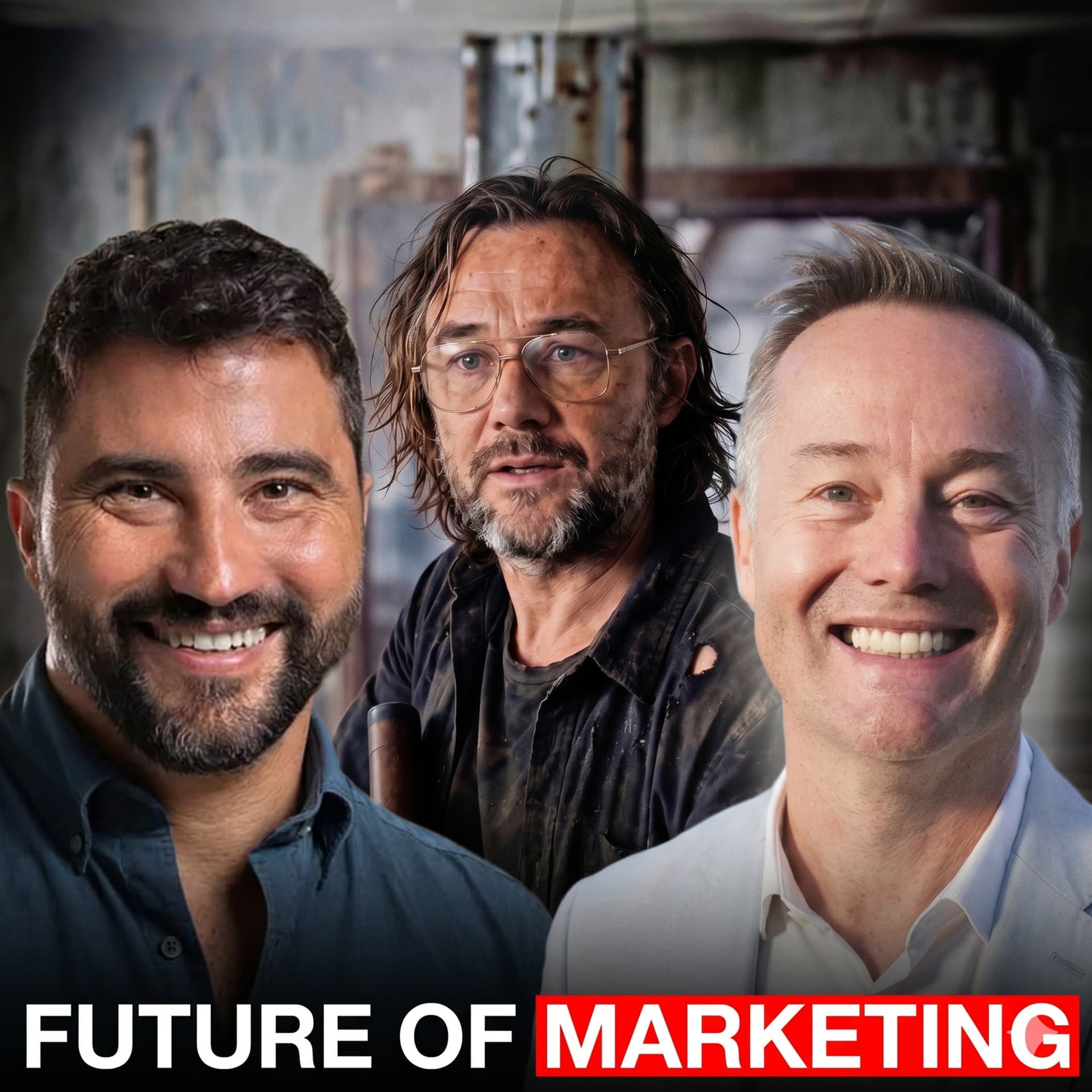
A demo creating a dystopian “This Week in Startups” ad in post-apocalyptic San Francisco from text prompts, generating storyboards, logo styling, and video scenes with audio references; discussion of future hyper-targeted, city-by-city video variants and the need for validation to prevent drift/errors.
Written by AI. May contain mistakes. Listen to the episode to check what was said.
Chapters
Tap a time to open that second in VOThe Rapid Evolution of AI Technology
0:45 to 1:16
Discussion on how quickly AI technology is changing and its implications for startups.
“And the challenge is this technology is moving faster and faster, faster than anything we've ever seen.”
Introducing Joaquín Cuenca Abela
1:49 to 2:18
Introduction of the guest, Joaquín Cuenca Abela, and his company Manific.
“He is the co-founder and CEO of Manific, Manific, I think would be the non-French way to say it, formerly known as FreePick.”
AI in Creative Marketing
2:18 to 4:21
Discussion on how AI can enhance creativity and marketing strategies.
“be more creative, but then turn their marketing into video, which is a big part of what you're doing, Joaquin, yes?”
Live Demo of Video Creation
4:21 to 7:10
Joaquín demonstrates how to create a video using AI tools, showcasing the process.
“So the first thing is I created a little storybook for the opening.”
Cost-Effectiveness of AI Video Production
7:10 to 9:11
Exploration of the reduced costs associated with AI-driven video production.
“Oh, he's got a shotgun and his glasses on.”
AI Tools in Hollywood and Beyond
9:11 to 12:52
Discussion on the adoption of AI tools in Hollywood and their impact on creativity.
“You usually get like somebody that is pretty good at photography, somebody that is good at audio.”
The Impact of Spec Work in Film Production
14:09 to 15:08
Explore how spec work can drive creativity and job creation in the film industry.
“Specwork's got a little bit of a, you know, people are like, oh, I don't want to do spec work.”
Recruiting AI Talent in Southern Spain
15:10 to 16:15
Learn about the unique advantages of recruiting AI talent in southern Spain.
“rather than something that's going to challenge their jobs or anything.”
AI's Role in Creative Storytelling
16:17 to 17:25
Discuss the limitations and potential of AI in generating creative narratives.
“on the visuals here, the aesthetic, but then creative storytelling, This seems to be a blocker for some people.”
Hyper-Targeting in Video Marketing
17:26 to 19:10
Understand the future of personalized video ads through regional targeting.
“What I think is unique to us is that it's our individuality.”
Show all 12 chapters
Challenges in Dynamic Video Production
19:11 to 20:23
Examine the challenges of creating dynamic videos for different audiences and the need for quality control.
“pick the iconic bridge in that city, pick the iconic restaurant or baseball field, the main street, and then make me a hundred versions by city.”
The Future of Personalized Ads
20:24 to 21:31
Discover how personalized advertising could evolve with AI technologies.
“that we still need kind of a cloud code for design.”
Transcript
Automatic transcript. May contain errors.0:00Hey, everybody. Welcome back to our Basics series. I get asked all the time as an angel investor, as somebody who helps grow companies, what should I do in terms of customer motion and finding my ideal customer profile? I get asked, hey, how should I do my cap table, legal issues, finance issues? How should I do my revenue recognition? And increasingly, the last two years, how should I use AI to make my startup grow faster, produce better? better quality products, better, cheaper, faster. You know, that's always the mantra. And you can see all of these great episodes at thisweekinstartups.com slash basics.
0:40We started doing AI basics to help people understand the core things this technology is allowing you to do. And the challenge is this technology is moving faster and faster, faster than anything we've ever seen. It's easy when we're doing legal because that changes every five, 10 years. Finance, hey, that changes also. Like, hey, every couple of years, You might get something out of the IRS to tweak. My Lord, when it comes to AI, it is changing month to month. And we've got a great guest today to help us with creative. And of course, this AI Basic Series is brought to you in partnership with my friends over at Google Cloud.
1:17Google Cloud really cares about founders. They're constantly giving credits and tools and this very series to help you as a founder figure it out and just figure out how to scale your company and increase your chances of success. You can check out Google's brand new Future of AI Perspectives on Generative Media for Startups Report. You can access that at goo.gle slash futureofgenmedia, all one word, no spaces, no dashes. And we'll put that in the show notes in the YouTube description today. We are lucky to have Joaquin Cuenca Abella. He is the co-founder and CEO of Manific, Manific, I think would be the non-French way to say it, formerly known as FreePick.
2:02They're based in Spain, I understand. Five billion all-time downloads, over 150 million monthly users for a reason. We're going to talk today about how to use his creative tools, hey, to go help founders be more creative, but then turn their marketing into video, which is a big part of what you're doing, Joaquin, yes? Yes, Jason. Thank you for having me. We are going to talk about how a modern marketing department can do more with AI. Many people are focused on how they can do the same things that we're doing before, but cheaper and faster. We're going to talk about the void. When you do things faster, what can you do that is new?
2:43And marketing is one of those spaces that has data. It's got creative. And then there's a whole bunch of best practices and alchemy between these two. Yeah, you have the, on one side, you've got this great science of marketing. And then on the other side, you've got the creative and in the middle, dare I say, alchemy. So let's see what you've built and how it works. Maybe you could do a quick demo for our audience of founders here. Sure, of course. Let me share my screen. Okay, listen, for this demo, I took the freedom to make it a little bit personal for you. I put together like a few restrictions.
3:20I wanted to show what a single person can do in 24 hours. And I'm in a point of making it myself. I'm not creative. My background is in tech. So there are going to be some glitches in the demo. I hope you will forgive me. Consider yourself pre-forgiven. Yes, it could be something to do in there. Okay. So the scenario here is I'm going to put together a little ad for your show for this week in startups. OK, and I'm going to put it in post-apocalyptic San Francisco. Just love it. OK, I'm all about the Blade Runner, post-apocalyptic, Walking Dead, zombies. I'm there. The first thing that I did is I created a few characters here that I'm going to use on this little show.
4:08OK, so this one in particular, he's looking for advice. This comes from a book that I read a while ago about science fiction that is from the 1915, very old book. So I decided to take a little bit of this background and mix it with yourself. Okay. Love it. So the first thing is I created a little storybook for the opening. Okay. So you see how these three characters, they're walking through the golden gate. So everything is devastated. Oh, it's like storyboards. It's storyboard. Okay, so you can create here like multiple images. You can combine them all together And then you pick them up and you create a video based on that story Okay, so you see now do you do that with text prompts or do you just find some images as inspiration and then add text prompts to it?
4:57Great question. There is a little bit of both in this case. It was all text prompt Okay, but in some cases I like to pick like some images from the internet use them as a reference especially when the text is not precise enough, it's very good to use some existing images. But in this case, it was all generated from scratch from some text. Okay? Great. And then I took your logo, this week in startups. Yes. I make it like rusty and old and all of that. Okay? Yes. Very dystopian. Yeah. Exactly. And I introduced it in a video and I made the same with you. Okay? So I took a few images from yourself and I made it post-posed.
5:37apocalyptic like you're kind of you know we're down a little bit yeah no haircut i got a goatee love it yeah exactly so uh you're gonna be kind of the guru that those three people uh seek for for advice into how to do like a big project again it's a bit messy because the creative process is messy but here it shows how you can go from one video to the next from one image blend it all use audio references. For example, I use these images from the internet as a show gun that you are having. And I'm a little dirty, I'm a little greasy. It's been a rough post-apocalyptic era for J-Cal. I'm in my post-apocalyptic era.
6:19Exactly. Let's say it's been a rough week. We put it all together and at the end I got this little clip here. I'm going to play it. I am excited to see this. Okay, so here we go. The bird screeching. We're going over a rusted out Golden Gate Bridge. There's an old man walking down the bridge. He's down on his luck. There is no one. Everything is desolated. Oh, there's Fort Mason. You know, the various buildings on the north part of San Francisco. Yeah. Here we go. You see that the young boy is still a boy. So there's a little bit of hope in the end. I mean, this looks amazing. Oh, and there it is.
7:04There's the This Week in Startups tattered logo, like a billboard or something. Exactly. And they get to this whole building. Maybe my studio. Maybe it's the studio. That's it. Okay, we're getting there. Are we done? Who's that? Uh-oh. He's getting his laptop. Oh, he's got a shotgun and his glasses on. This is some dark dystopian stuff here.
7:35It's me, Jason. Grandpa. Yeah, you are. I thought you were dead. It's my grandfather. The kid needs your help. It's my grandfather. I don't do that anymore. Who knows? Who knows? What do you know about building? What have you ever built? Do you even know how it feels to lose everything? Yes. I'm a grand. I want to rebuild civilization. What?
8:07come on follow me
8:16so not bad for one day i mean it's so inspiring and fun sincerely like i could see like it makes me want to use this this weekend with my daughters because they are into storytelling and they use CapCut and some of these, you know, like TikTok type tools, but it doesn't give you this palette. Now, when you were showing all of those storyboards, like sketches and whatnot, and they were getting attached together, did you draw those lines or did the AI draw the lines between the different scenes and collateral and inspiration you gave it? You can do both. Like as soon as you are typing the prompt, it can suggest, oh, do you want to connect it with this one?
8:55So you start connecting, okay, I want to use this image as a reference. I want to use this voice. I want to use, and you can put it all together super easily. So this thing was done just by me one day. Imagine a true creative team, like three, four people, like to their best. You usually get like somebody that is pretty good at photography, somebody that is good at audio. You put them together. And now you can tell much more compelling stories than before. What's really interesting about what you've built is you're starting to see a movement of people doing launch videos now. Startups are all doing launch videos.
9:29There are some brands that are getting a little cheeky on TikTok, Instagram. YouTube has the shorts feature now. And there's reels. I mean, all these different short features. You did Letterboxd there, so it looks cinematic. But I assume we could have flipped that and made it in the short feature. And what's great about this is this would have been$150 ,000 to make, you know, maybe 10K a sec, 10K a minute, 20K a minute, depending on the level of person you hired. So you do a five minute launch video, it could be 50K, it could be 100K. Here, you know, what do you charge for the software? What does it cost to do the output?
10:11And how do you charge for the product? Per second is around 10 cents nowadays. to be honest like you usually take like you do multiple tries to get the right one so you should you should assume it's like one dollar per second that's nothing like the real budget here is going to be your creative team spending their time and doing something great it's not going to be anymore on the platform the models you're building all these tools but there are many people building models open source models we have frontier models obviously google's got all their amazing models that are making great progress, Nano Banana and everything.
10:48So what do you use as the back end for this? Is it headless or are you actually building language models as well or image models as well? So we have some image models, like the upscaler is our own technology. We have some skin enhancer that is our technology, but we use many other like third-party models. We use the state of the art, obviously many from Google, but also from some other, but we try to have like a state of the art, whatever it is in the platform so that it is really easy for the user to achieve the best work that they can do. Who are the other customers for this product? Obviously, you know, the first thing that comes to mind here on This Week in Startups is startups who want to do launch videos.
11:31But has this made its way towards Hollywood creatives? I would think they would like to use this. You know, if you were a writer on a television show like The Walking Dead or, you know, any of these hit shows, Better Call Saul, it kind of would be cool to do a little cinematography yourself and, you know, do the dialogue and actually be able to use those actors' voices in the creative process. So the line between a writer and a storyboard artist, a set designer and a director and a cinematographer, I would assume those lines are blurring, yeah? Oh, yes. The great thing about this is that it is releasing the ceiling and it's also raising the floor, both of them.
12:12So you have Hollywood Studios, they are using it. For example, like the company that does the House of David, they have used Freepeek to make the production. It's used by all the big studios in Hollywood nowadays, and it's used more and more. The growth there is exponential, creating many, many users in Hollywood, but also many, many marketing departments. So that's the other side of the equation is you get used by companies that are 200, 300 people doing a film, but also by small studios that are three, four people making an ad or making a short film. It's using both sides, and they are both getting great value a little bit.
12:52The usage is slightly different. I want to clarify. If you're doing a film, typically you still record actors and you still do all that work, but now you can do much more with that footage. It seems like Hollywood went from just two years ago saying, hey, you know, pardon my French, F these tools, or like, these things are evil, they're bad, to now two years later, they're like, wait a second. And I was literally at this Breakthrough Prize this weekend, it's a science, the Oscars of science, and I was talking to Gal Gadot. She is very famous for playing Wonder Woman and a bunch of other things.
13:30And I asked her, hey, what's your take on all this AI sessions? It's incredible. We are now able to make films for one-third the price. We can film ourselves on a green screen or a gray screen, whatever it happens to be, and then let everybody else do the rest of the work, but we just focus on our performance. We'll be able to make two, three, four, five times as much content, and we'll be able to service different audiences. So, you know, sometimes people get scared, oh, people are going to lose their jobs, but we're also going to see a Cambrian explosion in creativity where, you know, somebody who's a screenplay writer or they want to be an ad executive, they can't break in, so they just start making spec work.
14:11Specwork's got a little bit of a, you know, people are like, oh, I don't want to do spec work. But people write spec scripts all the time. You can make a spec storyboard here, bring it to somebody, and you're just proving your idea out bit by bit a little bit more. Yeah, and it's just so exciting. Yeah, yeah, exactly. You can, listen, you can take some sacrifices and put still what looks like a great story. And it's going to be like a great story for people to see. or you can go full on on a bigger production. Like I talked to some Hollywood directors and what they told me is that they had a project that it would have never been greenlighted because of the cost to make the project.
14:50But now as they managed to reduce the cost, they managed to get that film and employ 600 people doing the film while otherwise there would not have been enough magic to do it. So it's actually creating more jobs. And I think you're right. Like Hollywood is coming to terms with technology because now they see more and more some alive rather than something that's going to challenge their jobs or anything. Yeah. And you've based the company on the coast of southern Spain. Am I correct? That is right. Yes. What is the AI talent like? I know it's big in Europe, right? You have Mistral there. You had a lot of great PhDs, et cetera.
15:28But when you pitch people on coming to the south of Spain, incredible seafood, incredible. Their tapas, great lifestyle, obviously. What's that like to recruit AI talent and have that in your back pocket? Listen, it is not San Francisco, that's for sure. But at the same time, it offers a great quality of life. It's also a great place for people to live. So when you pitch, the whole value proposition is you're going to build something that is exciting. you are going to reshape how creativity works in marketing environments, how films are made, how people tell stories. And it's in a great place with a great company.
16:13People really buy. Yeah, just amazing. When do you think the line between being able to execute really well on the visuals here, the aesthetic, but then creative storytelling, This seems to be a blocker for some people. You ask any large language model, hey, make me a script or make me a storyline. It's good at giving you brainstorming ideas, I find. Like when I'm writing a blog post or I'm going to be on a podcast, I might say, hey, I'm going to talk about this. Give me some bullet points, some history or some analogies in history, right? I'll ask for things that are analogous or maybe some other people's take on this topic.
16:54and it will do a good job brainstorming, but it's not, it doesn't feel creative. It doesn't feel tight, um, or visionary in any way. It's almost like asking a college student to, you know, give you some ideas and it's good at giving you some ideas and looking something up like our, like an intern might or a researcher might, but it's not fully creative. So do you think we're going to hit that point where the creativity of these models starts to match the creativity of humans? Or do you think it's going to be a tool creative humans use for some time to come? I think it will match the creativity of some humans.
17:27What I think is unique to us is that it's our individuality. So in a way, you are you and you are a result of your experiences and what is inside your brain. Me, it's impossible to replicate you or to replicate me. Okay, we are very, very like, an AI is very different because it's a digital artifact. So you can copy it. In a human, you do not copy it. So the thing that is important about this is that whatever we do, it's unique to us. And I think that's important. And putting that in your work, I think that's important and that's meaningful. So I think that those tools, they are going to drive more opportunities for people that are good at telling stories, that are good at putting their own history into something that is meaningful for others.
18:17So I think this is going to drive up actually more demand for people that can tell stories, for people that can put together like a good film or a good story. The interesting thing for me is as the compute gets better, I could see making 100 versions of the film you just made in some dynamic way and then using targeting to share them. So we did one dystopian in San Francisco, but we could have done Los Angeles. We could have done Sydney. We could have done Galicia or Madrid or any number of cities. And then people from that region could actually experience the same concept. concept, oh my God, everything died in this post-apocalyptic world except the Cybertruck, and the Cybertruck made it through with its solar panels, and you should buy a Cybertruck to prepare for the apocalypse.
19:09Are people doing that yet where they say, hey, you know, pick the iconic bridge in that city, pick the iconic restaurant or baseball field, the main street, and then make me a hundred versions by city. Then you can use something like the Google ad network to do hyper-targeting, regional targeting, or even other preferences. You know, it could have people who are my age, right? Or it could be more inclusive in different ways. Could have, I could have a Spanish accent. I could have a Japanese. I could speak Japanese. Like, there's so many possibilities here. Have you had customers try that yet? Yes, but for simpler things, not just for video.
19:51So what is happening is that for the previous generation of ads, when you have something static, that's something that you can try. That's something that we do. You can localize like 50 different languages, change the food in the ads, change like things like that. And that works pretty well. If you try it with a full video like this one, the problem is that at every step, you have a decent probability of error, decent probability of some of things going wrong. So again, you take like one minute and it completely loses the track. Okay. It diverges. It's not yet, I think we still need, and maybe we'll provide that, that we still need kind of a cloud code for design.
20:31Yes. Something that harnesses the AI, checks the output, and kind of steers it back. This feels like you know we're making progress when we start talking about the harness, the fact-checking, the validation level, because what it means is the tools are actually ready for production, and we need the fit and the finish and the polish, let alone doing this in real time. I mean, I'm talking about making 100 versions, but eventually this will be like Minority Report where each ad will mention you by name, you know, and they're going to be served dynamically in real time, you know, and it's going to be pretty crazy the future.
21:13But I think we're going to get both. We're going to get like some productions that are very, very bespoke to the viewer. Yes. But some of them, you want the vision of the director. It's like when you go to a restaurant. They tell you, you can't get any dish that you want. Here, you have all the ingredients. That's too much. I want your opinion on it. So sometimes you want the opinion of the creative to drive the narrative. That's also pretty cool. Yes. All right. Listen, Joaquin, thank you so much for educating us. Where can people download the app and find more information? Go to Magnific.com.
21:48Oh, well, there it is, folks. It couldn't be easier than that. And of course, check out Google Cloud's brand new report, Future of AI, Perspectives on Generative Media for Startups. It's a great report that you can get at go.gle slash future of gen media. It's in the description. It's in the show notes. Joaquin, you're famous. You're also featured in the report. Yes, they got you in the report. Yes, I want to thank Google for that. Thank you. Yes. and all the episodes of Startup Basics from marketing to legal to accounting. And now AI Basics are available at thisweekinstartups.com slash basics.
22:26This is our gift to the community. Get those basics, lock them in as a founder and just keep building your knowledge and we'll see you next time. Bye-bye.
From the publisher
The TWiST AI Basics series is made possible by Google Cloud!Check out Google Cloud’s new report, “Future of AI: Perspectives on generative media for startups,” Featuring thoughts from today’s guest, Joaquín Cuenca AbelaVisit: goo.gle/futureofgenmedia to check it out!Today’s show:In today’s edition of TWiST AI Basics, J-Cal is joined by Joaquin Cuenca Abela, co-founder and CEO of Magnific (formerly known as Freepik). We’re discussing how generative AI is transforming the creative landscape for startups.In watching today’s show you’ll have-consider your expectations of what AI video can actually do for you and your business. What used to take a high end production team months and tens of thousands of dollars now takes 24 hours and one person with patience to learn the right tools. This conversation explores how founders can use these tools to scale their creative output better, cheaper, and faster.Timestamps:0:00 Google Cloud - Check out Google Cloud's new report, "Future of AI: Perspectives on generative media for startups," Featuring thoughts from today's guest, Joaquín Cuenca Abela at https://goo.gle/futureofgenmedia1:10 Welcome to AI Basics, presented by Google Cloud!2:11 Meet Joaquín Cuenca Abela, CEO of Magnific (formerly Freepik)3:12 Building a post-apocalyptic SF ad for TWiST in 24 hours4:25 Storyboarding characters, blending images, and text-prompting scenes6:39 The finished product: post-apocalyptic Jason!7:56 How much cheaper is this than traditional advertising?9:34 The tech stack: Magnific's upscaler and 3rd party frontier models11:02 Which Hollywood productions are actually using AI?13:14 Hollywood's 180 from "F these tools" to enthusiastic adoption14:38 One director's 600-person AI-enabled production15:23 Why Magnific built in Málaga, Spain and how they recruit AI talent16:40 Can AI ever match human creative vision?18:43 The future: 100 versions of the same ad, hyper-localized by city21:35 Where to find Magnific + Google Cloud's Future of AI reportConnect with Joaquín and Magnific!Magnific (formerly Freepik) — Joaquín's AI creative platform, 150M+ MAU, $230M ARR → https://magnific.comJoaquín Cuenca Abela on X → https://x.com/cuencaJoaquín Cuenca Abela on LinkedIn → https://www.linkedin.com/in/joaquin-cuenca-abela-905717a/Magnific on X → https://x.com/magnificPanoramio — Joaquín's prior startup, acquired by Google in 2007 → https://en.wikipedia.org/wiki/PanoramioFortune feature on Magnific's $230M ARR rebrand (April 2026) → https://fortune.com/2026/04/28/freepik-magnific-joaquin-cuenca-abela-230-million-arr-video-generation-ai-pivot/Subscribe to the TWiST500 newsletter: https://ticker.thisweekinstartups.comCheck out the TWIST500: https://www.twist500.comSubscribe to This Week in Startups on Apple: https://rb.gy/v19fcpFollow Lon:X: https://x.com/lonsFollow Alex:X: https://x.com/alexLinkedIn: https://www.linkedin.com/in/alexwilhelmFollow Jason:X: https://twitter.com/JasonLinkedIn: https://www.linkedin.com/in/jasoncalacanisThank you to our partner!Google Cloud - Check out Google Cloud’s new report, “Future of AI: Perspectives on generative media for startups,” Featuring thoughts from today’s guest, Joaquín Cuenca Abela at goo.gle/futureofgenmediaCheck out all our partner offers: https://partners.launch.co/Great TWIST interviews: Will Guidara, Eoghan McCabe, Steve Huffman, Brian Chesky, Bob Moesta, Aaron Levie, Sophia Amoruso, Reid Hoffman, Frank Slootman, Billy McFarlandCheck out Jason’s suite of newsletters: https://substack.com/@calacanisFollow TWiST:Twitter: https://twitter.com/TWiStartupsYouTube: https://www.youtube.com/thisweekinInstagram: https://www.instagram.com/thisweekinstartupsTikTok: https://www.tiktok.com/@thisweekinstartupsSubstack: https://twistartups.substack.com


