
In short
Podcast Summary: This Week in Startups - Episode 2262
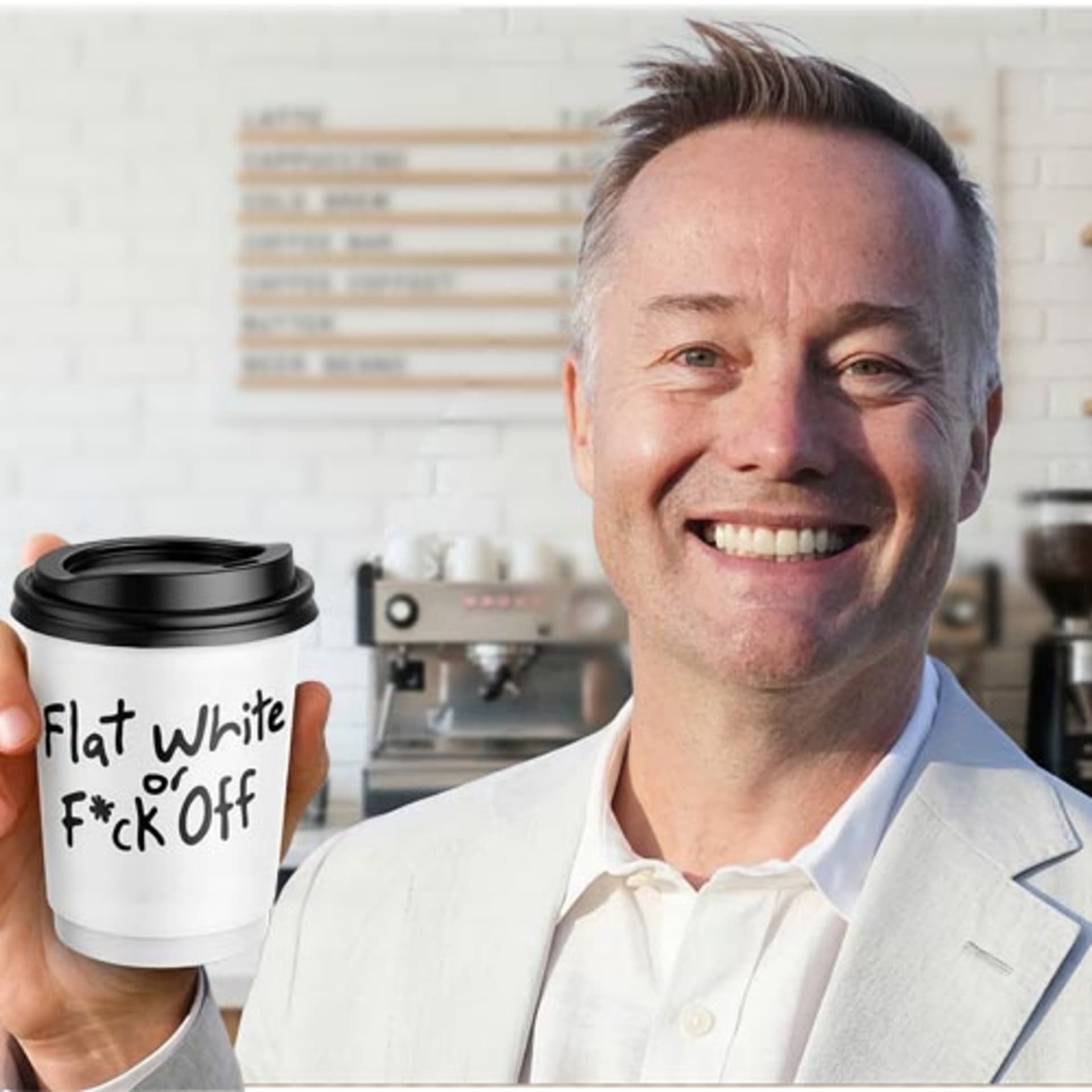
Title: One Genius Rule That Made This Coffee Brand Famous Description: The episode explores the journey of the coffee brand "Flat White or F**k Off," inspired by British adman Rory Sutherland. Founders Charlie Hurst, Tom Noble, and Will Sudlow share how they transformed a catchy slogan into a thriving business. Additionally, the hosts discuss decentralized storage solutions with Mog and Dubs from Subnet 75.
Key Guests
- Charlie Hurst: Founder and graphic designer behind the brand.
- Tom Noble: Tech expert and content creator for the brand.
- Will Sudlow: Experiential marketing professional and co-founder.
- Mog and Dubs: Founders of Subnet 75, a decentralized storage platform.
Episode Highlights
Introduction
- Jason Calacanis and Lon Harris discuss the evolution of startups beyond software.
- The episode features two segments: the coffee brand discussion and a talk on decentralized storage.
Flat White or F**k Off
- The brand was inspired by a humorous idea from Rory Sutherland, aiming to streamline the coffee ordering process for busy commuters.
- The founders discussed the viral nature of their marketing efforts, emphasizing the importance of simplicity in a chaotic market.
- The concept plays on the "tyranny of choice," simplifying the coffee selection to just one drink: a flat white.
Brand Development
- Social Media Strategy: The founders utilized TikTok and Instagram to gauge public interest before fully launching the brand.
- Production Collaboration: They partnered with a production agency to create a memorable pop-up café experience.
- Customer Engagement: The brand encourages playful interactions with customers, which became a hallmark of their marketing strategy.
Key Marketing Insights
- Experiential Marketing: Will's agency focused on creating unique experiences that engage customers and tell a compelling story.
- Feedback-Driven Decisions: Initial public reactions guided their decisions on the product offering (e.g., the inclusion of oat milk).
Decentralized Storage Discussion
- Mog and Dubs introduced the concept of decentralized cloud storage through their platform, Hippias.
- They explained how their system differs from traditional cloud storage providers like Amazon, focusing on reliability and cost-effectiveness.
- The conversation highlighted the challenges and innovations in building a decentralized infrastructure.
Closing Remarks
- Jason and Lon wrap up the discussion by emphasizing the importance of transparency and customer engagement in modern businesses.
- They also touch on broader cultural topics, including the evolving nature of media consumption and entrepreneurship.
Key Takeaways
- Simplicity can be a powerful marketing tool.
- Engaging customers through humor and direct interaction can enhance brand loyalty.
- The importance of adaptability in startup culture—responding to feedback and market trends is crucial.
- Decentralized platforms are emerging as viable alternatives to traditional models, particularly in cloud storage.
Additional Notes
- The episode includes timestamps for various segments, making it easy for listeners to navigate specific discussions.
- The hosts reference their ongoing efforts to cover various industries and technologies, aiming to provide valuable insights to startup founders and entrepreneurs alike.
Sponsors
- Plaud: Note-taking tool for efficient meetings.
- LinkedIn Jobs: Job posting platform with special offers.
- Wispr Flow: Speech-to-text tool for faster writing.
- Northwest Registered Agent: Business registration service.
---
For more updates and insights, listeners are encouraged to subscribe to the podcast and follow the hosts and guests on their respective social media platforms.
Written by AI. May contain mistakes. Listen to the episode to check what was said.
Chapters
Tap a time to open that second in VOIntroduction to BitTensor and Guests
3:21 to 3:54
Hosts introduce the new series and welcome the co-founders of Hippias.
“It's our very first entry in our new series, Tau plus AI.”
The Evolution and Purpose of BitTensor
3:59 to 5:32
Discussion on the significance of BitTensor in the context of AI and decentralized storage.
“It's an inspiring project because I remember having Bitcoin on this very podcast in, I think, 2010 or 2009, 2010, 2011, right in that time period.”
Building the Hippias Subnet
5:32 to 8:41
Co-founders share insights on the development of the Hippias subnet and its purpose.
“And how, and BitTensor feels like the perfect platform for that.”
Technical Insights on Decentralized Storage
8:41 to 10:54
The co-founders explain the technical aspects of their decentralized storage solution.
“And for people who don't know, Amazon has a product called S3.”
Understanding Contributors to BitTensor
10:54 to 14:00
Discussion about who contributes storage to the BitTensor network and the technical requirements involved.
“And then I guess maybe you could walk us through how it gets distributed and what the performance is like.”
Understanding BitTensor Storage Contributions
14:00 to 15:18
Learn about who can contribute storage to BitTensor and the expertise required.
“So then they can say wherever they're storing.”
Exploring HIPAAs Storage Network
15:18 to 17:40
Discover how HIPAAs has evolved in providing storage and its current capacity.
“In the early days, BitTensor miners are a strong community and we got a lot of feedback from them.”
Understanding Alphanomics in BitTensor
17:40 to 19:46
Delve into the concept of alphanomics and its implications for storage projects.
“It has to work as good as, and of course, it's cheaper.”
HIPAAs Blockchain and Its Mechanics
21:30 to 23:24
Understand the unique blockchain structure of HIPAAs within BitTensor.
“Now there's a number next to that, 488-7427.”
The Evolution of BitTensor's Storage Systems
23:24 to 27:40
Learn about the evolution of storage systems in BitTensor and the impact of the Arian update.
“So you're building a team in order to move up the rankings.”
Show all 36 chapters
Future Developments in BitTensor
27:40 to 28:00
Explore upcoming enhancements and new applications being developed for BitTensor.
“If there's nobody using the storage, I'm going to just back up all my photos times 10 just to fill up the storage because I've figured out the arbitrage, right?”
Understanding the Arian Update and Its Impact
28:00 to 30:00
Learn about the Arian update and its effects on data transfer and development.
“It's the virtuous thing is that everybody is doing that arbitrage incessantly.”
Exploring Market Dynamics in Decentralized Systems
30:58 to 34:18
Discuss the economics of decentralized storage and the competition with AWS.
“Like, are you concerned in general about like unit economics?”
The Future of Hippias and Corporate Structure
34:18 to 35:39
Learn about Hippias's corporate structure and its plans for the future.
“So all subnets and BitTensor itself follow the same tokenomic principles as Bitcoin, all fair launch, no pre-mines, no ICO.”
Dining Experience at O'Farrell Brothers
35:39 to 36:28
Hear about an exquisite dining experience at a Michelin-starred restaurant.
“And so next time I come by, I'll definitely come and let's have a, let's go to O 'Farrell Brothers.”
Rory Sutherland's Coffee Business Idea
36:28 to 38:44
Discover the inspiration behind the 'Flat White or F-Off' coffee concept.
“they're in the michelin guide is one of the world's 50 best restaurants in the world yeah that's not an easy thing to get and you go there and like you know i'm just i'm showing you a couple here lawn.”
Founders of Flat White or F-Off Share Their Journey
38:44 to 42:00
Meet the founders and learn how they transformed an idea into a business.
“Welcome to the Flat White or F-Off guys.”
The Concept Emerges
42:00 to 43:30
Learn how the initial idea for the coffee brand developed through social media interactions.
“As I always tell young people who are like, how do I make it?”
Testing the Waters with Viral Content
43:30 to 45:38
Discover the strategy of using viral content to gauge interest and build momentum.
“I thought I've seen these campaigns to try and get to celebrities happen before.”
The Power of Memes and Ideas
45:38 to 47:33
Explore the role of memes and powerful ideas in driving brand virality.
“So like a vibe code websites, and then it's even easier to not even vibe code the website, just make a video about it and you get the traction there.”
Understanding Flat Whites and Coffee Culture
47:33 to 51:46
Get insights into the flat white coffee and its significance in branding.
“And, you know, FWFO, just that phrase, flat white, F off, is such a concise, understandable way of demonstrating the tyranny of choice.”
Building a Brand Through Experience
51:46 to 56:00
Learn about the experiential marketing strategies that contribute to brand success.
“But then we're like, what do we actually do?”
Elevating the Dirty Water Hot Dog
56:00 to 56:40
Learn about a creative twist on a New York classic that surprised everyone.
“And one of these people who was leaving New York said, we did everything.”
The Importance of Beverage Sommeliers
56:40 to 58:00
Discover how beverage specialists can transform customer experiences.
“I don't know if it was Nome at the time or whatever it was.”
Building a Viral Coffee Brand
58:00 to 1:00:00
Explore the journey of starting a coffee brand with a unique concept.
Customer Reactions and Branding Choices
1:00:00 to 1:02:00
Hear about customer interactions and the branding strategy used at the cafe.
“upped our expectations and it was a lot of sleepless nights uh getting the graphics ready for the screens.”
Engaging with Dietary Preferences
1:02:00 to 1:04:40
Understand the balance between brand identity and customer dietary needs.
“So how do you think about somebody saying, I'm lactose intolerant?”
The Business Dynamics of a Coffee Shop
1:04:40 to 1:10:00
Learn about the economic considerations and operational strategies in running a coffee shop.
“And then you just, it gives you another level of dunking and those people will be the most vocal and offended and will spread the meme.”
Investment Insights on Coffee Brand Economics
1:10:00 to 1:11:56
Learn about the economic factors involved in launching a coffee brand.
“People can figure out our revenue because it's 1 % royalty.”
Wrap-Up and Investment Plans
1:11:56 to 1:13:00
Hear the concluding discussions on potential investments and future strategies.
“I think we need to answer that question.”
Oscar Predictions and Award Discussions
1:13:00 to 1:17:42
Explore predictions for the Oscars and discussions about nominated films.
“So I do, before we get into streaming recommendations, I do have a few.”
The State of Opera and Cinema
1:17:42 to 1:20:32
Delve into the relevance of cinema today and opinions on theater arts.
“Well, best actress will probably be Jesse Buckley from Hamnet or Rose Byrne from If I Had Likes, I Kick You, which is great.”
Cherry Soda and Italian Treats
1:20:32 to 1:24:00
Discover a delicious cherry soda recipe and its Italian inspirations.
“One more thing I wanted to talk about of the Oscars.”
Delicious Cherry Soda and Ice Cream Memories
1:24:00 to 1:25:15
Learn about the delightful combination of cherry syrup and gelato, inspired by a trip to Italy.
“And then there's like Amarina wild cherries.”
Exploring Documentaries and Reality TV Culture
1:25:15 to 1:26:24
Discover insights from Louis Theroux's documentary that critiques online personalities and their authenticity.
“And then I came back the fourth day and the woman's, you know, like, how long are you staying?”
The Impact of Algorithms on Media Consumption
1:26:24 to 1:29:26
Understand how algorithms shape opinions and content creation in today's media landscape.
“manosphere guys like not andrew tate but guys in the andrew tate sort of vein who are like coaching young boys how to be anti-feminist or how to be you know like you gotta you gotta be one-way monogamous.”
Transcript
Automatic transcript. May contain errors.0:00Lon Harris:All right, everybody. Welcome back to This Week in Startup. With me, Lon Harris. I'm Jason Calacanis. We have a full docket on Fridays. Yeah, we like to expand a little bit. Our horizons. Talk to maybe some businesses that aren't strictly software-based inside your computer. Maybe talk to some entrepreneurs. And we have a really cool one that Rory Sutherland inspired called Flat White or?
0:25Charlie Hurst:We should say F off, I think. F off. Flat white or F off? I'm going to say F off so we don't get YouTube. We don't get booted off of YouTube.
0:36Tom Noble:This Week in Startups is brought to you by Northwest Registered Agent. Get more when you start your business with Northwest. In 10 clicks and 10 minutes, you can form your company and walk away with a real business identity. Learn more at northwestregisteredagent.com slash twist. Whisperflow. Stop typing. Dictate with Whisperflow and send clean final draft writing in seconds. Visit whisperflow.ai slash twist to get started for free today. That's W-I-S-P-R flow dot A-I slash twist. And LinkedIn jobs. Hire right the first time. Post your job and get$100 off towards your job post at linkedin.com slash twist.
1:19Lon Harris:Before we get started here, we want to make sure we don't lose any of these gems. We have a lot of things we'll talk about during the show and we tape the show live and we like to banter a little bit before the show. We'll have a little banter in between that we cut out of the final podcast while we're queuing things up. If you don't want to lose any of those nuggets, any of those action items, any of your inspiration or ideas, get a plod pin. And then you just press the button. Boom. It vibrates. You get a nice haptic. It starts recording. Red light. Everybody knows that you're recording. You may have heard me before.
1:51Lon Harris:Hey, I'm into privacy. So I say, hey, may I record our meeting? Or hey, is anybody else using a meeting recorder? It's now kind of table stakes. When you go into a meeting, you expect it to be recorded for AI. So hey, that train's left the station. It provides massive value. Everybody understands when you're in a meeting, you know, Zoom records and everybody's recording it. But this one, the plot pin puts it right on your lapel. So when I'm skiing or, you know, I'm in meetings, I don't have to like grab my device and fire up some other app, hit the settings, just press it. And then it delightfully will make me a summary.
2:26Lon Harris:Sometimes I'll take that summary. I'll just send a link to Lon and say, hey, this is for the talk I'm doing in two weeks. Just some ideas for you. Boom. And then he has something to build from.
2:35Charlie Hurst:Unlike a lot of these note takers, it understands a lot of the context of what you're saying. So it's not just like a wall of text that you have to go through and dig through. It fixes your grammar and punctuation. It organizes everything neatly. It looks like a human sat next to you and actually took diligent notes, but it was just your Plod Pit.
2:53Lon Harris:Man, they also have one that goes in the back of your phone that I love. So I carry both of these things with me and I travel a lot internationally and I am popping out of meetings with my team all the time. And bang, this thing makes me so much more productive. You know, I still will like to have my pen and my pad here sometimes. The old ways never die. It never dies, but I find myself using it half as much.
3:14Charlie Hurst:You should check it out at plod.ai slash twist and use the code twist. and they're going to give you 10 % off. Let's get to the show. It's our very first entry in our new series, Tau plus AI. We're going to be talking to some of the very top BitTensor subnets. We talked to Mark Jeffrey, of course, of Steelcore Capital last week, got really excited about Tau, BitTensor, this whole ecosystem. So we've got Mog and Dubs here, the co-founders of Hippias subnet 75. That's the decentralized blockchain-powered cloud storage platform. It's sort of like a decentralized AWS or Google Cloud. So they're going to come on now and show us around.
3:53Lon Harris:You know, Tau is very similar in a distributed fashion. Mog and Dubs, welcome. It's an inspiring project because I remember having Bitcoin on this very podcast in, I think, 2010 or 2009, 2010, 2011, right in that time period. I believe it was 2011. I was really inspired by it. 2011? Yes. Super inspired by it because it was, yeah, so very decentralized and nobody in control. And you had this ability to move money around and store value. And then maybe it would work for transactions. Maybe there'd be other uses for it. It turned out there was only one real use, speculation, store of value. You know, maybe if you're trying to get from out of one country to another lawn and you got a thumb drive.
4:40Lon Harris:Yeah. You know, you're leaving Venezuela, you're trying to get back on track, and you're trying to keep your assets as you're leaving a dictatorship to go flee. You know, there's like some really interesting uses for Bitcoin. What I found really interesting about the BitTensor project, Lon, is that instead of using the compute to solve cryptography problems to create this network that allowed for the storage of assets, this one allows you to take all of that work and put it towards something productive in the world. At the same time, and BitTensor's been around for a while, at the same time, you know, it started to get some, you know, early true believers, the AI revolution happened.
5:24Lon Harris:And then the need for compute happened, and it's happening right now. We're soaking in it, the data center build out. And people buying Mac Studios to run OpenClaw. We need more compute. We need more, you know, infrastructure. And how, and BitTensor feels like the perfect platform for that. So, Mag and Dubs, tell me how you found out about this BitTensor project, what inspired you to get involved in it, and what have you built?
5:52Jason Calacanis:It's actually fantastic to see so many people getting excited about it. I'm glad that Mark was on explaining you a lot of the basics. My history love affair with BitTensor sounds much like yours, only it's a couple of years older. And I remember, I'll do this briefly, but discovering BitTensor in the early days of GPT 2.5 and understanding the power of using distributed compute and distributed participation to essentially produce either a mixture of experts or to provide a better solution than calling out inference to a single provider, be it OpenAI, Meta, etc. And this was very early on. But what I also saw was that a lot of the very bright people that were building in this space weren't the best suited to deliver product and understand what really connected with users.
6:46Jason Calacanis:And we saw an opening at that time that was really needed was the ability to visualize the network. And so we created TalStats, which is essentially a blockchain explorer and data analytics for the network. It now provides all of the trading to go in and out of subnets. It's the one site that anyone in BitTensor uses and probably has double figure tabs open on their desktop. Not here to pick up TaoStats. I think I've just managed to do that. I'm not there already. And then when subnets came into fruition, subnets being the ability for anyone to go and build their own incentive mechanism to generate their own commodity, because in the early days of BitTensor, there was only one.
7:24Jason Calacanis:Everyone was working towards one particular commodity value. One of the real needs for the network was storage. And a couple of people tried and failed to get storage right. And Dubbs was working with me on TalStats, helping with the architecture there. And it transpired that he had an incredible history with both node operation and decentralized storage. and have the, I think it takes a certain type of person and work ethic to build a subnet. You have to have thick skin, be very, very multi-spectrum talented across, and also be prepared to be learning as you go. This is new technology. This incentive mechanism design is not something that really exists in production in such a way, and you're building on an ever-evolving network.
8:20Jason Calacanis:And so we set about to create Hippias. Hippias is, as Lon alluded, essentially AWS, Google Cloud, R2 on distributed, decentralized infrastructure. Storage initially being perfected. Essentially, the major product now is a drop-in replacement for S3. Sorry, Amazon, we're coming after you.
8:45Lon Harris:And for people who don't know, Amazon has a product called S3. Basically, if you need storage, you can just pay them a fee and you get a terabyte. And so with your project, you pay a fee, you get a terabyte. And that terabyte, instead of being in an Amazon data center, is where?
9:02Jason Calacanis:All around. It is distributed between the participants. I'll switch over to dubs in a minute for the technical side of it. But essentially distributed with fail-says. So you often see this from time to time because many people don't understand that S3 probably powers, I would guess, 60 % of storage and products on the Internet. And very often when you have these huge network outages for the Internet, it's usually one of two things that have gone down. Cloudflare, bless them, they are amazing, or an S3 data center or pipeline somewhere. And suddenly you've got, you know, American Express is out, MasterCard is out, and all these other services are out.
9:41Jason Calacanis:Netflix isn't working for a couple of hours. And, of course, they're hugely important infrastructure providers within the Internet. But much like so much of the evolution of what we're doing, by distributing and decentralizing it, we create these fail-safes.
9:57Lon Harris:For startups, every single hire matters, but posting an ad and sorting through all the applications, it can be a huge drain on your time and resources. Don't I know it? But thankfully, there's LinkedIn Hiring Pro. That's right. Our friends at LinkedIn are going to help you hire with confidence faster than ever before. For example, we're hiring new editors here for the pod and reviewing all these reels and applications. This can get overwhelming very quickly. We know what we're looking for. It's just a matter of tracking them down. Hiring pro streamlines the entire process, helping us quickly draft a perfect job post, then using AI to shortlist candidates and even conduct initial interviews.
10:37Lon Harris:So we can zero in on the best overall applications right away. Nearly 60 % of companies find a quality candidate within their first week. So hire right the first time and get$100 off your first job posting by going to linkedin.com slash twist. Terms and conditions apply. Who are the people who've contributed their hard drive space to the network? And then I guess maybe you could walk us through how it gets distributed and what the performance is like. Because if the hard drives are all in one data center with a massive pipe into it and Amazon has all that, I would assume that they're going to outperform a distributed network which has to piece together.
11:15Lon Harris:And maybe it doesn't have the throughput or the speed. Or am I wrong? Maybe have you architected it to be faster or just cheaper? So usually you get like a couple of those things. It's either a faster and, you know, more stable, but not cheaper or it's cheaper and stable, but not as fast. You know, when you, when you're talking about storage, you get to pick two. So how does it work? And then who's putting their, who's contributing the storage dubs?
11:40Will Sudlow:I will try to be not too technical, but basically we created a protocol ourself, which is called Arion. Um, and we made it from the ground up. We started on the basics on distributing everything to the miners. And we select the miners using incentive mechanism. So basically the incentive mechanism is something you design and it constantly change over the time because you want to have some performance in some point. You get the performance you have already for some stuff. And that's a beauty of BitTensor is like you can modulate your algorithm or your incentive mechanism to get the miners adapting what you need.
12:21Will Sudlow:For example, you need to have more speed. You will put more effort on waiting more on the speed of the network so you can have more throughput. But the way we did it, because the big question would be, yeah, cool, but what if the team goes down or stuff like that? I trust more Amazon. We developed something that is Crash Map also. So, well, we get the crush path and we adapted it for the decentralized storage, which is basically mathematics. You can calculate exactly where your file is on which minor it is. And everything is backed by the blockchain. We have a blockchain for Aqus that we run, and we write everything as a log, if you want, in the blockchain, so you can explore where your file is, how it goes.
13:10Lon Harris:All right. So to translate that for the audience, maybe who isn't as technical, when you set up a subnet, you get to define how people earn their tokens on that. And what you can decide if you're doing one based on storage is saying, hey, I care about uptime. So in order to earn the tau and to get tokens as being part of this, you need to have a certain level of uptime. You need a certain level of speed. So I need this amount of throughput. But if you don't hit those things, you can't participate. Or if you're faster, maybe you can participate at a higher level. But that's what the Tau platform allows you to do, correct?
13:47Jason Calacanis:Yeah. What we're doing is designing an incentive mechanism that's very fluid. So you can actually adjust that to say, as Dub said, hey, I need the miners to be faster. It's great. We've got all the storage. The latency is fine. But we're suffering a bit on speed. Let's push miners to optimize for speed.
14:02Lon Harris:So then they can say wherever they're storing. and I want to ask this question for the third or fourth time, who's contributing the hard drive space? Because that's what somebody wants to know. So let's get that out of the way right now.
14:13Jason Calacanis:Anyone with redundant storage who has the expertise to optimize for the incentive mechanism. So it is not mom and pops at home with an extra 20 gig on their hard disk. It is usually people with data centers or infrastructure. You could technically be doing it at home. But I would say that currently it's those that understand BitTensor, they're able to read an incentive mechanism and optimize their setup for it. But it can be anyone. That is the beauty.
14:46Lon Harris:It's open to anyone. It's permissionless then. But you do need to have as a prerequisite, Lon, knowledge of BitTensor. You have to be highly technical to be able to go read the incentive structures and align with that and build that software. and you need to have hard drive space that would make it worth joining this, which I'm going to read into it. You must know some of the people who put storage on the network, Mog, or you must have asked some friends maybe to seed it. Would these be data center people?
15:18Jason Calacanis:No. In the early days, BitTensor miners are a strong community and we got a lot of feedback from them. But the reality of BitTensor is most people are optimizing for incentives. So they'll do anything they can, including cheat to maximize incentive, which is very good for making sure your incentive mechanism. Okay.
15:35Lon Harris:So it's ruthless. Show me an incentive. I'll show you the outcome. They might go find and do arbitrage. There might be some data storage company that is doing a sale on, you know, storage and they buy that, put it into the network to leverage that. And they're just constantly on the lookout for cheap storage and they're going to optimize for that.
15:54Jason Calacanis:Yes, but we can, of course, score for reliability and continuous runtime and metrics and such. So, yes, but we don't know. The answer to that is no, we don't have a closed circle of people that we know. The miners are mostly getting in contact with you or those that are complaining about something.
16:12Lon Harris:So then let's talk a little bit, Dubs, about who's using this. So how long has HIPAAs been offering storage? And how many people are contributing storage, like the total number of people contributing storage? And how many people in the last 30 days have used storage, let's say?
16:33Will Sudlow:You have 256 slots on Bitensor, the UID, where the miners can bring storage in. We make something that we can split that. so basically maybe more would be better to explain that but you are you are able to to have a family and then bring more server to it to make a cluster so every miner is able to bring a cluster
16:57Lon Harris:and make redundancy between his own nodes okay so that's what is technically possible my question how many people are providing storage currently because i know these projects are nascent they're very young. So how long has the network been offering storage? And then how many people have contributed storage so far? You must know those numbers, even if you don't know who they are,
17:17Jason Calacanis:right? I'll grab it. You can actually go to hip stats and see a lot of this, but because we have, which is the network explorer for hippias. And as we've evolved, we've just implemented Arian recently to get rid of a huge amount of redundancy. So there was a perceived drop in files stored, but you can see there currently 351 terabytes stored of storage available and what we're doing at the moment is onboarding large sort of subnets within bit tensor as our core test audience but what we're doing is appealing to developers who are already using aws as just a simple drop-in to replace what it is that they're doing so obviously the The requirements are pretty simple.
18:05Jason Calacanis:It has to work as good as, and of course, it's cheaper.
18:08Lon Harris:So the answer to my question, we have 351 terabytes online across. I love the fact that this is all transparent because now you get to see the network growing and you can build confidence in it. So when we're looking at this, Lon, we have 350 terabytes up and running. Okay, it's a modest amount, but these are nascent projects, as I've said. And that's what we do here at This Week in Startups is we try to get on things very early so that we can understand them. And this is super disruptive. There is 100 % of the nodes are online. Then we have total tau burned. Is that what that is there?
18:48Jason Calacanis:Yes. I actually spoke to Doug about this. I don't know if I like this metric or not. Within BitTensor, there's a lot of conversation around a term that I actually coined called alphanomics. And I don't know how deep you want to get into this, but every project within BitTensor, every subnet, has its own alpha token. And the way that BitTensor's flow of emissions is designed, in layman's terms, is it will not reward wastage. So you can't just say, hey, you know, the investors in BitTensor think my project is worth 5%, so I'm just throwing that to all my miners. So we were one of the very first projects to say, hey, you know what?
19:24Jason Calacanis:We're only paying the miners for what is used. So although our miners get 41 % of our emissions, we only actually pay out for the used storage, which directly translates to revenue. There's no free storage on Hippias unless we decide to pay for it on your behalf if you happen to be a startup.
Read the full transcript
19:41Lon Harris:Lon, this is going to be one of our big questions. Hey, which subnets should you own tokens on? And which subnets are being run by the most sophisticated entrepreneurs? Or are they being run by hippies who just want to change the world? or is there an investment opportunity or is it a nonprofit? These things can be anything, you know, based on, you know, when I've talked to Mark. Sure. So we have to then validate the nodes as investors. And then also as, you know, just strategically, where are these going to go? So there was another line at the top there. Explain to me what the final number there is in that row.
20:18Lon Harris:I want to tell you about a product I'm obsessed with and everyone in tech seems to be obsessed with. It's called Whisperflow, W-I-S-P-R flow. You set it up and then you hit a key combination and you talk and it transcribes what you say. It does it more accurately and quicker and across all your platforms than any other speech to text software I've ever used. When you communicate all day long, like I do, even as a fast typist, it is going to be three, four, five times faster than you can type. And because it fixes all of your ums and your ahs and your mistakes and cleans it up, all of the punctuation, all of the filler and unnecessary words being removed in real time, Whisperflow is already available everywhere.
21:01Lon Harris:When I'm using it in Superhuman, Gmail, Slack, Google Docs, I use it everywhere. The messages sound like I wrote them. We're moving into a world where agents are going to make us a hundred times more efficient. Now you add Whisperflow, making you 5, 10, 20 times more efficient. Visit whisperflow.ai slash twist to get started for free today. This product's amazing. That's W-I-S-P-R-F-L-O-W dot AI slash twist. I've been using this product for six months. It is extraordinary. Now there's a number next to that, 488-7427.
21:37Charlie Hurst:Yes.
21:38Jason Calacanis:So what's interesting here is Hippias is the first and only BitTensor subnet that has its own blockchain. with this could go down a whole rabbit hole of my BitTensor expertise. But essentially, the BitTensor blockchain records only the incentive that subnets, essentially the incentive landscape, the current scoring and transactions within the BitTensor blockchain. And that was not enough to have verifiable on-chain storage for a storage network. So we created the first subnet to have its own substrate blockchain, But aligning with the principles of BitTensor, this was pre-subnets having alpha tokens, so not having its own secondary token, not trying to extract value from BitTensor Tau.
22:23Jason Calacanis:Of course, as things evolve, now all subnets have their own token. But in short, that's the block number for the hippiest blockchain.
22:30Lon Harris:Okay. And then you can click on miners here and we get a rank and we see the weight. Where do we see the total number of miners? And what's the point of this heads up display?
22:43Jason Calacanis:As Dubbs explained, what happens is that although there are 256 slots available, that's like saying, I'm going to limit my business to having 256 suppliers. I don't need more than that. However, each supplier can have their own sub supply chain that you are only interfacing with 256. So what you see there is child. And what will actually be happening, which is not quite in place yet, is as network expands and demand expands, miners will compete and have more and more child nodes. So there'll still be 256 slots. But let's say you need to provide more storage in order to compete. You may need two, three, four, five, six, seven child nodes.
23:27Lon Harris:So you're building a team in order to move up the rankings. And so 256, you know, a standard number in compute, you know, 248, 16.
23:38Jason Calacanis:I mean, we have to speak a little bit about the evolution. This started as an IPFS network. And we basically pushed IPFS to its limits, especially in terms of what developers needed in terms of absolute latency, immediate availability. I'm not going to go into the issues of IPFS. But as a result, and as happens with BitTensor thinking on your feet and realigning, this Arian upgrade, which is unique to Hippias, was built in order to solve so many of the problems of decentralized storage so that it is as fast as AWS. Got it.
24:16Lon Harris:And IPFS, for people who don't know, is kind of like a protocol, like HTTP will be sending you web pages. And what's interesting about this is you can see how much they've stored, how much bandwidth. And then there's a final column there, strikes. Is strikes good or bad? Strikes in baseball is you missed. So what's a strike?
24:36Jason Calacanis:Strike is never good. Dubs, what's a strike?
24:40Will Sudlow:Well, basically, behind the scene, we have something that runs as EK proof because you cannot prove every miner to know if they have everything. So you send them a computation. You ask them to calculate something. and if they don't calculate it correctly, that means they miss a file, it doesn't download it fast enough or transfer it fast enough to have, so they get a strike. If they are not up or not able to provide a file when you download it, they get a strike. You need to know that basically your files, when you send the files to Ipius, it's divided in certain chunk. Everything is erasure coded.
25:19Will Sudlow:So basically we could lose 60 % of the network we should be able to serve still the file because that's the biggest problem with with decentralized storage miners come and go you need to save the files and you need to be able to reconstruct the files so that's what we did and that's why we put this mechanism in place so we can judge the miner expose the proof to the users and they can't see it and even miners can know where they are good or bad and improve.
25:51Lon Harris:How long have you had the network up and running? Obviously, this is a very nascent technology. This is super inspiring. You could take, you know, thousands of participants around the world who work at data centers or have extra server capacity could be competing here to put their unused storage or finding storage that's super cheap in China, in Malaysia. Somebody's got a data center lawn and they got access to a bunch of, close out hardware and servers. They bought them at a discount. They racked them. They stacked them and they had free electricity from a hydro dam. This was kind of like the story of Bitcoin.
26:25Lon Harris:People went and found the cheapest power. They went and found the cheapest compute and they then won the game of making a Bitcoin. Here, the game is what's the cheapest I can put storage onto the hippest network.
26:41Jason Calacanis:So to answer the first question, how long has it been going? Just almost exactly a year, just under a year. But in that time, as you can see on these graphs, there has been a huge evolution. As I say, initially with IPFS, what happened is we had at least five copies of everything and miners, bless them, decided that as they were being rewarded for the storage that they were serving, they essentially started uploading huge amounts of data to the network to try and optimize their scoring metrics, which was not particularly helpful.
27:17Lon Harris:Okay, so just to, they were like, hey, I put the storage up here. Let me see how it works. They wanted to make sure that the game was, and the flywheel was going, but they weren't
27:27Jason Calacanis:If you're being paid for the amount of storage that you're putting up and it's costing you less to use that storage and you're being paid for supplying it, then yes, you have a little bit of a feedback loop issue there. An incentive, right?
27:39Lon Harris:We're back to incentives. If there's nobody using the storage, I'm going to just back up all my photos times 10 just to fill up the storage because I've figured out the arbitrage, right? So there's arbitrage in all of these Tau networks and just all the subnets and Tau itself is arbitrage, right? Correct. That's the actual beautiful thing, Lon. It's the virtuous thing is that everybody is doing that arbitrage incessantly. You could have moments where people are doing it non-productively, is I think what you're saying.
28:13Jason Calacanis:What's happened is the Arian update has been deployed. I mean, I think probably in total in the back end of month, but really being pushed in the last few weeks with some supporting applications. And for this, I'm talking about pull weights and Hermes, which Dubs will talk about. Pull weights is essentially hugging face, but built on BitTensor. and Hermes is something that I'm hoping Dubs will explain, but it's essentially huge data transfer specifically for models orientated around BitTensor but can be used outside of BitTensor. And now what's happening is we've been working with a lot of subnets and satisfying the needs of their development teams.
28:54Jason Calacanis:And we've reached this point now where suddenly everyone is coming back and going, this is great. This is working exactly how I need it. Thank you, guys. So I sometimes would like to reset all of this, uh, these graphs and say, Hey, can we start from a couple of weeks ago? Um, but, uh, that would, that, that wouldn't be fair to, to, to do. And I think the history is important, but there is a transparency.
29:16Lon Harris:A lot of questions here about where this is all going. And obviously this is just a starting point. We're just trying to learn here on this week in startups about this, not financial advice. We don't know where the, we, I'm an investor in Mark Jeffries Fund and a partner there so that I can learn. Sometimes I invest to learn. Other times I learn and invest. This is a clearly invest, get my attention, and then learn, Lon. That's what I'm doing here. And these are all nascent projects. I can't tell you which subnet's going to work, which one, where the value will accrue, where the most participation is.
29:49Lon Harris:But we just want to learn. And this is one that was super interesting to us. But any questions, Lon, from you or insights? It's easier than ever to build a great new product and launching a startup, even as a solopreneur, is getting easier and easier. But as my experienced founders already know, there's a lot more to starting a company than just putting up a website or even building a product. If you're serious about going into business, you need a Delaware C-Corp. That's going to give you a serious leg up on your competition and you can be taken seriously by investors. That's where Northwest registered agent comes in.
30:23Lon Harris:Just a few clicks, they're going to give you the perfect start to your new enterprise. A real identity, a domain, a custom website, a business email, all the public filings done, and even a phone number. And you'll complete this process in under 10 minutes. Plus, you're going to get all sorts of free tools and resources from step-to-step guides, compliance reminders, and an online account that's going to keep everything organized, even as your business grows. So get all the advantages of a Delaware C Corp, regardless of where in the U.S. you are operating out of. NorthwestRegisteredAgent.com slash twist.
30:57Lon Harris:I mean, I think I'm just, we were sort of talking about it, like how much this is almost like a
31:01Charlie Hurst:marketplace for storage. Like, are you concerned in general about like unit economics? Like how many, how many tokens do we need to give miners to make it worth them? Like, cause I know you're trying to undercut the AWSs of the world, how much of your work is going into thinking about how Uber would, well, the drivers have to make enough to make it worth driving, and passengers have to be cheap enough for them to be willing to take. Are you thinking a lot about it as a marketplace like that?
31:29Jason Calacanis:Yes and no. You see, because of the bit-tense incentivized infrastructure and the distributed nature, the miners will always compete to undercut the AWSs and the R2s of the world. It's a given. And we already significantly, and if you actually go to just hippias.com and look at the front page there, which is a little bit more hippias, you can see the price calculator and you can work out if you go to pricing for yourself, the price difference for your storage needs. Actually, the main focus is not on needing to provide or the miners providing the storage. At this point, it's about getting the confidences of the developers and the users, splitting our time between developer-orientated functionality through API, through code, and then also that balance, which is something I feel quite strongly about, which is the consumer side.
32:19Jason Calacanis:I remember speaking to Raoul Paul last year about this, and he said, look, come back to me when I can literally do a one-click replacement for my Dropbox. That's always been my thing, replace Dropbox, replace Nextcloud, Owncloud, or anything like that. And there is a console that you can see where you can literally go on, you can select it, and you can upload data immediately from your computer. You know, I have 50 gig from my desktop that's stored on here that I access all the time. I actually use this as the backup and file system for my claw bolt.
32:53Lon Harris:Very smart. So is Hippias' software is an open source project?
32:58Jason Calacanis:There are elements of it. The miner code is open source because the miner is a force to iterate. There are large elements of it that are open source, and then there are some proprietary parts to it.
33:09Lon Harris:And is it a private company, a nonprofit project? Are you two the CEO and CTO? Tell me about the corporate structure.
33:19Jason Calacanis:Hippias is part of a private company. It was incubated by the parent company of Taustats, who have incubated a number of subnets, of which I am the CEO.
33:30Lon Harris:Oh, what's the name of your company?
33:33Jason Calacanis:Well, Taustats is the main operating name. The actual parent company is called T34, which is a company incorporated in Dubai. And because so much of BitTense is done on the fly, from a corporate structure, the aim is to have Hippias on its own feet as an individual entity. We've been very, very lucky and it's always been a belief in mine is to prolong equity and release of equity until you really accrue value within your company. I've never been a fan of just selling ideas and a dream. I would rather sell provable value. And I know that when that time comes, Hippias will have to be a standalone corporate entity.
34:10Jason Calacanis:It's in the roadmap for 2026. But the ability to support and iterate fast has taken priority, which has got us to where we are. So all subnets and BitTensor itself follow the same tokenomic principles as Bitcoin, all fair launch, no pre-mines, no ICO. There are many subnets who have raised equity through private companies. We haven't. The subnets that we incubate are fortunate enough that we can allow them not to have to go down that route because I personally believe selling equity in your business too early on is negative.
34:45Lon Harris:I love that, by the way. It's a great startup founder approach, a very mature one, which is, hey, let's make sure there's some value here before we start taking capital. Of course, there are some people like myself who love to give risk capital knowing, hey, 90 % chance.
35:00Jason Calacanis:We used to have that offer to us early on. They would turn around to the investors and say, you know what I'm going to do with your capital? I'm just going to buy a towel.
35:08Lon Harris:Right, exactly. Well, and this is all so complicated, which is why I partnered with Mark on Stilcor because I knew he knew you and he is spending literally 14 hours a day trying to figure this out. And, uh, you know, you can tell from all the time.
35:23Charlie Hurst:Yeah.
35:23Lon Harris:Well, we're going to just keep asking questions here and having the leaders, uh, uh, in Tao and BitTensor come on the program. Mog Dubs, thank you so much for sharing the project. This was amazing. Really interesting. And, uh, we'll have you back on again in, uh, I think maybe three months and talk more. And then when I'm in Dubai, Mog, I'm, uh, I come to the region for founding university in Riyadh, uh, every six months or so. And so next time I come by, I'll definitely come and let's have a, let's go to O 'Farrell Brothers. Have you been to that place? O 'Farrell Brothers? I haven't. In Dubai?
35:56Lon Harris:That's a place in Dubai? Yeah, it's a really great chef who's on TV. He's like a TV chef, but he's got a really great, it's a Jordanian, I think it's Jordanian. This is O 'Farrell Brothers. Let me show you this one.
36:07Charlie Hurst:Yes, I put it, O 'Farrell Brothers, I think is how you do it.
36:11Lon Harris:Yes, O 'Farrell Brothers. My man in the region took me here, Zoffer. And these guys are like TV chefs or whatever. um and yeah these brothers are incredible chefs one of the great meals of my life and and you can see they got they got every award you can imagine they're not only do they have a michelin star
36:29Charlie Hurst:they're in the michelin guide is one of the world's 50 best restaurants in the world yeah that's not
36:35Lon Harris:an easy thing to get and you go there and like you know i'm just i'm showing you a couple here lawn. But when I went there, they were the guy, uh, you know, they talked me up before I got there, right? Oh, Jason Calacanis is coming out. So that was very nice. And then they start doing this. They start bringing out like the Barry wine beggars purses kind of situation on, um, you know, these incredible array of pedestals and whatnot. And they have this foie gras on a cloud sore
37:05Charlie Hurst:dome and sure, you know, just the presentation, you're going to crack the Michelin top 50. It's beyond just everything tastes really good. It's beyond just great service. They take care of you. It has to be beautiful. It has to be like a work of art on a plate, really. Right.
37:22Lon Harris:And this is the guy. This is a guy like if I lived there, we'd be best friends because we just vibe totally. And he's got those crazy glasses like me. And we literally just sat for an hour and talked food. And the restaurant's beautiful. Here's the restaurant, really tall, iconic restaurant. You had a ton of choices, Lon. One after the next was more inspiring. You know, that's like one type of experience. You know, it's another type of experience. Just, just one. You got one choice. Just one. Yeah. But really, wow. Right. One done great. Or you're going for the Michelin star and you're creating a 16 course.
37:56Lon Harris:My friend, Rory Sutherland, who's been on this podcast a number of times, he works in marketing. He did like a clip.
38:02Charlie Hurst:He was, yeah, he was on, he was on another podcast. He was on Jamie Lang's podcast. He's an iconic British ad executive and author, former vice chairman of Ogilvy and Mather. And so he was having this exact same conversation. He was saying he's tired of Starbucks. He's tired of these kinds of places. You always end up in this long line. Everybody in front of you is getting the double half frappuccino with mocha. Two pumps. Light ice. He's like, I'm in a hurry. I'm a commuter. I just want my coffee to get. I got places to be. So he was saying his dream. He just is imagining it on a podcast. He's saying his dream would be a business called Flat White or Fuck Off, and you're only there to get a flat white.
38:41Charlie Hurst:It's an orderly and quick and easy process to get a delicious flat white. He was just throwing this out in an idea, but three guys who are listening, Charlie Hurst, Tom Noble, and Will Sudlow, they have turned this, Jason, into a brand and a business, and we have them here to talk to us about it today. Welcome to the Flat White or F-Off guys.
39:01Lon Harris:Let me just start by telling all of you blokes to fuck off for taking this genius idea from Rory. I hope you cut him into the cap table. Is this a pop-up, a put-on, a publicity stunt, or a real business? And I don't know who speaks for the company here. You've got three founders. That's a red flag. But okay, who's in charge here? Who makes the final decision? Who speaks for the group?
39:27Tom Noble:Well, it's everything all at once. We all speak at the same time. Yeah, we always... I knew this was going to happen. No, I think, you know, it's everything that you've said there, really, all at once. I think we're taking this journey as it comes and sort of rolling with the punches, which I know in your guys' world is probably absolutely insane, but we don't really do things like traditional businesses and we sort of own that, really. But yeah, you know, Rory gave us his blessing and we're trying to do the best with that blessing and make something pretty spectacular, hopefully.
40:01Lon Harris:No, wait, who saw Rory on the podcast? Which one of you? By the way, that's Charlie Hurst talking right now. So Charlie, you seem like you're the leader. You're the CEO. I'm just the gobshite. Well.
40:13Tom Noble:Will's got problems.
40:15Lon Harris:I can tell Will's going for this. Will's going for the throne. Fuck off, Flav.
40:20Tom Noble:Yeah, so I saw the clip. I saw the clip, and I'm a freelance graphic designer, so I build brands for a living. That's what I do as part of my business. And I saw the clip and thought, that's a great brief that no one's really touched. I wonder what would happen if you tried to bring some visuals and sort of a brand idea to life. Rory's joke. Because again, you know, he has all these great business ideas. He's a man of many mad ideas. But no one's really ever tried to take that and build it into it. So it was just meant to be a bit of fun. So you designed the iconic logo and the cup.
40:54Lon Harris:I did.
40:54Tom Noble:Yes, yes, indeed. Which is what first drew me to it.
40:57Lon Harris:I was on my, one of my social feeds and Rory and I are friends. It's been on the pod a number of times and I see the iconic cup go by and I hear his voice. So I stop on anytime he's doing like a little micro lesson. I'm like, Oh, I've got to stop in here. Roy's always got something interesting to say, but then I see the cup, but it's playful and fun. It's cheeky, Charlie. I've got that.
41:18Tom Noble:I think I've got the cup somewhere actually. Well, here, I mean, it's here it is.
41:22Lon Harris:You can see it right there next to a Johnny. And it's got a star in the U. So with all these books that have the F off. Tell me about, you build the brief and then these are your mates, I take it? Tom and Will are your mates? Or these are just randos? We hate each other, really.
41:41Tom Noble:No, we didn't know each other before this started. So I put it on LinkedIn just as a little PR piece. And then that got the attention of Mr. Tom Noble who enters the story. Got it. Okay, so Tom, who are you? So we are all randos online.
41:57Lon Harris:You're online randos, but apparently with some skills. Charlie's got the design skills. He makes something iconic. He puts it online. He's of action in the world, Lon. As I always tell young people who are like, how do I make it? I'm just like, make something. You're either creating or you're waiting. You're creating or you're waiting. That was something Kevin Pollack told me. So now what's your involvement, Tom? You're just, you got no job and you're sitting there scrolling, looking for something to do? What happened?
42:23Tom Noble:So I build websites and tech. That's the day job. And then I decided, like last year, I wanted to get into the content creation. So I saw this. I want to make YouTube videos about building.
42:33Lon Harris:You're unemployed. Isn't everyone really? Yeah, we all are. We're all the same.
42:38Tom Noble:Freelance on. Freelance on a website builder.
42:42Lon Harris:Hey, I wrote this show, guys. I didn't do anything. It's over. I'm AI. Who knows? All right. So, Tom, you're looking for work. So I reached out to him.
42:51Tom Noble:Yeah, so I reached out to him. I still wanted to make some videos. Just a LinkedIn messenger. I just said, that's cool. Do you want to do it? And I didn't know who he was, Charlie. So just email him. And he got back to me. And where are you? You're in London? No, no. I'm based in Cheltenham, which is two hours away from London. Charlie's actually based in Sheffield, which is two hours north of London. Okay, so you guys can't even afford to live in London.
43:10Lon Harris:You guys are in the burbs. Perfectly lovely. I'm sure it's lovely. I love it. This is great. So you email Charlie. You're like, I have nothing going on as well. Let's go. and that somehow will and will looks like he's a marauder so we tell me the next step how does will get involved tom or what happens next time so continue so i reach out to charlie and say do
43:32Tom Noble:you want to actually do this thing and he says only if we can get rory's permission because okay i didn't actually know it was rory's idea at the time i'd never heard it i thought it was charlie's so i said should we do it he said reach out to rory and then if you do that then then then we should do it. So I put it on LinkedIn. I thought I've seen these campaigns to try and get to celebrities happen before. So I thought, why not do it? Because the worst that could happen is it just falls into obscurity and no one sees it. So I post it on LinkedIn and it gets about 5 ,000 views. But someone connects me with an email like a few days later, but I went on Twitter or X and I said, because I tweeted at Rory, can I have your blessing?
44:09Tom Noble:And three people saw that tweet and one of them was Rory. And he said, yeah, blessed. Off you go. So I went back to Charlie And I said, well, you know, we now have to do this thing. I actually made a TikTok at the same time. And the part one TikTok got, it's on 250K views straight away. And then the second TikTok of, yeah, yeah. So that's how we knew it was going to work. Well, I say work, that's how we knew that people would actually like care about this thing. And then I made a part two, which was where Rory actually said yes. And that got another 100K or so. Both those videos today, 400K, that's on TikTok.
44:41Tom Noble:And then on Instagram, it's on like 500K. And this whole thing has got like 10 million impressions so far. So before we took the idea and then within within a week of even like speaking to each other, we had about 400000 impressions on social media about it. So that's how we knew that.
44:56Lon Harris:And this is the classic lean startup or startup engine playbook from 20 years ago, Lon, which was run some experiments, put up a landing page and see if anybody reacts to it. In the modern era, it's let me make a launch video. Let me do a TikTok. Let me write a blog post or let me do a creative brief. And then when you do that, if it gets energy, now you don't have to build it for a quarter million dollars or a million dollars and see if anybody responds to it. You build it for five hours of work, 10 hours of work. See if anybody responds. And then if you get some energy back, you're like, wait a second, there's something here.
45:33Lon Harris:Let's keep following, you know, what we're doing here.
45:37Tom Noble:100%. So I do a load of vibe coding as well. So like a vibe code websites, and then it's even easier to not even vibe code the website, just make a video about it and you get the traction there. So you're truly unemployed.
45:48Lon Harris:You're like doubly unemployed. You're a vibe coder and you build websites. You're truly destitute at this point.
45:55Tom Noble:Yeah, yeah, yeah. Absolutely. So yeah, it's basically using the attention. It hasn't validated the business at all. Well, the business work, who knows? It validates that people will actually like care about this thing. It violates the attention and it's easier to sell something if it gets attention than not. So it sort of worked out in the end.
46:12Charlie Hurst:It was multiple levels of focus group because it was like Rory said this thing and then these three random guys were like, hey, that sounds great. I would want to be involved in it. And then they start posting things that other people are like, hey, that sounds great. The tail grows in the telling. At every level, more people get sucked in.
46:27Tom Noble:A hundred percent. Such a simple concept. Because when he said it, yeah, because when he said it on the podcast, it went viral. When Charlie posted about it, it went viral. When I asked Rory, it didn't actually go viral, but there was two instances of it going viral. So it was a viral topic. And then I put the TikToks out and it went viral again. So you have instances of like those four viral videos. It's what the creator on TikTok or X.
46:47Charlie Hurst:They're like, if you have something that works, it goes viral. Just tweak it a little bit and post it again. Like you already know it works. There's no reason not to like keep hitting it.
46:57Tom Noble:Well, what's so great about a viral post on LinkedIn that I posted four times. It's gone viral and got 100 ,000 views every time.
47:03Lon Harris:Nobody remembers. You might as well keep going. What's really interesting about this is it really goes back to memes. And like really in the Marshall McLuhan like 50 years ago memes. Going way back. Which is, yeah, the original idea was there was something inside of the idea that was so powerful that it would spread virally, you know, or like a virus from one brain to another. But it was contained. The idea was self-contained as a unit, as a life form. And, you know, FWFO, just that phrase, flat white, F off, is such a concise, understandable way of demonstrating the tyranny of choice. Now, if I say tyranny of choice, that's also very appealing to people who are intellectual, etc.
47:53Lon Harris:But it doesn't manifest itself in the same meme-like fashion. A tyranny of choice is a very famous study in an article from like HBS or, you know, these MBAs did, which I'm going to guess, Will, is the token MBA here. But I'm just taking a crazy guess. I think he's the business head because he looks very serious. But that tyranny of choice was they realized giving people, you know, 400 chairs to pick from. Yeah. Not a great idea.
48:21Charlie Hurst:It's what we log into Netflix. There's so much shows. There's so much content you're like, and what do people go to? You get paralysis and you don't know what to choose.
48:31Lon Harris:Decision paralysis. And what they realized was small, medium, large, and then maybe something for the whales that's off menu. So, um, or, you know, extremely high end, extremely budget, somewhere between the two. Right. So when you're booking a hotel room, they're like, here's the presidential suite. Here's the suite. $1 ,500 a night. here's this like tiny little room in the back alley and then here's the junior suite and people like i'll go to the junior suite it's got like an it's got a desk right makes it just easier for people to quickly hey i'm just going to be in the room for eight hours i'm overnight i don't care i don't not going to be working i just want that one i'll use the desk in the lobby so anyway the tyranny of choice but just something about this meme specifically flat white which triggers something in your brain because you've heard of a flat white it's a new beverage see i was going to If you're from America and then F off is just,
49:24Charlie Hurst:I don't think this works with a latte. I don't think this works with an Americano. It's a flat white. It's like, Oh, what is a flat white? Like America is like, we've heard the term. We don't necessarily know exactly what it is, which makes it feel elite and special.
49:39Lon Harris:Well, it's, and it's even got a little bit of a punk rock thing. It's, it's known for coming from Australia, but in fact it was created in New Zealand. Anyway, I didn't even know that. Aussies. Don't get into that controversy.
49:51Tom Noble:I don't want to go to that one.
49:52Lon Harris:Wow. Yeah, it's just... Anyway, when you're in Australia, people order flat whites, and they are religious about it, and they will comment on it, and there's no other beverage. And if you order anything else, you're... Yeah, you're screwing up the queue.
50:11Tom Noble:It is insane, because you talk about it as the meme. There's flat white being that drink that's well-known, and then you've got Rory's involvement. then you got the logo and the brand which is looking it looks amazing then you got the word in it as well you have all these things that add together like the perfect storm really that turn this thing into that's why it keeps going viral all the time i just mentioned on another podcast that we post on instagram it's like 300 000 views now already it just keeps going viral this thing just because and like the way the words are laid out just just everything about it it's yeah we
50:41Lon Harris:sort of locked onto the concept well and just to be absolutely and to be clear uh flat white is a double shot of espresso with like a micro foam uh not like your cappuccino foam where you're like is there any liquid here i'm gonna i'm gonna tilt the cup back and it's gonna give me a mustache and then burn my lips off when the actual liquid comes no it's a micro foam it's a very fine foam that is liquidy but foamy it's like a five or six ounce drink new zealand people tell you um that
51:12Tom Noble:you can have a 12 ounce flat white because it's four shots of espresso with the rest of milk so it's all about that ratio like you said the two to one ratio of milk to coffee then you know again we sort of get hung up on this this you know we only serve one thing flat whites but you know we're also trying to get away from the pretentiousness of it and sort of say you know it's a milky coffee you know if you like a latte a flat white is just a stronger taste it's still of milky coffee at the end of the day so we're trying to get past that um almost snobbery that's come in the speciality coffee industry especially with all these different customizations and and roast levels and uh you know shots it's too much and all that stuff it's just too much and we just want to get back to again the a simple product that's done really well and that's all we do we got all this momentum and then me and Charlie like what do we actually do because you know I've got no experience running a coffee shop.
52:08Tom Noble:He's barista trained at Costa. But then we're like, what do we actually do? So we were thinking about what to do. And then I got a message in my TikTok DMs that said, hi, Tom. And it was just that because TikTok doesn't let you send more than one message. And I hate ambiguity. So I responded, I just wanted to know what was going on. And it turned out it was Will's wife saying, we love the concept. We'd want to help out in any way we can. So I went across London. I saw Grey Goose was doing an event where Will and Lucia were doing and met them, saw the sort of production that they put on. So they run production.
52:37Tom Noble:And then I called Charlie straight away and said, we need to get these guys involved because they could take this thing to actually be an incredible thing, which was the pop-up that they were behind it. So this is Will.
52:49Lon Harris:Will, you run an experiential marketing company? What's your story? Yes.
52:53Will Sudlow:Yeah. So I run an experiential marketing agency called Ask the Impossible with my wife, Lucia, who reached out to Tom. And what we do, broadly speaking, is we translate the stories that brands want to tell in a variety of different ways. So PR stunts, marketing, experiential, whatever it might be, whatever story they want to tell, we work out the best way to tell it through production. And, you know, we know Rory, we know him now personally, but at the time we knew all of his concepts, principles. I'd read his book, I'd seen all his podcasts he'd been on. And it just felt like a really lovely opportunity to get involved and try it.
53:30Will Sudlow:As Charlie said earlier, put the test to the test. So we work with brands and we love our clients, but to be able to do something that's ours and steer it, there was some real joy in being able to do that.
53:43Lon Harris:Love it. So you connected with the concept. You're a fan of Rory's. Yes. And you maybe had some cycles and you're like, this would be a fun project to do.
53:54Will Sudlow:Oh, yeah. Yeah.
53:55Lon Harris:okay so what happens next then okay you had an insight into the to the brand itself i mean
54:02Will Sudlow:everything so so we i mean as i say i mean we we we love rory we love rory's work and we always try to apply it to the work that we do and i guess that the principle that i love most about rory's thinking is when he talks about creativity to go viral is about pattern disruption so um you have to do something really unusual unexpected and in some ways completely insane to to to capture the attention and the imagination of people um and i guess that's what we've done with black white is do something that's if everyone's operating over here doing the same thing the monster will be the same thing and then you're operating over here doing something completely different not only does the attention shift to you because there is no one else there is no one else over here doing their thing um but also it allows you to um do what you like it has a sort of freedom and um it's not rory but it's will gadara but rory talks about him a lot and he says don't go to your competition to figure out what they're doing well and then copy it go and figure out what they're not doing well and then do so much better yes i do all the other stuff really well so i had will
55:04Lon Harris:on this podcast that's what i was trying to do yeah that that insight was a very interesting one to me, Lon. I had Will on the podcast. He's got that great book, Unreasonable Hospitality. Actually, I think it was in The Bear as well. And some of the stories were in there. So the story in The Bear, where they go out and get the pizza and then bring it so they don't miss Chicago deep dish, was something from Eleven Madison. Oh, I didn't realize that's a true story. Eleven Madison, they overheard, they had this really great moment, Will and Lon, where they would try to like overhear conversations.
55:37Lon Harris:They would eavesdrop and they hurt. And they always were aware that when people showed up with their luggage, that they were a VIP in some way because they either got off the airplane and came to 11 Madison. It was the first thing they wanted to do. Or it was something they absolutely couldn't miss to the point at which they brought their luggage to the thing and snuck in 11 Madison before they left the city, New York. Great. And one of these people who was leaving New York said, we did everything. We hit everything. We did Broadway shows that this, the Central Park, the only thing we didn't have, one person said jokingly, was a dirty water hot dog.
56:14Lon Harris:Will Goddaro sends somebody, goes running out into Madison Square Park. There's a dirty water hot dog he buys, four dirty water hot dogs, runs them back to the thing, and they deconstruct them, put the greatest mayonnaise, they elevate it, blah, blah, blah, blah. And then they drop it and say, we didn't want you to leave New York without having a dirty water hot dog elevated with truffles and caviar or whatever. Boom. Breaks people's brains. But the story you're referring to, Will, is they took everybody to the number one restaurant. I don't know if it was Nome at the time or whatever it was. And they said, just write down what didn't work or what sucked.
56:48Lon Harris:And I think one of the guys wasn't a wine drinker. A lot of chefs are into beer. And he tried to get a beer. And they're like, yeah, we have this beer. Like they have a beer at a Michelin star restaurant. And then their guy was like, hey, yeah, you know, well, what kind of coffee do they have? They're like, yeah, we have coffee, you know, like you can have espresso, flat white, whatever. But they didn't like know what the beans were or whatever. They get back. They say, okay, you are the beer sommelier. You are the coffee sommelier. When we go, we say, would you like a wine or would you like to talk to the sommelier for wine or sommelier for beer?
57:19Lon Harris:And then like there's one person in every party. It's like, you have a beer sommelier? I've never experienced that before. That was the magic. Yeah, Will?
57:26Will Sudlow:but exactly that exactly that in the cafe industry i guess that's why we get the little cards where you get yes and there's a great so there's a great web she calls herself the web psychologist her name is nathalie nahai she writes a great book on uh online psychology and how to encourage people to you know navigate websites the right way and click buttons and so forth and you know place it in a different place and it encourages people to click it more and all that sort of stuff and she said that when it comes to the journey of that little stamp cards if they give you one stamp you're more likely to throw it away than if you give they give you say three stamps of the 10 because once you're into that journey you want to then complete the journey so the trick is to give you three a couple extra they give you a couple extra they pretend they're being generous but actually you're more likely to then complete that journey of getting the stamps
58:10Lon Harris:now you've got two partners in crime maybe three with will's wife and you're off to the races what
58:17Tom Noble:happens next will and luchia came on board we had the production we had the design and we had the content creator that is tom all great recipes for a great successful uh viral brand so uh we get going we start delving into the coffee industry you know because again we're all really from marketing and sort of design backgrounds none of us are in the coffee world so it's really important to us to really educate ourselves on that if we're going to do one thing we have to do it really really well um so yeah we get going we we move on uh and we get a partnership with a a place called fire heart uh rotary you know when we were looking for the perfect bean for the flat white uh we have quite you know big interest in brands you know a lot of people are interested in this uh brand from a industry perspective you know they're not used to this speciality of just doing one thing you know the margins in coffee are ridiculous uh people often say we're actually quite insane uh restricted down to one thing and still there's a big determine whether that's right or wrong uh yet but uh yeah did loads of coffee tasting picked the beans uh and then it was all about the production then of uh getting the physical space ready the activation of how we're going to first tell the joke of flat white or fuck off uh and we had a location uh it was at russell square it was something that me and tom acquired before um will and lucia came on board but what we realized quite quickly was the momentum was growing so much and it was going at such rapid pace that we had to up our expectations we moved uh to a bigger location uh outranet uh which has a massive uh screen place uh in london tottenham court road uh you know we were thinking we would get 600 people in the day we were upping that to 1 500 um so so eight days out yeah we really upped our expectations and it was a lot of sleepless nights uh getting the graphics ready for the screens.
1:00:05Tom Noble:Will, I know for a fact, the production went into overdrive just before then.
1:00:10Will Sudlow:Yeah, I think it was eight days out, wasn't it, Charlie?
1:00:13Lon Harris:What was people's reaction and did people come up and ask for a non-flat white to experience everybody yelling F off?
1:00:24Tom Noble:Yes. Yes, they did. A lot of people did. They loved it. A lot of people walked past, they looked in, they saw it and they're like, oh, is that actually what's going to happen? And I said, yeah, I always remember there was a 70-year-old woman. She was like, no, there's no way you'd say that if I asked for something different. I said, well, go on. Go and see. And she did, and she got her fuck off. And then she loved it so much that she then actually went and bought a flat white. She wasn't a flat white drinker. And weirdly, it's the older generation that liked this way more than everyone else. Didn't realize that until the day.
1:00:54Tom Noble:But there were quite a few who asked for it.
1:00:57Will Sudlow:One of the standouts for me was when the police entered the space, and we were like, uh-oh.
1:01:01Lon Harris:Oh, boy.
1:01:02Will Sudlow:What? Like, oh, no. are they going to tell us that we section five public order act i'm sorry you're going to have to come with us situation uh but no they asked for cappuccinos and lattes we told them to fuck off we gave them some lattes and they had a great time i love it it was the biggest it was the
1:01:17Tom Noble:biggest f off of the day i believe the baristas behind the bar really said it with their chest
1:01:22Lon Harris:i don't know if you know the wieners circle uh since we're we're deep into this stuff they're behind the counter and whatever, you know, you come up and you order and they just roast you and they just abuse you to a level that is like triumph, the insult comic dog. I don't know if you guys know that Conan O 'Brien skit, but I want to have a cheeseburger. Oh, wow. That's probably why we didn't. Wow. That was probably why we didn't. I'm going to need to bleep that one out. wow yeah yeah so that's that we can take that off the screen for now I have to bleep that in post
1:02:05Will Sudlow:we'll bleep it out
1:02:06Lon Harris:no we just bleep it it'll be fine there's the one thing 11 Madison Park didn't serve
1:02:11Tom Noble:yeah it's also worth mentioning that this is a barista's dream they love this all the baristas want to do is tell them to go away that's it that's literally it so they dreamed about it we're that dream job You must have had the conversation that it would be interesting, funny, at some point to add a skew, to add an option or not.
1:02:37Lon Harris:So how do you think about somebody saying, I'm lactose intolerant? Well, we do offer oat milk.
1:02:46Tom Noble:So we do offer an alternative milk. So we had this conversation with Rory when we met him. he was he was a bit flabbergasted at first when we said we were going to do oat milk and dairy milk because his his idea was purely flat lights and we sort of tried to negotiate with him in a way it was kind of interesting trying to talk to the man himself of you know human behavior about this sort of things went well you're alienating an audience so much to milky coffee that it doesn't feel very fair for people that are lactose intolerant they can't enjoy the brand as well you've got to have some some way of flexing around those dietary requirements now your answer to or putting a latte on there or you know a black coffee it well the answer's in the name you know i feel like the name really resonates that if we lose that part you just end up like everyone so
1:03:31Lon Harris:decaf f off or f off oh yeah right if it's a full f off even in a normal coffee shop an interesting
1:03:39Tom Noble:one so it's interesting because in the summer maybe we have an iced flat white because it's a flat white we still need to discuss this we're working on it yeah that's a that's a very that's it well it was really interesting and in oh you go well gone i know you go tom supply say the really interesting thing when we um when the first videos went viral we got so many comments and a lot of those comments were asking about the milk so like we'd be idiots to like avoid the customer feedback like it was it was overwhelming there must have been although most those two videos each got probably 200 comments and like 50 of them were talking about the milk and it you know it's we're still making flat whites with oat milk they're still it's still the drink i think that's so i think that's a category yeah it's like if i get a latte and i put soy milk in it that's still
1:04:28Lon Harris:a latte here's the i'll give the counter argument i'm going to take the other side of this one i know i'm outnumbered people who order oat milk are generally annoying virtue signaling hippies
1:04:38Charlie Hurst:some people just have trouble with sorry i don't know i don't know i get the feeling
1:04:43Lon Harris:I don't care Some people get a funny tummy Okay, that's my point Let Jason talk, let Jason give his point It's fine I know there's probably some hippie dippies here on the program but you want to tell them to F off strictly because they will lose their minds and say, but my tummy but I object to cows and you know cows are tortured and blah blah blah and you say, yeah, we love to torture cows to get the milk. That's what we do here. And then you just, it gives you another level of dunking and those people will be the most vocal and offended and will spread the meme. Well, we do.
1:05:24Tom Noble:We're not looking to be bullcated. Yeah.
1:05:28Will Sudlow:I mean, I would say a lot of people are disagreeing with us still about just doing one thing. I don't think we need to get that controversial. We're still getting a lot of people to this day moaning about the fact we only do a flat white.
1:05:38Charlie Hurst:Yeah. I feel like in time we can go to more people, but for now,
1:05:42Tom Noble:we can always bring up our political opinions and put that up. Oh God, no. To get extra controversy. Donald Trump or F off.
1:05:49Charlie Hurst:That's what it's. Yeah. I'm just kidding. Well, no.
1:05:52Lon Harris:If we really want to get canceled, yeah. And when people come up and they order one, are they getting theirs that was ordered at that time and it goes in the queue? Or are they just queuing flat whites and just walk up and grab one?
1:06:05Will Sudlow:Yes and no. so the percentage we discovered of flat dairy to oat is about 60 dairy to 40 percent so proportionally it's about i mean just under half and half so um the one of the ways we wanted to interrogate and test royalist theories is well firstly you can't make a flat white you can't sit there and wait and then someone picks it up five minutes later because after a couple of minutes it's too cold it's too dead it's too well unintended flat the bubbles deflate it tastes disgusting so you kind of have to make it live but there's a there's an onus on speed and we have to make it fast so um once a queue starts to build and we rationalize this whole process once once someone appears for the queue you know they're having a coffee because we don't do anything else they're not asking for anything other than the coffee right and you got a 50 50 shot basically yeah yeah well we start grinding the beans we can start making the coffee we can put the the running the espresso through and by the time they've tapped and paid their coffee is ready or the espresso is ready and it's just a question of oat and dairy and then in theory if we've got five or six let's say for easy maths 10 people deep queue we know about six are going to order a dairy and about four are going to order an oat so we just slightly overestimate and then by the time those 10 have progressed through the queue a few more have joined so it's just a case of keeping up with the numbers but one of the funniest things about all the brits love a queue but also they hate there to not be a queue because they don't want to be the first in.
1:07:30Will Sudlow:So whilst we wanted to do things really quickly, we also needed to offer a few free coffees to the first few people just to get it going. What's the optimal cue?
1:07:38Lon Harris:What's the optimal cue, Will?
1:07:40Will Sudlow:I mean, it varies. So for our pop-up, 10 or 15 people, I mean, we got the service time down to about 15, 20 seconds of flat white. Wow.
1:07:55Lon Harris:I heard you say you got Rory's blessing, but who owns this business? What's the equity? This is America. You're an American program. We talk about these things. I know in England, everything's like, oh, well, the king owns a piece. The queen owns a piece. This prince owns a piece. And then we, you know, are servants to the queen and we genuflect and we get a pittance. This is America. We talk cap tables here. You guys are all equity partners here. Tom is your idea. I don't know, Charlie, who gets, who owns what?
1:08:21Tom Noble:Third, third, and third.
1:08:22Lon Harris:What does Rory own? he just gave you his blessing
1:08:27Charlie Hurst:wow nothing
1:08:30Tom Noble:we have had conversations with him loads about it and where it was going and stuff and he's just really happy to see the idea come to life and I think Rory's got a lot going on and he's always happy to give us his time in absolute abundance every time we meet him it's a mini podcast in itself
1:08:45Lon Harris:we gotta fix this, here's what I want you to do I'm gonna throw this up the flagpole we'll see if anybody salutes I want you to take 1 % off the top and tell Rory, we're reserving 1 % royalty to you forever. Like the McDonald's brothers didn't get from Ray Kroc and he screwed them out of. You're going to do a reverse Ray Kroc and you're going to tell him, we're going to put this 1 % into an annuity. It's going to be like a trust. You take it or you don't. You tell us who to donate it to, but we're giving you the 1 % royalty forever. And that's the Royalty Royal Trust. You know, like you have the Queen's Trust and all this other stuff and whatever.
1:09:27Lon Harris:You're just saying this is the Rory Trust.
1:09:29Will Sudlow:We're going to call it the Rural Tea. The Rural Tea.
1:09:32Lon Harris:Thank you. So this is like now we've got a real Rory Tea.
1:09:37Charlie Hurst:Just know that if you take any of Jason's ideas, this is what he's going to charge you. There's no free ride. There's no stop by your pop-up to give you some advice. It's 1%. No, no.
1:09:47Lon Harris:You put Rory in an impossible position. Because if he says he wants a piece, then it's not very Rory-esque. That's not his vibe. So you have to force it on him and say, Rory, there's a Rory tea for you. It's in the Royal Trust. Take it or leave it. We're going to put it in there. And it's going to be on the website. And it's just going to grow over time. People can figure out our revenue because it's 1 % royalty. And we're just going to skim it off the top and put it in there. That's it.
1:10:16Charlie Hurst:This is a very expensive podcast appearance for these guys. I don't care. I think it's a killer. I think it'll drive 10 % more usage of the brand. We're going to have a hard time booking the show if it's 1 % off the top. No, the brand goes 10 % more.
1:10:27Lon Harris:Yeah. Go ahead.
1:10:28Tom Noble:Jason, you said you like the idea and you think it's going to work. If you invest in us, we'll consider that. Yeah.
1:10:33Lon Harris:Okay. I'll invest in this, I think. I need to know the economics of this. You know, there's the format. The next level of this is figuring out the overhead because coffee is an overhead game. Of course. And it's a price per square foot game. So you have to make a really thoughtful decision here if this is going to be a third space where people hang, and if it's a destination or it's a commuter thing. And then you're going to have to be as ruthlessly about that as you are about the menu. So if this is truly ruthless capitalism, than what's the minimum square footage and the cheapest way to provide the service to the most people, which would be some sort of algorithm of lowest square footage, highest foot traffic.
1:11:24Lon Harris:And that's like a kiosk or whatever. And the way you know this was there was some sort of, um, uh, I got pitched on this, which was a mobile bicycle with a coffee set up on the front and you would drive it and park it places. So it's not even a food truck version, but a mobile bicycle version. And I don't know if that ever worked out, but that's where we have to put our thinking caps on because once you get a rent, once you have 10 K a month in rent, the idea blows up. It's just not going to work. And then you need to add SKUs, right? Let's talk offline. I'll have you guys back on. I think we need to answer that question.
1:11:58Lon Harris:Uh, this has been amazing guys. Congratulations on finding employment in two of your cases. And I think this actually, I think you've -
1:12:09Tom Noble:Congratulations on your investment.
1:12:11Lon Harris:Yeah, absolutely. Let me know who to make it out to. Is it Will's wife? Is it Tom's Bitcoin wallet? Where am I sending this investment? Cash in the post. Go and follow Flat White or F Off on Instagram. Just search for it. They have raise a syndicate for this. I think I could put in like a hundred K myself. I might need to do it personally because it's outside of what I do, but I think I would put like a hundred K personally and then raise a million dollars for my syndicate. Um, that's what Jacob was saying. We're going to put coffee in our core six at launch. No, definitely not. It's not that kind of business, but I get with the syndicate.
1:12:50Lon Harris:I've got a bunch of lunatic investors who might be interested in doing this time for your favorite, my favorite part of the week off duty. Me too. It's a great way to end the week.
1:13:00Charlie Hurst:So I do, before we get into streaming recommendations, I do have a few. I wanted to talk about, it's the Oscars on Sunday, Jason. I don't know if you knew, the Oscar ceremony is coming up. I put my Oscar pick in. I saw that you entered our Oscar pool. So I just want to, real quick, what do you, what do you think of the crop this year? What's your pick for best picture? Have you seen a bunch of the Oscar movies? I haven't seen enough of them. I do think. Here's the best picture nominees. Secret Agent, Begonia, Marty Supreme, Train Dreams, F1, Sinners, Frankenstein, Hamnet, One Battle After Another, Sentimental Value.
1:13:35Charlie Hurst:I know you saw One Battle because we saw it together.
1:13:37Lon Harris:Yes, we start together. I think Sinners in One Battle are going to sweep the whole thing. Because, you know, the Oscars is a very political, woke, virtue signaling, hand-wringing, precious kind of thing. They want to feel good about who they pick. And I tried to watch Sinners twice, and it just was so boring at the start, I couldn't get through it.
1:14:01Charlie Hurst:Oh, it's great.
1:14:02Lon Harris:I have to, you know what the problem is? I think, and in fairness to the film, both times I watched it was on a plane and a plane is suboptimal. I have to watch it in my movie theater. You got to watch it with the good sound so you can hear the songs. I have a movie theater in the ski house. That's where I do most of my watching. I did go to the theater, see Begonia. Um, and I was fascinated by that film. Uh, very arthouse, very experimental. So I like that that exists. on Paul Thomas Anderson films, one battle after another would be in my bottom, like way down on the bottom of my list. Oh, I liked it.
1:14:38Lon Harris:Because, listen, there were aspects of it I liked, but I think people like it for the wrong reason. I think it appeals to the left because they think it's like a rallying cry kind of a film about this moment in time, and they think it's actually anti-right. What I took from it was, horseshoe theory, all the extremists are giant losers with nothing going on in their life. The left and the right are both idiots on this like horseshoe theory when like both extremes are retarded.
1:15:07Charlie Hurst:I mean, it's about how hard it is to sort of live these principles all the time that like, you know, like DiCaprio, he's part of this revolutionary movement, but there are indications that he also just likes the ladies and he's a big part of it. He's sort of in it for himself. And And when it comes down to the family, that's the divide. It's Tiana Taylor's character, Perfita Beverly Hills. She's so committed to the cause that she's like, I'm going to leave my child. I'm going to leave this life. Right. She's an actual believer. Activism. And then you get him and it's sort of like, well, not really.
1:15:40Charlie Hurst:He wasn't really that committed.
1:15:41Lon Harris:And the other guy on the right, played by Sean Penn, is also in it to meet hot chicks.
1:15:46Charlie Hurst:Personal. It's about himself and his ego and he wants to be part of this elite. But it's also about hot chicks.
1:15:52Lon Harris:And it's like when you look at movements like this and you look at or like cults and this kind of thing, a lot of times it's like really loser guys who just don't have game with girls who are trying to meet girls or try to status. Anyway, I didn't like the film for that reason.
1:16:08Charlie Hurst:I think all that's in there. But I do think like Sensei Carlos, like the Benicio de Toro's character, like he's a heroic character and he is associated with these left wing sort of protest. He definitely is trying to actually accomplish something. Right. I think that's the dynamic between him and DiCaprio is this guy's put so much work into this. He's got this whole set up. Yes, it matters to him. Yeah.
1:16:31Lon Harris:With the two white characters, they're just in it. Like they have white privilege and they have the ability. Like it's actually giving the opposite message. These people just have privilege. They can F around and be part of movements because they have options in life. And if it doesn't work out, they can always go back to their next option.
1:16:47Charlie Hurst:Yeah, it's an interesting critique. I think I can see both sides of this argument. Anyway, it's not a great film. It's pretty good. It's really good.
1:16:55Lon Harris:It's a good film. It's not great. You cannot put this film anywhere near the master, which is his masterpiece, or There Will Be Blood, which is what other people would consider his masterpiece. It's one of those two. There Will Be Blood is my favorite.
1:17:07Charlie Hurst:Yeah. Okay, fine. I flip-flop between those two.
1:17:10Lon Harris:What's your number three, then? Is it Master? There Will Be Blood, the Master, and then?
1:17:13Charlie Hurst:I mean, I think I would, yeah, I would probably go like Boogie Nights versus One Battle is sort of right there. I like Phantom Thread a lot, too. They're all great. It's hard for me to pick. You can't put this film - Licorice Pizza is the only one that I didn't like as much as all the actors.
1:17:25Lon Harris:You cannot put this film anywhere near Boogie Nights. It is a steep drop off after Boogie Nights.
1:17:29Charlie Hurst:I don't know. The road scene is really great. Well, we can talk more. I think that's what's going to win.
1:17:33Lon Harris:Then I think it's, you know, a bunch of the Sinners actors win. I think the Oscar's so white thing is still in people's brains. So I think that they're -
1:17:42Charlie Hurst:Well, best actress will probably be Jesse Buckley from Hamnet or Rose Byrne from If I Had Likes, I Kick You, which is great. I like that one a lot, too.
1:17:48Lon Harris:I need to see that one. That one looks like it would be appealing to me. now that one's on h i love roseburn anyway so i anyway the oscars to me has never been relevant not since they're enough it used to be like we could sit there and be like well dances with wolves are good fellows like these are it's i don't know it just feels like it's not about cinema i'm in the brett east and ellis yes there's a lot of politics to it as well you're you're it's not enough about the films and the actual performances because if it was then certain things would just break out like the fact that um what was the scorsese film um that just got totally snubbed um killers of the flower moon or no wolf of wall street right wolf of wall street because like who in this climate who could vote for that it's like yeah a bunch of like you know white guys doing cocaine and stealing money from retail investors like makes no sense that like there's nobody likable in that it doesn't fit any of the the garbles anyway i'm gonna put it all aside what what do you think is going to be the two biggest winners in total oscars i'm going to say what one battle if they're the other is going to get the most oscars and right behind it sinners like they'll get like five or six each probably i think that is probably right
1:19:03Charlie Hurst:i think i think it's it's probably going to be about two three i would say maybe three or four for sinners and and one battle is going to do do very well looks like probably i would say supporting actor, they've got a good chance. Obviously, screenplay, director, picture, they're going to get a lot of the big ones.
1:19:17Lon Harris:Did you see the Frankenstein movie yet?
1:19:18Charlie Hurst:I've seen all 10. I've seen all the Oscar nominees. What's up with the Frankenstein movie? I like... It's beautiful. It's gorgeous. It looks amazing. The sets are incredible. I like Maggie Gyllenhaal. The makeup's incredible. Well, no, that's two different movies. Maggie Gyllenhaal did a movie called The Bride with her and Christian Bale. Oh, this is a different film. Guillermo del Toro's Frankenstein is a much more faithful adaptation. It does take some liberties. It's a fateful adaptation of the book.
1:19:45Lon Harris:Oh, now I understand why I'm so confused, because I saw the whole press tour for Maggie. I did see the first 15 minutes of the Frankenstein one. Right.
1:19:53Charlie Hurst:That's the one with Oscar Isaac as Victor Frankenstein and Jacob Elordi as the creature. That one's more like the book. The Bride is like this feminist 20th century reimagining that gets real freaky, and it's all different. It's more like a comedy.
1:20:06Lon Harris:I just realized for me to get through films now, I have to go to the movie theater.
1:20:09Charlie Hurst:It's tough. It's tough at home. There's a lot of distractions, especially now that we've got all the devices and everything.
1:20:15Lon Harris:You're constantly being I'm now going to make the commitment that I'm just going to go see the Oscar films in theaters from now on. I'm just going to do that.
1:20:23Charlie Hurst:It's hard sometimes with the Netflix ones, but otherwise you can you can make it. I saw Secret Agent at the Austin Film Society. Shout out. I want to see that one, too. Yeah, I mean, what else you got? One more thing I wanted to talk about of the Oscars. Did you see this Timothy Chalamet, your buddy Timmy? Did you see he got in trouble for this clip that's going around? It's him talking to Matthew McConaughey. Oh, yeah, let me hear the clip. I know the clip, but I haven't seen it. Yeah, we'll pull the clip up. This is from one of those variety, like, actors-on-actors kinds of discussions.
1:20:54Will Sudlow:I admire people, and I've done it myself, to go on a talk show and go, hey, we've got to keep movie theaters alive. You know, we've got to keep this genre alive. And another part of me feels like if people want to see it like Barbie, be like Oppenheimer, they're going to go see it and go out of their way to be loud and proud about it. And I don't want to be working in ballet or opera or, you know, things where it's like, hey, keep this thing alive, even though no one cares about this anymore. All respect to the ballet and opera people out there. I just lost 14 cents in viewership. But I mean,
1:21:23Lon Harris:is 100 percent accurate? It's 100 percent accurate. And it's he even contextualized it at the end. and there's no reason to cancel them. The ballet people, the opera people are admittedly trying to bring in a new audience. That's what they themselves talk about. He's not speaking out of school and he is being humble and saying cinema is having the same issue that new options and cinema did it to ballet and opera and theater. That was the same complaint people made about movies. These are taking away from the ballet, taking away from the theater.
1:21:59Charlie Hurst:Oh, it's going to kill movies. More options. Yes. And I agree. It's such an obvious thing. And all the people who are getting mad, Doja Cat, actually. You know Doja Cat, the rapper and singer. She was one of the people on social media who was like, this idiot. Ballet is amazing. And opera, how dare you? And then just today, she was like, you know what? She reposted. And she's like, you know what? I don't go see opera and ballet. I don't know why I said that about him. I was just jumping, getting mad on social media for no reason. And I think that was a lot of it. Like how many people are actually paying if this many people were really that passionate about opera, opera would be huge.
1:22:36Charlie Hurst:You'd constantly be talking about the new operas. Like I don't think most people could name more than a few operas.
1:22:42Lon Harris:I mean, Puccini, like I can tell you, Madame Butterfly.
1:22:47Charlie Hurst:Yeah, like The Marriage of Figaro is one. Carmen is one. Like I'm not – none of us are experts. It's a – it doesn't mean you hate it. You just say like most people – Americans aren't super into opera. That's just true. All right.
1:23:01Lon Harris:I'm going to give you one. This is like out of left field. It's off duty. I, you know, would love a cherry Coke back in the day. Ooh, yeah. You know, you ever have a nice cold cherry Coke? I love cherry flavored sodas. I'm a big fan. Now, I also stopped drinking caffeine in the afternoons. So, and I love Coke Zero. So I get Coke Zero and I get caffeine free. But when I was in Italy, I kept seeing this brand, Toschi cherries. Amarena Toschi cherries, yeah. Yes. And they come in an iconic... There's a very iconic bottle that these kind of cherries come in from Italy. I sent you the one I buy that's at scale.
1:23:50Lon Harris:It's a large portion. These are not cheap, let me tell you that. These are not maraschino cherries. These are like cocktail cherries, right? And they're very expensive. Luxardo makes them. And then there's like Amarina wild cherries.
1:24:10Charlie Hurst:Amarina is the one you sent us, yeah.
1:24:11Lon Harris:Yes, and they come in fancy bottles. Anyway, I order this in bulk and I will make a little cherry soda for my girls where I will take a little sparkling water, some crushed ice. Sure. And I put some of the syrup in from this and the cherries they love it i'll drop it into my in the afternoons caffeine free uh whatever and put it on there but you could also put it on vanilla ice cream and when i was in italy i would i would order black cherry gelato and i kept going back to the place and they would give it to me and then i looked and i couldn't find it in the counter say oh you have no more black cherry they're like no we have black cherry i'm like where is it she's like well we we take this vanilla one and then they had the giant thing of these amarina cherries and we just put a scoop of them on top i was like oh wow delicious yeah that's how you make it so i make this at home and i went back to the same place in florence like literally with my daughters like every day i'm gonna check this out i will send you the place i would go like twice a day every day i would go they would just hand me my thing they knew i was going to order black cherry for myself and every day they would put more on it And then I came back the fourth day and the woman's, you know, like, how long are you staying?
1:25:20Lon Harris:I'm like, actually, we're leaving tomorrow, whatever. She put so many cherries on top of it. Thank you for coming. Because I was giving you up a big tipper. She put like 20 cherries on top of it. Scoop of ice cream on top of that. Then more cherries. I made a total Sunday for me. I'm addicted to them. You'll love them. Yeah, that sounds delicious. Treat your family. Delicious. Yeah. Love it.
1:25:38Charlie Hurst:There was a yogurt shop in L.A. called Humphrey Yogurt. I don't think it's still there. But that's what they used to do. There were no flavors. It was just plain vanilla. But then they would put the toppings in and, like, mix it up, and that would be how you do your flavors. So it was, like, Butterfinger flavor, Snickers flavor, cherry flavor, all that kind of stuff. Really good. You made me nostalgic for it. Oh, there it is. I'm free yogurt. There you go. Okay. There is a documentary on Netflix right now that Louis Theroux did. You know Louis Theroux? He's this British TV. He does interviews, but he picks, like, the Westboro Baptists or this group of white supremacists.
1:26:12Charlie Hurst:premises like he interviews fringe people and kind of brings this very mainstream sort of mindset like i want to understand your group and how you think he's he's done a whole bunch of these for bbc and different films over the years so his new one is on netflix and he goes to fit a bunch of manosphere guys like not andrew tate but guys in the andrew tate sort of vein who are like coaching young boys how to be anti-feminist or how to be you know like you gotta you gotta be one-way monogamous. My girl doesn't cheat on me, but I can sleep with whoever I want. Guys like Sneeko and all that. It's really interesting and I think he does a good job of showing how a lot of these people with these big TikTok and Instagram accounts, it's not reality.
1:26:56Charlie Hurst:It's like reality TV. They're playing a character. Everything is sort of set up to be filmed and when you go meet the real guys, they're not these guys they're playing on social media. I think he does a really good job of sort of getting them to reveal their, who they really are that, and that this is all an act and that they're selling, you know, they're selling supplements. They're selling, come join my telegram.
1:27:20Lon Harris:Of course. I mean, half of people's opinions now are based on the algorithm. And so if you want to understand, you know, I'm not, I'm not singling anybody out, but I don't know, uh, maybe the most extreme would be on the political side, there are a group of people who are like just all in on Trump, right? Yeah. Like Michael Wolff. And they just are, you know, releasing content every day about Michael Wolff. Michael Wolff and Joanna Kearns from Deli Beast are just constantly doing Trump stuff, right? Sure. It's kind of anti. And then on the other side, you have the Candace Owens of the world and Fuentes.
1:28:03Lon Harris:Like they know that there's certain keywords, whether it's like anti-Semitic stuff or they go after Charlie or not go after Charlie Kirk. But, you know, Charlie Kirk is going to feed the algorithm and it's just algorithm feeding. And it's a volume game and it's a titles game. And that's the challenge of like being a media consumer today is looking at the content and saying, is that person trying to get massive amounts of views by keyword stuffing and feeding the algorithm at this moment in time? Or are they authentically interested in it? When you look at us and we talk about open claw and we talk about Tao as like two of the things that we've been covering here a lot on the show, it's because I personally find these things very interesting in terms of the future of technology.
1:28:55Lon Harris:Some people might not be interested in them at all. Or I see, you know, the flat white thing. I'm like, oh, there's something interesting going on here. I build this show not to feed the algorithm, but based on my own personal view of what's fascinating. And then that's what I've charged you and the team with doing. Hey, find me fascinating stuff that's groundbreaking. And when we find something that's particularly fascinating, I want to double down on it until it becomes not interesting. Yeah. Makes sense? Yeah. But I think that's not the winning strategy. That's not the winning strategy.
1:29:27Charlie Hurst:Well, maybe for YouTube. I mean, I think you have a special because you're sort of well-known outside of this. And so we have, like, some advantages that a lot of other creators don't have. But when you watch guys like that, it's a guy named HSTikiTaki who's on TikTok. They are purely slaves to the algorithm. They're just doing things. They're seeing which things that they could do will get the most people to follow them on kick or rumble, to tune in when they start streaming. And, like, they're going to do whatever those things are. And like that, that, that's a lot of what I think Louie is showing in the film is like, it sounds like they sound so confident.
1:30:01Charlie Hurst:They sound so brash. They sound like they're coming up with all this stuff off the top of their head and they are desperate to share it with you because it's important life strategies. But then you take a closer look and it's like, they're purely just doing what works and what's going to add up to the most clicks and what's going to get them the most attention because they're trying to sell you a subscription to this or this gambling site or whatever. Great to work with you, Lon. As always, have a great weekend, everybody.
1:30:25Lon Harris:We'll see you next time. Bye-bye. Bye-bye.
From the publisher
Legendary British ad man Rory Sutherland invented a fake business on a podcast, a coffee shop appealing to the busy commuter called “Flat White or F**k Off.”
But it’s one thing to have a post go big on TikTok or Instagram… but to turn that viral moment into an actual COMPANY is a very different challenge.
On TWiST, Jason and Lon chat with Charlie Hurst, Tom Noble, and Will Sudlow, founders of the online brand “Flat White or F**k Off,” about how they took a funny little slogan and turned it into a string of popular social media accounts, a line of merch, a pop-up café, and let’s face it, an entire lifestyle.
PLUS we’ve got Mog and Dubs from Subnet 75 — Hippius! Hear how they’re using the blockchain for decentralized storage, and providing server space much cheaper than their famous hyperscaler rivals.
This Week In Startups is made possible by:
Plaud - https://Plaud.ai/twist
LinkedIn Jobs - https://LinkedIn.com/twist.
Wispr Flow - https://wisprflow.ai/twist
Northwest Registered Agent - https://www.northwestregisteredagent.com/twist
Timestamps:
00:00:00 Intro
00:01:28 Plaud - If your work depends on conversations — interviews, meetings, calls — you need a Plaud NotePin. You can check it out at https://Plaud.ai/twist and use code TWIST for 10% off!
00:03:22 What is "decentralized cloud storage"?
00:05:42 How Hippius came together
00:09:57 LinkedIn Jobs - Hire right, the first time. Post your first job and get $100 off towards your job post at https://LinkedIn.com/twist.
00:11:38 Incentivizing miners
00:14:25 How many people are contributing?
00:18:42 But where does the value accrue?
00:20:18 Wispr Flow - Stop typing. Dictate with Wispr Flow and send clean, final-draft writing in seconds. Visit https://wisprflow.ai/twist to get started for free today.
00:29:55 Northwest Registered Agent. Get more when you start your business with Northwest. In 10 clicks and 10 minutes, you can form your company and walk away with a real business identity — Learn more at https://www.northwestregisteredagent.com/twist
00:35:53 The best places to eat in Dubai
00:38:06 The inspo behind "Flat White or F Off"
00:42:16 From social media to IRL business
00:53:06 The secrets of experiential marketing
00:57:28 Hospitality's "Rule of 3s"
00:59:33 Inside the Flat White London pop-up
01:13:11 Lon and Jason's Oscar picks
01:26:06 Lon went "Inside the Manosphere"
Subscribe to the TWiST500 newsletter:
https://ticker.thisweekinstartups.com
Check out the TWIST500: https://www.twist500.com
Subscribe to This Week in Startups on Apple: https://rb.gy/v19fcp
Follow Lon:
X: https://x.com/lons
Follow Alex:
X: https://x.com/alex
LinkedIn: https://www.linkedin.com/in/alexwilhelm
Follow Jason:
X: https://twitter.com/Jason
LinkedIn: https://www.linkedin.com/in/jasoncalacanis
Check out all our partner offers: https://partners.launch.co/
Great TWIST interviews: Will Guidara, Eoghan McCabe, Steve Huffman, Brian Chesky, Bob Moesta, Aaron Levie, Sophia Amoruso, Reid Hoffman, Frank Slootman, Billy McFarland
Check out Jason’s suite of newsletters: https://substack.com/@calacanis
Follow TWiST:
Twitter: https://twitter.com/TWiStartups
YouTube: https://www.youtube.com/thisweekin
Instagram: https://www.instagram.com/thisweekinstartups
TikTok: https://www.tiktok.com/@thisweekinstartups
Substack: https://twistartups.substack.com


